
Ondas Plans U.S. Manufacturing Push to Scale ULTRA Aircraft Output


Ondas Inc. ONDS recently announced plans to expand the manufacturing capacity of its ULTRA intelligence, surveillance and reconnaissance (“ISR”) aircraft, targeting production of 10 aircraft per month by 2028. The initiative aims to address growing demand for affordable, long-endurance surveillance capabilities along with additional dual-use opportunities across U.S. and allied defense markets.

To support this expansion, the company signed a definitive agreement to acquire Germany-based Stemme GmbH, ULTRA’s existing airframe manufacturer, in an all-cash transaction. The acquisition, expected to close in the first quarter of 2027, is subject to regulatory approvals and customary closing conditions. Stemme manufactures ULTRA’s S12 airframe.

The proposed buyout will support onshoring and localization of airframe production in the United States, added Ondas. Stemme currently operates at approximately 25% capacity across its German facilities, spanning 135,571 square feet.

Ondas intends to increase utilization of these facilities while establishing 345,000 square feet of planned U.S. production space. Ondas highlighted that the expansion could shorten supply chains, accelerate deliveries and boost responsiveness to domestic defense requirements.

LTRA, already operationally deployed by the U.S. Air Force, offers more than 70 hours of flight and over 400 pounds of payload capacity. Its capabilities also create opportunities across maritime surveillance, border security, environmental and commercial infrastructure monitoring.

Ondas Holdings Inc. Price, Consensus and EPS Surprise

Ondas Holdings Inc. Price, Consensus and EPS Surprise Ondas Holdings Inc. Price, Consensus and EPS Surprise

Ondas Holdings Inc. price-consensus-eps-surprise-chart | Ondas Holdings Inc. Quote

The expansion builds on Ondas’ growing order momentum. On Oct. 7, 2026, Ondas announced that it has secured more than $165 million in aggregate orders from the second half of August through Oct. 1. This, when combined with roughly $105 million of orders disclosed on the last earnings call (Aug. 13), brings total orders to more than $270 million since June 30, improving revenue visibility into 2027.

Management noted that broad-based strength across product categories and geographies contributed to strong order activity. Importantly, the latest wins include strategically significant orders for ULTRA and IonStrike, with both platforms progressing through key customer-validation milestones. ONDS acquired ULTRA through the DZYNE buyout.

The planned manufacturing expansion could strengthen Ondas’ competitive position in persistent ISR markets. However, successful integration and conversion of demand into deliveries will be crucial to realizing these opportunities.

Story Continues

ONDS is scheduled to report third-quarter 2026 results on Nov. 12. During ONDS’ second-quarter earnings call, management projected third-quarter revenues between $140 million and $155 million and raised its full-year revenue target to $525-$550 million.

Mapping the Competitive Terrain

AeroVironment AVAV has a strong foothold in the unmanned ISR market through its P550, JUMP 20 and JUMP 20-X platforms. In October, AeroVironment and Alpha Unmanned Systems signed a memorandum of understanding to explore JUMP 20 support capabilities in Spain.
The company won a $117.3 million U.S. Army contract for its P550 aircraft under the Long-Range Reconnaissance program in July this year.

The Autonomous Systems segment remains the company’s principal growth engine. The segment delivered 21% year-over-year revenue growth, with Uncrewed Aircraft Systems revenues up 71%, driven by strong domestic and international demand for P550, JUMP 20-X and Puma in the first quarter of fiscal 2027.

Textron Inc. TXT is strengthening its position in the unmanned ISR market through the Aerosonde aircraft portfolio. In September 2026, Aerosonde UAS successfully completed commercial-airspace flights using vertiports in Virginia, demonstrating its expanding operational capabilities. The company also reported its first commercial Aerosonde delivery in Africa, involving three UAS Mk. 4.7 VTOL systems in Nigeria.

In the third quarter of 2026, Textron Systems segment revenues increased 16% year over year to $360 million, driven by primarily by higher volume on armored land vehicles and military training and support services provided by Airborne Tactical Advantage Company. Textron Systems segment comprises UAS, electronic systems and solutions, advanced marine craft, piston aircraft engines, live military training, and armored and specialty vehicles.

ONDS’ Price Performance, Valuation and Estimates

ONDS’ shares have lost 10.5% in the past month, compared with the Wireless-National industry’s decline of 13.9%

Zacks Investment Research Zacks Investment Research

Image Source: Zacks Investment Research

ONDS is trading at a 12-month forward price/sales ratio of 3.57X, considerably lower than the industry’s multiple of 5.97X.

Zacks Investment Research Zacks Investment Research

Image Source: Zacks Investment Research

The Zacks Consensus Estimate for ONDS’ earnings for the current year has been unchanged over the past 60 days.

Zacks Investment Research Zacks Investment Research

Image Source: Zacks Investment Research

ONDS currently has a Zacks Rank #3 (Hold). You can see the complete list of today’s Zacks #1 Rank (Strong Buy) stocks here.

Want the latest recommendations from Zacks Investment Research? Today, you can download 7 Best Stocks for the Next 30 Days. Click to get this free report

Ondas Holdings Inc. (ONDS) : Free Stock Analysis Report

Textron Inc. (TXT) : Free Stock Analysis Report

AeroVironment, Inc. (AVAV) : Free Stock Analysis Report

This article originally published on Zacks Investment Research (zacks.com).

Zacks Investment Research

Free Training

Source link

Why The US Is Worried About Canada & Europe’s Aircraft Manufacturing Talks


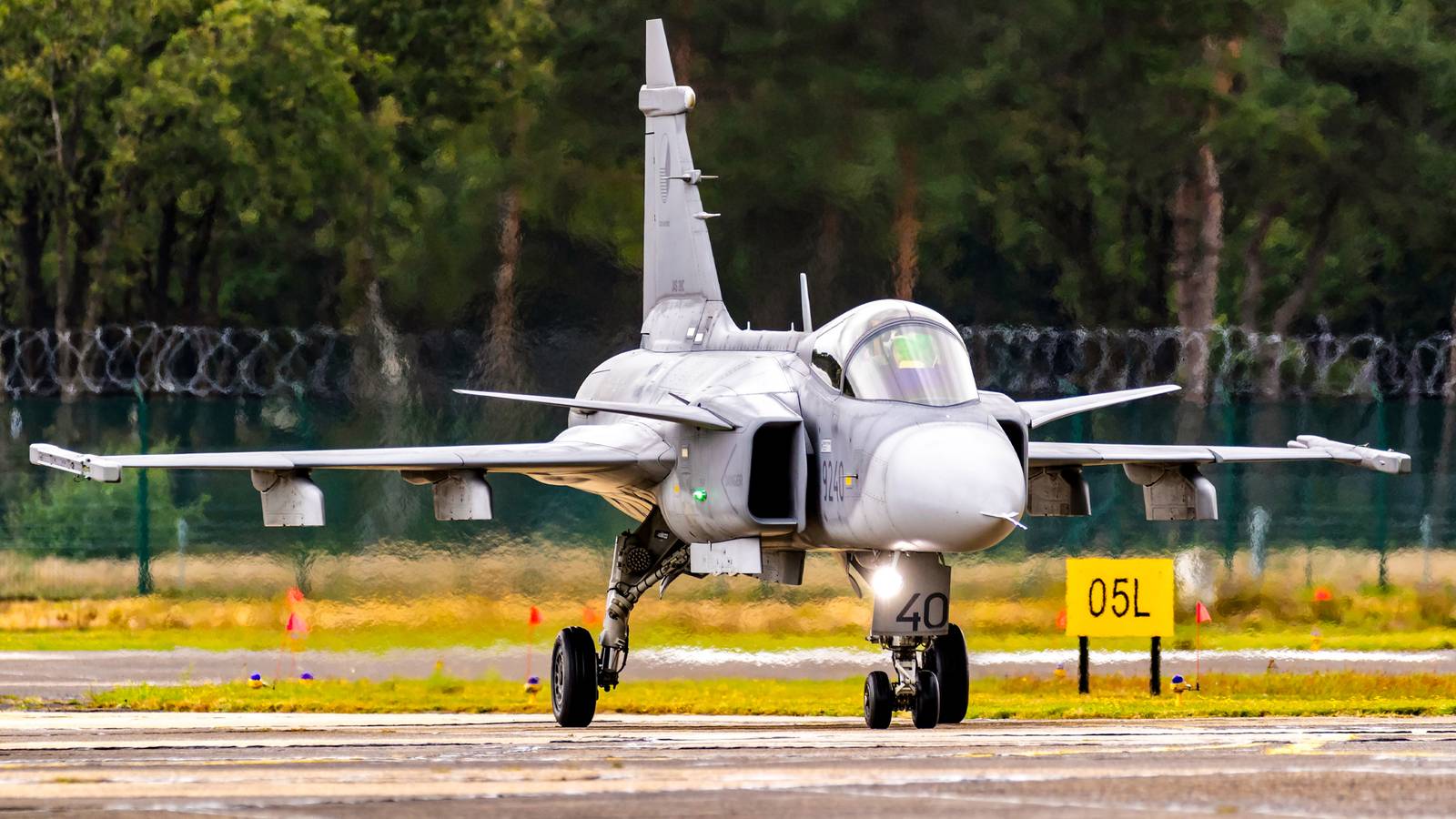
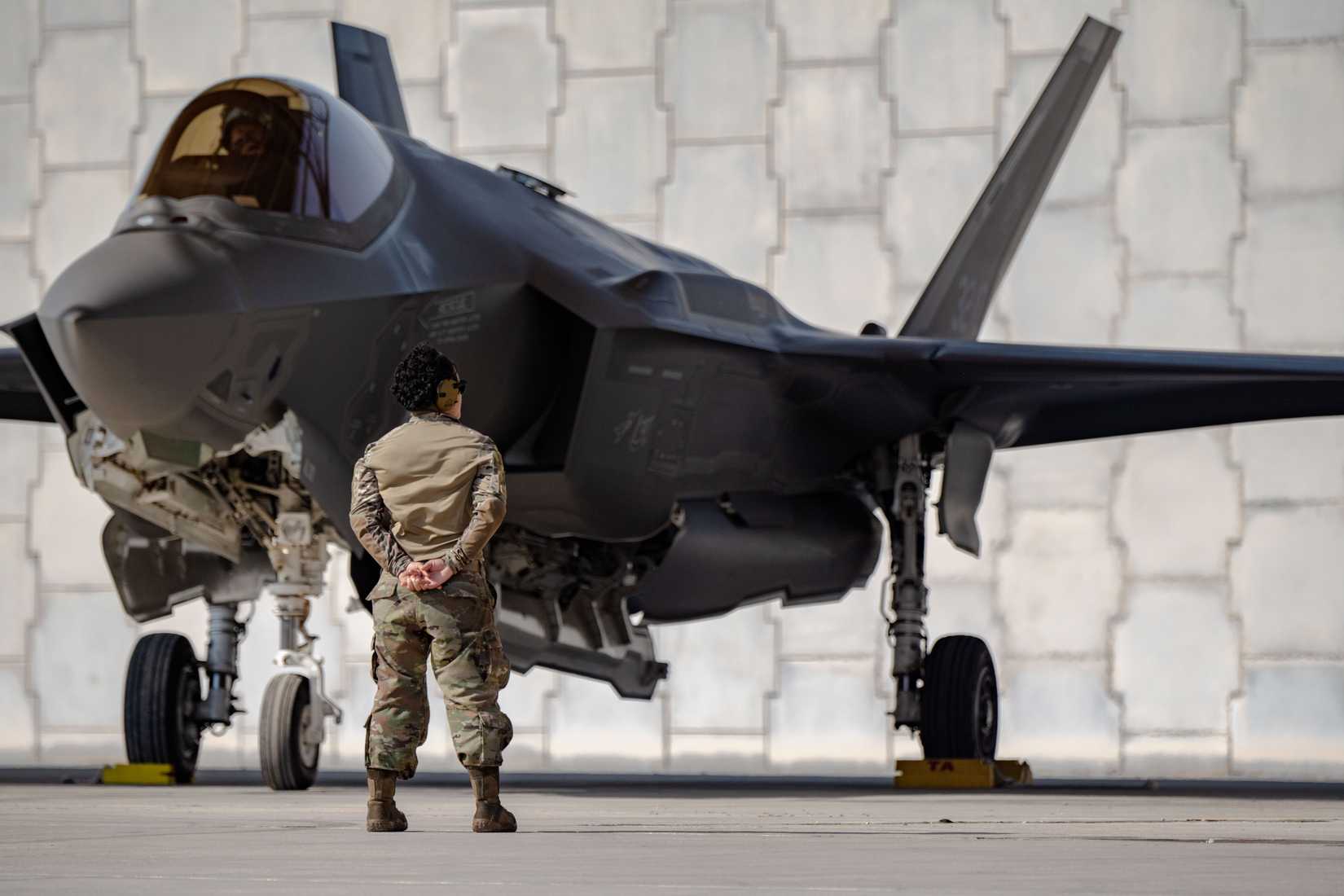
Is the United States worried about Canada building Swedish Saab JAS 39 Gripen fighter jets in Canada? Sort of. In this article, we will explain why the Gripen is no competitor to the F-35A and why the US doesn’t really care if Canada acquires the Gripen so long as it’s in addition to the F-35A. We will also explore why the US cares if Canada significantly reduces its planned purchase of 88 F-35A fighter jets.

At the core of the debate is Canada’s quest for sovereignty over its fighter jets and concern over excessive US control over its defense, while the US is concerned about Canada’s ability to police its airspace and meaningfully fulfill its NORAD obligations. From this perspective, debates over costs and various capabilities, like taking off from unprepared runways, are largely distractions from the real issues. The real issues are geopolitical.

Canada’s F-35A Program Of Record

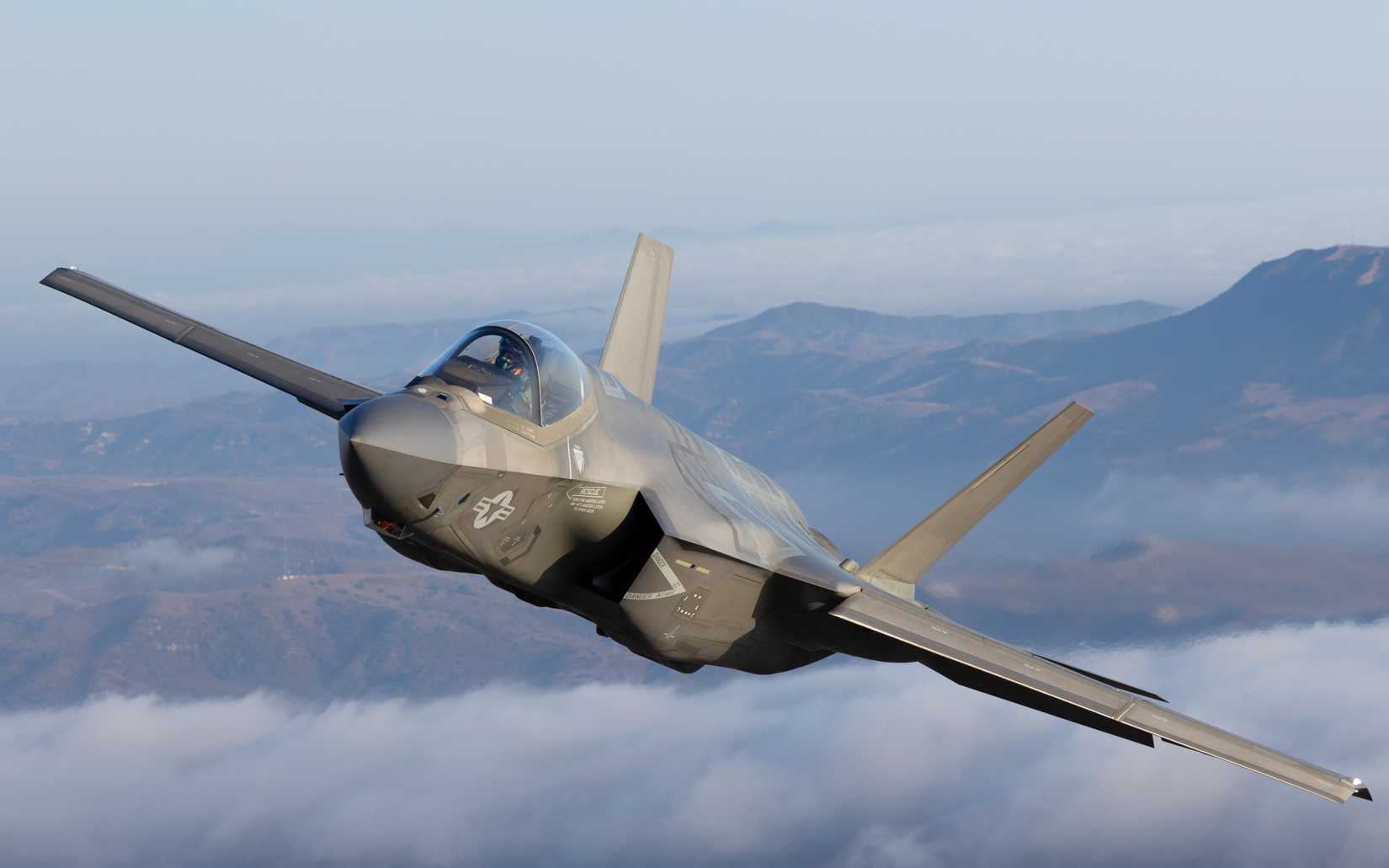
An Italian Air Force F-35 Lighting II arrives at an undisclosed location within the U.S. Central Command.
Credit: US Air Force

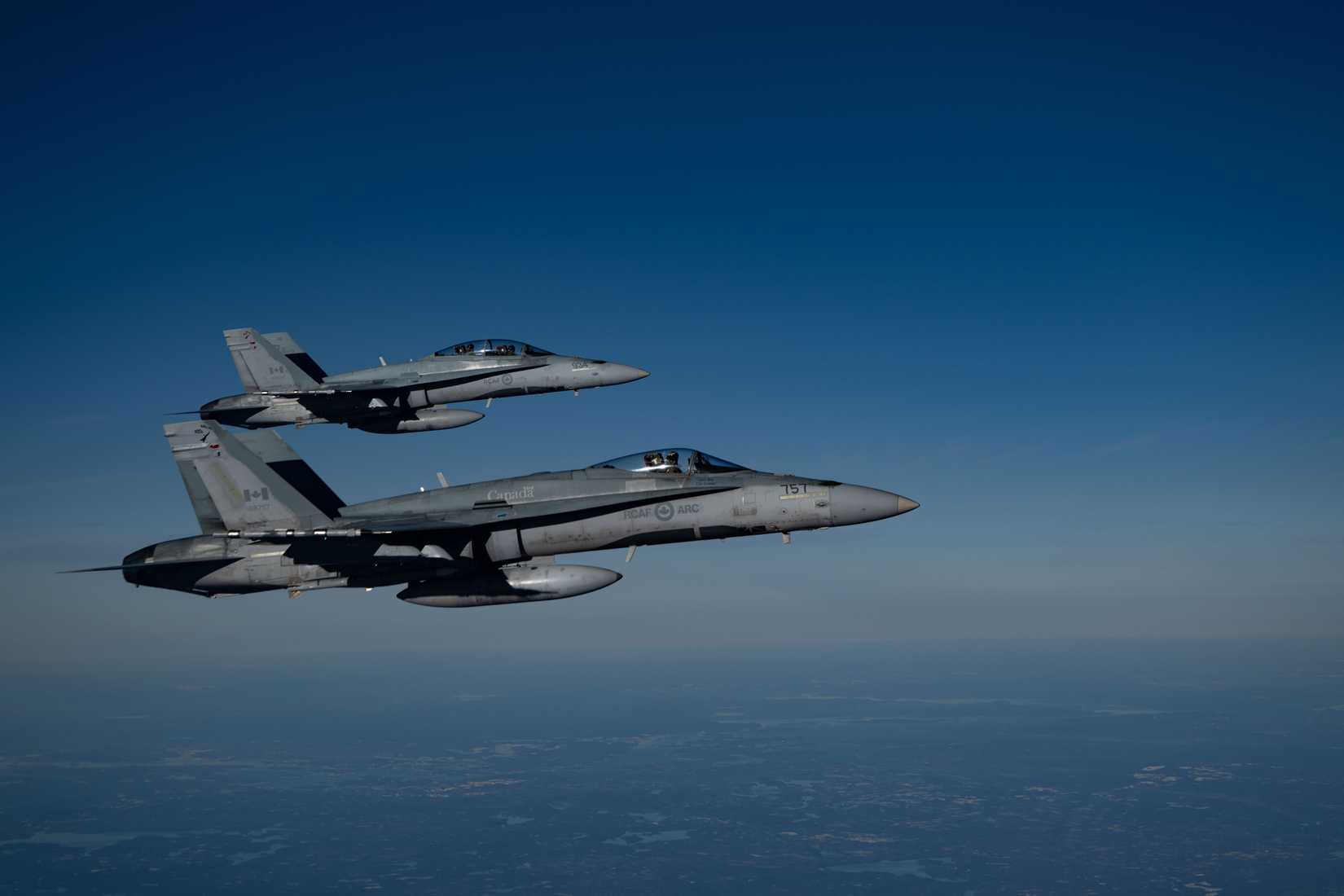
Canada has been slow in replacing its aging fleet of legacy CF-18s (the Canadian variant of the F/A-18 Hornet). These jets are aging and are in dire need of replacement, and arguably should have already been replaced. The US Marines have already retired their F/A-18 Hornets, as has Australia. Australia replaced its Hornets with two dozen Super Hornets (essentially a new aircraft) and F-35As.

To keep its Hornets flying, Canada purchased some of the retired Australian Hornets for spares as well as flyable airframes. The country selected the F-35A to replace its Hornets with a program of record for 88 aircraft, of which it is currently contracted to purchase 16 examples. These are already being produced, and the first two were delivered in October 2026.

These are being kept at Luke Air Force Base in Arizona for training as the Canadian Air Force begins its transition to the next-generation aircraft. The current discourse is not so much about Canada canceling the F-35 entirely, as those 16 aircraft are already contracted: it’s about reducing the order from 88 jets. The debate is about Canada operating two types of fighter jets, something similar to the Royal Air Force, the Royal Australian Air Force, the Italian Air Force, and many other capable and mid-sized air forces.

Canada’s NORAD Responsibility

Royal Canadian Air Force CF-18 Hornet aircraft assigned to 3 Wing Bagotville participates in the joint training exercise Operation Crimson Snowman, 2024.
Credit: US Air Force

At the heart of the issue from the American perspective is NORAD. Fighter jets are much more than fighter jets in a historical sense: they are nodes of a major, more comprehensive, and powerful system. The United States shares Link 16 with its other NATO allies, but NORAD is not NATO. A NORAD aircraft must use US-controlled IFF Mode 5, missile defense data links, classified datalinks tied to US early warning, and more.

The Gripen is NATO-compatible with Link 16, NATO weapons, and Western sensors, but it is not certified to be integrated into NORAD. Canada rejected the Gripen in 2022, partly because, as it assessed, the Gripen was sufficient for basic tasks, but insufficient for full NORAD demands.

Saab has said it can make the Gripen NORAD-compliant, but has not been able to show how it can do this. This is essentially a US decision, as the US has control of the systems and the US tightly controls who has access to these systems. Canada’s existing CF-18s, meanwhile, are fully integrated into NORAD operations and support air sovereignty patrols and intercepts.

The US argues the Gripen falls short of the interchangeability required for optimal NORAD performance. The F-35 has been designed with proprietary US-controlled software and an ecosystem built to integrate with NORAD’s C2 infrastructure. US Ambassador Pete Hoekstra has called the Gripen an “inferior product” and one that’s “not as interchangeable.”


Could Canada Choose Sweden's Gripen Fighter Jet Over The F-35

Related


Could Canada Choose Sweden’s Gripen Fighter Jet Over The F-35?

Canada’s ‘Plan B’ for air superiority.

A Conflict Of National Security

F-35 Lightning Flight
Credit: Shutterstock

At its core, the issue is one of national security. The bigger issue for the US is not about losing the money from selling an extra 60 or so airplanes: the issue is that Canadian airspace is seen as the backdoor to US airspace and security. From the US perspective, Canada must be able to police its airspace to US satisfaction. However, the Canadian perspective is very different.

The geopolitical deterioration of relations between the United States and Canada is eroding Canada’s trust in the US, and it fears a loss of sovereignty. From Canada’s point of view, the F-35 may be the most capable fighter jet by a long shot, but that is undermined by the fear of a “kill-switch” and having the country’s top defensive capabilities dependent on US technology and sustainment. The US is able to exercise a large amount of leverage through the sale of fighter jets.

Canada’s F-35 program (Per the Canadian Government and F-35.com)

Date signed

2023

Program of record

88 aircraft

Variant

F-35A

Number contracted

16

First deliveries

Two delivered in October 2026

Initial operating capability

2029-2030

CF-18 fleet

Approx. 95

This is not unique to Canada. All sales of fighter jets have been essentially geopolitical marriage contracts between countries for decades. In South American countries like Colombia and Peru, debating purchasing the Gripen or F-16 is overshadowed by how the current governments in those countries want to work with the United States.

The previous US-skeptical government in Colombia signed for the Gripen, while the pro-US opposition asked the US to block the sale until they can contest the next election. That opposition has since won the presidency, but has so far looked at renegotiating the deal rather than canceling it. Peru has also canceled the Gripen fter the purchase got caught up in its domestic politics, instead opting for the F-16.

The Gripen Is Ill-Suited To Canadian Requirements

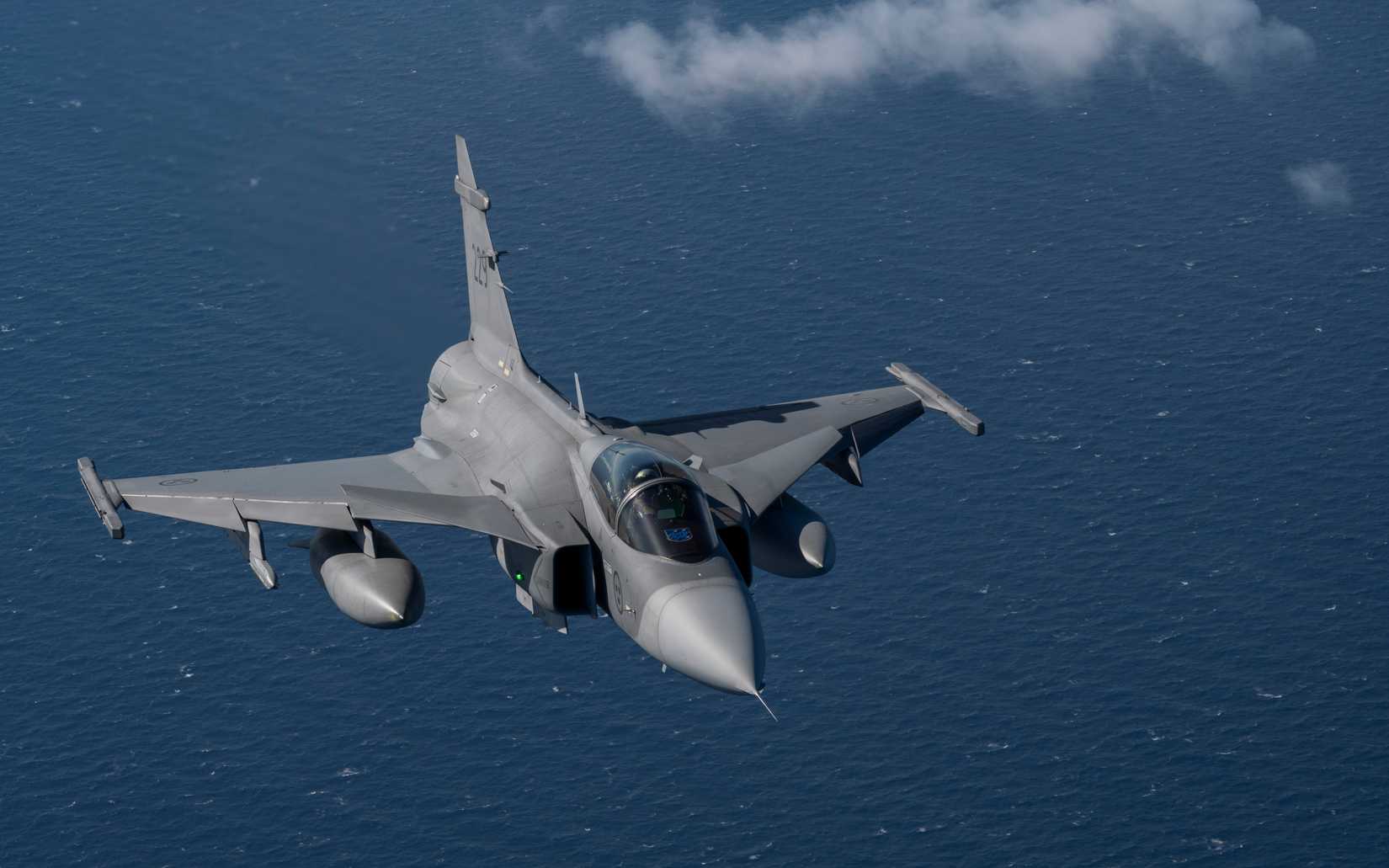
A Swedish Air Force JAS 39 Gripen participating in NATO exercise Ramstein Flag 24.
Credit: Department of Defense

Much is said of the Gripen’s ability to take off from unprepared runways, and it is true that it has some features for that, like higher air intakes. But all modern Western fighter jets can take off from unprepared runways. Finland uses its fighter jets in a dispersed doctrine similar to Sweden, and it uses F/A-18s in that capacity. In 2021, Finland selected the F-35A as the best aircraft to continue that dispersed air force doctrine over the Gripen.

The Gripen may be designed for Arctic conditions, but so too is the F-35A, which operates in Alaska, Norway, and now, Finland. The Eurofighter and F-16 also operate from unprepared bases in exercises, but this is not even an important requirement for Canada, which doesn’t have the need to disperse aircraft, unlike Sweden and Finland.

These jets need to police the vastness of the Canadian north, and here, range is much more important. The F-35A has a much greater internal fuel range. Note that when operating from an unprepared and short landing strip, the Gripen E can’t even be fully fueled, let alone carry external fuel tanks.

It’s not possible to explore all the technical advantages of the F-35A over the Gripen in this article. However, to quote Radio Canada reporting on a Canadian Department of National Defense leak, “the F-35 got a score of 95% on military capabilities, with a total of 57.1 points out of 60. By contrast, the Gripen-E finished with a score of 33%, netting 19.8 points out of 60.” David Perry, president of the Canadian Global Affairs Institute, said:

“The capability assessment here says that there is a clear-cut winner, no contest, no ambiguity. I’d expected that [the F-35] was going to be a clear winner, but this is a winner by a mile.”


Artboard 2 3_2 - 2024-12-20T114505.685

Related


What Countries Operate SAAB JAS 39 Gripen Fighter Jets?

The SAAB JAS 39 Gripen, a versatile, multi-role fighter jet, is a highly admired piece of military technology in the world of aviation.

The Gripen Is A Lightweight Fighter

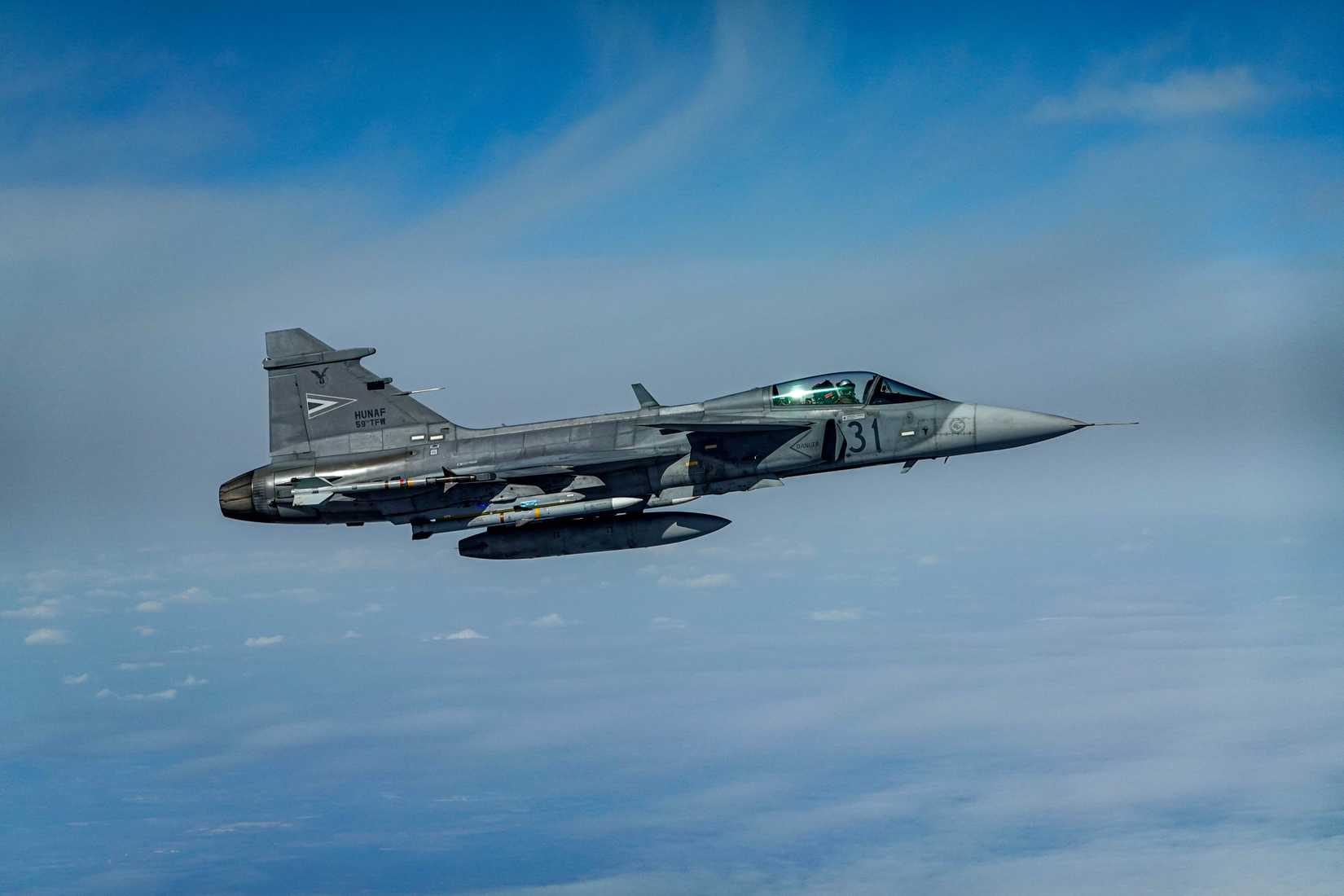
A Hungarian Air Force Saab JAS 39 Gripen flies in formation.
Credit: Department of Defense

Much is said of the Gripen being cheaper than the F-35. This is complicated as headline figures often produce apples-and-oranges comparisons. Old flyaway costs of the Gripen are often used, cost overruns of the F-35 are highlighted, while glossing over the Gripen’s significant cost overruns and delays. Saab is up to eight years behind delivering the Gripen E to Brazil, while cost overruns are “equal to eight fighter jets,” according to Defense Express.

The Gripen E is not an F-35A competitor, as the F-35A has no competitor on the export market. Indeed, it is the world’s most advanced fighter jet and is in a category unto itself. Internationally, the Gripen E barely competes with other 4.5th-generation frontline fighters like the Eurofighter Typhoon, Rafale, and F-15EX. Instead, the Gripen E mostly competes with the US’s light/medium fighter: the F-16 Block 70/72.

Where the Gripen E has won export orders, the follow-up or most likely other candidate was the F-16 Block 70/72. Examples include Peru (which seems to be switching to the F-16), Colombia, Brazil, Ukraine, and Thailand. In each of these countries, there was no prospect of purchasing the F-35. Thailand is reported to have asked, but was denied by the US. The Gripen E is a great fighter in its class, but that is a different class compared with the F-35A.

NORAD Requirement Forced Eurofighter/Rafale Out

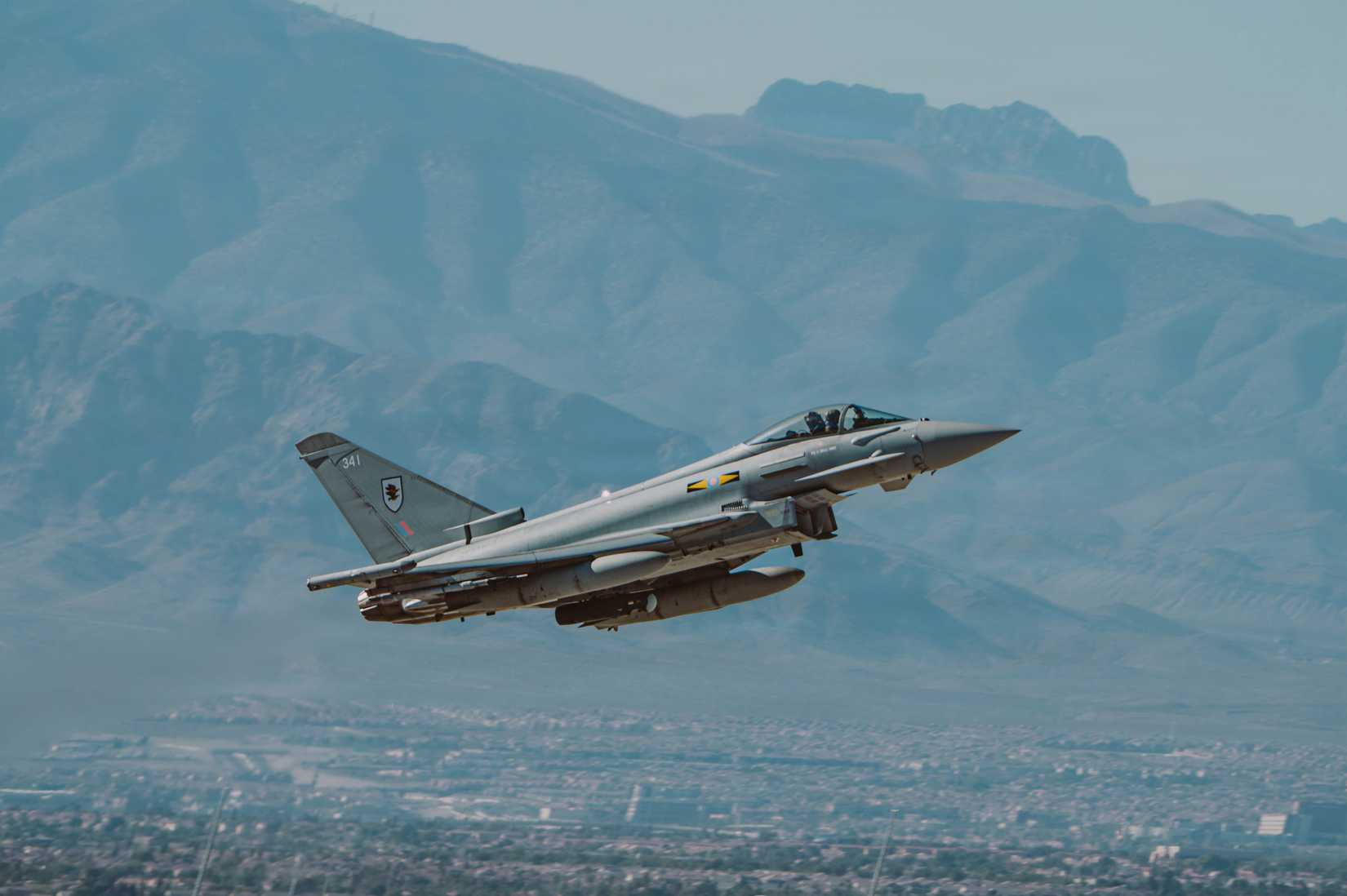
A Royal Air Force Eurofighter Typhoon takes flight at Nellis Air Force Base, Nevada, Feb. 4, 2026.
Credit: Department of Defense

It would be misleading to say the US is worried about Canada purchasing the Saab Gripen, but it is fair to say the US is worried about Canada slashing its planned F-35A purchase. For the US, Canada’s purchasing the Gripen is fine if it also purchases enough F-35s to confidently carry out its NORAD missions. Arguably, the Dassault Rafale or Eurofighter Typhoon would be a better solution for Canada should they become NORAD-compliant.

These jets also have the distinction of being the only Western fighter jets free, or mostly free, of US export controls. The Gripen E has a GE Aerospace engine, and the aircraft is very much subject to US-export controls, paradoxically eating into Canada’s sovereignty requirement.

So, why does Canada not purchase the Rafale or Eurofighter? It seems part of the answer was that the contractors assessed the NORAD-compliant requirement was a pipedream. In 2018, the Defense and Security Monitor reported that “Dassault Aviation has pulled its Rafale fighter jet out of Canada’s CF-18 replacement competition.”

It added that “the concern appears to stem primarily from the fact that Canadian aircraft require a deep level of integration with U.S. systems due to joint NORAD missions.” The Eurofighter followed in 2019, with Airbus saying that “NORAD security requirements continue to place too significant a cost on platforms whose manufacture and repair chains sit outside the United States-Canada 2-EYES community,” according to Skies Magazine.

Free Training

Source link

Ondas Plans Significant U.S. Manufacturing Expansion to Scale Low-Cost ULTRA ISR Aircraft Production, Targeting 10 Aircraft per Month by 2028


WEST PALM BEACH, FL / ACCESS Newswire / November 5, 2026 / Ondas Inc. (NASDAQ:ONDS) (‘Ondas’ or the ‘Company’), a leading provider of advanced autonomous systems and next-generation defense and security technologies, announced today plans to expand production of ULTRA, its long-endurance intelligence, surveillance and reconnaissance (ISR) aircraft, including in the United States, targeting 10 aircraft per month by 2028. To support this expansion, Ondas has entered into a definitive agreement to acquire 100% of Stemme GmbH (‘Stemme’), ULTRA’s airframe manufacturer, in an all-cash transaction. The planned acquisition would strengthen Ondas’ manufacturing capacity and supply chain to meet growing U.S. and allied demand for affordable, persistent ISR, with additional dual-use opportunities.

Ondas’ long-endurance ISR platform ULTRA is operationally deployed by the U.S. Air Force and is capable of more than 70 hours of flight time with over 400 pounds of payload capacity. Built on Stemme’s type-certified S12 composite airframe, the military-hardened, uncrewed platform uses its commercial aviation foundation to provide a lower-cost option for persistent ISR. Its endurance supports extended time on station and limits the frequency of aircraft rotations, while its modular payload architecture supports electro-optical and infrared sensing, radio-frequency collection and communications relay. These capabilities also support dual-use opportunities in border and maritime surveillance, disaster response, environmental monitoring and commercial infrastructure inspection, where sustained coverage across wide areas at a manageable operating cost is an operational requirement.

Demand for persistent ISR continues to outpace available capacity as combatant commands seek wider-area coverage, increased time on station and greater resilience in contested and distributed operating environments. In response, the U.S. Department of War is advancing a mixed-fleet approach that combines high-end crewed assets with autonomous and uncrewed platforms, networked sensors and lower-cost, attritable aircraft that can be fielded at scale. These initiatives prioritize affordable mass, modularity and rapid production, reinforcing the need for systems such as ULTRA that can augment scarce high-value platforms, expand operational coverage and deliver persistent ISR without the cost and risk associated with traditional aircraft.

Ondas has developed a plan to significantly expand ULTRA production capacity to meet urgent global demand for ISR capabilities. The proposed acquisition of Stemme is central to this strategy and would support the onshoring and localization of airframe production in the United States. Stemme, the certified German manufacturer of ULTRA’s S12 airframe, currently operates at approximately 25% of production capacity across its facilities in Strausberg and Pasewalk, which span approximately 135,571 square feet of design, production and maintenance space. Ondas plans to increase utilization of these facilities while establishing significant U.S. airframe production capacity with 345,000 square feet of planned production space to shorten supply lines and improve responsiveness to U.S. customer requirements. The acquisition would also reduce reliance on an external supplier and enable closer coordination between engineering and production as ULTRA scales.

‘Our objective is to align aircraft production with the scale of customer requirements,’ said Eric Brock, Chairman and CEO of Ondas. ‘Acquiring Stemme would give us greater control over airframe capacity, cost and schedule as we work toward 10 ULTRA aircraft per month by 2028 and bring significant production capacity to the United States. This plan connects an operational, lower-cost ISR aircraft with an existing manufacturing base that has capacity to support increased production.’

‘ULTRA was designed to deliver persistent ISR at long range, at a fraction of the cost of traditional platforms,’ said Ryan Hartman, President and CEO of Ondas Sentinel. ‘Our focus now is building more aircraft, faster. Bringing Stemme into Ondas Sentinel would put the airframe, the engineering and the production line under one roof, so we can respond faster to customer requirements, meet demand as ULTRA scales and iterate the design of ULTRA for future U.S. Air Force requirements.’

Koenraad Geurts and Benjamin de Broqueville, Co-CEOs of Stemme, shared their enthusiasm for the strategic milestone: ‘We are incredibly excited about our future with Ondas and look forward to what we will achieve together as we enter this next chapter of growth and innovation within the Ondas Sentinel group.’

Stemme holds EASA, LBA and FAA airworthiness approvals and operates an FAA Part 145 repair station, complementing its airframe manufacturing, engineering and maintenance capabilities. The transaction is expected to close in the first quarter of 2027, subject to customary closing conditions and regulatory approvals.

About Ondas Inc.

Ondas Inc. (NASDAQ:ONDS) is a leading provider of autonomous systems, robotics, and mission-critical technologies for defense, homeland security, public safety, critical infrastructure, and industrial markets. The Company develops and deploys integrated unmanned and autonomous platforms across air, ground, and stratospheric environments, including autonomous drone systems, counter-UAS technologies, robotic ground systems, advanced unmanned aircraft and propulsion solutions, demining and engineering systems, and integrated sensing and communications technologies designed to support intelligence, surveillance, reconnaissance, security, and operational missions in complex environments. Ondas’ solutions are deployed globally by government, defense, and commercial customers to protect infrastructure, borders, transportation networks, personnel, and strategic assets.

For additional information on Ondas Inc., visit www.ondas.com.

About Stemme GmbH

Stemme GmbH is a vertically integrated German aircraft original equipment manufacturer specializing in high-performance motor gliders, special-mission aerospace platforms and UAV-enabling aerostructures. With operations in Strausberg and Pasewalk, Germany, Stemme holds airworthiness approvals from the European Union Aviation Safety Agency (EASA), the Luftfahrt-Bundesamt (LBA) and the U.S. Federal Aviation Administration (FAA), and operates an FAA Part 145 repair station. Its flagship S12 platform serves both private aviation and defense customers, including as the core airframe for the ULTRA long-endurance ISR system. Stemme also operates a growing aftermarket, refurbishment and maintenance services business. For more information, visit www.stemme.com.

Forward-Looking Statements

Statements made in this release that are not statements of historical or current facts are ‘forward-looking statements’ within the meaning of the Private Securities Litigation Reform Act of 1995. We caution readers that forward-looking statements are predictions based on our current expectations about future events. These forward-looking statements are not guarantees of future performance and are subject to risks, uncertainties and assumptions that are difficult to predict. Our actual results, performance, or achievements could differ materially from those expressed or implied by the forward-looking statements as a result of a number of factors, including the risks discussed under the heading ‘Risk Factors’ discussed under the caption ‘Item 1A. Risk Factors’ in Part I of our most recent Annual Report on Form 10-K or any updates discussed under the caption ‘Item 1A. Risk Factors’ in Part II of our Quarterly Reports on Form 10-Q and in our other filings with the SEC. We undertake no obligation to publicly update or revise any forward-looking statements, whether as a result of new information, future events or otherwise that occur after that date, except as required by law.

Contacts

IR Contact for Ondas Inc.
888-657-2377
[email protected]

Media Contact for Ondas Inc.
Escalate PR
[email protected]

Preston Grimes
Marketing Manager, Ondas Inc.
[email protected]

Jill Vacek
Director of Communications, Ondas Sentinel
[email protected]

SOURCE: Ondas Inc.

View the original press release on ACCESS Newswire

Free Training

Source link

Cirrus expands US plant by 30,000 sq ft for aircraft manufacturing


US-based Cirrus has announced a multi-million-dollar, 30,000-square-foot expansion at its Grand Forks facility to meet growing demand for its products across its portfolio.

Cirrus, a global leader in personal aviation, recently opened its expanded manufacturing facility in Grand Forks, North Dakota. This investment advances Cirrus’ mission to ensure manufacturing excellence, safety, quality, and long-term growth.

“This expansion reflects our continued investment in our people, our products, and the Grand Forks community,” said Zean Nielsen, Chief Executive Officer at Cirrus. “By adding more than 30,000 square feet, creating new jobs, and enhancing our workplace for our team members, we’re positioning Cirrus for continued growth.”

“The strong partnerships we’ve built with the City of Grand Forks, the State of North Dakota, the Bank of North Dakota, and the University of North Dakota have given us the confidence to continue investing here, including making Grand Forks the location where we will manufacture composites for the new TRAC10 flight training aircraft.”

Cirrus expands to deliver

Founded in 1984, Cirrus is the recognized global leader in personal aviation and the maker of the best-selling SR Series piston aircraft and the Vision Jet—the world’s first single-engine Personal Jet and the recipient of the Robert J. Collier Trophy.

Since its inception, the company has redefined aviation performance, comfort, and safety with innovations like the Cirrus Airframe Parachute System (CAPS)—the first FAA-certified whole-airframe parachute safety system included as standard equipment on an aircraft, according to a news release.

“To date, worldwide flight time on Cirrus aircraft is over 19 million hours, and over 300 people have returned home safely to their families as a result of the inclusion of CAPS as a standard feature on all Cirrus aircraft,” added Cirrus.

“The company has seven locations in the United States, including Duluth, Minnesota; Grand Forks, North Dakota; Greater Dallas, Texas; Greater Phoenix, Arizona; Greater Orlando, Florida; Knoxville, Tennessee, and Benton Harbor, Michigan.”

The company emphasized the importance of the Grand Forks, North Dakota, location as central to its manufacturing power. Home to about 500 employees, with approximately 80% of them dedicated to direct manufacturing operations, the company called the recent expansion “a significant milestone.” Built to meet current and future production rates, “the expanded facility enables an optimized production layout that streamlines the movement of composite parts throughout the manufacturing process,” according to a news release.

“Grand Forks has played an essential role in Cirrus’ growth and manufacturing strategy for decades,” said Pat Waddick, President of Innovation and Operations at Cirrus in a news release. “Our success starts with our people and our supportive community. This investment allows us to create an even better environment for our team while expanding the capacity and capabilities needed to support our continued growth.”

This growth reflects strong demand and Cirrus’ commitment to both innovation and its employees. The company also highlighted its close partnership with the Grand Forks community, noting that local contributions to the expansion demonstrate a shared commitment to advancing economic growth and manufacturing in the region.

The expanded facility officially opens on August 14. It strengthens Cirrus’ manufacturing network, ensuring the company is well-positioned to meet customer demand while continuing to deliver the quality, innovation, and craftsmanship that define every Cirrus aircraft.

Free Training

Source link