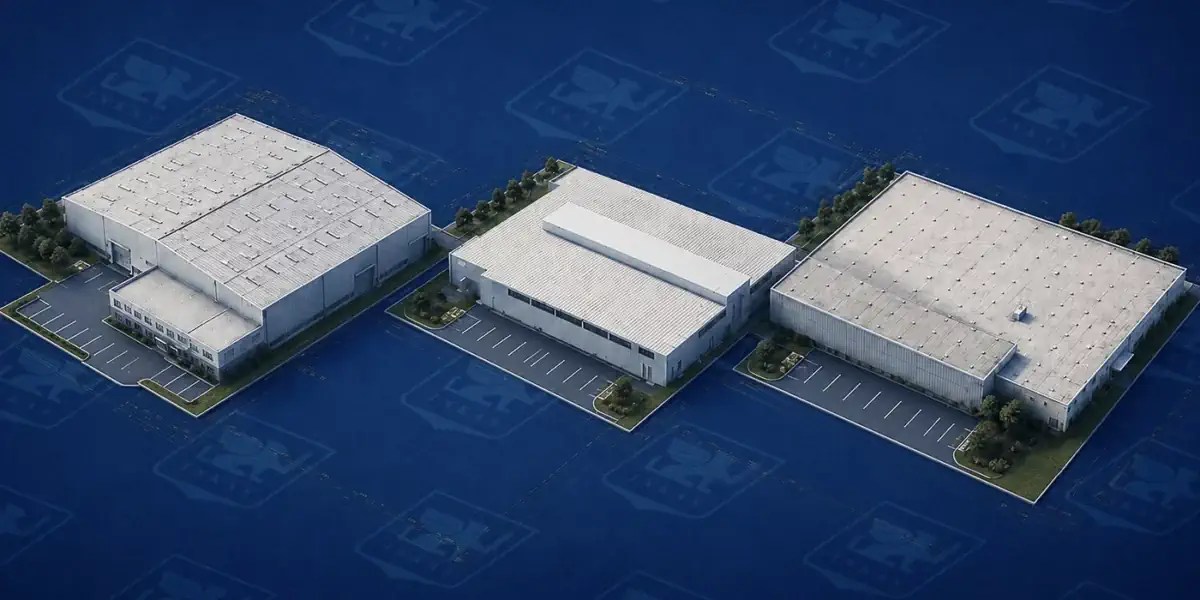

Arda Emerges from Stealth to Speed Up American Manufacturing


SAN FRANCISCO–(BUSINESS WIRE)–Oct 20, 2026–

Arda Industries today launched from stealth with $232 million in funding to speed up American manufacturing. Its software helps manufacturers quickly turn new product designs into working assembly lines. It is the first step toward a larger vision: automated robotic assembly lines that update as designs change, making it possible to build fast-changing products in the U.S.

Think of a 7,500-piece Lego set that arrives as a finished model with no instruction book. To build it from scratch, you would have to figure out the assembly order, write the instructions, and lay out the stations. Today’s phones, drones and other advanced hardware products change rapidly, requiring manufacturing engineers to work out how to assemble them each time. Arda’s AI agent does that work from the product’s CAD files and other design artifacts, so a design change reaches the factory floor without halting production.

“I kept asking: why can we design the next generation of products in America, but not build them here? When a product changes every year, the factory has to be able to change with it,” said Bob McGrew, founder and CEO of Arda. “Manufacturing leaders told me their products change constantly, and manufacturing engineering can’t keep pace. Their designs change at software speed, but their factories don’t. So, we built the technology platform that solves this problem. Today, U.S. manufacturers designing innovative consumer hardware products at scale can only make them in Asia. Imagine a fully automated version of Shenzhen in West Texas – that’s what we want to make possible.”

Already Deployed at Anduril

Anduril Industries is already using Arda’s product as part of its ArsenalOS manufacturing software. The two companies began working together before Arda was incorporated. Anduril found that in many cases, Arda turns days of work into hours, and hours of work into minutes. Basic work instructions that once took 10 hours can now be created in 15 minutes, while more complex engineering workflows that previously took up to 30 hours now take roughly 2.5 hours.

“Our manufacturing engineers are doing two hard things at once. They’re keeping up with design teams that iterate constantly, and they’re scaling production to meet demand,” said Matt Grimm, co-founder and COO of Anduril Industries. “Arda helps them get design changes onto the floor faster and catch potential issues sooner. We would be behind on our production goals without it.”

Why Factories Can’t Keep Up

Hardware now changes at a software pace. Mobile phones get a new generation every year, and only about a quarter of the parts carry over from one model to the next. Defense hardware is revised as threats change. Drones, robots and data center equipment are redesigned constantly. Factories haven’t kept up. While human workers can learn new instructions in a day, programming conventional automation for a single station can take three to six months and cost close to $1 million. A new phone stays at full-rate production for only about four months. By the time an automated line is ready, the product has moved on.

Across Asia, large teams of factory workers and manufacturing engineers adapt phone production lines with each new generation. In the U.S., fast-changing hardware gets built where the price can carry the labor and engineering cost, as in defense. At consumer scale, it mostly isn’t built here at all. No one has successfully built a smartphone in America.

That engineering work is also hard to staff. Manufacturing engineers are scarce in the U.S., and hiring needs often outpace the available talent. Arda helps companies get more from the engineers they already have, effectively giving each senior engineer the productivity of a team of junior engineers.

Arda is starting in defense and the data center supply chain, two of the most active parts of U.S. manufacturing. In data centers, it works with manufacturers of transformers and electrical equipment that bring power online. Next is consumer electronics: the phones, drones, and devices that change every year and have never been built at scale in America.

Next on the Roadmap: Robotics

Arda is already prototyping its next step: using AI agents to program robots to carry out its assembly plans, station by station. Traditional automation requires custom equipment, lengthy engineering work and careful calibration for each assembly step. When a product design changes, adapting that automation can take months.

Arda is developing AI agents to accelerate automation engineering so that automated lines can be updated in days rather than months. The goal is to make robotic assembly lines as quick to adapt to new designs as an assembly line staffed by people today, making it possible to assemble fast-changing consumer electronics devices in the U.S.

A Team Purpose-Built for the Mission

McGrew led product and engineering at Palantir through its first decade and helped develop its forward-deployed engineering model. He joined OpenAI when it was a small nonprofit lab, led its research team from 2018 to 2024, and left as Chief Research Officer in September 2024.

His co-founders are Augustus Odena, Arda’s Chief AI Officer, who co-founded Adept and previously worked at Google Brain and Meta’s TBD Lab; Alex Mark, Arda’s CTO, a former Palantir engineering leader who later worked on IRS Direct File at the U.S. Digital Service; and Jakob Frick, who previously worked at Palantir and SpaceXAI.

The team includes software engineers from Palantir, manufacturing engineers from Tesla, and AI researchers from MIT, who work on customers’ factory floors against real assemblies. Building Arda takes close partnership with manufacturers and a serious research team, and the founders come out of both, at Palantir and OpenAI.

Backed by Top Investors

The $160 million Series A, at a $1.5 billion valuation, was co-led by Altimeter, Accel, and Khosla Ventures, with participation from XYZ Venture Capital, 8VC, SVAngel, and Felicis. It follows a $72 million seed round led by Accel and Founders Fund, with Khosla Ventures and XYZ Venture Capital also participating. Arda will use the funding to grow its engineering and research teams, expand deployments with manufacturers in defense, electronics, the data center supply chain, and other industries, and to develop the robotics models needed to automate assembly.

About Arda Industries

Arda Industries builds AI for manufacturing engineering. Its software turns a product design into an assembly line and keeps that line current as the design changes, work that is necessary to build innovative, fast-changing products. Arda was founded by Bob McGrew, former Chief Research Officer at OpenAI and Palantir’s product and engineering leader for its first decade, with co-founders from Palantir and Adept. It is deployed at Anduril and works with companies in the data center supply chain. Arda has raised $232 million from Accel, Altimeter, Khosla Ventures, Founders Fund, XYZ Venture Capital, 8VC, SVAngel, and Felicis. Learn more at arda.ai.

View source version on businesswire.com:https://www.businesswire.com/news/home/20261020574393/en/

Media Contact: press@arda.ai

KEYWORD: CALIFORNIA UNITED STATES NORTH AMERICA

INDUSTRY KEYWORD: TECHNOLOGY MANUFACTURING ROBOTICS OTHER MANUFACTURING SOFTWARE ARTIFICIAL INTELLIGENCE OTHER DEFENSE DEFENSE ENGINEERING HARDWARE ELECTRONIC DESIGN AUTOMATION

SOURCE: Arda Industries

Copyright Business Wire 2026.

PUB: 10/20/2026 04:05 PM/DISC: 10/20/2026 04:06 PM

http://www.businesswire.com/news/home/20261020574393/en

Free Training

Source link

American billionaire Mark Cuban strongly believes that manufacturing can return to the US from China; it is really simple, all that Americans need is …


American billionaire Mark Cuban strongly believes that manufacturing can return to the US from China; it is really simple, all that Americans need is ... American billionaire and Shark Tank judge Mark Cuban believes bringing manufacturing back to the United States is “really simple”: outcompete China in robotics and artificial intelligence. The Shark Tank investor argued that advances in automation could make domestic production economically viable, reducing America’s reliance on Asian manufacturing hubs. Cuban made the remarks in a post on social media platform X (formerly known as Twitter) on Sunday while responding to comments from Anduril Industries co-founder Palmer Luckey, who had pushed back against claims that manufacturing products in the United States is prohibitively expensive.
Mark Cuban: ‘Our robots and AI versus their robots and AI’

Cuban framed the future of manufacturing as a technological race between the United States and China. “It’s really simple. Our Robots and AI vs their Robots and AI,” Cuban wrote. “If we can catch up on robotics/software, and can stay ahead on AI, there is zero reason manufacturing won’t come back, or initiate here.”According to Cuban, automation and software advances could help offset labour-cost advantages that have traditionally driven companies to manufacture products in China and other parts of Asia.

Cost plus drugs example

The billionaire pointed to his pharmaceutical venture, Cost Plus Drugs, as an example of how domestic production could become competitive. Cuban said the company could manufacture generic medicines in Dallas at lower costs than importing them from Asia if not for various fees associated with bringing production online.“At Cost Plus Drugs, the only thing holding us back from making generic drugs cheaper in Dallas than we can buy from Asia, are the fees we have to pay,” he wrote.

Palmer Luckey: High-cost claims are ‘psychological operations’

Luckey had said that stories about iPhones costing $37,000 or laptops costing $100,000 if made in the US are psychological operations. They are “sometimes pushed by foreign adversaries but more commonly by American corporations that want anything but an upset to the status quo,” he said.He added that companies that treat US manufacturing as impossible want to justify staying in China and avoid admitting “it is a choice.” Luckey also said a 30% tariff can bring production home only if making the product in the US costs less than 30% more.

AI competition with China intensifies

The discussion arrives amid growing competition between the US and China in artificial intelligence and advanced manufacturing technologies. Recent industry data cited by Reuters showed Nvidia held a 34% share of China’s AI accelerator market during the first half of 2026, while Huawei’s share rose to 28% as the Chinese technology giant gained ground in the sector.Chinese semiconductor companies have also continued expanding their capabilities in memory chips and AI infrastructure, increasing pressure on Western rivals. The strategic importance of AI was also highlighted by US President Donald Trump, who recently rejected the idea of a US-China AI joint venture, arguing that such cooperation could risk sharing sensitive technology with Beijing. “Whoever wins super intelligence wins,” Trump said.

Free Training

Source link

August Jobs Report: American Manufacturing Gains New


The U.S. economy delivered a welcome surprise in August, adding 162,000 jobs — more than five times the average monthly gain over the previous year. But buried beneath that encouraging headline was another development that could prove even more consequential for America’s long-term economic strength.

Manufacturing added 16,000 jobs last month, continuing what the Bureau of Labor Statistics described as an “upward trend.” Since hitting a recent low in December 2025, the sector has now added 58,000 jobs.

Just as important is where many of those jobs are appearing. Machinery manufacturing added 6,000 positions in August, while fabricated metal products added another 6,000. Employment also increased in computers and electronics, electrical equipment, primary metals, and chemicals.

These are not merely factories producing consumer goods. Machinery, metals, electronics, chemicals, and related industries form critical parts of the industrial base America relies on for infrastructure, advanced technology, energy, and national defense.

That connection has become increasingly important as America confronts the risks of relying on foreign suppliers for essential materials and components. The Department of War’s National Defense Industrial Strategy has specifically called for more resilient supply chains and greater domestic production capacity, while Pentagon initiatives have targeted sectors including microelectronics, castings and forgings, critical chemicals, metals, and other defense-related materials.

The August numbers therefore offer an encouraging early indication that President Donald Trump’s push to strengthen domestic manufacturing may be gaining traction.

Dr. Frank Schneider, a retired Austrian economist who advised former Chancellor Fred Sinowatz, called the recent growth “anything but accidental,” noting that many of the industries adding workers overlap with administration priorities in advanced technology and defense.

“This shift in job quality is often overlooked,” Professor Schneider said. He explained that government jobs primarily represent spending and do not generate profit; instead, they contribute to debt. “Private sector projects create capital wealth, which is a fuel for the economy,” he added.

These gains also fit with other recent indicators. The Federal Reserve Bank of New York’s August survey found that manufacturing activity in New York State expanded strongly, with its general business conditions index reaching 20.6, the highest level in more than four years. New orders and shipments both increased.

Trump’s trade policies are only one part of this story, and a single jobs report cannot prove that tariffs are responsible for a manufacturing rebound. But there is growing evidence from individual companies that the administration’s efforts to protect domestic producers are affecting investment decisions.

Revere Copper Products, America’s oldest copper rolling mill, is one example. After decades of intense foreign competition, the company has been expanding operations and hiring workers. Amy O’Shaughnessy, Revere’s vice president of sales and marketing, has said tariffs helped “reset the playing field” and provided greater certainty for long-term investment.

More recently, O’Shaughnessy said that tariffs, along with booming demand from data centers, have allowed Revere to invest in its factories and workforce in ways it had not been able to do for decades. The company has added roughly 100 workers at its New York and North Carolina facilities since 2023.

Drew Greenblatt, owner of Baltimore-based Marlin Steel Wire Products, has likewise emerged as an outspoken supporter of policies aimed at strengthening American manufacturing.

“I’m thrilled the new policies exist so that we can nurture these American companies,” Greenblatt said.

Marlin Steel, which makes wire baskets and sheet-metal products from American steel, recorded its best year ever in 2025. Greenblatt said earlier this year that the company had responded by purchasing the most expensive piece of machinery in its history and expected further growth in 2026.

None of this means tariffs come without costs. Manufacturers that rely heavily on imported materials can face higher input prices, and the long-term effects vary significantly from one industry to another. But for companies competing directly against heavily subsidized or lower-cost foreign production, tariffs can also provide breathing room to invest, expand capacity, and hire American workers.

That calculation becomes particularly important when the foreign competitor is China.

Retired Italian economist Professor Alfredo Di Gagliardi argued that rebuilding key American industries would be exceedingly difficult without some protection from Chinese competition. Beijing, he noted, has achieved dominant positions in industries ranging from batteries and electric vehicles to solar panels because of its own protectionist policies.

“Is there a price to be paid? Yes,” Di Gagliardi said, “but it is small compared to the inability to produce valuable products.”

The national security implications of relying on foreign adversaries for goods and materials reinforce that argument. The Pentagon has warned that the United States cannot afford excessive dependence on foreign suppliers for critical components and has specifically sought to onshore defense-related production chains. American military strength ultimately depends not only on weapons already in the arsenal, but on the factories, skilled workers, materials, and machinery capable of replacing and expanding them.

Manufacturing also remains important for another reason — it provides a pathway to economic security for millions of workers who do not have four-year college degrees.

Scott Paul, president of the Alliance for American Manufacturing, recently described manufacturing as “a ladder to the middle class,” noting that the sector can still offer strong wages to Americans without university degrees.

“I do think manufacturing is an industry where you can still find good wages in the United States and particularly for the majority of Americans who won’t have a four-year degree,” he said.

August’s numbers do not by themselves amount to a full-scale industrial renaissance. But 58,000 manufacturing jobs added since December, including continued gains in machinery and metals, constitute meaningful progress.

For decades, Americans watched factories close, production move overseas, and the country become increasingly dependent on foreign industrial capacity. If the recent trend continues, the United States can break its reliance on foreign suppliers and re-establish itself as a premier global manufacturing hub.

Free Training

Source link

Duffy Scolds Ford Over Deals With China in Urging More American Manufacturing


Transportation Secretary Sean Duffy has warned Ford Motor Company about maintaining “questionable foreign alliances” with Chinese companies amid calls from the Trump administration to reshore its manufacturing operations.

In a recent letter to Ford CEO Jim Farley, Duffy derided the company’s recent deals with China-backed auto manufacturers, and said Ford “fails to act as [a] reliable partner” to the American public.

“The company’s recent strategic decisions paint a troubling picture of a foundational American brand actively intertwining its future with Chinese state-backed enterprises,” Duffy wrote in the letter sent Sept. 3 and released publicly Tuesday.

Ford pushed back sharply in a statement to NOTUS on Tuesday, calling Duffy’s letter an error-filled and “wrongheaded attempt to capture headlines.”

The company said it produces more vehicles in the United States and employs more American workers than any other automaker.

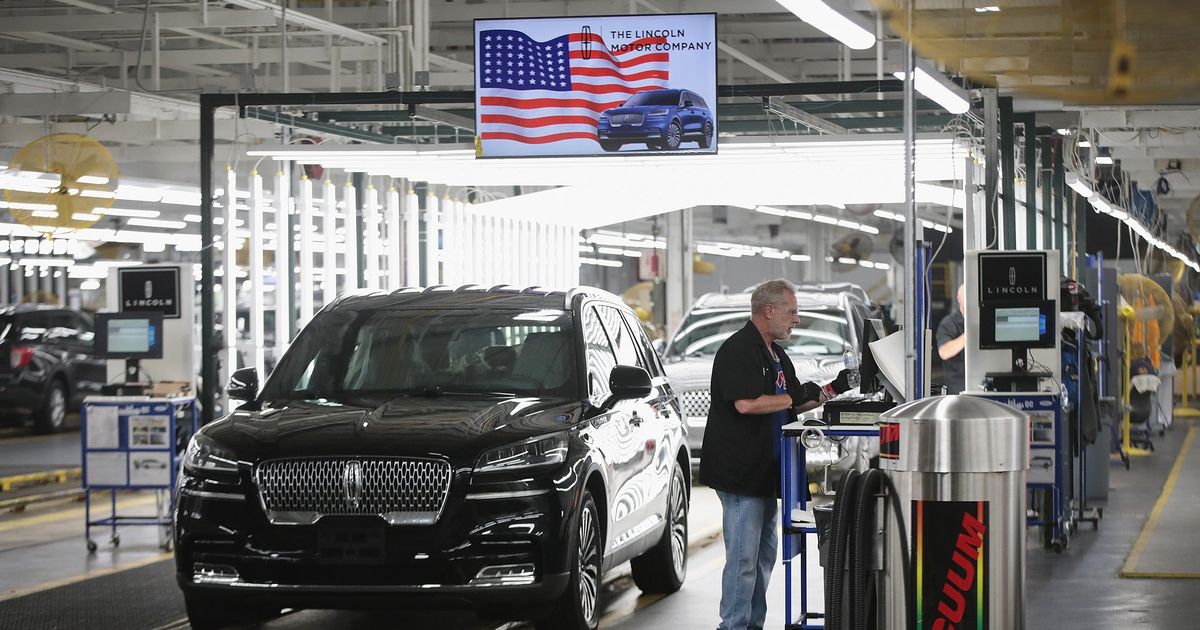
Ford has been under continued pressure from the White House to return to domestic supply chains and manufacturing, and recently announced it would relocate manufacturing operations of its Lincoln models from China to the United States by 2030.

Commerce Secretary Howard Lutnick recently celebrated the announcement as a tariff success, but Duffy asserted the four-year timeline “leaves an unacceptable, multi-year window of reliance on Chinese manufacturing while depriving skilled American workers of vital manufacturing jobs.”

Duffy went on to highlight Ford’s dependence on licensed technology from Chinese battery manufacturer Contemporary Amperex Technology Co., Limited — a company that appears on the Defense Department’s list of banned companies. He also criticized Ford over a new deal with Chinese automotive company Geely Auto to build zero-emission vehicles at a Ford factory in Spain.

Ford defended its arrangement with Chinese battery makers, saying its Michigan battery hub is owned and operated by Ford and can’t be classified as a foreign-owned manufacturing operation. The company said Duffy’s assessment of its operations in Spain are also fraught.

“Ford supports the Trump administration’s vision for advancing American innovation and manufacturing,” Ford’s response states. “Had Secretary Duffy reached out before issuing his letter to the press, we would have been happy to share more details about Ford’s U.S. commitment.”

Free Training

Source link

‘Wings For The World’s Fastest Business Jet Are Made By American Workers’ — TradingView News


Bombardier Inc. (BDRBF) fired back Monday after President Donald Trump threatened to block sales of the Canadian planemaker’s jets in the United States, issuing a statement defending its American manufacturing footprint and thousands of U.S. jobs tied to its business-jet production.

Bombardier Highlights U.S. Economic Impact 

Trump posted on Truth Social that he would end Bombardier sales in the United States, saying the company’s products were not worth it.

“NO MORE SELLING BOMBARDIER IN THE UNITED STATES! Their products aren’t good enough! Over 50% of their revenue comes from the United States — They live off American Buyers, American Companies, American Airports, and American Service — All while Canada blocks our GREAT American Banks, and Companies, throughout the U.S.A. They even blocked Gulfstream Aerospace from doing business in Canada — Completely unjust and unfair!”

The Montreal-based manufacturer pushed back within hours, emphasizing its existing U.S. manufacturing operations. The company said its American operations support tens of thousands of jobs, both directly and through its supplier network. Bombardier class B stock slipped 0.6% last week, logging three straight weeks of losses.

Bombardier employs workers across more than 20 states, including Kansas, Texas, Arizona, Florida, Connecticut, Illinois, Delaware, California, New Jersey and Washington, D.C. Its U.S. operations work with roughly 2,800 domestic suppliers spanning 47 states. The company spends more than $2.5 billion annually with those businesses.

“Bombardier aircraft are built with American-made components such as engines, avionics and many more key systems provided by great American companies. Significantly, the wings for the world’s fastest business jet are made by American workers at Bombardier’s facility in Red Oak, Texas while crucial flight control components are made in Bombardier’s Los Angeles, California area facility.”

Canada Prepares New Tariffs On U.S. Goods 

The disagreement comes as trade tensions between the U.S. and Canada grow. Trump criticized Canada for restricting American banks and companies, while Canada prepares to respond to U.S. tariffs, raising fears of a broader trade war.

According to a Bloomberg report, Canada plans to place 15% to 50% tariffs on hundreds of U.S. products, starting Tuesday, as Prime Minister Mark Carney tries to strengthen Canada’s position in trade talks with the U.S. The tariffs would raise duties on many U.S. steel products to 50% from 25% and add new taxes on items such as motorcycles, cosmetics and cheese.

BDRBF Stock: Retail View

Meanwhile, on Stocktwits, retail sentiment around the stock jumped to ‘bullish’ from ‘bearish’ territory.

“They do build in the US… they are in Texas, California, Kansas, Connecticut, Florida and Indiana. At least 3000 American employees,” said one user in response to Trump’s latest post.

BDRBF stock has gained 34% year-to-date.

Free Training

Source link

Foundry School Launched To Rebuild American Manufacturing


The Trump administration has launched a Foundry School, a training program for entrepreneurs, engineers, technicians, and industrial leaders to rebuild American manufacturing.

The launch of the training school was announced by Vice President J.D. Vance and Secretary of State Marco Rubio at an event held at the Donald J. Trump Institute of Peace.

They were joined by Under Secretary for Economic Affairs Jacob Helberg, presidents and senior leaders from the eight universities working to deliver the Foundry School curriculum and chief executives and company presidents from manufacturing and technology companies.

It is estimated that American manufacturers will need 3.8 million skilled workers by 2033 in semiconductors, defense, energy, and beyond. The State Department, working with Congress, plans to support the participation of Pax Silica economies in Foundry School and is working with Stanford University to develop the curriculum for U.S. and foreign participants. Foundry School will collaborate with Pax Silica economies to create opportunities for America and partners in industries critical to our nation’s economic security.

Foundry School is anchored in a first-of-its-kind advanced manufacturing curriculum developed by Stanford University that also features keystone lectures provided by seven universities. Stanford University has collaborated with Arizona State University, Georgia Institute of Technology, The Ohio State University, The Pennsylvania State University, the University of Kansas, Vanderbilt University, and Washington University in St. Louis. Across these eight campuses, the program will run 17 sessions, each taught by founders and CEOs from advanced manufacturing enterprises.

These industry leaders will be drawn from the United States and Pax Silica participants, including South Korea, Japan, Taiwan, and India, covering everything it takes to build and run a world-class manufacturing enterprise.

Foundry School is a flagship initiative of Pax Silica, the Trump Administration’s economic security partnership connecting governments, industry, and universities to strengthen the critical supply chains and industrial capabilities that underpin the AI economy. Foundry School connects students and workers directly with the companies building and operating advanced manufacturing facilities.

For comments and feedback contact: editorial@rttnews.com

Business News

Free Training

Source link

Secretary of War Pete Hegseth Visits Oshkosh Corporation, Highlighting the Strength of American Manufacturing and the Arsenal of Freedom | News


State

AlabamaAlaskaArizonaArkansasCaliforniaColoradoConnecticutDelawareFloridaGeorgiaHawaiiIdahoIllinoisIndianaIowaKansasKentuckyLouisianaMaineMarylandMassachusettsMichiganMinnesotaMississippiMissouriMontanaNebraskaNevadaNew HampshireNew JerseyNew MexicoNew YorkNorth CarolinaNorth DakotaOhioOklahomaOregonPennsylvaniaRhode IslandSouth CarolinaSouth DakotaTennesseeTexasUtahVermontVirginiaWashingtonWashington D.C.West VirginiaWisconsinWyomingPuerto RicoUS Virgin IslandsArmed Forces AmericasArmed Forces PacificArmed Forces EuropeNorthern Mariana IslandsMarshall IslandsAmerican SamoaFederated States of MicronesiaGuamPalauAlberta, CanadaBritish Columbia, CanadaManitoba, CanadaNew Brunswick, CanadaNewfoundland, CanadaNova Scotia, CanadaNorthwest Territories, CanadaNunavut, CanadaOntario, CanadaPrince Edward Island, CanadaQuebec, CanadaSaskatchewan, CanadaYukon Territory, Canada

Zip Code

Country

United States of AmericaUS Virgin IslandsUnited States Minor Outlying IslandsCanadaMexico, United Mexican StatesBahamas, Commonwealth of theCuba, Republic ofDominican RepublicHaiti, Republic ofJamaicaAfghanistanAlbania, People’s Socialist Republic ofAlgeria, People’s Democratic Republic ofAmerican SamoaAndorra, Principality ofAngola, Republic ofAnguillaAntarctica (the territory South of 60 deg S)Antigua and BarbudaArgentina, Argentine RepublicArmeniaArubaAustralia, Commonwealth ofAustria, Republic ofAzerbaijan, Republic ofBahrain, Kingdom ofBangladesh, People’s Republic ofBarbadosBelarusBelgium, Kingdom ofBelizeBenin, People’s Republic ofBermudaBhutan, Kingdom ofBolivia, Republic ofBosnia and HerzegovinaBotswana, Republic ofBouvet Island (Bouvetoya)Brazil, Federative Republic ofBritish Indian Ocean Territory (Chagos Archipelago)British Virgin IslandsBrunei DarussalamBulgaria, People’s Republic ofBurkina FasoBurundi, Republic ofCambodia, Kingdom ofCameroon, United Republic ofCape Verde, Republic ofCayman IslandsCentral African RepublicChad, Republic ofChile, Republic ofChina, People’s Republic ofChristmas IslandCocos (Keeling) IslandsColombia, Republic ofComoros, Union of theCongo, Democratic Republic ofCongo, People’s Republic ofCook IslandsCosta Rica, Republic ofCote D’Ivoire, Ivory Coast, Republic of theCyprus, Republic ofCzech RepublicDenmark, Kingdom ofDjibouti, Republic ofDominica, Commonwealth ofEcuador, Republic ofEgypt, Arab Republic ofEl Salvador, Republic ofEquatorial Guinea, Republic ofEritreaEstoniaEthiopiaFaeroe IslandsFalkland Islands (Malvinas)Fiji, Republic of the Fiji IslandsFinland, Republic ofFrance, French RepublicFrench GuianaFrench PolynesiaFrench Southern TerritoriesGabon, Gabonese RepublicGambia, Republic of theGeorgiaGermanyGhana, Republic ofGibraltarGreece, Hellenic RepublicGreenlandGrenadaGuadaloupeGuamGuatemala, Republic ofGuinea, Revolutionary
People’s Rep’c ofGuinea-Bissau, Republic ofGuyana, Republic ofHeard and McDonald IslandsHoly See (Vatican City State)Honduras, Republic ofHong Kong, Special Administrative Region of ChinaHrvatska (Croatia)Hungary, Hungarian People’s RepublicIceland, Republic ofIndia, Republic ofIndonesia, Republic ofIran, Islamic Republic ofIraq, Republic ofIrelandIsrael, State ofItaly, Italian RepublicJapanJordan, Hashemite Kingdom ofKazakhstan, Republic ofKenya, Republic ofKiribati, Republic ofKorea, Democratic People’s Republic ofKorea, Republic ofKuwait, State ofKyrgyz RepublicLao People’s Democratic RepublicLatviaLebanon, Lebanese RepublicLesotho, Kingdom ofLiberia, Republic ofLibyan Arab JamahiriyaLiechtenstein, Principality ofLithuaniaLuxembourg, Grand Duchy ofMacao, Special Administrative Region of ChinaMacedonia, the former Yugoslav Republic ofMadagascar, Republic ofMalawi, Republic ofMalaysiaMaldives, Republic ofMali, Republic ofMalta, Republic ofMarshall IslandsMartiniqueMauritania, Islamic Republic ofMauritiusMayotteMicronesia, Federated States ofMoldova, Republic ofMonaco, Principality ofMongolia, Mongolian People’s RepublicMontserratMorocco, Kingdom ofMozambique, People’s Republic ofMyanmarNamibiaNauru, Republic ofNepal, Kingdom ofNetherlands AntillesNetherlands, Kingdom of theNew CaledoniaNew ZealandNicaragua, Republic ofNiger, Republic of theNigeria, Federal Republic ofNiue, Republic ofNorfolk IslandNorthern Mariana IslandsNorway, Kingdom ofOman, Sultanate ofPakistan, Islamic Republic ofPalauPalestinian Territory, OccupiedPanama, Republic ofPapua New GuineaParaguay, Republic ofPeru, Republic ofPhilippines, Republic of thePitcairn IslandPoland, Polish People’s RepublicPortugal, Portuguese RepublicPuerto RicoQatar, State ofReunionRomania, Socialist Republic ofRussian FederationRwanda, Rwandese RepublicSamoa, Independent State ofSan Marino, Republic ofSao Tome and Principe, Democratic Republic ofSaudi Arabia, Kingdom ofSenegal, Republic ofSerbia and MontenegroSeychelles, Republic ofSierra Leone, Republic ofSingapore, Republic ofSlovakia (Slovak Republic)SloveniaSolomon IslandsSomalia, Somali RepublicSouth Africa, Republic ofSouth Georgia and the South Sandwich IslandsSpain, Spanish StateSri Lanka, Democratic Socialist Republic ofSt. HelenaSt. Kitts and NevisSt. LuciaSt. Pierre and MiquelonSt. Vincent and the GrenadinesSudan, Democratic Republic of theSuriname, Republic ofSvalbard & Jan Mayen IslandsSwaziland, Kingdom ofSweden, Kingdom ofSwitzerland, Swiss ConfederationSyrian Arab RepublicTaiwan, Province of ChinaTajikistanTanzania, United Republic ofThailand, Kingdom ofTimor-Leste, Democratic Republic ofTogo, Togolese RepublicTokelau (Tokelau Islands)Tonga, Kingdom ofTrinidad and Tobago, Republic ofTunisia, Republic ofTurkey, Republic ofTurkmenistanTurks and Caicos IslandsTuvaluUganda, Republic ofUkraineUnited Arab EmiratesUnited Kingdom of Great Britain & N. IrelandUruguay, Eastern Republic ofUzbekistanVanuatuVenezuela, Bolivarian Republic ofViet Nam, Socialist Republic ofWallis and Futuna IslandsWestern SaharaYemenZambia, Republic ofZimbabwe

Free Training

Source link

Durkin: North American Trade Is Critical to U.S. Manufacturing


America’s relationship with Mexico and Canada is the most complementary and symbiotic set of trade relationships the United States has, NAM Vice President of International Policy Andrea Durkin said on Grant Thornton’s DC Dispatch podcast recently.

  • Durkin’s comments come as U.S. and Canadian trade leaders meet to resolve differences ahead of proposed U.S. tariffs on Canada scheduled to take effect on Aug. 19.

The case for USMCA: “We export one-third of all U.S. manufactured goods to Canada and Mexico,” Durkin told Grant Thornton’s David Sites and Colin Wilhelm. “That is more than to the next nine U.S. manufacturing export partners combined.”

  • “And since implementation of USMCA, 15 of 18 manufacturing sub-sectors have increased their exports to Canada and Mexico, and they’re growing faster than to other markets.”

A symbiotic relationship: Many companies straddle these borders and benefit hugely from drawing resources from—and selling goods to—all of North America. “Half of what we’re buying from Canada and nearly 70% of what we buy from Mexico is trade within a single corporate parent,” Durkin pointed out. “It is truly regionalized co-production.”

  • Durkin emphasized that America’s trade relationship with Mexico and Canada helps it compete with China, and that the administration must balance its desire to onshore as much production as possible with keeping that regional partnership strong.

The review process explained: As a key champion of the USMCA when it was originally passed, the NAM urged policymakers to renew and modernize the agreement during its scheduled review in July. The Trump administration decided not to pursue a 16-year renewal this year, but as Durkin told the podcast hosts, that was no catastrophe.

  • The agreement will stay in force for another decade, and the three countries will continue to conduct annual reviews (CNBC).

Priorities for cooperation: Durkin laid out a few priorities for policymakers as they consider the ongoing maintenance of the agreement.

  • Strengthen implementation and coordination: “With the volume of trade and breadth of this agreement, there will always be implementation issues on any given day,” she said, noting the three countries should continually look for ways to improve coordination, make trade at the border more fluid and manage risks more effectively. “That can always be improved and should be regularly discussed.”
  • Build on the agreement: The countries should pursue additional cooperation on customs facilitation, energy, AI policy or critical minerals policy, without necessarily reopening the USMCA itself, Durkin continued. 
  • Address changes carefully: They should also continue discussions on consequential issues that could affect how companies use the agreement, including potential changes to rules of origin. 

The geopolitical angle: Durkin also highlighted the administration’s push to compete with China.

  • Emphasizing that competition with China will continue to drive U.S. investment in the “technological race in advanced manufacturing,” Durkin pointed out the importance of U.S. policies aimed at helping manufacturers “retain competitiveness in advanced manufacturing” and “leapfrog” in sectors where it needs to maintain preeminence.
  • At the same time, she stressed the need to reduce overreliance on single markets and supply chain “choke points,” arguing that manufacturers’ global footprint and diversification with U.S. allies are a “source of resilience.”

The bottom line: Durkin urged policymakers to work closely with manufacturers as they consider changes to the agreement—particularly aground rules of origin, where adjustments can ripple across supply chains and affect costs and competitiveness across the sector.

  • “Our advice to the government is: Please work with us,” she said. “We will be happy to test-proof some innovative ideas around rules of origin.”
  • Durkin said manufacturers can help policymakers determine which parts of the production process are most important to retain in the United States—and where the region can benefit from integrated North American supply chains, including access to raw materials that are not available domestically.

Free Training

Source link

American Rheinmetall expands U.S. Tier 1 manufacturing network supporting missile structures and major military modernization programs


American Rheinmetall is positioning its U.S. Tier 1 manufacturing network to support rising demand for precision components used in critical defense systems. The company highlighted missile body structures as one area where its domestic facilities provide advanced metal forming, machining and finishing capabilities.

The missile structures require tight manufacturing tolerances and must withstand demanding operational environments, according to the company. American Rheinmetall said its manufacturing teams are delivering at the speed and volume required by the U.S. Department of War.

The manufacturing network forms part of a broader U.S. industrial operation spanning six facilities in Michigan, Ohio and Maine. American Rheinmetall operates more than 1.7 million square feet of manufacturing space and employs more than 1,500 people.

The workforce supports fabrication, machining, assembly and welding activities for defense and commercial customers. The company said its facilities also retain significant capacity for future expansion.

Headquartered in Auburn Hills, Michigan, American Rheinmetall designs, develops and produces tracked and wheeled military vehicles and components. It operates as both a full-service original equipment manufacturer and a Tier 1 supplier to the U.S. defense sector.

Its portfolio includes vehicle systems, mechanical systems, ground-vehicle electronics, ISR platforms and soldier lethality technologies. The company also supplies short-range air defense solutions, fabricated structures, armored products, rubber products and track systems.

American Rheinmetall’s U.S. industrial footprint expanded significantly after Rheinmetall AG acquired Loc Performance Products in late 2024. The Michigan and Ohio-based business supplied track and mechanical systems, fabricated structures and precision-machined components to defense, industrial and commercial customers.

Loc Performance Products now operates under the American Rheinmetall name, with its legacy products and capabilities incorporated into the wider business. Rheinmetall said the acquisition would directly support the growth of its U.S. military vehicle operations.

American Rheinmetall Systems also began operating under the unified American Rheinmetall name in 2025. The Biddeford, Maine-based operation focuses on next-generation lethality, fire control, vision systems and short-range air defense technologies.

The company said the unified structure is intended to streamline operations and improve collaboration across its U.S. businesses. American Rheinmetall continues to supply the U.S. government, major defense prime contractors and customers in several commercial industries.

Its U.S. strategy combines domestic manufacturing capacity with access to Rheinmetall’s wider vehicle and electronics portfolios. American Rheinmetall said that approach allows it to adapt and integrate established platforms for specific U.S. military requirements.

Free Training

Source link

INKAS® Announces Major North American Manufacturing Expansion Across Canada and the United States – sUAS News


New facilities in Canada, North Carolina, and Florida are expected to more than double INKAS®’ armored vehicle, defense, and special-purpose production footprint by July 31, 2026

INKAS®, a Canadian armored vehicle manufacturer and systems integrator, announces a major expansion of its North American manufacturing footprint, with three additional production facilities across Canada and the United States expected to be in full operation by July 31, 2026.  

The three newly leased facilities are comprised of a mix of manufacturing and production space, with approximately 42,000 square feet at an additional Toronto facility in Canada, 200,000 square feet at an armored vehicle production facility in Charlotte, North Carolina, and 31,000 square feet for a first-time facility in Florida at Fort Pierce.  

Together, these facilities are expected to more than double INKAS’® production space across North America, strengthening the company’s ability to support growing demand from government, defense, law enforcement, commercial security, and specialized vehicle customers.  

The expanded footprint provides INKAS® with greater production flexibility, additional manufacturing capacity, and a stronger operational platform to support both current and future programs across its armored vehicle, tactical platform, drone / UAV, and special purpose vehicle portfolios. The Charlotte facility is specially equipped for armored vehicle production and has access to an experienced workforce with direct expertise in armored vehicle manufacturing, helping accelerate operational scaling without the need to build those capabilities from the ground up.  

“This expansion marks an important milestone in the continued growth of INKAS® as a North American manufacturer,” said David Khazanski, CEO of INKAS®. “By adding significant production space across Canada and the United States, we are strengthening our ability to support customers with reliable, scalable, and mission-ready security and defense solutions. This investment reflects our confidence in the long-term demand for advanced protected mobility, unmanned systems, and specialized platforms.” 

The new facilities form part of INKAS®’ broader strategy to increase production capacity, improve operational resilience, and support a growing portfolio of armored, tactical, unmanned, and special-purpose solutions. With operations expanding across Toronto, Charlotte, and Fort Pierce, INKAS® is positioned to better serve domestic and international customers while supporting more efficient production, faster program execution, and future growth across key markets.  

“Beyond expanding our production footprint, this investment is about creating skilled jobs, supporting local economies, and building long-term manufacturing capability in North America,” said Margarita Simkin, Chairwoman of INKAS®. “As these facilities come online, they will create opportunities for engineers, technicians, production specialists, and support teams across Canada and the United States. We believe that investing in people and manufacturing infrastructure is essential to building a stronger, more resilient security and defense industry.”

For nearly three decades, INKAS® has specialized in the design, engineering, and manufacturing of armored vehicles and advanced security solutions. The company’s portfolio includes discreet armored SUVs and sedans, tactical vehicles, armored personnel carriers, drones / UAVs, cash-in-transit vehicles, and custom-built special purpose platforms for clients around the world. 

Discover more from sUAS News

Subscribe to get the latest posts sent to your email.

Free Training

Source link