

Intel gets waiver after worries fuzzy US ban on foreign-made robots may hit fabs


US chip champion Intel was so confused by the US government ban on foreign-made robots that it requested and received a waiver “out of an abundance of caution.” The tech company wanted to make sure that it could continue using certain robotic vehicles in its US chip fabs.

The uncertainty surrounding the Federal Communications Commission ban on certain foreign-made robots was revealed in the agency’s decision to grant Intel’s waiver request. On October 22, the FCC published its order allowing Intel to continue using the foreign-made robots in US semiconductor manufacturing facilities for a period of one year.

The robots in question are automated guided vehicles operating on “tracks or predefined paths” while often requiring operator oversight, according to Intel’s website. They help to move materials and items around within warehouses and factory floors.

Such robotic vehicles are typically manufactured by Japanese companies like Murata Machinery and Daifuku Co., according to Bloomberg News. But the exact types of robotic vehicles used by Intel were only identified in a “confidential appendix” that accompanied its request.

The FCC’s ban mainly covers new models of mobile robots, like humanoid robots and robot vacuums, and still allows for the import of robots previously approved for sale in the United States. But the agency rules seem to restrict major modifications to “previously authorized devices.”

Intel’s waiver request stated that it was “unclear” whether its robotic vehicles even qualify as robots covered by the FCC ban but said it sought relief just in case. The tech company also received approval to “make certain hardware, software, and firmware changes” that would help ensure the continued operation and maintenance of the robotic vehicles.

Free Training

Source link

Asus won’t say how it escaped the US router ban


This spring, the United States banned all future foreign-made consumer routers — effectively all future routers — unless their makers could 1) convince the US government that they weren’t a national security threat, and 2) submit “a detailed, time-bound plan to establish or expand manufacturing in the United States.”

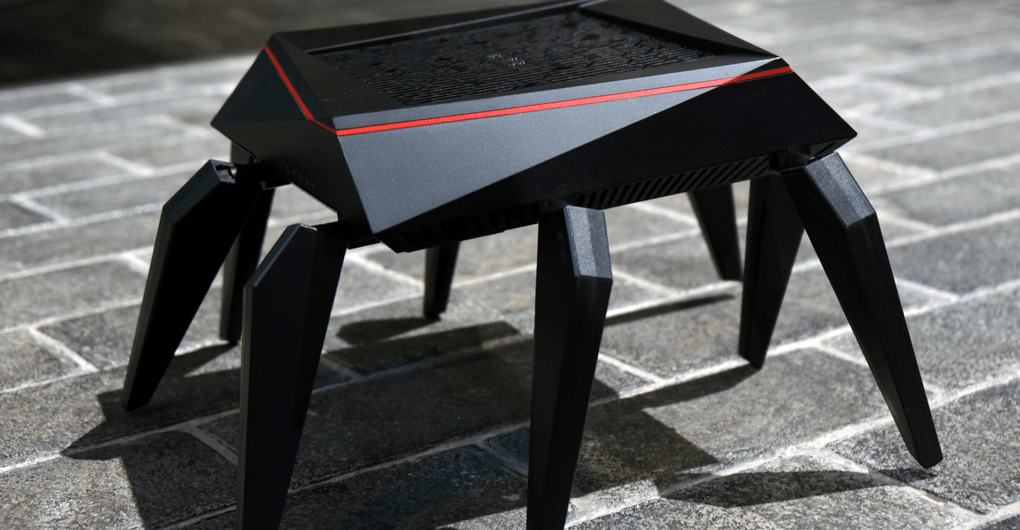
As of September 9th, Asus now has an exemption from the ban, just in time to bring its first early Wi-Fi 8 routers here. But Asus has not publicly announced any plan to bring manufacturing to the US. It would not even confirm to The Verge whether it had submitted a US manufacturing plan.

Initially, Asus spokesperson JJ Guerrero forwarded the following statement to The Verge: “ASUS has submitted the required plan to the FCC and is working with trusted manufacturing partners to support our future networking product portfolio in the U.S.”

But when we repeatedly asked Asus to clarify whether that meant it had submitted a plan to manufacture equipment in the United States — as opposed to equipment that’s just for the United States — the company did not answer. We’ve been waiting over 12 days without clarification.

The US router ban is not about security, despite the government’s claims. The FCC doesn’t ask companies a single question about security to get an exemption from the ban; it’s more about where routers are made. Nor is the FCC carefully testing which products are safe and which might have security holes — it has granted Asus a blanket exemption on all future routers through March 2028.

Few consumer products are made in the United States these days for all kinds of economic reasons. Even a copy of the board game Monopoly is now difficult to manufacture domestically. It wouldn’t be surprising if Asus wants to avoid building factories here.

But if the US router ban is not about US manufacturing, and it’s not about security, what is it actually about? Why did the Trump administration suddenly give Asus a blanket exemption, and why did it give Netgear a similar blanket exemption back in April?

The FCC did not respond to a request for comment then, and it has not responded to our fact-check request for this story. Perhaps it’s simply satisfied that these companies aren’t making them in China; both Asus and Netgear claim they’re manufacturing in countries that are considered US allies, and Netgear additionally says that “we no longer procure internet-connected components from manufacturers in China, or entities owned or controlled by China.”

Publicly, both Asus and Netgear are using the US government’s exemptions as marketing tools. In April, Netgear even emailed existing customers to share the news that Netgear is a “trusted consumer router company” now. Asus now claims it passed a “rigorous cybersecurity review” and is now certified as a “Trusted Networking Equipment Brand” and listed as a “Trusted Consumer Router Vendor,” as if those were official terms.

But search results for “Trusted Networking Equipment Brand” and “Trusted Consumer Router Vendor” only point back to Asus’s own claims — not the federal government.

Free Training

Source link