

Ernst, Miller-Meeks Bill to Strengthen U…


WASHINGTON – Today, the U.S. Senate unanimously passed U.S. Senator Joni Ernst’s (R-Iowa) bipartisan Critical Infrastructure Manufacturing Feasibility Act to decrease our reliance on foreign adversaries for key materials and boost manufacturing in rural America.

The bill instructs the Secretary of Commerce to identify critical goods that are currently being imported and find ways to help domestic producers manufacture them in rural areas and industrial parks, boosting manufacturing here at home.

The bill now heads to the president’s desk to be signed into law.
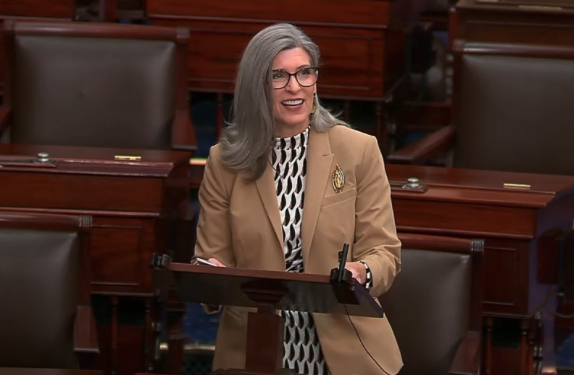
2026-09-23 JKE Floor Speech on Critical Manufacturing Bill

Ernst spoke on the Senate floor ahead of its passage.

“My bipartisan bill will identify vulnerabilities in our supply chains and help bring manufacturing back to rural America, where Iowans are ready to roll up their sleeves, get to work, and once again make ‘Made in America’ the norm instead of the exception,” said Sen. Ernst. “I look forward to President Trump signing it into law.”

“Iowa has the skilled workforce, manufacturing expertise, and strong communities America needs to lead the next generation of domestic manufacturing. For too long, critical production has moved overseas, leaving American workers behind and making our country dependent on foreign supply chains,” said Rep. Miller-Meeks. “This bipartisan bill gives us a roadmap to bring that production home, create more opportunities for Iowa workers, and strengthen our nation’s economic and national security. I’m proud to have led this effort with Senator Ernst and grateful for her partnership in getting it across the finish line.”

“Supply chains are critical to global competitiveness and our national security,” said Sen. Blunt Rochester. “I’m proud to see this bipartisan legislation pass into law to help identify where we are over-reliant on foreign imports for critical infrastructure and explore how we can bring that manufacturing back to the United States. These investments will strengthen domestic production, secure our supply chains, and support good-paying jobs right here at home.”

“We have become heavily dependent upon overseas supply chains, leaving us vulnerable to increased cybersecurity risks and price fluctuations,” said Sen. Ossoff. “This bipartisan bill will take steps to mitigate those risks, while helping open the door to new manufacturing jobs in Georgia and across the nation.”

Ernst’s full remarks as delivered below:

“Mr. President, I’m here today to talk a little more about our national and economic security of the United States. This has really been the focus of my career, protecting that national and economic security.

“In 1940, the United States became the ‘Arsenal of Democracy,’ and our country came together to quickly accelerate production of the weapons, vehicles, food, and supplies that enabled the Allies to defeat the Axis powers.

“Americans in factories, farms, small businesses, and across the country did what was necessary to make what was needed.

“Instead of internalizing the lesson that our ability to make these critical items in the United States led to great success…we spent much of the last 50 years offshoring our jobs and manufacturing capabilities.

“This is something China, Russia, and other nefarious actors around the world have all been too happy to accommodate and take on themselves.

“Today, we have only ONE active facility producing cannon barrels.

“Today, we rely 100 percent on foreign sources for 12 critical minerals essential to our military and our economy.

“During COVID, we saw what happens when supply chains are strained.

“There was a global shortage of microchips, which upended manufacturers’ ability to make everything from cars to computers. At the same time, moms in the Midwest had to worry about finding baby formula due to supply chain issues at both the production and shipping levels.

“Put simply: we’ve lost the ability to make what we need right here at home.

“In the event of a conflict with one of our near-peer adversaries, supply chains will be challenged, and the United States will have to make what it needs.

“Thank goodness President Trump, his administration, and Congress have been taking steps to put us on the right track and bring back the manufacturing capabilities we need right here at home.

“My bipartisan Critical Infrastructure Manufacturing Feasibility Act builds on these efforts.

“My bill, which has already passed the Senate unanimously, directs the Secretary of Commerce to identify critical goods that are currently being imported and find ways to help domestic producers manufacture them in rural areas and shovel-ready industrial sites.

“Rural Iowans are ready to roll up their sleeves and build the factories and processing facilities we need to secure our supply chains.

“We can and need to make things here.

“But you can’t fix vulnerabilities you can’t see.

“Which is why my bill gives Congress and the Executive Branch the visibility necessary to identify gaps and close them.

“I am grateful to Representative Mariannette Miller-Meeks for introducing the House version of this bill, and for the House of Representatives passing the bill unanimously.

“Now it is time for the Senate to act and send this bill to the President’s desk. Thank you.”

###

Free Training

Source link

NAFTZ Supports Senate Bill Meant to Enhance U.S. Manufacturing Competitiveness Across North America


Measure would help restore parity for U.S. manufacturers exporting to Canada and Mexico, strengthening North American supply chains and cross-border trade

WASHINGTON, June 16, 2026 /PRNewswire/ — The National Association of Foreign-Trade Zones (NAFTZ), the only national trade association focused solely on the U.S. Foreign-Trade Zones program, today applauded the introduction of Senate companion legislation from U.S. Sen. Tim Scott (R-S.C.) aimed at strengthening the competitiveness of American importers and exporters operating in U.S. FTZs.

The National Association of Foreign-Trade Zones (NAFTZ) today applauded the introduction of Senate companion legislation from Sens. Tim Scott (R-S.C.) and Katie Britt (R-Ala.), aimed at strengthening the competitiveness of American importers and exporters operating in U.S. FTZs.
(Photo by Harold Mendoza on Unsplash)

The legislation – co-sponsored by Sen. Katie Britt (R-Ala.) – mirrors the recently introduced Foreign-Trade Zone Export Enhancement Act in the House and would provide duty-relief benefits for certain goods produced or altered in federally designated U.S. FTZs and subsequently exported to Canada and Mexico. The proposal addresses a longstanding imbalance under the U.S.-Mexico-Canada Agreement (USMCA) that has placed businesses operating in U.S. FTZs at a competitive disadvantage relative to counterparts in Canada and Mexico.

Annual trade between the U.S., Canada and Mexico totals roughly $1.8 trillion, with operators increasingly relying on cross-border production, sourcing and export relationships to remain globally competitive. Yet, under current USMCA rules, businesses operating in U.S. FTZs must pay duties on inputs before exporting finished goods to North American partners – even when those products would otherwise qualify for preferential treatment under the agreement.

Meanwhile, competing manufacturers in Canada and Mexico benefit from national duty-relief programs that eliminate comparable costs – including Mexico’s PROSEC program and Canada’s targeted tariff relief efforts.

“South Carolina companies operating in Foreign-Trade Zones make significant contributions to the Palmetto State’s economy,” said Sen. Scott. “My bill levels the playing field for our businesses by making sure American manufacturing remains globally competitive, boosting USA-made exports, and supporting American jobs.”

Ultimately, the bill would clarify U.S. trade law to ensure qualifying goods produced in U.S. FTZs can benefit from duty-relief treatment when exported to Canada and Mexico, helping restore the intent behind the U.S. Foreign-Trade Zones program – first established by Congress in 1934 to promote domestic production and exports.

“U.S. Foreign-Trade Zones were designed to make the nation a more competitive place to invest and operate in,” said Jeff Tafel, president of NAFTZ. “Unfortunately, current USMCA rules have produced the opposite result for many U.S. FTZ-based operations, imposing costs that competitors in Canada and Mexico often do not face. Sen. Scott’s proposal recognizes that American businesses should not be penalized simply because they operate within one of these zones.”

NAFTZ has advocated for reforms addressing this issue since the NAFTA era and has continued that effort through the implementation of USMCA. The association maintains that the legislation would not weaken the agreement, but rather ensure that U.S. operators receive treatment comparable to that already available to competing North American producers.

The organization also noted that the proposal aligns with broader national priorities surrounding reshoring, supply-chain security and domestic industrial growth.

“At a time when policymakers are focused on strengthening North American supply chains and encouraging manufacturing investment in the U.S., this legislation addresses a clear policy inconsistency that has persisted for far too long,” said Melissa Irmen, director of advocacy for NAFTZ. “The bill would help reduce cost disparities for qualifying U.S. FTZ operators, encourage additional investment in U.S. production facilities, and better align USMCA implementation with the original purpose of the U.S. FTZ program.”

Irmen added: “We appreciate Sen. Scott’s leadership and look forward to working with lawmakers in both chambers to advance this important measure.”

U.S. FTZ users like AFL, a South Carolina-based manufacturer of fiber-optic cable, hardware and equipment, are equally hopeful for the bill’s eventual passage.

“We appreciate Senator Scott’s leadership in supporting policies that strengthen U.S. manufacturing competitiveness,” said Jaxon Lang, CEO and President of AFL. “This legislation will help ensure that products manufactured in South Carolina can be exported efficiently to Canada and Mexico, allowing companies like AFL to compete on a level playing field and continue investing in jobs and innovation here at home.”

NAFTZ now intends to work directly with Congress, the administration and key industry stakeholders to further the proposal. Its House counterpart is pending review among the chamber’s Ways and Means Committee.

About the National Association of Foreign-Trade Zones (NAFTZ)

The National Association of Foreign-Trade Zones (NAFTZ) is the collective voice of the U.S. Foreign-Trade Zones community. Representing public and private sector members across the United States, NAFTZ is dedicated to advancing the U.S. Foreign-Trade Zones program through advocacy, education and collaboration. The association works to promote policies that strengthen U.S. competitiveness, encourage domestic investment and job creation, and support secure and efficient international trade operations. For more information visit: www.naftz.org.

SOURCE National Association of Foreign-Trade Zones

Free Training

Source link

Democrats Introduce Bill to Boost U.S. Manufacturing, Reduce Reliance on China


Washington — Senate Democrats have introduced sweeping legislation aimed at rebuilding America’s manufacturing base, reducing reliance on Chinese-dominated supply chains and expanding federal support for industries viewed as critical to U.S. economic and national security.

The Make More in America Act would broaden the mandate of the Export-Import Bank of the United States, known as EXIM, allowing it to finance domestic manufacturing projects in sectors including semiconductors, artificial intelligence, critical minerals, biotechnology, robotics, batteries and shipbuilding.

Senate Democratic Leader Chuck Schumer said the measure is intended to address vulnerabilities exposed by repeated disruptions to global supply chains, which he said have contributed to higher costs for American consumers.

“Americans cannot keep paying the price every time a supply chain crisis hits — whether it’s a pandemic, a war, or the whims of the Chinese Communist Party trying to undermine the American economy,” Schumer said.

“We have to break the cycle of supple chain shocks that are raising prices, invest in American industry, and protect our national security,” he added.

The bill was introduced by Schumer along with Democratic Sens. Jack Reed, Amy Klobuchar, Chris Coons, Brian Schatz, Cory Booker, Elizabeth Warren, Chris Van Hollen, Tammy Duckworth, Mark Kelly, Andy Kim, Lisa Blunt Rochester and Angela Alsobrooks.

Under the legislation, EXIM would be authorized to support the development, commercialization, production and future export of technologies deemed critical to U.S. competitiveness and national security. The bill would create a permanent Make More in America Program focused on expanding manufacturing capacity across the country.

Priority industries would include semiconductors, artificial intelligence, quantum technology, biotechnology, advanced energy systems, critical minerals, drones, robotics and shipbuilding.

“The United States has faced a manufacturing decline under the Trump Administration and we need to reverse that trend,” Reed said.

“We must bolster domestic supply chains, revive America’s manufacturing competitiveness, and get our manufacturing workforce growing again to ensure America is capable of responding to global threats and builds critical technologies here at home.”

Democrats backing the bill cited China’s growing industrial dominance and U.S. dependence on overseas suppliers for strategically important goods. The bill’s findings state that China accounts for a substantially larger share of global manufacturing output than the United States and continues to strengthen its position in advanced technologies.

Booker said the legislation is designed to help American workers compete in the global economy.

“By expanding the Export Import Bank’s core mandate, this legislation strengthens EXIM’s ability to support the industries that are essential to our national security and economic leadership from semiconductors to advanced manufacturing,” Booker said.

The proposal would allow federal support for building or expanding manufacturing facilities in the United States and would require recipients to show benefits for American workers. Projects would need to include commitments related to workforce training and education, while construction work would be subject to prevailing wage requirements.

The legislation also includes safeguards intended to protect taxpayer funds. Assistance could not be used for stock buybacks or repayment of existing debt, and projects that fail to meet agreed deadlines or labor requirements could face clawbacks.

Senior executive branch officials, members of Congress and their immediate family members would also be barred from receiving support under the program. (Source: IANS)

Free Training

Source link

Zinke-Led Military Sales Bill Passes House, Bolstering U.S. Manufacturing and Global Alliances


Washington, D.C. – Today, the U.S. House of Representatives passed Congressman Ryan Zinke’s Allied Defense Sales Act, legislation aimed at strengthening American manufacturing by making it easier for allied nations to jointly purchase U.S.-made defense equipment while deepening strategic partnerships abroad. The bill is a continuation of Zinke’s work as Chairman of the Foreign Military Sales Task Force, where he has worked alongside the Department of War to modernize military sales, securing huge wins through legislation and executive order.

“America builds the best defense equipment in the world, and our allies need it to safeguard their – and our – people and interests,” said Zinke. “This bill helps cut through the bureaucracy so our partners can work together to buy American-made systems faster and more efficiently. That means stronger and more secure alliances, and more manufacturing jobs here at home.”

“Strengthening our partnerships abroad is critical to advancing our national security interests and maintaining a competitive edge in an increasingly complex and dangerous world,” said Representative Ami Bera, M.D. “I’m pleased the House has passed our bipartisan legislation to help trusted allies and partners coordinate purchases of U.S. defense equipment, improve interoperability, and deliver critical capabilities more efficiently.”

The bill is modeled after successful multinational cooperation efforts and focuses on helping groups of allied countries with similar defense needs coordinate joint purchases. By aligning demand across multiple partners, the legislation would help stabilize production and accelerate delivery timelines for American manufacturers.

Under the current system, many smaller countries face steep barriers when trying to purchase U.S. equipment due to the scale and complexity of the process. These hurdles can delay orders and create uncertainty for American manufacturers. The Allied Defense Sales Act addresses these challenges by creating a more flexible and coordinated approach for enabling multinational procurement, especially for partners in regions like Eastern Europe, Southeast Asia, and the Caribbean, further helping generate more consistent demand for U.S.-made systems.

The legislation directs the Department of War to assess interest among allied nations, identify potential lead coordinator countries for joint purchases, recommend ways to streamline approvals and licensing, and increase the exportability of defense articles and services. It also explores ways to expand access to financing tools and accelerate sales outside traditional programs, ensuring American defense companies can respond more quickly to allied demand.

Read the full text of the bill here.

###

Free Training

Source link

One Big Beautiful Bill Act Drives U.S. Construction Boom and Manufacturing Growth


The One Big Beautiful Bill Act (BBBA) is reshaping the U.S. manufacturing and construction landscape by introducing significant tax incentives tied to capital investment, domestic production and research activity.

Courtesy: Photo by Scott Blake on Unsplash

Signed as part of President Donald Trump’s broader tax and spending agenda, the legislation is designed to stimulate U.S.-based manufacturing capacity and reduce reliance on overseas production.

BBBA Incentives Expected to Accelerate U.S. Factory Construction

One of the most impactful provisions is the Qualified Production Property Deduction. Under this measure, companies that build new manufacturing facilities — or significantly expand existing ones — can deduct 100% of eligible capital expenditures, provided construction begins between January 20, 2025 and December 31, 2028. Projects must be placed into service by January 1, 2031.

This accelerated deduction dramatically improves project economics. Instead of spreading depreciation over decades, companies can deduct the full investment upfront, strengthening short-term cash flow and improving internal rates of return.

For the construction sector, this creates a narrow but powerful investment window. Industry analysts expect a surge in factory groundbreakings over the next three years as companies race to qualify.

For composites manufacturers and suppliers, the ripple effects could be substantial. Increased factory construction means higher demand for advanced building materials such as fiber-reinforced polymer (FRP) rebar, composite panels, corrosion-resistant structures and lightweight structural components.

100% Bonus Depreciation Strengthens Capital Spending and R&D

In addition to the production property deduction, the BBBA reinstates 100% bonus depreciation for qualifying capital expenditures. Traditionally, capital investments are depreciated over multiple years according to IRS schedules. Under the updated framework, companies can deduct the entire cost of machinery, tooling, and production equipment in the year it is placed in service.

This provision improves liquidity and encourages businesses to modernize production lines, automate facilities and invest in advanced manufacturing technologies.

For the composites industry, this could accelerate:

  • Expansion of domestic composite fabrication plants
  • Investment in automated layup and molding systems
  • Increased capacity for thermoplastic and thermoset production
  • Growth in aerospace, automotive and infrastructure supply chains

Beyond construction, R&D-related incentives embedded in the broader tax package are expected to encourage innovation in advanced materials. Composites firms developing lightweight, high-strength and sustainable materials stand to benefit from a more favorable tax treatment of research expenditures.

Strategic Timing for Composites Manufacturers

The timing window built into the legislation is critical. With eligibility tied to construction start dates and service deadlines, companies must act quickly to secure benefits.

Domestic firms considering U.S. expansion now have a tax-advantaged environment to do so. Likewise, international composites manufacturers evaluating North American production footprints may view the current period as an optimal entry point.

The legislation effectively compresses investment decisions into a three- to four-year horizon. That urgency is likely to generate elevated activity across engineering, procurement and construction (EPC) markets.

For suppliers of composite materials used in industrial flooring, bridge decks, wastewater facilities, reinforcement systems and structural retrofits, the anticipated uptick in manufacturing plant construction could translate into steady order growth through the end of the decade.

Broader Economic Implications

Courtesy: Photo by Pixabay on Pexels

The BBBA’s construction and capital expenditure provisions are not isolated measures; they are part of a broader strategy to strengthen domestic industrial capacity.

If widely adopted, the incentives could:

  • Expand U.S. manufacturing output
  • Increase demand for skilled labor in construction and engineering
  • Shorten supply chains for advanced materials
  • Support long-term infrastructure modernization

For the composites industry, the law represents more than a short-term stimulus. It creates structural incentives for reshoring production and investing in advanced materials technologies — positioning the sector to play a central role in the next wave of U.S. industrial growth.

As companies evaluate investment pipelines for 2025–2029, the BBBA’s tax environment may prove decisive in determining where and when new manufacturing capacity is built.

Originally Reported by JEC Composites.

Free Training

Source link