UCB Dedicates Site for New U.S. Biologics Manufacturing Campus in Georgia


  • Site dedication signals continued momentum for UCB’s first U.S. manufacturing campus
  • Emphasizes long-term commitment to advancing innovation, patient access, and workforce development in Gwinnett County and surrounding areas
  • New manufacturing site strengthens Georgia’s position as a Life Sciences Leader

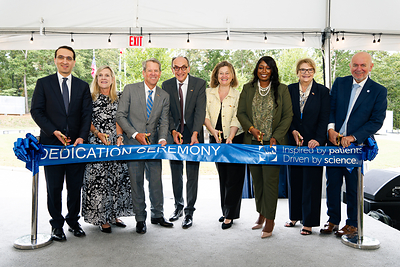
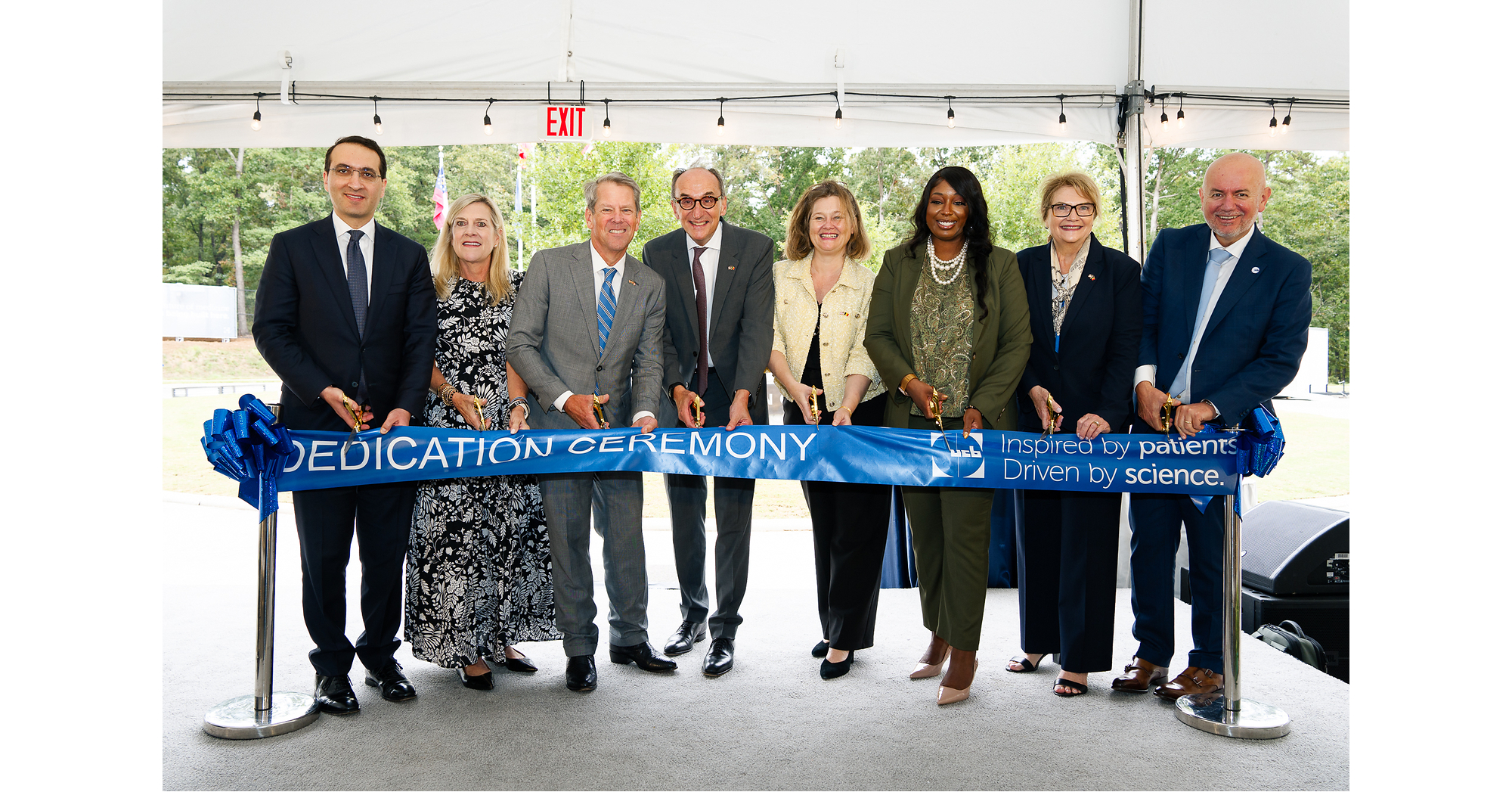
ATLANTA, Oct. 9, 2026 /PRNewswire/ — UCB today marked the dedication of the future site of its new U.S. biologics manufacturing campus at Rowen in Gwinnett County, Georgia. The ceremony brought together Georgia, U.S. Department of Commerce, and Gwinnett County officials, the Belgium Consulate, UCB leaders, community partners, and industry stakeholders to celebrate the future site of one of the largest life sciences manufacturing investments in Georgia history.

UCB Dedicates Site for New U.S. Biologics Manufacturing Campus on October 9, 2026, in Gwinnett County, Georgia.

UCB Dedicates Site for New U.S. Biologics Manufacturing Campus on October 9, 2026, in Gwinnett County, Georgia.

UCB Dedicates Site for New U.S. Biologics Manufacturing Campus on October 9, 2026, in Gwinnett County, Georgia.

UCB Dedicates Site for New U.S. Biologics Manufacturing Campus on October 9, 2026, in Gwinnett County, Georgia.

UCB Dedicates Site for New U.S. Biologics Manufacturing Campus on October 9, 2026, in Gwinnett County, Georgia.

UCB Dedicates Site for New U.S. Biologics Manufacturing Campus on October 9, 2026, in Gwinnett County, Georgia.

Emmanuel Janssen Circle Unveiled
As part of the ceremony, distinguished guests participated in the unveiling of Emmanuel Janssen Circle, a commemorative stonework installation just completed within the roundabout to the entrance of the future campus. Emmanuel Janssen Circle is named for the founder of UCB and his family, who started the company nearly a century ago.

The ceremony included a ribbon-cutting, marking the beginning of the next phase of development for the future manufacturing campus.

Emmanuel Janssen Circle honors the entrepreneurial legacy that continues to shape UCB’s mission and growth today.

Leaders Highlight Importance of U.S. Biomanufacturing
The site dedication featured remarks from Georgia Governor Brian Kemp, U.S. Department of Commerce Under Secretary Jeffrey Kessler, Gwinnett County Chairwoman Nicole Love Hendrickson, Consul General Katherine Raeymaekers of Belgium, and UCB leadership.

Jean-Christophe Tellier, Chief Executive Officer of UCB, said: “At UCB, our purpose is to create value for people living with severe diseases, and that purpose guides the science we pursue, where we invest, and the choices we make for the long term. Our manufacturing investment in the United States reflects our long-term commitment to patients, strengthening our ability to serve them while contributing to scientific innovation, highly skilled jobs, and economic growth in Georgia.”

Georgia Governor Brian Kemp said: “It is an honor to stand with UCB leadership and so many Georgians who made this campus a reality to mark this great milestone for our state. From visiting UCB’s headquarters in Belgium to welcoming their first U.S. manufacturing site, this partnership is already delivering great results for this community and supporting the health of people across our state and nation.”

Under Secretary for the U.S. Department of Commerce for Industry and Security Jeffrey I. Kessler, said: “Today’s announcement is the latest example of how President Trump’s policies are making America – and Georgia – stronger, more prosperous, and more secure. The Department of Commerce is proud to support major new investments in domestic manufacturing, jobs, and innovation.”

Katherine Raeymaekers, Consul General of Belgium, said: “Today’s site dedication reflects the strength of the partnership between Belgium, the United States, and the State of Georgia – and our shared commitment to enduring progress, innovation, and opportunity. UCB’s new biomanufacturing campus builds on the entrepreneurial legacy of Baron Emmanuel Janssen, founder of UCB, while strengthening the transatlantic collaboration that drives economic growth, scientific innovation, and improving people’s lives.”

Nicole Love Hendrickson, Chairwoman of the Gwinnett County Board of Commissioners, said: “We are honored that UCB has chosen Gwinnett County as the home for this transformational investment. This new biologics manufacturing campus strengthens our position as a hub for innovation, creates meaningful opportunities for our residents, and supports the continued growth of a thriving life sciences ecosystem. We look forward to partnering with UCB as they build a campus that will have a lasting impact on our community and our economy.”

Why UCB Selected Georgia
UCB selected Georgia for its new biologics manufacturing campus because of the state’s strong life sciences ecosystem, highly skilled workforce, robust infrastructure, and access to leading academic and research institutions.

Home to UCB’s U.S. headquarters in metro Atlanta for more than 30 years, UCB already employs more than 400 people in Georgia and was named a winner of the 2026 Metro Atlanta Top Workplaces Award by Axios.

As UCB expands its presence in Georgia, this new manufacturing campus reinforces the company’s long-term investment in the state, its growing life sciences offering, and its overall culture that attracts, develops, and retains the talent needed to support innovation and a reliable medicine supply for U.S. patients. UCB is actively seeking partnerships with local universities, schools, and workforce development organizations to help cultivate the next generation of biomanufacturing talent in Georgia.

UCB’s planned biologics manufacturing campus is part of an approximately $2 billion investment expected to generate approximately $5 billion in economic impact, create approximately 330 highly skilled permanent jobs, and support more than 1,000 construction jobs.

A New U.S. Biologics Manufacturing Campus
The approximately 460,000-square-foot campus will occupy 79 acres within the Rowen innovation district in Gwinnett County, Georgia.

Designed with a digital-first approach, the facility will leverage artificial intelligence, automation, and advanced manufacturing technologies to produce complex biologic medicines for patients while strengthening UCB’s supply chain resilience.

The future campus is expected to support commercial production of recently approved and future biologic medicines, further integrating UCB’s U.S. patient value chain from research and development through manufacturing and delivery.

Economic development partners with the Metro Atlanta Chamber, Georgia Quick Start, Gwinnett County Government, and Georgia Power Company, worked with Partnership Gwinnett and the Georgia Department of Economic Development on this project.

UCB’s Presence in the United States
UCB has maintained a presence in the United States for nearly a century and established its U.S. headquarters in Atlanta, Georgia, in 1993.

Today, UCB employs more than 2,000 people across the United States in research, development, manufacturing, commercial operations, and corporate functions.

The new Georgia manufacturing campus will expand UCB’s existing U.S. footprint and strengthen the company’s ability to manufacture biologic medicines in the United States.

About UCB 
UCB, Brussels, Belgium (www.ucb.com) is a global biopharmaceutical company focused on the discovery and development of innovative medicines and solutions to transform the lives of people living with severe diseases of the immune system or of the central nervous system. With more than 9 000 people in approximately 40 countries, the company generated revenue of € 7.7 billion in 2025. UCB is listed on Euronext Brussels (symbol: UCB).

For further information, contact UCB:

U.S. Communications
Erica Puntel
T 404.938.5359
Email [email protected] 

Jeanna Buck-Simpson
T 252.945.6566
Email [email protected] 

Forward looking statements 

This document contains forward-looking statements, including, without limitation, statements containing the words “potential”, “believes”, “anticipates”, “expects”, “intends”, “plans”, “seeks”, “estimates”, “may”, “will”, “continue” and similar expressions. These forward-looking statements are based on current plans, estimates and beliefs of management. All statements, other than statements of historical facts, are statements that could be deemed forward-looking statements, including estimates of revenues, operating margins, capital expenditures, cash, other financial information, expected legal, arbitration, political, regulatory or clinical results or practices and other such estimates and results. By their nature, such forward-looking statements are not guaranteeing future performance and are subject to known and unknown risks, uncertainties, and assumptions which might cause the actual results, financial condition, performance or achievements of UCB, or industry results, to be materially different from any future results, performance, or achievements expressed or implied by such forward-looking statements contained in this document.

Important factors that could result in such differences include but are not limited to: global spread and impacts of wars, pandemics and terrorism, the general geopolitical environment, climate change, changes in general economic, business and competitive conditions, the inability to obtain necessary regulatory approvals or to obtain them on acceptable terms or within expected timing, costs associated with research and development, changes in the prospects for products in the pipeline or under development by UCB, effects of future judicial decisions or governmental investigations, safety, quality, data integrity or manufacturing issues, supply chain disruption and business continuity risks; potential or actual data security and data privacy breaches, or disruptions of UCB’s information technology systems, product liability claims, challenges to patent protection for products or product candidates, competition from other products including biosimilars or disruptive technologies/business models, changes in laws or regulations, exchange rate fluctuations, changes or uncertainties in laws and/or rules pertaining to tax and duties or the administration of such laws and/or rules, and hiring, retention and compliance of employees. There is no guarantee that new product candidates will be discovered or identified in the pipeline, or that new indications for existing products will be developed and approved. Movement from concept to commercial product is uncertain; preclinical results do not guarantee safety and efficacy of product candidates in humans. So far, the complexity of the human body cannot be reproduced in computer models, cell culture systems or animal models. The length of the timing to complete clinical trials and to get regulatory approval for product marketing has varied in the past and UCB expects similar unpredictability going forward. Products or potential products which are the subject of partnerships, joint ventures or licensing collaborations may be subject to disputes between the partners or may prove to be not as safe, effective or commercially successful as UCB may have believed at the start of such partnership. UCB’s efforts to acquire other products or companies and to integrate the operations of such acquired companies may not be as successful as UCB may have believed at the moment of acquisition. Also, UCB or others could discover safety, side effects or manufacturing problems with its products and/or devices after they are marketed. The discovery of significant problems with a product similar to one of UCB’s products that implicate an entire class of products may have a material adverse effect on sales of the entire class of affected products. Moreover, sales may be impacted by international and domestic trends toward managed care and health care cost containment, including pricing pressure, political and public scrutiny, customer and prescriber patterns or practices, and the reimbursement policies imposed by third-party payers as well as legislation affecting biopharmaceutical pricing and reimbursement activities and outcomes. Finally, a breakdown, cyberattack or information security breach could compromise the confidentiality, integrity and availability of UCB’s data and systems.

Given these uncertainties, the public is cautioned not to place any undue reliance on such forward-looking statements. These forward-looking statements are made only as of the date of this document, and do not reflect any potential impacts from the evolving event or risk as mentioned above as well as any other adversity, unless indicated otherwise. The company continues to follow the development diligently to assess the financial significance of these events, as the case may be, to UCB.

UCB expressly disclaims any obligation to update any forward-looking statements in this document, either to confirm the actual results or to report or reflect any change in its forward-looking statements with regard thereto or any change in events, conditions or circumstances on which any such statement is based, unless such statement is required pursuant to applicable laws and regulations.

SOURCE UCB

Free Training

Source link

UCB Dedicates Site for New U.S. Biologics Manufacturing Campus i


  • Site dedication signals continued momentum for UCB’s first U.S. manufacturing campus
  • Emphasizes long-term commitment to advancing innovation, patient access, and workforce development in Gwinnett County and surrounding areas
  • New manufacturing site strengthens Georgia’s position as a Life Sciences Leader

ATLANTA, Oct. 9, 2026 /PRNewswire/ — UCB today marked the dedication of the future site of its new U.S. biologics manufacturing campus at Rowen in Gwinnett County, Georgia. The ceremony brought together Georgia, U.S. Department of Commerce, and Gwinnett County officials, the Belgium Consulate, UCB leaders, community partners, and industry stakeholders to celebrate the future site of one of the largest life sciences manufacturing investments in Georgia history.

UCB-Dedicates-Site-for-New-Campus.jpg?id=OA2998413

Emmanuel Janssen Circle Unveiled
As part of the ceremony, distinguished guests participated in the unveiling of Emmanuel Janssen Circle, a commemorative stonework installation just completed within the roundabout to the entrance of the future campus. Emmanuel Janssen Circle is named for the founder of UCB and his family, who started the company nearly a century ago.

The ceremony included a ribbon-cutting, marking the beginning of the next phase of development for the future manufacturing campus.

Emmanuel Janssen Circle honors the entrepreneurial legacy that continues to shape UCB’s mission and growth today.

Leaders Highlight Importance of U.S. Biomanufacturing
The site dedication featured remarks from Georgia Governor Brian Kemp, U.S. Department of Commerce Under Secretary Jeffrey Kessler, Gwinnett County Chairwoman Nicole Love Hendrickson, Consul General Katherine Raeymaekers of Belgium, and UCB leadership.

Jean-Christophe Tellier, Chief Executive Officer of UCB, said: “At UCB, our purpose is to create value for people living with severe diseases, and that purpose guides the science we pursue, where we invest, and the choices we make for the long term. Our manufacturing investment in the United States reflects our long-term commitment to patients, strengthening our ability to serve them while contributing to scientific innovation, highly skilled jobs, and economic growth in Georgia.”

Georgia Governor Brian Kemp said: “It is an honor to stand with UCB leadership and so many Georgians who made this campus a reality to mark this great milestone for our state. From visiting UCB’s headquarters in Belgium to welcoming their first U.S. manufacturing site, this partnership is already delivering great results for this community and supporting the health of people across our state and nation.”

Under Secretary for the U.S. Department of Commerce for Industry and Security Jeffrey I. Kessler, said: “Today’s announcement is the latest example of how President Trump’s policies are making America – and Georgia – stronger, more prosperous, and more secure. The Department of Commerce is proud to support major new investments in domestic manufacturing, jobs, and innovation.”

Katherine Raeymaekers, Consul General of Belgium, said: “Today’s site dedication reflects the strength of the partnership between Belgium, the United States, and the State of Georgia – and our shared commitment to enduring progress, innovation, and opportunity. UCB’s new biomanufacturing campus builds on the entrepreneurial legacy of Baron Emmanuel Janssen, founder of UCB, while strengthening the transatlantic collaboration that drives economic growth, scientific innovation, and improving people’s lives.”

Nicole Love Hendrickson, Chairwoman of the Gwinnett County Board of Commissioners, said: “We are honored that UCB has chosen Gwinnett County as the home for this transformational investment. This new biologics manufacturing campus strengthens our position as a hub for innovation, creates meaningful opportunities for our residents, and supports the continued growth of a thriving life sciences ecosystem. We look forward to partnering with UCB as they build a campus that will have a lasting impact on our community and our economy.”

Why UCB Selected Georgia
UCB selected Georgia for its new biologics manufacturing campus because of the state’s strong life sciences ecosystem, highly skilled workforce, robust infrastructure, and access to leading academic and research institutions.

Home to UCB’s U.S. headquarters in metro Atlanta for more than 30 years, UCB already employs more than 400 people in Georgia and was named a winner of the 2026 Metro Atlanta Top Workplaces Award by Axios.

As UCB expands its presence in Georgia, this new manufacturing campus reinforces the company’s long-term investment in the state, its growing life sciences offering, and its overall culture that attracts, develops, and retains the talent needed to support innovation and a reliable medicine supply for U.S. patients. UCB is actively seeking partnerships with local universities, schools, and workforce development organizations to help cultivate the next generation of biomanufacturing talent in Georgia.

UCB’s planned biologics manufacturing campus is part of an approximately $2 billion investment expected to generate approximately $5 billion in economic impact, create approximately 330 highly skilled permanent jobs, and support more than 1,000 construction jobs.

A New U.S. Biologics Manufacturing Campus
The approximately 460,000-square-foot campus will occupy 79 acres within the Rowen innovation district in Gwinnett County, Georgia.

Designed with a digital-first approach, the facility will leverage artificial intelligence, automation, and advanced manufacturing technologies to produce complex biologic medicines for patients while strengthening UCB’s supply chain resilience.

The future campus is expected to support commercial production of recently approved and future biologic medicines, further integrating UCB’s U.S. patient value chain from research and development through manufacturing and delivery.

Economic development partners with the Metro Atlanta Chamber, Georgia Quick Start, Gwinnett County Government, and Georgia Power Company, worked with Partnership Gwinnett and the Georgia Department of Economic Development on this project.

UCB’s Presence in the United States
UCB has maintained a presence in the United States for nearly a century and established its U.S. headquarters in Atlanta, Georgia, in 1993.

Today, UCB employs more than 2,000 people across the United States in research, development, manufacturing, commercial operations, and corporate functions.

The new Georgia manufacturing campus will expand UCB’s existing U.S. footprint and strengthen the company’s ability to manufacture biologic medicines in the United States.

About UCB
UCB, Brussels, Belgium (www.ucb.com) is a global biopharmaceutical company focused on the discovery and development of innovative medicines and solutions to transform the lives of people living with severe diseases of the immune system or of the central nervous system. With more than 9 000 people in approximately 40 countries, the company generated revenue of € 7.7 billion in 2025. UCB is listed on Euronext Brussels (symbol: UCB).

For further information, contact UCB:

U.S. Communications
Erica Puntel
T 404.938.5359
Email [email protected]

Jeanna Buck-Simpson
T 252.945.6566
Email [email protected]

Forward looking statements

This document contains forward-looking statements, including, without limitation, statements containing the words “potential”, “believes”, “anticipates”, “expects”, “intends”, “plans”, “seeks”, “estimates”, “may”, “will”, “continue” and similar expressions. These forward-looking statements are based on current plans, estimates and beliefs of management. All statements, other than statements of historical facts, are statements that could be deemed forward-looking statements, including estimates of revenues, operating margins, capital expenditures, cash, other financial information, expected legal, arbitration, political, regulatory or clinical results or practices and other such estimates and results. By their nature, such forward-looking statements are not guaranteeing future performance and are subject to known and unknown risks, uncertainties, and assumptions which might cause the actual results, financial condition, performance or achievements of UCB, or industry results, to be materially different from any future results, performance, or achievements expressed or implied by such forward-looking statements contained in this document.

Important factors that could result in such differences include but are not limited to: global spread and impacts of wars, pandemics and terrorism, the general geopolitical environment, climate change, changes in general economic, business and competitive conditions, the inability to obtain necessary regulatory approvals or to obtain them on acceptable terms or within expected timing, costs associated with research and development, changes in the prospects for products in the pipeline or under development by UCB, effects of future judicial decisions or governmental investigations, safety, quality, data integrity or manufacturing issues, supply chain disruption and business continuity risks; potential or actual data security and data privacy breaches, or disruptions of UCB’s information technology systems, product liability claims, challenges to patent protection for products or product candidates, competition from other products including biosimilars or disruptive technologies/business models, changes in laws or regulations, exchange rate fluctuations, changes or uncertainties in laws and/or rules pertaining to tax and duties or the administration of such laws and/or rules, and hiring, retention and compliance of employees. There is no guarantee that new product candidates will be discovered or identified in the pipeline, or that new indications for existing products will be developed and approved. Movement from concept to commercial product is uncertain; preclinical results do not guarantee safety and efficacy of product candidates in humans. So far, the complexity of the human body cannot be reproduced in computer models, cell culture systems or animal models. The length of the timing to complete clinical trials and to get regulatory approval for product marketing has varied in the past and UCB expects similar unpredictability going forward. Products or potential products which are the subject of partnerships, joint ventures or licensing collaborations may be subject to disputes between the partners or may prove to be not as safe, effective or commercially successful as UCB may have believed at the start of such partnership. UCB’s efforts to acquire other products or companies and to integrate the operations of such acquired companies may not be as successful as UCB may have believed at the moment of acquisition. Also, UCB or others could discover safety, side effects or manufacturing problems with its products and/or devices after they are marketed. The discovery of significant problems with a product similar to one of UCB’s products that implicate an entire class of products may have a material adverse effect on sales of the entire class of affected products. Moreover, sales may be impacted by international and domestic trends toward managed care and health care cost containment, including pricing pressure, political and public scrutiny, customer and prescriber patterns or practices, and the reimbursement policies imposed by third-party payers as well as legislation affecting biopharmaceutical pricing and reimbursement activities and outcomes. Finally, a breakdown, cyberattack or information security breach could compromise the confidentiality, integrity and availability of UCB’s data and systems.

Given these uncertainties, the public is cautioned not to place any undue reliance on such forward-looking statements. These forward-looking statements are made only as of the date of this document, and do not reflect any potential impacts from the evolving event or risk as mentioned above as well as any other adversity, unless indicated otherwise. The company continues to follow the development diligently to assess the financial significance of these events, as the case may be, to UCB.

UCB expressly disclaims any obligation to update any forward-looking statements in this document, either to confirm the actual results or to report or reflect any change in its forward-looking statements with regard thereto or any change in events, conditions or circumstances on which any such statement is based, unless such statement is required pursuant to applicable laws and regulations.

favicon.png?sn=CL68153&sd=2026-10-09 View original content to download multimedia:https://www.prnewswire.com/news-releases/ucb-dedicates-site-for-new-us-biologics-manufacturing-campus-in-georgia-302903841.html

SOURCE UCB

Free Training

Source link

Samsung Biologics to acquire PolyPeptide for $1.8 bil.


The headquarters of Samsung Biologics in Songdo, Incheon / Courtesy of Samsung Biologics

The headquarters of Samsung Biologics in Songdo, Incheon / Courtesy of Samsung Biologics

Samsung Biologics said Monday it will acquire Swiss peptide drug manufacturer PolyPeptide Group through an all-cash public tender offer valued at approximately 1.46 billion Swiss francs ($1.8 billion), marking its largest overseas acquisition as it expands beyond antibody manufacturing into peptide therapeutics.

Samsung Biologics CEO John Rim

Samsung Biologics CEO John Rim

The Korean contract development and manufacturing organization (CDMO) will offer 44.31 Swiss francs per share for all outstanding shares of PolyPeptide, representing a 40 percent premium to the company’s unaffected closing price before acquisition rumors emerged in April.

The transaction, expected to close toward the end of 2026, is subject to shareholder approval, regulatory clearances and other customary conditions. Samsung Biologics must secure at least a two-thirds acceptance rate from shareholders. PolyPeptide’s largest shareholder, which owns about 55.7 percent of the company, has already agreed to tender its stake.

PolyPeptide’s board of directors unanimously recommended that shareholders accept the offer, saying the acquisition provides an attractive outcome for investors while positioning the company for its next stage of growth.

The acquisition significantly broadens Samsung Biologics’ manufacturing portfolio by adding peptide-based active pharmaceutical ingredients, a rapidly expanding market fueled by soaring demand for obesity and diabetes treatments, including GLP-1 therapies.

The company said combining its large-scale biologics manufacturing capabilities with PolyPeptide’s expertise will create an end-to-end multimodality CDMO platform spanning antibodies, antibody-drug conjugates (ADCs) and peptide therapeutics.

Founded more than 70 years ago, PolyPeptide is one of the world’s leading peptide CDMOs. The company has produced more than 1,000 therapeutic peptides and operates research, development and commercial manufacturing facilities in Sweden, Belgium, France, the United States and India, with its headquarters in Switzerland.

Samsung Biologics said the acquisition will also strengthen its global manufacturing footprint and enhance its ability to serve pharmaceutical customers across major markets.

“The acquisition reinforces our long-term growth strategy by broadening our service portfolio into peptides, including GLP-1 therapies, while further expanding our geographic reach across the United States, Europe and India,” Samsung Biologics CEO John Rim said.

He added that PolyPeptide’s technology, experienced workforce and global operations would complement Samsung Biologics’ existing capabilities and strengthen its position as a global multimodality CDMO.

PolyPeptide Chairman Peter Wilden described the deal as a transformational opportunity that would accelerate the Swiss company’s long-term growth while delivering immediate value to shareholders.

Samsung Biologics plans to launch the formal tender offer by the end of August, following procedures required under Swiss takeover law. After completing the acquisition, the company intends to buy out remaining minority shareholders and delist PolyPeptide from the SIX Swiss Exchange, making it a wholly owned subsidiary.

J.P. Morgan is serving as Samsung Biologics’ exclusive financial adviser on the transaction.

Free Training

Source link

Samsung Biologics establishes first U.S. manufacturing base with acquisition of GSK site – Chemical Engineering


April 3, 2026 | By Mary Bailey

Samsung Biologics, a leading contract development and manufacturing organization (CDMO), announced the completion of its acquisition of a manufacturing facility in Rockville, Maryland from GSK, establishing the company’s first manufacturing presence in the United States.

The Rockville site comprises two cGMP manufacturing plants with a combined 60,000-liter drug substance capacity, supporting both clinical and commercial biologics production across multiple manufacturing scales. With this addition, Samsung Biologics’ total global manufacturing capacity increases to 845,000 liters.

Samsung Biologics will continue supplying the products previously manufactured at the site to GSK under the terms of the agreement, and the site will transition to serve additional contract manufacturing needs. Samsung Biologics also plans further investments to expand the site’s capacity and upgrade technologies, reinforcing its long-term commitment to advancing a more resilient global supply chain and improving patient access to critical medicines.

“This represents a meaningful step in expanding our U.S. manufacturing footprint. The addition of the Rockville site strengthens our ability to operate a geographically diversified manufacturing network, and we are thrilled to officially welcome more than 500 colleagues at the site to the Samsung Biologics family,” said John Rim, President and CEO of Samsung Biologics. “The Rockville team brings deep expertise and strong operational experience that will further strengthen the site as part of our global manufacturing network. As a CDMO, our mission is to help our partners bring important therapies to patients worldwide, and this site will play a pivotal role in that mission while ensuring continuity and upholding the high standards our clients expect.”

The completion follows the previously announced agreement to acquire the facility on December 22, 2025.

Free Training

Source link

Samsung Biologics secures first manufacturing base in U.S.


(Samsung Biologics) 사진 확대 (Samsung Biologics)

Samsung Biologics Co. has expanded its global production network by securing its first manufacturing base in the United States.

Samsung Biologics announced on Wednesday that it completed the acquisition of a biopharmaceutical production facility in Rockville, Maryland, previously owned by GSK Plc, as of Tuesday, local time. The deal was carried out through its subsidiary, Samsung Biologics America.

The Rockville site is a drug substance (DS) manufacturing plant with total capacity of 60,000 liters, comprising two production buildings. It is equipped with infrastructure capable of producing antibody therapeutics at various scales, from clinical-stage to commercial production.

With this acquisition, Samsung Biologics has expanded its total production capacity to 845,000 liters from 785,000 liters. The company said that it has now established a dual production system connecting Songdo, Korea, and Rockville, enabling more stable and flexible supply to global clients.

In particular, securing a production base in North America is expected to strengthen responsiveness to local customers and further enhance competitiveness in winning global contracts.

Samsung Biologics has retained all approximately 500 employees at the Rockville facility, ensuring operational continuity. It plans to pursue stable supply of existing products while expanding new orders through integrated operations between the two production bases.

The company said it will also review further investment, including capacity expansion and technology upgrades at the Rockville facility, based on mid- to long-term demand and utilization.

“This represents a meaningful step in expanding our U.S. manufacturing footprint,” said John Rim, president and chief executive officer of Samsung Biologics. “The Rockville team brings deep expertise and strong operational experience that will further strengthen the site as part of our global manufacturing network.”

By Wang Hae-na and Chang Iou-chung
[ⓒ Pulse by Maeil Business News Korea & mk.co.kr, All rights reserved]

Free Training

Source link

Samsung Biologics completes acquisition of US manufacturing facility


Officials cut a ceremonial ribbon during an event marking Samsung Biologics’ acquisition of a biopharmaceutical manufacturing plant in Rockville, Md., Tuesday (local time). From front row fifth from left, are Korean Ambassador to the United States Kang Kyung-wha, Samsung Biologics CEO John Rim, Maryland Gov. Wes Moore and Congresswoman April Delaney. Courtesy of Samsung Biologics

Officials cut a ceremonial ribbon during an event marking Samsung Biologics’ acquisition of a biopharmaceutical manufacturing plant in Rockville, Md., Tuesday (local time). From front row fifth from left, are Korean Ambassador to the United States Kang Kyung-wha, Samsung Biologics CEO John Rim, Maryland Gov. Wes Moore and Congresswoman April Delaney. Courtesy of Samsung Biologics

Samsung Biologics has closed the deal to acquire GSK’s facility in Rockville, Md., establishing the biopharmaceutical firm’s first manufacturing base in the United States, the company said Wednesday.

In its regulatory filing, the Korean company said its wholly owned subsidiary Samsung Biologics America has completed the acquisition of Human Genome Sciences, which owns a drug substance manufacturing facility in the U.S. from GSK for a total of $353.1 million.

Of the amount, $280 million is for the acquisition of the facility and equity, while the remaining $73.1 million was paid for the transfer of inventories and raw materials held by Human Genome Sciences.

The deal’s closure came three months after Samsung Biologics announced the acquisition on Dec. 22 last year, as part of its efforts to mitigate risks stemming from the Trump administration’s tariffs on biopharmaceuticals, as well as to expand its contract drug manufacturing capacity beyond Korea.

Samsung Biologics' biopharmaceutical manufacturing site in Rockville, Md. / Courtesy of Samsung Biologics

Samsung Biologics’ biopharmaceutical manufacturing site in Rockville, Md. / Courtesy of Samsung Biologics

The Rockville site is comprised of two manufacturing plants with a combined 60,000-liter drug substance capacity, supporting both clinical and commercial biologics production across multiple manufacturing scales.

The acquisition increased Samsung Biologics’ total global manufacturing capacity to 845,000 liters per year from 785,000 liters.

Despite being one of the world’s largest contract drug manufacturers, Samsung Biologics had been exposed to supply chain risks, as all of its manufacturing facilities were located in Korea prior to the acquisition.

With the acquisition, Samsung Biologics will be able to provide clients with more flexible multi-site manufacturing options in both the U.S. and Korea, strengthening collaboration with North American customers and enhancing its ability to respond to regional changes in the supply environment.

Samsung Biologics said it will continue supplying the products previously manufactured at the site to GSK under the terms of the agreement, as well as serving additional contract manufacturing needs. The company plans further investments to expand the site’s capacity and upgrade technologies. It will retain more than 500 employees at the site to ensure operational continuity and stability.

Samsung Biologics CEO John Rim speaks during a ceremony marking the company's acquisition of a biopharmaceutical manufacturing plant in Rockville, Md., Tuesday (local time). Courtesy of Samsung Biologics

Samsung Biologics CEO John Rim speaks during a ceremony marking the company’s acquisition of a biopharmaceutical manufacturing plant in Rockville, Md., Tuesday (local time). Courtesy of Samsung Biologics

“This represents a meaningful step in expanding our U.S. manufacturing footprint,” Samsung Biologics CEO John Rim said.

“The addition of the Rockville site strengthens our ability to operate a geographically diversified manufacturing network. … The Rockville team brings deep expertise and strong operational experience that will further strengthen the site as part of our global manufacturing network.”

Free Training

Source link

Samsung Biologics looks to scale up U.S. manufacturing in Maryland


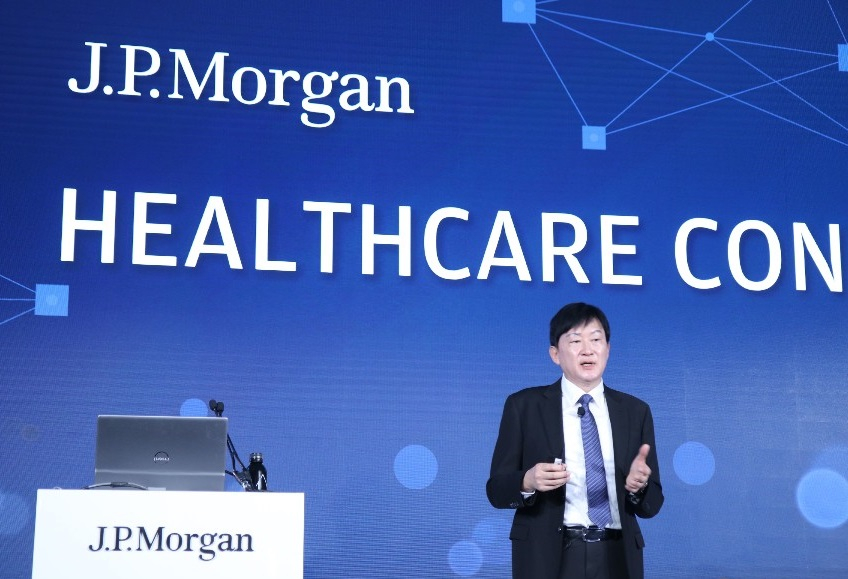
Samsung Biologics CEO John Rim delivers his keynote speech outlining the company's future roadmap at the 44th J.P. Morgan Health Care Conference held at Westin St. Francis Hotel in San Francisco on Jan. 13. [SAMSUNG BIOLOGICS]

Samsung Biologics CEO John Rim delivers his keynote speech outlining the company’s future roadmap at the 44th J.P. Morgan Health Care Conference held at Westin St. Francis Hotel in San Francisco on Jan. 13. [SAMSUNG BIOLOGICS]

 
SAN FRANCISCO — Samsung Biologics is seeking to strengthen its U.S. footprint by expanding capacity at its recently acquired manufacturing facility in Rockville, Maryland, as it seeks to meet growing customer demand for U.S.-based production amid shifting trade policies.
 
“The GSK facility acquisition is anticipated to close in March this year, giving us regional presentation in the United States,” said CEO John Rim at the 44th J.P. Morgan Health Care Conference on Tuesday. “It will have flexibility to take on additional products beyond the GSK product line.”
 
Samsung Biologics announced in December 2025 that it would acquire the Rockville facility from GlaxoSmithKline for $280 million. The plant has an annual production capacity of 60,000 liters (15,850 gallons).
 
 
“It [the U.S. factory] has always been a higher cost area and everybody knows that, but for us, the U.S. was critical and the reason for that is we’ve lost customers because we didn’t have a U.S. presence,” Rim said, adding that clients wanted supply chain resiliency.
 
While the Rockville facility is modest in scale compared to Samsung Biologics’ five plants in Songdo, Korea — which together have a combined capacity of 785,000 liters — the company said the U.S. site can be expanded by an additional 20,000 to 40,000 liters.
 
“Everybody understands that there’s some pricing flexibility, so we’ll have to work through,” Rim said. “But we do see that having the Rockfield facility will open up new venues of growth for us.”
 
Initially, the plant will continue manufacturing existing GSK products, including Benlysta, a monoclonal antibody treatment for lupus. Over time, the facility is expected to be upgraded to support multiple modalities, particularly antibody production.
 
Samsung Biologics CEO John Rim delivers his keynote speech outlining the company's future roadmap at the 44th J.P. Morgan Health Care Conference held at Westin St. Francis Hotel in San Francisco on Jan. 13. [SAMSUNG BIOLOGICS]

Samsung Biologics CEO John Rim delivers his keynote speech outlining the company’s future roadmap at the 44th J.P. Morgan Health Care Conference held at Westin St. Francis Hotel in San Francisco on Jan. 13. [SAMSUNG BIOLOGICS]

 
“Whether antibody drug conjugate [ADC] capabilities are added in the future will depend on demand,” Rim added at a separate press conference held with the Korean press on Monday.
 
With the facility, the Korean company will have more than 500 employees working at the site, and plans to recruit more U.S talent in the future.
 
The company’s main production site, however, remains rooted in its Songdo campus as U.S. tariffs on biopharmaceutical imports have largely dissolved. While tariffs were previously discussed at levels as high as 250 percent, subsequent bilateral negotiations have capped potential tariffs at 15 percent, significantly reducing trade-related risk.
 
In parallel, Samsung Biologics is continuing to expand domestically. Construction of a sixth plant is expected to begin between 2026 and 2027, and the company has secured land for a third phase of its Songdo manufacturing campus. It plans to invest approximately 7 trillion won ($4.7 billion) through 2034 to build additional production facilities.
 
Looking ahead, Rim said the company’s investment strategy, including mergers and acquisitions, will remain focused on antibody manufacturing.
 
 
The global biopharmaceutical market is projected to grow at a compound annual growth rate of 10 percent, from $565 billion in 2025 to $921 billion in 2030, according to market researcher Evaluate Pharma, driven in particular by monoclonal antibodies, multispecific antibodies, ADCs and fusion proteins.
 
“The antibody market is so large that even single-digit growth translates into meaningful demand,” Rim said. “Other segments may grow faster in percentage terms, but their overall impact is limited by smaller market size.”
 
Samsung Biologics is also closely monitoring developments in GLP-1 therapies — particularly the shift toward oral formulations — as well as opportunities in peptide manufacturing.
 
The company has rebranded its contract manufacturing offering under the name ExcellenS, a move that reflects its emphasis on tailored production and operational efficiency, based on standardized and scalable manufacturing processes.
 
Samsung Biologics is scheduled to report its fourth-quarter and full-year 2025 earnings on Jan. 21. The company recorded a record annual order intake of 6.8 trillion won in 2025, with cumulative orders surpassing $21 billion.
 

BY LEE JAE-LIM [[email protected]]

Free Training

Source link

Samsung Biologics to establish first U.S. manufacturing base in Maryland


ROCKVILLE, MD—In a major win for Maryland’s life sciences sector, Governor Wes Moore announced this week that South Korea-based Samsung Biologics will open its first United States manufacturing facility in Rockville. The move follows a strategic international trade mission led by the Governor earlier this year to strengthen economic ties with East Asian tech leaders.

Samsung Biologics, the world’s largest contract drug manufacturer, has reached an agreement to acquire a manufacturing campus in Rockville from GSK for $280 million. The facility will serve as a cornerstone for the company’s expansion into the American market, providing a localized hub for the production of critical biologic medicines.

Strengthening the Global Supply Chain

The acquisition secures a site that currently houses two high-standard manufacturing plants with a combined capacity of 60,000 liters. Samsung Biologics plans to not only maintain the current production of existing medicines but also invest in significant technology upgrades and capacity expansions.

By establishing a footprint in Maryland, the company aims to create a more resilient supply chain for life-saving therapeutics, offering clinical and commercial production capabilities on U.S. soil.

Economic Impact and Job Retention

A primary component of the agreement is the preservation of Maryland’s specialized workforce. Samsung Biologics has committed to:

  • Retaining more than 500 existing jobs at the Rockville site.
  • Creating additional high-skilled positions as production capacity grows.
  • Generating new opportunities for local Maryland suppliers.

Governor Moore noted that the deal is a testament to the state’s highly skilled workforce and its status as a premier global bio-cluster. The announcement builds on a record year for Maryland’s biopharmaceutical industry, which recently saw a $2 billion investment from AstraZeneca and the arrival of several other international firms.

Strategic Location in the I-270 Tech Corridor

Montgomery County officials emphasized that Rockville’s proximity to federal institutions like the FDA and the NIH makes it an ideal location for global companies navigating complex regulatory environments. County Executive Marc Elrich described the investment as a robust endorsement of the local ecosystem, which relies on a combination of talent, diversity, and public-private partnerships.

The transition is expected to be finalized following the formal close of the acquisition, with Samsung Biologics integrating the Rockville campus into its global network that already spans five major plants in South Korea.

Please follow and like us:

fb-share-icon
Tweet


Chris Montcalmo - Baltimore Acoustic Musician


Free Training

Source link