
How A Laramie Startup Is Bringing Manufacturers Back To Wyoming And The U.S.


LARAMIE — For decades, American companies chased cheap overseas labor, hollowing out domestic manufacturing in the process.

Today, a massive wave of “reshoring” has companies aiming to return their operations to U.S. soil. 

According to the nonprofit Reshoring Initiative, announcements of reshoring and foreign direct investment projects are projected to account for roughly 309,000 manufacturing jobs in 2026 as corporate leaders prioritize supply-chain resilience.

But wanting to return to the United States and actually pulling it off are two different things. 

In a separate 2026 survey, the Reshoring Initiative found that 57% of original equipment manufacturers identified policy uncertainty as their primary challenge. Other hurdles include import-price competition and shortages of skilled workers.

Put simply, they want to come home, but connecting all the dots is a much bigger job than they can handle.

Wyoming is famous for exporting coal, oil, and trona, but its newest high-value export might just be the data that can solve this national bottleneck. 

Christian Bitzas, former CEO and co-founder of Uplink Robotics, a Laramie startup that manufactures robotic inspection devices, has created a cutting-edge supply chain intelligence platform that’s already helped some companies navigate reshoring problems.

Christian Bitzas has created a domestic supply chain platform thats helping companies return to America.Christian Bitzas has created a domestic supply chain platform thats helping companies return to America. (Courtesy Photo)

Cutting Through SEO Static

Bitzas told Cowboy State Daily he started this company because he was all too familiar with the problems from his own experience navigating domestic supply chains for Uplink.

“There’s a huge issue out there of not knowing who does what in your region,” Bitzas said. “So it’s not just Wyoming, it’s the entire U.S. And with the new administration, with their whole effort of reshoring manufacturing, it’s difficult, because you really don’t know who’s here and what they do.

“And all the sources out there are all either stale, outdated or incomplete.”

Fragmented data cuts across many different sources, Bitzas added. And traditional Google and ChatGPT searches won’t cut through all the static.

“I like to say it’s gamed because of something called SEO,” Bitzas said. “So only certain companies will show at the top.”

SEO is search engine optimization. Some companies are exceptional at it, but that doesn’t mean companies who aren’t as good at it don’t have something valuable to offer. 

“So, EcosAtlas pulls from more than 100 different datasets all across the U.S.,” Bitzas said. “And it gets information from all these different datasets for individual businesses and from federal sources too.”

Bitzas’ platform helps surface companies that have successful government contracts or that have undergone OSHA inspections or have other indicators of quality, regardless of SEO.

The platform Bitzas has created is also more up-to-date than all the other databases and tools Bitzas was using when he was trying to solve supply-chain issues for Uplink.

“I have automatic algorithms and AI agents going out and getting up-to-date data as it updates and bringing it all in,” Bitzas said. “So, as a company starts up, you can see them start up and track as they add services, change locations, and things like that.”

Wyoming Litmus Test

Eric Carman-Murray, Manufacturing Works’ southwest Wyoming regional director, is among those who are helping pilot Bitzas’ platform in Wyoming. He has already used it to help a pesticide company look at returning some production to his corner of the state.

The company’s issue wasn’t with physical goods in its supply chain, but with services, demonstrating the flexibility of Bitzas’ invention.

“Wyoming has some specific insurance insolvency rules that they wanted to make sure they had addressed,” Carman-Murray said.  “In most cases, this is kind of outside our lane at Manufacturing Works because researching specific insurance companies probably isn’t going to get us very far.”

But with EcosAtlas, Carman-Murray was able to query the platform much the way one would any other artificial-intelligence agent and put together a workable list of other companies that had already solved such questions in Wyoming.

“That way they were able to get all their questions answered,” Carman-Murray said.

Pesticide manufacturers are one sector looking to do more manufacturing at home, he added. 

“But it’s got to make sense,” he said. “So by using this tool, we’re able to connect them with other people who are addressing some of these problems that might have cost them more money and time to get answered.”

Helps Existing Manufacturers

Carman-Murray isn’t just using the platform for companies that want to reshore, though. He’s also using it to help startups and established businesses that want to try something new.

“It’s a great connection tool to understand and help expose those whose capabilities would otherwise remain invisible,” he said. “And for those who are wanting to explore Wyoming as a potential new home, this gives them a great read on what already exists.”

Carman-Murray said he believes it’s going to be an invaluable tool for the state to continue building its manufacturing sectors.

“It’s not AI software, but there’s an AI component in it that’s really great,” he said. “It helps organize and maintain a huge amount of the fragmented business information out there, so a person can actually ask useful questions.”

That makes it user-friendly for those who might not be software programmers. 

“You can just ask it a flat-out question and it helps, at least me in my job, find real possibilities,” he said. “I still have to evaluate those possibilities and the companies and the different connections as to whether it actually makes sense. But it gives me the information in a more useful way very quickly.” 

Planning To Go National

Bitzas is not just developing the platform for the Cowboy State. He’s also looking at ways to take its reach national.

In addition to the pilot in Wyoming, Bitzas is also doing a paid pilot in Idaho with an organization similar to Manufacturing Works.

“And then I’m hoping to start commercializing it much further soon,” he said. “I’m also talking to a few other organizations throughout Wyoming for different purposes. Because while it can be used for supply chain specifically for manufacturers, there’s also a lot of economic-development opportunity for it to help businesses grow in Wyoming.”

The software can also show where there is leakage, meaning businesses and agencies are paying outside vendors for something that could be provided in-state.

“So all that money is going out of state when it could be staying here,” Bitzas said. 

Keeping that money home means more jobs for Wyoming, he added. 

“So we’re exploring all those different options,” he said.

One Way To Fight ‘Brain Drain’

Taking the platform national is Bitzas’ ultimate business goal, but the soul of the Powell native’s project remains deeply rooted in the state that raised him. 

Like many young Wyoming engineers, Bitzas is one of those who faced the state’s notorious “brain drain” firsthand after graduation. Despite a résumé that boasted internships with NASA and aerospace giant Raytheon, suitable local opportunities were virtually nonexistent.

“I couldn’t find another job in Wyoming,” he said. “So I accepted a full-time position in Tucson. But then I ended up starting my first company, which was the only opportunity for me at the time to stay here in Wyoming. So I resigned from my full-time offer in Tucson to kind of gamble and stay here.”

The gamble — Uplink Robotics — paid off, but the struggle to find local suppliers and business mentors stuck with him. It inspired him to build WyoHub, a free, interactive resource map for local entrepreneurs. 

He soon realized that keeping the resource map updated would be its Achilles’ heel, which gave him the idea for EcosAtlas.

Ultimately, Bitzas hopes his platform will be part of the solution for Wyoming graduates who don’t want to pack their bags for places like Arizona or Silicon Valley just to use their degrees.

By mapping the state’s hidden industrial capabilities, he’s building the infrastructure that can help keep Wyoming’s brightest minds — and their paychecks — at home.

“There’s a lot of opportunity,” Bitzas said. “I’m really excited for the future and how this can make an impact on Wyoming.”

Renée Jean can be reached at renee@cowboystatedaily.com.

Free Training

Source link

Texas records suggest OCI is bringing Elite Solar to Mission Solar Energy manufacturing site


Share

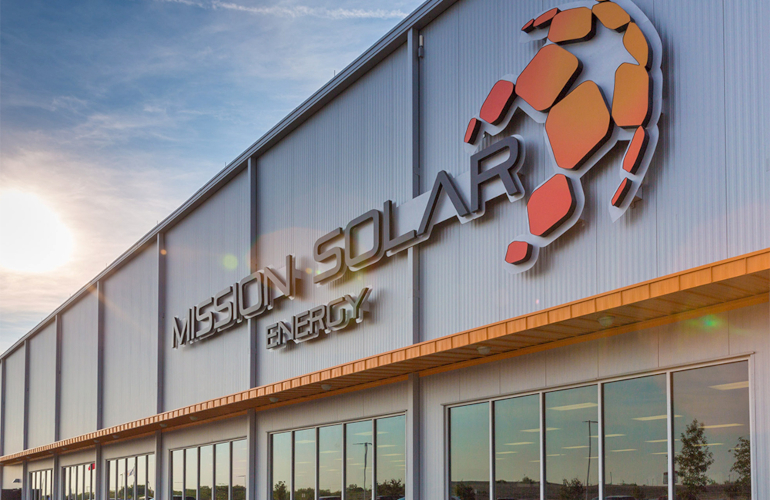
Mission Solar Energy’s solar panel manufacturing site in San Antonio, Texas, considered one of the longest-running panel assembly operations in the United States, may soon receive a boost from a global manufacturer.

Mission Solar has been making solar panels in the United States since 2014 and is owned by OCI Company, a South Korean chemical conglomerate that is involved with solar project development and polysilicon production. OCI started the assembler to supply panels to its own utility-scale projects in Texas. Mission Solar has since worked through solar panel distribution channels and mostly supplied the U.S. residential sector but was attempting plays into larger markets. The company is currently listed as having a 500-MW annual module assembly capacity in San Antonio.

Sam Martens, president of Mission Solar, submitted testimony in the ongoing antidumping/countervailing duty (AD/CVD) investigation into solar cell imports from India, Indonesia and Laos. In addition to reiterating to the U.S. International Trade Commission the challenges the U.S. solar industry faces from unfairly priced imports, Martens commented on Mission Solar’s Texas factory.

“Despite trying our best to be cost-competitive, our customers repeatedly told us that our prices are too high. Subject producers have even offered prices well below our cost of production. We simply cannot cut prices that far, and we often ended up losing the sale instead,” he said. “The continual loss of sales and revenue forced us to curtail our production, leaving us with significant excess capacity.

“Lower utilization has naturally resulted in reduced shifts and reduced employees,” Martens continued. “For example, we previously employed more than 200 workers. But, due to the market conditions caused by subject imports, we only had 70 employees by 2025, and have now temporarily ceased all manufacturing operations and related employment.

“If injurious subject imports remain unrestrained in the face of potentially shrinking demand, I am afraid that the domestic industry will once again face rising closures and mass layoffs,” he concluded.

There have been no layoff announcements by Mission Solar in Texas worker adjustment and retraining notification notices, so if employment has been temporarily ceased, it’s likely to have resulted in furloughs. When asked, Mission Solar representatives were unable to comment on the matter to Solar Power World.

It’s an unfortunate trend for long-established U.S. solar panel manufacturers. Silfab Solar furloughed workers in August at its South Carolina manufacturing site due to “temporary constraints affecting the availability of certain materials required for production.” Heliene laid off nearly 100 workers in August at its Minnesota solar panel assembly facility due to “unforeseen business circumstances.” Qcells furloughed 1,000 employees at its Georgia operations last year, but was able resume production four months later.

Mission Solar, which has long operated a small-output solar panel factory at a mixed-use community located on the former Brooks Air Force Base, announced in 2022 it would expand operations to reach 1 GW of annual module manufacturing capacity. The company built a 200,000-sq-ft addition on its property, but it was instead later described as a warehouse.

The warehouse was then assumed to become the starting point of Mission and OCI’s solar cell manufacturing operations, which the two companies announced in 2025. They would invest $265 million into the site to eventually reach 2 GW of annual cell manufacturing capacity. Martens confirmed in his ITC testimony that actual construction plans never progressed further.

That warehouse is back in play after a filing with the Texas Dept. of Licensing and Regulation in August. The filing says that $15 million will be spent to renovate the existing warehouse into the “Elite Solar factory [f]or manufacturing.” Construction is expected to begin in October and be completed in June 2027.

Elite Solar, a Singapore-headquartered panel brand (previously known as ET Solar), has affiliated panel manufacturing operations across the globe. The company’s flagship sites are now based in Egypt and Indonesia, but it has a longstanding relationship with OCI and is jointly developing a solar wafer production facility in Vietnam. This partnership could be extending to panel manufacturing in Texas.

Elite Solar provided no comment when asked by Solar Power World about the San Antonio factory plans.

Free Training

Source link

Hitachi Energy Bringing Its Largest Transformer Manufacturing Investment In U.S. To Mississippi » Office of Governor Tate Reeves


JACKSON, Miss. – Hitachi Energy, a wholly owned subsidiary of Hitachi, Ltd. (TSE: 6501, “Hitachi”) is expanding its operations at its transformer manufacturing factory in Copiah County, Mississippi. The project represents a corporate investment of $528 million, the company’s largest investment to date in the U.S., and it will create 654 jobs.

Hitachi Energy is a global leader in electrification that manufactures transformers and other equipment to help power the nation’s homes, businesses and communities. The company’s current facility in Copiah County produces small power transformers and employs 475 people.

The expansion will significantly increase Hitachi Energy’s production capacity and expand the range of small power transformers manufactured domestically, helping meet growing demand across North America while strengthening the domestic supply chain for critical energy infrastructure. The project includes the purchase of a 45-acre site at the Copiah County Industrial Park in Gallman, the construction of a new facility, new manufacturing equipment and infrastructure improvements.

The Mississippi Development Authority is providing assistance through the Mississippi Flexible Tax Incentive, or MFLEX, program. MDA also is assisting with site development and infrastructure improvements. Copiah County is assisting with the project, as well.

Construction is expected to begin later this year, with transformer production scheduled to start in 2029.

QUOTES

“This is truly a massive win for Mississippi and the United States. Hitachi Energy could’ve made its largest investment in America anywhere in the country – but the company chose Mississippi. Mississippi’s momentum is growing stronger every day, and it is our people who are building the future of American energy infrastructure. This $528 million investment will create over 650 new jobs while expanding the domestic manufacturing capacity our country needs to meet growing demand. Mississippi is proud to play a leading role in powering America’s future.” – Gov. Tate Reeves

“Reliable energy infrastructure has become one of the most important factors in economic growth, and that starts with the ability to manufacture the equipment that keeps the grid running. At $528 million, Hitachi Energy’s expansion is a massive addition to the investment taking place in Mississippi and puts Copiah County at the center of an industry that is increasingly critical to economic development.” – Mississippi Development Authority Executive Director Bill Cork

“Demand for electricity is growing rapidly, and the grid must grow with it. This investment in Mississippi, our largest ever in the U.S., reflects our long-term commitment to American manufacturing and building the grid infrastructure that will help power America’s growth for decades to come. We are pleased to work with the Trump administration and Governor Reeves to support investment in American manufacturing at a pivotal time for U.S. energy security.” – Andreas Schierenbeck, CEO, Hitachi Energy

“Copiah County Economic Development District is grateful for the decision of Hitachi Entergy to invest $528 million into expanding the domestic transformer production located in Copiah County. We thank the Mississippi Development Authority for support of this project, which will strengthen Hitachi Entergy’s operation, create new jobs and assist with continued economic growth of our community.” – Copiah County Economic Development District Executive Director Arthur L. Evans, Jr.

“This expansion is about more than adding 654 jobs. It will create new career pathways and generational opportunity across Copiah County and the surrounding region. Building on the strength of Hitachi Energy’s existing Mississippi workforce, AccelerateMS is committed to working with the company and our education and workforce partners to prepare Mississippians for these highly skilled roles and support their continued growth throughout their careers. This is the kind of investment that can transform a region while demonstrating that Mississippi has the talent to help lead the future of American manufacturing.” – AccelerateMS Executive Director Courtney Taylor

Free Training

Source link

Why Are Some Companies Bringing Manufacturing Back to China Despite US Tariffs?


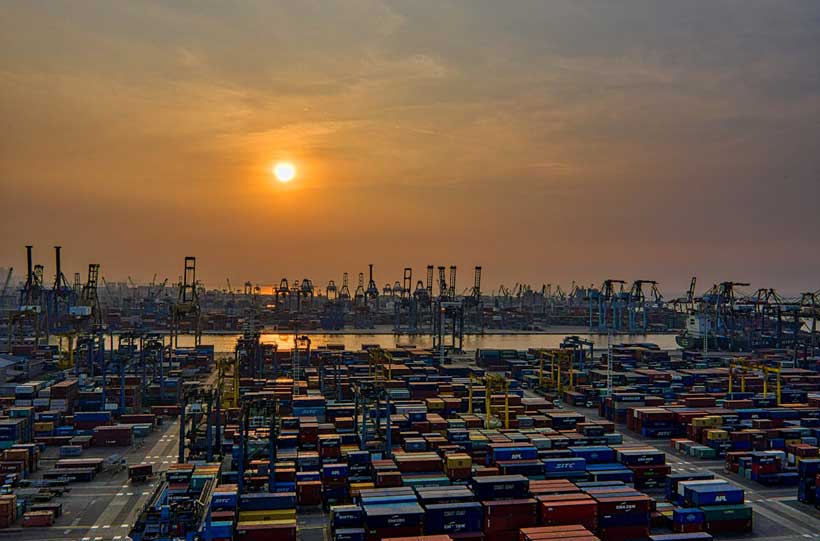
A year after U.S. tariffs pushed companies to diversify production away from China, some businesses are discovering that replacing the country’s manufacturing ecosystem is more difficult and expensive than expected.

The shift reflects the limits of the “China plus one” strategy, under which companies maintained production in China while developing additional manufacturing capacity in countries such as Vietnam, India and Indonesia to reduce exposure to U.S. tariffs.

While diversification continues, some companies are now restoring Chinese suppliers or bringing production back after facing higher costs, supply chain disruptions, shortages of skilled labour and unreliable infrastructure elsewhere.

What’s Happening

Heather Kuang, vice president of China based Dawang Metals, said the company lost business last year when a major U.S. customer moved some orders to India in response to higher tariffs.

Stay ahead of the geopolitical week.

MD Briefing delivers expert analysis across five global fronts — the Indo-Pacific, energy, geoeconomics, European security, and the Middle East — every Monday morning. Free.

The customer has since returned with new orders after encountering problems in India. Dawang itself also explored moving some production overseas but ultimately abandoned the plan.

Kuang said China’s supply chain advantage remains difficult to reproduce elsewhere.

Other companies are reaching similar conclusions.

U.S. retailer Target has moved some orders back to Chinese suppliers, according to two people familiar with the matter, who cited supply chain disruptions and production constraints.

Chinese exporter Jin Chaofeng also moved production back to China after closing a workshop in Ho Chi Minh City that had opened in 2024. He said he struggled to find the necessary equipment in Vietnam and had to import basic supplies such as screws and moulds from China.

After calculating the full cost of operating abroad, Jin said the overall expense was not significantly different from producing in China.

The Tariff Advantage Is Narrowing

One of the main reasons companies moved production away from China was the difference in U.S. tariff rates.

According to Economist Intelligence Unit estimates from July, China faced an effective U.S. tariff rate of about 20%, compared with 6.1% for Vietnam, 13.4% for Indonesia and 4.5% for Thailand.

That gap, however, has narrowed as Washington expanded tariffs across a wider range of countries.

The changing tariff environment has made it harder for companies to justify relocating production solely to avoid duties on Chinese goods.

Chinese manufacturers are also reconsidering overseas investment as the benefits of lower tariff rates become less certain.

Beyond Tariffs

For many companies, the decision is increasingly about more than tariffs.

Access to reliable electricity and the broader manufacturing infrastructure have become important considerations, particularly after the Middle East crisis pushed up energy costs and highlighted vulnerabilities in global energy markets.

Stanislaw Krykun, CEO of Poland based packaging company DST Pack, said his six year Chinese manufacturing partner helped the company navigate a period when plastic input costs rose sharply.

DST Pack currently sources about 80% of its production from a factory in Shenzhen, with the remainder coming from established backup plants in the United States and Europe.

Those alternatives cost two to three times more per unit.

Krykun said he had rejected the idea of relocating to Southeast Asia after seeing a business partner struggle with production and exports in Vietnam.

A Qingdao based lawyer who advises manufacturers, Guan Baokui, also pointed to electricity supply problems in Vietnam and Indonesia, describing their power systems as unstable and discontinuous.

China’s Manufacturing Ecosystem

The experience of these companies highlights China’s broader manufacturing advantage.

The country has developed extensive networks of suppliers, specialized equipment manufacturers, skilled workers and supporting industries. Companies can often source multiple components and services within the same industrial ecosystem.

This means that moving one factory does not necessarily mean moving only production. Businesses may also need to recreate the network of suppliers, machinery, logistics and technical expertise that supports that factory.

For companies that have already spent years building relationships in China, the cost and complexity of reproducing that ecosystem elsewhere can outweigh the benefits of lower tariffs.

Diversification Has Not Ended

The return of some manufacturing to China does not mean the supply chain diversification trend has stopped.

Vietnam remains one of the biggest beneficiaries of companies seeking alternatives to China and continues to attract billions of dollars in foreign investment.

Some businesses are also maintaining production outside China as insurance against future policy changes.

Yu Yangxian, who sells electric lockers and vending machines, said her company is keeping about one eighth of its total capacity in Vietnam as a hedge.

She said the company could expand production there again if tariffs rise sharply.

This suggests that many companies are moving toward a more flexible strategy rather than choosing China or another country exclusively.

Why It Matters

The developments show that tariffs alone cannot determine where global manufacturing takes place.

Lower tariffs can make countries such as Vietnam, Indonesia and Thailand attractive, but companies must also consider electricity, equipment availability, supplier networks, labour skills, logistics and the overall reliability of the production system.

For China, the return of some orders provides evidence that its manufacturing ecosystem remains difficult for competitors to replicate despite rising geopolitical and trade pressures.

For companies, however, maintaining production in China still carries tariff and geopolitical risks. That is why many are keeping alternative capacity elsewhere even when Chinese production remains cheaper or more reliable.

Key Stakeholders

Chinese manufacturers continue to benefit from established supplier networks, skilled labour, infrastructure and production capabilities.

U.S. companies and retailers are balancing tariff costs against the reliability and overall cost of alternative manufacturing bases.

Vietnam, India and Indonesia remain important destinations for companies pursuing supply chain diversification.

Thailand also retains an advantage through comparatively low U.S. tariff rates, although the gap with China has narrowed.

The U.S. and Chinese governments remain central to the outlook because future tariff decisions could alter companies’ calculations again.

What’s Next

Businesses are watching the expected meeting between Donald Trump and Chinese President Xi Jinping for signs of whether Washington and Beijing can reduce trade barriers on some non sensitive goods.

However, exporters do not expect the meeting to resolve the broader uncertainty.

Companies are likely to continue maintaining manufacturing capacity across multiple countries rather than relying entirely on a single production base.

Analysis

The return of some manufacturing to China reveals a weakness in the assumption that supply chains can be relocated simply by following tariff differences.

China’s advantage is not just the cost of producing an individual product. It is the dense industrial ecosystem surrounding that production. When companies move factories abroad, they may discover that machinery, components, skilled workers, electricity and logistics cannot be replicated at the same cost or speed.

At the same time, the diversification strategy has not failed completely. Companies are increasingly using countries such as Vietnam as backup capacity rather than complete replacements for China.

This could lead to a more fragmented global manufacturing system in which China remains the core production hub for many businesses while Southeast Asia and other emerging hubs provide alternatives.

The result may therefore be less of a reversal of globalization than a more complicated form of it. Companies are learning that reducing dependence on China does not necessarily mean abandoning China. Instead, they may need to maintain Chinese production while building enough alternative capacity elsewhere to protect themselves against future tariffs, geopolitical shocks and supply chain disruptions.

With information from Reuters.

Free Training

Source link

BeOne Medicines Plans $300M NJ Expansion, Bringing US Manufacturing Investment Over $1B


Editor’s Take: Whether based in the U.S. or globally, companies continue to seek opportunities to grow their business stateside.

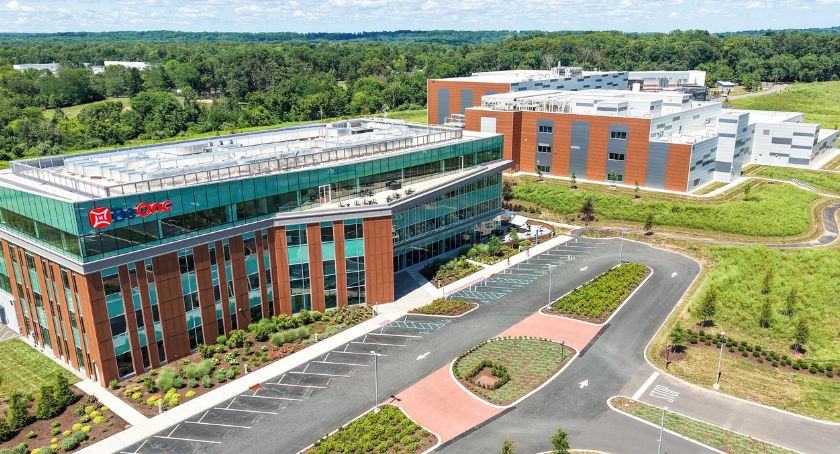
BeOne Medicines is announcing a $300 million expansion of its clinical- and commercial-stage manufacturing and R&D center in Hopewell, NJ. This newest tranche of money takes BeOne’s United States manufacturing investment over $1 billion.

History of BeOne in NJ

The center, at the Princeton West Innovation Campus, opened in July 2024 on an initial investment of $800 million. A new, three-story, 145,000-square-foot building will bring the total campus footprint into the neighborhood of 545,000 square feet.

Over 42 acres, the site boasts more than 1 million square feet of developable real estate earmarked for future growth.

The expansion makes the campus a fully integrated, multi-platform manufacturing site combining existing biologics and new small molecule drug production.

Growing Manufacturing Capabilities

The added drug product manufacturing and packaging operations serve to strengthen BeOne’s production and supply chain capabilities. According to the company, this in turn supports a growing hematology portfolio and pipeline.

BeOne Medicines CEO Aaron Rosenberg weighed the impact of the announcement.

“[This] reflects BeOne’s commitment to strengthening U.S. manufacturing and expanding access to innovative medicines for patients with cancer,” Rosenberg said.

Not only President Donald Trump’s tax policies, Rosenberg said, but also NJ Governor Mikie Sherrill’s support of advanced manufacturing contributed.

In particular, the “Next New Jersey Manufacturing Program,” according to Rosenberg, encourages high-quality job creation.

“Together, these efforts create an environment for long-term growth,” Rosenberg said. “We are proud to continue expanding our global footprint in support of patients.”

The newly announced BeOne facility should be operational in 2029, the company says; subsequently, U.S. headcount will number approximately 240.

Free Training

Source link

Is Apple bringing chip manufacturing home? – Computerworld


TSMC doubles down

That’s why it is significant that TSMC confirmed plans to extend its own manufacturing in America. It already has a $165 billion US commitment; now, it is investing an additional $100 billion in four more chip plants — including one dedicated to churning out the company’s most advanced 2nm (and smaller) processors. 

“We believe this investment will help to further foster the development of the US semiconductor ecosystem, strengthen the supply chain, and support an increasing number of high-tech, high-paying jobs in the United States,”  CEO C.C. Wei told analysts.

TSMC has also confirmed plans to invest in packaging facilities for processors, which is basically the process where memory, processor, and networking nodes can all be combined and packaged on the chip. That sort of packaging is needed to make the final SoC chip. That means TSMC factories in the US will be able to churn out the advanced processors used in Apple’s current and, presumably, future devices.

Free Training

Source link

Taiwan’s Foxlink Group picks Fort Worth for first U.S. AI Factory, bringing 900 jobs to AllianceTexas


When the Taiwanese Foxlink Group sought to establish its first facility in the U.S., the company came to Fort Worth, Texas.

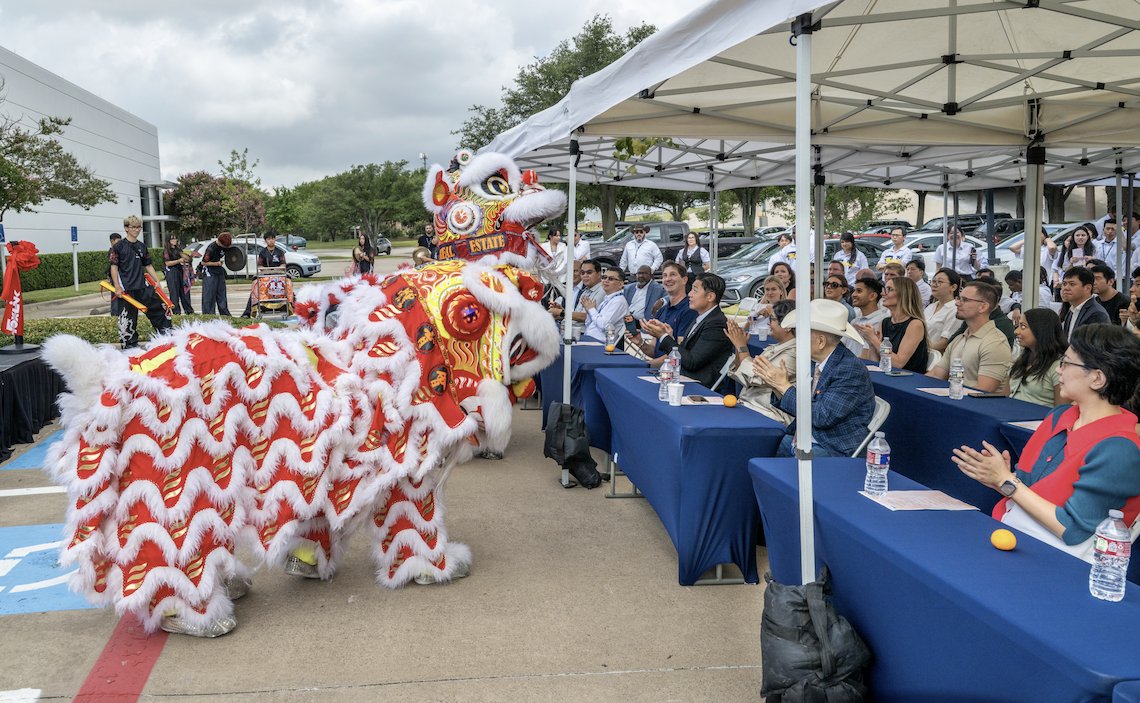
Foxlink Group, a global advanced technology manufacturer, has purchased Alliance Gateway 17 at the burgeoning AllianceTexas, where it will establish a new printed circuit board assembly (PCBA) manufacturing operation expected to create approximately 900 jobs at full capacity. The company celebrated its grand opening Tuesday. 

The company acquired the 147,780-square-foot facility at 4600 Alliance Gateway Freeway as part of an expansion of its U.S. manufacturing footprint.

Production is expected to begin in August.

Foxlink said the facility will be converted into an advanced manufacturing site supporting key phases of its surface mount technology (SMT) and final assembly, testing and packaging (FATP) production processes. The operation will integrate AI-driven robotics and intelligent automation directly on the production floor.

According to the company, the facility is designed for long-term scalability and will serve as a replicable model for Foxlink’s AI Factory deployments across its global manufacturing network.

“The launch of our Texas facility marks a monumental milestone in Foxlink’s steadfast commitment to the U.S. market,” Freddy Kuo, CEO of Foxlink Group, said in a statement. “We are deploying Physical AI directly on the production floor — embedding intelligent automation into every workstation, enabling flexible manufacturing that can be replicated rapidly across our global sites. This is not just a new factory. It is Foxlink’s first AI Factory in the United States, and it will not be the last.”

Founded in 1986, Foxlink Group designs and manufactures high-precision components for technology brands around the world. The company said it is also advancing the use of Physical AI through its subsidiaries — SYNCROBOTIC, UBILINK, and Luminys — which integrate AI-driven robotics, high-performance computing, and intelligent security solutions into its manufacturing operations.

Kuo added that the company’s expansion in Texas reflects its belief that the manufacturing solutions it develops internally can also be deployed for customers around the world.

Foxlink said it selected AllianceTexas because of its strategic location, transportation access, skilled workforce, and proximity to North Texas’ growing advanced manufacturing ecosystem.

Located within Hillwood’s 27,000-acre AllianceTexas development, the site offers access to major regional transportation corridors and infrastructure designed to support large-scale industrial and manufacturing operations.

The project adds to continued advanced manufacturing investment at AllianceTexas, which is home to more than 600 companies, more than 73,000 direct jobs and an estimated $142.9 billion in regional economic impact since 1989.

Foxlink noted that recent investments in the development include AI supercomputing facilities and MP Materials’ rare earth magnet manufacturing campus, which is under construction.

“Foxlink’s decision to establish its new U.S. AI Factory at AllianceTexas reinforces the strength of our platform for advanced manufacturing,” said Jack Barkley, vice president at Hillwood. “This transaction reflects what global manufacturers need — strategic location, infrastructure, workforce access, and connectivity that support speed, scale, and long-term growth.”

Free Training

Source link

Bauducco® Opens Largest U.S. Manufacturing Facility in Zephyrhills, Florida, Bringing 75 Years of Brazilian Baking Craftsmanship to American Tables | Press Releases


The iconic Brazilian brand — beloved for its cookies, wafers, and specialty baked goods — makes a landmark U.S. investment, deepening its commitment to American consumers and strengthening a retail partnership built on a larger domestic production.

ZEPHYRHILLS, Fla., June 26, 2026 /PRNewswire/ — For three generations, Bauducco® has done one thing exceptionally well: make food worth sharing. Its Wafer Cookies — layered, crisp, and impossible to eat just one of — have been a staple of Brazilian households for decades. Its rich cream-filled cookies, classic butter biscuits, and beloved seasonal specialties have traveled from pantries in São Paulo to celebrations across more than 50 countries. Today, that story takes its most ambitious chapter yet.

Bauducco® officially opened the doors to its largest U.S. manufacturing facility at 40334 6th Ave, in Zephyrhills, Florida. The 160,000-square-foot facility brings state-of-the-art production technology and double the manufacturing capacity previously available for the American market under one roof — streamlining the supply chain, shortening lead times, and enabling Bauducco® to respond to retail demand with greater speed and precision than ever before. The campus is designed to scale beyond 1.2 million square feet of production and distribution capacity as the company’s U.S. footprint grows, making today’s opening not just a milestone but a foundation — the most permanent and ambitious commitment Bauducco® has ever made to American consumers.

Founded in 1952, Bauducco® built its reputation on a deceptively simple idea: that the best baked goods require no shortcuts. The company’s U.S. wafer portfolio reflects that philosophy at every layer. The signature Wafer Cookies — available in chocolate, vanilla, strawberry, and coconut, and across multiple formats including a 40g single-serve, a 5oz multipack, a 9oz Family Pack, and a Sugar Free line in 5oz and 4.2oz — are made with a proprietary process that has remained largely unchanged since the brand’s earliest days. The result is a product that has achieved something rare in the snack category: genuine loyalty across generations.

The plant brings Bauducco®’s full wafer lineup under a Made in USA designation for the first time, operating at double the production capacity of what the brand previously had available for the American market. The demand signal was clear. What Bauducco® needed was the infrastructure to meet it — and now they have it.

The decision to build that infrastructure in the United States was not made quickly. For a family-owned company with deep roots in Brazil, it was a question of identity as much as strategy: was Bauducco® ready to make the expansion and build out the portfolio?

The answer, ultimately, was yes. And it’s expanding with a bet on Florida.

Zephyrhills — a growing community in the heart of Pasco County, northeast of Tampa — offered the combination of infrastructure, workforce, and community character that Bauducco®’s leadership was looking for. Pasco County’s economic development team was a key partner in making the case, helping to connect the company’s expansion vision with the resources and relationships needed to turn it into reality. The company expects the facility to employ over 600 people at full production capacity, making it one of the more significant food manufacturing employers in Pasco County.

“Bauducco’s decision to expand in Zephyrhills and create 600 jobs is a tremendous win for Pasco County. These are the kinds of opportunities that change lives and provide quality jobs for our residents while strengthening our local economy. We are proud that a globally recognized brand like Bauducco sees Pasco County as a place where it can grow and succeed, and we look forward to supporting their continued success for many years to come.” – Bill Cronin, President/CEO, Pasco Economic Development Council

The State of Florida and local government played an equally important role in bringing the project to life, with support that reflected the kind of public-private collaboration that Bauducco®’s leadership says made the decision clear.

“Today marks an exciting milestone for the City of Zephyrhills. We are proud to welcome Bauducco Foods and celebrate the opening of its largest U.S. manufacturing facility right here in Zephyrhills. Bauducco’s investment brings new high-wage jobs, strengthens our local economy, and further demonstrates the momentum taking place throughout our growing Industrial Corridor. Beyond its investment, Bauducco has already demonstrated a commitment to our city through its support of local organizations, events, and initiatives. On behalf of the Zephyrhills City Council and our residents, we are honored that this globally recognized company chose Zephyrhills for this important expansion and look forward to a long and successful partnership that will benefit our community for years to come.” – Melonie Bahr Monson, Mayor, City of Zephyrhills

For Stefano Mozzi, Bauducco®’s recently appointed Global CEO, the Zephyrhills facility is the physical expression of a strategic conviction he has championed since joining the company: that Bauducco®’s future in the United States depends on being present here in every sense of the word.

Speak to the vision behind this investment — why the U.S., why now, what this facility enables for the brand’s product quality and growth ambitions. Personal tone encouraged. Reference the brand’s 75-year legacy and what it means to bring that craftsmanship to American manufacturing. – Stefano Mozzi, Global CEO, Bauducco®

Bauducco®’s growth in the United States has been driven by retail partners who recognized early what American consumers were beginning to discover: that the brand’s commitment to quality was something worth putting on a shelf and standing behind. Those partnerships — built on consistent product performance, strong consumer pull, and a brand story that resonates across demographics — are now supported by something they have not had before: domestic production.

The Zephyrhills facility changes the equation for Bauducco®’s retail relationships in meaningful ways. Manufacturing on U.S. soil means shorter lead times, greater supply chain reliability, and the ability to respond to demand signals with speed and precision. For the retailers who have invested in the brand, it is a signal that Bauducco® is not here to test the market — it is here to serve it.

The facility also positions Bauducco® within a broader movement among major U.S. retailers to prioritize domestic sourcing and American-made products — a shift that has created new opportunities for brands willing to make the infrastructure investment to match.

“Bauducco’s investment in U.S. manufacturing is a strong example of how companies can create jobs, strengthen local communities and serve Walmart customers closer to home,” said Melody Richard, Senior Vice President, Pantry, Walmart U.S.

Bauducco® products are currently available at major retailers across the country, with the Zephyrhills facility expected to support expanded distribution and shelf presence as domestic production capacity grows. Bauducco® is the world’s largest producer of Panettone — a distinction earned over decades of perfecting the Italian-origin holiday bread that has become synonymous with the brand across more than 50 countries.

Bauducco® remains a family company. The founders’ descendants remain active in the business, and that ownership structure — with its long time horizons and personal stakes — is something company leaders say directly shaped the decision to invest at this scale in the United States.

The Zephyrhills facility is not a licensing arrangement or a co-manufacturing deal. It is Bauducco®’s own building, Bauducco®’s own lines, and Bauducco®’s own people. That distinction matters to a company that has always insisted on controlling what goes into every product it puts its name on.

For the Bauducco® family, today’s ceremony is a milestone measured not just in square footage and production capacity, but in what it represents across generations: the belief that something built carefully and honestly will always find its audience.

About Bauducco®

Founded in Brazil in 1952 by an Italian immigrant, Bauducco® is one of the world’s largest producers of baked goods, globally. Inspiring unforgettable moments with recipes crafted with innovation and passion, Bauducco®’s products are synonymous with The Feeling of Family. As a global company exporting to more than 50 countries, Bauducco® has been doing business in the U.S. for more than 20 years and has a national presence. Panettone, one of Bauducco®’s most iconic products, is a strategic player in the U.S. market, where the brand holds an 86% value share in this category. Bauducco® is the leading wafer producer nationwide. Bauducco®’s signature Panettones, Wafers, Cookies and Toasts are sold in most major retailers across the U.S. To learn more about Bauducco®, please visit www.bauducco.com and follow @bauducco.us on Instagram.


Cision View original content to download multimedia:https://www.prnewswire.com/news-releases/bauducco-opens-largest-us-manufacturing-facility-in-zephyrhills-florida-bringing-75-years-of-brazilian-baking-craftsmanship-to-american-tables-302812316.html

SOURCE Bauducco

Free Training

Source link

Bauducco® Opens Largest U.S. Manufacturing Facility in Zephyrhills, Florida, Bringing 75 Years of Brazilian Baking Craftsmanship to American Tables


The iconic Brazilian brand — beloved for its cookies, wafers, and specialty baked goods — makes a landmark U.S. investment, deepening its commitment to American consumers and strengthening a retail partnership built on a larger domestic production.

ZEPHYRHILLS, Fla., June 26, 2026 /PRNewswire/ — For three generations, Bauducco® has done one thing exceptionally well: make food worth sharing. Its Wafer Cookies — layered, crisp, and impossible to eat just one of — have been a staple of Brazilian households for decades. Its rich cream-filled cookies, classic butter biscuits, and beloved seasonal specialties have traveled from pantries in São Paulo to celebrations across more than 50 countries. Today, that story takes its most ambitious chapter yet.

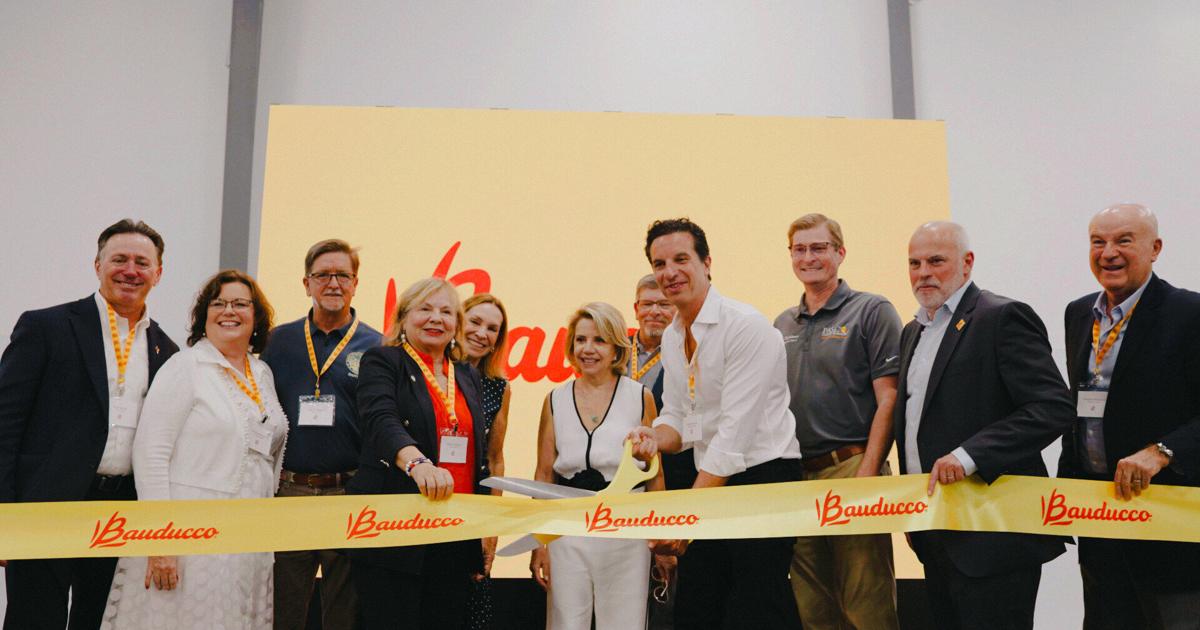
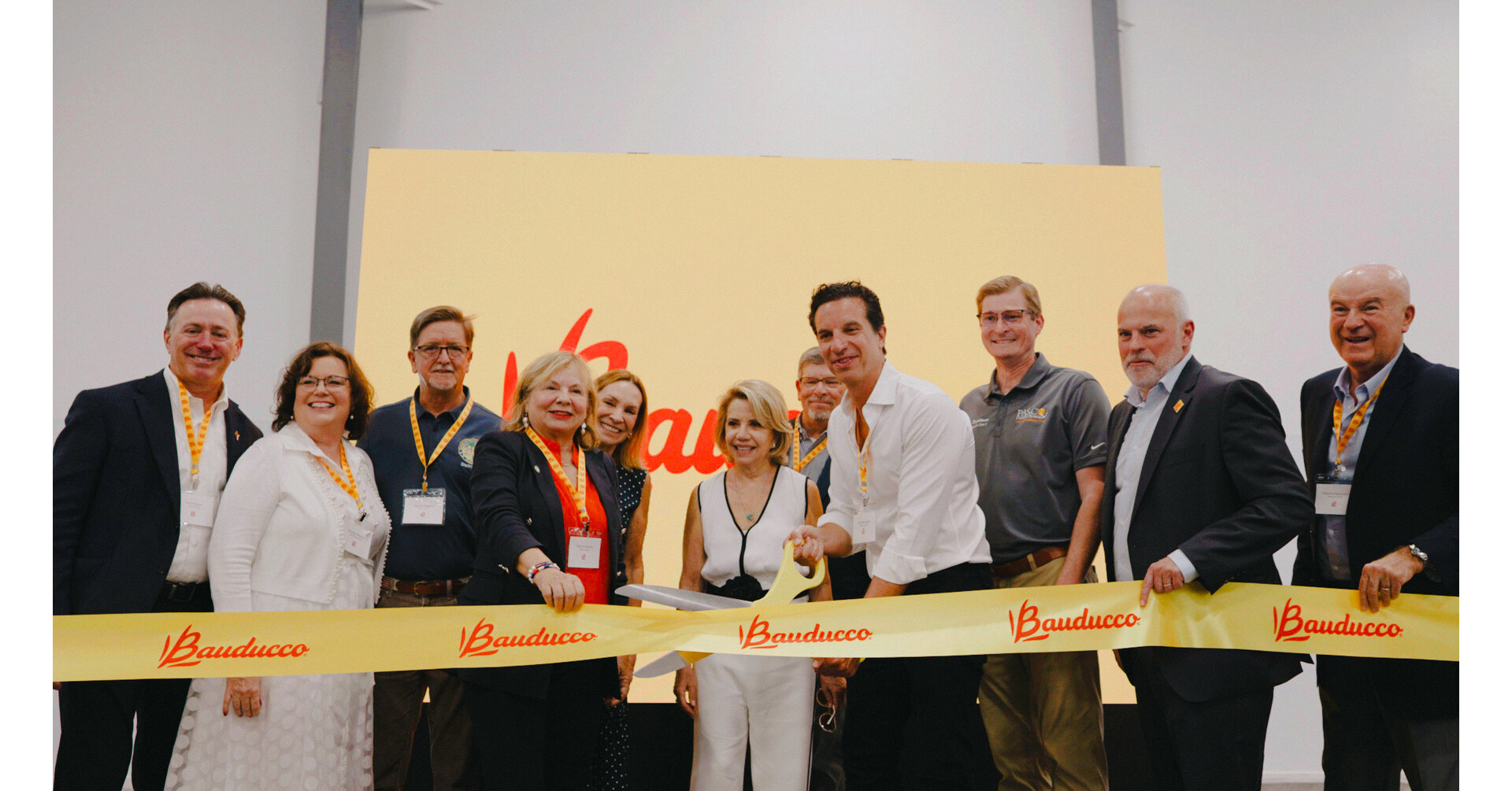
Bauducco International Business Unit CEO and Bauducco family members are joined by the Zephyrhills Mayor and state and local officials for a ribbon cutting celebrating the grand opening of Bauducco's largest U.S. manufacturing facility in Zephyrhills, Florida.

Bauducco International Business Unit CEO and Bauducco family members are joined by the Zephyrhills Mayor and state and local officials for a ribbon cutting celebrating the grand opening of Bauducco’s largest U.S. manufacturing facility in Zephyrhills, Florida.

Bauducco® officially opened the doors to its largest U.S. manufacturing facility at 40334 6th Ave, in Zephyrhills, Florida. The 160,000-square-foot facility brings state-of-the-art production technology and double the manufacturing capacity previously available for the American market under one roof — streamlining the supply chain, shortening lead times, and enabling Bauducco® to respond to retail demand with greater speed and precision than ever before. The campus is designed to scale beyond 1.2 million square feet of production and distribution capacity as the company’s U.S. footprint grows, making today’s opening not just a milestone but a foundation — the most permanent and ambitious commitment Bauducco® has ever made to American consumers.

Founded in 1952, Bauducco® built its reputation on a deceptively simple idea: that the best baked goods require no shortcuts. The company’s U.S. wafer portfolio reflects that philosophy at every layer. The signature Wafer Cookies — available in chocolate, vanilla, strawberry, and coconut, and across multiple formats including a 40g single-serve, a 5oz multipack, a 9oz Family Pack, and a Sugar Free line in 5oz and 4.2oz — are made with a proprietary process that has remained largely unchanged since the brand’s earliest days. The result is a product that has achieved something rare in the snack category: genuine loyalty across generations.

The plant brings Bauducco®’s full wafer lineup under a Made in USA designation for the first time, operating at double the production capacity of what the brand previously had available for the American market. The demand signal was clear. What Bauducco® needed was the infrastructure to meet it — and now they have it.

The decision to build that infrastructure in the United States was not made quickly. For a family-owned company with deep roots in Brazil, it was a question of identity as much as strategy: was Bauducco® ready to make the expansion and build out the portfolio?

The answer, ultimately, was yes. And it’s expanding with a bet on Florida.

Zephyrhills — a growing community in the heart of Pasco County, northeast of Tampa — offered the combination of infrastructure, workforce, and community character that Bauducco®’s leadership was looking for. Pasco County’s economic development team was a key partner in making the case, helping to connect the company’s expansion vision with the resources and relationships needed to turn it into reality. The company expects the facility to employ over 600 people at full production capacity, making it one of the more significant food manufacturing employers in Pasco County.

“Bauducco’s decision to expand in Zephyrhills and create 600 jobs is a tremendous win for Pasco County. These are the kinds of opportunities that change lives and provide quality jobs for our residents while strengthening our local economy. We are proud that a globally recognized brand like Bauducco sees Pasco County as a place where it can grow and succeed, and we look forward to supporting their continued success for many years to come.” – Bill Cronin, President/CEO, Pasco Economic Development Council

The State of Florida and local government played an equally important role in bringing the project to life, with support that reflected the kind of public-private collaboration that Bauducco®’s leadership says made the decision clear.

“Today marks an exciting milestone for the City of Zephyrhills. We are proud to welcome Bauducco Foods and celebrate the opening of its largest U.S. manufacturing facility right here in Zephyrhills. Bauducco’s investment brings new high-wage jobs, strengthens our local economy, and further demonstrates the momentum taking place throughout our growing Industrial Corridor. Beyond its investment, Bauducco has already demonstrated a commitment to our city through its support of local organizations, events, and initiatives. On behalf of the Zephyrhills City Council and our residents, we are honored that this globally recognized company chose Zephyrhills for this important expansion and look forward to a long and successful partnership that will benefit our community for years to come.” – Melonie Bahr Monson, Mayor, City of Zephyrhills

For Stefano Mozzi, Bauducco®’s recently appointed Global CEO, the Zephyrhills facility is the physical expression of a strategic conviction he has championed since joining the company: that Bauducco®’s future in the United States depends on being present here in every sense of the word.

Speak to the vision behind this investment — why the U.S., why now, what this facility enables for the brand’s product quality and growth ambitions. Personal tone encouraged. Reference the brand’s 75-year legacy and what it means to bring that craftsmanship to American manufacturing. – Stefano Mozzi, Global CEO, Bauducco®

Bauducco®’s growth in the United States has been driven by retail partners who recognized early what American consumers were beginning to discover: that the brand’s commitment to quality was something worth putting on a shelf and standing behind. Those partnerships — built on consistent product performance, strong consumer pull, and a brand story that resonates across demographics — are now supported by something they have not had before: domestic production.

The Zephyrhills facility changes the equation for Bauducco®’s retail relationships in meaningful ways. Manufacturing on U.S. soil means shorter lead times, greater supply chain reliability, and the ability to respond to demand signals with speed and precision. For the retailers who have invested in the brand, it is a signal that Bauducco® is not here to test the market — it is here to serve it.

The facility also positions Bauducco® within a broader movement among major U.S. retailers to prioritize domestic sourcing and American-made products — a shift that has created new opportunities for brands willing to make the infrastructure investment to match.

“Bauducco’s investment in U.S. manufacturing is a strong example of how companies can create jobs, strengthen local communities and serve Walmart customers closer to home,” said Melody Richard, Senior Vice President, Pantry, Walmart U.S.

Bauducco® products are currently available at major retailers across the country, with the Zephyrhills facility expected to support expanded distribution and shelf presence as domestic production capacity grows. Bauducco® is the world’s largest producer of Panettone — a distinction earned over decades of perfecting the Italian-origin holiday bread that has become synonymous with the brand across more than 50 countries.

Bauducco® remains a family company. The founders’ descendants remain active in the business, and that ownership structure — with its long time horizons and personal stakes — is something company leaders say directly shaped the decision to invest at this scale in the United States.

The Zephyrhills facility is not a licensing arrangement or a co-manufacturing deal. It is Bauducco®’s own building, Bauducco®’s own lines, and Bauducco®’s own people. That distinction matters to a company that has always insisted on controlling what goes into every product it puts its name on.

For the Bauducco® family, today’s ceremony is a milestone measured not just in square footage and production capacity, but in what it represents across generations: the belief that something built carefully and honestly will always find its audience.

About Bauducco®
Founded in Brazil in 1952 by an Italian immigrant, Bauducco® is one of the world’s largest producers of baked goods, globally. Inspiring unforgettable moments with recipes crafted with innovation and passion, Bauducco®’s products are synonymous with The Feeling of Family. As a global company exporting to more than 50 countries, Bauducco® has been doing business in the U.S. for more than 20 years and has a national presence. Panettone, one of Bauducco®’s most iconic products, is a strategic player in the U.S. market, where the brand holds an 86% value share in this category. Bauducco® is the leading wafer producer nationwide. Bauducco®’s signature Panettones, Wafers, Cookies and Toasts are sold in most major retailers across the U.S. To learn more about Bauducco®, please visit www.bauducco.com and follow @bauducco.us on Instagram.

SOURCE Bauducco

Free Training

Source link

LGM Pharma Expands U.S. Manufacturing, Bringing Total Investment to $15M Across Texas and Colorado Sites


— $9M Second Phase of CDMO Investment Builds on 2025 $6M Expansion, Funding Facility Upgrades and Increased Capacity for Suppository, Semi-Solid, and Oral Solid Dose Capacity —

— Enhancements Strengthen Domestic Supply Chains for Finished Dose Manufacturing, Complementing Extensive API Sourcing and Analytical Testing Services —

BOCA RATON, Fla.–(BUSINESS WIRE)–#505b2–LGM Pharma, a leading provider of tailored API sourcing, contract analytical testing, and CDMO services for the full drug product lifecycle, today announced the second phase of its CDMO growth strategy, committing an additional $9 million to its facilities in Rosenberg, Texas, and Colorado Springs, Colorado. The investment follows the company’s previously announced $6 million expansion in Rosenberg in 2025 and is designed to increase commercial capacity, expand R&D capabilities, and support continued demand for U.S.-based drug product manufacturing.


The Texas facility enhancements include a $4 million investment to expand commercial-scale manufacturing suites for suppositories in response to increasing customer and market demand, including growth in women’s health products. The upgrades also expand R&D capabilities to support formulation and scale-up for suppositories, solutions, suspensions, and semi-solids. The Rosenberg site will remain fully operational throughout construction, with upgrades already underway.

In Colorado Springs, LGM Pharma will invest $5 million to expand commercial manufacturing capacity for niche, high-value oral solid dose (OSD) products, including orally disintegrating tablets (ODTs). The facility has served as the company’s center of excellence for OSD development. The expansion, planned for completion this year, will support growing demand for domestic manufacturing. In 2024, the global OSD CDMO market was valued at $43.65 billion, with North America accounting for approximately 40.5% of global OSD pharmaceutical manufacturing activity.1,2

“These multi-site investments totaling $15 million reflect our continued commitment to strengthening pharmaceutical supply chains in the United States,” said Prasad Raje, Chief Executive Officer of LGM Pharma. “Today’s pharma companies need partners that are both resilient and integrated across the full product lifecycle. By reinforcing domestic drug product manufacturing at the downstream end of the supply chain, closer to end markets, and leveraging our global API sourcing capabilities upstream, we create a balanced end-to-end model. This gives customers greater control and visibility as they move products from development to commercialization.”

Earlier in the supply chain, at the drug substance stage, LGM Pharma supports 505(b)(2), NDA, and ANDA programs through a global network of more than 220 pre-qualified API manufacturers. By combining global drug substance sourcing with expanded U.S. finished dose development and manufacturing, the company provides integrated support across the full drug product lifecycle.

Hamilton Lenox, Chief Commercial Officer of LGM Pharma, said the company’s prior Rosenberg upgrades from Phase I of the expansion, including implementation of enhanced track-and-trace serialization systems and increased production volumes, are now complete. “We are executing this next phase of expansion while keeping both facilities fully operational,” Lenox said. “Our teams are experienced in managing complex upgrades without sacrificing quality or disrupting customer supply, which remain our top operational priorities. Rather than overextending in a single phase, we are executing these enhancements incrementally to expand capabilities and capacity while ensuring operational continuity. This approach allows us to strengthen infrastructure, support customer growth, and scale in response to market demand.”

Companies developing 505(b)(2), NDA, or ANDA products, as well as those with commercial branded or generic portfolios, are encouraged to explore LGM Pharma’s API sourcing and expanded drug product manufacturing capabilities by visiting LGMPharma.com or meeting with company executives at DCAT Week, March 23-26, 2026, in New York City.

References:

  1. Grand View Research, “Oral Solid Dosage CDMO Market Size, Share & Trends Analysis Report,” [March 2024].
  2. Persistence Market Research, “Oral Solid Dosage Contract Manufacturing Market,” [May 2023].

About LGM Pharma

LGM Pharma is a leading contract development and manufacturing organization (CDMO) providing comprehensive Active Pharmaceutical Ingredient (API) sourcing, drug product CDMO services, and contract analytical testing services to the pharmaceutical, biotechnology, and compounding pharmacy industries. LGM Pharma assists clients in managing all phases of the drug product development process, from API sourcing through to drug product commercialization. LGM Pharma’s extensive global network of qualified API partners enables clients to optimize supply chain management and distribution. Services include API sourcing and procurement, formulation development, drug product manufacturing, analytical method development, method and process validation, ANDA/NDA submission, stability studies, and raw material and finished product testing and packaging. LGM Pharma is committed to quality and has a long-established positive regulatory track record, providing expert regulatory and market intelligence services to its clients. The company is focused on customer service and customized solutions, providing clients with a comprehensive U.S.-based manufacturing solution that reduces risk, increases efficiency, and accelerates the path to commercialization. For more information, visit LGMPharma.com.

Contacts

Media Contact:

Charya Wickremasinghe, Ph.D.

Brandwidth Solutions LLC

cwickremasinghe@brandwidthsolutions.com


Free Training

Source link