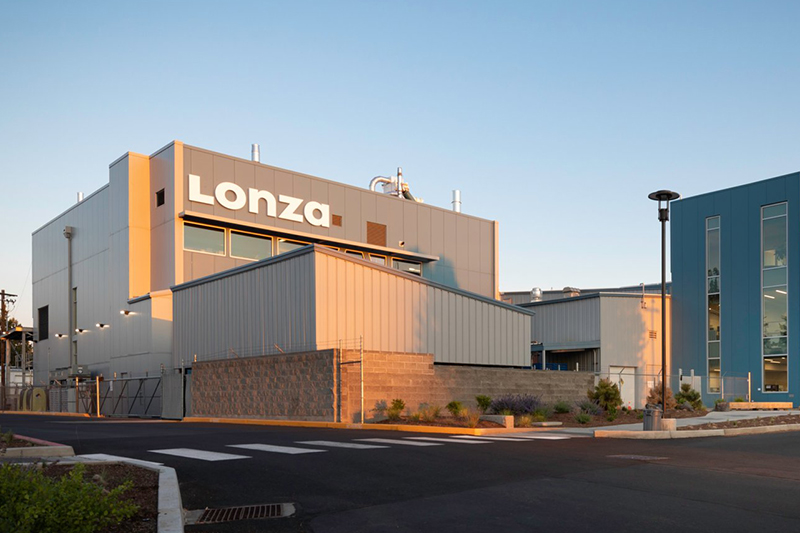
Lonza strengthens US manufacturing with new commercial spray-drying facility


Lonza, the world’s leading contract development and manufacturing organization (CDMO), announced today plans to further strengthen its significant US presence by constructing a large-scale commercial spray-drying facility in Bend, Oregon. The investment will establish Lonza as the leading CDMO provider of commercial-scale spray-drying PSD-4 capacity in the US. Lonza will offer a full range of spray-dried dispersion (SDD) capacity to support customers across both clinical and commercial programs. Through its integrated end-to-end offering, Lonza will support the development and manufacturing of small molecules and other modalities, including biologics and mRNA.

SDD technologies are increasingly relevant in modern drug development, as the industry addresses the growing complexity of molecules and their related bioavailability challenges. The demand for SDD CDMO services has grown alongside the increasing scientific complexity of pharmaceutical pipelines, driven by the increasing prevalence of poorly soluble drug substances. Today, a significant share of molecules in the clinical pipeline requires bioavailability enhancement. The Bend expansion is intended to meet this growing market demand, with a particular focus on US demand, enabling Lonza to provide customers with an additional option to access a complete and integrated end-to-end development and manufacturing solution for SDDs.

Wolfgang Wienand, Chief Executive Officer, Lonza, said: “The investment in the Bend site reflects our conviction that the United States will remain a leading source of pharmaceutical innovation and a key market for Lonza. It also delivers on our One Lonza strategy, powered by the Lonza Engine, to invest where we can create the greatest value for our customers and, ultimately, for patients. By significantly expanding our commercial-scale spray-drying capabilities, we strengthen a technology that can fundamentally improve the delivery and bioavailability of medicines. With this, our world-class particle engineering team in Bend will be even better able to support our customers in turning their breakthrough innovations into viable products and to manufacture the medicines of tomorrow.”

Christian Seufert, Head of Advanced Synthesis, Lonza, added: “The growing number of complex drug molecules is increasing demand for advanced particle engineering technologies. With decades of expertise in spray-drying, our Bend team helps customers address formulation challenges and progress their programs efficiently. This investment expands the capacity and capabilities needed to support customers from development through commercialization.”

The new facility will be equipped with two state-of-the-art PSD-4 spray-drying units, allowing for future capacity expansions as demand continues to grow. Additional upgrades to the Bend site include supporting infrastructure for solvent handling and storage. The project also integrates energy-efficient utility and process systems and enhanced emission control technologies to reduce overall facility energy demand.

The new facility, expected to be completed in 2029, will be delivered through a significant capital investment and will initially create more than 80 new jobs, highlighting Lonza’s commitment to expanding its manufacturing footprint in the US. The expansion enhances proximity to key customers and supports more resilient, regionalized supply chains for critical therapies.

Free Training

Source link

NurExone Announces Binding MOU with Made Scientific for U.S. GMP Manufacturing and Commercial Supply Partnership


The Signed MOU Targets Initial GMP Exosome Batches in H1 2027 to Support NurExone’s Clinical Pipeline and Planned Commercial Production

TORONTO and HAIFA, Israel, Aug. 13, 2026 (GLOBE NEWSWIRE) — NurExone Biologic Inc. (“NurExone” or the “Company“) (TSXV: NRX, OTCQB: NRXBF, FSE: J90), a biotechnology company developing exosome-based regenerative therapies, today announced that its wholly owned U.S. subsidiary, Exo-Top Inc. (“Exo-Top“), together with the Company, has signed a binding memorandum of understanding (“MOU“) with Made Scientific, Inc. (“Made Scientific”) to establish an exclusive U.S. Good Manufacturing Practice (“GMP”) manufacturing and commercial exosome supply partnership to support NurExone’s clinical and commercial activities.

The proposed partnership brings together two companies with a shared vision for building scalable U.S. manufacturing infrastructure to support exosome-based therapeutics and commercial exosome products – two rapidly growing markets.

Made Scientific is a U.S.-based cell therapy contract development and manufacturing organization (“CDMO“) which operates a 60,000-square-foot U.S. FDA and EU GMP Annex 1 compliant facility in Princeton, New Jersey.

The parties intend to immediately begin the transfer of NurExone technology in parallel with negotiation of a definitive partnership agreement, with a target of initiating first GMP exosome batches in H1 2027.

Get the latest news


delivered to your inbox

Sign up for The Manila Times newsletters

By signing up with an email address, I acknowledge that I have read and agree to the Terms of Service and Privacy Policy.

“Partnering with highly regarded organizations is essential to building world-class manufacturing around novel therapeutic approaches, including exosome-based therapies,” said Dr. Lior Shaltiel, Chief Executive Officer of NurExone. “This allows us to focus on what we do best and create shareholder value, while working with specialized partners to support execution. Made Scientific is an ideal strategic partner because of its manufacturing capabilities, operational expertise, and shared long-term vision. Together, we have an opportunity to establish a U.S. manufacturing and commercialization platform to accelerate NurExone’s therapeutic pipeline, including lead candidate ExoPTEN, while creating a foundation for company revenue, commercial growth and leadership in the emerging exosome market.”

Syed T. Husain, Chairman and CEO of Made Scientific, commented, “NurExone has developed a differentiated exosome platform with significant clinical and commercial potential. This collaboration combines NurExone’s innovative bone marrow-derived exosome platform with Made Scientific’s manufacturing and regulatory expertise, creating an integrated pathway to bring exosome-based therapies from development through commercial supply.”

The proposed collaboration builds on NurExone’s broader manufacturing strategy, including bioprocess optimization with Novasign GmbH announced on July 30, 2026. Together, these initiatives are intended to strengthen the infrastructure supporting both NurExone’s therapeutic pipeline and future commercial exosome activities, positioning the Company for long-term, sustainable commercial success.

Under the binding MOU, Made Scientific will serve as NurExone’s exclusive U.S. partner for the manufacturing and aseptic fill-finish of NurExone’s bone marrow-derived exosomes. The MOU contemplates that the definitive agreement, if executed, will feature an initial term of five (5) years, with options for successive five-year renewals. If the parties do not execute a definitive agreement within six months of MOU execution, the MOU and ongoing obligations, including exclusivity grants, will automatically terminate, subject to specified surviving obligations.

Update Regarding BioXtek Letter of Intent

The Company also announced that Exo-Top has mutually agreed with Florida-based BioXtek Inc. (“BioXtek”) not to proceed with the non-binding Letter of Intent (“LOI“) previously announced on April 7, 2026. This decision follows NurExone’s strategic pivot to consolidate its U.S. GMP exosome manufacturing infrastructure under the proposed collaboration with Made Scientific. NurExone and BioXtek intend to explore potential collaborative business opportunities outside of direct production in the near future.

About Made Scientific

Made Scientific is a leading U.S.-based cell therapy contract development and manufacturing organization (CDMO) specializing in the development, manufacturing, and release of autologous and allogeneic cell therapy products for clinical- and commercial-supply. Headquartered in Princeton, New Jersey, Made Scientific combines the agility of a specialist CDMO with the deep technical expertise to deliver reliable and scalable solutions, supported by their long-term strategic backer, GC Corporation, a global leader in the pharmaceutical and biotechnology sectors. For more information, visit www.madescientific.com.

About NurExone

NurExone is a TSX Venture Exchange (“TSXV”), OTCQB, and Frankfurt-listed biotech company focused on developing regenerative exosome-based therapies for central nervous system injuries. Its lead product, ExoPTEN, has demonstrated strong preclinical data supporting clinical potential in treating acute spinal cord and optic nerve damage. Regulatory milestones, including obtaining the Orphan Drug Designation, support the Company’s roadmap towards clinical trials in the U.S. and Europe. Commercially, the Company intends to offer solutions to companies interested in quality exosomes and minimally invasive targeted delivery systems for other indications. NurExone has established Exo-Top to anchor its North American activity and growth strategy.

For additional information and a brief interview, please watch Who is NurExone?, visit www.nurexone.com or follow NurExone on LinkedIn, Twitter, Facebook, or YouTube.

For more information, please contact:

Dr. Lior Shaltiel

Chief Executive Officer and Director

Phone: +972-52-4803034

Email: [email protected]

Russo Partners LLC

Investor and Media Relations – United States

215 Park Ave S, Suite 1905

New York, NY 10003

Phone: 212-845-4200

Email: [email protected]

Dr. Eva Reuter

Investor Relations – Germany

Phone: +49-69-1532-5857

Email: [email protected]

FORWARD-LOOKING STATEMENTS

This press release contains “forward-looking information” and “forward-looking statements” within the meaning of applicable Canadian securities laws (collectively, “forward-looking statements”). Forward-looking statements are often, but not always, identified by words such as “may”, “will”, “should”, “could”, “expect”, “plan”, “intend”, “anticipate”, “believe”, “estimate”, “potential”, “target”, “designed to”, “goal”, “subject to”, “contemplate” and similar expressions, or statements that events, conditions or results “may”, “could”, “would”, “should” or “will” occur or be achieved.

Forward-looking statements in this press release include, without limitation, statements relating to: the proposed collaboration with Made Scientific; the negotiation, execution, timing and terms of any definitive agreement; the expected scope, objectives and potential benefits of the MOU and proposed definitive agreement; the technology transfer, process establishment, manufacturing, aseptic fill-finish, quality, regulatory, commercial supply and distribution activities contemplated by the MOU; the target timing for initiating first GMP exosome batches; the ability of the parties to complete due diligence, approve SOWs, enter into definitive documentation, satisfy applicable technical, quality, regulatory, commercial, securities law and stock exchange requirements, and operationalize the proposed collaboration; the potential role of Made Scientific as a U.S. manufacturing partner; the potential use of the proposed collaboration to support NurExone’s clinical pipeline, Exo-Top activities, potential future commercial exosome activities and broader manufacturing strategy; the expected relationship between the proposed collaboration, Exo-Top and the Company’s previously announced bioprocess optimization initiative with Novasign; the potential commercialization of exosome products in jurisdictions where legally permitted; the potential exploration of business opportunities with BioXtek outside of direct production; and the Company’s development, regulatory, manufacturing, commercialization and platform opportunities.

Forward-looking statements are based on management’s current expectations and assumptions as of the date of this press release, including assumptions regarding: the ability of NurExone, Exo-Top and Made Scientific to proceed with the MOU and negotiate and enter into a definitive agreement on acceptable terms, or at all; the successful completion of due diligence; the approval and performance of applicable SOWs; the continued willingness and ability of each party to proceed with the proposed collaboration; the availability of required personnel, capital, materials, equipment, manufacturing capacity, cleanroom availability, quality systems, technical information and third-party services on commercially reasonable terms; the ability to complete technology transfer, process establishment, scale-up, quality-control and release activities; the continued accuracy and relevance of the Company’s manufacturing, scientific, regulatory and commercial plans; the ability to satisfy applicable regulatory, securities law, stock exchange and commercial requirements; the ability to maintain required intellectual property, confidentiality and regulatory protections; and the absence of material adverse technical, regulatory, commercial, legal, market, financing or operational developments.

Forward-looking statements are subject to known and unknown risks, uncertainties and other factors that may cause actual results, performance or achievements to differ materially, including, without limitation: the risk that a definitive agreement with Made Scientific may not be entered into on the timeline contemplated or at all; the risk that the MOU may terminate if a definitive agreement is not executed within the six-month period contemplated by the MOU; the risk that the proposed collaboration may not proceed as currently contemplated or may be terminated, delayed or restructured; due diligence, negotiation, documentation, SOW approval and approval risks; technology transfer, manufacturing scale-up, process development, quality-control, batch release, supply chain, raw material, equipment, facility, cleanroom availability, storage, logistics and cost risks; regulatory review, clinical development and commercialization risks; the risk that products may not be approved, authorized, commercially viable or legally marketable in one or more jurisdictions; the risk that anticipated manufacturing capacity, timelines, cost efficiencies, batch timing, commercial supply arrangements or revenue opportunities may not be achieved; risks related to exclusive arrangements, rights of first refusal or rights of first offer; dependence on third-party collaborators, manufacturers, suppliers, distributors and service providers; risks related to intellectual property, confidential information, data, know-how and regulatory documentation; financing and market risks; competition and technological change; general biotechnology and early-stage development risks; the risk that preclinical results may not be predictive of clinical results; and the risks described in the Company’s continuous disclosure filings available under its profile on SEDAR+, including the risks described under the heading “Risk Factors” in the Company’s annual information form and other public disclosure documents.

Readers are cautioned not to place undue reliance on forward-looking statements. Although the Company believes that the assumptions underlying the forward-looking statements are reasonable, forward-looking statements are not guarantees of future performance, and actual results may differ materially from those expressed or implied by such statements. Forward-looking statements are made as of the date of this press release, and the Company undertakes no obligation to update or revise any forward-looking statements, except as required by applicable law.

Neither the TSXV nor its Regulation Services Provider, as that term is defined in the policies of the TSXV, accepts responsibility for the adequacy or accuracy of this release.

Free Training

Source link

No commercial rubber trees grow in the United States


FACT:  No commercial rubber trees grow in the United States.

THE NUMBERS: Imports of goods by industry type (2024)* –

Industry type 
Import value
Share of Imports

All identifiable U.S. importers
$2.925 trillion
89%

… Manufacturers 
$1.220 trillion
37%

… Wholesalers 
$0.971 trillion
29%

… All known others 
$0.735 trillion
22%

All else, not identified by importer type
$0.370 trillion
11%

* Census Bureau.

WHAT THEY MEAN: 

As legal devices, the Trump administration’s tariff decrees are faring poorly. The Supreme Court killed most of Plan A — “emergency” declarations under the International Emergency Economic Powers Act — in February. The specialized Court of International Trade found Plan B, a Section 122 claim that the U.S. is in the midst of a “balance of payments crisis,” illegal last Thursday: 

“Because the Proclamation’s use of trade and current account deficits to stand in the place of balance-of-payment deficits within the meaning of the statute renders the Proclamation ultra vires … Proclamation No. 11012 is invalid, and the tariffs imposed on Plaintiffs are unauthorized by law.”
Plan C, announced in March and probably going live in July, disinters a third old trade law (“Section 301”), hoping to use it to impose tariffs on allegations of “structural excess capacity” and forced labor law. (PPI’s unimpressed comment here.) Court rulings on this one will presumable coming next year. In the interim, a reality check: if the administration’s decrees are struggling as a legal matter, are they nonetheless achieving their real-world economic goals? 

A year ago, the administration said that while tariff increases might cause pain, this would be transitory. Though prices might go up, and living standards for American waitresses, teachers, truck drivers, and auto mechanics might fall, new manufacturing output and jobs would compensate with better opportunities. A year later, this hasn’t happened: manufacturers have shed about 100,000 jobs, and their “GDP” share is down from 9.8% to 9.4%. Why not? A likely explanation is that the administration’s mental picture of both “trade” and “manufacturing” was naïve: manufacturers are far larger importers than it realized, and a lot of the tariff burden has fallen on them. Two examples, then the big-picture point:

  1. Metal tariffs and container chassis-making: Sitting next to PPI’s Ed Gresser at the U.S. Trade Representative Office’s “public hearing” on Plan C last Friday, a lawyer for U.S.-based makers of container chassis for trucks argued that foreign chassis-makers are getting various tax breaks and other supports from their governments, and unfairly competing to sell the low-priced result to American trucking companies, so tariffs on Chinese-made chassis have simply shifted production to other countries.

Whether or not foreign chassis have gotten too cheap, the administration’s tariff decrees are definitely making the U.S.-made version more expensive. Last June’s “Section 232” tariff decree — not legally challenged so far, and thus fully in force — imposed a 50% tariff on steel on “national security” grounds. According to the Commerce Department, American buyers of steel now pay an average of $971 per ton for their metal, more than twice the $460 average their overseas competitors pay. A 40-foot container chassis costing about $25,000 requires about three tons of steel, and this price gap means the U.S. version now starts out $1,500 in the hole against foreign rivals — even before the potential Plan C tariffs on screws, coatings, rivets, lathes, sandblasters, gantry welders, laser cutters, positioning tables, etc., and all the inputs and capital equipment needed to make things out of metal.

  1. Natural rubber tariffs and airplane tire-making: The March “Federal Register Notice” announcing Plan C cites a “trade surplus in rubber” as grounds for putting Thailand on its 16-country investigation list. Thailand does indeed have such a surplus, but this is natural — in economic terms, a consequence of Southeast Asia’s “absolute advantage” in rubber trees — and a Plan C tariff on Thai rubber would help nobody and harm lots of American manufacturers.

To explain, the U.S. uses about 3 million tons of rubber a year. This includes 1 million tons of natural rubber produced by rubber-tree tapping, and 2 million tons of artificial rubber produced in factories. They aren’t substitutes for one another: artificial rubber is less chemically active and therefore preferred for gaskets, fan belts, tubes, and the soles of shoes; natural rubber, being stretchier and more friction-resistant, is the main material for airplane and truck tires, as well as for condoms, surgical gloves, construction joints, and medical devices.  

All natural rubber comes from abroad — mainly Southeast Asia, secondarily West Africa — because the rubber tree, Hevea brasiliensis, is a tropical plant which thrives in hot, rainy climates. (Curious D.C. Metro residents can see one in the U.S. Botanical Gardens’ climate-controlled Tropics Room near the Capitol.) Since rubber trees don’t grow in places with cold winters, the U.S. produces no natural rubber at all. Tariffs on natural rubber, no matter how high, won’t bring rubber-tree plantation jobs to Minnesota or North Carolina, but will raise costs and reduce sales for every U.S. manufacturer of airplane and truck tires, vibration dampers in bridges, specialized medical equipment, and so on.

These specific cases illustrate a systematic administration error: a belief that “trade” operates on something like 19th-century terms, with manufacturers buying raw materials, farmers and miners exporting bulk commodities, and countries competing to export finished manufactured goods. This wasn’t exactly true then, and hasn’t been close to reality since the 1950s. Just-in-time delivery, supply chains, and coordinated production mean the largest amount of trade is in “intermediate” goods — neither raw materials nor finished stuff, but parts and components used to assemble more complex things. The largest U.S. importers are accordingly not “buyers of finished goods” such as retail chains, hospitals, construction firms, restaurants, and so forth. Instead, they are the chassis-makers buying metals, the airplane-tire-makers buying natural rubber, and other manufacturers buying energy, paint, screws, semiconductor chips, etc., so as to turn these “inputs” into final products or “semi-finished goods” they then sell to others. So though tariffs on steel may benefit steel companies, those benefits only come at the expense of chassis-makers and other metal-users; and tariffs natural rubber are pure losses for U.S. manufacturing.

Statistically, the Census’s annual “Profile of Importing and Exporting Companies” release last Tuesday credits manufacturers with $1.2 trillion in imports — over 40% of the total import value they could identify by industry. That suggests last year’s tariff decrees likely hit U.S. manufacturers with $150 billion or so in new costs. So as the tariffs raised prices for the waitresses, teachers, truck operators, and repair-shop mechanics, they also made it more expensive to operate factories in the United States. Thus no industrial boom has materialized.

In sum: So far, legal judgments on the administration’s tariff decrees haven’t been positive. Real-world economic impacts, likewise.

FURTHER READING

PPI’s four principles for response to tariffs and economic isolationism:

  • Defend the Constitution and oppose rule by decree;
  • Connect tariff policy to growth, work, prices and family budgets, and living standards;
  • Stand by America’s neighbors and allies;
  • Offer a positive alternative.

Data:

Census counts U.S. importers and exporters by industry type, company size, etc., as of 2024 (see Table 1d for the importers), and finds that manufacturers are the largest importers.

Legal update:

Plan A: The April 2nd, 2025, “international emergency” decree. Now defunct.

… the Supreme Court’s February 20 ruling striking it down.

Plan A(ii): The June 3, 2025, steel “national security” decree is an exception since it hasn’t so far faced legal challenge and is still in effect.

Plan B: The February 26, 2026, “balance of payments crisis” decree, ruled illegal last week with appeal pending.

… the Court of International Trade’s ruling striking it down last Thursday.

Plan C: The U.S. Trade Representative Office’s “Structural Excess Capacity” investigation, with a gloomy assessment of how “reindustrialization” is going, and a memorably loopy explanation of “Structural Excess Capacity”:

“The Trump Administration’s reindustrialization efforts continue to face significant challenges due to foreign economies’ structural excess capacity and production in manufacturing sectors. Across numerous sectors, many U.S. trading partners are producing more goods than they can consume domestically. This overproduction displaces existing U.S. domestic production or prevents investment and expansion in U.S. manufacturing production that otherwise would have been brought online. In many sectors, the United States has lost substantial domestic production capacity or has fallen worryingly behind foreign competitors.”

PPI’s Gresser testified on the “Plan C” 301 investigation last week. (Quick summary: inconsistent with the statute and a breach of the separation of powers; economically irrational; data unpersuasive and at times irrelevant.)

… and in Monday’s Wall Street Journal (subs. req.)

ABOUT ED

Ed Gresser is Vice President and Director for Trade and Global Markets at PPI.

Ed returns to PPI after working for the think tank from 2001-2011. He most recently served as the Assistant U.S. Trade Representative for Trade Policy and Economics at the Office of the United States Trade Representative (USTR). In this position, he led USTR’s economic research unit from 2015-2021, and chaired the 21-agency Trade Policy Staff Committee.

Ed began his career on Capitol Hill before serving USTR as Policy Advisor to USTR Charlene Barshefsky from 1998 to 2001. He then led PPI’s Trade and Global Markets Project from 2001 to 2011. After PPI, he co-founded and directed the independent think tank ProgressiveEconomy until rejoining USTR in 2015. In 2013, the Washington International Trade Association presented him with its Lighthouse Award, awarded annually to an individual or group for significant contributions to trade policy.

Ed is the author of Freedom from Want: American Liberalism and the Global Economy (2007). He has published in a variety of journals and newspapers, and his research has been cited by leading academics and international organizations including the WTO, World Bank, and International Monetary Fund. He is a graduate of Stanford University and holds a Master’s Degree in International Affairs from Columbia Universities and a certificate from the Averell Harriman Institute for Advanced Study of the Soviet Union.

Read the full email and sign up for the Trade Fact of the Week.

Free Training

Source link