By Dan Burns and Lucia Mutikani
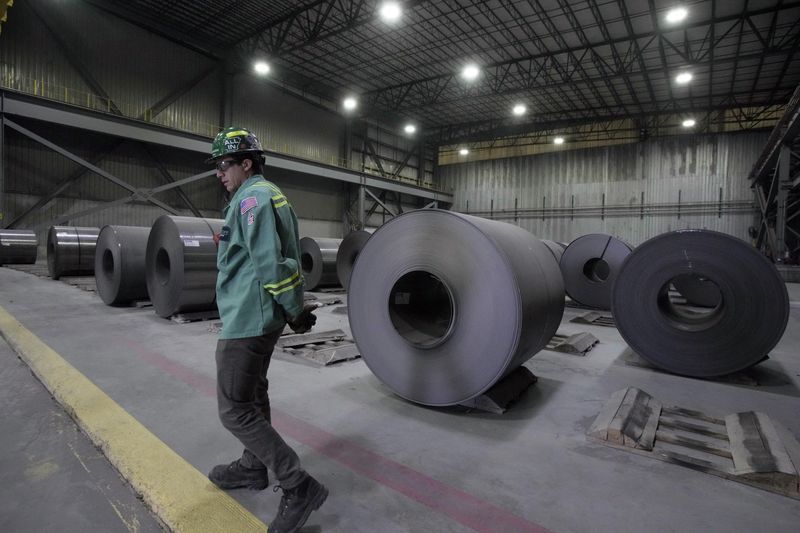
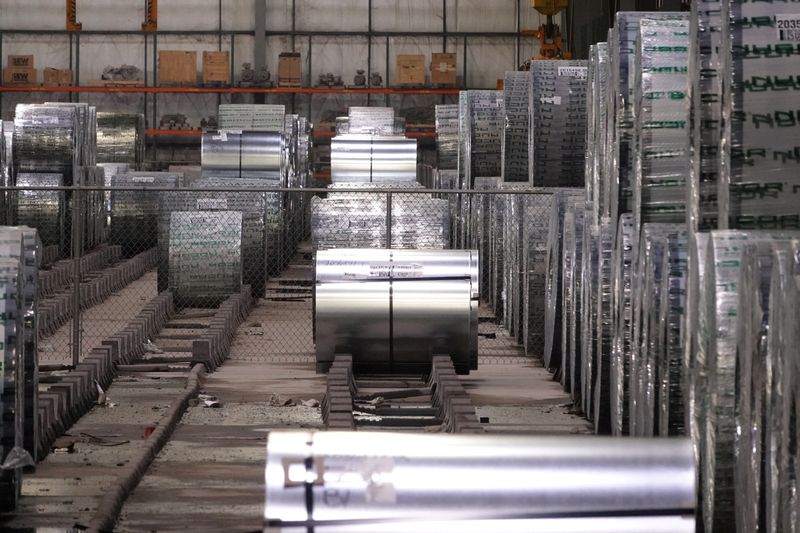
WASHINGTON, Jan 5 (Reuters) – U.S. manufacturing activity slumped to a 14-month low in December, with new orders contracting further and input costs grinding higher as the sector continued to bear the imprint of President Donald Trump’s import tariffs.
The Institute for Supply Management survey on Monday suggested a recovery was unlikely in the near-term, but economists were hopeful of a turnaround this year as Trump’s tax cuts took effect.
Comments from survey respondents continued to single out tariffs as a problem, with some manufacturers of chemical products saying they hoped “for some return to free trade, which is what consumers have ‘voted for’ with their spending.”
Trump has said the tariffs are bringing in hundreds of billions of dollars in new revenue to the U.S. Treasury and that they are improving U.S. economic security.
But beyond the sectors lifted by an Artificial Intelligence investment boom, Trump’s sweeping import duties have undercut manufacturing, even as he touts them as necessary to shore up a long-declining domestic factory base.
Economists have argued it is impossible to restore the industry to its former glory because of structural issues, including worker shortages.
“While a less fluid trade environment and somewhat more favorable business tax environment are positives for activity, we remain cautious on the extent of recovery in traditional cap-ex categories this year,” said Shannon Grein, an economist at Wells Fargo.
The ISM said its manufacturing PMI dropped to 47.9 in the final month of 2025, the lowest level since October 2024, from 48.2 in November. A reading below 50 indicates contraction in manufacturing, which accounts for 10.1% of the economy.
It was the 10th straight month that the PMI remained below the 50 threshold. Economists polled by Reuters had forecast the PMI would be little changed at 48.4. The PMI remained above 42.3, a level that ISM said over time was consistent with an expansion of the overall economy.
Last month’s drop reflected pullbacks in the production and inventories sub-indexes after they improved in November.
“Their contraction this month continues the short-term ‘bubble’ of improvement indicative in the last several months of PMI data, and a hallmark of recent economic uncertainty in manufacturing,” said ISM Manufacturing Business Survey Committee chair Susan Spence.
Last month, 85% of the manufacturing economy’s gross domestic product contracted, a surge from 58% in November, and the percentage of manufacturing GDP in strong contraction increased to 43% from 39% in November, Spence said.
Story Continues
COMMENTS FROM RESPONDENTS ARE DOWNBEAT
Electrical equipment, appliances and components as well as computer and electronic products were the only two industries reporting growth. The remaining 15 industries, including chemical products, miscellaneous manufacturing, machinery and transportation equipment, reported a contraction.
Some makers of fabricated metal products reported that “order levels have continued to decline.” They noted that December was “dismal,” adding “January and February don’t look too good, as bookings are down 25 percent compared to the first two months of 2025.”
Computer and electronic products manufacturers said “margins have deteriorated, as full pass- through of cost increases is not possible.” Transportation equipment makers said that while many customers were ordering for 2026, “those orders are 20 percent to 30 percent below their historical buying patterns,” adding “the general mood of the industry is that the first half of 2026 will be another bust.”
Some electrical equipment, appliances and components manufacturers said “things look a bit bleak overall.” Some makers of miscellaneous products reported that “2025 revenue was down 17 percent due to tariffs.”
The U.S. Supreme Court is set to rule on the legality of the premise Trump has employed for his tariffs sometime in early 2026. Yale Budget Lab estimated that Trump’s protectionist trade policy raised the average tariff on imported goods to nearly 17% from less than 3% last January.
The ISM survey’s forward-looking new orders sub-index was little changed at 47.7 in December from November’s 47.4, marking a fourth straight month of falling demand. This measure has contracted in 10 of the last 11 months with demand curbed by the rise in some goods prices because of the tariffs.
Its measure of manufacturing inventories dropped 3.7 percentage points to 45.2 last month. The production index eased to 51 from 51.4 in November.
Factory input costs, which have contributed to the persistence of inflation that continues to run above the Federal Reserve’s 2% target, remain elevated. ISM’s prices paid index was unchanged at 58.5, higher than forecasts for 57.0.
Amid the soft demand environment, factory employment declined for an 11th straight month, the sector’s longest hiring slump by ISM’s measure in about five years.
The ISM noted that for every comment on hiring, there were three on reducing head counts, adding that companies continued to focus on accelerating staff reductions due to uncertain near- to mid-term demand.
“A number of tariff deals have been struck and many exemptions have been granted over the past two months, and I would expect more of that in the new year,” said Stephen Stanley, chief U.S. economist at Santander U.S. Capital Markets.
“It remains to be seen whether that will be enough to pull the factory sector out of its current malaise,” he added.
(Reporting By Dan Burns and Lucia Mutikani; Editing by Chizu Nomiyama and Alexander Smith)

Source link