
SMITH AND FORD Push East-West Energy, Infrastructure and Manufacturing Ties at Calgary Enserva Event – Canadian Energy News, Top Headlines, Commentaries, Features & Events
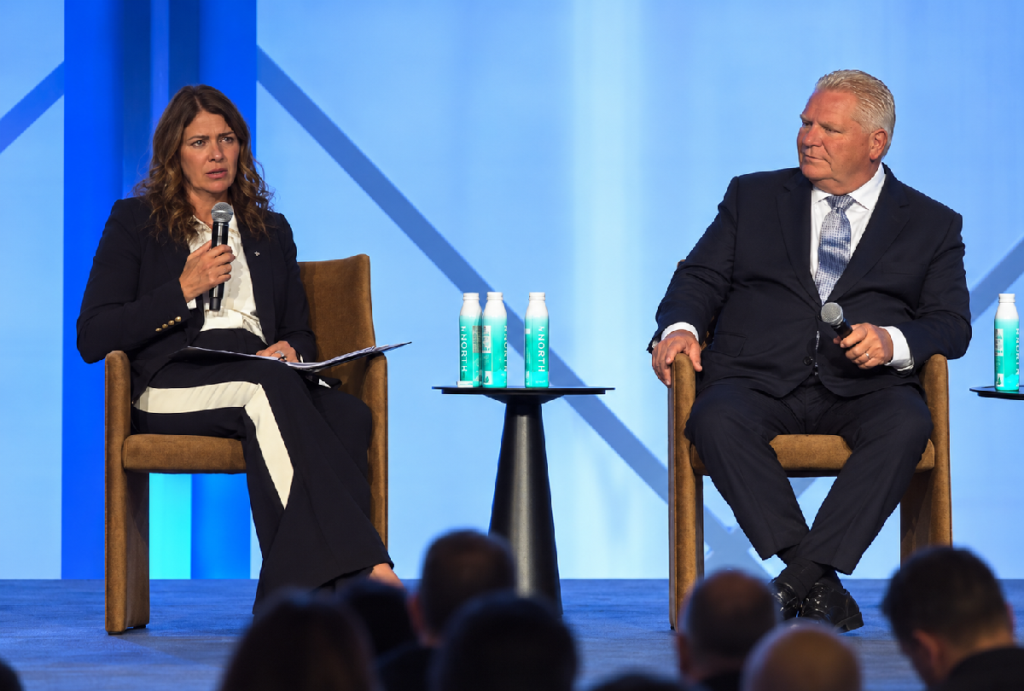


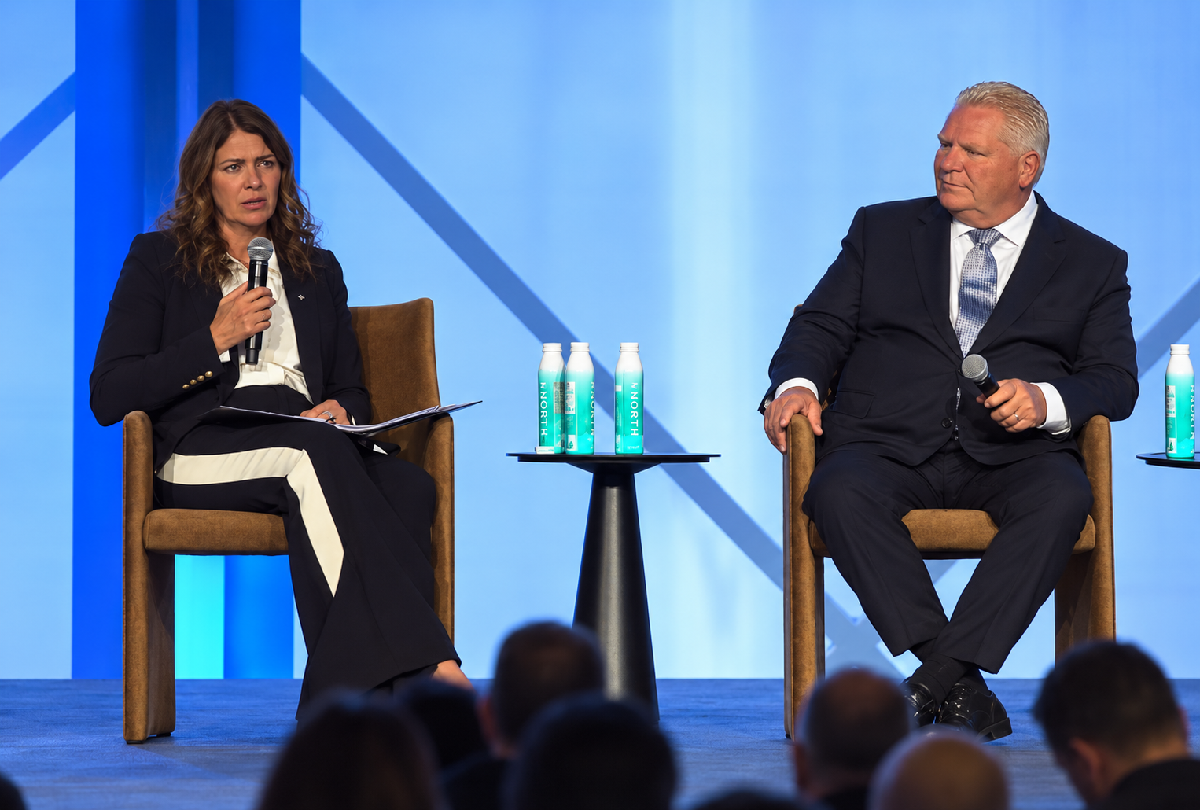
smith ford enserva event 1200x810Premiers Danielle Smith and Doug Ford during a fireside chat hosted by Enserva at the Calgary Telus Convention Centre September 28, 2026 – EnergyNow Media

EnergyNow Media

The two premiers appeared September 28 at the Enserva Speaker Series — Build Canada Stronger: Powering Canada’s Economic Future at the Calgary TELUS Convention Centre. The event brought together energy and business leaders to discuss energy security, infrastructure, trade and Canada’s ability to compete in global markets. It was moderated by Enserva President and CEO Gurpreet Lail. Enserva

The discussion highlighted both areas of agreement and differences between Smith and Ford, particularly on Canada’s evolving relationship with the United States.

Get the Latest Canadian Focused Energy News Delivered to You! It’s FREE: Quick Sign-Up Here

Smith said Alberta’s exposure to U.S. tariffs differs significantly from Ontario’s because most Alberta exports entering the United States are energy products that remain largely tariff-free.

“If you’re looking at a bit of a difference in tone between Premier Ford and I, that’s what it comes down to,” Smith said, pointing to Alberta’s large existing trade relationship with the United States and the role played by cross-border energy companies including Cenovus, TC Energy and Enbridge.

Smith argued that Canada could potentially use energy as the foundation for a broader economic agreement with Washington, suggesting significantly larger volumes of Canadian oil could ultimately move south if a comprehensive Canada-U.S. arrangement were reached.

Ford struck a somewhat different tone but emphasized that he remains strongly supportive of the broader Canada-U.S. relationship.

“I truly love Americans,” Ford said, noting Ontario’s deep economic integration with U.S. manufacturing and trade. He argued for what he called a “Fortress North America” approach in which Canada and the United States strengthen their economic and security relationships while Canada simultaneously expands trade with other countries.

Ford said the current trade friction could ultimately push Canada to become economically stronger.

“He woke us up that we needed to be woken up, and he’s united the country like I’ve never seen before,” Ford said of U.S. President Donald Trump. “We’re going to diversify our trade, but continue building a strong relationship with our closest friends and allies, and that’s the Americans.”

Pipelines Move to Centre Stage

The conversation quickly turned to pipelines and major infrastructure projects — a central theme of the Enserva event, which was promoted around the question of how Canada can build, move and sell more energy to global markets. Enserva

Smith said she has become increasingly confident about the prospects for a proposed new West Coast oil pipeline.

“I’m feeling more and more confident every day that the West Coast oil pipeline is going to potentially even be the first of the projects that go ahead,” she said.

Smith argued that global concerns about supply security have strengthened Canada’s position as a potential long-term supplier to Asian countries seeking greater diversification.

She also pointed to additional export possibilities through the United States and to the proposed Northern Shield corridor, which Alberta and Ontario have been advancing as a potential east-west energy and infrastructure route.

Ford was emphatic that Canada should not be forced to choose between individual pipeline routes.

“We need the West, we need the North, we need the South, and we need to go east,” he said. “Why can’t we do it simultaneously?”

Ford also signalled Ontario’s willingness to participate financially in the Northern Shield concept, saying he evaluates major infrastructure according to its potential return to taxpayers.

“You show me the numbers, and if you can clip those coupons after we get it built every single year, that’s a great investment for our province,” Ford said.

Skilled Labour Could Become the Next Constraint

Both premiers warned that even if governments approve more infrastructure, Canada will need enough skilled workers to actually build it.

Smith pointed to Alberta’s expansion of apprenticeship programs, dual-credit education and partnerships with unions and employers. She said Alberta now has 81,000 apprenticeship positions and argued provinces need greater ability to align immigration with labour-market shortages.

“We need some office jobs, but we sure need a heck of a lot more factory floor jobs and field jobs,” Smith said. Pasted markdown

Ford said Ontario has invested more than $2 billion through its Skills Development Fund and said more than 750,000 people have received training through various programs.

“Number one issue: supply chain and labour. Who is going to fill these jobs?” Ford said, arguing that provinces should have greater influence over immigration programs so workers who have developed needed skills can remain in Canada. Pasted markdown

Alberta Energy Meets Ontario Manufacturing

Perhaps the strongest area of agreement came around creating deeper economic links between Alberta’s energy sector and Ontario’s manufacturing base.

Ford argued governments need to reduce regulatory barriers and create conditions that encourage companies to invest.

“The biggest problem, biggest hurdle is government,” Ford said, pointing to regulation, taxation and permitting as obstacles governments can address. Pasted markdown

Smith then outlined several areas where the provinces could work together directly.

One is natural gas-fired power generation. Alberta wants to substantially expand electricity generation to support industrial growth and data centres, but Smith said global demand for natural gas turbines has created long equipment lead times.

“We’ve got the cheapest natural gas probably anywhere in the world, sitting on an ocean of it,” she said.

Smith suggested Ontario’s manufacturing expertise could help develop a Canadian supply chain for natural gas turbines and related electricity infrastructure.

Another opportunity is steel.

With pipelines, energy projects and other infrastructure requiring enormous volumes of steel pipe and fabricated components, Smith said Alberta should identify the equipment its energy industry will need and work with Ontario manufacturers to produce more of it domestically.

“Let’s figure out how we can identify the steel fabricated items that we need, and let’s work with our friends in Ontario,” Smith said.

She also suggested Canada needs stronger east-west supply chains, rather than relying predominantly on north-south trade with the United States or imported products arriving through West Coast ports. Pasted markdown

The message fit closely with the theme Enserva established for the event. Using Canadian energy, infrastructure and industrial partnerships to improve the country’s economic competitiveness and energy security. Enserva said the discussion was intended to examine how Canada could “look beyond provincial boundaries” to unlock its energy potential.

For Canada’s energy services sector, the discussion underscored a potentially significant shift: major energy development is increasingly being presented not simply as a Western Canadian issue, but as an opportunity to connect Alberta resources, Ontario manufacturing, Canadian workers and new international markets.

And on that central point, Smith and Ford were clearly aligned.

“We’re stronger together,” Ford said.

Free Training

Source link

Ford Urged to Reduce China Ties and Increase US Manufacturing


US Transportation Secretary Sean P. Duffy has urged Ford Motor Company to reduce its reliance on Chinese technology and manufacturing, citing national security concerns.

In a letter to Ford CEO Jim Farley dated 8 September, Duffy criticised the company’s continued use of Chinese technology and partnerships, arguing that Ford should increase its focus on manufacturing and technological development in the US.

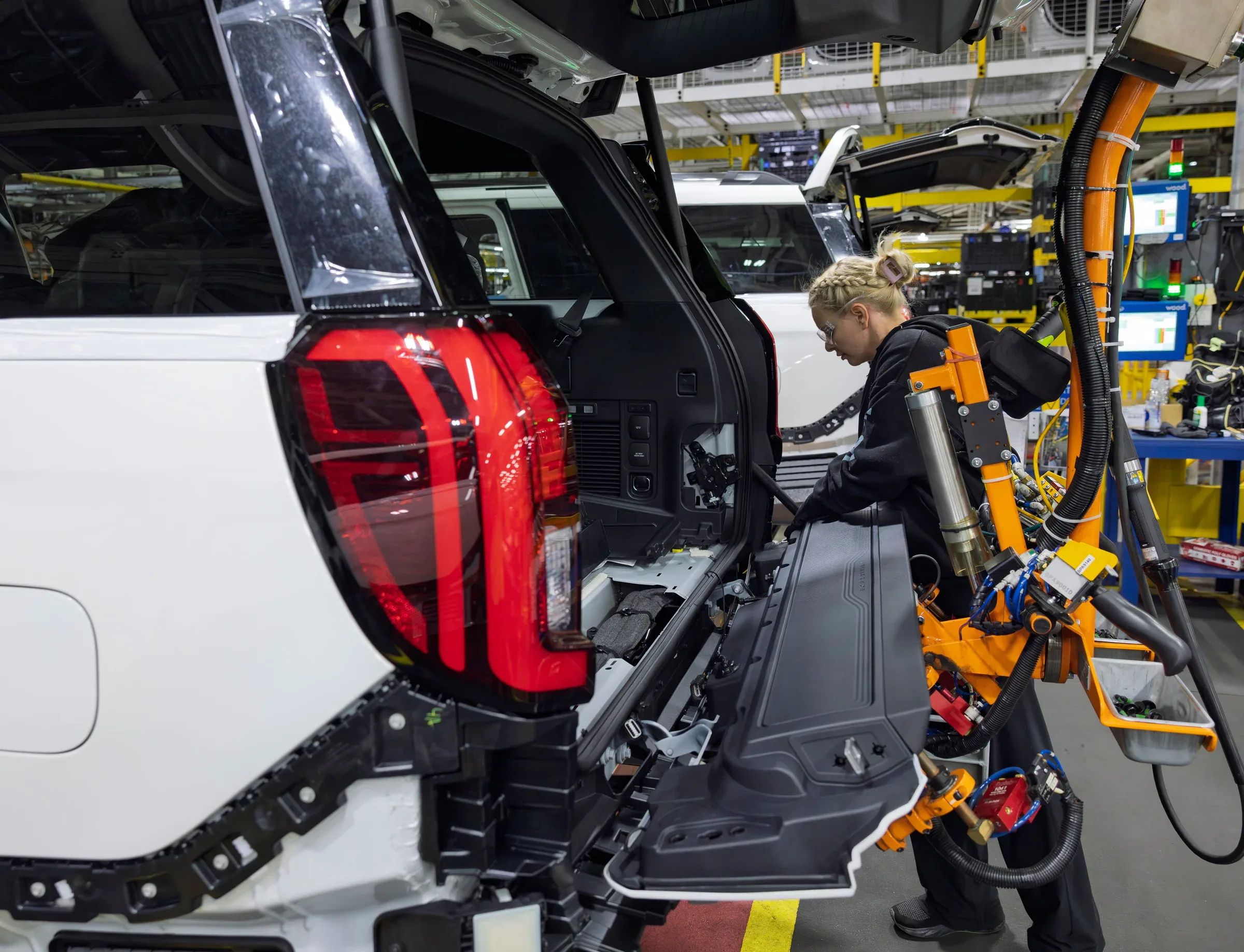
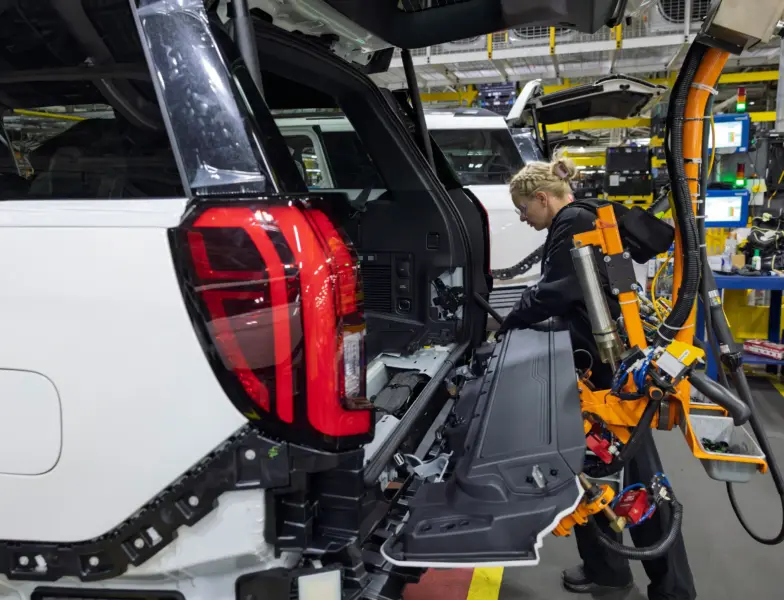
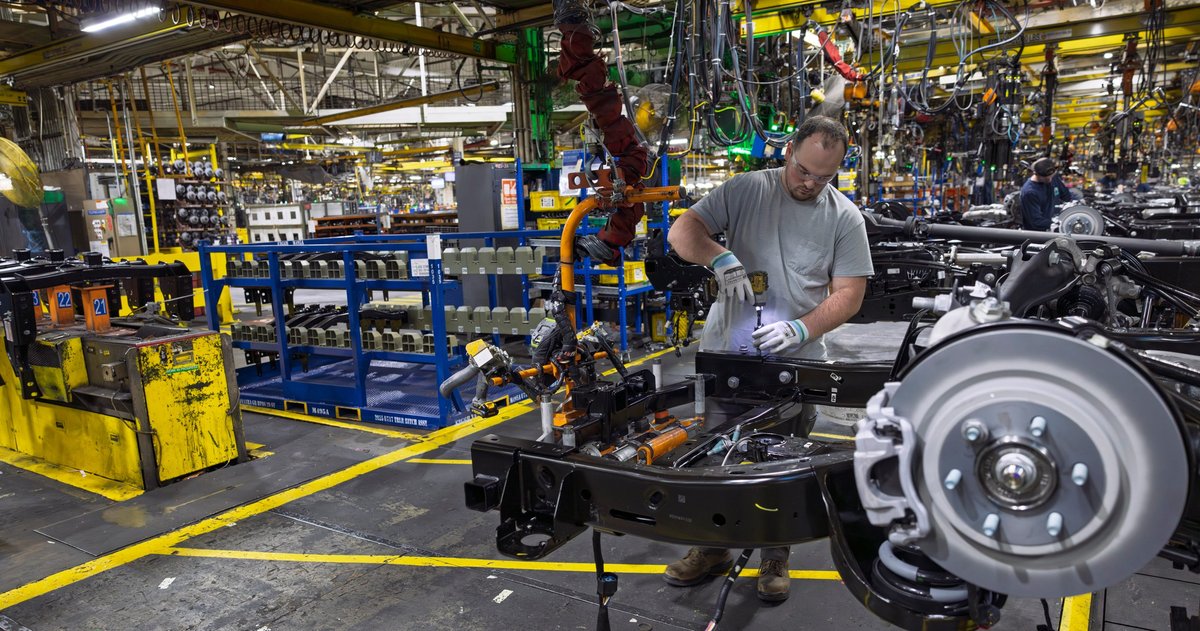
A worker in a Ford factory

Kentucky Truck Plant in Louisville is Ford Motor Company’s largest and highest revenue U.S. manufacturing plant

© Ford

The letter highlights Ford’s use of licensed technology from Chinese battery manufacturer Contemporary Amperex Technology Co. Ltd. (CATL) at its BlueOval Battery Park facility in Marshall, Michigan. Duffy said CATL is included on the US Department of War’s list of banned companies.

Duffy also raised concerns about Ford’s partnership with Chinese automotive manufacturer Geely Auto. The companies recently agreed to work together on low- and zero-emission vehicles at Ford’s factory in Valencia, Spain.

The secretary further pointed to Ford’s decision to delay the return of some Lincoln models to US production until 2030. He said this would leave Ford dependent on China for aspects of its vehicle manufacturing for several more years.

He also called on Ford to develop greater technological independence and make use of US-based manufacturing and engineering capabilities.

U.S. Transportation Secretary Sean P. Duffy said:

When a company intentionally chooses to deepen operational dependencies on strategic competitors, it fails to act as the reliable partner the American public and this DOT require. Iconic American companies, like Ford, are also expected to out-innovate competitors. To that end, they need to chart clear paths to technological self-reliance.

The intervention comes as the Trump administration continues to emphasise domestic manufacturing and reducing US dependence on China across strategic industries, including automotive and battery technology.

Tags

Free Training

Source link

Kentucky: How Ford is Rebuilding US Manufacturing Capacity


Key companies 

Ford

Headquarters: Michigan, US
CEO: Jim Farley

Ford is an international automotive manufacturer producing commercial trucks, passenger cars, utility vehicles and electric mobility solutions. Managing heavy stamping plants, engine facilities and vehicle assembly lines globally, the enterprise scales advanced industrial operations. 

General Motors

Headquarters: Michigan, US
CEO: Mary Barra

General Motors is a major automotive manufacturing enterprise operating vehicle assembly networks, stamping facilities and battery plants across North America. The business drives industrial production by scaling modular electric vehicle platforms, advancing autonomous driving integration and deploying automated assembly technology across its factories. 

Apple

Headquarters: California, US
CEO: John Ternus

Apple is an international technology enterprise designing and manufacturing consumer electronics, personal computer hardware and mobile devices. The corporation manages a vast global hardware supply chain, coordinating specialised component fabrication, precision tooling and high-volume assembly operations. 

Free Training

Source link

Duffy Scolds Ford Over Deals With China in Urging More American Manufacturing


Transportation Secretary Sean Duffy has warned Ford Motor Company about maintaining “questionable foreign alliances” with Chinese companies amid calls from the Trump administration to reshore its manufacturing operations.

In a recent letter to Ford CEO Jim Farley, Duffy derided the company’s recent deals with China-backed auto manufacturers, and said Ford “fails to act as [a] reliable partner” to the American public.

“The company’s recent strategic decisions paint a troubling picture of a foundational American brand actively intertwining its future with Chinese state-backed enterprises,” Duffy wrote in the letter sent Sept. 3 and released publicly Tuesday.

Ford pushed back sharply in a statement to NOTUS on Tuesday, calling Duffy’s letter an error-filled and “wrongheaded attempt to capture headlines.”

The company said it produces more vehicles in the United States and employs more American workers than any other automaker.

Ford has been under continued pressure from the White House to return to domestic supply chains and manufacturing, and recently announced it would relocate manufacturing operations of its Lincoln models from China to the United States by 2030.

Commerce Secretary Howard Lutnick recently celebrated the announcement as a tariff success, but Duffy asserted the four-year timeline “leaves an unacceptable, multi-year window of reliance on Chinese manufacturing while depriving skilled American workers of vital manufacturing jobs.”

Duffy went on to highlight Ford’s dependence on licensed technology from Chinese battery manufacturer Contemporary Amperex Technology Co., Limited — a company that appears on the Defense Department’s list of banned companies. He also criticized Ford over a new deal with Chinese automotive company Geely Auto to build zero-emission vehicles at a Ford factory in Spain.

Ford defended its arrangement with Chinese battery makers, saying its Michigan battery hub is owned and operated by Ford and can’t be classified as a foreign-owned manufacturing operation. The company said Duffy’s assessment of its operations in Spain are also fraught.

“Ford supports the Trump administration’s vision for advancing American innovation and manufacturing,” Ford’s response states. “Had Secretary Duffy reached out before issuing his letter to the press, we would have been happy to share more details about Ford’s U.S. commitment.”

Free Training

Source link

Ford Shifts Lincoln Production Home: Strengthening U.S. Manufacturing Edge


Ford Motor Company announced plans to relocate the production of certain Lincoln models from China to the United States by the year 2030. Ford’s CEO emphasized that this decision, while challenging, is essential to fortify America’s auto manufacturing sector in light of significant import tariffs.

The primary vehicles affected, such as the Lincoln Nautilus, face a hefty U.S. import tariff of 52.5%. These tariffs, alongside restrictions from the Connected Vehicle Rule, have compelled automakers to reconsider their international production strategies. Ford’s decision reflects a wider industry trend, as evidenced by General Motors planning to move Buick Envision production stateside.

The move is part of Lincoln’s strategy to enhance its U.S. production capabilities, building on existing operations in Kentucky and Illinois. Ford’s commitment to domestic production highlights an industry shift towards mitigating regulatory risks and strengthening the U.S. manufacturing edge amid evolving trade policies.

(With inputs from agencies.)

Free Training

Source link

Ford (F) Explores U.S. Manufacturing Ties with Chinese Automaker


Key Takeaways:

  • Ford (F, Financial) is exploring strategic partnerships with Chinese automotive firms to enhance its market presence in the U.S.
  • Ford’s financial health shows mixed signals with strong revenue but challenges in profitability and debt management.
  • Valuation metrics suggest Ford is trading near historical highs, with a focus on improving operational efficiency.

Ford (F) is in discussions with senior U.S. government officials regarding a strategy for Chinese automotive companies to produce vehicles in the United States through partnerships with American firms. These conversations, involving CEO Jim Farley, propose a basic framework where Chinese manufacturers could engage in joint ventures with U.S. automotive companies, provided the American partner maintains majority control. This initiative aims to foster collaboration between Chinese and domestic automakers, enhancing their presence in the U.S. market.

Ford Motor Co. manufactures automobiles under its Ford and Lincoln brands. In March 2022, the company announced that it will run its combustion engine business, Ford Blue, and its BEV business, Ford Model e, as separate businesses but still all under Ford Motor. The company has nearly 13% market share in the United States, about 10% share in the UK, and under 2% share in China including unconsolidated affiliates. Sales in the US made up about 68% of 2024 total company revenue. Ford has about 171,000 employees, including about 56,500 UAW employees, and is based in Dearborn, Michigan.

With a market capitalization of $56.33 billion, Ford operates within the Consumer Cyclical sector, specifically in the Vehicles & Parts industry. The company’s strategic positioning is crucial as it navigates the competitive automotive landscape.

Financial Health Analysis

Ford’s financial performance presents a complex picture:

  • Revenue Growth: Ford reported a revenue growth of 10.8% over the past three years, indicating a positive trajectory in sales.
  • Profitability: The company faces challenges with a negative EPS of -2.07 and an operating margin of 1.91%, reflecting operational inefficiencies.
  • Balance Sheet Strength: Ford’s debt-to-equity ratio stands at 3.47, highlighting significant leverage, while the current ratio of 1.12 suggests adequate short-term liquidity.
  • Warning Signs: The Altman Z-Score of 1.05 places Ford in the distress zone, indicating potential financial instability.

Valuation & Market Sentiment

Ford’s valuation metrics provide insights into its market positioning:

  • Valuation Ratios: The P/B ratio of 1.19 and P/S ratio of 0.3 are near historical highs, suggesting the stock may be overvalued.
  • Analyst Targets: The target price is set at $13.73, with a moderate recommendation score of 3.
  • Technical Indicators: The RSI of 56.97 indicates a neutral market sentiment, while moving averages suggest a stable trading pattern.
  • Ownership: Institutional ownership is at 62.35%, reflecting strong interest from large investors.

Risk Assessment

Ford’s risk profile is shaped by several factors:

  • Financial Health Grades: The Beneish M-Score of -2.71 suggests Ford is unlikely to be a financial manipulator.
  • Sector-Specific Risks: As a cyclical company, Ford is exposed to economic fluctuations that can impact demand for vehicles.
  • Volatility and Beta: With a beta of 1.38, Ford’s stock is more volatile than the market, indicating higher risk.
  • Upcoming Catalysts: Strategic partnerships and potential joint ventures with Chinese firms could serve as significant growth drivers.

In conclusion, while Ford is actively pursuing strategic initiatives to enhance its market presence, the company’s financial health and valuation metrics suggest a cautious approach. Investors should consider the inherent risks and opportunities as Ford navigates the evolving automotive landscape.

This stock alert was generated using automated technology and GuruFocus financial data to provide readers with timely and accurate market reporting. This content was reviewed by GuruFocus editorial team prior to publication. Please send any questions or comments about this story to [email protected].

Free Training

Source link