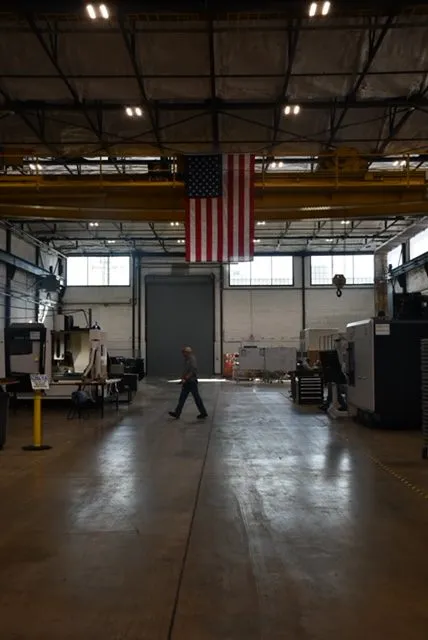
BD To Invest $19 Billion In U.S. Through Government Partnership To Expand Medical Manufacturing


BD has entered into a partnership with the U.S. government that includes plans for the medical technology company to invest $19 billion in the United States over several years, with $3 billion specifically directed toward expanding domestic manufacturing.

The agreement is intended to strengthen U.S. healthcare supply chains and increase domestic production of essential medical consumables used by hospitals and healthcare providers.

BD, formally Becton, Dickinson and Company, said the broader $19 billion commitment will include capital, operational and supply chain investments across its U.S. business.

Of that total, $3 billion is expected to support manufacturing expansion at strategic production sites across the country.

The company plans to expand end-to-end U.S. production by approximately 5 billion essential medical consumables annually.

That additional capacity is expected to increase BD’s share of essential medical consumables supplied domestically to roughly 80%.

BD also intends to manufacture 100% of the needles it supplies for use in the United States domestically, using American-made steel.

The partnership reflects efforts by the federal government and BD to increase domestic production capacity for medical products considered important to healthcare delivery and emergency preparedness.

BD is the nation’s largest manufacturer of essential medical consumables, and the company said its products are used in approximately 90% of U.S. hospital visits.

The agreement also provides BD with relief from future tariffs imposed under Section 232 on covered products and manufacturing inputs.

That tariff treatment remains subject to the final scope and implementation of any future Section 232 actions and BD’s achievement of agreed milestones.

Because tariff rates, covered products and implementation timing have not yet been finalized, BD is not currently estimating the financial impact of that portion of the agreement.

The company expects to provide additional information once the Section 232 tariffs are finalized.

BD already operates a substantial U.S. manufacturing network, with facilities in locations including Columbus and Broken Bow, Nebraska; Canaan, Connecticut; Añasco, Puerto Rico; Sandy, Utah; El Paso, Texas; Covington, Georgia; and Sumter, South Carolina.

The new investment is intended to further expand that domestic footprint while increasing the resilience of the company’s supply chain.

BD has operated for nearly 130 years and has a long history of supplying essential medical products during major healthcare events.

The company cited its development of the first disposable syringe used in efforts against polio and the delivery of more than 2 billion additional devices during the recent pandemic as examples of its role in responding to large-scale public health needs.

BD said the new commitments are expected to help establish one of the world’s most resilient manufacturing bases for essential medical consumables while improving the reliability of supplies available to U.S. healthcare providers.

The partnership also forms part of BD’s broader strategy of investing in innovation, manufacturing and healthcare infrastructure while maintaining its global operations.

BD employs more than 60,000 people worldwide and develops technologies across medical essentials, connected care, biopharma systems and interventional care.

KEY QUOTES:

“This agreement reflects a shared commitment between the U.S. Government and BD to strengthening America’s healthcare infrastructure, expanding U.S. manufacturing capacity and supporting reliable access to essential medical technologies, ultimately building a more resilient healthcare system for the future. The administration recognizes the importance of investing in a stronger, more secure healthcare supply chain, and BD is uniquely positioned to help bring that vision to life through our scale, innovation expertise and longstanding U.S. manufacturing footprint.

For nearly 130 years, BD has partnered with health systems and governments in the U.S. and around the world to meet critical healthcare challenges. We are proud to build on that legacy through significant investment in U.S. manufacturing and innovation, while continuing to advance healthcare and serve patients, providers and communities around the world who depend on us.”

Tom Polen, Chairman, CEO and President of BD

Thank you for visiting Pulse 2.0. We work hard every day to bring leaders and decision makers like you the latest intelligence on business, finance, capital markets, deal flow, law, tech, and AI. Click here to subscribe to the Pulse 2.0 Newsletter.

Free Training

Source link

Washington Examiner | Political News and Conservative Analysis About Congress, the President, and the Federal Government


The simple reality is Iran cannot have a nuclear weapon, and foreign countries like China and India must not buy Iranian oil. The most important lesson from the prolonged Strait of Hormuz closure is that an overreliance on foreign countries for critical products supporting U.S. economic and national security harms America.  

Having served in the U.S. Congress for 14 years and as Chairman of the House Energy and Commerce Subcommittee on Energy, Climate and Grid Security, I have a vested interest in the strength of our critical minerals and materials that form the bedrock of our national security. Weak Democratic leadership for years favored “globalist” trade policies that offshored millions of American manufacturing jobs and did not favor energy independence. 

The No. 1 culprit in years past has consistently been China, followed by India and the Socialist Republic of Vietnam. The Chinese Communist Party strategically subsidizes the manufacturing of affiliated Chinese companies, pushing prices down to unsustainable levels for competitors who operate in the free market. Meanwhile, American manufacturers are the first to pay the price when these products are dumped into America. In recent years, India has become the new China, as they flood the U.S. with cheap, inferior materials, often originating from socialist countries. 

Fortunately, Trump is on a mission to hold foreign countries that cheat accountable. Historic antidumping and countervailing cases, such as the petitions brought forward by the cabinet, countertop and steel industries, demonstrated that U.S. manufacturers are eager to continue investing in America and willing to fight for their survival. 

Thomas Tull (Shannon Venditti/Washington Examiner)
While Trump’s strong 50% tariff is working to rebuild certain domestic industries like steel and aluminum, others remain in limbo as import surges continue to decimate manufacturing towns across America’s heartland. For example, while consumer demand for housing products such as quartz countertops has risen by 62% in the past five years, imports have flooded into the country, increasing by 78%, while U.S. manufacturing is down nearly 20% with plants laying off hundreds of workers. As foreign companies subsidized by their own governments get rich, thousands of American families feel the pain. 

Trump recognizes what is happening and is targeting countries complicit in China’s cheating with a broad range of national security tariffs. Once again, major American industries are also stepping up to the plate, with a coalition of quartz countertop manufacturers bringing forward a historic Global Safeguard case to restore free and fair trade. Already, the bipartisan U.S. International Trade Commission has recommended strong relief in recognition of the severe injury inflicted by India, Cambodia, Thailand, Vietnam and foreign countries destroying 100,000 American jobs. 

Multi-billion-dollar “globalist” importers like MSI with major operations in India are clearly suffering from Trump Derangement Syndrome, bankrolling Trump-hating Democrats, and seeking to destroy manufacturing towns all across America. The truth is that Trump will never stop fighting for the millions of forgotten men and women of America who stood with him in 2024. These American manufacturing workers in small towns will stand with Trump again in the midterm elections if he keeps fighting for them and their families from Georgia to Minnesota and across America’s heartland.  

TO END THE IRAN THREAT, AMERICA MUST DISMANTLE THE REGIME’S FOUNDATIONS

As Trump fights to bring back millions of domestic manufacturing jobs, from steel to semiconductors to household items such as quartz countertops and cabinetry, we must not cave to globalist special interests. To protect our economic and national security, we must hold India, China, and all foreign countries that cheat accountable. 

As the Iranian leadership chants “death to America” and seeks support from rogue regimes, now is the time to stand strong and rally around Trump, who is laser-focused on bringing back critical domestic industries and keeping America safe. With the midterm elections approaching, let’s remember that Trump is following the Reagan doctrine of “Peace Through Strength” and know that under his strong leadership, the best is yet to come. 

Congressman Jeff Duncan served as chairman of the House Energy and Commerce subcommittee on energy and grid security. The congressman served seven terms in the U.S. House of Representatives from 2011 to 2025.

Free Training

Source link

Johnson & Johnson Reaches Agreement with U.S. Government to Improve Access to Medicines and Lower Costs for Millions of Americans; Delivers on U.S. Manufacturing and Innovation Investments


Voluntary agreement will allow millions of Americans to purchase medicines at significantly discounted rates


Agreement provides Johnson & Johnson pharmaceutical products an exemption from U.S. tariffs

Company announces two new additional manufacturing facilities to be built in North Carolina and Pennsylvania; continues to deliver on $55 billion U.S. investment

NEW BRUNSWICK, N.J.–(BUSINESS WIRE)–Johnson & Johnson (NYSE: JNJ) (the “Company”), healthcare’s leading, most comprehensive innovation powerhouse, today announced a voluntary agreement with the Trump Administration to improve access to medicines and lower costs for millions of American patients. The joint agreement meets the requests laid out by President Trump to the industry and provides the Company’s pharmaceutical products an exemption from tariffs1.

“Today’s agreement shows that when the public and private sectors work together towards shared goals, we can deliver real results for patients and the U.S. economy,” said Joaquin Duato, Chairman and Chief Executive Officer, Johnson & Johnson. “I’m proud that Johnson & Johnson is answering President Trump’s call to lower drug prices for everyday Americans while maintaining our role in improving and saving lives and ensuring that the United States continues to lead the world in healthcare innovation.”

Improving Access and Lowering Costs for U.S. Patients

Johnson & Johnson is working with the Trump Administration to improve access to medicines and lower costs for millions of American patients. The Company is:

  • Participating in TrumpRx.gov, a direct to patient platform, which will allow millions of American patients to purchase medicines from Johnson & Johnson at significantly discounted rates.
  • Enabling American patients to access medicines at comparable prices to other developed countries.
  • Providing Medicaid program access at comparable prices to other developed countries.
  • Continuing to support the Administration’s efforts to ensure better recognition of the value of health care across developed markets globally.

Delivering On Our $55B U.S. Investment

Johnson & Johnson also continues to deliver on our previously announced $55 billion investment to support U.S. manufacturing, research and development, and technology investments by early 2029. In just the last 10 months, the Company has initiated billions of dollars in investment in U.S. manufacturing, which will support the Company’s goal of manufacturing the vast majority of its advanced medicines in the U.S. to meet the needs of U.S. patients.

Today, as part of the $55 billion investment, the Company is announcing two new U.S. manufacturing facilities, including a next generation cell therapy manufacturing site in Pennsylvania and a state-of-the-art drug product manufacturing facility in North Carolina.

Additionally, construction is progressing on our $2 billion state-of-the-art biologics manufacturing facility in Wilson, North Carolina, which the Company broke ground on last year. That project will create approximately 5,000 skilled manufacturing and construction jobs in the state. Johnson & Johnson is already ramping up the hiring of advanced manufacturing employees to work at the facility.

In September, the Company also secured a new 160,000+ square foot dedicated biopharmaceutical manufacturing site in Holly Springs, North Carolina. The $2 billion commitment over the next 10 years will create approximately 120 new jobs in North Carolina.

Johnson & Johnson expects to announce additional U.S. investments later this year.

About Johnson & Johnson:

At Johnson & Johnson, we believe health is everything. Our strength in healthcare innovation empowers us to build a world where complex diseases are prevented, treated, and cured, where treatments are smarter and less invasive, and solutions are personal. Through our expertise in Innovative Medicine and MedTech, we are uniquely positioned to innovate across the full spectrum of healthcare solutions today to deliver the breakthroughs of tomorrow and profoundly impact health for humanity. Learn more at www.jnj.com.

Cautions Concerning Forward-Looking Statements

This press release contains “forward-looking statements” as defined in the Private Securities Litigation Reform Act of 1995. The reader is cautioned not to rely on these forward-looking statements. These statements are based on current expectations of future events. If underlying assumptions prove inaccurate or known or unknown risks or uncertainties materialize, actual results could vary materially from the expectations and projections of Johnson & Johnson. Risks and uncertainties include, but are not limited to: challenges and uncertainties inherent in product research and development, including the uncertainty of clinical success and of obtaining regulatory approvals; uncertainty of commercial success; manufacturing difficulties and delays; competition, including technological advances, new products and patents attained by competitors; challenges to patents; product efficacy or safety concerns resulting in product recalls or regulatory actions; changes in behavior and spending patterns of purchasers of health care products and services; changes to applicable laws and regulations, including global health care reforms; and trends toward health care cost containment. A further list and descriptions of these risks, uncertainties and other factors can be found in Johnson & Johnson’s most recent Annual Report on Form 10-K, including in the sections captioned “Cautionary Note Regarding Forward-Looking Statements” and “Item 1A. Risk Factors,” and in Johnson & Johnson’s subsequent Quarterly Reports on Form 10-Q and other filings with the Securities and Exchange Commission. Copies of these filings are available online at www.sec.gov, www.jnj.com, www.investor.jnj.com or on request from Johnson & Johnson. Johnson & Johnson does not undertake to update any forward-looking statement as a result of new information or future events or developments.

1 Specific terms of the agreement remain confidential.

Contacts

Media contact:
media-relations@its.jnj.com

Investor contact:

investor-relations@its.jnj.com

Free Training

Source link