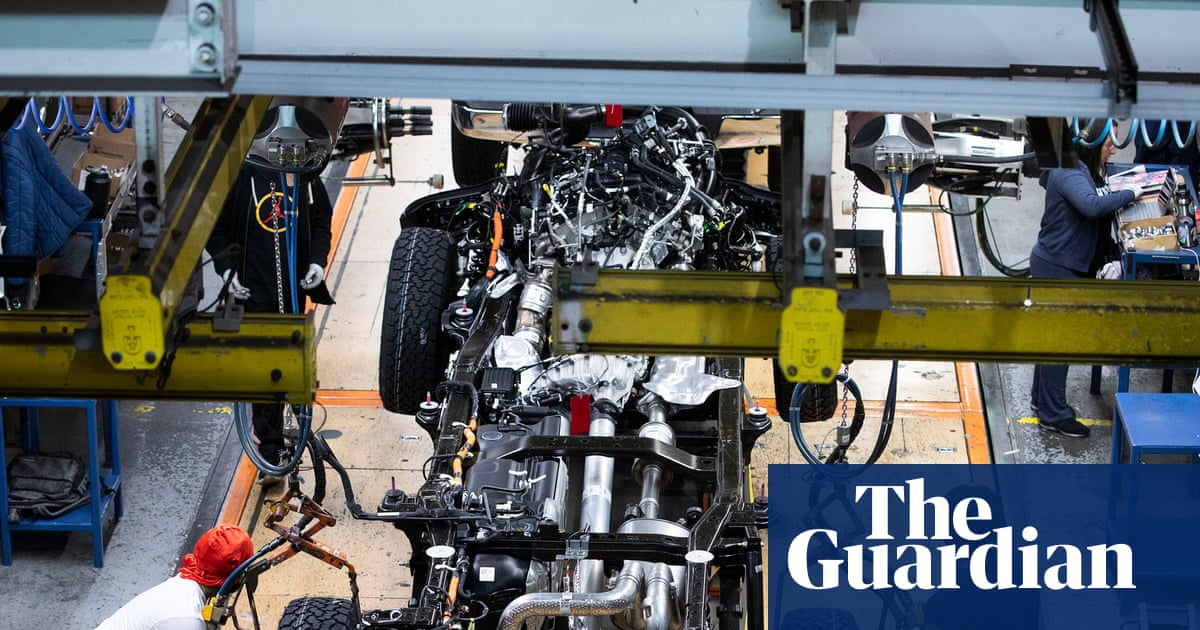
These U.S. companies think Trump’s tariffs are great. Here’s why
It’s hard to imagine that any CEO in the United States likes the tariffs imposed by U.S. President Donald Trump more than Marc Bitzer does.
Bitzer is the chief executive of Whirlpool Corp., the only major appliance company that makes the bulk of its products in the U.S.
At one of the company’s factories — a giant plant in Clyde, Ohio, that has the capacity to produce 22,000 washing machines per day — Bitzer announced Whirlpool’s plans for a new $60-million US facility in nearby Perrysburg, which would create 150 jobs.
He told the audience that Whirlpool used to feel it did not have a fair chance against its chiefly Asia-based competitors because of their ability to manufacture using cheap, subsidized steel and other components.
“It felt occasionally, being the last U.S.-based appliance manufacturer, like being in a boxing fight with three other guys in the ring, and you have one arm tied behind your back,” he said.
Then along came the Trump administration and its sweeping global tariff regime, which Bitzer says has given the country an opportunity to start a renaissance in U.S. manufacturing. It’s a sentiment you rarely hear from the many Americans struggling with rising costs triggered in part by Trump’s trade policies.
 Marc Bitzer is the chief executive of Whirlpool Corp., the only major home appliance company that manufacturers the bulk of its products in the U.S. (Mike Crawley/CBC)
“Tariffs do create a level playing field, and that’s a big deal,” Bitzer said, a line that triggered applause from the audience, a mix of plant workers and elected officials.
The White House is on a push to showcase the success stories of U.S. manufacturers who are benefitting from tariffs. The push saw U.S. Trade Representative Jamieson Greer, a member of Trump’s cabinet, setting out last week on a two-day tour of factories in Ohio and Michigan, including the Whirlpool plant.
‘Tariffs on all that crap from China’
CBC News followed Greer on his itinerary, which also included stops at a company near Detroit that builds drones and at the biggest U.S. manufacturer of solar energy systems, near Toledo, Ohio.
“Under other presidents, the job of the U.S. trade representative was usually to do trade deals to try to import as much crap as possible from China,” Greer told the audience at Whirlpool.
“Under President Trump, the job is to put tariffs on all that crap from China,” he said.
 Jamieson Greer, the U.S. trade representative in the Trump administration, attends an event in Warren, Mich., on Thursday as part of a push by the White House to showcase success stories of U.S. manufacturers who are benefitting from tariffs. (Mike Crawley/CBC)
After Whirlpool’s CEO praised the Trump administration for its tariff policies, Greer praised the company for its long-standing commitment to making its washing machines, dryers, refrigerators and more in the U.S.
It revealed something of a common theme to Greer’s tour: the companies he visited were already doing “Made in America” manufacturing before Trump returned to the White House in 2025 and launched his tariff-powered global trade war.
Ultimate goal is more U.S. manufacturing
At each stop on the tour, Greer laid out his pitch for the administration’s tariff regime. And in contrast to Trump, who has imposed or threatened tariffs for at times wildly divergent reasons, Greer puts forward a consistent rationale.
“The ultimate goal is we want to make sure that we have more manufacturing in the United States,” Greer told reporters at one of the Michigan stops, the plant where automaker Stellantis assembles the Jeep Wagoneer.
“The more you make here, the more the tariffs benefit you,” he said later that day at the Auburn Hills, Mich., location of Firefly Drone Systems and Swarm Defense Technologies.
 An employee of Firefly Drone Systems works at the company’s factory in Auburn Hills, Mich. (Mike Crawley/CBC)
Like Whirlpool, the two drone companies were making their products in the U.S. before Trump’s tariffs were imposed.
“It’s been very important to us from the beginning that we manufacture close to home,” Kyle Dorosz, CEO of Swarm and Firefly, said in an interview.
Companies want ‘level playing field’
So while tariffs did not drive the companies’ initial moves to make their products in the U.S., Trump’s trade war means the decision is paying off.
“It’s actually created a competitive advantage for us compared to some of our other competitors, especially on the commercial side, who were manufacturing overseas and their entire system was now subject to tariffs,” Dorosz said.
There’s a similar take on tariffs at First Solar, which manufactures large-scale solar power systems at U.S. factories like the one Greer visited near Toledo.
With its rivals either based in China or using largely Chinese-made components, First Solar committed seven years ago to sourcing its materials domestically and making its products in U.S. factories, says CEO Mark Widmar.
 Greer, left, speaks with Mark Widmar, CEO of First Solar, the largest solar power manufacturer that makes its products in the U.S. (Mike Crawley/CBC)
“China has chosen to compete in a way that it would almost make it unmanageable for any company, regardless of your industry,” Widmar told reporters as he stood beside Greer after their factory tour.
“I don’t need to be protected. I just need a level playing field,” he said. “Give me a level playing field, we’ll out-innovate and we’ll thrive.”
Manufacturing jobs declined since Trump inauguration
While Greer’s tour highlighted companies that have been making their products in the U.S. for years, it’s more difficult for the administration to showcase manufacturers that have set up shop in the U.S. or added jobs specifically as a result of the tariffs.
Since Trump’s return to the White House, U.S. manufacturing job numbers have continued to decline. According to Federal Reserve Bank statistics, there were 12,673,000 manufacturing jobs at Trump’s inauguration in January of last year, a figure that has since dipped to 12,591,000.
One win for the tariff regime that Greer pointed to: the announcement in October by Stellantis that it would shift production of the Jeep Compass from Brampton, Ont., to a previously shuttered plant in Belvidere, Ill.
Greer says the administration isn’t singling out Canada with its tariff policy, but has made a strategic decision to bring as much auto manufacturing to the U.S. as possible.
 Dozens of Whirlpool employees at the washing machine plant in Clyde, Ohio, were in the audience for the company’s announcement of investing $60 million US to build a new manufacturing plant producing appliance components in nearby Perrysburg. (Mike Crawley/CBC)
“It’s not really about Canada per se. Our action on autos is global in nature,” Greer told CBC News.
Asked if the administration sees Canada as a partner or competitor, Greer refused to bite.
“I don’t think it’s really binary, right? There are some things we import from Canada that we need,” he said.
It’s a statement that contrasts notably with Trump’s oft-repeated yet factually incorrect line that the U.S. doesn’t need anything from Canada.
Greer will be a key negotiator in the upcoming talks on the future of the Canada-U.S.-Mexico Agreement (CUSMA), the trade deal that currently exempts the vast bulk of Canada’s export from tariffs.
Each country has until July 1 to announce whether it intends to renew the agreement, and Greer told CBC News in February that tariffs will be a part of any Trump administration trade deal with Canada.
Back at the Whirlpool plant, he told the audience that he’s in the Oval Office on a near-daily basis.
“Almost every day, President Trump says, ‘Do you think the tariffs should be higher, Jamieson?'” Greer said. His response: “We’re working on it, sir. We’re working on it.”