
Mobilicom Establishes First U.S. Manufacturing Operations to Address Growing Domestic Defense Demand


Mobilicom Limited Mobilicom Limited

Engages U.S.-Based Contract Manufacturer, Targeting Initial Domestic Production by Year-End

Expands Production Capacity and Supports Alignment with Evolving U.S. Federal Procurement and NDAA Requirements

Palo Alto, California, Nov. 12, 2026 (GLOBE NEWSWIRE) — Mobilicom Limited (Nasdaq: MOB) (“Mobilicom” or the “Company”), a provider of cybersecure solutions for drones and robotics, today announced that it has engaged a U.S.-based contract manufacturer with extensive experience supporting the stringent requirements of the defense and aerospace industries, as part of its strategy to expand and onshore production of its proprietary cybersecure datalink product family. The milestone marks the establishment of Mobilicom’s first U.S. manufacturing operations in Phoenix, Arizona, with initial domestically manufactured products currently expected by the end of 2026.

“We are proud to deliver on our 2026 strategic initiative to establish U.S.-based manufacturing operations,” said Oren Elkayam, CEO of Mobilicom. “Our technologies have been trusted, validated and deployed across U.S. defense programs. Expanding our manufacturing footprint into the U.S. is the next step in scaling production to meet growing customer demand, shorten delivery lead times and enhance supply chain resilience. With our first U.S.-manufactured products expected by year-end, we believe Mobilicom will be well-positioned to support larger-scale deployments and capture additional market share in 2027 and beyond.”

Mobilicom’s expansion into U.S. manufacturing builds on its established presence in the U.S. defense market, including the integration of its technologies into a Tier-1 drone platform selected for a U.S. Department of War Program of Record. The Company’s cybersecure solutions are NDAA-compliant and have been included in the FCC’s initial Trusted Drones exemptions and the Department of War’s Blue UAS Framework, reinforcing its position as a trusted supplier of mission-critical technologies for U.S. defense applications.

About Mobilicom

Mobilicom is a leading provider of cybersecure robust solutions for the rapidly growing defense and commercial drones and robotics market. Mobilicom’s large portfolio of field-proven technologies includes cybersecurity, software, hardware, and professional services that power, connect, guide, and secure drones and robotics. Through deployments across the globe with over 50 customers, including the world’s largest drone manufacturers, Mobilicom’s end-to-end solutions are used in mission-critical functions.

For investors, please use https://ir.mobilicom.com/
For company, please use www.mobilicom.com

Forward Looking Statements

This press release contains “forward-looking statements” that are subject to substantial risks and uncertainties. For example, the Company is using forward-looking statements when it discusses its expectation to establish U.S. manufacturing operations through a U.S.-based contract manufacturer; the anticipated timing of initial domestically manufactured products, including by the end of 2026; the expected benefits of U.S. manufacturing, including increased production capacity, shorter delivery lead times and enhanced supply chain resilience; anticipated alignment with U.S. federal procurement and NDAA requirements; growing customer demand; and the Company’s ability to support larger-scale deployments and gain additional market share in 2027 and beyond. All statements, other than statements of historical fact, contained in this press release are forward-looking statements. Forward-looking statements contained in this press release may be identified by the use of words such as “anticipate,” “believe,” “contemplate,” “could,” “estimate,” “expect,” “intend,” “seek,” “may,” “might,” “plan,” “potential,” “predict,” “project,” “target,” “aim,” “should,” “will” “would,” or the negative of these words or other similar expressions, although not all forward-looking statements contain these words. Forward-looking statements are based on Mobilicom Limited’s current expectations and are subject to inherent uncertainties, risks and assumptions that are difficult to predict. Further, certain forward-looking statements are based on assumptions as to future events that may not prove to be accurate. These and other risks and uncertainties are described more fully in the Company’s filings with the Securities and Exchange Commission.

Forward-looking statements contained in this announcement are made as of this date, and Mobilicom Limited undertakes no duty to update such information except as required under applicable law.

For more information on Mobilicom, please contact:

Chris Donovan
Mobilicom Ltd
ir@mobilicom.com

Free Training

Source link

Factory job growth hits 5-year peak as US manufacturing keeps growing in October


The American manufacturing sector grew in October, with strong demand driving factory hiring to levels not seen in over five years.

S&P Global and the Institute for Supply Management released reports Monday on the health of the U.S. manufacturing sector. Both reports draw on surveys of manufacturing executives.

ISM showed the manufacturing sector expanded in October for the 10th straight month, which followed a 10-month streak of contraction.

ISM’s monthly surveys are used to generate a purchasing managers’ index, or PMI. That headline index registered 55.5%, near its 12-month high and a percentage point above September.

A manufacturing PMI above 47.5% generally indicates an expansion of the overall economy, according to ISM.

All five subindexes that directly factor into the PMI were in expansion territory. Those are new orders, production, employment, supplier deliveries, and inventories.

ISM also said five of the six largest manufacturing industries expanded in October.

Meanwhile, the S&P Global manufacturing PMI registered a 54.9 in October.

S&P Global said manufacturing growth remained “comfortably above trend” in October, though it said its PMI softened a bit from September’s 52-month high of 55.9.

Chris Williamson, the chief business economist at S&P Global Market Intelligence, said in the report that the U.S. manufacturing sector is having its best growth spell since early 2022.

“However, growing pains are clearly evident, with factories struggling to meet strong demand, especially for AI-related goods and equipment, amid supply chain disruptions,” Williamson said. “Delivery delays, often linked to shipping and logistics issues, are more widespread than at any time since 2022.”

S&P Global said manufacturers responded to increasing backlogs by generating jobs at a pace not seen for five-and-a-half years.

The firm said production and new orders increased in October, though at slower rates.

And inflationary pressures intensified.

S&P Global said demand pressures have allowed producers to increasingly pass along their higher costs to customers.

“Such steep growth in factory gate prices will inevitably feed through to consumers in the coming months, keeping inflation well above the Fed’s target and adding to pressure on policymakers to raise interest rates further,” Williamson said.

Victoria Bloom, the chief economist for the National Association of Manufacturers, told The National News Desk that both the ISM and S&P Global reports showed “continued strength in manufacturing.”

Bloom said the ISM report showed growth accelerated, while the S&P Global report showed growth softened. She chalked that up to differences in who the two firms survey and how they weight different components.

But she said both reports broadly told a growth story in American manufacturing, despite cost pressures and an increasing concern of price volatility.

FILE - Employees work on the line at the Webasto Plymouth Plant on May 1, 2026, in Plymouth, Michigan. (Photo by Sarah Rice/Getty Images)

FILE – Employees work on the line at the Webasto Plymouth Plant on May 1, 2026, in Plymouth, Michigan. (Photo by Sarah Rice/Getty Images)

Bloom said the backlog struggles differ by manufacturing subsector, but she views those demand pressures as a positive sign for future production.

She said factories have seen consistently strong demand from their customers, and not just those supporting data center construction.

“We’re optimistic that we’ll continue to see that in the months to come,” Bloom said. “And we see investment has really picked up, and we saw that kind of begin in the middle of last year following the passage of the tax bill. … Purchases of machinery and equipment picked up, and we also saw in this recent Q3 GDP report that spending on structures picked up. That is something that had been lagging for several quarters.”

Bloom also said the manufacturing sector can sustain its job growth as long as the new orders keep coming in and if the factory bosses aren’t deterred by the “environment of uncertainty” in the economy.

“But I think a lot of manufacturers have kind of adjusted to that uncertainty, or at least recognized that new order growth is too strong now for them to not be able to hire new workers to keep up with that new demand,” she said.

Free Training

Source link

S&C Expands U.S. Manufacturing Footprint to Meet Growing Demand for Grid Resilience


S&C Expands U.S. Manufacturing Footprint to Meet Growing Demand for Grid Resilience

New 295,000-square-foot Illinois facility will add capacity across S&C’s manufacturing network and create jobs in the Chicago area.

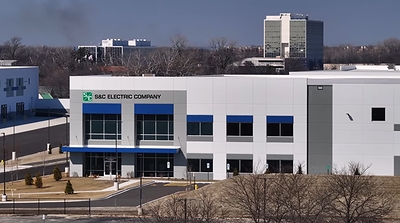
CHICAGO, Oct. 6, 2026 /PRNewswire/ — S&C Electric Company today announced plans for a 295,000-square-foot facility in Glenview, Illinois, the latest in a series of investments to increase U.S. manufacturing capacity as utilities and critical infrastructure operators invest in a more resilient and reliable distribution grid.

The facility will serve as S&C’s central warehouse, consolidating materials and inventory that support production across the company’s manufacturing operations. Moving these operations to Glenview will create additional space for production at existing facilities, improve material movement across S&C’s operations, and provide flexibility for future expansion of assembly operations. The investment is also expected to create new jobs in the Chicago area.

“For more than a century, S&C team members have done critical work to deliver proven solutions that help utilities and essential industries around the world keep the power on,” said Anders Sjoelin, President and CEO of S&C Electric Company. “We are proud of that legacy, and we continue to build on it. As demand for electricity and a more resilient grid grows, we are investing in U.S. manufacturing, creating jobs and career opportunities, and increasing our capacity to serve customers for generations to come.”

The Glenview facility is the latest in a series of investments S&C is making in its team members, products, and manufacturing capabilities. The company recently added manufacturing capacity in Palatine, Illinois, creating room for product-line growth, and introduced TripSaver® FXR, the newest addition to its TripSaver® Recloser portfolio. Additional expansion work is underway at S&C’s Chicago headquarters to increase manufacturing capacity and support a growing workforce. Together, these investments increase S&C’s ability to manufacture and deliver technologies for a more resilient grid.  

Severe weather, electrification, and the growth of large loads, including data centers and advanced manufacturing facilities, are creating new challenges for the electric grid. These trends are increasing the need for technologies that help utilities and critical infrastructure operators strengthen the resilience and reliability of their distribution systems.

S&C expects work on the facility to begin in the third quarter of 2026, with central warehouse operations targeted to begin in early 2027.

About S&C Electric Company
For more than a century, S&C has helped transform electricity distribution, from pioneering the Liquid Power Fuse to advancing intelligent grid automation. Powered by team member expertise and precision engineering, S&C delivers field-proven technologies that strengthen resilience, enhance reliability, and provide greater visibility and control across the distribution grid. With solutions that keep the power on for utilities, critical power operators, and the communities they serve, S&C empowers people to transform the grid. Learn more at www.sandc.com.

Media Contact:  Laura Patrick, S&C Electric Company, 585.953.0111, Laura.Patrick@sandc.com

View original content to download multimedia:https://www.prnewswire.com/news-releases/sc-expands-us-manufacturing-footprint-to-meet-growing-demand-for-grid-resilience-302899801.html

SOURCE S&C Electric Company

Free Training

Source link

U.S. Manufacturing Investment Fuels Growing Demand for Domestic C


Technician testing an industrial control panel using electrical diagnostic equipment inside a UL 508A-certified panel fabrication facility.

As U.S. manufacturing investment continues to grow, manufacturers are increasingly prioritizing domestically fabricated control panels that support quality, collaboration, and deployment readiness.

Continued investment in domestic manufacturing, infrastructure modernization, and automation is driving demand for U.S.-built, integration-ready control panels.

Control panels are often the brains of an automation project. Customers are still concerned about lead times, but they’re also looking for greater control over their projects.”

— Mark Gathings, Panel Shop Group Leader at DSI Innovations

THOMASVILLE, NC, UNITED STATES, July 10, 2026 /EINPresswire.com/ — Continued investment in U.S. manufacturing is reshaping the industrial automation landscape, driving increased demand for domestically fabricated control panels that help manufacturers reduce project risk, accelerate deployment, and improve long-term operational reliability.

According to recent U.S. Census Bureau construction spending data, manufacturing and industrial infrastructure remain significant areas of investment as companies continue building, expanding, and modernizing domestic production facilities. At the same time, manufacturers are facing tighter project schedules, workforce challenges, supply chain pressure, and increasingly complex automation requirements.

As a result, many manufacturers are reevaluating how automation infrastructure is engineered, fabricated, tested, and delivered

Domestic Fabrication Becomes a Strategic Advantage
While supply chain disruptions initially exposed the risks associated with long lead times and limited visibility, manufacturers are increasingly recognizing the broader operational advantages of domestic control panel fabrication.

Closer collaboration between engineering and fabrication teams allows design revisions to be incorporated more efficiently, improves communication throughout the project lifecycle, and provides greater schedule certainty during the build process. Domestic fabrication also allows for more comprehensive Factory Acceptance Testing, standardized documentation, network validation, controls verification, and quality inspections before systems leave the shop.

Rather than viewing control panel fabrication as simply another procurement item, manufacturers increasingly see it as a critical component of successful project execution.

Integration-Ready Panels Improve Startup Success
Today’s industrial control panels are expected to arrive as complete, deployment-ready systems — not simply assembled enclosures.

Manufacturers increasingly expect panels to include detailed documentation, standardized labeling, network validation, controls verification, and pre-shipment testing that reduce field modifications and accelerate commissioning.

By identifying issues before shipment, integration-ready panels help reduce startup delays while improving long-term maintainability and operational reliability.

This approach is becoming increasingly important across industries such as life sciences, automotive and vehicle manufacturing, water and wastewater, food and beverage, data centers, and specialty chemicals, where compressed schedules leave little room for unexpected commissioning challenges.

DSI Innovations Supports the Shift Toward Domestic Fabrication
As manufacturers continue prioritizing reliability and deployment readiness, DSI Innovations is helping customers meet those expectations through integrated engineering, UL 508A-certified panel fabrication, Factory Acceptance Testing, and systems integration.

Operating from UL 508A-certified panel fabrication facilities in Thomasville, North Carolina (40,000 sq. ft.) and Jacksonville, Florida (8,000 sq. ft.), DSI designs and fabricates custom industrial control panels for manufacturers throughout North America. Together, the facilities support both greenfield and modernization projects, with the capacity to stage large multi-panel systems for Factory Acceptance Testing (FAT) prior to shipment.

By integrating engineering, fabrication, controls programming, commissioning, and long-term lifecycle support under one organization, DSI helps manufacturers streamline project execution while reducing deployment risk.

“Control panels are often the brains of an automation project,” said Mark Gathings, Panel Shop Group Leader at DSI Innovations. “Customers are still concerned about lead times, but they’re also looking for greater control over their projects. Working with a domestic fabrication partner allows them to collaborate more closely throughout the build, make engineering decisions faster, participate in Factory Acceptance Testing, and have confidence that their panels are ready for startup.”

Looking Ahead
Industry trends suggest demand for domestic control panel fabrication will continue to grow as manufacturers invest in automation, modernize aging infrastructure, and expand domestic production capacity.

As automation systems become increasingly connected and projects grow more sophisticated, control panel fabrication is evolving beyond a commodity purchase into a strategic investment that directly influences startup success, operational reliability, and long-term maintainability.

For manufacturers evaluating automation projects, selecting a fabrication partner capable of supporting the entire project lifecycle — from engineering through commissioning — may prove just as important as selecting the control system itself.

About DSI Innovations
DSI Innovations is a full-service automation and systems integration company headquartered in Thomasville, North Carolina. The company provides UL 508A-certified control panel fabrication, PLC and SCADA programming, industrial automation, systems integration, commissioning, modernization services, and long-term lifecycle support for manufacturers across North America. DSI serves industries including life sciences, automotive and vehicle manufacturing, food and beverage, water and wastewater, specialty chemicals, data centers, and industrial manufacturing through a network of regional offices and technical specialists.

Madelyn Hough
DSI Innovations
+1 336-893-8385
madelyn.hough@dsiinnovations.com
Visit us on social media:
LinkedIn
Instagram
Facebook
YouTube
X

Legal Disclaimer:

EIN Presswire provides this news content “as is” without warranty of any kind. We do not accept any responsibility or liability
for the accuracy, content, images, videos, licenses, completeness, legality, or reliability of the information contained in this
article. If you have any complaints or copyright issues related to this article, kindly contact the author above.


Free Training

Source link

Growing shortage of high-skilled workers threatens US chip manufacturing revival


Washington – A growing nationwide shortage of high-skilled workers threatens to delay the construction of billions of dollars in new semiconductor plants across the United States and constrain future chip production unless the industry pools resources and the government keeps up funding, according to a new report.

The deficit is expected to be most acute in states such as Texas, California, Arizona, New York and Ohio, where many of the new facilities are being planned, according to new analysis including a survey of employers from McKinsey & Co, the chip industry group SEMI and the National Science Foundation.

Altogether, the skilled labour shortage is projected to reach as many as 157,000 full-time workers by 2030, the study released on July 7 found.

The dearth of talent risks stalling plans by Taiwan Semiconductor Manufacturing Co to invest as much as an estimated US$265 billion (S$342 billion) in a dozen chip-making and packaging facilities in Arizona, as well as Micron Technology’s vision to spend US$100 billion on memory chip production in New York and Samsung Electronics’ logic chip facility in Texas.

Even Intel’s delayed US$28 billion investment in Ohio is set for shortages once production ramps up, the report said.

The workforce challenges mark the latest hurdle for chipmakers seeking to expand their manufacturing footprint in the US and reverse the migration of production capacity to Asia that unfolded decades ago.

Rising prices for a wide range of goods including copper, steel and cement threaten to increase the cost of construction for new facilities billed as a centrepiece of US President Donald Trump’s economic agenda.

At the same time that the chip industry expects to see a worker shortfall, the artificial intelligence boom – and companies’ rush to invest in it – has also been blamed for layoffs in other parts of the labour market, including in the tech industry.

Challenger, Gray & Christmas, which tracks layoff plans, found almost 102,000 announced job cuts attributed to AI so far in 2026.

Unless addressed soon, the chip industry labour gap risks undermining not only the billions of dollars in planned investment by companies but also the US grants aimed at boosting domestic production under the 2022 Chips and Science Act, according to the report.

The authors recommended a range of solutions, including continued government funding, expanded curriculum on semiconductors and earlier exposure to chip industry careers.

“There’s just not enough talent to go around,” said Taylor Roundtree, a partner at McKinsey who helped with the analysis. “People are realising that the potential gap is so large that they collectively do have to solve it.”

By 2030, about 74 per cent of the semiconductor industry’s unfilled roles will be in manufacturing and 60 per cent in engineering, the study found.

While Chips Act-funded programmes have helped to increase the number of technicians available to work at new plants, those initiatives have hardly made a dent in addressing the need for manufacturing and hardware engineers.

Already, nearly three-quarters of employers are reporting significant difficulty in hiring engineers, according to the survey, which canvassed semiconductor companies.

The root of the problem is that few US engineering students – only about 3 per cent – go on to work in the chip industry, with most opting for more lucrative software-related fields like AI.

The Chips Act provided the National Science Foundation with US$200 million through 2027 for workforce development through programmes that educate students and train new workers via an organisation called the National Network for Microelectronics Education.

The authors recommended keeping up the funding, though the report did not elaborate on extending those initiatives.

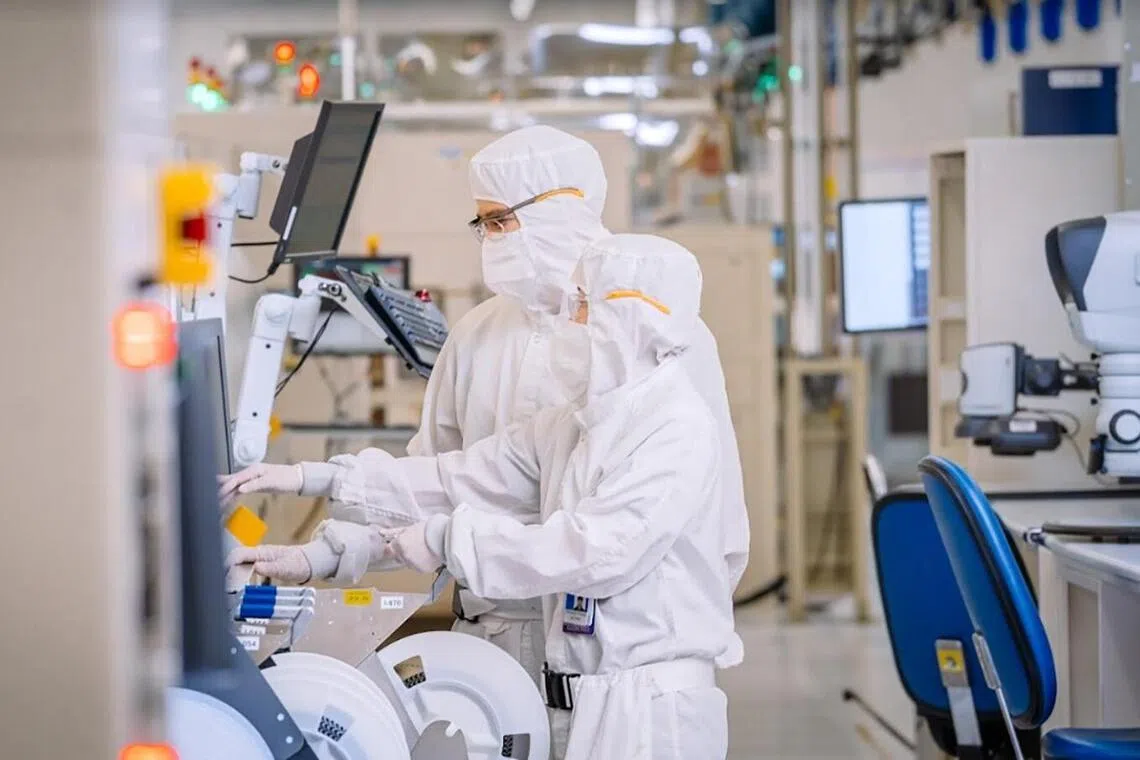
Ongoing efforts to increase interest in the industry have included programmes giving elementary school students in Arizona the chance to touch semiconductor equipment and try on a white bunny suit – the full-body coverall fab workers must wear to ensure no microscopic particles ruin the sensitive semiconductor manufacturing process.

“This is an industry that hasn’t been doing a significant build-out in the United States in decades,” Roundtree said. “High school guidance counsellors, college professors – this just isn’t a natural career for a lot of them to advise folks to look into.” BLOOMBERG

Free Training

Source link