Trump Says U.S. Plans to Announce More Manufacturing Investments Before Midterms


President Donald Trump said Sunday his administration plans to announce additional investments in U.S. manufacturing before the Nov. 3 midterm elections, following Volkswagen’s disclosure of plans for an Audi factory in Georgia.

Trump highlighted the Audi assembly plant plan on Oct. 24. The $4.2 billion project is planned for Macon, Georgia, and is planned to produce 200,000 SUVs a year. Audi is Volkswagen’s subsidiary.

The $4.2 billion figure applies to the Audi plant.

Free Training

Source link

US announces billions in mining investments to strengthen manufacturing supply chains


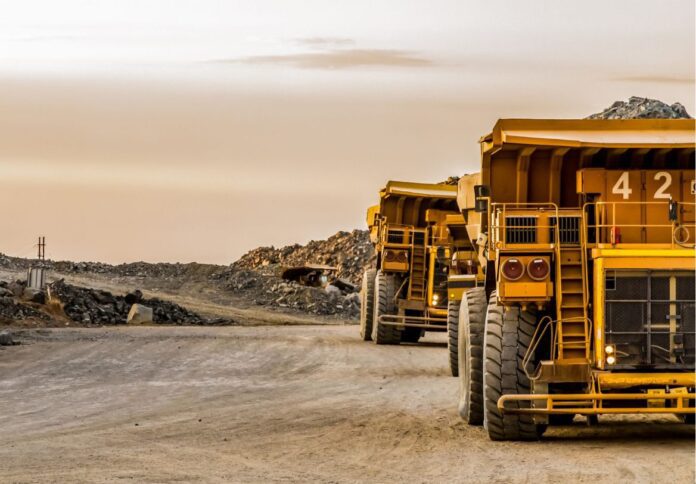
Stock image. Image credit: Sunshine_Seeds/stock.adobe.com

The US administration has announced more than $2 billion in mining and mining-related investments, alongside more than $180 million in mining education and workforce initiatives, as it seeks to strengthen domestic manufacturing supply chains for critical materials.

In a media release, the White House said the investments were announced by President Donald Trump during a roundtable with representatives from the US mining industry on 7 August, with funding directed towards projects spanning bauxite, rare earth-free magnets, battery materials, scandium, graphite, tantalum and niobium.

According to the White House, the Department of War will invest more than $85 million in Standard Bauxite to secure supplies of refractory-grade bauxite, which is used to produce high-temperature-resistant materials for critical components and industrial applications.

A further $150 million will be invested in Minnesota-based Niron Magnetics, which is developing and producing permanent magnets without rare earth materials. 

The White House said the investment is intended to support the US defence industrial base and reduce reliance on foreign-produced rare earth magnets.

California-based Sila Nanotechnologies is set to receive $1.4 billion from the Department of War to expand production of silicon-carbon battery anodes and develop a lithium-ion battery cell manufacturing facility. 

The White House said the facilities are intended to strengthen supply chains supporting satellite operations, unmanned aerial systems and munitions.

The administration also announced a $400 million investment in Sunrise Energy Metals to develop what the White House described as a full scandium value chain, including a primary scandium mine. Scandium is used in high-heat aluminium alloys for applications including aerospace.

Additional investments include $8 million from the Export-Import Bank for 5E Advanced Materials to develop a boron deposit in California, $25 million for Westwater Resources to develop the Coosa Graphite Deposit in Alabama, and $25 million for Global Advanced Materials in Pennsylvania to develop tantalum and niobium resources.

The White House said boron, graphite, tantalum and niobium are used across industries including battery manufacturing, electronics, permanent magnets, semiconductors and steel production.

The US Development Finance Corporation will also match a $4.8 million investment in Harena Rare Earths to develop a rare earth mine in Madagascar. The White House said the project is intended to secure inputs for US manufacturing, including magnet metals and rare earths.

Alongside project funding, the administration announced more than $180 million for mining education and workforce development. The Department of Energy will invest $100 million across 14 US mining schools, with the stated aim of increasing the number of graduates with mining, minerals and related supply chain credentials.

The Department of War will provide more than $80 million to three schools for workforce development programs and technology innovation hubs focused on training geologists, metallurgists and mining engineers.

The White House said strengthening the workforce was necessary to support efforts to rebuild the country’s critical mineral supply chain, which it said had contracted over several decades while demand for critical minerals increased.

The administration has framed the investments as part of a broader effort to reduce US reliance on foreign sources of critical materials and strengthen domestic industrial and defence supply chains.

“Critical materials build and power the modern world from cars to military weaponry and factory machinery to smartphones and computers,” the White House said, adding that secure domestic capabilities across mining, processing, refining, manufacturing and recycling were important to reducing reliance on foreign countries.

The administration also pointed to measures introduced since Trump returned to office in January 2025, including executive orders covering domestic mineral production, offshore critical minerals, processed critical minerals and defence supply chains.

According to the White House, the administration has signed or approved 160 minerals deals worth almost $40 billion since January 2025. 

It also said the administration had used Section 232 measures covering industries including steel, aluminium, copper, trucks, automobiles, timber, semiconductors, critical minerals and pharmaceuticals.

The White House said these measures are intended to support domestic producers, strengthen US industrial capacity and improve national and economic security.

The latest announcement comes as the administration continues to link mining and critical mineral production with the broader goal of expanding domestic manufacturing capacity. The White House said the investments would help address supply chain vulnerabilities and support industries dependent on secure supplies of critical materials.

The figures and descriptions of the investments, as well as the administration’s assessment of their expected impact on US manufacturing and supply chains, were provided by the White House.

Free Training

Source link

APAA celebrates one year of President Trump’s 50 per cent Section 232 aluminium tariff and historic investments in US manufacturing


Alternate Text

CBAM is applicable to trade volumes starting from 50 metric tonnes. For trade volumes below 50 metric tonnes, CBAM does not apply.

Usage Procedure – How to use the CBAM Calculator Sheet

Enter or update values only in the
INPUT
PARAMETERS section (Highlighted in blue)
,
including
the carbon price, benchmark emissions, CBAM
chargeable
percentage (as per the phase-in year),
and imported quantity.


The system will automatically calculate the
payable
emissions and the total CBAM cost (€)

based on the
inputs provided.


Notes:

• Change any input value to automatically update CBAM cost.

• Formula used: Carbon price × payable emissions × quantity.

• Model aligned with CBAM supplier-side illustrative methodology.

Free Training

Source link

APAA Celebrates One Year of President Trump’s 50% Section 232 Aluminum Tariff and Historic Investments in U.S. Manufacturing


  1. Home
  2. News
  3. PR Newswire
  4. APAA Celebrates One Year of President Trump’s 50% Section 232 Aluminum Tariff and Historic Investments in U.S. Manufacturing

APAA Celebrates One Year of President Trump’s 50% Section 232 Aluminum Tariff and Historic Investments in U.S. Manufacturing

APAA Celebrates One Year of President Trump’s 50% Section 232 Aluminum Tariff and Historic Investments in U.S. Manufacturing

PR Newswire

WASHINGTON, June 5, 2026


WASHINGTON, June 5, 2026 /PRNewswire/ — Today, the American Primary Aluminum Association celebrates the one-year anniversary of President Trump’s 50% Section 232 aluminum tariff. This tariff is revolutionizing domestic manufacturing production, strengthening supply chains, creating thousands of new jobs, generating billions of dollars in US investment, and fortifying our national security. President Trump strengthened the Section 232 aluminum tariff to combat unfair trade practices and persistent cheating by foreign governments, delivering unprecedented wins for American workers in the aluminum industry:

  • Emirates Global Aluminum and Century Aluminum plan to build the first new US smelter in nearly 50 years, a more than $4 billion investment that will more than double U.S. production capacity and create over 5,000 jobs in Oklahoma.
  • Century Aluminum restored their Mt. Holly smelter to full production capacity, creating over 100 U.S. aluminum jobs in South Carolina and increasing U.S. aluminum production by over 10%.
  • Novelis is investing $5 billion into a new aluminum rolling mill, creating up to 1,000 jobs in Alabama.
  • Aluminum Dynamics officially launched commercial production at a new, state-of-the-art recycled aluminum flat rolled mill in Mississippi, a $2.5 billion investment that has created over 700 jobs.

“One year ago today, President Trump took decisive action to stand up for American workers by launching a new Golden Age for domestic aluminum manufacturing,” remarked APAA President Mark Duffy. “The results speak for themselves: the aluminum industry is delivering billions of dollars in U.S. investment and creating thousands of American aluminum jobs, and it’s all due to President Trump’s 50% Section 232 tariff, with no exemptions or exclusions.”

About the American Primary Aluminum Association:

The American Primary Aluminum Association advances the interests of America’s primary aluminum industry and its workers through the Aluminum Now campaign. APAA is registered and incorporated in Washington, DC and operates as a non-profit trade association. For more, please visit: www.aluminumnow.org.

View original content to download multimedia:https://www.prnewswire.com/news-releases/apaa-celebrates-one-year-of-president-trumps-50-section-232-aluminum-tariff-and-historic-investments-in-us-manufacturing-302792742.html

SOURCE American Primary Aluminum Association


The articles, information, and content displayed on this webpage may
include materials prepared and provided by third parties. Such
third-party content is offered for informational purposes only and
is not endorsed, reviewed, or verified by Morningstar.

Morningstar makes no representations or warranties regarding the
accuracy, completeness, timeliness, or reliability of any third-party
content displayed on this site. The views and opinions expressed in
third-party content are those of the respective authors and do not
necessarily reflect the views of Morningstar, its affiliates, or employees.

Morningstar is not responsible for any errors, omissions, or delays
in this content, nor for any actions taken in reliance thereon.
Users are advised to exercise their own judgment and seek independent
financial advice before making any decisions based on such content.
The third-party providers of this content are not affiliated with
Morningstar, and their inclusion on this site does not imply any
form of partnership, agency, or endorsement.

Free Training

Source link

GM Announces New US Manufacturing Investments


The largest automaker of the Detroit Big Three has announced new investments for manufacturing facilities in the United States of America. Said investments total $340 million, and they will support mostly full-size pickup trucks.

First and foremost, around $150 million is going into the Saginaw Metal Casting Operations facility to increase head casting volume for next-generation small blocks. The only gen-six engine announced to date is the LS6 of the Corvette, a 6.7-liter small block that powers the Stingray, Grand Sport, and Grand Sport X for model year 2027.

Later on, the redesigned Chevrolet Silverado and GMC Sierra will receive gen-six engines. Hearsay suggests larger displacements compared to the outgoing 5.3- and 6.2-liter naturally aspirated V8s, although there is no concrete information available on the replacement of the 6.6-liter small block for heavy-duty applications.

$40 million will be invested to support Toledo Propulsion Systems capacity increases for the 10-speed automatic that GM uses in light-duty pickup trucks. Around 1,650 people work there as of May 2026, whereas Saginaw prides itself on approximately 350 employees.

The 10-speed transmission is referred to as 10L80 in General Motors vernacular. Mostly developed by Ford as part of a joint venture that also gave us the 10R series, the 10L carries over just around 80 percent of the Ford unit’s internal hardware. Despite this commonality, said transmissions clearly aren’t identical.

Manufactured in separate plants, the 10L and 10R use brand-specific parts and software. In the light-duty Silverado and Sierra, the 10L80 can take an estimated 800 Newton-meters (590 pound-feet) of twist. Its dry weight is 230 pounds (104 kilograms), and this baby drinks Dexron ULV automatic transmission fluid exclusively.

GM small\-block V8 production

Photo: GM

A mega $300 million will be going to Romulus Propulsion Systems to further support 10-speed automatic production. Once again, the Detroit-based automaker mentions full-size pickup trucks as the primary recipients. Full-size utility vehicles also need mentioning because the Silverado 1500 and Sierra 1500 have many SUV-bodied siblings.

Chevrolet offers the Tahoe and long-wheelbase Suburban, whereas GMC is much obliged to sell you two versions of the Yukon. The latter applies to Cadillac’s incredibly popular Escalade as well. Going for the long-wheelbase option results in more legroom for the rearmost passengers and more cargo space behind the third-row seats.

All six utility vehicles feature 10-speed autos, whereas the Silverado 1500 and Sierra 1500 with the base 2.7-liter turbo inline-four engine pack an eight-speed unit. A heavier-duty version of the 10L is used in the Escalade-V, which is GM’s most powerful SUV based on the T1XX platform introduced by the Silverado 1500 in 2018.

Light-duty pickups retained the good ol’ solid live axle with leaf springs to prioritize towing durability and payload capacity. Higher trim levels feature a composite second leaf to shave off a few pounds while maintaining roll stiffness. On sport utility vehicles, multi-link rear suspension is standard.

Free Training

Source link

President Trump Secures Trillions in New U.S. Investments as Companies Expand American Manufacturing


Supporters of President Donald J. Trump say his America First economic policies are driving a massive wave of private investment back into the United States. Since the start of his second term, companies from around the world have announced major plans to expand U.S. manufacturing, artificial intelligence infrastructure, energy production, and advanced technology development.

Advocates of the administration say the investments demonstrate renewed confidence in the U.S. economy and a shift toward onshoring production, strengthening domestic supply chains, and creating American jobs. The announced investments collectively total trillions of dollars, with projects spread across dozens of states.

Below is a non-comprehensive list of companies and projects announcing new U.S.-based investments during President Trump’s second term.

  • Apple – $600 billion investment in U.S. manufacturing and workforce training while expanding domestic supply chains.
  • Meta – $600 billion investment by 2028 to expand artificial intelligence technology, infrastructure, and workforce development in the U.S.
  • Project Stargate (SoftBank, OpenAI, Oracle) – $500 billion private investment in U.S. artificial intelligence infrastructure.
  • NVIDIA – $500 billion investment in U.S. AI infrastructure over four years, while manufacturing AI supercomputers in the United States for the first time.
  • Amazon – $340 billion invested in the U.S. last year, plus $20 billion for cloud infrastructure in Pennsylvania, $10 billion in North Carolina data centers, and $4 billion across small towns nationwide.
  • Micron Technology – $200 billion investment in U.S. semiconductor manufacturing, including facilities in Boise, Idaho, and Manassas, Virginia.
  • IBM – $150 billion investment over five years in U.S. manufacturing and technology growth.
  • Taiwan Semiconductor Manufacturing Company (TSMC) – $100 billion investment in U.S. chip manufacturing facilities.
  • Johnson & Johnson – $55 billion investment in manufacturing, research, and technology, including a major facility in North Carolina.
  • AstraZeneca – $50 billion investment in medicines manufacturing and research in the U.S.
  • Anthropic – $50 billion investment in AI infrastructure, including new data centers in Texas and New York.
  • Roche – $50 billion investment in U.S. research and manufacturing expected to create more than 1,000 permanent jobs and 12,000 construction jobs.
  • Bristol Myers Squibb – $40 billion investment in U.S. manufacturing, technology, and research operations.
  • GSK – $30 billion investment in U.S. research, development, and manufacturing facilities.
  • Eli Lilly – $27 billion investment to more than double U.S. drug manufacturing capacity.
  • Hyundai – $26 billion investment, including a $5.8 billion steel plant in Louisiana, creating roughly 1,500 jobs.
  • Vantage Data Centers – $25 billion project to build a 1.4-gigawatt data center campus in Texas employing more than 5,000 workers.
  • ADQ and Energy Capital Partners – $25 billion investment in U.S. energy and data center infrastructure.
  • Google – $25 billion investment in AI and data center infrastructure.
  • Blackstone – $25 billion investment in digital and energy infrastructure in Pennsylvania.
  • Novartis – $23 billion investment to build or expand ten U.S. manufacturing facilities and create 4,000 jobs.
  • John Deere – $20 billion investment over the next decade in American manufacturing expansion.
  • DAMAC Properties – $20 billion investment in U.S. data centers.
  • CMA CGM – $20 billion investment in shipping and logistics expected to create 10,000 jobs.
  • Sanofi – $20 billion investment in research and manufacturing in the U.S.
  • Venture Global LNG – $18 billion investment in a Louisiana liquefied natural gas facility.
  • Woodside Energy Group – $17.5 billion investment in a new LNG facility in Louisiana.
  • GlobalFoundries – $16 billion investment expanding chip manufacturing plants in New York and Vermont.
  • FirstEnergy Corp. – $15 billion investment in energy infrastructure improvements.
  • Nippon Steel – $14 billion investment in U.S. Steel operations, including a new steel mill.
  • Stellantis – $13 billion investment to expand U.S. vehicle production by more than 50 percent.
  • Gilead Sciences – $11 billion expansion of U.S. manufacturing investment.
  • AbbVie – $10 billion investment over ten years, adding four new manufacturing plants.
  • JPMorganChase – $10 billion investment supporting U.S. manufacturing growth.
  • Merck & Co. – $9 billion investment in U.S. pharmaceutical manufacturing, including new facilities in Delaware and North Carolina.
  • PPL – $6.8 billion investment expanding power grid capacity.
  • CoreWeave – $6 billion investment in data center expansion.
  • Westinghouse – $6 billion investment to build ten nuclear reactors in the United States.
  • Clarios – $6 billion expansion of domestic manufacturing operations.
  • UCB – $5 billion investment for a new U.S. pharmaceutical manufacturing plant.
  • Ford – $5 billion investment in Kentucky and Michigan manufacturing facilities.
  • Pratt Industries – $5 billion investment creating 5,000 manufacturing jobs across four states.
  • Hanwha Group – $5 billion investment expanding shipbuilding operations in Philadelphia.
  • GlobalWafers – $4 billion investment expanding U.S. semiconductor production.
  • General Motors – $4 billion investment shifting vehicle production from Mexico and China to U.S. plants.
  • Mitsubishi – $3.9 billion investment in American energy projects.
  • Shintech – $3.4 billion expansion of a Louisiana chemical manufacturing facility.
  • Regeneron and Fujifilm Diosynth Biotechnologies – $3 billion agreement to expand pharmaceutical manufacturing in North Carolina.
  • Kraft Heinz – $3 billion investment upgrading U.S. food manufacturing plants.
  • GE Appliances – $3 billion investment expanding manufacturing across five states.
  • NorthMark Strategies – $2.8 billion supercomputing facility in South Carolina.
  • Thermo Fisher Scientific – $2 billion investment expanding manufacturing operations.
  • Amkor Technology – $2 billion semiconductor facility in Arizona, creating 2,000 jobs.
  • Biogen – $2 billion investment in North Carolina manufacturing.
  • Mars, Inc. – $2 billion expansion of U.S. manufacturing operations.
  • GE Aerospace – $2 billion combined investment creating 10,000 jobs nationwide.
  • Kimberly-Clark – $2 billion investment expanding manufacturing facilities, including a major plant in Ohio.
  • Chobani – $1.7 billion investment, including a new dairy processing plant in New York.
  • Oklo – $1.68 billion fuel recycling facility in Tennessee.
  • Corning – $1.5 billion expansion of Michigan manufacturing, creating 1,500 jobs.
  • Smithfield Foods – $1.3 billion pork processing facility in South Dakota.
  • MP Materials – $1.25 billion rare earth magnet facility in Texas.
  • First Solar – $1.1 billion solar manufacturing plant in Louisiana.
  • Carrier – $1 billion investment creating 4,000 jobs.
  • Cencora – $1 billion investment strengthening U.S. distribution networks.
  • Siemens Energy – $1 billion expansion of grid and turbine manufacturing.
  • Hikma Pharmaceuticals – $1 billion investment expanding research and manufacturing.
  • Vaxcyte – $1 billion U.S. vaccine manufacturing investment.
  • Anduril Industries – $1 billion autonomous defense systems facility in Ohio.
  • Live Nation Entertainment – $1 billion investment building 18 new music venues nationwide.
  • Hitachi – $1 billion investment in American energy infrastructure, including a transformer plant in Virginia.
  • Williams International – $1 billion aviation engine manufacturing facility in Florida.

Numerous additional companies—including Toyota, Lego, Samsung Biologics, Siemens, Abbott Laboratories, Anheuser-Busch, Whirlpool, Rolls-Royce, Philips, ABB, JBS USA, Pratt & Whitney, and many others—have also announced new manufacturing plants, technology facilities, or infrastructure investments across the country.

Supporters say the scale of the announcements reflects a broader trend of reindustrialization and renewed domestic manufacturing capacity, with hundreds of thousands of jobs expected to be created.

Economic analysts note that many large corporate investment decisions span several years and multiple administrations, but the administration’s backers argue the surge signals strong confidence in the American economy and workforce.

More investment announcements are expected as companies continue expanding U.S. operations.

Free Training

Source link

Manufacturers Expand U.S. Operations With New Plants and Investments


Several major companies are ramping up manufacturing investments across the United States, announcing new facilities, production expansions and job creation as firms strengthen domestic supply chains and meet rising demand in sectors such as pharmaceuticals, steel and advanced electronics.

Courtesy: Photo by Josh Olalde on Unsplash

Industry leaders including Novartis, US Forged Rings, Akston Biosciences and Faith Technologies have recently revealed projects spanning multiple states, highlighting continued momentum in U.S. manufacturing development.

These investments come as companies seek to expand production capacity, shorten supply chains and support growing demand for high-tech products and industrial materials.

Novartis Plans New Cancer Treatment Facility in Texas

Pharmaceutical giant Novartis is planning to build a 46,000-square-foot radioligand therapy manufacturing facility in Denton, Texas, as part of its wider effort to expand research and manufacturing operations in the United States.

The new plant will focus on producing targeted treatments for patients with advanced cancers and will become the company’s fifth U.S. site dedicated to radioligand therapy manufacturing.

Construction on the project is expected to begin in 2026, with commercial production anticipated to start by 2028.

The Denton facility represents part of Novartis’ broader $23 billion commitment to expand its U.S. manufacturing and research footprint, which the company announced last year.

Over the past 10 months, the pharmaceutical company has already broken ground on four additional facilities across the country, demonstrating continued progress toward that long-term investment strategy.

The Texas project is expected to create jobs in several specialized fields including:

  • Bioengineering
  • Advanced manufacturing
  • Quality control
  • Operations management

Local officials say the project could generate new opportunities for the regional biotechnology workforce while supporting broader economic growth.

The investment in Denton is estimated at $280 million and may qualify for nearly $9 million in state and local tax incentives, according to local reports.

US Forged Rings Plans Major Steel Production Facility

Startup steel manufacturer US Forged Rings has selected Hertford County, North Carolina, as the location for a large-scale industrial production facility focused on steel forgings and industrial components.

The project is part of a three-phase development plan valued at approximately $875 million.

The first two phases alone are expected to create 625 new jobs in the region while supporting growth in domestic steel production.

“This investment represents an important step in our mission to strengthen American manufacturing capability in critical steel products,” US Forged Rings President and CEO Giacomo Sozzi said in a statement.

Founded in 2022, the company is part of the Sozzi family’s industrial group, which has more than four decades of experience in steel forging operations.

Once operational, the facility will produce specialty tubular products and forged components used in sectors such as power generation and heavy industry.

The plant will also manufacture industrial parts including:

  • Forged rings
  • Shafts
  • Cylinders

The site will be located next to a steel plant operated by Nucor, a key supply chain partner for the project. Rail services will be provided by CSX Transportation to support long-distance freight shipments.

Production for the first phases is expected to begin in 2028.

Additional Manufacturing Projects Expand Across the U.S.

Several other companies are also expanding their manufacturing presence with new facilities and production investments.

Animal health biotech company Akston Biosciences has opened a 31,000-square-foot manufacturing plant in Shreveport, Louisiana, marking a key milestone in its expansion strategy.

The facility is part of a $7 million investment aimed at increasing production of protein therapeutics designed for pet health treatments.

The site is expected to create 69 direct jobs over the next five years, with average annual salaries of around $100,000, according to local economic development officials.

Akston co-founder and CEO Todd Zion described the project as a significant step for the company’s growth.

“major milestone,” saying that it was critical to expand in the U.S. and aims to address unmet needs in pet health with its protein therapeutics.

The facility includes specialized infrastructure such as clean rooms for biologics production, quality control laboratories, cold storage systems and warehouse space.

Meanwhile, electrical equipment manufacturer Faith Technologies is planning to invest $79 million in a new production facility in Opelika, Alabama.

The project involves renovating a former distribution center previously used by Joann Fabrics.

Once completed, the site is expected to create around 200 jobs in the Auburn-Opelika metropolitan area.
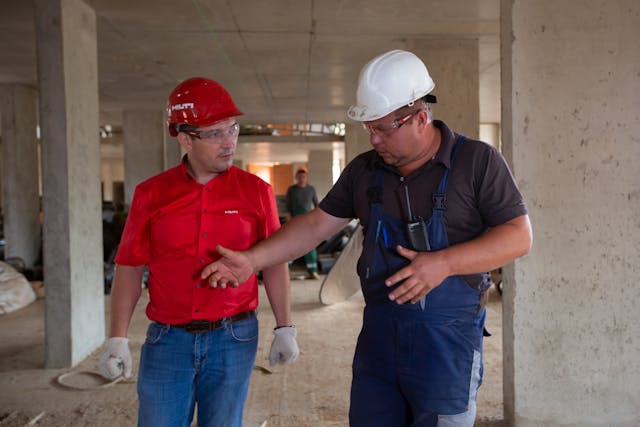
Courtesy: Photo by Aleksey on Pexels

Faith Technologies manufactures electrical systems including switchboards, power modules and charging infrastructure used in energy, construction and technology markets.

The company’s modular electrical solutions are also designed for large data center developers and industrial customers, a rapidly growing segment of the construction and technology industries.

Domestic Manufacturing Momentum Continues

The wave of new investments reflects a broader trend toward reshoring manufacturing operations in the United States.

Companies are increasingly prioritizing domestic production to improve supply chain resilience, reduce shipping delays and respond more quickly to market demand.

At the same time, federal and state incentives, growing demand for advanced technologies and expanding infrastructure projects are encouraging firms to build new facilities across the country.

As industries such as pharmaceuticals, energy, electronics and advanced materials continue to grow, analysts expect manufacturing investment in the U.S. to remain strong in the coming years, with more companies announcing expansion plans and new production hubs.

Originally reported by Nathan Owens, Reporter in Manufacturing Dive.

Free Training

Source link

Japan’s $36 Billion U.S. Investments: A New Era in Energy and Manufacturing


In a major economic development, President Donald Trump’s administration has unveiled three significant projects totaling $36 billion, all financed by Japan. These ventures mark the first wave of investments under Japan’s $550 billion commitment to the United States as part of a trade agreement that reduced tariffs on Japanese imports to 15%.

Among the projects is a $2.1 billion deepwater crude oil export facility in Texas, expected to generate up to $30 billion annually in exports. An $800 million industrial diamonds plant is set for Georgia, aimed at meeting the entire U.S. demand for synthetic diamond grit used in advanced manufacturing. The centerpiece, however, is a $33 billion natural gas-fired power plant in Ohio, slated to become the world’s largest of its kind by capacity.

The announcement follows recent discussions between U.S. Secretary of Commerce Howard Lutnick and Japan’s economic minister, Ryosei Akazawa. While the projects promise significant benefits, key issues, including financial specifics and tariff implications, remain under negotiation as both nations navigate this landmark collaboration.

(With inputs from agencies.)

Free Training

Source link

Johnson & Johnson Reaches Agreement with U.S. Government to Improve Access to Medicines and Lower Costs for Millions of Americans; Delivers on U.S. Manufacturing and Innovation Investments


Voluntary agreement will allow millions of Americans to purchase medicines at significantly discounted rates


Agreement provides Johnson & Johnson pharmaceutical products an exemption from U.S. tariffs

Company announces two new additional manufacturing facilities to be built in North Carolina and Pennsylvania; continues to deliver on $55 billion U.S. investment

NEW BRUNSWICK, N.J.–(BUSINESS WIRE)–Johnson & Johnson (NYSE: JNJ) (the “Company”), healthcare’s leading, most comprehensive innovation powerhouse, today announced a voluntary agreement with the Trump Administration to improve access to medicines and lower costs for millions of American patients. The joint agreement meets the requests laid out by President Trump to the industry and provides the Company’s pharmaceutical products an exemption from tariffs1.

“Today’s agreement shows that when the public and private sectors work together towards shared goals, we can deliver real results for patients and the U.S. economy,” said Joaquin Duato, Chairman and Chief Executive Officer, Johnson & Johnson. “I’m proud that Johnson & Johnson is answering President Trump’s call to lower drug prices for everyday Americans while maintaining our role in improving and saving lives and ensuring that the United States continues to lead the world in healthcare innovation.”

Improving Access and Lowering Costs for U.S. Patients

Johnson & Johnson is working with the Trump Administration to improve access to medicines and lower costs for millions of American patients. The Company is:

  • Participating in TrumpRx.gov, a direct to patient platform, which will allow millions of American patients to purchase medicines from Johnson & Johnson at significantly discounted rates.
  • Enabling American patients to access medicines at comparable prices to other developed countries.
  • Providing Medicaid program access at comparable prices to other developed countries.
  • Continuing to support the Administration’s efforts to ensure better recognition of the value of health care across developed markets globally.

Delivering On Our $55B U.S. Investment

Johnson & Johnson also continues to deliver on our previously announced $55 billion investment to support U.S. manufacturing, research and development, and technology investments by early 2029. In just the last 10 months, the Company has initiated billions of dollars in investment in U.S. manufacturing, which will support the Company’s goal of manufacturing the vast majority of its advanced medicines in the U.S. to meet the needs of U.S. patients.

Today, as part of the $55 billion investment, the Company is announcing two new U.S. manufacturing facilities, including a next generation cell therapy manufacturing site in Pennsylvania and a state-of-the-art drug product manufacturing facility in North Carolina.

Additionally, construction is progressing on our $2 billion state-of-the-art biologics manufacturing facility in Wilson, North Carolina, which the Company broke ground on last year. That project will create approximately 5,000 skilled manufacturing and construction jobs in the state. Johnson & Johnson is already ramping up the hiring of advanced manufacturing employees to work at the facility.

In September, the Company also secured a new 160,000+ square foot dedicated biopharmaceutical manufacturing site in Holly Springs, North Carolina. The $2 billion commitment over the next 10 years will create approximately 120 new jobs in North Carolina.

Johnson & Johnson expects to announce additional U.S. investments later this year.

About Johnson & Johnson:

At Johnson & Johnson, we believe health is everything. Our strength in healthcare innovation empowers us to build a world where complex diseases are prevented, treated, and cured, where treatments are smarter and less invasive, and solutions are personal. Through our expertise in Innovative Medicine and MedTech, we are uniquely positioned to innovate across the full spectrum of healthcare solutions today to deliver the breakthroughs of tomorrow and profoundly impact health for humanity. Learn more at www.jnj.com.

Cautions Concerning Forward-Looking Statements

This press release contains “forward-looking statements” as defined in the Private Securities Litigation Reform Act of 1995. The reader is cautioned not to rely on these forward-looking statements. These statements are based on current expectations of future events. If underlying assumptions prove inaccurate or known or unknown risks or uncertainties materialize, actual results could vary materially from the expectations and projections of Johnson & Johnson. Risks and uncertainties include, but are not limited to: challenges and uncertainties inherent in product research and development, including the uncertainty of clinical success and of obtaining regulatory approvals; uncertainty of commercial success; manufacturing difficulties and delays; competition, including technological advances, new products and patents attained by competitors; challenges to patents; product efficacy or safety concerns resulting in product recalls or regulatory actions; changes in behavior and spending patterns of purchasers of health care products and services; changes to applicable laws and regulations, including global health care reforms; and trends toward health care cost containment. A further list and descriptions of these risks, uncertainties and other factors can be found in Johnson & Johnson’s most recent Annual Report on Form 10-K, including in the sections captioned “Cautionary Note Regarding Forward-Looking Statements” and “Item 1A. Risk Factors,” and in Johnson & Johnson’s subsequent Quarterly Reports on Form 10-Q and other filings with the Securities and Exchange Commission. Copies of these filings are available online at www.sec.gov, www.jnj.com, www.investor.jnj.com or on request from Johnson & Johnson. Johnson & Johnson does not undertake to update any forward-looking statement as a result of new information or future events or developments.

1 Specific terms of the agreement remain confidential.

Contacts

Media contact:
media-relations@its.jnj.com

Investor contact:

investor-relations@its.jnj.com

Free Training

Source link