How A Laramie Startup Is Bringing Manufacturers Back To Wyoming And The U.S.


LARAMIE — For decades, American companies chased cheap overseas labor, hollowing out domestic manufacturing in the process.

Today, a massive wave of “reshoring” has companies aiming to return their operations to U.S. soil. 

According to the nonprofit Reshoring Initiative, announcements of reshoring and foreign direct investment projects are projected to account for roughly 309,000 manufacturing jobs in 2026 as corporate leaders prioritize supply-chain resilience.

But wanting to return to the United States and actually pulling it off are two different things. 

In a separate 2026 survey, the Reshoring Initiative found that 57% of original equipment manufacturers identified policy uncertainty as their primary challenge. Other hurdles include import-price competition and shortages of skilled workers.

Put simply, they want to come home, but connecting all the dots is a much bigger job than they can handle.

Wyoming is famous for exporting coal, oil, and trona, but its newest high-value export might just be the data that can solve this national bottleneck. 

Christian Bitzas, former CEO and co-founder of Uplink Robotics, a Laramie startup that manufactures robotic inspection devices, has created a cutting-edge supply chain intelligence platform that’s already helped some companies navigate reshoring problems.

Christian Bitzas has created a domestic supply chain platform thats helping companies return to America.Christian Bitzas has created a domestic supply chain platform thats helping companies return to America. (Courtesy Photo)

Cutting Through SEO Static

Bitzas told Cowboy State Daily he started this company because he was all too familiar with the problems from his own experience navigating domestic supply chains for Uplink.

“There’s a huge issue out there of not knowing who does what in your region,” Bitzas said. “So it’s not just Wyoming, it’s the entire U.S. And with the new administration, with their whole effort of reshoring manufacturing, it’s difficult, because you really don’t know who’s here and what they do.

“And all the sources out there are all either stale, outdated or incomplete.”

Fragmented data cuts across many different sources, Bitzas added. And traditional Google and ChatGPT searches won’t cut through all the static.

“I like to say it’s gamed because of something called SEO,” Bitzas said. “So only certain companies will show at the top.”

SEO is search engine optimization. Some companies are exceptional at it, but that doesn’t mean companies who aren’t as good at it don’t have something valuable to offer. 

“So, EcosAtlas pulls from more than 100 different datasets all across the U.S.,” Bitzas said. “And it gets information from all these different datasets for individual businesses and from federal sources too.”

Bitzas’ platform helps surface companies that have successful government contracts or that have undergone OSHA inspections or have other indicators of quality, regardless of SEO.

The platform Bitzas has created is also more up-to-date than all the other databases and tools Bitzas was using when he was trying to solve supply-chain issues for Uplink.

“I have automatic algorithms and AI agents going out and getting up-to-date data as it updates and bringing it all in,” Bitzas said. “So, as a company starts up, you can see them start up and track as they add services, change locations, and things like that.”

Wyoming Litmus Test

Eric Carman-Murray, Manufacturing Works’ southwest Wyoming regional director, is among those who are helping pilot Bitzas’ platform in Wyoming. He has already used it to help a pesticide company look at returning some production to his corner of the state.

The company’s issue wasn’t with physical goods in its supply chain, but with services, demonstrating the flexibility of Bitzas’ invention.

“Wyoming has some specific insurance insolvency rules that they wanted to make sure they had addressed,” Carman-Murray said.  “In most cases, this is kind of outside our lane at Manufacturing Works because researching specific insurance companies probably isn’t going to get us very far.”

But with EcosAtlas, Carman-Murray was able to query the platform much the way one would any other artificial-intelligence agent and put together a workable list of other companies that had already solved such questions in Wyoming.

“That way they were able to get all their questions answered,” Carman-Murray said.

Pesticide manufacturers are one sector looking to do more manufacturing at home, he added. 

“But it’s got to make sense,” he said. “So by using this tool, we’re able to connect them with other people who are addressing some of these problems that might have cost them more money and time to get answered.”

Helps Existing Manufacturers

Carman-Murray isn’t just using the platform for companies that want to reshore, though. He’s also using it to help startups and established businesses that want to try something new.

“It’s a great connection tool to understand and help expose those whose capabilities would otherwise remain invisible,” he said. “And for those who are wanting to explore Wyoming as a potential new home, this gives them a great read on what already exists.”

Carman-Murray said he believes it’s going to be an invaluable tool for the state to continue building its manufacturing sectors.

“It’s not AI software, but there’s an AI component in it that’s really great,” he said. “It helps organize and maintain a huge amount of the fragmented business information out there, so a person can actually ask useful questions.”

That makes it user-friendly for those who might not be software programmers. 

“You can just ask it a flat-out question and it helps, at least me in my job, find real possibilities,” he said. “I still have to evaluate those possibilities and the companies and the different connections as to whether it actually makes sense. But it gives me the information in a more useful way very quickly.” 

Planning To Go National

Bitzas is not just developing the platform for the Cowboy State. He’s also looking at ways to take its reach national.

In addition to the pilot in Wyoming, Bitzas is also doing a paid pilot in Idaho with an organization similar to Manufacturing Works.

“And then I’m hoping to start commercializing it much further soon,” he said. “I’m also talking to a few other organizations throughout Wyoming for different purposes. Because while it can be used for supply chain specifically for manufacturers, there’s also a lot of economic-development opportunity for it to help businesses grow in Wyoming.”

The software can also show where there is leakage, meaning businesses and agencies are paying outside vendors for something that could be provided in-state.

“So all that money is going out of state when it could be staying here,” Bitzas said. 

Keeping that money home means more jobs for Wyoming, he added. 

“So we’re exploring all those different options,” he said.

One Way To Fight ‘Brain Drain’

Taking the platform national is Bitzas’ ultimate business goal, but the soul of the Powell native’s project remains deeply rooted in the state that raised him. 

Like many young Wyoming engineers, Bitzas is one of those who faced the state’s notorious “brain drain” firsthand after graduation. Despite a résumé that boasted internships with NASA and aerospace giant Raytheon, suitable local opportunities were virtually nonexistent.

“I couldn’t find another job in Wyoming,” he said. “So I accepted a full-time position in Tucson. But then I ended up starting my first company, which was the only opportunity for me at the time to stay here in Wyoming. So I resigned from my full-time offer in Tucson to kind of gamble and stay here.”

The gamble — Uplink Robotics — paid off, but the struggle to find local suppliers and business mentors stuck with him. It inspired him to build WyoHub, a free, interactive resource map for local entrepreneurs. 

He soon realized that keeping the resource map updated would be its Achilles’ heel, which gave him the idea for EcosAtlas.

Ultimately, Bitzas hopes his platform will be part of the solution for Wyoming graduates who don’t want to pack their bags for places like Arizona or Silicon Valley just to use their degrees.

By mapping the state’s hidden industrial capabilities, he’s building the infrastructure that can help keep Wyoming’s brightest minds — and their paychecks — at home.

“There’s a lot of opportunity,” Bitzas said. “I’m really excited for the future and how this can make an impact on Wyoming.”

Renée Jean can be reached at renee@cowboystatedaily.com.

Free Training

Source link

US manufacturers need robotics to expand at scale, executive says


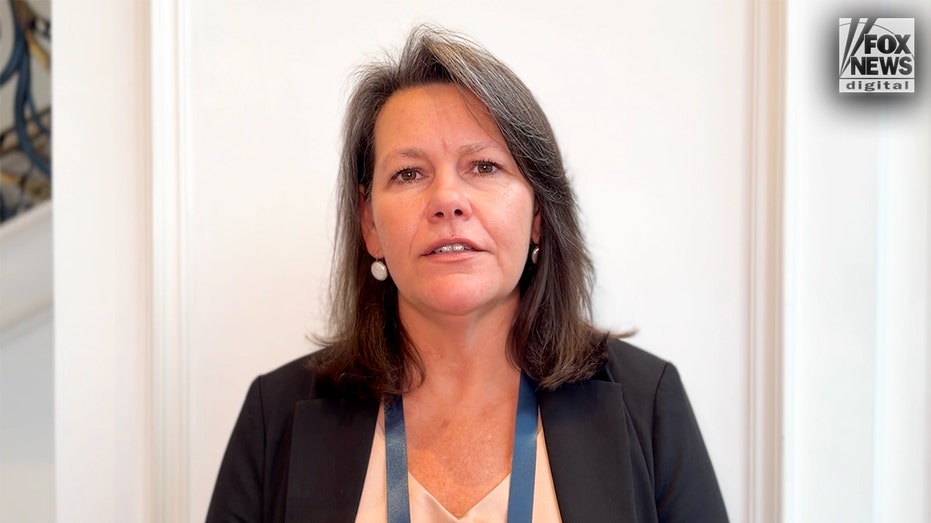
Path Robotics executive Heather Carroll says robotics could help bring manufacturing jobs back to America, pointing to a Texas shipyard planning 10,000 jobs as the US works to regain ground against China.

Robotics will be critical to expanding U.S. manufacturing at scale as companies struggle to find enough skilled workers, a manufacturing executive told FOX Business.

“We do not have the workforce needed to do that,” Heather Carroll, chief revenue officer at Path Robotics, said when asked whether the U.S. could expand manufacturing at scale without robotics.

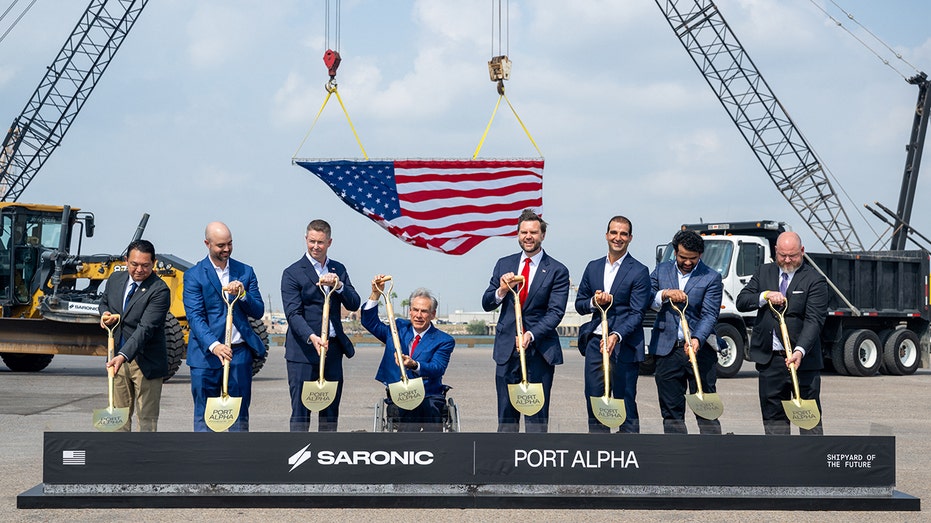
Carroll pointed to Saronic Technologies’ $3.2 billion Port Alpha shipyard in Brownsville, Texas, as an example of how automation can be used alongside American workers. Vice President JD Vance attended the project’s groundbreaking last month.

“This is a great example of how using automation, advanced technology, can be joined and combined with hiring lots of really good American jobs right here at home,” she said.

The issue is becoming increasingly important as the U.S. competes with China, which Carroll said has moved faster to put robotics to work in its factories.

INSIDE SILICON VALLEY’S BET ON A NEW PATH TO LANDING A JOB IN THE AI ERA

Heather Carroll, chief revenue officer at Path Robotics

Robotics will be critical to expanding U.S. manufacturing at scale as companies struggle to find enough skilled workers, a manufacturing executive told FOX Business. (Brooke Curto/Fox News Digital)

“I definitely think that that is a big risk that we run right now,” she said when asked whether the U.S. could lose ground by failing to adopt the technology quickly enough.

China has developed a national strategy around robotics and AI that brings together government, industry and financing to increase adoption, according to Carroll.

“We really lack something similar here in the United States, and it is a competitive disadvantage,” Carroll said. “And so what we’re seeing is this gap widening between the amount of adoption that China has in the robotics space versus what we have in the United States.”

Carroll said American manufacturers face several hurdles to adopting automation, including access to capital, uncertainty over demand and a shortage of workers with the technical skills needed to deploy the technology.

ZOOX CEO SAYS AUTONOMOUS VEHICLES NEED REGULATION MONTHS AFTER ROBOTAXI DROVE INTO LAS VEGAS FIRE SCENE

Vice President Vance Attends Groundbreaking For Texas Shipyard

Carroll pointed to Saronic Technologies’ $3.2 billion Port Alpha shipyard in Brownsville, Texas, as an example of how automation can be used alongside American workers. (Brandon Bell/Getty Images)

She said advances in AI could help lower some of those barriers by making robots easier to deploy without requiring as much technical expertise.

Carroll said automation could help manufacturers offset shortages of skilled workers.

She pointed to welding, where she said an aging workforce is facing growing demand from shipbuilding, defense, energy and AI infrastructure.

“We see it with everyday manufacturers that tell us, ‘We have huge order volumes, but we can’t take this work on here, because we can’t hire a second shift,'” she said.

ERIC TRUMP-BACKED ROBOT STARTUP LANDS $24M PENTAGON DEAL TO COMPETE WITH CHINA

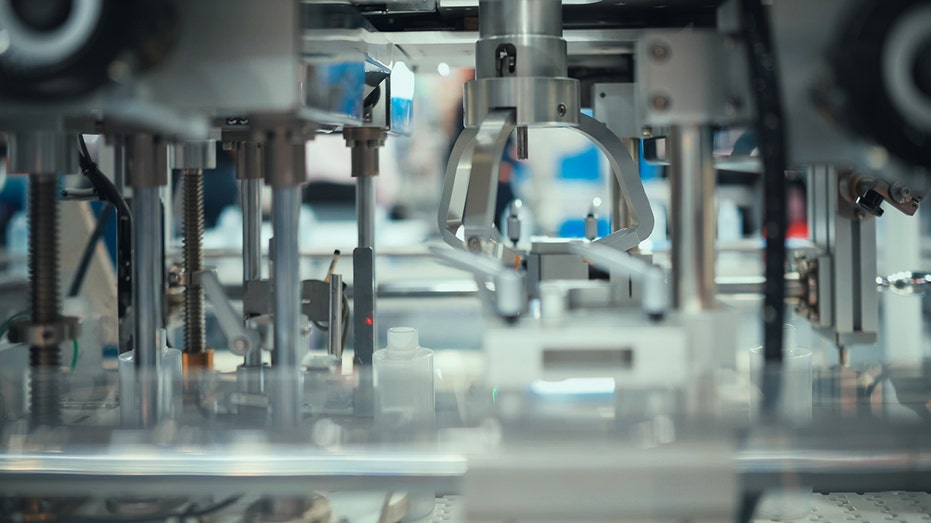
Close-up of a robotic arm or automated system precisely manipulating tiny components,

Carroll said automation could help manufacturers offset shortages of skilled workers. (iStock)

She said, for example, that one welder could be trained to operate 10 welding robots while continuing to handle more skilled work.

Carroll acknowledged concerns that AI and robotics could replace jobs but said the focus should be on training workers to use the new technology.

GET FOX BUSINESS ON THE GO BY CLICKING HERE

“We need to look at ways that we can augment the workers that we have, and ways that we can upskill them and provide them opportunities to be part of the workforce that is being developed around these new types of jobs and skills,” Carroll said.

Free Training

Source link

Some Canadian manufacturers move to U.S. to survive tariffs


One day last December, Julian Reusing pulled his managers into a virtual meeting to lay bare an uncomfortable truth. 

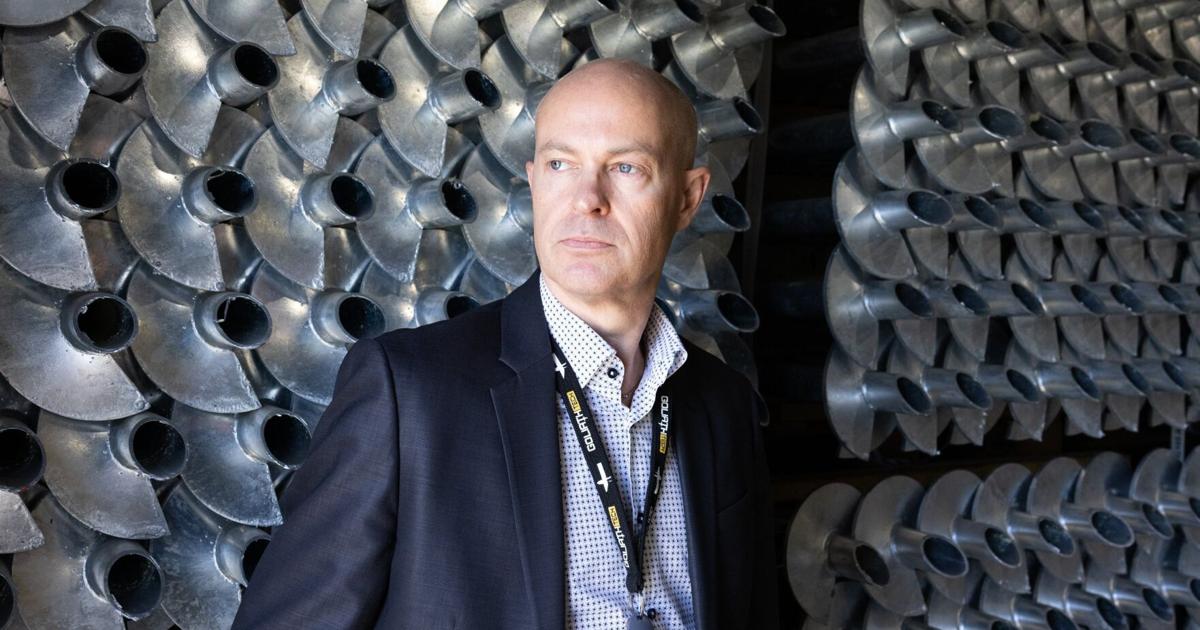
His Quebec company, GoliathTech, a manufacturer of helical screw piles that operates on a franchise model, was getting battered by U.S. tariffs and running out of ways to keep its head above water.

Since the steel tariffs came into effect last March, the company has paid about $3.7 million in tariffs that it has split with its U.S. franchisees.

Reusing, 56, was eager to open a factory south of the border, but he was cash-strapped. Just days earlier, RBC had turned down financing for the company’s European franchise expansion.

Reusing appealed to his own employees for money.

There have been few moments in Canadian history when small and mid-sized manufacturers have faced such pressure. Insurmountable trade barriers with the U.S. have appeared overnight for some companies, suddenly cutting off their largest export market and forcing an urgent need to pivot.

The fight to survive can feel lonely, business owners told the Star. Several said the country’s support falls far short of what they need: the tariff relief programs don’t go far enough and structural threats to Canadian manufacturing competitiveness are making it difficult to replace lost U.S. business.


Julian Reusing.JPG

Over the past two years, GoliathTech’s Julien Reusing approached multiple Canadian government agencies and banks for financing, but was repeatedly turned down. He found his own investors to raise $2.4 million.


Luckily, GoliathTech did not go under that winter. 

Instead, following that pivotal meeting in December, the company raised $900,000 through an equity sale to six of its employees, alongside $1.5 million from a private investor. Reusing opened a small factory in Ohio in March after 10 months of planning in an effort to bypass most U.S. tariffs. He also added 19 European and British franchisees, expanding the firm’s global network to 190 locations as part of a broader restructuring.

“Without a shadow of a doubt, we would be a non-existent company right now if we didn’t make that move,” said Reusing, explaining why he chose to move some production south. “It’s impossible for a company to survive where for every hundred dollars you ship, you have to give fifty dollars to the government.”

Headquartered in Magog, Que., the 13-year-old company is turning a profit for the first time in three years — a turnaround that resulted from Reusing’s own scrambling, with little help from the Canadian government or financial institutions at home.

Many company owners are not nearly as fortunate, and he says Canada needs to do more before more of them are pushed to the brink.

“The government needs to come up with some programs that would teach people how to deal with this, not just offer money,” he said. “I don’t think everybody knows how to deal with a massive revolution.”

Why $7.5 billion in loans isn’t enough

It’s rare to find a clothing company that makes all of its products in Canada — about 95 per cent of the apparel sold here is manufactured outside the country.

When the 50-per-cent U.S. tariffs hit in August, Amit Thakkar feared they could spell the end of his Brampton textile company, Roopa Knitting Mills, which makes fabric for T-shirts, sweatshirts and leggings now caught in the tariff net.

Across the three Canadian clothing businesses he owns, Thakkar employs 120 people, with 50 to 70 per cent of sales destined for the U.S.

His disappointment only grew when Ottawa rolled out a $7.5-billion package to aid tariff-stricken businesses, the majority of which came in the form of loans. 

“If you want to know my honest truth, I think those are all bulls—t,” Thakkar said. “The Canadian government wants to give us loans, but we don’t have customers anymore.”

To Thakkar, the situation is reminiscent of a problem that emerged during the pandemic, when businesses took on emergency debt that some are still struggling to repay years later.

Thakkar says he believes the best way to save his business is for Ottawa to return counter-tariff revenue to companies affected by the trade war, giving them cash to cover tariff costs or lost sales.


GoliathTech 1.JPG

Julien Reusing considers himself lucky to have had the resources and experience to reshape GoliathTech. Many other businesses, he fears, do not have the same room to manoeuvre. 


“If this is like the same in six months,” said Thakkar, “we’re going to be talking about shutting down or moving to the U.S.,” adding that there just isn’t enough buy-in for Canadian-made clothes from the government or domestic consumers.

Before Reusing raised money on his own to restructure his business, he went to the Business Development Bank of Canada (BDC), which launched its Pivot to Grow program last March, offering up to $5 million in loans to help businesses stay afloat and break into new markets.

It seemed like a perfect fit for Reusing’s strategy, but he was denied financing because the business had reported losses in the past two years.

“I’ve spoken with the BDC, Investissement Québec, many different government entities, and we’ve had zero money from the government,” he said. “I lost faith.”

Reusing found investors on his own. 

Dennis Darby, president of Canadian Manufacturers and Exporters, said he is in constant contact with Ottawa to discuss the eligibility and access issues manufacturers are running into. The recent tariff-relief programs are well-intentioned, he said, but their success depends on execution and the speed of approvals.


Tube_laseer_cutter.JPG

A tube laser cutter in action at GoliathTech manufacturing.


“For these smaller manufacturers getting access to that funding, it can’t take six months,” he said.

Companies need more support at home

When Jack Dell’Accio set out to expand Essentia Organic Mattress in 2023, he faced a choice: scale up the company’s factory in Laval, Que., or open a second plant. He chose the latter, investing in a facility in Florida that opened last October.

Mattresses are not subject to the tariffs, and the move was driven purely by logistics costs, particularly the high shipping rates in Canada.

“I have no issues building in Canada all of our raw materials, but it’s our distribution of finished product that has challenges in Canada,” said Dell’Accio, whose company generates about 70 per cent of its sales in the U.S.

The Florida plant has cut Essentia’s shipping costs by about one-third, he said. It also brought an unexpected advantage: with no state personal income tax in Florida, Dell’Accio said Essentia can attract highly skilled engineers with lower salaries than it would need to offer in Quebec.

Alex Greco, senior director of manufacturing and value chains at the Canadian Chamber of Commerce, said tariffs are only one part of the equation when Canadian companies look south, alongside factors such as taxes, regulation, financing and supply chain proximity to customers.


GoliathTech 3.JPG

GoliathTech plate laser operator Stéphane Roy, removes helixes after they’ve been cut.


Canada needs to create a more attractive, business-friendly environment for domestic and foreign investment, so that it can reduce the risk of losing businesses to the U.S., he said.

“We can’t be like psychologists with the president of the United States, but we can control our own competitiveness,” said Greco. 

For Reusing, the solution starts with Canadian financial institutions doing more to back manufacturers.

After the tariffs took effect last March, Reusing approached RBC several times for financing to expand his European franchise network. It was not until December, he said, that his account manager told him the bank was no longer lending against European receivables and inventory.

“It was the ultimate blow because we’ve been with RBC for seven years, very solid, great relationship.”

When asked whether the bank pulled back from corporate financing in Europe, RBC said in a statement that it is unable to comment on individual clients for privacy reasons, but “that financing decisions are made on a client-by-client basis.”

“We see significant opportunity in Europe and are expanding our financing capacity in that market, while also continuing to support clients with cross-border financing needs,” the bank said.


GoliathTech 2.JPG

GoliathTech tube laser technician Josée Roy, who’s worked for nine years at company, arranges tubes. 


Reusing then turned to other Canadian banks, only to be told they would not lend to a company that was “losing money.” He eventually approached a U.S. bank, and the first one he tried agreed to back him.

Last week brought some uplifting news for Canada’s capital markets, as Ottawa unveiled a “productivity mega deduction” as part of its push to attract $1 trillion in new investment over five years.

The measure expands the range of capital assets eligible for businesses to immediately deduct in their first year of use and makes the incentive permanent.

“It’s hard to predict what the future holds for investments in Canada, but this is a policy change that absolutely provides a much stronger incentive for companies to invest in Canada,” said Trevor Tombe, an economics professor at the University of Calgary.

Mutual assured economic destruction

While tariffs have not directly affected Essentia Organic Mattress, they have brought some “social negativity” from Canadian customers when they learn the company operates a factory in the U.S., said Dell’Accio.


GoliathTech 4.JPG

GoliathTech laser cutting supervisor since 2020, Patrick Montmigny, prepares a machine for cutting new plates.


Dell’Accio said opening a plant across the border does not mean scaling back production in Canada, where the company still makes all of its raw materials. If anything, he said, the Florida operation gives Essentia a hedge against any future escalation in trade tensions.

“We’re a Canadian success story that exists in both markets and sometimes it feels that we’re forced to choose sides,” said Dell’Accio. “We can’t. We have a commitment and a customer base in both countries.”

Jim Stanford, economist and director of the Centre for Future Work, said there is no evidence of a migration of jobs to the United States from Canada or elsewhere. But what the data do show, he said, is that tariffs have taken a toll on manufacturing workforces on both sides of the border.

“In terms of Donald Trump’s trade war, this is a case of mutual assured destruction,” he said.

Between January 2025 and August 2026, Canadian manufacturing employment fell by 27,600, from 1.875 million to 1.847 million while the U.S. manufacturing workforce shrank by 35,000. Both countries, however, have seen a modest rebound in those numbers in recent months.

Since the new 50 per cent tariffs took effect, Northern Cables, which has manufactured commercial and industrial power cable with aluminum and copper conductors in Brockville and Prescott, Ont., for 30 years, has had to shut off its cross-border shipping.

Shelley Bacon, the company’s chief executive, said half of the company’s sales go to the U.S. and leadership will have to consider establishing a facility south of the border should the tariffs remain in place to the end of the year.

The Star, simplified

Breaking news, interactive polls, video, and voice notes. Star stories you’ll want to share, delivered where you’re already chatting. Follow the Star on WhatsApp.

Yet that offers no easy workaround, he said. Building an American operation from the ground up represents a massive capital undertaking. 

“If they have trade rules that say you can’t ship product into the country and you have a good customer base and wants to buy from you, you really don’t have a lot of choice here,” he said.

Northern Cables has not laid off any of its 320 workers, instead reassigning them to expand its Canadian product lines and pursue growth domestically. Expanding beyond North America is far from a quick fix. Different standards and measurement systems mean adapting products for Europe could take years, even decades, he added.

But at home, Bacon said some Asian cable makers blocked from the U.S. market by tariffs have been pouring product into Canada at prices so low that his company sometimes cannot even buy the raw materials cheaply enough to match them.

“You can only fight one battle at a time,” Bacon said. “We seem to be fighting two battles at the same time.”

‘If you take your time, you’re going to get eaten up’

It has been 18 months of improvising under pressure for GoliathTech’s Reusing, who kept the company afloat by engineering an entirely new operational playbook to survive the tariff shock.

On top of setting up a U.S. factory, he moved the engineering department to Mexico to cut costs, began manufacturing for two competitors and made 15 trips to Europe to drum up business.

Reusing acknowledged that he was fortunate to have decades of experience to lean on from working in his father’s manufacturing business at 13 to operating a previous franchise business active in 67 countries.

Simply handing out capital won’t solve every problem, Reusing said. What Ottawa really needs to do, he argues, is to launch targeted programs that train business leaders on how to restructure operations and rebuild on the fly.

“You have to do a revolution to your company instantly,” he said. “If you take your time, you’re going to get eaten up.”

Free Training

Source link

Alabama Training Network awarded $2.19 million to continue helping state manufacturers


Alabama manufacturers looking to keep up with rapidly changing technology will continue to have a statewide resource to help them make that transition.

The Alabama Training Network has been awarded $2.19 million from the U.S. Department of Commerce’s National Institute of Standards and Technology to continue serving as Alabama’s Manufacturing Extension Partnership Center.

Although it is a division of the Alabama Community College System, ATN is not one of the system’s community colleges. Instead, it serves as a statewide resource for business and industry, working directly with manufacturers to provide workforce training, technical assistance and business solutions.

The $2,191,702 award will allow that work to continue while putting an increased focus on helping small and medium-sized manufacturers adopt advanced technology, including artificial intelligence, robotics, automation and additive manufacturing.

“This award is an investment not only in ATN, but in the manufacturers, employees, and communities we serve across Alabama,” ATN Executive Director Keith Phillips said. “Our team works alongside companies every day to understand their challenges and provide practical solutions that make a measurable difference.

“We are grateful for NIST’s continued confidence in ATN and excited about the opportunity to build on that work over the next five years.”

ATN works with manufacturers across Alabama to strengthen their workforce and improve operations. Its customized training and technical assistance are designed to help companies improve productivity, quality, safety and competitiveness while preparing for changing technology and workforce needs.

Under the new agreement, Manufacturing Extension Partnership centers will put more emphasis on helping manufacturers successfully adopt advanced technologies and strengthening critical domestic supply chains. The centers will also develop ways to measure technology adoption and work with manufacturers in priority industry sectors.

For Alabama, the funding will allow ATN to continue expanding the resources and expertise available to manufacturers as they deal with changing technology, workforce demands and competition in the global marketplace.

The Alabama award is part of more than $30 million NIST announced for 12 Manufacturing Extension Partnership centers in 11 states and Puerto Rico following a competitive funding process.

The NIST Manufacturing Extension Partnership is a public-private partnership with centers across the United States and Puerto Rico. Its national network includes nearly 1,400 manufacturing advisers and experts working from more than 450 locations.

Sherri Blevins is a staff writer for Yellowhammer News. You may contact her at [email protected].

Free Training

Source link

Manufacturers Take Unlawful EPA Air Standard Fight to Supreme Court


New NAM Analysis Finds Rule Threatens Nearly $1 Trillion in Manufacturing Investment and More Than 122,000 American Jobs

Washington, D.C. – Today, the National Association of Manufacturers joined a coalition of leading business groups in filing a petition for certiorari asking the U.S. Supreme Court to review and reverse the D.C. Circuit’s decision allowing the Environmental Protection Agency’s unlawful and unworkable air quality standard for fine particulate matter, or PM2.5, to stand.

“The Biden administration took an unlawful regulatory shortcut to impose an unworkable air standard that makes it harder to grow manufacturing in America and create well-paying jobs,” said NAM Chief Legal Officer and Corporate Secretary Linda Kelly. “Manufacturers have fought this rule from the beginning because the consequences for investment, growth and American competitiveness are enormous: investment, jobs and America’s ability to compete.

“In 2025, the EPA under the Trump administration agreed, asking the court to vacate the new PM2.5 standard and echoing manufacturers’ concerns that the previous administration had exceeded its authority.

“Yet, the D.C. Circuit allowed the rule to stand, relying on a legal argument the previous administration never invoked to defend its actions. An agency cannot simply disregard the substantive safeguards required by Congress to impose a sweeping new regulatory burden—and a court should not rescue an unlawful rule with an argument the government never raised.

“Manufacturers need the ability to obtain permits, expand operations, modernize facilities and invest in communities across the country. This standard puts those investments and the jobs they support at risk.”

In 2024, the EPA lowered the National Ambient Air Quality Standards for PM2.5 from 12 micrograms per cubic meter to 9. According to new NAM analysis, a standard of 9 threatens at least 474 manufacturing projects announced in the United States since Jan. 1, 2025—representing nearly $1 trillion in investment and more than 122,000 American jobs.

Background:

The Clean Air Act requires the EPA to conduct a thorough review of the NAAQS every five years to determine whether existing standards should be retained or revised. Following a complete review in 2020, the EPA retained the PM2.5 standard of 12 micrograms per cubic meter.

The previous administration subsequently reopened that completed review and in 2024 lowered the standard to 9 micrograms per cubic meter. The NAM and seven leading business groups challenged the rule in the D.C. Circuit, arguing that the EPA lacked authority to revise the standard through an off-cycle reconsideration without conducting the thorough review required by the Clean Air Act.

In November 2025, the EPA reversed the federal government’s position in the litigation and asked the D.C. Circuit to vacate the rule, agreeing with the NAM that the previous administration had used an unlawful regulatory shortcut.

On June 26, 2026, the D.C. Circuit nevertheless upheld the rule, concluding that the EPA could revise the standards outside the five-year review cycle without completing a thorough review. In reaching that conclusion, the court relied on a provision of the Clean Air Act that the previous administration had not invoked in defending the rule.

-NAM-

The National Association of Manufacturers is the largest manufacturing association in the United States, representing small and large manufacturers in every industrial sector and in all 50 states. Manufacturing employs nearly 13 million men and women, contributes $3 trillion to the U.S. economy annually and accounts for nearly 52% of private-sector research and development. The NAM is the powerful voice of the manufacturing community and the leading advocate for a policy agenda that helps manufacturers compete in the global economy and create jobs across the United States. For more information about the NAM or to follow us on Twitter and Facebook, please visit www.nam.org.

Free Training

Source link

NIST Funds 14 MEP Centers to Boost U.S. Manufacturers


NIST Manufacturing Extension Partnership logo

GAITHERSBURG, Md. – The U.S. Department of Commerce’s National Institute of Standards and Technology (NIST) has released a Notice of Funding Opportunity for 14 Manufacturing Extension Partnership (MEP) centers to improve U.S. industrial competitiveness by helping small and medium-sized manufacturers adopt advanced manufacturing technologies. The funding will establish MEP centers in Alabama, Alaska, Arkansas, California, Georgia, Louisiana, Massachusetts, Missouri, Montana, Ohio, Pennsylvania, Puerto Rico, Utah and Vermont.

Small and medium-sized manufacturers make up 98% of the U.S. manufacturing base. NIST MEP facilitates cooperation among private sector industry partners, government agencies, academic institutions, economic development organizations and other manufacturing ecosystem stakeholders for advanced manufacturing technologies demonstration, deployment and adoption.

“This new funding opportunity and competition will help to strengthen manufacturing across the United States and expand the impact of the MEP program,” said Under Secretary of Commerce for Standards and Technology and NIST Director Arvind Raman. “With a renewed focus on advanced technology adoption and strong partnerships, MEP can help supercharge the American manufacturing ecosystem and improve America’s industrial competitiveness via our small and medium-sized manufacturers.”

The new funding creates MEP centers that will strengthen manufacturing ecosystems by encouraging the adoption or scale-up of advanced technologies to improve production capacity and capability, supporting supply chain integration and developing a strong manufacturing workforce.

Advanced manufacturing technologies are those that integrate innovations such as robotics, artificial intelligence (AI), automation, advanced materials, additive manufacturing or biotechnology into a manufacturing environment to optimize production, improve efficiency or create new, highly customized products.

Selected applicants must secure nonfederal matching funds (or cost-share) of at least 50% and will enter into a cooperative agreement with NIST to operate the centers. The new centers will join the MEP National Network™, which comprises MEP centers across the country and includes nearly 1,400 trusted manufacturing advisers and experts at more than 450 MEP service locations, with oversight provided by the MEP program at the federal level.

NIST plans to award up to the following amounts to centers in each location:

  • Alabama: $2,191,702
  • Alaska: $706,300
  • Arkansas: $1,291,618
  • California: $15,641,800
  • Georgia: $3,227,001
  • Louisiana: $1,537,719
  • Massachusetts: $2,959,870
  • Missouri: $2,656,601
  • Montana: $839,900
  • Ohio: $6,076,983
  • Pennsylvania: $6,110,684
  • Puerto Rico: $939,133
  • Utah: $1,492,598
  • Vermont: $812,300

NIST MEP will host an informational webinar on Tuesday, July 28, 2026, at 1 p.m. EDT to provide general information about this opportunity and guidance on preparing applications.

Additional information about this funding opportunity is available on Grants.gov and on the NIST MEP website. Applications must be received no later than 11:59 p.m. Eastern Daylight Time, on Aug. 21, 2026.

/Public Release. This material from the originating organization/author(s) might be of the point-in-time nature, and edited for clarity, style and length. Mirage.News does not take institutional positions or sides, and all views, positions, and conclusions expressed herein are solely those of the author(s).View in full here.

Free Training

Source link

Manufacturers eyeing U.S. move as trade tensions take a toll: KPMG


BNN Bloomberg is Canada’s definitive source for business news dedicated exclusively to helping Canadians invest and build their businesses.

A new survey shows trade tensions have some Canadian manufacturers deciding to move production south of the border or delay capital investments.

KPMG Canada said on Tuesday that 42 per cent of Canadian manufacturing companies indicated they have or are considering moving production to the United States. Of those considering relocating, 77 per cent expect to make the transition within the next two years.

Anamika Gadia, partner and national leader of industrial markets at KPMG Canada, said domestic manufacturers have shown resilience over the last year, “but resilience certainly has its limits.”

“Our survey clearly shows that while companies have been making short-term decisions to adapt to tariffs and trade uncertainty, they’re now moving toward making longer-term investment decisions,” she said in an interview.

“In other words, they’re not waiting to see what might happen with the trade situation, including the CUSMA discussions and they’re moving to make longer-term investment decisions, including investment decisions that see them shifting their production to the U.S.”

Results for the survey were taken from business owners, executives and decision-makers at 275 Canadian manufacturing companies between May 11 and May 29, using Angus Reid’s business research panel.

Last week, United States Trade Representative Jamieson Greer said the U.S. is not renewing the Canada-U.S.-Mexico Agreement “in its current form” — but the trade agreement will remain in place as negotiations continue.

The decision triggers a rolling annual review for up to a decade, at which point it will expire if an extension isn’t agreed upon. CUSMA remains in place unless one of the partner countries gives six months’ notice that it is pulling out.

The trade agreement has shielded Canada from many of U.S. President Donald Trump’s tariffs, but the country is being affected by separate sectoral tariffs on industries like steel, aluminum, automobiles and cabinetry.

Gadia said the issues go beyond the trade situation though, with Canada needing to create a competitive environment for manufacturers to grow.

“This survey clearly shows that manufacturers need to feel more comfortable and see some action from the government in order to continue to produce and invest and grow in Canada,” she said.

“Some of the key factors that companies have cited are more certainty around interprovincial trade barriers, they need more tariff certainty, they want to see lower corporate taxes, they want better access to capital and cheaper energy.”

The survey also found 57 per cent of manufacturing firms have paused, reduced or cancelled capital investment projects. Thirty-six per cent said they have scaled back investments, 12 per cent have paused their plans and nine per cent have cancelled planned spending.

Gadia said delays in capital investments may be a signal that those investment dollars are going to be redeployed into the U.S.

The survey showed 80 per cent of manufacturers were planning to maintain their Canadian headquarters, but 11 per cent were planning to move their head office to the U.S. within the next five years.

A loss of that size could meaningfully impact Canada’s gross domestic product, KPMG Canada said.

According to figures from the federal government, the manufacturing sector represents about 10 per cent of Canada’s overall GDP.

This report by The Canadian Press was first published July 7, 2026.

Daniel Johnson, The Canadian Press

Related Stories

Free Training

Source link

American Trailer Manufacturers Coalition calls 130.76% China trailer duties a win for U.S. manufacturing


The American Trailer Manufacturers Coalition (ATMC) today applauds the U.S. Department of Commerce’s (Commerce) announcement of preliminary antidumping duties of 130.76% on van-type trailers from China. The duties apply to van-type trailers sold in the United States at prices that were deemed unfairly low by Commerce. The determination follows Commerce’s June 3, 2026, preliminary finding that Chinese trailer producers benefit from significant government subsidies.

Upon publication of Commerce’s determination in the Federal Register, U.S. Customs and Border Protection will begin collecting antidumping duties on imports of subject merchandise from China at the preliminary rates established by Commerce. This includes Chinese-origin subassemblies entering the U.S. through third countries, such as Canada. These duties will be added to the countervailing duties already announced by Commerce, increasing accountability for unfairly traded imports entering the U.S. market.

“This determination is an important victory for American manufacturing and the thousands of workers who build trailers in communities across the country,” said Robert E. DeFrancesco, trade counsel to the Coalition and partner in the International Trade Practice at Wiley. “For too long, Chinese producers have exploited unfair pricing practices and government support to gain market share at the expense of the U.S. manufacturing industry. Commerce’s decision sends a strong message that American workers have been harmed by these practices and sets the conditions needed for them to compete on fair terms.”

The Department of Commerce’s antidumping investigation into Mexico remains ongoing, with a preliminary determination expected in late July. The agency is expected to issue final determinations later this year.
Free Training

Source link

U.S. Charges 4 Of The World’s Largest Shipping Container Manufacturers Over Multi-Billion-Dollar Trade Conspiracy


shippingImage for representation purposes only
The United States has charged seven Chinese executives and four of the world’s biggest shipping container manufacturers with allegedly fixing prices and restricting the global supply of shipping containers during the COVID-19 pandemic.

The U.S. Department of Justice (DOJ) said the companies controlled about 95% of the world’s standard dry shipping container production and worked together between November 2019 and January 2024 to limit output and raise prices.

Prosecutors said the alleged conspiracy increased the cost of shipping containers during the global supply chain crisis, forcing businesses and consumers to pay more for goods shipped worldwide.

The companies named in the indictment are Hong Kong-listed Singamas Container Holdings Ltd., Chinese container manufacturing giant China International Marine Containers (Group) Co., Ltd. (CIMC), Shanghai Universal Logistics Equipment Co., Ltd., also known as Dong Fang International Containers, and CXIC Group Containers Co. Ltd..

The DOJ said executives from the companies met in Shenzhen in November 2019 and agreed to reduce production in order to increase container prices.

According to prosecutors, the companies limited production shifts and factory operating hours, agreed not to build new factories, and created a penalty system for companies that broke the agreement.

Investigators also alleged the companies installed 87 surveillance cameras across 49 production lines to make sure manufacturers followed the agreed production limits.

By September 2020, prosecutors said the alleged cartel expanded the arrangement to limit the number of containers supplied to specific customers, including major U.S.-based shipping lines, logistics companies and container leasing firms.

The DOJ said the conspiracy later evolved into production caps that remained in place until at least late 2023.

Prosecutors cited internal presentations allegedly showing “allowable quota” limits assigned to participating manufacturers and factories.

One executive, Vick Nam Hing Ma, a marketing director at Singamas, was arrested in France in April 2026 and is awaiting extradition to the United States. Six other executives remain at large.

Other executives charged include Siong Seng Teo, Boliang Mai, Tianhua Huang, Yongbo Wan, Qianmin Li and Yuqiang Zhang.

U.S. officials said the alleged cartel operated during one of the worst global shipping disruptions in recent history, when container shortages and port congestion disrupted trade routes and increased freight costs worldwide.

According to the indictment, CIMC’s container manufacturing profits rose from about $19.8 million in 2019 to around $1.75 billion in 2021.

Singamas also moved from a loss of about $110 million in 2019 to profits of around $186.8 million in 2021.

Associate Attorney General Stanley Woodward accused the companies of manipulating markets during the pandemic, while Acting Assistant Attorney General Omeed A. Assefi said the companies “held hostage the world’s supply of ocean shipping containers” during the global supply chain crisis.

The companies and executives were charged under the Sherman Antitrust Act, which carries a maximum sentence of 10 years in prison for individuals and fines of up to $100 million for companies.

Reference: US Department of Justice

Disclaimer :
The information on this website is for general purposes only. While efforts are made to ensure accuracy, we make no warranties of any kind regarding completeness, reliability, or suitability. Any reliance you place on such information is at your own risk. We are not liable for any loss or damage arising from the use of this website.

Free Training

Source link

Victorian Manufacturers Target U.S. via Moog Roadshow


Victoria’s advanced manufacturing and defence exporters are making their mark in the United States this week, with Global Victoria’s team on the ground connecting Victorian businesses with one of the world’s most significant advanced manufacturing and defence supply chains.

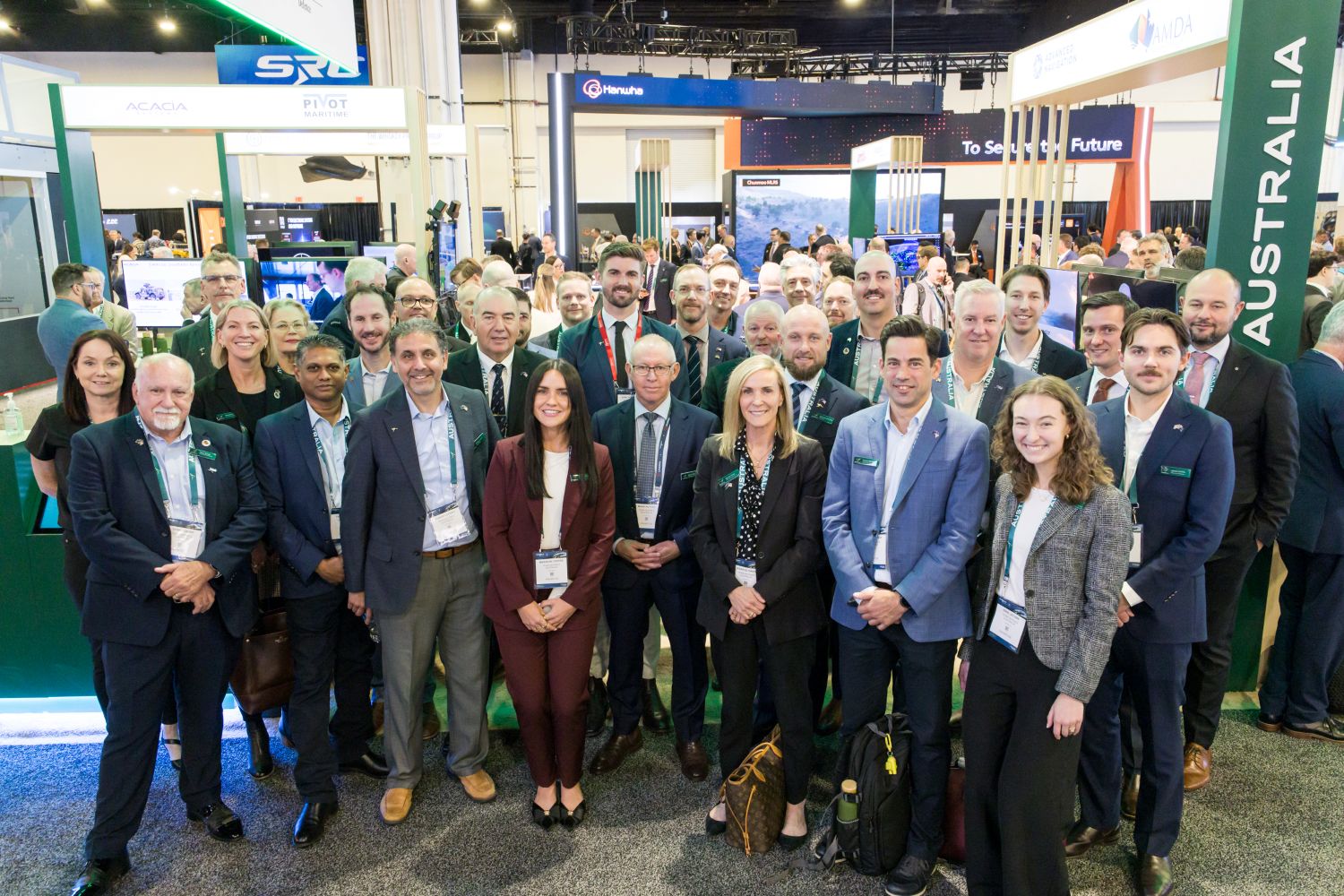
A group shot of the Victorian companies exhibiting at Sea Air Space 2026

At the centre of the action is Sea Air Space 2026, the premier US maritime exposition hosted by the Navy League of the United States, where close to 100 Australian companies are exhibiting at the Team Defence Australia (TDA) Pavilion. More than 30% of those companies are Victorian or have substantial advanced manufacturing capacity in Victoria.

Connecting Victorian exporters to opportunity

Global Victoria has also partnered with Moog Australia, a wholly owned subsidiary of Moog Inc., to deliver a dedicated advanced manufacturing and defence roadshow for Victorian exporters.

Seven Victorian companies are travelling to Washington DC, Buffalo and Akron this week for a program of one-on-one business matching meetings with key decision-makers from Moog Inc. The goal is to position Victorian firms as suppliers into Moog’s international advanced manufacturing and defence programs and build commercial relationships that can lead to long-term export growth.

The Moog team will also host a networking event in Buffalo and provide one-on-one presentation coaching to help the Victorian companies sharpen how they pitch their capability to US primes and buyers.

About Moog

Moog Australia, established in 1979 and headquartered in Heatherton, Victoria, is a specialist advanced manufacturing and defence supplier with deep roots in the local market. Its parent company, Moog Inc., is a global prime delivering mission-critical motion control systems across land, air and naval platforms for military forces around the world.

For Victorian companies, access to Moog Inc.’s supply chain can open the door to procurement programs that span multiple platforms, countries and years of production.

Building Victorian capability

A photo of Mark Bayliss - Advanced Manufacturing and Defence Manager, Victorian Government USA office

Sitting at the heart of Global Victoria’s advanced manufacturing and defence export work is Mark Bayliss, Director of Defence and Aerospace Trade and Investment in the Victorian Government’s Trade and Investment (VGTI) office in the United States.

With 25 years of service in the Australian Army, including in Special Operations Command, Mark Bayliss brings rare frontline insight to Global Victoria’s advanced manufacturing and defence export work in the United States. That experience helps him connect Victorian companies with the right decision-makers and position their capability in a way that resonates with US primes and military buyers.

Victoria’s pathway into global supply chains

With the Commonwealth Government investing $765 billion in defence over the next decade, Victoria has a major opportunity to secure exports, high-value jobs and capital investment.

The Victorian Government’s Economic Growth Statement reinforces that ambition by backing advanced manufacturing and defence capability, strengthening supply chains and supporting business growth.

Global Victoria is helping companies take advantage of those opportunities through one-on-one trade facilitation, international introductions and support to access programs such as Team Defence Australia.

Trade expositions like Sea Air Space deliver face-to-face access to military decision-makers, global primes, and technology leaders who are actively looking for solutions. Backing that with a structured roadshow and supply chain introductions helps Victorian companies shift from awareness to viable commercial outcomes.

Get involved

If your business has advanced manufacturing and defence capability and you want to explore export opportunities in the US, reach out to the Global Victoria team.

/Public Release. This material from the originating organization/author(s) might be of the point-in-time nature, and edited for clarity, style and length. Mirage.News does not take institutional positions or sides, and all views, positions, and conclusions expressed herein are solely those of the author(s).View in full here.

Free Training

Source link