Why medical device tariffs would hurt the U.S. manufacturers they’re meant to help


Not all imports are evidence of dangerous dependence. Much of the 30% of medical technology manufactured outside the country comes from allies and trading partners in North America and Europe. China, the most plausible adversary concern, accounts for less than 3% of the total American medtech market. National security policy should distinguish between a critical product for which America depends on a potential adversary and a device or component moving through an integrated supply chain with an ally.

Markets reward the cheapest device available today. They don’t necessarily price in the strategic value of having the capacity to manufacture that device domestically tomorrow. The COVID-19 pandemic taught us what can happen when a crisis interrupts access to products we assumed would always be available. Domestic manufacturing capacity provides a measure of security that won’t necessarily show up in the price of a syringe, catheter or medical monitor.

The U.S. government does have an interest in correcting this market indifference to where something is produced and what that means for national security. But there is a problem with using tariffs to accomplish that goal: Medical device manufacturers currently building products in America already depend on global supply chains. American-made medical devices often contain imported raw materials, specialized components and subassemblies. Tariffs on these inputs could raise the cost of making the finished device here. Medical device manufacturers cannot necessarily respond by simply switching suppliers, and likely would run up against regulatory hurdles.

For medical technology, that creates a paradox: a tariff policy intended to bring more production to the United States could instead make it more expensive to manufacture here.

There is a better way to address genuine vulnerabilities. Start by identifying what they actually are. Reliance on a geopolitical adversary for an essential medical product with few alternative suppliers may pose a real national security risk. Importing a medical device from a NATO ally under an existing trade agreement does not. Where a true vulnerability exists, targeted tools can address it without penalizing the entire sector: strategic reserves for critical single-source products, Defense Production Act designations and federal procurement preferences for domestically manufactured devices represent only a few focused alternatives.

A tariff that treats both products as carrying the same threat simply because both are classified as medical technology won’t improve security, but it will make the U.S. less competitive.

The goal is not fewer imports for the sake of fewer imports. It is a stronger, more resilient American medical technology industry, and that goal is best served by removing barriers, not adding them.

One of the most significant barriers is already embedded in federal regulation. FDA medical device approvals follow strict processes. Because FDA approvals are tied to specific components and suppliers, a domestic manufacturer that wants to substitute American inputs for foreign ones faces an entirely new validation and review process to do it. That friction makes onshoring more expensive at precisely the time we want it to be less so. Streamlining that review pathway would do more to accelerate domestic production than any tariff, and it would cost American patients nothing.

Broad medical technology tariffs are a tax on the patients who need those devices and on the manufacturers who build them here. The administration’s instinct is right: the United States should make more of the medical technology Americans depend on. The instrument is wrong. The way to get there is to make the United States a better place to build, not a more expensive one.

Monique Yohanan, MD, MPH, is director of the Center for Better Health at Independent Women.

Free Training

Source link

Medical Products Makers Invest in U.S. Manufacturing


Reports related to this article:

Written by Eric Funderburk for IIR News Intelligence (Sugar Land, Texas)

Summary

Consumable and disposable medical products other than drugs are driving various construction projects throughout the U.S.

Essential Products

Industrial Info Resources’ coverage of the Pharmaceutical-Biotech Industry includes not only the drugs, active pharmaceutical ingredients and the related labs and research facilities, but also other essential medical products, including syringes, wound dressings and packaged intravenous solutions. The manufacture of these essential items represents a steady source of construction investment throughout the country.

Syringes & Drug Delivery Devices

Earlier this month, medical device manufacturer Becton Dickinson (BD) announced it had struck a deal with the U.S. government to invest $19 billion in the U.S., including $3 billion earmarked for manufacturing sites across the country. As details of these upcoming projects emerge, one U.S. project in the U.S. already is underway: upgrades and additions that will expand production capacity at the company’s plant in Columbus, Nebraska, which manufacture BD’s proprietary Neopak prefillable glass syringes. Strongly driving BD’s Nebraska capacity growth is the injectable GLP-1 market, which is very much driving construction on the drug side of the U.S. industry.

Readers can access details of the Becton Dickinson project, including construction timelines, key contact details, and equipment and service needs, by clicking here. To learn more about U.S. GLP-1-related construction projects, see August 27, 2026, article – GLP-1 Drugs Drive Pharma Construction Wave.

Other projects are focusing on the packaging aspect of syringes, autoinjectors and similar devices. These include Sharp Packaging Solutions‘ expansion of its plant in Macungie, Pennsylvania, which will focus on secondary packaging, and labeling and cartoning for autoinjectors and prefilled syringes that contain drugs. Facilitating the types of drugs that can be packaged, Sharp is expanding its cold storage space as well.

PCI Pharma Services also is fitting out its packaging area for autoinjectors and prefilled syringes at its plant in Rockford, Illinois.

IV Solutions

In a similar vein to syringes and autoinjectors, Otsuka ICU is at work expanding its main production campus in Austin, Texas, which manufactures the company’s filled intravenous (IV) solution bags. The joint venture company is adding another 500,000 square feet of manufacturing space to its Austin campus, and while the company hasn’t elaborated on exactly what sorts of products the addition will cover, ICU’s products include IV bags with substances such as saline, sterilized water, dextrose and electrolyte solutions.

Wound Dressings

Last year, Mölnlycke Health Care US, broke ground on a building addition at its manufacturing campus for single-use wound dressings in Brunswick, Maine. Among Mölnlycke’s offerings are its Mepitel and Mepilex dressing lines that are based on a soft-silicone technology.

Kidney Care

Dialyzers are the name of the game for Nipro Medical Corporation’s construction of a new plant in Greenville, North Carolina, which also will manufacture precision needles. Patients requiring kidney dialysis require a new dialyzer each time they receive treatment, and with this occurring multiple times per week, the number of dialyzers required by individuals over an extended basis can be quite large. Nipro is catering to a strong market; a 2026 report from the National Kidney Foundation suggested more than 831,000 U.S. residents were being treated for end-stage renal disease at the end of 2023, a number which has appeared to stay relatively stable over recent years.

Contact Lenses

Contact lenses have very much become a disposable medical item, with users discarding lenses at a frequency ranging daily to monthly, but always with a new pair waiting to be worn. The biggest construction news in this segment comes from Johnson & Johnson Vision, manufacturer of the blockbuster ACUVUE line of disposable contact lenses.

J&J broke ground earlier this year on the expansion of its contacts plant in Jacksonville, Florida, which already manufactures 1.7 billion lenses per year for the U.S. market. Johnson & Johnson is adding new production and packaging lines at the plant along with the latest in automation to grow capacity. Work is expected to last into 2029.

Key Takeaways

  • Disposable and consumable medical items represent a driver of U.S. construction throughout the country.
  • Syringes and autoinjectors represent a strong market driver, which in turn is being driven by injectable GLP-1 drugs/
  • Other items supporting U.S. construction projects include contact lenses, IV solution bags and wound dressings.

About Industrial Info Resources
Industrial Info Resources (IIR) is the leading provider of industrial market intelligence. Since 1983, IIR has provided comprehensive research, news and analysis on the industrial process, manufacturing and energy related industries. IIR’s Global Market Intelligence (GMI) helps companies identify and pursue trends across multiple markets with access to real, qualified and validated plant and project opportunities. Across the world, Industrial Info Resources is tracking over 250,000 current and future projects worth $30.2 trillion (USD).

Free Training

Source link

BD To Invest $19 Billion In U.S. Through Government Partnership To Expand Medical Manufacturing


BD has entered into a partnership with the U.S. government that includes plans for the medical technology company to invest $19 billion in the United States over several years, with $3 billion specifically directed toward expanding domestic manufacturing.

The agreement is intended to strengthen U.S. healthcare supply chains and increase domestic production of essential medical consumables used by hospitals and healthcare providers.

BD, formally Becton, Dickinson and Company, said the broader $19 billion commitment will include capital, operational and supply chain investments across its U.S. business.

Of that total, $3 billion is expected to support manufacturing expansion at strategic production sites across the country.

The company plans to expand end-to-end U.S. production by approximately 5 billion essential medical consumables annually.

That additional capacity is expected to increase BD’s share of essential medical consumables supplied domestically to roughly 80%.

BD also intends to manufacture 100% of the needles it supplies for use in the United States domestically, using American-made steel.

The partnership reflects efforts by the federal government and BD to increase domestic production capacity for medical products considered important to healthcare delivery and emergency preparedness.

BD is the nation’s largest manufacturer of essential medical consumables, and the company said its products are used in approximately 90% of U.S. hospital visits.

The agreement also provides BD with relief from future tariffs imposed under Section 232 on covered products and manufacturing inputs.

That tariff treatment remains subject to the final scope and implementation of any future Section 232 actions and BD’s achievement of agreed milestones.

Because tariff rates, covered products and implementation timing have not yet been finalized, BD is not currently estimating the financial impact of that portion of the agreement.

The company expects to provide additional information once the Section 232 tariffs are finalized.

BD already operates a substantial U.S. manufacturing network, with facilities in locations including Columbus and Broken Bow, Nebraska; Canaan, Connecticut; Añasco, Puerto Rico; Sandy, Utah; El Paso, Texas; Covington, Georgia; and Sumter, South Carolina.

The new investment is intended to further expand that domestic footprint while increasing the resilience of the company’s supply chain.

BD has operated for nearly 130 years and has a long history of supplying essential medical products during major healthcare events.

The company cited its development of the first disposable syringe used in efforts against polio and the delivery of more than 2 billion additional devices during the recent pandemic as examples of its role in responding to large-scale public health needs.

BD said the new commitments are expected to help establish one of the world’s most resilient manufacturing bases for essential medical consumables while improving the reliability of supplies available to U.S. healthcare providers.

The partnership also forms part of BD’s broader strategy of investing in innovation, manufacturing and healthcare infrastructure while maintaining its global operations.

BD employs more than 60,000 people worldwide and develops technologies across medical essentials, connected care, biopharma systems and interventional care.

KEY QUOTES:

“This agreement reflects a shared commitment between the U.S. Government and BD to strengthening America’s healthcare infrastructure, expanding U.S. manufacturing capacity and supporting reliable access to essential medical technologies, ultimately building a more resilient healthcare system for the future. The administration recognizes the importance of investing in a stronger, more secure healthcare supply chain, and BD is uniquely positioned to help bring that vision to life through our scale, innovation expertise and longstanding U.S. manufacturing footprint.

For nearly 130 years, BD has partnered with health systems and governments in the U.S. and around the world to meet critical healthcare challenges. We are proud to build on that legacy through significant investment in U.S. manufacturing and innovation, while continuing to advance healthcare and serve patients, providers and communities around the world who depend on us.”

Tom Polen, Chairman, CEO and President of BD

Thank you for visiting Pulse 2.0. We work hard every day to bring leaders and decision makers like you the latest intelligence on business, finance, capital markets, deal flow, law, tech, and AI. Click here to subscribe to the Pulse 2.0 Newsletter.

Free Training

Source link

Fulflex Acquires 300,000-Square-Foot Texas Medical Manufacturing Facility to Expand U.S. Healthcare Platform


Fulflex Acquires 300,000-Square-Foot, Fully Automated Medical Products Manufacturing Facility In Texas

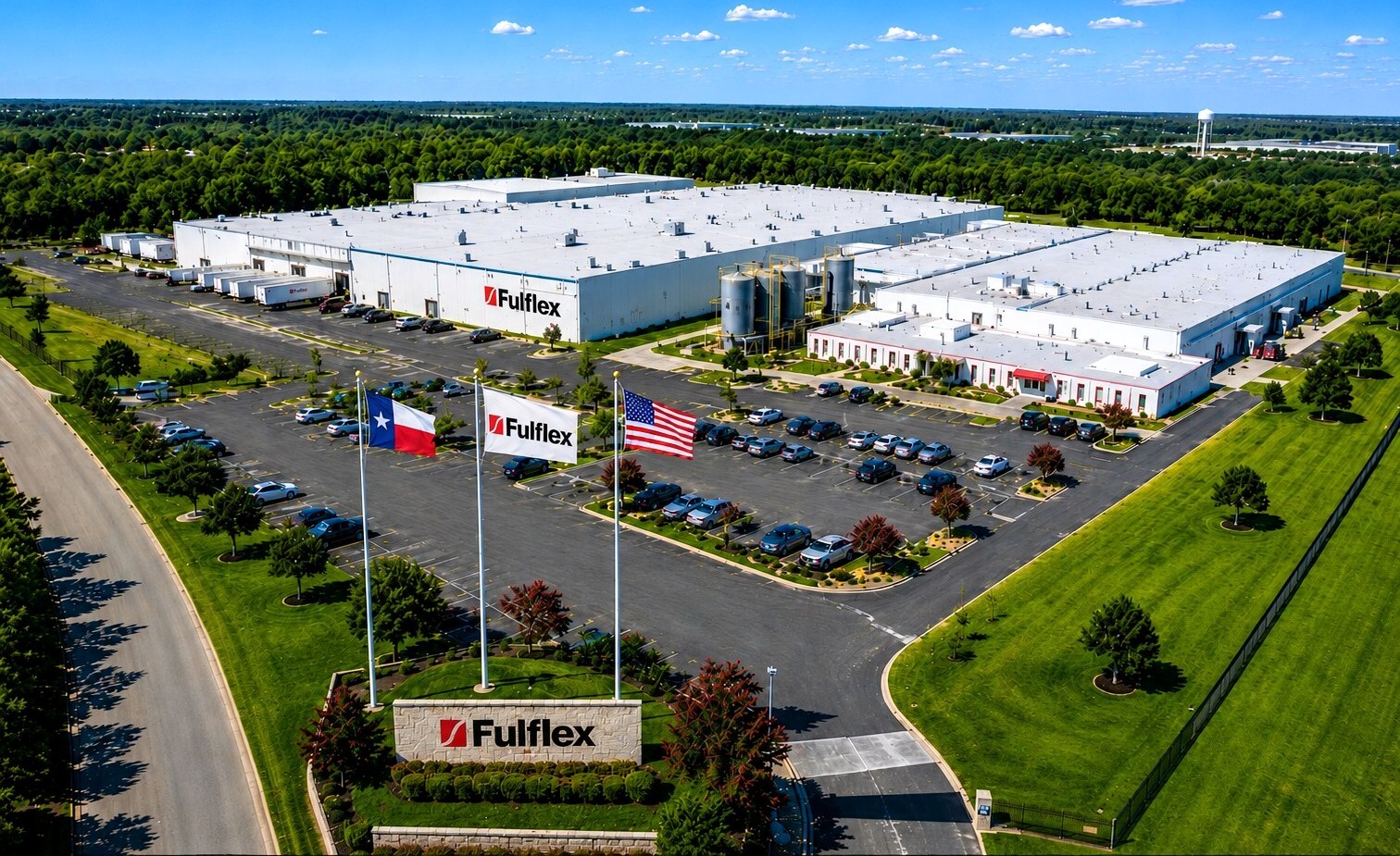
Fulflex has completed the acquisition of a 300,000-square-foot medical products manufacturing facility in Jacksonville, Texas, significantly expanding its North American production capacity and reinforcing its strategy to build a larger global healthcare manufacturing platform.

Located on a 30-acre campus, the facility becomes one of Fulflex’s largest and most advanced manufacturing sites worldwide. The acquisition also brings more than 250 employees into the company, strengthening its manufacturing workforce while establishing a larger operational presence in East Texas.

The Jacksonville facility produces a broad range of medical products used by healthcare providers and patients globally. Its manufacturing capabilities include plastics injection molding, blow molding, thermoforming, extrusion, automated assembly and other advanced production technologies, enabling Fulflex to increase output while supporting customers with scalable, high-quality manufacturing solutions.

“This is an exciting day for Fulflex and for the Jacksonville community,” said Diya Garware Ibanez, Chairperson of Fulflex. “We are delighted to officially welcome the Jacksonville team into the Fulflex family. This acquisition reflects our confidence in the exceptional people, the advanced manufacturing capabilities of this facility, and the long-term future of healthcare manufacturing in East Texas. We are committed to investing in this facility, creating new opportunities for our employees, supporting our customers with world-class manufacturing, and contributing positively to the Jacksonville community for many years to come.”

The acquisition expands Fulflex’s manufacturing footprint across North America while increasing capacity in polymer processing, medical device manufacturing and automated production. The additional facility also enhances supply chain resilience by providing greater geographic diversification and production flexibility for customers operating in global healthcare markets.

The investment aligns with Fulflex’s long-term strategy of expanding through advanced manufacturing assets that strengthen operational scale and support growing demand for medical products. The company said it plans to build on the Jacksonville facility’s existing capabilities through continued investments in manufacturing technology, quality systems, operational excellence and workforce development.

“Every acquisition begins and ends with people,” Garware Ibanez said. “The dedication, experience, and commitment of the Jacksonville employees are the foundation of this facility’s success. We are honored that so many talented people have chosen to continue this journey with us, and we look forward to building an organization where our employees can grow, our customers can succeed, and our community can thrive.”

The transition was formally marked with a community event attended by employees, customers, local officials and business leaders, underscoring the company’s commitment to maintaining the facility’s operations while investing in its long-term growth.

Following the acquisition, Fulflex operates 14 locations worldwide, including four manufacturing facilities in the United States, one manufacturing facility in the Dominican Republic, two manufacturing facilities in India, and seven sales offices and distribution centers across eight countries. The company’s global network serves customers in more than 85 countries, providing medical products and engineered polymer solutions for applications spanning medical devices, patient care, rehabilitation and personal protective equipment.

By expanding its U.S. manufacturing base with one of its largest production facilities, Fulflex is positioning itself to support increasing demand from healthcare customers while strengthening its role as a global contract manufacturing partner with enhanced capacity, operational flexibility and regional supply chain capabilities.

Free Training

Source link