Meet The Early Movers In America’s $3T Push For Manufacturing Construction
Manufacturing facilities have broken ground in a burst over the last two years, helped along by incentive programs that span presidencies, with President Donald Trump’s latest rounds of tax breaks passed through the One Big Beautiful Bill Act specifically aimed at unleashing their development.
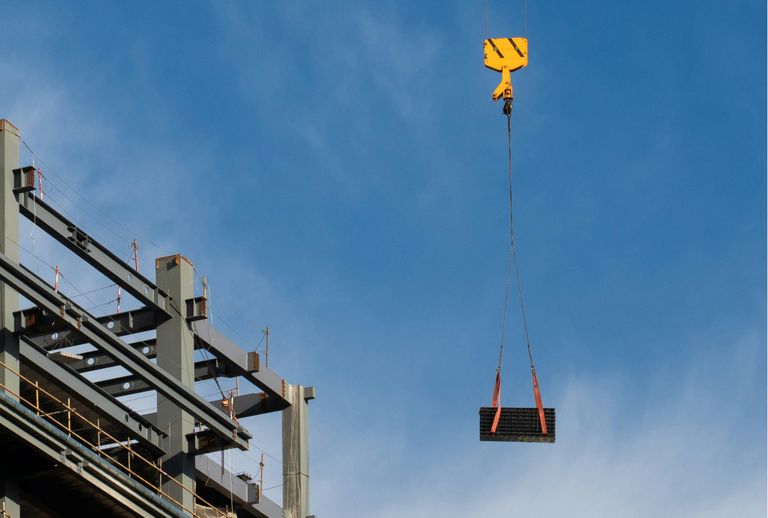
There are roughly two dozen facilities under construction across the country totaling around $500B in committed capital, with a deep pipeline of projects behind them, according to Avison Young. The brokerage is tracking 124 projects that have been proposed or announced, amounting to $3.4T in potential investment.
Avison Young’s lead industrial researcher, Peter Kroner, said he expects the pace of groundbreakings will accelerate through the end of the year.
“We fully anticipate another hockey stick that’s going to dwarf this starting to happen at the end of the year,” Kroner said, describing a steep upward shift in momentum on a line chart that is shaped like the sports equipment. “We’ve peaked in terms of that trough of uncertainty for 18 months, and there’s a lot of excitement from manufacturers to take advantage of what’s in this bill.”
Some of what is breaking ground today is leveraging benefits from former President Joe Biden’s CHIPS and Science Act, but Trump’s One Big Beautiful Bill Act and the ongoing trade war have also driven firms to bring manufacturing stateside.
Biden’s other policy package, the Inflation Reduction Act, has largely been sidelined by the administration that inherited it, but the CHIPS Act has continued to ride the wave of monumental demand for digital infrastructure amid the mass deployment of artificial intelligence, said Craig Van Pelt, who leads research at Cresa.
“The CHIPS Act is a huge deal, one of the biggest financial packages we’ve ever done in the United States, but there’s a long way to go from permitting and site preparation to active construction and production,” he said.
Republicans’ One Big Beautiful Bill Act added a raft of new incentives to build new factories, not just for chip fabricators but for the broader manufacturing sector.
Tech dominates the largest projects leveraging the tax incentives today, but pharmaceutical and automotive production round out the top projects that have broken ground. Aerospace is also quickly growing, although at a smaller scale, as drone technology is rapidly developed and as the business of going to space is increasingly privatized by the government and given to companies like SpaceX and Blue Origin.
Most of the projects being built today aren’t the types of operations that involve hundreds of blue-collar workers on production floors. Instead, they rely on advanced robotics to maintain precise production lines, Van Pelt said.
“A lot of the stuff that’s coming back is not traditional manufacturing, but it is more technically advanced manufacturing, which takes a different kind of worker,” he said. “We’re not going to get a bunch of steel workers back here.”
Here is a look at the biggest projects now underway, according to Avison Young.
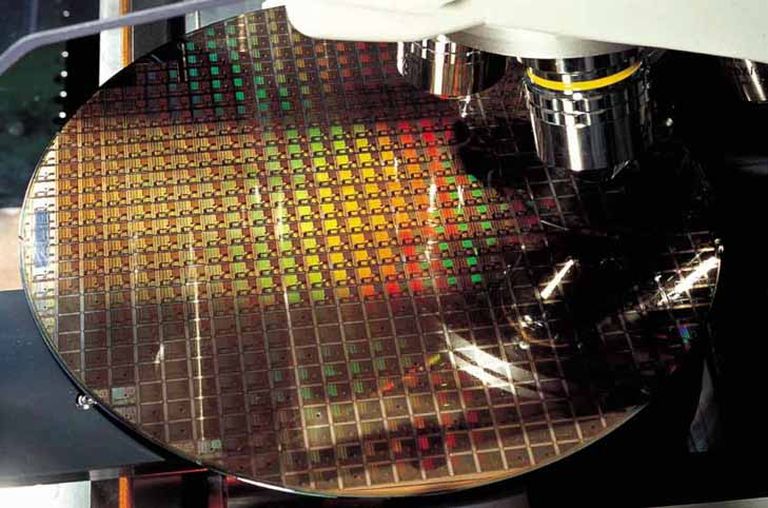
A chip wafer like what will be produced by TSMC in Arizona
TSMC In Arizona
Location: Phoenix
Project Investment: $100B
TSMC, the world’s largest chipmaker, began construction in April 2025 on a third chip fabrication site to complement two existing facilities in Phoenix. The groundbreaking followed a March 2025 announcement expanding the planned facility from a $65B plant to a $165B megasite. This July, TSMC announced plans to invest another $100B in the state, raising its total commitment in Arizona to $265B.
Micron Expands In New York
Location: Clay, New York
Project Investment: $100B
Micron Technology is building a $100B manufacturing plant in central New York that is slated to be the largest semiconductor facility in the U.S. The project officially broke ground in January, and chip production is expected to begin in 2030.
Micron also pledged $30B in June 2025 to expand chip production facilities in Boise, Idaho, where it is headquartered, and to upgrade a manufacturing facility in Manassas, Virginia. The Idaho commitment was part of a planned $50B campus that would include an additional production facility and a research and development center. In all, the tech giant says it has pledged more than $250B to increase its manufacturing and research presence in the U.S.
Flickr/The White House/Daniel Torok
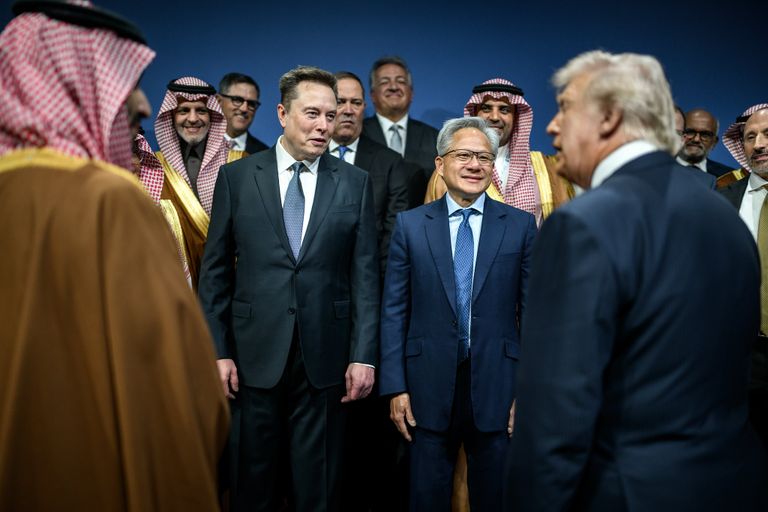
Elon Musk and Nvidia’s Jensen Huang at the U.S.-Saudi Investment Forum in November 2025
Elon Musk’s Terafab
Location: Grimes County, Texas
Project Investment: $16.8B
Elon Musk took to his social media platform in March to announce that xAI, SpaceX and Tesla would build a 100M SF megacampus to produce chips to power his companies’ AI ambitions. The project has a more than $16.8B price tag and a delivery date in 2028, with Gov. Greg Abbott’s office saying the factory will create 3,000 jobs.
Eli Lilly Picks Texas
Location: Houston
Project Investment: $6.5B
Pharmaceutical giant Eli Lilly waded through more than 300 proposals before selecting a site outside Houston for a $6.5B plant that will manufacture the company’s first oral GLP-1 weight-loss drug and ingredients for other medicines. The project was announced in September 2025 and broke ground a year later.
The new plant, which is expected to create more than 600 jobs, is one of four Lilly said in 2025 that it would build. The pharmaceutical company later rolled out plans for a $5B plant outside Richmond, Virginia, in September 2025 and announced plans for a $6B production facility in Huntsville, Alabama, in December 2025. Those projects have yet to break ground.
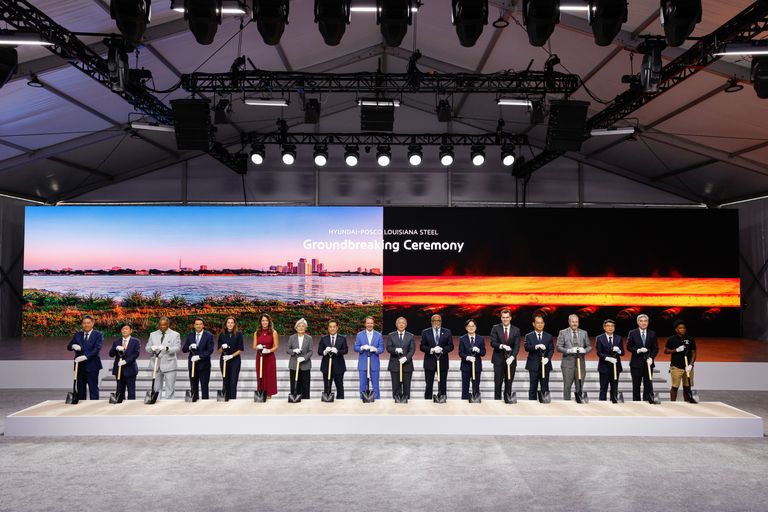
South Korean executives and leading state officials gather in Louisiana for a ceremonial groundbreaking in September.
Hyundai’s American Steel Mill
Location: Donaldsonville, Louisiana
Project Investment: $5.8B
Site work is underway in Donaldsonville, Louisiana, for a 1,700-acre steel mill that Hyundai expects will eventually produce 2.7 million metric tons of steel per year. A ceremonial groundbreaking for the $5.8B facility was held in September, but South Korea-based Hyundai is still working with state officials to secure an air pollution permit before extensive development can get underway, The Advocate reported. The steel mill will support 1,300 direct jobs and is a piece of Hyundai’s pledge from August 2025 to invest $26B into the U.S. by 2028.
Rivian Expands Production
Location: Stanton Springs, Georgia
Project Investment: $5B
Executives from automaker Rivian and political leaders from Georgia, including Gov. Brian Kemp, gathered outside Social Circle, Georgia, in September 2025 for a groundbreaking ceremony for a new manufacturing site that promises to create 7,500 jobs by 2030. The facility was originally expected to be built in two phases, with each phase generating a plant capable of rolling 200,000 cars off the production line annually.
Rivian shifted plans in April and said the first phase would leverage a $4.5B loan from the Department of Energy — down from the $6.6B allocated under the Biden administration — to complete the first phase of the project, which would have an increased 300,000-unit capacity. The site for the second phase would be reserved for future expansion, Chief Financial Officer Claire McDonough said on the firm’s earnings call, TechCrunch reported.
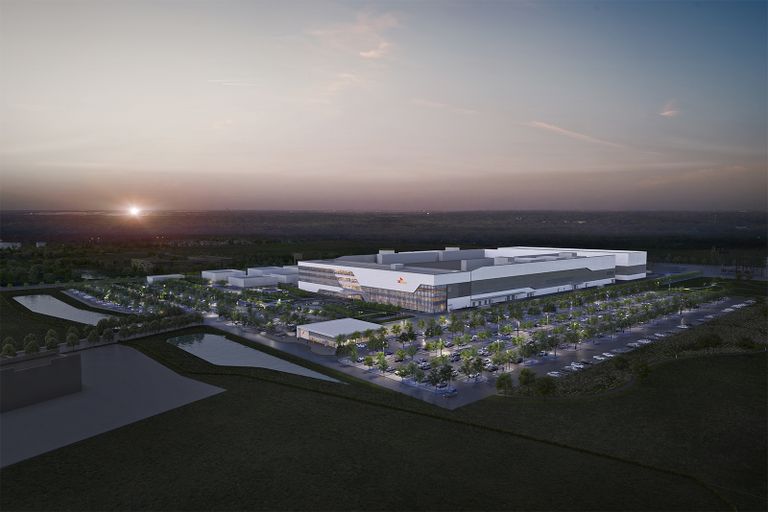
A rendering of SK Hynix’s under-construction advanced memory packaging facility being built in West Lafayette, Indiana
SK Hynix Comes To America
Location: West Lafayette, Indiana
Project Investment: $4B
Indiana Gov. Mike Braun, Sen. Todd Young, the president of Purdue University, and a host of SK Hynix executives were on hand at the August groundbreaking of a $4B memory packaging hub that will be the South Korean giant’s first manufacturing site in the U.S. The project is expected to create 1,000 jobs and research opportunities through a collaboration with nearby Purdue. The 133-acre site will host a high-bandwidth memory production hub that uses advanced packaging to stack multiple chips on top of one another to optimize size and performance.