Ukraine moves toward deal for US drone factory


Ukraine and the United States are moving forward with plans to jointly produce Ukrainian-designed drones in the US, President Volodymyr Zelenskyy said, as Washington seeks to draw on technology developed during more than four years of war with Russia.

Speaking in an interview with US political commentator Laura Loomer broadcast on July 24, 2026, Zelenskyy said the proposed partnership would include a factory and drone production lines in the United States.

“We will build a great factory in the United States,” Zelenskyy said. “We want to have lines of production.”

Zelenskyy described the planned cooperation as a “win-win” arrangement that would combine Ukraine’s rapidly evolving drone technology with US manufacturing and defense capabilities.

Ukraine and the United States have reportedly signed a statement of intent establishing a framework for deeper cooperation on unmanned systems. The document is an initial step rather than a final production contract, and the details of a broader agreement remain under negotiation.

A source familiar with the talks told Reuters that officials were still working through the terms ahead of Zelenskyy’s scheduled meeting with US President Donald Trump in Washington on July 28, 2026. The White House confirmed that the leaders were expected to meet.

The negotiations mark a notable change in the defense relationship between the two countries. Ukraine has depended heavily on American weapons and financial assistance since Russia launched its full-scale invasion in February 2022. The proposed drone partnership would see battlefield-developed Ukrainian technology transferred in the opposite direction for production and possible use by the US military.

Ukraine has become one of the world’s largest developers and users of unmanned aircraft, producing millions of drones annually and modifying designs quickly in response to changing Russian defenses and electronic warfare tactics.

Zelenskyy said Ukrainian long-range drones can now fly more than 3,000 kilometers, or approximately 1,864 miles, with further increases in range under development.

The proposed manufacturing agreement is linked to the Pentagon’s effort to acquire large numbers of inexpensive unmanned aircraft more quickly.

Ukraine has agreed to export drones to the United States for evaluation under the Pentagon’s Drone Dominance program, according to Reuters. Six Ukrainian companies have reportedly received permission to export approximately 100 drones each, although the companies and aircraft types involved have not been publicly identified.

The exports would allow the US military to assess systems developed and modified under combat conditions before any larger manufacturing program begins.

The Pentagon launched Drone Dominance to accelerate the acquisition of low-cost unmanned systems and reduce the time required to move new designs from development into operational units. US defense officials have increasingly pointed to Ukraine’s experience as evidence that traditional procurement cycles cannot keep pace with the rapid evolution of drone warfare.

Ukraine has already established or announced joint drone-production arrangements with several allied countries.

Kyiv and Denmark signed a drone agreement in July 2026 that allows Ukrainian defense companies to establish production with access to partner-country markets. Ukraine has also announced joint-production initiatives with Canada, Norway, the Netherlands, Estonia and Germany.

The Ukrainian government has also streamlined the process for transferring drone technology, weapons and technical documentation to countries participating in its international Drone Deal framework. The revised process is intended to reduce approval times to as little as 30 days.

Ukraine’s Ministry of Defense said in June that Ukrainian manufacturers supplied 95% of the drones procured for the country’s armed forces. Nearly 485,000 unmanned systems and related items had been delivered through the government’s DOT-Chain Defence marketplace during the first five months of 2026.

No location, construction timetable, production capacity or participating manufacturers have been announced for the proposed US factory.

It also remains unclear which Ukrainian drone designs would be built in the United States or whether the aircraft would be intended primarily for the US military, Ukraine or export customers.

Free Training

Source link

Byrna Technologies moves manufacturing to US amid tariff concerns


Byrna Technologies CEO Bryan Ganz discusses the company’s efforts to ramp up its U.S. manufacturing operations.

A company that makes self-defense products has spent the last few years moving much of its manufacturing to the U.S. and is finding the benefits extend beyond having the ability to put a “Made in America” label on their products.

Byrna Technologies, which makes non-lethal personal security devices that can launch plastic or chemical irritant rounds, moved its main manufacturing facility from South Africa to Indiana in 2021 and began finding qualified U.S. component suppliers to prevent supply chain disruptions like what transpired during the pandemic.

“There are over 100 components that go into our launchers, we wanted redundancy on all of them,” Byrna Technologies CEO Bryan Ganz told FOX Business. “Generally, the offshore manufacturers were a little bit less expensive, so they got the majority of the production.”

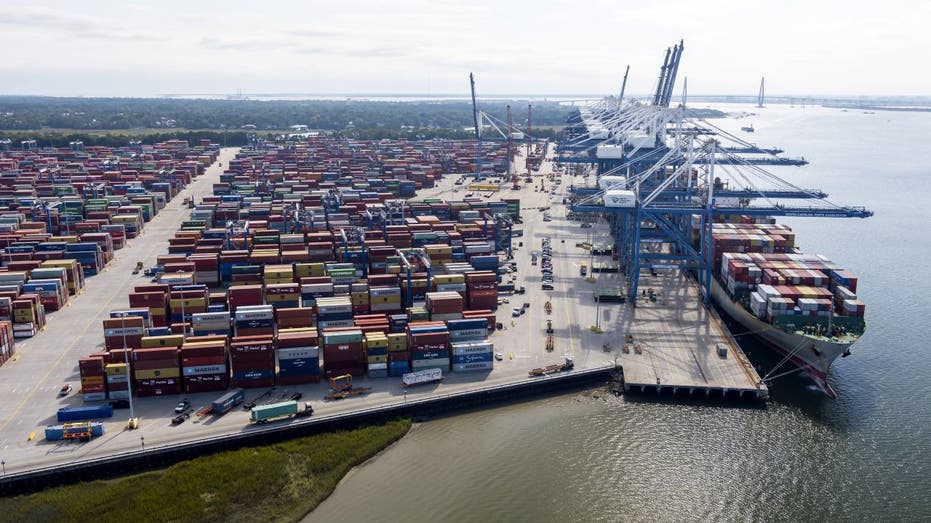
Port of Charleston

Byrna Technologies moved its main manufacturing facility from South Africa to Indiana in 2021. (Sam Wolfe/Bloomberg via Getty Images)

“But when it was evident that Donald Trump was going to be elected president, we said, ‘You know what, he’s been very, very vocal about tariffs, this is probably a good time for us to start the process of moving the supply chain back on-shore,'” Ganz said.

BYRNA TECHNOLOGIES CEO ‘PLEASED’ WITH TRUMP TARIFFS HITTING CHINESE RIVALS

“We started this even before the tariffs were announced. When the tariffs were announced, we were feeling pretty smart about ourselves that we had correctly surmised that we would be able to on-shore things,” he added.

Ganz said that while the process of onshoring more of Byrna’s supply chain before the Trump administration’s tariffs were implemented last year, the tariffs made domestic production more cost-effective and the onshoring process revealed other benefits.

“It was very interesting because not only was it much cheaper with the imposition of the tariffs to be producing in the U.S., but we also discovered all sorts of soft cost benefits,” he said.

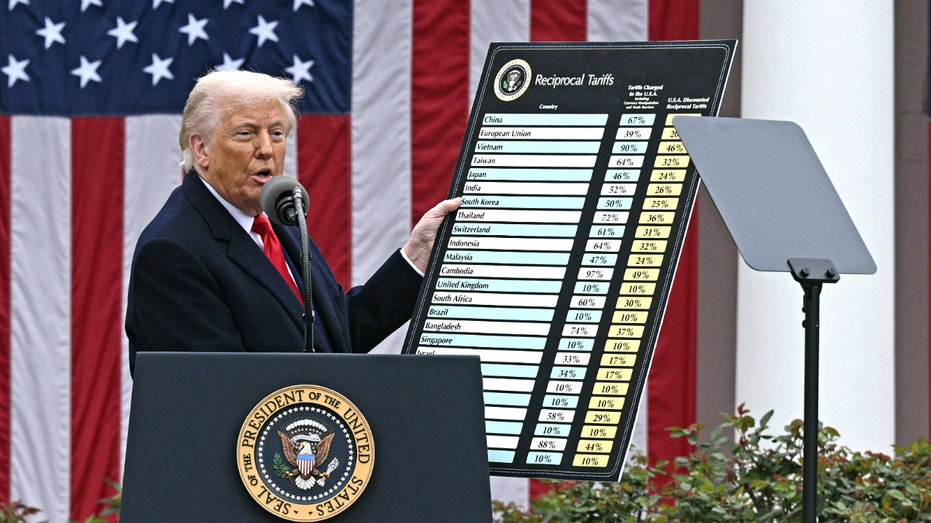
President Donald Trump holds up a sign showing reciprocal tariffs.

Byrna Technologies moved its manufacturing back to the U.S. before President Donald Trump implemented tariffs. (Brendan Smialowski/AFP via Getty Images)

“When you’re supplying componentry from offshore, you either have air freight costs, you have lengthy ocean voyages – when you’re supplying it from a hundred miles away by truck, you can be much more responsive to changes in consumer demand. If I need to visit the factory because there’s a quality problem, I can do it.”

HOW SHOULD BUSINESSES APPROACH TARIFF REFUNDS?

He added that while Byrna continues to buy some of its accessories from offshore suppliers, the company has focused its onshoring effort on the most critical aspects of its product, such as the launcher itself and its ammunition.

“We’re making self-defense products and I think the quality of the product, the dependability of the product, is really important to our consumers, so the Made in America moniker is very, very meaningful for our type of product,” he explained.

Ganz noted that Byrna closed its ammunition manufacturing facility in South Africa and moved it to a newly built facility in Fort Wayne that’s five miles away from the company’s facility where its launchers are produced.

FORMER INTEL CEO WARNS US CHIP COMEBACK STILL HAS A LONG WAY TO GO

The company’s latest launcher, the Byrna CL, was made of 34% U.S. components prior to the reshoring effort, but the launcher is now made with 92% U.S. components.

“It’s not without some cost. We’ve seen a couple percentage points increase in our cost as a result of bringing it back to the U.S., because of course, we would have been making it in the U.S. to begin with if it was the same price,” Ganz said. “But our margins have remained within two percentage points – last year we were 62% and this year we were 60.5-61% – so it was a de minimis impact on the cost.”

Ganz added that the tariffs were a determining factor in some of its reshoring decisions due to the higher cost of the import levies.

GET FOX BUSINESS ON THE GO BY CLICKING HERE

“When we ship something up, even though it may have been 10% less expensive than building it here, not so when you put a 30% tariff on. I’m a very patriotic guy, I like making stuff here in America. On the other hand, we’re a public company, we have shareholders – we have to look at what’s in the best interest of our shareholders,” he said. “With the tariffs, it was clear that it became less expensive to build in the U.S. than to build offshore.”

Ganz added that Byrna maintains some component manufacturing abroad to keep redundancy in the supply chain to guard against vulnerabilities that would arise if a domestic facility were to go offline unexpectedly, but the onshoring push has brought the company’s overall supply chain into the 80%-90% range for domestically-sourced components.

Free Training

Source link