

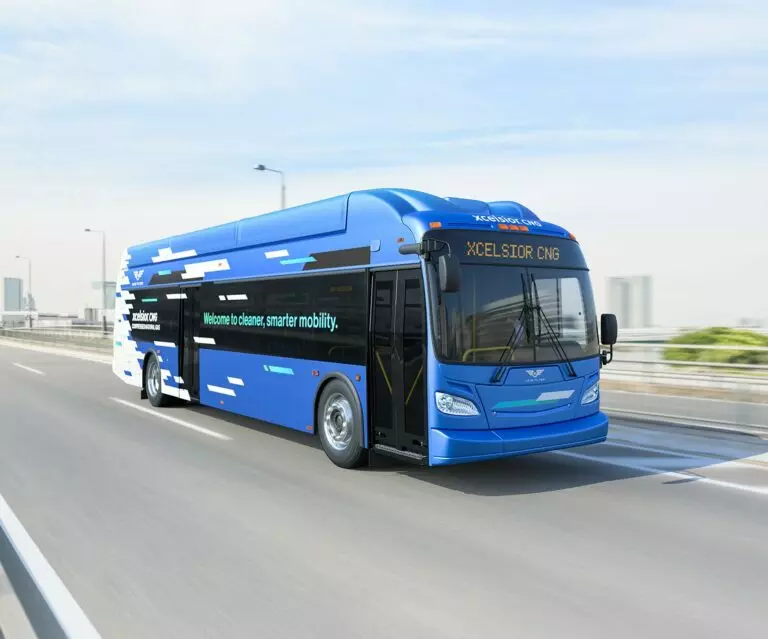
U.S. Manufacturing Boost as Agencies Order 525 New Flyer Buses


New Flyer has received an order from NJ TRANSIT for 375 Xcelsior 40-foot, clean-diesel buses. This order is part of a larger, previously announced multi-phase fleet replacement program, with orders placed in the third and fourth quarters of 2025.

The original contract, awarded in the first quarter of 2024, included a base order of 550 Xcelsior 40-foot, buses to be delivered in three distinct lots, along with options for an additional 750 units. With this newly announced order, NJ TRANSIT has now completed the full base order of 550 buses, leaving all 750 option buses available for future procurement.

“The Xcelsior buses included in this contract deliver dependable, cost-effective performance while improving safety and accessibility for passengers,” said Chris Stoddart, president, North American Bus and Coach, NFI. “Built for durability and long service life, these new buses will help NJ TRANSIT continue providing the reliable, essential transportation services that keep communities and economies moving every day.”

With this additional portion of the contract, NJ TRANSIT can continue replacing aging buses without compromising service. Building and deploying these replacement vehicles strengthens domestic manufacturing, secures good local jobs, and ensures taxpayers get maximum utility from their investment in public transit.

“This additional order underscores NJ TRANSIT’s unwavering commitment to our customers and to delivering the safe, reliable service they depend on every day,” said NJ TRANSIT President & CEO Kris Kolluri. “Modernizing our bus fleet is a critical investment in our riders, our employees, and the communities we serve. These new buses move us closer to our goal of a fully modernized bus fleet by 2031—improving reliability, accessibility, and comfort while ensuring we can continue meeting the needs of hundreds of thousands of daily trips across New Jersey.”

New Flyer also announced that the Washington Metropolitan Area Transit Authority (WMATA / Metro) has exercised options for 75 Xcelsior hybrid-electric 40-foot buses and 25 Xcelsior CHARGE NG battery-electric forty-foot buses. The options are being exercised from New Flyer’s Q4 backlog.

The purchase will be supported by federal, state, and local funding as well as funds awarded through FTA’s Low- or No-Emission grant program. The new buses will replace end-of-life vehicles and provide Metro customers with a modernized, efficient passenger experience, while also delivering on the agency’s five-year Strategic Transformation Plan.

“New Flyer is committed to continuing our decades-long relationship with Metro, providing buses that deliver strong value, reliability, and performance,” said Chris Stoddart. “As Metro phases out aging buses, New Flyer’s Buy America-compliant, advanced hybrid and battery-electric vehicles will boost the efficiency, power, and overall service quality of its transit system while fueling good manufacturing jobs and economic opportunity across the United States.”

“These new hybrid and battery-electric buses allow us to replace aging vehicles, improve the customer experience, and continue modernizing our fleet while reducing emissions across the region,” said Randy Clarke, WMATA general manager and CEO. “Partnering with New Flyer helps ensure we’re delivering safe, dependable service and demonstrating good financial stewardship.”
In addition, New Flyer confirmed that the Regional Transportation Commission of Southern Nevada (RTC) is exercising options for 19 60-foot and 31 40-foot Xcelsior compressed natural gas (CNG) buses. This order was included in NFI’s fourth quarter 2025 firm backlog.

Valued at approximately $56 million, the options are part of two five-year contracts with RTC, supported by local and FTA funds, and meet Buy America requirements supporting manufacturing jobs in the U.S. The low-emission buses in this order will replace end-of-life vehicles, ensuring efficient, safe, clean, and sustainable transit for the region’s 64 million annual riders.

“For more than three decades, New Flyer and RTC have partnered to deliver efficient and reliable transportation options tailored to the community’s evolving needs, delivering over 900 buses to date, with more than 500 utilizing low-emission CNG propulsion,” said Stoddart.

Free Training

Source link

US FDA launches program to boost domestic drug manufacturing


By Ahmed Aboulenein

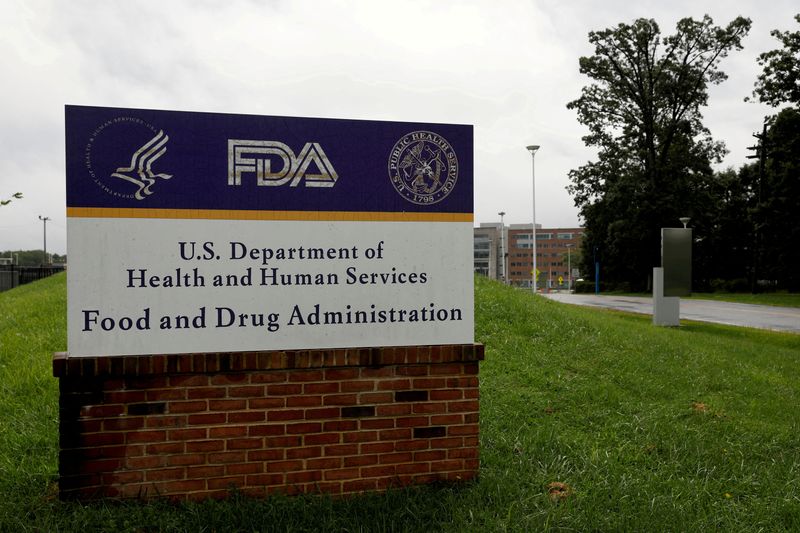
WASHINGTON, Feb 1 (Reuters) – The U.S. Food and Drug Administration on Sunday began accepting requests to participate in its PreCheck pilot program, designed to ​boost domestic drug supply by speeding up construction and review of drug manufacturing ‌plants in the country.

The FDA said it would select an initial group of new pharmaceutical manufacturing facilities this year ‌based on “alignment with national priorities” in several areas including the product itself, how quickly it can be developed for the U.S. market, and innovations in facility development.

“Additional priority considerations will be given to facilities producing critical medications for the U.S. market,” the agency said in a statement.

The ⁠FDA PreCheck program, first announced ‌in August, aims to streamline review of domestic pharmaceutical plants and eliminate unnecessary regulatory requirements, in line with President Donald Trump’s executive order in ‍May to shift manufacturing of drugs to the United States.

The program introduces a two-phase approach to facilitate new U.S. drug manufacturing facilities.

The initial phase would provide for more frequent communication with the FDA, including ​for facility design, construction and pre-production.

The second phase would facilitate pre-application meetings and early ‌feedback to help streamline the development of manufacturing and quality control processes, the agency said.

The FDA had separately announced another program in June to incentivize drug developers that align with national priorities, including increased domestic manufacturing, with shortened times for reviewing marketing applications.

The FDA Commissioner’s National Priority Voucher Program promised decisions in one or two months on a limited number of ⁠drugs deemed critical to public health or national security, ​cutting four to six months off the fastest priority ​approval process.

Reuters, citing internal documents, reported exclusively last month that the agency had delayed reviews of two drugs chosen for the new fast-track program after ‍agency scientists flagged safety ⁠and efficacy concerns, including the death of a patient while taking one of the medicines.

Two other drugs tapped for the speedy review program have also been pushed by ⁠weeks or longer beyond the original target date. The four drugs are among at least seven in the ‌program that have started their approval process, according to documents.

(Reporting by Ahmed ‌Aboulenein; Editing by Sergio Non and Chizu Nomiyama )

Free Training

Source link

A Trade Policy to Boost U.S. Manufacturing


The new tariffs imposed last year have thrown a wrench in the gears of U.S. manufacturing (as discussed in Parts 1, 2, 3, and 4). More than half of all imported goods are raw materials, parts and components, and capital equipment used by U.S. manufacturers to produce “Made in America” goods, so it’s no surprise these new taxes have hurt U.S. manufacturers—including in the following ways:

  • Higher Costs for Business: Goldman Sachs estimates that manufacturers and other businesses were “eating” 64% of tariff costs in June, but the share being passed on to consumers has now risen to more than 50%. In any event, these new costs mean reduced resources for manufacturers to raise wages or invest in new equipment and R&D.
  • Reduced Competitiveness for Exporters: The burden of tariffs means that U.S. manufacturers—whose exports topped $1.6 trillion last year—will find their higher cost structure makes it harder for their products to compete in foreign markets.
  • Negative Productivity Shock: Minneapolis Fed economists write that tariffs and trade wars act like an interest rate hike, lowering demand for capital investment. This bodes ill because, in the long term, productivity is the key to industrial competitiveness.
  • Small Businesses Suffer: In an October Wall Street Journal/Vistage survey, 51% of small businesses (including many manufacturers) reported that tariffs are decreasing their profitability while just 5% say tariffs benefit them.

It’s plain that tariffs have not been helping most U.S. manufacturers, and 2025 saw declining manufacturing construction, which bodes ill for near-term expansion of the sector. The administration’s laudable pro-manufacturing tax and regulatory reforms will be undermined by ongoing tariffs that make inputs more expensive, exports less competitive, and productivity more elusive.

To correct course, the Chamber has urged the administration to grant exclusions for small businesses, for products not readily available from domestic sources, and in instances where tariffs threaten American jobs. Additional common-sense steps the administration could pursue include:

  • Restore the country exceptions and tariff-rate quotas for imports of steel and aluminum such as those established for Canada and Mexico in 2019;

  • Restore the product exemptions for steel and aluminum established in the Trump administration’s first term—and create an improved process for firms to seek new ones;

  • End the flawed “inclusion” process, where new products become subject to high tariffs with little visibility or effort to assess the potential harm to U.S. industry or consumers;

  • Terminate the novel tariffs imposed on Canada, Mexico, and other U.S. free-trade agreement partners;
  • Pursue new market-opening trade agreements—on the basis of zero-for-zero tariff reciprocity—so that U.S. manufacturers can sell their products more readily around the globe.

The U.S. Chamber of Commerce has long fought to make the United States the best place in the world to invest, build, hire, innovate, grow, and manufacture. The right trade policies will help American manufacturers and make the United States more prosperous—let’s get to work.

DIG DEEPER: More on tariffs

PART 1: How Tariffs Risk Hollowing Out American Manufacturing

PART 2: How Tariffs Risk Hollowing Out American Manufacturing

PART 3: How Tariffs Risk Hollowing Out American Manufacturing

PART 4: How Tariffs Risk Hollowing Out American Manufacturing

About the author

John G. Murphy

John G. Murphy

John Murphy directs the U.S. Chamber’s advocacy relating to international trade and investment policy and regularly represents the Chamber before Congress, the administration, foreign governments, and the World Trade Organization.

Read more

Free Training

Source link

CFDA & Ralph Lauren launch grants to boost US fashion manufacturing


The Council of Fashion Designers of America (CFDA) announced two new initiatives designed to strengthen American fashion manufacturing, drive innovation, support workforce development, and promote economic growth in key apparel-producing regions across the country.

The CFDA x NY Forward Grant Fund, developed with funding from both the New York State Department of State and Ralph Lauren Corporation (Ralph Lauren), will provide partially matching grants to designers and manufacturers based in New York City’s Garment District. The U.S. Fashion Manufacturing Fund, created with Ralph Lauren as founding partner, will support apparel manufacturers nationwide. Both programs aim to help companies to modernize equipment, expand services, and train workers – building the capacity and resilience of American fashion manufacturing.

CFDA has launched two new grant programmes with Ralph Lauren to strengthen American fashion manufacturing.
The CFDA x NY Forward Grant Fund will support New York City’s Garment District, while the US Fashion Manufacturing Fund will aid manufacturers nationwide, focusing on modernisation, workforce training, innovation and long-term industry resilience.

These programs build on the success of the CFDA’s Fashion Manufacturing Initiative (FMI), launched in 2013 in affiliation with the New York City Economic Development Corporation (NYCEDC), Andrew Rosen, and with the long-term support of Ralph Lauren, among others. To date, Ralph Lauren has contributed $2 million as FMI’s Premier Underwriter, enabling grants to 54 factories and positively impacting more than 2,000 jobs.

“Strengthening American manufacturing to ensure designers have local partners has long been at the core of CFDA’s mission,” said Steven Kolb, CEO and President of the CFDA. “We are proud to extend our decade-plus work with Ralph Lauren Corporation and expand to a national level while also continuing our local NYC investments alongside our first-ever partnership with the New York State Department of State.”

Together, these new grant programs mark a landmark commitment: sustaining New York’s Garment District while bolstering U.S. manufacturing nationwide — ensuring that American fashion continues to lead globally through innovation, craftsmanship and community.

“Our expanded partnership with the CFDA reflects Ralph Lauren’s enduring commitment to advancing innovation and supporting American fashion,” said Katie Ioanilli, Chief Global Impact & Communications Officer, Ralph Lauren Corporation. “This is not only an investment in our industry — it’s an investment in a vital part of American culture that we share with the world.”

Note: The headline, insights, and image of this press release may have been refined by the Fibre2Fashion staff; the rest of the content remains unchanged.

Fibre2Fashion News Desk (RM)

Free Training

Source link