
APAA celebrates one year of President Trump’s 50 per cent Section 232 aluminium tariff and historic investments in US manufacturing


Alternate Text

CBAM is applicable to trade volumes starting from 50 metric tonnes. For trade volumes below 50 metric tonnes, CBAM does not apply.

Usage Procedure – How to use the CBAM Calculator Sheet

Enter or update values only in the
INPUT
PARAMETERS section (Highlighted in blue)
,
including
the carbon price, benchmark emissions, CBAM
chargeable
percentage (as per the phase-in year),
and imported quantity.


The system will automatically calculate the
payable
emissions and the total CBAM cost (€)

based on the
inputs provided.


Notes:

• Change any input value to automatically update CBAM cost.

• Formula used: Carbon price × payable emissions × quantity.

• Model aligned with CBAM supplier-side illustrative methodology.

Free Training

Source link

APAA Celebrates One Year of President Trump’s 50% Section 232 Aluminum Tariff and Historic Investments in U.S. Manufacturing


  1. Home
  2. News
  3. PR Newswire
  4. APAA Celebrates One Year of President Trump’s 50% Section 232 Aluminum Tariff and Historic Investments in U.S. Manufacturing

APAA Celebrates One Year of President Trump’s 50% Section 232 Aluminum Tariff and Historic Investments in U.S. Manufacturing

APAA Celebrates One Year of President Trump’s 50% Section 232 Aluminum Tariff and Historic Investments in U.S. Manufacturing

PR Newswire

WASHINGTON, June 5, 2026


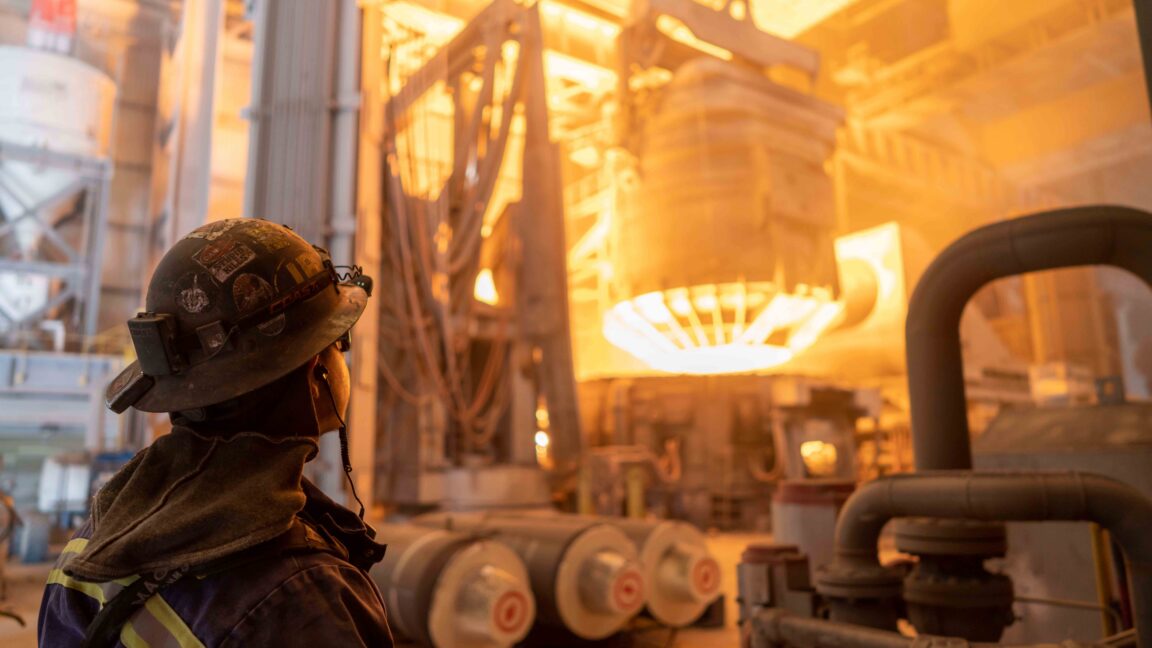
WASHINGTON, June 5, 2026 /PRNewswire/ — Today, the American Primary Aluminum Association celebrates the one-year anniversary of President Trump’s 50% Section 232 aluminum tariff. This tariff is revolutionizing domestic manufacturing production, strengthening supply chains, creating thousands of new jobs, generating billions of dollars in US investment, and fortifying our national security. President Trump strengthened the Section 232 aluminum tariff to combat unfair trade practices and persistent cheating by foreign governments, delivering unprecedented wins for American workers in the aluminum industry:

  • Emirates Global Aluminum and Century Aluminum plan to build the first new US smelter in nearly 50 years, a more than $4 billion investment that will more than double U.S. production capacity and create over 5,000 jobs in Oklahoma.
  • Century Aluminum restored their Mt. Holly smelter to full production capacity, creating over 100 U.S. aluminum jobs in South Carolina and increasing U.S. aluminum production by over 10%.
  • Novelis is investing $5 billion into a new aluminum rolling mill, creating up to 1,000 jobs in Alabama.
  • Aluminum Dynamics officially launched commercial production at a new, state-of-the-art recycled aluminum flat rolled mill in Mississippi, a $2.5 billion investment that has created over 700 jobs.

“One year ago today, President Trump took decisive action to stand up for American workers by launching a new Golden Age for domestic aluminum manufacturing,” remarked APAA President Mark Duffy. “The results speak for themselves: the aluminum industry is delivering billions of dollars in U.S. investment and creating thousands of American aluminum jobs, and it’s all due to President Trump’s 50% Section 232 tariff, with no exemptions or exclusions.”

About the American Primary Aluminum Association:

The American Primary Aluminum Association advances the interests of America’s primary aluminum industry and its workers through the Aluminum Now campaign. APAA is registered and incorporated in Washington, DC and operates as a non-profit trade association. For more, please visit: www.aluminumnow.org.

View original content to download multimedia:https://www.prnewswire.com/news-releases/apaa-celebrates-one-year-of-president-trumps-50-section-232-aluminum-tariff-and-historic-investments-in-us-manufacturing-302792742.html

SOURCE American Primary Aluminum Association


The articles, information, and content displayed on this webpage may
include materials prepared and provided by third parties. Such
third-party content is offered for informational purposes only and
is not endorsed, reviewed, or verified by Morningstar.

Morningstar makes no representations or warranties regarding the
accuracy, completeness, timeliness, or reliability of any third-party
content displayed on this site. The views and opinions expressed in
third-party content are those of the respective authors and do not
necessarily reflect the views of Morningstar, its affiliates, or employees.

Morningstar is not responsible for any errors, omissions, or delays
in this content, nor for any actions taken in reliance thereon.
Users are advised to exercise their own judgment and seek independent
financial advice before making any decisions based on such content.
The third-party providers of this content are not affiliated with
Morningstar, and their inclusion on this site does not imply any
form of partnership, agency, or endorsement.

Free Training

Source link

Trump’s crackdown on China-linked solar firms stalls U.S. factory boom


Top solar companies, banks and insurers have stopped doing business with at least a half dozen recently built U.S. panel factories because of ⁠uncertainty over whether their ties to China could disqualify them from clean-energy subsidies, according to industry executives and documents.

The shift, driven by new policies of U.S. President Donald Trump’s administration, jeopardizes more than a third of U.S. solar capacity in factories initially built by Chinese firms. Details of how the policy uncertainty is driving installers and insurers away from U.S. solar factories with China ties have not been previously reported.

The emerging effects dovetail with Trump’s broader efforts to block Chinese companies from the U.S. market and to slash government support for green energy. However, the policy could backfire by imperiling growth in U.S. manufacturing jobs and power generation at a time of rising utility bills and soaring electricity demand from data centers serving the artificial intelligence industry, industry experts say.

Free Training

Source link

These U.S. companies think Trump’s tariffs are great. Here’s why


It’s hard to imagine that any CEO in the United States likes the tariffs imposed by U.S. President Donald Trump more than Marc Bitzer does.

Bitzer is the chief executive of Whirlpool Corp., the only major appliance company that makes the bulk of its products in the U.S.

At one of the company’s factories — a giant plant in Clyde, Ohio, that has the capacity to produce 22,000 washing machines per day — Bitzer announced Whirlpool’s plans for a new $60-million US facility in nearby Perrysburg, which would create 150 jobs.

He told the audience that Whirlpool used to feel it did not have a fair chance against its chiefly Asia-based competitors because of their ability to manufacture using cheap, subsidized steel and other components.

“It felt occasionally, being the last U.S.-based appliance manufacturer, like being in a boxing fight with three other guys in the ring, and you have one arm tied behind your back,” he said.

Then along came the Trump administration and its sweeping global tariff regime, which Bitzer says has given the country an opportunity to start a renaissance in U.S. manufacturing. It’s a sentiment you rarely hear from the many Americans struggling with rising costs triggered in part by Trump’s trade policies.

Marc Bitzer standing inside a factory that makes washing machines.  Marc Bitzer is the chief executive of Whirlpool Corp., the only major home appliance company that manufacturers the bulk of its products in the U.S. (Mike Crawley/CBC)

“Tariffs do create a level playing field, and that’s a big deal,” Bitzer said, a line that triggered applause from the audience, a mix of plant workers and elected officials.

The White House is on a push to showcase the success stories of U.S. manufacturers who are benefitting from tariffs. The push saw U.S. Trade Representative Jamieson Greer, a member of Trump’s cabinet, setting out last week on a two-day tour of factories in Ohio and Michigan, including the Whirlpool plant.

‘Tariffs on all that crap from China’

CBC News followed Greer on his itinerary, which also included stops at a company near Detroit that builds drones and at the biggest U.S. manufacturer of solar energy systems, near Toledo, Ohio.

“Under other presidents, the job of the U.S. trade representative was usually to do trade deals to try to import as much crap as possible from China,” Greer told the audience at Whirlpool.

“Under President Trump, the job is to put tariffs on all that crap from China,” he said.

Jamieson Greer stands with his arms crossed in front of a backdrop of a large U.S. flag, beside a podium with a sign saying "America First in Action'Jamieson Greer, the U.S. trade representative in the Trump administration, attends an event in Warren, Mich., on Thursday as part of a push by the White House to showcase success stories of U.S. manufacturers who are benefitting from tariffs. (Mike Crawley/CBC)

After Whirlpool’s CEO praised the Trump administration for its tariff policies, Greer praised the company for its long-standing commitment to making its washing machines, dryers, refrigerators and more in the U.S.

It revealed something of a common theme to Greer’s tour: the companies he visited were already doing “Made in America” manufacturing before Trump returned to the White House in 2025 and launched his tariff-powered global trade war.

Ultimate goal is more U.S. manufacturing

At each stop on the tour, Greer laid out his pitch for the administration’s tariff regime. And in contrast to Trump, who has imposed or threatened tariffs for at times wildly divergent reasons, Greer puts forward a consistent rationale.

“The ultimate goal is we want to make sure that we have more manufacturing in the United States,” Greer told reporters at one of the Michigan stops, the plant where automaker Stellantis assembles the Jeep Wagoneer.

“The more you make here, the more the tariffs benefit you,” he said later that day at the Auburn Hills, Mich., location of Firefly Drone Systems and Swarm Defense Technologies.

A man holds drone parts while standing in front of a work surface covered with more parts and partially built drones.  An employee of Firefly Drone Systems works at the company’s factory in Auburn Hills, Mich. (Mike Crawley/CBC)

Like Whirlpool, the two drone companies were making their products in the U.S. before Trump’s tariffs were imposed.

“It’s been very important to us from the beginning that we manufacture close to home,” Kyle Dorosz, CEO of Swarm and Firefly, said in an interview.

Companies want ‘level playing field’

So while tariffs did not drive the companies’ initial moves to make their products in the U.S., Trump’s trade war means the decision is paying off.

“It’s actually created a competitive advantage for us compared to some of our other competitors, especially on the commercial side, who were manufacturing overseas and their entire system was now subject to tariffs,” Dorosz said.

There’s a similar take on tariffs at First Solar, which manufactures large-scale solar power systems at U.S. factories like the one Greer visited near Toledo.

With its rivals either based in China or using largely Chinese-made components, First Solar committed seven years ago to sourcing its materials domestically and making its products in U.S. factories, says CEO Mark Widmar.

Mark Widmar and Jamieson Greer stand in front of a backdrop depicting solar energy projects. Greer, left, speaks with Mark Widmar, CEO of First Solar, the largest solar power manufacturer that makes its products in the U.S. (Mike Crawley/CBC)

“China has chosen to compete in a way that it would almost make it unmanageable for any company, regardless of your industry,” Widmar told reporters as he stood beside Greer after their factory tour.

“I don’t need to be protected. I just need a level playing field,” he said. “Give me a level playing field, we’ll out-innovate and we’ll thrive.”

Manufacturing jobs declined since Trump inauguration

While Greer’s tour highlighted companies that have been making their products in the U.S. for years, it’s more difficult for the administration to showcase manufacturers that have set up shop in the U.S. or added jobs specifically as a result of the tariffs.

Since Trump’s return to the White House, U.S. manufacturing job numbers have continued to decline. According to Federal Reserve Bank statistics, there were 12,673,000 manufacturing jobs at Trump’s inauguration in January of last year, a figure that has since dipped to 12,591,000.

One win for the tariff regime that Greer pointed to: the announcement in October by Stellantis that it would shift production of the Jeep Compass from Brampton, Ont., to a previously shuttered plant in Belvidere, Ill.

Greer says the administration isn’t singling out Canada with its tariff policy, but has made a strategic decision to bring as much auto manufacturing to the U.S. as possible.

An audience seated in chairs is seen from the rear, including a person standing wearing a t-shirt that says 'Here Comes Whirlpool - U.S. Mfg Muscle.'Dozens of Whirlpool employees at the washing machine plant in Clyde, Ohio, were in the audience for the company’s announcement of investing $60 million US to build a new manufacturing plant producing appliance components in nearby Perrysburg. (Mike Crawley/CBC)

“It’s not really about Canada per se. Our action on autos is global in nature,” Greer told CBC News.

Asked if the administration sees Canada as a partner or competitor, Greer refused to bite.

“I don’t think it’s really binary, right? There are some things we import from Canada that we need,” he said.

It’s a statement that contrasts notably with Trump’s oft-repeated yet factually incorrect line that the U.S. doesn’t need anything from Canada.

Greer will be a key negotiator in the upcoming talks on the future of the Canada-U.S.-Mexico Agreement (CUSMA), the trade deal that currently exempts the vast bulk of Canada’s export from tariffs.

Each country has until July 1 to announce whether it intends to renew the agreement, and Greer told CBC News in February that tariffs will be a part of any Trump administration trade deal with Canada.

Back at the Whirlpool plant, he told the audience that he’s in the Oval Office on a near-daily basis.

“Almost every day, President Trump says, ‘Do you think the tariffs should be higher, Jamieson?'” Greer said. His response: “We’re working on it, sir. We’re working on it.”

Free Training

Source link

Trump’s promised ‘manufacturing boom’ couldn’t save these Whirlpool jobs


New York
 — 

The US has lost thousands of manufacturing jobs over the last year. Beverly Dawson’s family was among them.

Dawson was laid off this month at Whirlpool’s refrigerator factory in Amana, a small town in eastern Iowa. Her son’s offer to work full-time at the plant when he graduates from college in a few semesters was also pulled. Her husband was the only one to survive the latest round of layoffs.

At the Amana plant, the hope of a stable future building appliances in the town that introduced America’s first side-by-side refrigerator is dimming. The factory’s workforce has been cut by more than half over the last few years as Whirlpool expands production in Mexico.

“You have generations working at the Amana plant. People’s parents and grandparents,” Dawson, 48, said. “It’s a central part of the community and was a good, solid place to work.”

Dawson is one of more than 100,000 American manufacturing workers who have lost their jobs since President Donald Trump entered office last year. Trump as a candidate promised a “manufacturing boom” and once in office launched broad global tariffs as the way to revitalize factory production in the United States.

Exterior of the Whirlpool Amana factory. More than 100,000 American manufacturing workers have lost their jobs since President Donald Trump entered office last year.

A 'Save Our Jobs at Whirlpool' rally, on March 6 in Amana. IAM Union said Whirlpool has shifted production to Mexico in recent years.

The Whirlpool factory in Amana. Whirlpool has said Trump's trade policies level the playing field for Whirlpool and other US manufacturers.

Despite the administration’s push, the decades-long decline in manufacturing has marched on. The US economy has shed more than 7.5 million manufacturing jobs since a peak in 1979, driven by global competition, automation and exchange rates.

Whirlpool has invested hundreds of millions of dollars in Mexico to manufacture refrigerators at two factories in recent years, said the International Association of Machinists and Aerospace (IAM), which represents workers at the Amana plant.

IAM opposes Trump’s broad tariffs, fearing they would disrupt US production and cause layoffs.

“Whirlpool advertised quite often that they’re the only American manufacturer of refrigerators and tariffs will only be beneficial,” Dawson said. “I don’t understand how that reconciles with opening up more in Mexico.”

Whirlpool, which also owns the KitchenAid, Maytag and Amana brands, supports Trump’s tariffs.

The Michigan-based company has said the import taxes give it an advantage. That’s because most of the appliances it sells in the United States are produced domestically at 10 US plants, in contrast to its rivals in Asia like LG and Samsung.

The administration’s “trade policies are critical to closing trade loopholes and leveling the playing field for Whirlpool and other US manufacturers,” Whirlpool spokesperson Chad Parks said in a statement to CNN.

Whirlpool said it’s making “difficult but necessary changes” to the plant in Amana “all with the goal of keeping Amana competitive and a viable manufacturing presence in the community for the long term.”

Whirlpool said it’s committed to American manufacturing, pointing to a recent $300 million investment in Ohio to build washing machines.

But the pull to produce in lower-cost countries like China and Mexico remains strong for all US manufacturers. The power of tariffs has not been enough to make US manufacturing competitive with these countries. Trump’s snap decisions on tariff rates have also chilled companies’ long-term investment and hiring plans. (The White House did not respond to CNN’s request for comment.)

A Whirlpool refrigerator on display at Lowe's.

Meanwhile, tariffs have hiked costs. For example, Trump’s 50% tariffs on imported steel and aluminum increased Whirlpool’s costs by $300 million last year. The company also paid more for appliance components that are only made overseas.

“Supply chains are integrated across countries. They can’t be changed overnight,” said Susan Houseman, an economist at the Upjohn Institute for Employment Research. “To think companies can turn on a dime and rearrange supply chains or make massive investments in this country is unrealistic.”

Big-ticket refrigerators and dishwashers are also going untouched at stores as fewer people move or buy new homes. Whirlpool’s sales dropped 6.5% last year and its stock declined around 35%.

Tariffs have “done little to benefit” the home appliance sector, said Jason Miller, a professor of supply chain management at Michigan State University.

Since Trump took office last year, the tariff rate on major home appliances has increased from 5% to 16.4% in December. That rate isn’t high enough for domestic manufactures to benefit, especially when steel and aluminum prices have spiked, Miller said.

“Production didn’t increase in 2025 and payrolls fell,” he said.

But Whirlpool’s pledge to keep jobs in Amana rings hollow to laid off workers like Dawson. When she goes into a nearby Lowe’s, she’s frustrated to see Whirlpool refrigerators made in Mexico and China.

There is a long history of building home appliances in Amana, one of seven villages outside Cedar Rapids that were German communal societies until the Great Depression.

A general store in Amana, Iowa, selling bakery goods and Hotpoint appliances in 1961.

In 1934, Amana entrepreneur George Foerstner began making beer coolers. The business grew into the Amana household appliances’ brand — the first side-by-side fridge in the United States was introduced there in 1949 and the first bottom-freezer fridge came in 1957. Hollywood stars like Gary Cooper and Groucho Marx advertised Amana’s appliances in magazines and on the radio.

Raytheon, the inventor of the microwave oven, bought Amana a decade later as it pushed to bring microwaves to households around the country.

Whirlpool eventually acquired the plant in 2006, which is still an economic engine for the area and processes wastewater for the local community. Roughly 950 people work there.

The factory has had a “wide-reaching benefit for people around Amana,” said Sandy Freytag, who has worked there for more than 30 years. She worries that the layoffs will have a spillover effect on local businesses and the economy.

An Amana chrome Radarange microwave oven sits on a kitchen countertop in the 1970s.

“People don’t trust that the factory will stay open,” she said. “I hope I am very wrong.”

Dawson had hoped to work there for the rest of her career, but the 48-year-old mother of four is now sending out job applications to dozens of employers.

She’s currently competing in a tough labor market with a weaker safety net. Iowa in 2022 cut its unemployment insurance from 26 weeks to 16, and a federal program for workers who lost their jobs due to foreign trade has expired.

Her husband has taken on a second job and is now working seven days a week to help the family make ends meet. If she can’t find a new job soon, she plans to tap into her retirement savings.

“I’ve worked hard. I’ve been loyal. I’ve made things better, and that still isn’t enough for me to be successful,” she said.

Correction: A previous version of this article incorrectly stated the number of factories Whirlpool has in Mexico. Whirlpool has two refrigerator plants in Mexico and recently expanded its investments at them.

Free Training

Source link

Trump’s tariffs are causing harm to American manufacturers instead of benefiting them


WASHINGTON (AP) — Jay Allen is a fan of President Donald Trump, and voted for him on the belief that the Republican would cut taxes and trim regulations, helping his manufacturing business in northeast Arkansas.

READ MORE: Trump administration starts new process to try to replace tariffs struck down by Supreme Court

But the tariffs at the core of Trump’s economic agenda have wreaked havoc on his company, Allen Engineering Corp., which makes industrial equipment used to install, finish and pave concrete. The import taxes have raised the costs of engines, steel, gearboxes and clutches made abroad that Allen needs to build power trowels that can sell for up to $100,000 each.

Allen’s experience embodies a growing body of evidence that the tariffs that Trump said would help American factories are, in fact, squashing many of them. The problem could get worse as the administration scrambles to craft new tariffs to replace the emergency import taxes that the Supreme Court ruled illegal in February.

WATCH: Trump says tariffs could replace income tax

Allen said he ran his company at a loss in 2025 because of tariffs. His payroll has fallen to 140 workers from a peak of 205. To get by this year, he has hiked prices by 8% to 10%, even though that might mean fewer sales.

“What’s really sad is the unintended consequences of his tariffs are hurting manufacturing in our country,” said Allen. “Unfortunately, the working-class people are getting squeezed.”

Manufacturing jobs have declined during Trump’s first year back

Trump’s core rationale for tariffs has been that they would force more factories to open in the U.S. and would generate enough revenue to close federal budget deficits. But that hasn’t materialized.

Factories continue to shed workers, with 98,000 manufacturing jobs lost during Trump’s first full 12 months back in the White House. American companies that foot the bill for tariffs are now suing the Trump administration for more than $130 billion in tariff refunds. Meanwhile, the federal deficit is projected to climb over the next decade.

READ MORE: U.S. employers added just 73,000 jobs last month as labor market weakens in face of Trump trade wars

The White House maintains that construction spending is high, more workers are being hired to build factories, new investments are being made and labor productivity in manufacturing is increasing — which could eventually fuel a factory revival.

“It takes time to get production online, and therefore it will be some more time before we fully materialize the benefits of the president’s policies,” Pierre Yared, the acting chairman of the White House Council of Economic Advisers, said in an email.

Construction is up — but that’s due to Biden’s bill

Some of the bright spots in construction cited by the White House appear to be the result of programs launched by then-President Joe Biden, a Democrat.

Factory construction spending began to accelerate in 2022 with the anticipation of government support from Biden’s CHIPS and Science Act, which included big subsidies for computer chip plants. The law was a primary contributor to a historic surge in the annualized rate of construction spending on manufacturing facilities, said Skanda Amarnath, executive director of the economic policy group Employ America.

READ MORE: Trump’s tariffs could squeeze U.S. factories and raise costs by up to 4.5%, a new analysis finds

Construction spending on factories has slipped during Trump’s presidency, but the pace remains relatively high largely because of continuing work on Biden-era projects in Arizona, Texas and Idaho, Amarnath said.

Amarnath has also gone through the interviews regional Federal Reserve banks have held with businesses. Those comments show some companies might expand by taking advantage of Trump’s tax breaks on investments in equipment and new buildings.

But while the pharmaceutical drug sector might be expanding, the comments show no overall uptick in manufacturing because of Trump’s tariffs.

“You don’t get the sense that there is this new manufacturing renaissance underway,” Amarnath said.

Uncertainty in tariffs has deterred investments

Based on orders, proclamations and other statements, Trump has taken more than 50 actions on tariffs so far — and that tally doesn’t include the tariff threats he regularly makes on social media or in conversations with reporters but hasn’t formally put in place.

The flurry of announcements, reversals, exemptions and legal challenges — as well as Trump’s decision to bypass Congress to impose tariffs — has made it difficult for smaller manufacturing companies to plan.

For example, Allen Engineering imports its 75-horsepower diesel engines from Germany. Building them in the United States would require a $20 million investment — a huge risk if the status of the tariffs is unclear.

WATCH: Business owner who challenged Trump’s tariffs reacts to Supreme Court decision

Are engine-makers “going to spend that kind of money to move production from Germany to the U.S. when they don’t know what the landscape is going to be in three years?” Allen said. “I don’t know who is going to be in the White House, and what the stance is going to be on these tariffs.”

Joseph Steinberg, an economist at the University of Toronto, said research shows that under the best-case scenario “it would take a decade for manufacturing employment to rise above where it was before tariffs were enacted.”

But Steinberg said “the current situation is nothing like the ‘best case,'” since U.S. trade policy is unsettled and that leaves companies reluctant to expand.

Equipment makers have been hit hard by rising steel costs

About 98% of U.S. manufacturing establishments have fewer than 200 workers, according to Census Bureau data, and don’t have the kind of name-brand recognition or lobbying heft to minimize the damage from tariffs that big players like Apple, General Motors and Ford possess.

The Association of Equipment Manufacturers in February reported that America’s share of global manufacturing severely lags China’s. The group has urged tax credits to offset the expense of tariffs, and specifically called for tariff relief on raw materials, parts and components that cannot be acquired domestically at scale.

Steel tariffs have been a particular concern. Trump imposed them last March and hiked them to 50% in June. They were not affected by the Supreme Court decision.

READ MORE: Trump’s 50% tariffs on steel and aluminum go into effect. Here’s what to know

Trump has credited the tariffs with restoring profits at American steel mills. But they have hurt companies that use that steel, like Calder Brothers in South Carolina, which makes equipment to pave asphalt.

“The steel tariffs were the first thing that got my attention,” said Glen Calder, the company’s president. “My steel pricing jumped 25% two weeks before the tariffs went into effect for domestic steel. The market price just jumped. It has stayed elevated.”

Meanwhile, China’s trade surplus has grown

Part of Trump’s push to expand manufacturing was to help American companies compete against China — a country he plans to visit this spring for talks with its leader, Xi Jinping.

But the U.S. manufacturing trade imbalance rose last year under Trump instead of narrowing. Meanwhile, China’s trade surplus with the world climbed to a record $1.2 trillion.

WATCH: How China is responding to pressure from Trump as trade war brews

This trend exposes one of the big problems with Trump’s tariff strategy, said Lori Wallach, director of the Rethink Trade program at American Economic Liberties Project. She noted that he largely bypassed Congress and failed to address gaps in the World Trade Organization’s rules for the trade frameworks that he negotiated with other countries.

Instead of working with partners to ensure there were penalties for foreign manufacturers with abusive labor practices and unfair subsidies, Trump chose against rallying partners to counter China as a unified group. American manufacturers are at a disadvantage, Wallach argued, because there is not a coalition of nations that can impose penalties for currency manipulation, subsidies and schemes to evade tariffs.

“The general revulsion of this administration to international cooperation means they’re trying to do it alone,” Wallach said.

A free press is a cornerstone of a healthy democracy.

Support trusted journalism and civil dialogue.


Donate now

Free Training

Source link

Trump’s Attack on Green Energy Hits Manufacturing Sector Hard


United States President Donald Trump has repeatedly pledged to ramp up the country’s manufacturing capacity and create more American jobs across a wide range of industries. While Trump has supported the expansion of certain industries, he has hindered the operation of others. In recent months, Trump has attacked green energy, using executive orders and new policies to restrict renewable energy development and cleantech manufacturing. This has resulted in sectoral stagnation, as investors grow more uncertain about the future of the industry.

In 2024, during the presidential campaign, Trump stated that the new American industrialism “will create millions and millions of jobs, massively raise wages for American workers, and make the United States into a manufacturing powerhouse like it used to be many years ago.”

Upon entering office in January last year, Trump pledged to expand fossil fuel production and boost U.S. manufacturing. “The inflation crisis was caused by massive overspending and escalating energy prices, and that is why today I will also declare a national energy emergency. We will drill, baby, drill,” stated Trump.

Set OilPrice.com as a preferred source in Google here.

“America will be a manufacturing nation once again, and we have something that no other manufacturing nation will ever have – the largest amount of oil and gas of any country on Earth – and we are going to use it,” the president added. He later described “tariffs” as his favourite word, and said the introduction of tariffs on foreign imports was key to bringing manufacturing back to the U.S.

These pledges have not been achieved. Employment in the manufacturing sector remained relatively flat during the first few months of Trump’s presidency, before falling for eight months straight. In addition, wage growth for non-managerial factory workers slowed in 2025. While Trump supporters say it will take time to see the positive impact of his trade policies, critics suggest that investment in factory construction has also fallen in recent months, which makes mid-term growth unlikely.

While manufacturing in general has suffered in recent months, green manufacturing has fared even worse. Under former President Biden, the U.S. witnessed significant growth in cleantech manufacturing. Years of increased investment in battery, electric vehicle (EV), solar panel, and other cleantech manufacturing, supported by funding from the Inflation Reduction Act (IRA), led to rapid industry expansion in this sector.

The IRA drove an estimated $100 billion in cleantech manufacturing commitments through incentives for consumers and manufacturers. This led to the creation of thousands of jobs in the sector and a strong cleantech project pipeline, which encouraged investors to support long-term sectoral growth. This was reflected in the expansion of cleantech manufacturing in states across the political spectrum, including traditional oil and gas-producing regions. 

However, since becoming president, Trump has sought to stall IRA progress and shift the focus to fossil fuel expansion. He has done this by halting wind energy developments, encouraging consumers to continue investing in gas-guzzling cars instead of EVs, and introducing numerous, far-reaching executive orders targeting renewable energy. In 2025, Trump placed stipulations on incentives for manufacturing facilities and cut several of the tax credits that helped grow demand for U.S.-produced cleantech.

Companies spent a total of around $41.9 billion on cleantech manufacturing factories in 2025, marking a significant reduction from the $50.3 billion investment made in 2024, according to data from the Clean Investment Monitor. Further, fewer businesses are making plans to invest in cleantech, due to the growing investor uncertainty of the last year. Although companies in the U.S. announced $24.1 billion in new cleantech manufacturing projects, $22.7 billion worth of cleantech projects were cancelled.

For example, in 2025, the Singapore-based solar panel producer Bila Solar halted plans to double capacity at its Indianapolis facility. Canada’s Heliene announced it was assessing plans for its Minnesota solar cell plant. Norway’s solar wafer producer, NorSun, also halted development to assess whether to move forward with a planned facility in Tulsa, Oklahoma. And two offshore wind farms in the northeast of the country faced the risk of not being completed due to opposition from the Trump administration.

The factory cancellations have resulted in the loss of thousands of jobs. At least 10,000 green energy manufacturing jobs were lost last year, out of a total of 72,000 manufacturing jobs lost in 2025, according to U.S. government figures. The job cuts were industry-wide, from EV production to solar panel manufacturing, and everything in between.

This may be just the beginning of the downfall of U.S. green energy manufacturing, as the Trump administration continues to revise, restructure, and cancel billions of Biden-era funding commitments for U.S. renewable energy and cleantech projects, in favour of expanding fossil fuels. In January, the U.S. Department of Energy announced that the Office of Energy Dominance Financing is restructuring, revising, or eliminating over $83 billion in what it termed “Green New Scam” loans and conditional commitments from the Biden-era loan portfolio.  

By Felicity Bradstock for Oilprice.com

More Top Reads From Oilprice.com

Free Training

Source link

Manufacturing Construction Spending Declines Despite Trump’s “41% Up” Claim


Spending to build and expand U.S. manufacturing facilities has fallen since President Donald Trump returned to office, according to U.S. Census Bureau figures — a trend that conflicts with the president’s repeated assertion that factory construction is soaring.

Trump has frequently cited a “41% increase” in factory investment, portraying it as proof that his trade and economic policies are fueling a manufacturing boom.

“Investment in American factories is up 41%. That’s a record. Nobody goes 41% up. You go 2% up, 1% up. You go down by 3%. If Kamala [Harris] got elected, the 41% up would be 41% down,” Trump said at a White House press conference on Jan. 20.

Courtesy: Photo by Schiba on Unsplash

He repeated the claim the next day at the World Economic Forum in Davos:

“Factory construction is up by 41%, and that number is really going to skyrocket right now, because that’s during a process that they’re putting in to get their approvals and we’ve given very, very quick, fast approvals.”

FactCheck.org reviewed the underlying data and found a different picture: manufacturing construction spending peaked in 2024 during the Biden administration and has edged downward since.

What the Census Data Actually Show

Under President Joe Biden, manufacturing construction experienced an unprecedented surge. Annual average spending rose more than 200%, climbing from $75.5 billion in 2021 to $235.6 billion in 2024, driven largely by the bipartisan CHIPS and Science Act and post-pandemic reshoring.

Economist Anirban Basu of the Associated Builders and Contractors explained the early momentum:

“Supply chain disruptions at the start of the COVID-19 pandemic convinced many producers to reshore capacity, while a sudden and sharp increase in construction materials prices—which rose more than 40% during the early years of the pandemic—also boosted nominal construction spending.”

However, quarterly Census data indicate that from late 2024 through the third quarter of 2025 — Trump’s first months back in office — spending declined 6.7%. Monthly figures show a 7.3% drop from January to October 2025.

The American Institute of Architects expects further cooling:

“Manufacturing construction spending has seen phenomenal growth… However, growth paused last year as spending in this category fell about 5% and is projected to decline another 4% this year and 1% in 2027.”

Where the “41%” Figure Came From

After multiple inquiries, the White House told FactCheck.org it compared January–August 2025 spending with the average of 2021–2024, producing roughly a 40% increase. But the methodology ignores that the entire surge occurred under Biden and that spending has since softened.

Basu attributed the recent slowdown partly to Trump’s tariff policies:

“With CHIPS Act-enabled megaprojects winding down and the stiff headwind of trade policy, manufacturing construction spending has fallen by nearly 10% over the past 12 months.”

He added that 2025 activity remains elevated “largely due to the surge in megaproject activity induced by the CHIPS Act.”

Tariffs have also pushed up costs:

“[I]t should be noted that spending in the fabricated metal manufacturing subsegment is up 19% over the past year. Some of the increase can be contributed to tariffs and the resulting increase in demand for domestic production.”

Jobs Haven’t Followed the Spending

Despite billions poured into new facilities, manufacturing employment has continued to slip. The Bureau of Labor Statistics shows the economy lost 63,000 manufacturing jobs in Trump’s first 11 months, following a loss of 98,000 in the prior 11 months.

Industry observers say job growth may come later. A December 2024 article in Manufacturing Today noted:

“Unlike traditional industrial projects, today’s semiconductor and clean energy facilities require longer timelines. Factories of this scale can take two to three years to complete… This extended timeline means the full benefits will not be realized for several more years.”

Courtesy: Photo by Pixabay on Pexels

Basu agreed but warned tariffs could blunt those gains:

“The massive facilities incentivized by the CHIPS Act will employ thousands of people. That said… recent trade policy and the effects on manufacturing input prices have put downward pressure on the industry’s employment.”

Mixed Views on Tariffs

Some analysts remain optimistic. Morgan Stanley’s Chris Snyder called tariffs “a positive catalyst” for relocating production:

“What we’re seeing is the cost of imports have gone higher with tariffs, and now it’s more economically advisable for these companies to make the product in the United States.”

Others disagree. The Wall Street Journal reported that tariffs “haven’t worked, so far,” increasing costs and creating uncertainty that executives view as “a lost year for investment.”

Bottom Line

While factory construction remains historically high, the recent trajectory under Trump is downward, not upward. The oft-repeated 41% claim relies on a comparison that credits Biden-era spending to the current administration.

As FactCheck.org concluded, “factory construction so far has declined under Trump and his claim that it has increased 41% depends on a spending surge that occurred under Biden.”

Originally reported by Eugene Kiely in Fact Check.

Free Training

Source link

Has Trump’s tariff policy backfired, leading to a contraction in U.S. manufacturing?


The manufacturing boom promised by Trump has failed to materialize. Months after the implementation of his hallmark tariff policies, manufacturing jobs continue to decline, and industry activity has remained in prolonged contraction.

Trump once promised a ‘golden age’ for American manufacturing, but this prosperity is now receding. After years of economic intervention under both the Trump and Biden administrations, the number of manufacturing jobs in the United States has dropped to its lowest point since the end of the pandemic.

Federal data shows that in the eight months following Trump’s announcement of the ‘Liberation Day’ tariff, manufacturing jobs declined month by month, continuing a contraction trend that has seen over 200,000 jobs disappear since 2023. The index of factory activity tracked by the Institute for Supply Management remained in contraction territory for 26 consecutive months through December of last year, although a surprise rebound in new orders and production indexes in January caught analysts off guard. Manufacturing construction spending, which had surged under Biden-era funding for chips and renewable energy, fell month by month during Trump’s first nine months in office, according to estimates from the U.S. Census Bureau.

This gradual slowdown is, to some extent, a continuation of decades-long trends that shifted factory jobs overseas and accelerated the decline of Midwestern cities. In an industry where capital planning and construction cycles often span several years, reversing these trends will not happen overnight.

In November last year, the Federal Reserve significantly revised downward its estimates of total U.S. output since the pandemic when it conducted its annual revision of industrial production indicators.

“We never fully recovered from the pandemic,” said Josh Lehner, a U.S. economist at SGH Macro Advisors. Although automakers and chip manufacturers cut tens of thousands of jobs over the past year, the steady pace of layoffs across the industry suggests that job losses have been gradual.

Lehner and other economists also pointed out signs that output has stabilized and even grown slightly, though increased efficiency may limit the number of new jobs created. A White House spokesperson highlighted a modest rise in manufacturing productivity in recent quarters and noted that wage growth for workers exceeded inflation over the past year.

U.S. manufacturing jobs

U.S. manufacturing job additions

In the long run, tariffs may achieve their intended effect of enhancing the competitiveness of some manufacturers relative to overseas producers. Economists believe that lowering interest rates and deregulation could also provide support. However, in the short term, tariffs have raised costs for many companies importing raw materials and components, forcing businesses reliant on foreign parts to raise product prices or hurriedly seek alternative supplies.

The intermittent policymaking from the White House—Trump threatened new tariffs on Europe, Canada, and South Korea in recent weeks—has also led many business executives to view the past year as a ‘lost year for investment.’ The possibility that the Supreme Court might overturn some import taxes has added further uncertainty.

Meanwhile, despite the tariffs, some countries continue to expand their exports, driving down prices in the global market and making it difficult for U.S. manufacturers to compete.

“In our product portfolio, there are hardly any products that have benefited from tariffs,” said the CEO of Insteel Industries, headquartered in North Carolina.$Insteel Industries (IIIN.US)$H.O. Woltz III. With foreign steel tariffs doubling to 50% this year, Insteel has found it increasingly difficult to obtain steel from its U.S. suppliers for producing concrete infrastructure reinforcements, such as those required for the upcoming Gordie Howe Bridge connecting Detroit and Canada.$TRADELINK (00536.HK)$On the contrary, when domestic supply in the U.S. is insufficient, Insteel sometimes has no choice but to turn to importing tariffed steel from places like Algeria and India.

“Our growth today could be undermined by a lack of available (domestic) raw materials,” Woltz said.

In the trucking industry, a multi-year slump following the pandemic hit metal component manufacturers such as NN. The company, headquartered in Charlotte, North Carolina, and operating 23 plants across six countries, has cut its U.S. workforce in recent years to compete with low-cost factories overseas while addressing slowing demand for electric vehicles. CEO Harold Bevis believes tariffs will ultimately benefit NN by curbing competition from rivals in precision components like steering systems and audiovisual controls. However, import duties have driven up costs for steel and aluminum, while surging market prices for gold and silver—used in some of NN’s products—have added further pressure.

This squeezes the company’s ability to invest in new potentially profitable areas such as data centers and electrical equipment. “So you get hit,” Bevis said. NN is attempting to offset the costs by raising prices in subsequent orders. Bevis noted that NN’s business has accelerated amid Ford and General Motors’ push for localized sourcing, following multibillion-dollar asset write-downs on their EV businesses. However, when evaluating locations for expanding production for the auto sector, Bevis cautioned that places like Michigan and Massachusetts remain less attractive compared to Mexico, where many products can still enter the U.S. duty-free under trade agreements.

Trump has also taken other measures to try to revitalize manufacturing. He pressured trading partners like Japan and South Korea into agreements promising to invest tens of billions of dollars in the U.S.$Apple (AAPL.US)$$Taiwan Semiconductor (TSM.US)$and$AstraZeneca (AZN.US)$Companies have announced large-scale projects that could create thousands of manufacturing jobs. Government officials stated that the long-term vision is achieving industrial self-sufficiency. However, these investments often span several years, leaving the short-term outlook for manufacturing uncertain. “I don’t know when all this money will start to pay off,” Trump told The Wall Street Journal in December last year.

Analysts pointed out that new investments might focus on areas that fascinate Wall Street, such as robotic tools and artificial intelligence components, meaning the likelihood of a surge in permanent factory jobs is low. After years of inflation and high borrowing costs, some sectors of the economy remain lagging, impacting certain types of manufacturing.$Qualcomm (QCOM.US)$After experiencing years of inflation and high borrowing costs, certain segments of the economy continue to lag behind, affecting specific types of manufacturing.

“If people aren’t buying homes, they won’t buy furniture,” said Meganne Wecker, CEO of Skyline Furniture Manufacturing, a family-owned business founded in 1946 located outside Chicago. Skyline ventured early into e-commerce and began sourcing metal materials domestically in 2018. However, tariffs have impacted hardwood imports from Vietnam and textiles from India and China, leading to price increases.

Wecker is more concerned about the impact of tariffs not directly on Skyline but on suppliers and retailers. “The entire industry feels somewhat fragile,” she said of the furniture sector, adding that tariff uncertainties have dampened prospects for new domestic capacity investment. “I don’t know anyone who feels confident enough to make an investment that might only last a few years.”

Some investors believe that interest rate cuts and stimulative fiscal policies should help accelerate economic growth this year. “The biggest overall factor determining how well manufacturing performs is how well our economy performs. There’s no escaping that,” said Scott Paul, president of the Alliance for American Manufacturing, which supports tariffs on steel and many products. “It’s too early to tell what the new normal will be because we’ve just come out of that roller-coaster period.”

Editor/Doris

Free Training

Source link

US factory headcount falling despite Trump’s promised manufacturing boom


  • US manufacturing jobs continue to decline
  • Unemployment rate falls slightly, but job creation estimates revised lower
  • Black unemployment rate rises, manufacturing sector loses 70,000 jobs since April

WASHINGTON, Jan 9 (Reuters) – U.S. manufacturing jobs in December continued an eight-month skid that began last spring after President Donald Trump rolled out aggressive import taxes that he pledged would lead to a resurgence of blue-collar jobs by reshuffling world trade to favor U.S. workers.

The reshuffling has certainly occurred, with the U.S. collecting around $30 billion a month in tariff revenue, spread among U.S. consumers, importers, and overseas exporting firms, and as firms first frontloaded goods abroad to stock their shelves with tariff-skirting inventory, then slowed their purchases and brought down U.S. import levels.

Sign up here.

But the blue-collar jobs boom hasn’t materialized, adding to the soured sentiment about Trump’s economic policies among households concerned about still-rising prices and uncertainty about the labor market.Data released on Friday showed the unemployment rate fell slightly to 4.4% in December from 4.5% in November, though estimates of job creation in prior months were revised lower, presenting U.S. Federal Reserve officials with a mixed message of a jobless rate that remains low by historic standards, but hiring trends that seem weak and job growth that seems narrow.

The latest data “is very much in line with the businesses I am talking to, which is that the low-hire environment continues. Some of it is uncertainty. A lot of it is productivity,” Richmond Fed President Tom Barkin said in comments to journalists. “It is hard to find businesses outside of the AI ecosystem or healthcare that are talking about hiring.”

Just ask J.B. Brown, CEO of BCI Solutions Inc., a small metal foundry in Bremen, Indiana, that sells to a range of agriculture and heavy equipment makers.

“Every time I hear that manufacturing is booming, I scream at the TV,” Brown told Reuters. His workforce is down to 130 from 240 people over the past 27 months. That’s the fewest the family-owned business has had since at least 1993, when he joined the company.

Brown said he eliminated a shift in September 2023 and has let attrition steadily reduce numbers since then. He said he could cut another 5% of his workers, if necessary, but he’s trying to avoid that to keep ready for the eventual upturn in orders. His capacity now stands at 52%, another low point. “I’ve never been below 70 to 65%,” he said. “This is our first time experiencing that.”

MANUFACTURING EMPLOYMENT LOWER THAN IN TRUMP’S FIRST TERM

The pace of job creation in the first year of Trump’s second term has fallen more than two-thirds from what it was in the final year under President Joe Biden, to an estimated 49,000 per month in 2025 versus 168,000 per month the prior year.

The unemployment rate has increased only modestly because the number of people looking for jobs has remained flat under Trump, with tougher immigration and deportation rules and enforcement curbing what had been steady labor force growth under Biden’s looser immigration policies.

“The healthcare sector is the only sector that is adding jobs right now, and it always does. It’s completely insensitive to the economic cycle,” Luke Tilley, chief economist at Wilmington Trust, said at a Maryland Bankers Association event on Friday.

Some parts of the economy have felt the pressure more than others. The Black unemployment rate has risen from 6.2% as of January, when Trump resumed office, to 7.5% the past two months. The white unemployment rate by contrast has been between 3.5% and 3.8% since April of 2024, and was below that for more than two years prior.

Shows hiring breadth in factory employmentShows hiring breadth in factory employment

Hiring in manufacturing, meanwhile, has been in the doldrums. The sector lost another 8,000 jobs in December, the Bureau of Labor Statistics estimated, and factory employment has dropped more than 70,000 since April to 12.69 million as of last month – the lowest reading since March of 2022. Construction jobs by contrast, while dropping in December, have continued the slow but steady growth seen throughout the post-pandemic era, goaded along recently by a boom in data-center investment.

The much smaller mining and logging industry has also been losing jobs, down to 608,000 as of December versus 626,000 in April.

That was the month Trump rolled out the “Liberation Day” tariffs that, while quickly scaled back after a brutal market reaction, set the stage for an upheaval in world trade and investment patterns that is still unresolved.

The U.S. Supreme Court is expected to rule soon on a case that challenged the legality of many of the tariffs imposed under national security laws but touted by Trump as a source of revenue and meant to reclaim U.S. manufacturing supremacy.

The path of employment since the new strategy was put in place, however, shows if anything how difficult it is to reshape labor market dynamics in a $30 trillion economy whose population is aging and in need of aging-related services, where growth is dependent on consumer spending that tends to be concentrated on services like education, healthcare, leisure, and restaurants, and whose workers command a wage premium that causes firms and managers to invest in productivity so they can make goods with fewer man-hours.

Manufacturing employment in the U.S. is now lower than it was for much of Trump’s initial term, which ran from 2017 until his loss to Biden in the 2020 election.

Shows US manufacturing employmentShows US manufacturing employment

Overall, hiring has been narrowly focused, with a measure of hiring breadth showing more industries shedding employment than adding.

The economy is generating jobs based on what people want to buy and what firms can profitably sell, and so hiring patterns haven’t shifted all that much.

“Nothing in the…data points towards significant, near-term change to this now familiar pattern,” Laura Ullrich, director of economic research in North America at the Indeed Hiring Lab, wrote after the release of the December employment data. “That said, a low-hire/low-fire environment can’t last forever in a growing economy. While a long-stagnant labor market might not be as directly alarming as an obviously broken one, it can still feel quite broken for many job seekers.”

Reporting by Howard Schneider; Addtional reporting by Tim Aeppel; Editing by Andrea Ricci

Our Standards: The Thomson Reuters Trust Principles., opens new tab

Purchase Licensing RightsHoward Schneider

Covers the U.S. Federal Reserve, monetary policy and the economy, a graduate of the University of Maryland and Johns Hopkins University with previous experience as a foreign correspondent, economics reporter and on the local staff of the Washington Post.

Free Training

Source link