General Motors invests $6 billion into U.S. manufacturing


DETROIT, Mich. — General Motors has invested over $6 billion into its U.S. manufacturing footprint over the past year, with hundreds of millions dedicated towards projects in Michigan.

The company recently announced $830 million in investments towards projects that will support the launch of GM’s next generation full-size trucks and SUVs.

The sites benefiting from the total investment include:

  • Romulus Propulsion Systems, receiving $300 million to increase the facility’s capacity to produce 10-speed transmissions, which are used in GM’s next-generation full-size trucks and SUVs. This is a further capacity increase for production at Romulus, which initially received $300 million late last year to support this work. Romulus has about 1,000 employees.
  • Saginaw Metal Casting Operations (Michigan) recently announced to its approximately 350 employees a $150 million investment to increase head casting volume for Gen 6 engines, supporting next-generation full-size pickup trucks and Corvettes.

Comment with Bubbles

BE THE FIRST TO COMMENT

The company says these investments show the strength of GM’s current operations and its focus on positioning its U.S. manufacturing base for continued leadership in full-size truck and SUVs segments.

Free Training

Source link

AbbVie Invests $1.4 Billion into New Manufacturing Campus in North Carolina


AbbVie announced a $1.4 billion investment to build a 185-acre pharmaceutical manufacturing campus in Durham, North Carolina.

Emerging Pharma Leaders nominations are now open!

Do you know someone who can make tough decisions that continue to face manufacturers? Are they destined to change the future of pharma?

Nominate a colleague with impressive leadership and career intentions – even yourself! – for the Pharmaceutical Executive 2026 Emerging Pharma Leaders Awards.

The decision marks the company’s largest capital investment to date and its first major presence in the state.

The campus, located near Research Triangle Park, is set to integrate advanced manufacturing and laboratory technologies with artificial intelligence to support production of AbbVie’s immunology, neuroscience, and oncology medicines.1 The first phase of construction is expected to include small volume parenteral drug product manufacturing facilities for sterile injectables including vials, prefilled cartridges, and prefilled syringes, alongside next-generation laboratories, a warehouse, administrative offices, and employee wellness facilities.1

Upon complete, the Durham campus will serve as AbbVie’s U.S. center of excellence for SVP manufacturing, supplying patients both domestically and internationally.1

Construction begins this year, with completion expected by the end of 2028.

AbbVie is expecting to hire 734 people over the next four years, including engineers, scientists, manufacturing operators, and laboratory technicians, along with the development phase expecting to generate more than 2,000 construction jobs. Durham was selected due to the strength of its regional workforce and its capacity to support future expansion.

“Our investment in North Carolina represents a significant milestone for AbbVie as our largest capital investment to date and an important expansion of our manufacturing footprint into a new region of the United States,” said Robert A. Michael, chairman and chief executive officer of AbbVie. “By establishing this campus, we are strengthening our ability to support future medical breakthroughs while also creating new jobs and a long-term partnership with Durham and the State of North Carolina.”

North Carolina Governor Josh Stein welcomed the investment, saying, “When you combine our world-renowned research and innovation with a strong, thriving life sciences hub, North Carolina quickly becomes the premier location for biopharmaceutical companies to do business.”

The Durham campus is part of AbbVie’s previously announced $100 billion commitment to U.S. research, development, and capital investments over the next decade.2 The company says it has now committed more than $2.2 billion in U.S. manufacturing investment over the past 12 months, including a $745 million license agreement with Haisco, and creating more than 1,300 jobs across North Carolina, Illinois, Arizona, and Massachusetts. AbbVie currently employs approximately 29,000 people in the U.S., including more than 6,000 at its domestic manufacturing campuses.

“AbbVie’s mission is to make a remarkable impact for the patients we serve around the world through our innovative medicines,” said Robert A. Michael, chairman and chief executive officer, AbbVie. “With approximately 29,000 U.S.-based employees and products treating 16 million Americans annually, we understand the complexity and access challenges in our healthcare system.”

The investment follows a broader trend of major pharmaceutical companies expanding U.S. manufacturing capacity, driven by a combination of supply chain resilience concerns, domestic policy incentives, and growing demand for complex biologics and injectable therapies across chronic disease indications.

  1. AbbVie Selects North Carolina for New $1.4 Billion Manufacturing Campus AbbVie April 22, 2026 https://www.prnewswire.com/news-releases/abbvie-selects-north-carolina-for-new-1-4-billion-manufacturing-campus-302750567.html
  2. AbbVie and Trump Administration Reach Agreement to Improve Access and Affordability for Americans AbbVie January 12, 2026 https://news.abbvie.com/2026-01-12-AbbVie-and-Trump-Administration-Reach-Agreement-to-Improve-Access-and-Affordability-for-Americans

Free Training

Source link

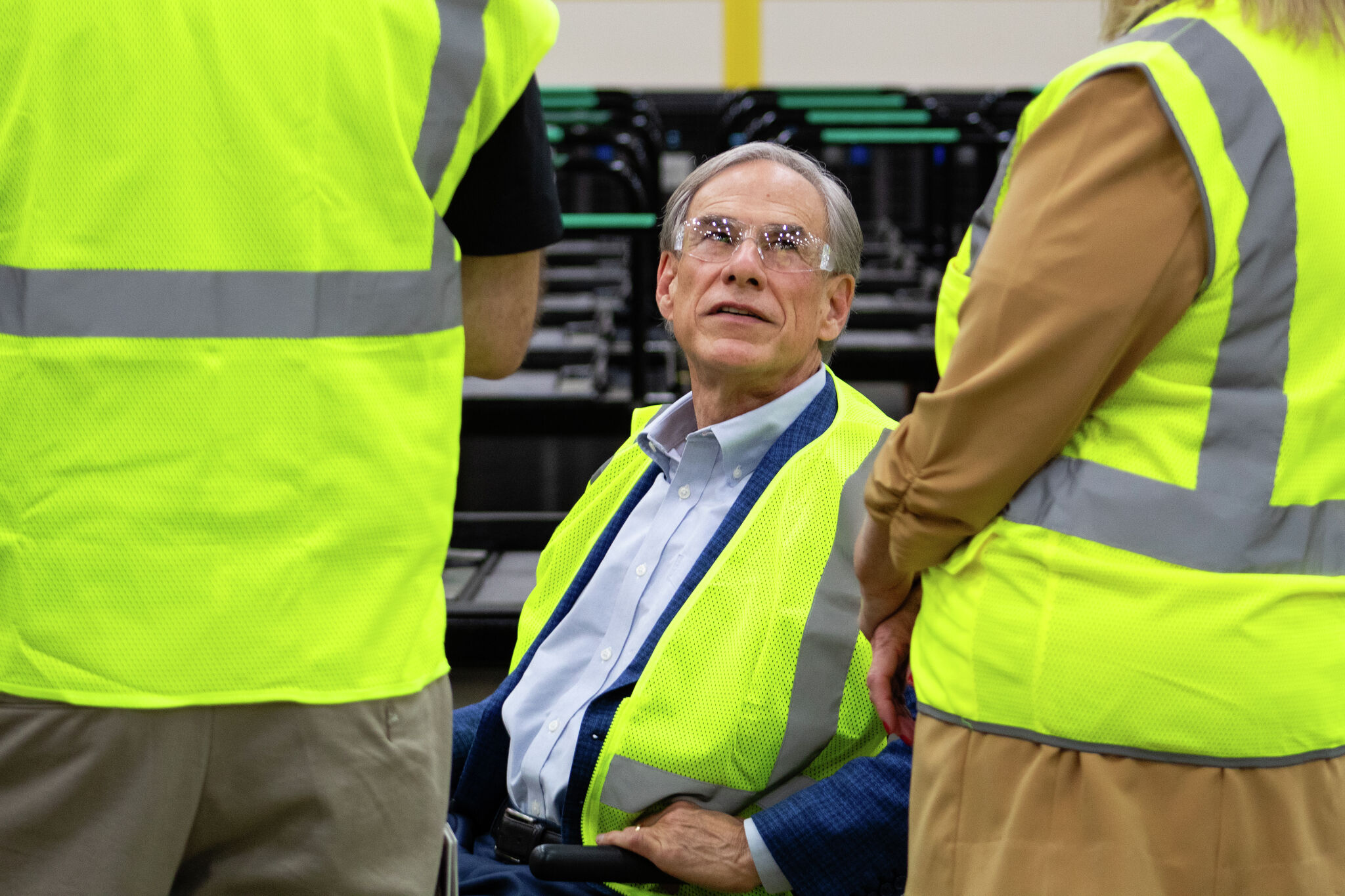
Toyota Invests $1 Billion to Expand U.S. Manufacturing Capacity


GEORGETOWN, Ky. — Toyota is investing $1 billion across its Kentucky and Indiana manufacturing operations to expand production capacity and support electrification, as the company marks 40 years of vehicle assembly in Kentucky.

The investment includes $800 million at Toyota’s Georgetown, Kentucky plant to prepare the facility for a second battery electric vehicle and increase assembly capacity for the Camry and RAV4. An additional $200 million will go to Toyota’s Indiana plant to expand production of the Grand Highlander SUV.

Toyota said the investment is part of a previously announced plan to invest up to $10 billion in U.S. manufacturing over the next five years, aimed at meeting customer demand and supporting a broader vehicle lineup.

The Georgetown facility, Toyota’s largest manufacturing plant globally, has produced more than 14 million vehicles since opening in 1986. The site remains a key hub for vehicle assembly and is central to the company’s strategy to expand production in North America.

In Indiana, the investment will increase output of the Grand Highlander, which will be assembled alongside the Sienna minivan in the plant’s East facility while continuing production with the Lexus TX in the West facility.

“Today’s announcement reflects the company’s commitment to meeting customer demand and the belief in our team to get it done,” said Jason Puckett, president of Toyota Indiana.

Toyota said the investments are designed to increase throughput and support production of both traditional and electrified vehicles as demand shifts across the automotive market.

]]>


Looking for quick answers on assembly and manufacturing topics?


Try Ask ASM, our new smart AI search tool.

Ask ASM

In addition to manufacturing expansion, the company is investing in workforce development programs tied to its production operations. Toyota Kentucky announced $4 million in funding for STEM education initiatives in local school systems and $400,000 to support manufacturing engineering programs at Eastern Kentucky University.

The company said the efforts are intended to support workforce readiness and ensure a pipeline of skilled workers for future production needs.

Toyota’s Kentucky plant employs approximately 10,000 workers, while its Indiana facility employs more than 7,000. The company said continued investment in facilities and workforce development is essential to maintaining production capacity and supporting long-term manufacturing growth in the United States.

Free Training

Source link

Siemens Invests $165M for U.S. Data Center Manufacturing


Siemens has invested more than $165 million across North and South Carolina to support America’s rapidly accelerating AI and data center markets. The new and expanded sites directly support Siemens’ record levels of data center-related electrical equipment orders while also increasing the company’s US manufacturing capacity.These expanded facilities will enable faster production, assembly, and delivery of essential low and medium voltage products to customers. From protection and automation devices manufactured in Wendell, North Carolina, to busway systems produced in Roebuck, South Carolina, these solutions provide the electrical backbone needed to rapidly scale AI data centers and AI factories across the United States. These investments build on nearly $700 million Siemens has committed over the past several years to expand local U.S. manufacturing capacity, including new and expanded electrical products facilities in Pomona, California, and Fort Worth, Texas. “Customer demand is at an all-time high as advanced infrastructure upgrades are needed to meet the power requirements from increasing AI workloads,” said Ruth Gratzke, President of Siemens Smart Infrastructure U.S. “Through sustained investment in U.S. manufacturing, Siemens is enhancing its capacity to meet the needs of data center and AI factory customers during this transformative phase of the AI industrial revolution, underscoring our long‑standing commitment to American made solutions.”In North Carolina, Siemens is growing its footprint with two new all-electric, carbon�neutral facilities. In Raleigh, the brand new 131,000-square-foot facility will add 100 jobs by the end of the year and will assemble Siemens’ integrated power delivery solutions. These prefabricated systems significantly reduce on-site installation time for critical power infrastructure, helping data center operators bring capacity online faster. In Wendell, a new 101,000-square-foot site will localize production of medium voltage protection and automation devices while adding 50 new roles. Lastly, Siemens’ Wendell-based Electrification and Automation U.S. headquarters will expand local switchgear production, creating more than 200 additional jobs at the facility by 2028. In South Carolina, Siemens is opening a new 120,000-square-foot facility in Spartanburg that will house the company’s lighting panel production and distribution center. Nearby in Roebuck, the company’s current facility will also add 22,000 square feet. This will increase busway production capacity significantly along with additional fabrication capabilities. The expanded facility will feature a new paint line, epoxy line, and an expanded plating line. Together, the Spartanburg and Roebuck facilities will add 150 new manufacturing roles to Spartanburg County. “Siemens’ investment in North and South Carolina will expand America’s ability to build the critical infrastructure that powers our grid, while also creating hundreds of American jobs,” said U.S. Energy Secretary Chris Wright. “The Trump Administration remains committed to unleashing the affordable, reliable, and secure power needed to power the future of American innovation and prosperity.”These electrical products, together with Siemens’ simulation, automation and cooling optimization portfolios create a chip-to-grid-to-buildings solution that reshapes the infrastructure powering AI. Together these technologies ensure efficiency and resiliency for the data center industry as well as neighboring communities across the country.As workforce development is as critical as production capacity for the future of AI infrastructure, the Siemens Foundation recently launched Careers Electric™, a national initiative designed to expand access to high-quality electrical training and create clear pathways to well-paying, in-demand electrical careers. Careers Electric™ launched in North Carolina with a $9.25 million investment from the Siemens Foundation, in partnership with state leaders, education institutions, and national workforce organizations. Together, through increased manufacturing capacity, technology development and workforce training initiatives, Siemens remains committed to aiding the U.S. in its position as a leader in innovation.For more information on Siemens’ data center solutions, visit here.

Free Training

Source link

EOS invests $3m in United States manufacturing and logistics expansion


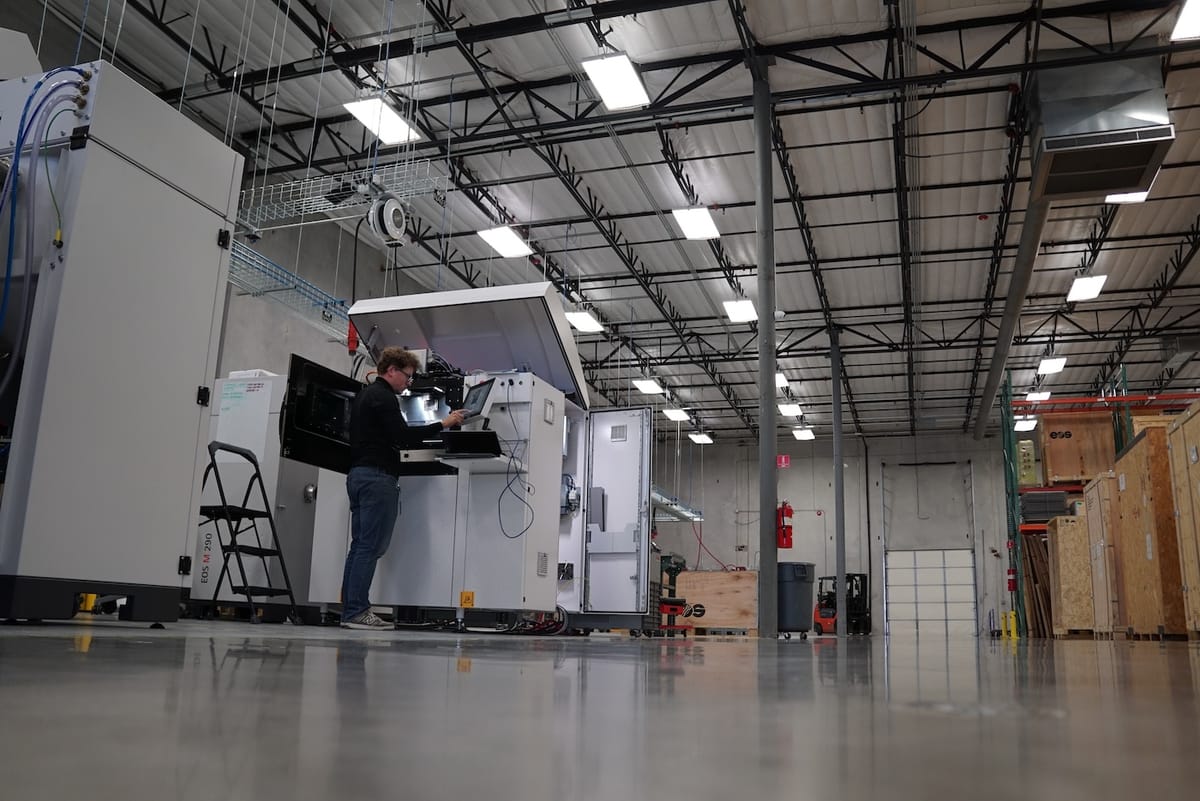
EOS has invested 3 million USD into the expansion of its US manufacturing and logistics capacity.

The company has consolidated its North American warehouse and logistics capability at its Pflugerville, Texas, campus into a new 40,000 square foot facility in Belton, Texas, which has enabled the manufacturing space in Pflugerville to be increased.

EOS says the reconfiguration of existing facilities and the opening of the new warehouse demonstrate its commitment to strengthening its U.S. manufacturing capacity. The assembly of its EOS M 290-1, EOS M 290-2, and EOS M 400-4 systems will receive a boost, while EOS has also created more space for a dedicated powder handling area and an in-house machine shop. It is expected that EOS will now be better equipped to meet increasing customer demand and reduce delivery times. The company has also created ten new jobs at the Pflugerville production site, including operations, quality assurance, engineering, and machine commissioning functions.

“Our Texas expansion enables us to scale North American metal AM assembly with both precision and consistency,” said Kent Firestone, SVP of Operations, EOS North America. “From optimising our production areas to onboarding new team members, every step has been carefully designed to accelerate turnaround times while maintaining the quality and reliability our customers expect from EOS.”   

“This expansion demonstrates our continued commitment to support the resurgence of American manufacturing,” added Glynn Fletcher, president of EOS North America. “This manufacturing facility is not just an investment in our own infrastructure; it is also about standing shoulder-to-shoulder with the U.S. manufacturing community to provide products and services for a superior customer experience. It demonstrates our dedication to the growing U.S. markets where our technology is in greatest demand. We fully understand the criticality that AM plays in the future of domestic manufacturing, and this expansion ensures EOS will continue to play a leading role for years to come.” 

Free Training

Source link

Ralph Lauren Invests in Domestic Fashion as U.S. Manufacturing Job Market Shrinks


Ralph Lauren and the Council of Fashion Designers of America is widening its financial commitment to domestic apparel production as new economic data underscore just how fragile American fashion manufacturing has become.

This week, the CFDA announced two new grant programs aimed at stabilizing and modernizing U.S.-based fashion manufacturing, extending its support well beyond New York City for the first time. The move comes as fresh analysis from Deloitte shows that apparel and textile manufacturing remain among the fastest-declining segments of the U.S. industrial economy, even as policymakers push to reshore production.

The first initiative, the CFDA x NY Forward Grant Fund, is a city-focused effort developed with funding from the New York State Department of State and Ralph Lauren Corp. It will provide partially matching grants to designers and manufacturers operating in New York City’s Garment District, an area that has steadily lost factories and skilled labor over the past two decades.

The second program, the U.S. Fashion Manufacturing Fund, represents a broader national expansion. Also created with Ralph Lauren as a founding partner, the new fund will operate from 2027 through 2029 and support manufacturers across key apparel-producing regions including California, New Jersey, North Carolina, South Carolina, Texas, and Florida. The program is structured to cover 80 percent of eligible investments, with recipients contributing the remaining 20 percent, and is designed to help manufacturers upgrade machinery, adopt advanced software, and invest in workforce training.

Rather than attempting to recreate the labor-intensive apparel sector that once defined American manufacturing, the CFDA is directing capital toward higher-value, technology-enabled production that can survive within a dramatically changed global economy.

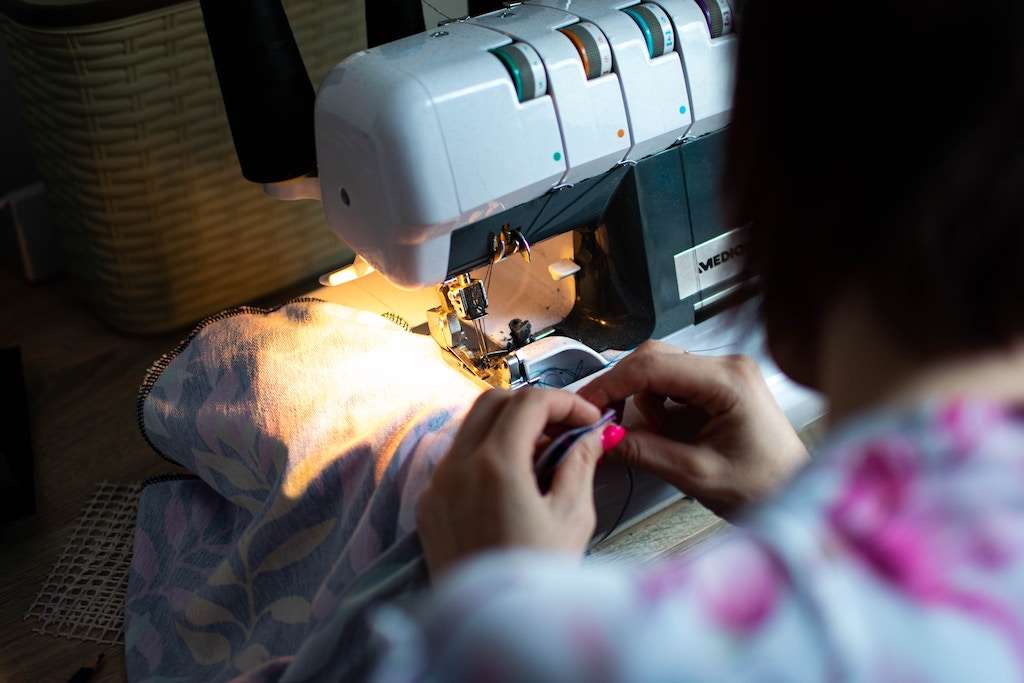
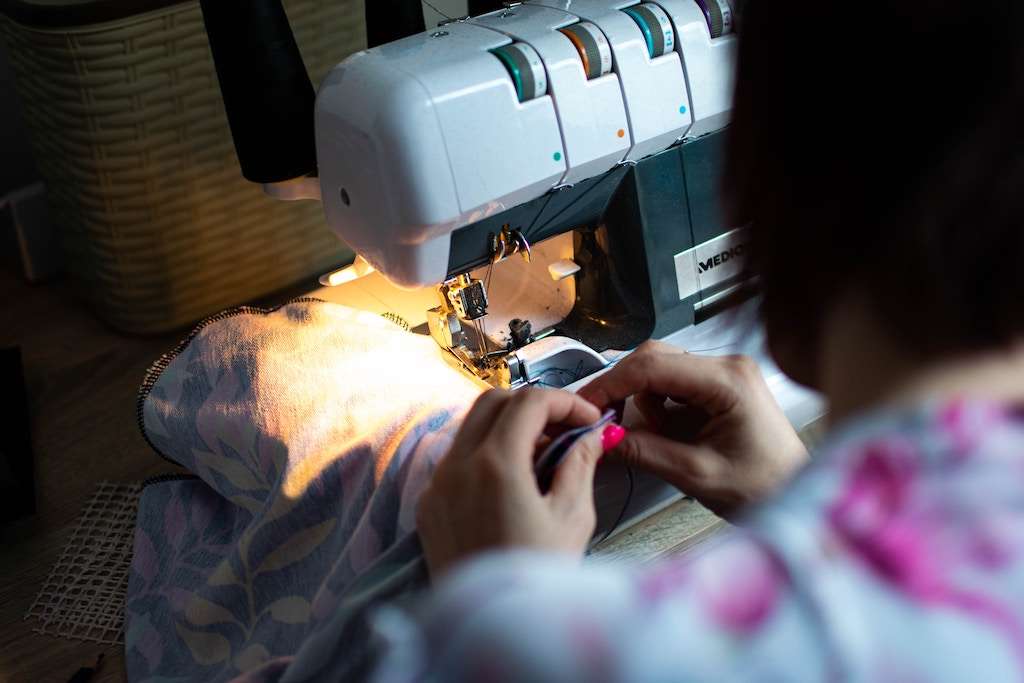
Hands at a sewing machine.Tomáš Petz

“Strengthening American manufacturing to ensure designers have local partners has long been at the core of CFDA’s mission,” Steven Kolb, chief executive officer and president of the CFDA, said in a statement. “We are proud to extend our decade-plus work with Ralph Lauren Corp. and expand to a national level while also continuing our local NYC investments alongside our first-ever partnership with the New York State Department of State.”

Ralph Lauren Corp. has been a central financial backer of the CFDA’s manufacturing efforts since 2013, when the organization launched its Fashion Manufacturing Initiative in partnership with the New York City Economic Development Corp. and industry executive Andrew Rosen. To date, Ralph Lauren has contributed $2 million as the initiative’s premier underwriter, enabling grants to 54 factories and supporting more than 2,000 jobs.

“Our expanded partnership with the CFDA reflects Ralph Lauren’s enduring commitment to advancing innovation and supporting American fashion,” said Katie Ioanilli, chief global impact and communications officer at Ralph Lauren Corp. “This is not only an investment in our industry — it’s an investment in a vital part of American culture that we share with the world.”

The renewed focus on modernization and training arrives as long-term economic trends continue to weigh heavily on apparel production. According to Deloitte’s Economics Insider series, real gross value added in U.S. manufacturing has grown at an average annual rate of 1.5 percent since 2000, compared with 2.1 percent growth across the broader economy. Manufacturing’s share of U.S. economic output stood at 9.4 percent in the second quarter of 2025, down from 15.1 percent 25 years earlier.

Within that contraction, apparel and textiles have been hit particularly hard. Deloitte data show that output in textile mills and textile product manufacturing has declined by an average of 2.9 percent per year since 2000, while apparel, leather, and allied products have fallen by an average of 2.2 percent annually. Employment losses have been even steeper, with apparel payrolls shrinking at an average rate of 6.8 percent per year over the same period.

By contrast, capital-intensive manufacturing sectors such as computer and electronic products have posted strong output growth, reinforcing a reality that CFDA leaders appear to be acknowledging: future domestic fashion manufacturing will depend less on scale and more on specialization, automation, and advanced skills.

The structure of the new grant programs mirrors that shift. Both funds are explicitly designed to help companies modernize equipment, expand technical services, and train workers in advanced production methods rather than increase headcount alone. The CFDA x NY Forward Grant Fund will distribute two rounds of funding in 2026 and 2027, with one manufacturer in each round also receiving the Ralph Lauren Manufacturing Award, which covers the full grant amount in recognition of innovation.

Woman in long coat.Ralph Lauren

New York State remains a focal point. In 2024, the state’s fashion industry was responsible for approximately $25 billion in wages, with New York City accounting for roughly $20 billion annually. Statewide, fashion employs about 315,000 people, including 204,000 jobs based in the city.

Ralph Lauren has also continued to anchor portions of its own production domestically, particularly through its role as Official Outfitter of Team USA. The company manufactures parade ceremony uniforms in the United States, including the opening and closing ceremony looks for the 2026 Milano Cortina Winter Olympic Games, work that has supported multiple American factories.

When asked about the potential for expanding U.S. production further, the company said, “We continue to explore and build additional opportunities to manufacture our products in the U.S. We value the wide range of production solutions that U.S. manufacturers can offer, from heritage craftsmanship to high-tech manufacturing like 3D printing. However, increasing domestic manufacturing is a complex process that requires ongoing collaboration across our sector, from how we collectively source raw materials to increasing existing domestic factory capacity to talent availability.”

The company added, “Working with factories across the country, we produce hundreds of thousands of products across all of our brands in the U.S.”

Deloitte’s analysis suggests that this kind of selective, high-value domestic production is likely to define the sector’s future. While tariffs and trade policy have renewed political interest in reshoring, the firm notes that manufacturing growth now hinges more on skilled labor, automation, and productivity than on sheer employment. As of September 2025, U.S. manufacturing payrolls totaled 12.7 million workers, down from 17.2 million in 2000, even as productivity has risen sharply.

Related on Ethos:

Free Training

Source link