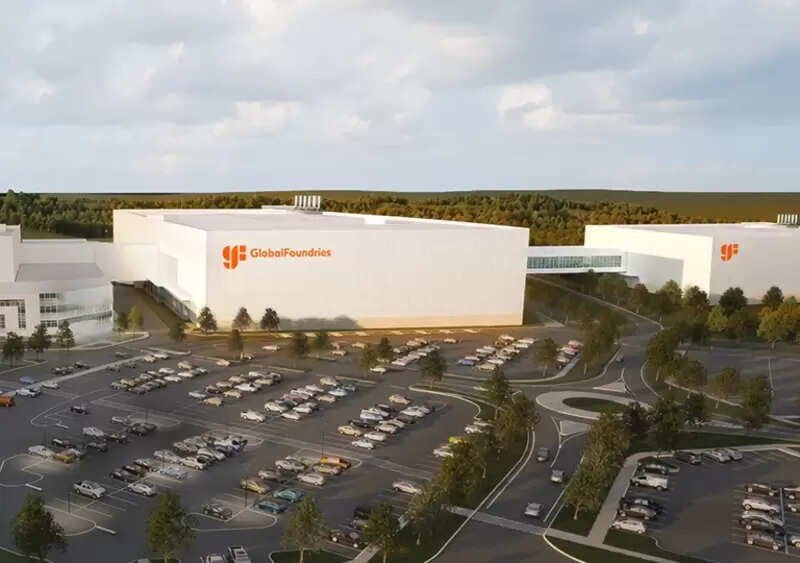
GlobalFoundries and US-Japan Partnership to Boost Semiconductor Manufacturing with New Fabs, ETElectronicsWorld

Source link

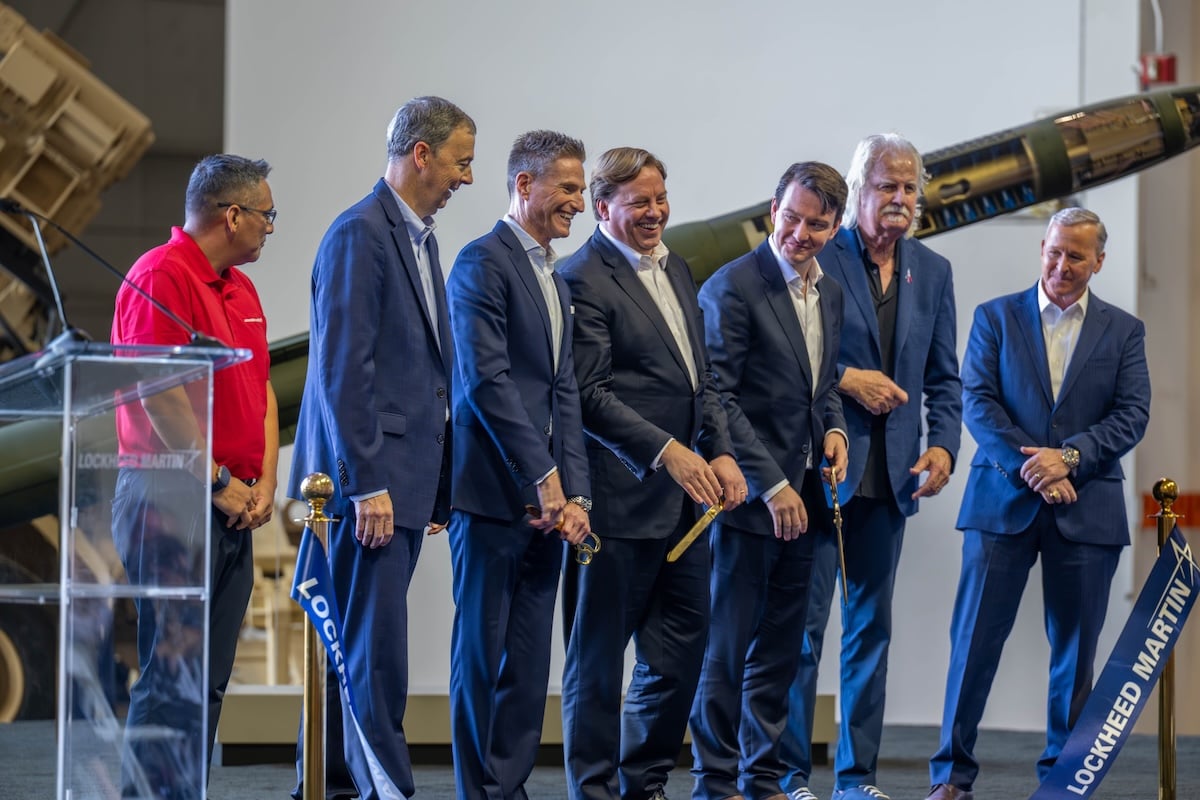
Lockheed Martin plans to create 6,000 jobs across the United States, including 2,000 in Texas, as it expands munitions production. A $300 million investment in its Grand Prairie operation forms part of a broader commitment to spend $8–9 billion through 2030.
The Texas project will add manufacturing space and equipment for automation, digital production and precision machining. Hadrian will supply a 24-machine automated cell, expected to be operational in early 2027 and run by Lockheed Martin’s production workforce.
Lockheed Martin did not give a hiring timetable or say how many of the new Texas jobs would be at Grand Prairie. Nearly 800 production employees currently work at the facility, which manufactured 250,000 parts in 2025.
The expansion will bring the site’s manufacturing footprint to more than 735,000 square feet. It includes 100,000 square feet of new space and 85,000 square feet of offices being converted for manufacturing.
More than 30 additional high-precision machines installed in recent months are already producing thousands of components each week. The company expects to have added nearly 100 advanced machines at Grand Prairie by the end of 2026.
“Lockheed Martin has brought together commercial speed and combat-proven performance because America needs both,” said Jim Taiclet, the company’s chairman, president and chief executive. “By combining advanced technology with the expertise of our American workforce, we’re transforming manufacturing to deliver critical munitions at speed and scale.”
Grand Prairie supplies components for Missiles and Fire Control programs, including PAC-3 MSE, THAAD, PrSM and JATM. Its output supports final-assembly sites including Camden, Arkansas, and Troy, Alabama.
Lockheed Martin’s wider investment commitment covers modernization or expansion of more than 20 U.S. facilities through 2030. The company is also working with GM Defense to apply automotive manufacturing expertise to defense production.
“This expansion is more than just a new facility; it is a stronger supply chain and a more resilient industrial base,” said Michael P. Duffey, Under Secretary of War for Acquisition and Sustainment. “Today in Grand Prairie, American industry is answering the call to support our warfighters.”
The company said agreements for PAC-3 MSE, THAAD, PrSM and JATM provide greater certainty for investment in personnel, equipment and supply chains. Those arrangements, developed with Department of War leadership, are intended to support faster production and deliveries.
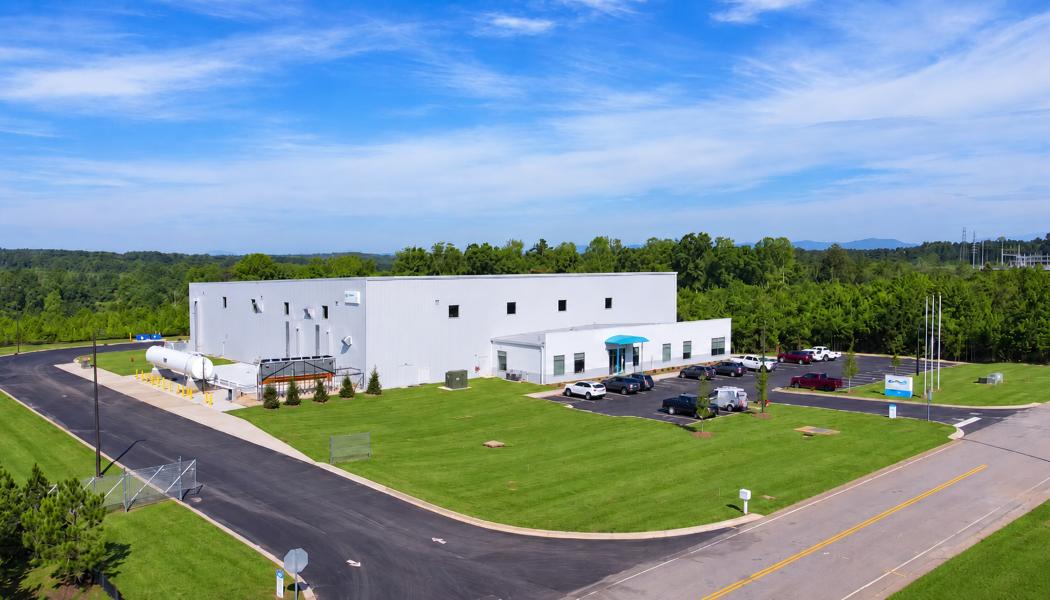
CurTec USA is investing $10 million to expand its Westminster, South Carolina operations, creating 10 new jobs. The project will increase warehouse and production capacity and broaden the range manufactured in the United States.
The expansion will add approximately 27,300 square feet and more than 2,000 pallet positions. Groundbreaking is planned for October 2026, with completion expected in Q2 2027.
CurTec is expanding its manufacturing operations in Westminster, S.C. with a new warehouse and additional production capacity.
“When we opened Westminster in 2023, our goal was to get closer to North American customers and create a platform for growth,” says Bart van Berkel, CEO of CurTec. “This expansion strengthens local production, inventory and supply reliability while broadening the range we manufacture in the United States.”
Expanding local production
A new blow molding line will significantly increase capacity and extend local production to smaller packaging sizes. CurTec plans to produce 6- and 10-liter Click Pack pails in Westminster before year-end, followed by smaller Wide Neck Drums in 2027.
“Expanding production and warehousing together gives us greater flexibility to respond to customer demand,” says Roy Kuipers, Operations Directorat CurTec. “It also allows us to manufacture more of our portfolio locally.”
“Westminster was designed for future growth,” says Martin Lamar, Site Director USA. “We are now adding capacity and capability while growing our local team.”
“It is another ‘Top Shelf for Business’ day in Oconee County,” says Jamie Gilbert, President and CEO of the Oconee Economic Alliance. “Just three years after opening the facility, this investment reflects CurTec’s confidence in our workforce and business climate. We value our partnership and look forward to CurTec’s continued growth in our community.”
About CurTec
CurTec manufactures high-performance packaging for life sciences and fine chemicals.
CurTec supports life sciences and fine chemicals companies with high-performance packaging for the safe handling and containment of critical materials. CurTec has GMP-certified production facilities in Westminster, South Carolina, and Rijen, the Netherlands.
The National Security Commission on Robotics for Advanced Manufacturing, a bipartisan initiative of the Special Competitive Studies Project, released its 90-page Preliminary Report on October 13, 2026. The commission’s central finding: the United States leads in the technologies that form the brain of modern robotics, including artificial intelligence, computer vision, autonomy and software, yet lacks the scale to deploy robots, produce robotic systems and manufacture critical components domestically.
The report addresses physical AI, its term for artificial intelligence embodied in machines that sense and act in the real world, and argues that leadership will be determined by productive deployment and resilient production capacity rather than model capability alone. The commission frames the document as a diagnosis rather than a prescription; a Final Report with recommendations is scheduled for March 2027.
The commission is co-chaired by Senator Ted Budd, a North Carolina Republican, Senator Elissa Slotkin, a Michigan Democrat, and SCSP President and CEO Ylli Bajraktari. Members include executives from Playground Global, Path Robotics, FANUC America, Intrinsic, NVIDIA, Andreessen Horowitz, Boston Dynamics, AMD, General Motors and Mytra; the director of the Johns Hopkins Applied Physics Laboratory; and academics from the Massachusetts Institute of Technology and the University of Michigan. Ayanna Howard stepped down as a commissioner in June 2026 to focus on her new role as president of Spelman College.
The analysis covers robotic systems used in advanced manufacturing, from fixed industrial robots and collaborative systems to autonomous mobile robots and emerging general-purpose platforms. The findings draw on publicly available data, academic and industry research, commission deliberations, briefings and site visits, and engagements with manufacturers, workers, technology developers, systems integrators, researchers, educators and investors. The commission labels them preliminary because robotics technologies, markets and deployment models are evolving rapidly and the available evidence remains uneven in several areas.
According to International Federation of Robotics figures cited in the report, Chinese factories installed approximately 354,200 industrial robots in 2025, 59% of worldwide installations, compared with approximately 38,400 in the United States. By the end of 2024, Chinese firms had more than two million industrial robots operating in factories, which the report describes as more than five times the U.S. stock of 393,700; that stock represented 8.3% of the global total as of 2024.
The United States ranked eighth worldwide in robot density in 2024, at roughly 307 robots per 10,000 manufacturing employees, a fraction of the Republic of Korea’s 1,220 but above China’s density. U.S. annual installations peaked at 40,000 units in 2022, or 7% of the global total, and the U.S. share fell to 6.3% in 2024; preliminary numbers indicate a rebound to 38,400 units in 2025. Most industrial robots installed in the United States were imported, while Chinese suppliers accounted for 55% of installations in their domestic market in 2025.
Only 12.1% of U.S. manufacturing plants reported using robots in 2021, according to U.S. Census Bureau data cited in the report. China’s Made in China 2025 initiative, launched in 2015, set a goal of 1.8 million operational robots by 2025, and the report states China met it early, in 2024, when its operational stock surpassed two million. The commission cautions that these figures measure industrial robots and do not capture newer systems such as mobile robots and humanoids, and that comparable deployment data for those systems are needed before drawing broader conclusions about physical AI leadership.
The report organizes ten preliminary findings around four pillars: the national framework, the talent pipeline, adoption at scale and the innovation ecosystem. At the center sits what the commission calls a supply-demand paradox: manufacturers wait for robotic systems to become cheaper, more adaptable and better proven, while robotics firms cannot lower costs or improve performance without the deployment volume manufacturers provide. The commission describes this first-mover problem as a market failure unlikely to resolve on its own.
On the national framework, the report finds federal robotics initiatives spread across at least four executive departments and numerous agencies, with no single institution accountable for national-scale outcomes. The National Robotics Initiative coordinated more than $250 million across more than 300 projects before the National Science Foundation ended the program in 2022.
On the talent pipeline, a 2024 Deloitte and Manufacturing Institute study cited in the report projects the industry will need to fill approximately 3.8 million jobs by 2033, with up to 1.9 million potentially going unfilled. The commission finds the employment effects of robotics ambiguous and not predetermined, shaped simultaneously by job displacement, job transformation and new job creation. Apprentices make up only 0.3% of the U.S. workforce as of 2025, the report notes, and traditional multi-year apprenticeship programs struggle to keep pace with rapid technological change.
According to the commission’s release, small and medium-sized manufacturers, about 95% of U.S. manufacturing firms, face capital constraints, knowledge gaps, narrow return-on-investment metrics and cybersecurity and liability uncertainty. The report adds that AI-assisted programming, low-code tools and collaborative robots are expanding the feasibility of automation beyond rigid, high-volume production, while safety frameworks and performance standards struggle to keep pace.
On the innovation ecosystem, the report describes a commercialization valley of death for U.S. robotics startups, whose capital-intensive hardware requirements align poorly with traditional venture capital timelines. China accounted for approximately 60% of global rare-earth mine production, 91% of refined output and 94% of sintered permanent-magnet production in 2024, according to the report, which describes such magnets as necessary components in most motors and actuators used in industrial robots; it adds that in 2025 China implemented export restrictions that disrupted industrial supply chains in the United States and its allies. The operational data U.S. firms produce sits locked inside individual companies, in incompatible formats and behind contracts that bar sharing.
The findings also cite security risks: a 2026 national security determination that added foreign-produced advanced robotic devices to the Federal Communications Commission’s Covered List; a vulnerability discovered in early 2026 in a Chinese company’s robot vacuums that exposed live camera feeds, microphone audio and floor plans from nearly 7,000 devices across 24 countries; and a pre-installed backdoor found in 2025 in a quadruped robot made by Unitree Robotics that enabled surveillance of customers worldwide and unauthorized remote control of the robots.
The report concludes that the United States needs a national mission organized around deployment, mobilizing private-sector dynamism, research strength, capital markets, regional manufacturing ecosystems and skilled workers. Such a mission would not copy China’s state-directed model or require domestic production of every component; the strategic question, the commission writes, is where concentrated or adversary-linked dependencies create vulnerability and where domestic or allied capacity is essential.
“A software advantage that cannot be embodied, manufactured, deployed, and sustained at scale will not be sufficient to secure American industrial leadership,” Bajraktari wrote in a letter opening the report.
In the release announcing the report, Budd called the report an important step toward harnessing physical AI, automation and robotics, and said reindustrializing the United States is essential to strengthening critical supply chains, securing leadership in emerging technologies and staying ahead of China. Slotkin said the country needs to bring back and expand critical manufacturing processes and shore up vulnerable supply chains without harming American workers.
The commission says such a mission should be judged by national outcomes rather than the number of programs created or dollars announced, citing measures including the breadth of adoption across industries, regions and smaller manufacturers; the time and cost required to move from assessment to productive operation; the share of pilots that advance to repeat deployments; and domestic and allied capacity in critical components. The Final Report, scheduled for March 2027, will propose recommendations for federal, state and regional leaders; manufacturers and technology companies; educators and workforce-development organizations; workers and labor representatives; investors; and research institutions.
In the Pacific, a single bolt can become a giant headache and the source of months of delay. The bolt that Col. Scott Carpenter held up Monday during the Association of the United States Army’s annual meeting belonged to a Common Remotely Operated Weapon Station turret, and it is back-ordered until February 2027.
At U.S. Army Materiel Support Command — Korea, the unit Carpenter commands, soldiers built the bolt through the drill-out process of subtractive manufacturing for a cost of $1.27, avoiding months of delay and saving more than $300 in the process.
As the Eighth Army in Korea builds out its logistics capability, it’s investing in advanced manufacturing with an eye to supplying spares, not only to local Army forces, but also to troops across the Pacific region.
“I want to be the advanced manufacturing center for INDOPACOM,” Carpenter said at an engagement with reporters at the AUSA meeting. “That’s my goal.”
Eighth Army officials spoke earlier this year about how establishing a Korea-based regional sustainment hub, or center for logistics, maintenance and supply, could cut down the burden and cost of long-distance sustainment. At a roundtable event Monday, Eighth Army Commander Lt. Gen. Joseph Hilber indicated the force was moving out to build that sustainment hub.
“Now, rather than taking equipment that might need a major overhaul and send it back to the United States, we’re looking at ways that we can overhaul it there in Korea and keep it in the fight longer. Keep it west of the [International Dateline] longer,” Hilber said. “That’s going to involve everything from some added manufacturing capabilities to additional repair capabilities that we’ve got in there in terms of being able to fabricate parts, being able to fabricate materials, and then being able to return that equipment back into the fight.”
The Eighth Army has already resourced maintenance support teams that cross service and regional boundaries, departing the Korean Peninsula to support the III Marine Expeditionary Force in Okinawa, Japan, and to Hawaii to support Army rotational units, Carpenter said.
Through additive manufacturing, or 3D printing, and subtractive manufacturing, or cutting a part out of a solid block of metal, the Eighth Army is manufacturing an increasing number of critical parts, Carpenter said. The materiel support command recently acquired a metal 3D printer and is now building out infrastructure to house it.
“But we think come January, February, the metal 3D printer [will be] in, and my goal is … I would like to get to a point where I can 3D print the bolt,” Carpenter said.
U.S. Army officers tour a South Korean navy shipyard to examine 3D printers used for their equipment on March 25, 2026. (Spc. Keli Luangrath/U.S. Army)

By next summer, he said, the Eighth Army is set to receive $3 million worth of advanced manufacturing machines, with some $10 million worth of additional machinery set to be requested in the Army’s fiscal 2028 budget.
“I’ll be able to print bumpers; I’ll be able to print doors,” Carpenter said. “These are not just desktop printers.”
Recently, he said, a Guam-based military unit requested an assembly that would have cost $36,000. The Korea-based team built it through subtractive manufacturing for $82.
Through a request system, Carpenter said, any joint forces member can now request a part and get routed to the Army’s logistics hub in Daegu, South Korea.
“If you’re the Marines operating in Okinawa and you need this bolt … I get this bolt back over to the Marine at a fraction of the cost, and a lot quicker than if they were to order through the supply system,” he said. “So again, we’re maintaining combat power inside the First Island Chain.”
Hilbert said some hurdles remained for the Eighth Army, including intellectual property restrictions with manufacturers; data-sharing to ensure the advanced manufacturing processes deliver components that are up to spec; and seamless connection into existing Army logistics systems not designed for these new modes of parts production.
“We’re continuing to work through those pieces to enable us to fix faster,” Hilbert said.
The U.S. Army plans to hold its first Manufacturing Rodeo early next year to find where its production processes and supply chains fail under pressure. Acting Army Secretary Adam Telle announced the competition at the opening ceremony of the AUSA annual meeting.
“The U.S. Army is going to do something we’ve never done before: early next year we will conduct what I’m calling a Manufacturing Rodeo—a race between our industrial base partners that strains our organic industrial base, stresses the supply chain, pressures manufacturing processes, and shows us exactly where it breaks,” Telle said. The exercise will test both the Army’s Organic Industrial Base and the wider U.S. manufacturing network.
Telle said the Army would learn by doing rather than “sitting around postulating at the Pentagon.” It intends to identify weak links, strengthen them and keep testing improvements to make production more resilient and responsive.
The initiative follows the Army’s shift this year from production targets for individual systems toward manufacturing capabilities that can make a wider range of components. The service has established advanced manufacturing hubs at Red River, Anniston and Tobyhanna Army depots and secured public-private partnerships with Hadrian and Siemens.
The Army said those investments have expanded its ability to manufacture subcomponents on demand for existing and future weapon systems. Products include complex electric motors and replacement parts such as tank engine transmission belt housings.
The service is also seeking to reduce bureaucratic barriers to working with U.S. companies and speed up the acquisition of new capabilities. It said integrating autonomous technologies and expanding production would help provide soldiers with equipment when needed and in sufficient quantities.
The US Army will launch its first-ever “manufacturing rodeo” early next year to test the resilience of military production facilities, identify supply chain vulnerabilities and assess whether American manufacturers can meet military equipment demands at scale.
Acting Army Secretary Adam Telle announced the initiative Monday during the opening ceremony of the Association of the United States Army (AUSA) National Convention in Washington, Anadolu Agency reported.
Telle described the event as a competitive exercise designed to challenge both the Army’s Organic Industrial Base (OIB) and the wider US manufacturing network under demanding conditions.
“The US Army is going to do something we’ve never done before: early next year we will conduct what I’m calling a manufacturing rodeo — a race between our industrial base partners that strains our organic industrial base, stresses the supply chain, pressures manufacturing processes, and shows us exactly where it breaks,” Telle said.
The exercise will seek to expose weaknesses in production systems and supply chains when they come under pressure. The findings are expected to help the Army determine where additional investment, improved manufacturing processes or new production capabilities may be necessary.
Telle said the initiative would prioritize practical testing of industrial capacity rather than relying solely on planning and analysis. The goal is to identify potential bottlenecks and assess how effectively the US industrial base can support the military’s equipment requirements.
Reports related to this article:
Written by Eric Funderburk for IIR News Intelligence (Sugar Land, Texas)
Consumable and disposable medical products other than drugs are driving various construction projects throughout the U.S.
Industrial Info Resources’ coverage of the Pharmaceutical-Biotech Industry includes not only the drugs, active pharmaceutical ingredients and the related labs and research facilities, but also other essential medical products, including syringes, wound dressings and packaged intravenous solutions. The manufacture of these essential items represents a steady source of construction investment throughout the country.
Earlier this month, medical device manufacturer Becton Dickinson (BD) announced it had struck a deal with the U.S. government to invest $19 billion in the U.S., including $3 billion earmarked for manufacturing sites across the country. As details of these upcoming projects emerge, one U.S. project in the U.S. already is underway: upgrades and additions that will expand production capacity at the company’s plant in Columbus, Nebraska, which manufacture BD’s proprietary Neopak prefillable glass syringes. Strongly driving BD’s Nebraska capacity growth is the injectable GLP-1 market, which is very much driving construction on the drug side of the U.S. industry.
Readers can access details of the Becton Dickinson project, including construction timelines, key contact details, and equipment and service needs, by clicking here. To learn more about U.S. GLP-1-related construction projects, see August 27, 2026, article – GLP-1 Drugs Drive Pharma Construction Wave.
Other projects are focusing on the packaging aspect of syringes, autoinjectors and similar devices. These include Sharp Packaging Solutions‘ expansion of its plant in Macungie, Pennsylvania, which will focus on secondary packaging, and labeling and cartoning for autoinjectors and prefilled syringes that contain drugs. Facilitating the types of drugs that can be packaged, Sharp is expanding its cold storage space as well.
PCI Pharma Services also is fitting out its packaging area for autoinjectors and prefilled syringes at its plant in Rockford, Illinois.
In a similar vein to syringes and autoinjectors, Otsuka ICU is at work expanding its main production campus in Austin, Texas, which manufactures the company’s filled intravenous (IV) solution bags. The joint venture company is adding another 500,000 square feet of manufacturing space to its Austin campus, and while the company hasn’t elaborated on exactly what sorts of products the addition will cover, ICU’s products include IV bags with substances such as saline, sterilized water, dextrose and electrolyte solutions.
Last year, Mölnlycke Health Care US, broke ground on a building addition at its manufacturing campus for single-use wound dressings in Brunswick, Maine. Among Mölnlycke’s offerings are its Mepitel and Mepilex dressing lines that are based on a soft-silicone technology.
Dialyzers are the name of the game for Nipro Medical Corporation’s construction of a new plant in Greenville, North Carolina, which also will manufacture precision needles. Patients requiring kidney dialysis require a new dialyzer each time they receive treatment, and with this occurring multiple times per week, the number of dialyzers required by individuals over an extended basis can be quite large. Nipro is catering to a strong market; a 2026 report from the National Kidney Foundation suggested more than 831,000 U.S. residents were being treated for end-stage renal disease at the end of 2023, a number which has appeared to stay relatively stable over recent years.
Contact lenses have very much become a disposable medical item, with users discarding lenses at a frequency ranging daily to monthly, but always with a new pair waiting to be worn. The biggest construction news in this segment comes from Johnson & Johnson Vision, manufacturer of the blockbuster ACUVUE line of disposable contact lenses.
J&J broke ground earlier this year on the expansion of its contacts plant in Jacksonville, Florida, which already manufactures 1.7 billion lenses per year for the U.S. market. Johnson & Johnson is adding new production and packaging lines at the plant along with the latest in automation to grow capacity. Work is expected to last into 2029.
Key Takeaways
About Industrial Info Resources
Industrial Info Resources (IIR) is the leading provider of industrial market intelligence. Since 1983, IIR has provided comprehensive research, news and analysis on the industrial process, manufacturing and energy related industries. IIR’s Global Market Intelligence (GMI) helps companies identify and pursue trends across multiple markets with access to real, qualified and validated plant and project opportunities. Across the world, Industrial Info Resources is tracking over 250,000 current and future projects worth $30.2 trillion (USD).
Manufacturing facilities have broken ground in a burst over the last two years, helped along by incentive programs that span presidencies, with President Donald Trump’s latest rounds of tax breaks passed through the One Big Beautiful Bill Act specifically aimed at unleashing their development.
)
There are roughly two dozen facilities under construction across the country totaling around $500B in committed capital, with a deep pipeline of projects behind them, according to Avison Young. The brokerage is tracking 124 projects that have been proposed or announced, amounting to $3.4T in potential investment.
Avison Young’s lead industrial researcher, Peter Kroner, said he expects the pace of groundbreakings will accelerate through the end of the year.
“We fully anticipate another hockey stick that’s going to dwarf this starting to happen at the end of the year,” Kroner said, describing a steep upward shift in momentum on a line chart that is shaped like the sports equipment. “We’ve peaked in terms of that trough of uncertainty for 18 months, and there’s a lot of excitement from manufacturers to take advantage of what’s in this bill.”
Some of what is breaking ground today is leveraging benefits from former President Joe Biden’s CHIPS and Science Act, but Trump’s One Big Beautiful Bill Act and the ongoing trade war have also driven firms to bring manufacturing stateside.
Biden’s other policy package, the Inflation Reduction Act, has largely been sidelined by the administration that inherited it, but the CHIPS Act has continued to ride the wave of monumental demand for digital infrastructure amid the mass deployment of artificial intelligence, said Craig Van Pelt, who leads research at Cresa.
“The CHIPS Act is a huge deal, one of the biggest financial packages we’ve ever done in the United States, but there’s a long way to go from permitting and site preparation to active construction and production,” he said.
Republicans’ One Big Beautiful Bill Act added a raft of new incentives to build new factories, not just for chip fabricators but for the broader manufacturing sector.
Tech dominates the largest projects leveraging the tax incentives today, but pharmaceutical and automotive production round out the top projects that have broken ground. Aerospace is also quickly growing, although at a smaller scale, as drone technology is rapidly developed and as the business of going to space is increasingly privatized by the government and given to companies like SpaceX and Blue Origin.
Most of the projects being built today aren’t the types of operations that involve hundreds of blue-collar workers on production floors. Instead, they rely on advanced robotics to maintain precise production lines, Van Pelt said.
“A lot of the stuff that’s coming back is not traditional manufacturing, but it is more technically advanced manufacturing, which takes a different kind of worker,” he said. “We’re not going to get a bunch of steel workers back here.”
Here is a look at the biggest projects now underway, according to Avison Young.
A chip wafer like what will be produced by TSMC in Arizona
TSMC In Arizona
Location: Phoenix
Project Investment: $100B
TSMC, the world’s largest chipmaker, began construction in April 2025 on a third chip fabrication site to complement two existing facilities in Phoenix. The groundbreaking followed a March 2025 announcement expanding the planned facility from a $65B plant to a $165B megasite. This July, TSMC announced plans to invest another $100B in the state, raising its total commitment in Arizona to $265B.
Location: Clay, New York
Project Investment: $100B
Micron Technology is building a $100B manufacturing plant in central New York that is slated to be the largest semiconductor facility in the U.S. The project officially broke ground in January, and chip production is expected to begin in 2030.
Micron also pledged $30B in June 2025 to expand chip production facilities in Boise, Idaho, where it is headquartered, and to upgrade a manufacturing facility in Manassas, Virginia. The Idaho commitment was part of a planned $50B campus that would include an additional production facility and a research and development center. In all, the tech giant says it has pledged more than $250B to increase its manufacturing and research presence in the U.S.
)
Elon Musk and Nvidia’s Jensen Huang at the U.S.-Saudi Investment Forum in November 2025
Elon Musk’s Terafab
Location: Grimes County, Texas
Project Investment: $16.8B
Elon Musk took to his social media platform in March to announce that xAI, SpaceX and Tesla would build a 100M SF megacampus to produce chips to power his companies’ AI ambitions. The project has a more than $16.8B price tag and a delivery date in 2028, with Gov. Greg Abbott’s office saying the factory will create 3,000 jobs.
Location: Houston
Project Investment: $6.5B
Pharmaceutical giant Eli Lilly waded through more than 300 proposals before selecting a site outside Houston for a $6.5B plant that will manufacture the company’s first oral GLP-1 weight-loss drug and ingredients for other medicines. The project was announced in September 2025 and broke ground a year later.
The new plant, which is expected to create more than 600 jobs, is one of four Lilly said in 2025 that it would build. The pharmaceutical company later rolled out plans for a $5B plant outside Richmond, Virginia, in September 2025 and announced plans for a $6B production facility in Huntsville, Alabama, in December 2025. Those projects have yet to break ground.
South Korean executives and leading state officials gather in Louisiana for a ceremonial groundbreaking in September.
Hyundai’s American Steel Mill
Location: Donaldsonville, Louisiana
Project Investment: $5.8B
Site work is underway in Donaldsonville, Louisiana, for a 1,700-acre steel mill that Hyundai expects will eventually produce 2.7 million metric tons of steel per year. A ceremonial groundbreaking for the $5.8B facility was held in September, but South Korea-based Hyundai is still working with state officials to secure an air pollution permit before extensive development can get underway, The Advocate reported. The steel mill will support 1,300 direct jobs and is a piece of Hyundai’s pledge from August 2025 to invest $26B into the U.S. by 2028.
Location: Stanton Springs, Georgia
Project Investment: $5B
Executives from automaker Rivian and political leaders from Georgia, including Gov. Brian Kemp, gathered outside Social Circle, Georgia, in September 2025 for a groundbreaking ceremony for a new manufacturing site that promises to create 7,500 jobs by 2030. The facility was originally expected to be built in two phases, with each phase generating a plant capable of rolling 200,000 cars off the production line annually.
Rivian shifted plans in April and said the first phase would leverage a $4.5B loan from the Department of Energy — down from the $6.6B allocated under the Biden administration — to complete the first phase of the project, which would have an increased 300,000-unit capacity. The site for the second phase would be reserved for future expansion, Chief Financial Officer Claire McDonough said on the firm’s earnings call, TechCrunch reported.
A rendering of SK Hynix’s under-construction advanced memory packaging facility being built in West Lafayette, Indiana
SK Hynix Comes To America
Location: West Lafayette, Indiana
Project Investment: $4B
Indiana Gov. Mike Braun, Sen. Todd Young, the president of Purdue University, and a host of SK Hynix executives were on hand at the August groundbreaking of a $4B memory packaging hub that will be the South Korean giant’s first manufacturing site in the U.S. The project is expected to create 1,000 jobs and research opportunities through a collaboration with nearby Purdue. The 133-acre site will host a high-bandwidth memory production hub that uses advanced packaging to stack multiple chips on top of one another to optimize size and performance.
WASHINGTON, D.C. — U.S. manufacturing employment increased by 72,000 jobs during the first nine months of 2026, while factory output, industrial investment and goods exports expanded, according to a report from the White House Council of Economic Advisers that credits President Donald Trump’s trade and tax policies with strengthening domestic production.
The 14-page report, The State of American Manufacturing, draws on federal employment, industrial production, economic output and trade statistics to assess manufacturing performance during Trump’s second term.
The administration attributes the gains to tariffs, investment incentives and policies intended to encourage companies to expand domestic manufacturing operations. The report combines government economic indicators with corporate investment commitments and examples of individual business expansions.
Manufacturing employment increased primarily in durable goods industries, which added 101,000 jobs during 2026, according to the council’s analysis of Bureau of Labor Statistics data.
Metal production accounted for 21,000 additional jobs, while transportation equipment manufacturing added 17,000.
The report contrasts those increases with a decline of more than 200,000 manufacturing jobs during the final two years of former President Joe Biden’s administration.
Its employment figures show average monthly manufacturing job gains of approximately 8,000 in 2026, compared with average monthly losses of 9,000 in 2025 and 15,000 in 2024.
Manufacturing activity also strengthened according to the S&P Global U.S. Manufacturing Purchasing Managers’ Index, which reached 55.9 in September, its highest reading since Trump returned to office.
The council reported that the index had remained in expansion territory for 14 consecutive months through September. Readings above 50 indicate expanding manufacturing activity.
Federal Reserve industrial production data cited in the report showed growth across several manufacturing industries.
Semiconductor and printed circuit board production increased 22% year over year, while business vehicle manufacturing rose 16.1% and transit equipment production increased 11.2%.
Computer and electronic products manufacturing grew 8.7%, defense and space equipment production increased 7.1%, and machinery manufacturing advanced 6.3%.
The report also identified a 4.2% increase in aerospace and miscellaneous transportation equipment production.
Economic output figures showed manufacturing growth during the second quarter of 2026, with value added increasing 8.3% in durable goods manufacturing and 9.5% in nondurable goods manufacturing from a year earlier.
Mining value added increased 31% over the same period.
Private investment also accelerated. Real private fixed investment grew at a 6.9% annualized rate during the first half of 2026, compared with annual growth of 3.8% in 2025 and 2.3% in 2024, according to the council’s analysis of Bureau of Economic Analysis data.
Construction employment increased by approximately 100,000 jobs since January 2025, while employment in nonresidential specialty trades rose by about 111,000.
The administration cited those construction figures as evidence of expanding industrial infrastructure, although the specialty-trades employment category encompasses work beyond factory construction.
The report also highlighted corporate investment commitments in semiconductor production, pharmaceuticals and automotive manufacturing.
Micron Technology committed $250 billion to memory-chip facilities in Idaho, Virginia and New York, while Apple outlined $600 billion in U.S. investment.
Pharmaceutical companies GSK and Gilead Sciences reported investment plans totaling $30 billion and $11 billion, respectively, while Stellantis committed $13 billion to U.S. operations.
The council characterized those commitments as part of more than $11 trillion in investment associated with Trump’s economic agenda. The commitments represent announced investment plans rather than a measure of completed capital spending.
The report also pointed to provisions allowing businesses to immediately deduct qualifying capital expenditures as an incentive for expansion.
Munson Boats, a Washington-based aluminum boat manufacturer, resumed a previously postponed expansion that added 6,000 square feet of production space and 15 jobs, according to the report.
Iowa-based equipment manufacturer Vermeer indicated that immediate deductions for capital spending would support investment in machinery and the potential addition of 150 to 200 jobs.
The council also reported increases in inflation-adjusted earnings for manufacturing and construction workers.
Its analysis of August 2026 wage data showed annualized real earnings for manufacturing workers increased by $1,945 since Trump took office, including a $2,486 increase for production and nonsupervisory employees.
Construction workers experienced an annualized real earnings increase of $2,883, rising to $3,824 for employees excluding managers and supervisors.
Across all private-sector workers, annualized inflation-adjusted earnings increased by $791, according to the report.
Manufacturing job openings increased 25% over the preceding year, while layoffs declined 25% and overtime hours increased approximately 5.3%, the council reported.
International trade figures provided another measure of industrial activity.
U.S. goods exports reached a monthly record of $220 billion in April 2026, according to the report, while exports during the first eight months of the year increased 15% compared with the corresponding period in 2025.
Exports of industrial supplies and materials increased 26%, while capital goods exports excluding automobiles rose 14%.
Within capital goods, computer exports increased 46%, semiconductor exports rose 26%, and exports of computer accessories climbed 52%.
Civilian aircraft exports increased 16%, while exports of civilian aircraft engines rose 19%.
The council also reported a 39% increase in capital goods imports excluding automobiles, including a 95% increase in computer imports and an 84% increase in semiconductor imports.
Consumer goods imports declined 20% over the comparison period.
The administration interpreted the shift toward capital goods imports as evidence of investment in domestic production capacity, with imported machinery and equipment supporting manufacturing expansion.
The report presents the employment, production, investment and trade figures as evidence that administration policies are encouraging companies to expand U.S. operations.
While those indicators document changes in manufacturing activity, the report’s attribution of the gains to specific trade and tax policies reflects the council’s assessment rather than a separate causal analysis isolating the effects of individual policies.
Support the local news that supports Chester County. MyChesCo delivers reliable, fact-based reporting and essential community resources—free for everyone. If you value that, click here to become a patron today.