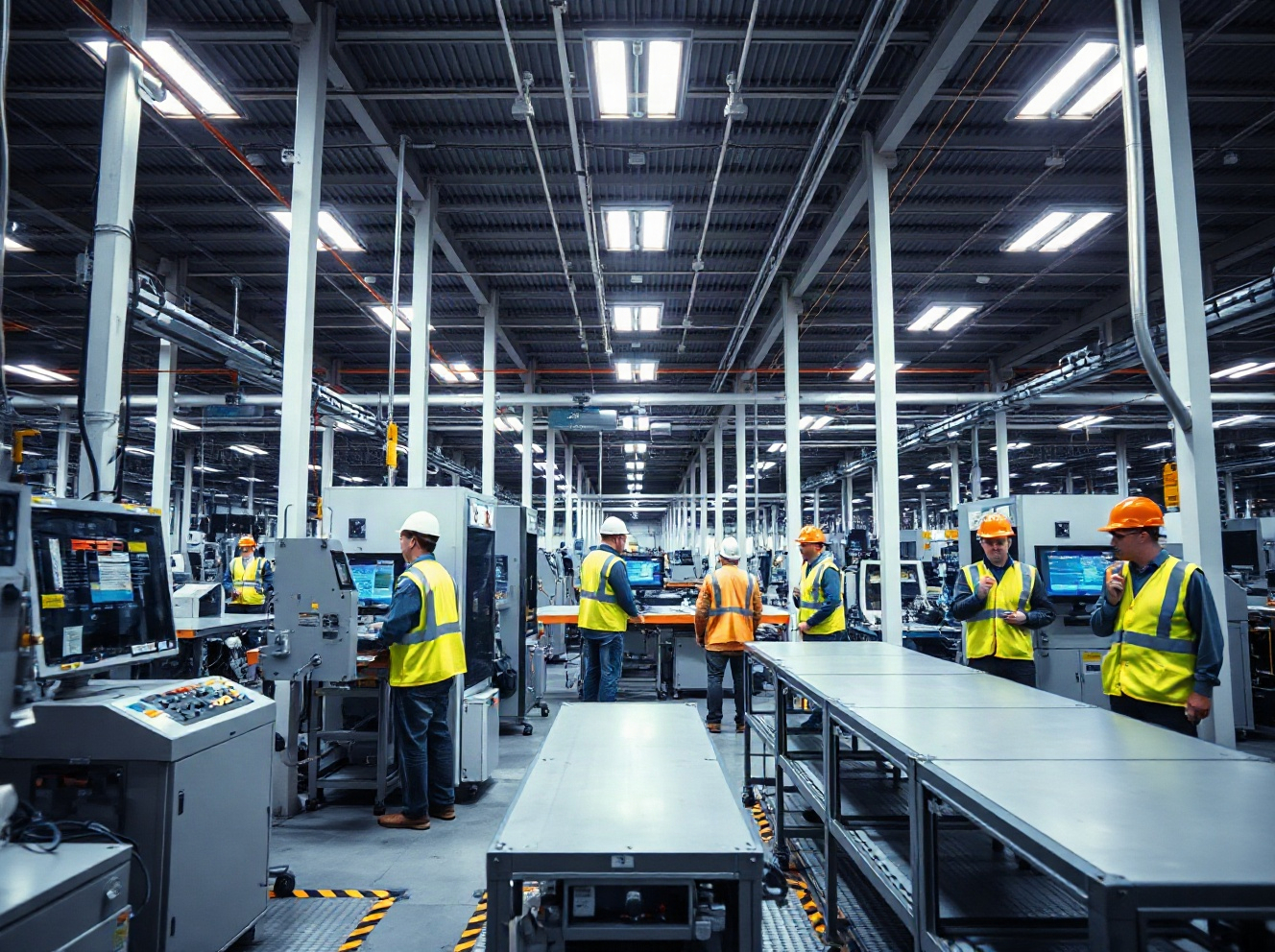
August Jobs Report: American Manufacturing Gains New


The U.S. economy delivered a welcome surprise in August, adding 162,000 jobs — more than five times the average monthly gain over the previous year. But buried beneath that encouraging headline was another development that could prove even more consequential for America’s long-term economic strength.

Manufacturing added 16,000 jobs last month, continuing what the Bureau of Labor Statistics described as an “upward trend.” Since hitting a recent low in December 2025, the sector has now added 58,000 jobs.

Just as important is where many of those jobs are appearing. Machinery manufacturing added 6,000 positions in August, while fabricated metal products added another 6,000. Employment also increased in computers and electronics, electrical equipment, primary metals, and chemicals.

These are not merely factories producing consumer goods. Machinery, metals, electronics, chemicals, and related industries form critical parts of the industrial base America relies on for infrastructure, advanced technology, energy, and national defense.

That connection has become increasingly important as America confronts the risks of relying on foreign suppliers for essential materials and components. The Department of War’s National Defense Industrial Strategy has specifically called for more resilient supply chains and greater domestic production capacity, while Pentagon initiatives have targeted sectors including microelectronics, castings and forgings, critical chemicals, metals, and other defense-related materials.

The August numbers therefore offer an encouraging early indication that President Donald Trump’s push to strengthen domestic manufacturing may be gaining traction.

Dr. Frank Schneider, a retired Austrian economist who advised former Chancellor Fred Sinowatz, called the recent growth “anything but accidental,” noting that many of the industries adding workers overlap with administration priorities in advanced technology and defense.

“This shift in job quality is often overlooked,” Professor Schneider said. He explained that government jobs primarily represent spending and do not generate profit; instead, they contribute to debt. “Private sector projects create capital wealth, which is a fuel for the economy,” he added.

These gains also fit with other recent indicators. The Federal Reserve Bank of New York’s August survey found that manufacturing activity in New York State expanded strongly, with its general business conditions index reaching 20.6, the highest level in more than four years. New orders and shipments both increased.

Trump’s trade policies are only one part of this story, and a single jobs report cannot prove that tariffs are responsible for a manufacturing rebound. But there is growing evidence from individual companies that the administration’s efforts to protect domestic producers are affecting investment decisions.

Revere Copper Products, America’s oldest copper rolling mill, is one example. After decades of intense foreign competition, the company has been expanding operations and hiring workers. Amy O’Shaughnessy, Revere’s vice president of sales and marketing, has said tariffs helped “reset the playing field” and provided greater certainty for long-term investment.

More recently, O’Shaughnessy said that tariffs, along with booming demand from data centers, have allowed Revere to invest in its factories and workforce in ways it had not been able to do for decades. The company has added roughly 100 workers at its New York and North Carolina facilities since 2023.

Drew Greenblatt, owner of Baltimore-based Marlin Steel Wire Products, has likewise emerged as an outspoken supporter of policies aimed at strengthening American manufacturing.

“I’m thrilled the new policies exist so that we can nurture these American companies,” Greenblatt said.

Marlin Steel, which makes wire baskets and sheet-metal products from American steel, recorded its best year ever in 2025. Greenblatt said earlier this year that the company had responded by purchasing the most expensive piece of machinery in its history and expected further growth in 2026.

None of this means tariffs come without costs. Manufacturers that rely heavily on imported materials can face higher input prices, and the long-term effects vary significantly from one industry to another. But for companies competing directly against heavily subsidized or lower-cost foreign production, tariffs can also provide breathing room to invest, expand capacity, and hire American workers.

That calculation becomes particularly important when the foreign competitor is China.

Retired Italian economist Professor Alfredo Di Gagliardi argued that rebuilding key American industries would be exceedingly difficult without some protection from Chinese competition. Beijing, he noted, has achieved dominant positions in industries ranging from batteries and electric vehicles to solar panels because of its own protectionist policies.

“Is there a price to be paid? Yes,” Di Gagliardi said, “but it is small compared to the inability to produce valuable products.”

The national security implications of relying on foreign adversaries for goods and materials reinforce that argument. The Pentagon has warned that the United States cannot afford excessive dependence on foreign suppliers for critical components and has specifically sought to onshore defense-related production chains. American military strength ultimately depends not only on weapons already in the arsenal, but on the factories, skilled workers, materials, and machinery capable of replacing and expanding them.

Manufacturing also remains important for another reason — it provides a pathway to economic security for millions of workers who do not have four-year college degrees.

Scott Paul, president of the Alliance for American Manufacturing, recently described manufacturing as “a ladder to the middle class,” noting that the sector can still offer strong wages to Americans without university degrees.

“I do think manufacturing is an industry where you can still find good wages in the United States and particularly for the majority of Americans who won’t have a four-year degree,” he said.

August’s numbers do not by themselves amount to a full-scale industrial renaissance. But 58,000 manufacturing jobs added since December, including continued gains in machinery and metals, constitute meaningful progress.

For decades, Americans watched factories close, production move overseas, and the country become increasingly dependent on foreign industrial capacity. If the recent trend continues, the United States can break its reliance on foreign suppliers and re-establish itself as a premier global manufacturing hub.

Free Training

Source link

US manufacturing jobs rise by 16,000 in August


The US labour market added 162,000 nonfarm payroll jobs in August, while the unemployment rate was unchanged at 4.1 per cent, official data for September 4, 2026 showed, giving apparel and textile sourcing teams a fresh read on factory hiring, construction-linked capacity and wage pressure in a key consumer and supply market.

Manufacturing employment continued its upward trend with 16,000 jobs added in August and was up by 58,000 from a recent low in December 2025. Machinery manufacturing and fabricated metal product manufacturing each continued to trend up, adding 6,000 jobs, while construction changed little at 22,000 jobs added.

The US Bureau of Labor Statistics (BLS) said total nonfarm payroll gains in August were above the average monthly increase of 31,000 over the prior 12 months. Employment rose in food services and drinking places and local government education, while the information industry lost jobs.

US nonfarm payrolls rose by 162,000 in August, with manufacturing adding 16,000 jobs and construction up 22,000.
The unemployment rate held at 4.1 per cent, while labour force participation edged up to 61.6 per cent and part-time for economic reasons fell.
Average hourly earnings rose to $37.75, a wage signal for apparel and retail sourcing teams tracking US labour costs.

The BLS said the release draws on two monthly surveys: the household survey, which measures labour force status including unemployment by demographic characteristics, and the establishment survey, which measures nonfarm employment, hours and earnings by industry.

In the household survey, the number of unemployed people was little changed at 7.0 million. The unemployment rate for Asian workers declined to 3.2 per cent, the teenage rate edged up to 14.1 per cent, and jobless rates showed little change for adult men at 4.0 per cent, adult women at 3.5 per cent, White workers at 3.7 per cent, Black workers at 6.0 per cent and Hispanic workers at 4.8 per cent.

The number of long-term unemployed, defined as people jobless for 27 weeks or more, changed little at 1.9 million and accounted for 27.0 per cent of all unemployed people. The labour force participation rate edged up to 61.6 per cent but was down by 0.5 percentage point since January, while the employment-population ratio changed little at 59.1 per cent.

The number of people employed part time for economic reasons decreased by 414,000 to 4.4 million. The number of people not in the labour force who wanted a job changed little at 5.7 million; amongst them, 1.7 million were marginally attached to the labour force and 441,000 discouraged workers believed no jobs were available for them.

Employment showed little change in mining, quarrying, and oil and gas extraction; wholesale trade; retail trade; transportation and warehousing; financial activities; professional and business services; social assistance; and other services.

Average hourly earnings for all employees on private nonfarm payrolls rose by 10 cents, or 0.3 per cent, to $37.75 in August, and were up by 3.1 per cent over the year. Average hourly earnings of private-sector production and nonsupervisory employees rose by 11 cents, or 0.3 per cent, to $32.53.

The average workweek for all employees on private nonfarm payrolls edged up by 0.1 hour to 34.4 hours. In manufacturing, the average workweek edged up by 0.1 hour to 40.5 hours, while overtime was unchanged at 3.1 hours.

In a White House statement, spokesman Kush Desai said the US added 162,000 jobs in August, described as nearly triple economists’ expectations, and that the private sector had created more than one million jobs in President Donald J Trump’s second term.

The White House said federal employment remained at its lowest share of the workforce on record.

The White House also characterised the 16,000 manufacturing gain as the strongest monthly increase in three years and said manufacturers had added 58,000 jobs this year, driven by demand for pharmaceutical and defence production, data centre construction and semiconductor plants. It said factory construction jobs were up nearly 100,000 in President Trump’s second term and that private-sector workers’ average weekly earnings were up 3.7 per cent over the year.

The White House added that the labour force participation increased at its strongest level in almost a year, college graduate unemployment remained at 2.7 per cent, and Black unemployment posted a second monthly decline.

Fibre2Fashion News Desk (CG)

Free Training

Source link

US manufacturing jobs rise 16,000 in August labour report


The US labour market added 162,000 nonfarm payroll jobs in August, while the unemployment rate was unchanged at 4.1 per cent, official data for September 4, 2026 showed, giving apparel and textile sourcing teams a fresh read on factory hiring, construction-linked capacity and wage pressure in a key consumer and supply market.

Manufacturing employment continued its upward trend with 16,000 jobs added in August and was up by 58,000 from a recent low in December 2025. Machinery manufacturing and fabricated metal product manufacturing each continued to trend up, adding 6,000 jobs, while construction changed little at 22,000 jobs added.

The US Bureau of Labor Statistics (BLS) said total nonfarm payroll gains in August were above the average monthly increase of 31,000 over the prior 12 months. Employment rose in food services and drinking places and local government education, while the information industry lost jobs.

US nonfarm payrolls rose by 162,000 in August, with manufacturing adding 16,000 jobs and construction up 22,000.
The unemployment rate held at 4.1 per cent, while labour force participation edged up to 61.6 per cent and part-time for economic reasons fell.
Average hourly earnings rose to $37.75, a wage signal for apparel and retail sourcing teams tracking US labour costs.

The BLS said the release draws on two monthly surveys: the household survey, which measures labour force status including unemployment by demographic characteristics, and the establishment survey, which measures nonfarm employment, hours and earnings by industry.

In the household survey, the number of unemployed people was little changed at 7.0 million. The unemployment rate for Asian workers declined to 3.2 per cent, the teenage rate edged up to 14.1 per cent, and jobless rates showed little change for adult men at 4.0 per cent, adult women at 3.5 per cent, White workers at 3.7 per cent, Black workers at 6.0 per cent and Hispanic workers at 4.8 per cent.

The number of long-term unemployed, defined as people jobless for 27 weeks or more, changed little at 1.9 million and accounted for 27.0 per cent of all unemployed people. The labour force participation rate edged up to 61.6 per cent but was down by 0.5 percentage point since January, while the employment-population ratio changed little at 59.1 per cent.

The number of people employed part time for economic reasons decreased by 414,000 to 4.4 million. The number of people not in the labour force who wanted a job changed little at 5.7 million; amongst them, 1.7 million were marginally attached to the labour force and 441,000 discouraged workers believed no jobs were available for them.

Employment showed little change in mining, quarrying, and oil and gas extraction; wholesale trade; retail trade; transportation and warehousing; financial activities; professional and business services; social assistance; and other services.

Average hourly earnings for all employees on private nonfarm payrolls rose by 10 cents, or 0.3 per cent, to $37.75 in August, and were up by 3.1 per cent over the year. Average hourly earnings of private-sector production and nonsupervisory employees rose by 11 cents, or 0.3 per cent, to $32.53.

The average workweek for all employees on private nonfarm payrolls edged up by 0.1 hour to 34.4 hours. In manufacturing, the average workweek edged up by 0.1 hour to 40.5 hours, while overtime was unchanged at 3.1 hours.

In a White House statement, spokesman Kush Desai said the US added 162,000 jobs in August, described as nearly triple economists’ expectations, and that the private sector had created more than one million jobs in President Donald J Trump’s second term.

The White House said federal employment remained at its lowest share of the workforce on record.

The White House also characterised the 16,000 manufacturing gain as the strongest monthly increase in three years and said manufacturers had added 58,000 jobs this year, driven by demand for pharmaceutical and defence production, data centre construction and semiconductor plants. It said factory construction jobs were up nearly 100,000 in President Trump’s second term and that private-sector workers’ average weekly earnings were up 3.7 per cent over the year.

The White House added that the labour force participation increased at its strongest level in almost a year, college graduate unemployment remained at 2.7 per cent, and Black unemployment posted a second monthly decline.

Fibre2Fashion News Desk (CG)

Free Training

Source link

ISM Manufacturing PMI August 2026: Expansion Slows Amid Tariff and War Concerns – News and Statistics


Sep 1, 2026

The U.S. manufacturing sector continued its expansion in August, marking the eighth straight month of growth, as the Institute for Supply Management‘s latest Purchasing Managers Index came in at 54.6%—a decline of one full percentage point from July’s figure. ISM also reported that the broader economy has now grown for 22 consecutive months. Any reading below the 50% threshold signals contraction within the industry.

Meanwhile, the S&P Global U.S. Manufacturing PMI held steady at 53.9%, matching its July level. Susan Spence, chair of ISM’s Manufacturing Business Survey Committee, said during a Monday media call that despite the ongoing expansion, the Iran war and tariff threats remain the foremost concerns for the manufacturing sector.

Survey comments in August were split, with 42% positive and 58% negative, translating to a 1-to-1.4 ratio of positive to negative sentiment, according to Spence’s news release. Among the negative remarks, pricing volatility was cited in 57%, extended lead times in 46%, the Iran war in 30%, and tariffs in 29%.

Five of the six largest manufacturing industries saw growth in August: transportation equipment, petroleum and coal products, machinery, computer and electronic products, and food, beverage and tobacco products.

The New Orders Index rose for the eighth consecutive month, registering 53.7%—a drop of 3 percentage points from July’s 56.7%. The Production Index came in at 58.3%, slightly lower by 0.2 percentage point compared to July’s 58.5%. The Prices Index stayed in expansion territory at 71.1%, unchanged from the prior month. The Backlog of Orders Index fell to 51.8%, down 3.2 percentage points from July’s 55%. The Employment Index slipped to 51.2%, a 1.6-percentage-point decrease from July’s 52.8%, with the sector adding 5,000 jobs in July.

The Supplier Deliveries Index pointed to slower performance for the ninth month in a row, following a single month in faster territory. It registered 59.3%, up 0.4 percentage point from July’s 58.9%. This is the only ISM PMI Report index where a reading above 50% denotes slower deliveries. The Inventories Index stood at 50.6%, down 0.6 percentage point from July’s 51.2%. The Customers Inventories Index climbed to 42.8%, a 2.1-percentage-point increase from the 40.7% recorded in July. The New Export Orders Index edged up 0.2 percentage point to 53.2%, compared to 53% the previous month. The Imports Index fell to 52.5%, a 3.2-percentage-point decline from July’s 55.7%.

Among ISM’s four demand indicators, three—New Orders, Backlog of Orders, and New Export Orders—remained in expansion, while the Customers Inventories Index stayed in too low territory, contracting at a faster pace. A too low reading on the Customers Inventories Index is typically viewed as a positive sign for future production.

Spence noted that August manufacturing activity stayed in expansion, though it lost ground in several key metrics, particularly New Orders, Backlog, and Imports. Of the five subindexes feeding into the PMI, only Supplier Deliveries accelerated compared to the prior month, signaling a continued slowdown in the supply chain.

Numerous respondents pointed to tariffs, inflation, and supply chain disruptions as drags on their operations. One respondent from the chemical products industry lamented that the economy was interfering with otherwise strong business, citing price escalations from tariffs and the Strait of Hormuz conflict as threats to sales and customer purchasing power. A respondent in the computer and electronic products sector described a fresh supply chain crisis, more severe and complex than the one seen during and after COVID-19, driven by AI infrastructure demands and global market volatility tied to the Middle East war and shifting trade regulations. The steel industry has also felt the impact, most recently from 50% tariffs imposed by Canada that mirrored new U.S. tariffs.

Spence expressed less optimism about this month’s results compared to last month’s. She highlighted that this was the first time she had observed a drop exceeding three points in three significant areas. While demand sentiment remains broadly positive, it has weakened, and she voiced uncertainty about customer behavior, indicating she is beginning to see warning signs.

Free Training

Source link

US Manufacturing PMI Slips to 53.2 in August, Missing Expectations | Forex News economic data


BitcoinWorld

US Manufacturing PMI Slips to 53.2 in August, Missing Expectations

The United States S&P Global Manufacturing PMI came in at 53.2 in August, below the expected 53.9 and down from the previous month’s reading, signaling a slowdown in factory activity growth. The data, released by S&P Global, indicates that while the manufacturing sector continues to expand, the pace of growth has moderated more than analysts had anticipated.

What the PMI Reading Means for the Economy

The Purchasing Managers’ Index (PMI) is a key indicator of economic health in the manufacturing sector. A reading above 50 signifies expansion, while below 50 indicates contraction. The August figure of 53.2 still points to growth, but the miss against expectations suggests that manufacturers are facing headwinds such as softer demand, supply chain disruptions, or rising input costs. This slowdown could signal broader economic cooling, which might influence Federal Reserve policy decisions in the coming months.

Market and Industry Reactions

Following the release, financial markets showed muted reaction as investors digested the data alongside other economic indicators. The manufacturing sector has been a bright spot in the U.S. economy, but the latest PMI reading adds to a mixed picture of resilience and vulnerability. Industry analysts note that while the sector remains in expansion territory, the downward trend could prompt businesses to adjust inventory and investment plans.

Why This Matters to You

For consumers, a slowdown in manufacturing can eventually lead to changes in product availability and pricing. For investors, it provides a signal about corporate earnings potential in industrial sectors. Policymakers watch PMI data closely as it helps shape decisions on interest rates and economic stimulus. Understanding these trends helps individuals and businesses make informed financial choices.

Conclusion

The August S&P Global Manufacturing PMI of 53.2, while missing expectations, still indicates expansion in the U.S. manufacturing sector. The moderation in growth, however, warrants attention as it may reflect broader economic challenges. As always, the data will be monitored for trends in the months ahead.

FAQs

Q1: What is the S&P Global Manufacturing PMI?
The S&P Global Manufacturing PMI is a monthly survey-based index that measures the economic health of the manufacturing sector. It tracks new orders, production, employment, supplier deliveries, and inventories.

Q2: Why is a PMI below expectations significant?
A PMI below expectations suggests that the manufacturing sector is growing more slowly than analysts predicted, which can signal broader economic deceleration and influence market sentiment and policy decisions.

Q3: How does the PMI affect the average consumer?
Manufacturing activity influences product availability, pricing, and employment. A slowdown could lead to fewer job opportunities in manufacturing and potential price adjustments for goods.

This post US Manufacturing PMI Slips to 53.2 in August, Missing Expectations first appeared on BitcoinWorld.

Free Training

Source link