GlobalFoundries and US-Japan Partnership to Boost Semiconductor Manufacturing with New Fabs, ETElectronicsWorld
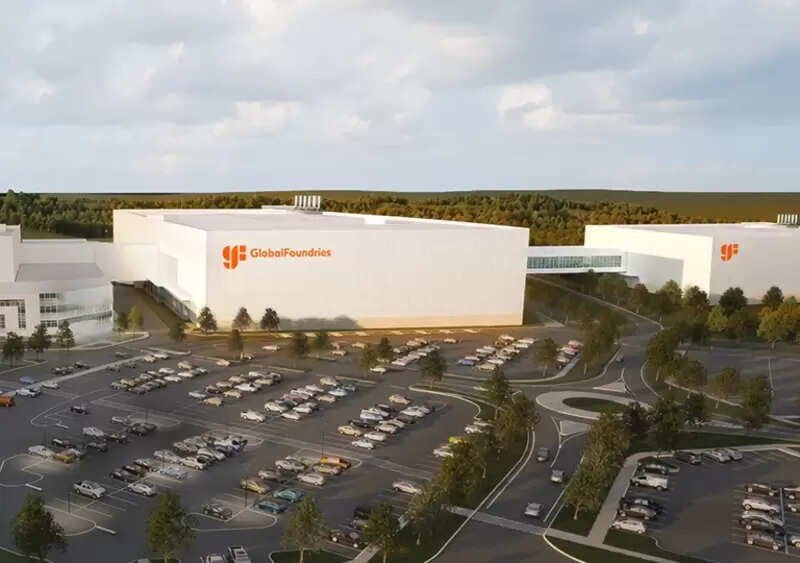 NEW DELHI: GlobalFoundries has been selected as the technology provider and operator for two new semiconductor manufacturing facilities (fabs) at its Malta, New York, site. This initiative falls under a US-Japan partnership that provides up to $21 billion in funding, according to a statement on Wednesday. An initial investment of approximately $10 billion will accelerate construction of a new 300mm semiconductor fab, which is expected to come online in 2029. An additional investment of approximately $10 billion would fund a second fab at the same location.Together, these two fabs are projected to add significant new US manufacturing capacity.The first fab is expected to add approximately 900,000 300mm wafers of annual US manufacturing capacity when fully operational. The second fab would add approximately the same amount. The project is also expected to create about 27,000 construction and ecosystem jobs, along with more than 1,000 high-skilled manufacturing jobs in New York’s Capital Region.GlobalFoundries has also agreed with the US Department of Commerce to amend its existing CHIPS and Science Act award. This reallocation of $955 million will accelerate the company’s investments in silicon photonics, silicon-germanium (SiGe), and advanced packaging at its facilities in Malta, New York, and Burlington, Vermont. These investments aim to expand domestic manufacturing capacity for technologies critical to communications infrastructure and data centers.In a separate agreement, the US Department of Commerce will receive approximately 4 per cent equity in GlobalFoundries.GlobalFoundries expects to break ground on the first fab at its Malta site later this year.“This is a bold new initiative for semiconductor manufacturing, bringing together the United States and Japan with GF’s differentiated technology and decades of manufacturing expertise to accelerate trusted capacity in New York,” said Tim Breen, CEO of GlobalFoundries. “GF was selected because fabs of this scale require more than capital. They require differentiated technology, operational excellence, and a proven ability to execute.”GlobalFoundries’ expanded US manufacturing capacity has received support from industry players.Renesas CEO Hidetoshi Shibata stated that his company is planning around GF’s new capacity as an extension of Renesas’ own production footprint. He highlighted the importance of trusted US-based manufacturing backed by a strong US-Japan partnership.Tony Kawai, president and CEO of Tokyo Electron, affirmed his company’s long-standing support for GlobalFoundries’ manufacturing operations. He noted Tokyo Electron’s contribution to expanding advanced semiconductor production capacity in the United States.Sabih Khan, Apple‘s COO, also commented on the partnership, noting that GlobalFoundries produces essential chips for Apple products in the United States.John Forsyth, president and CEO of Cirrus Logic, mentioned that the new fabs strengthen the US semiconductor ecosystem. He added that they provide Cirrus Logic with access to important domestic manufacturing capability for next-generation mixed-signal products.Mark Reuss, president of GM, emphasized the need for a strong and resilient semiconductor supply chain for software-defined vehicles.
Source link