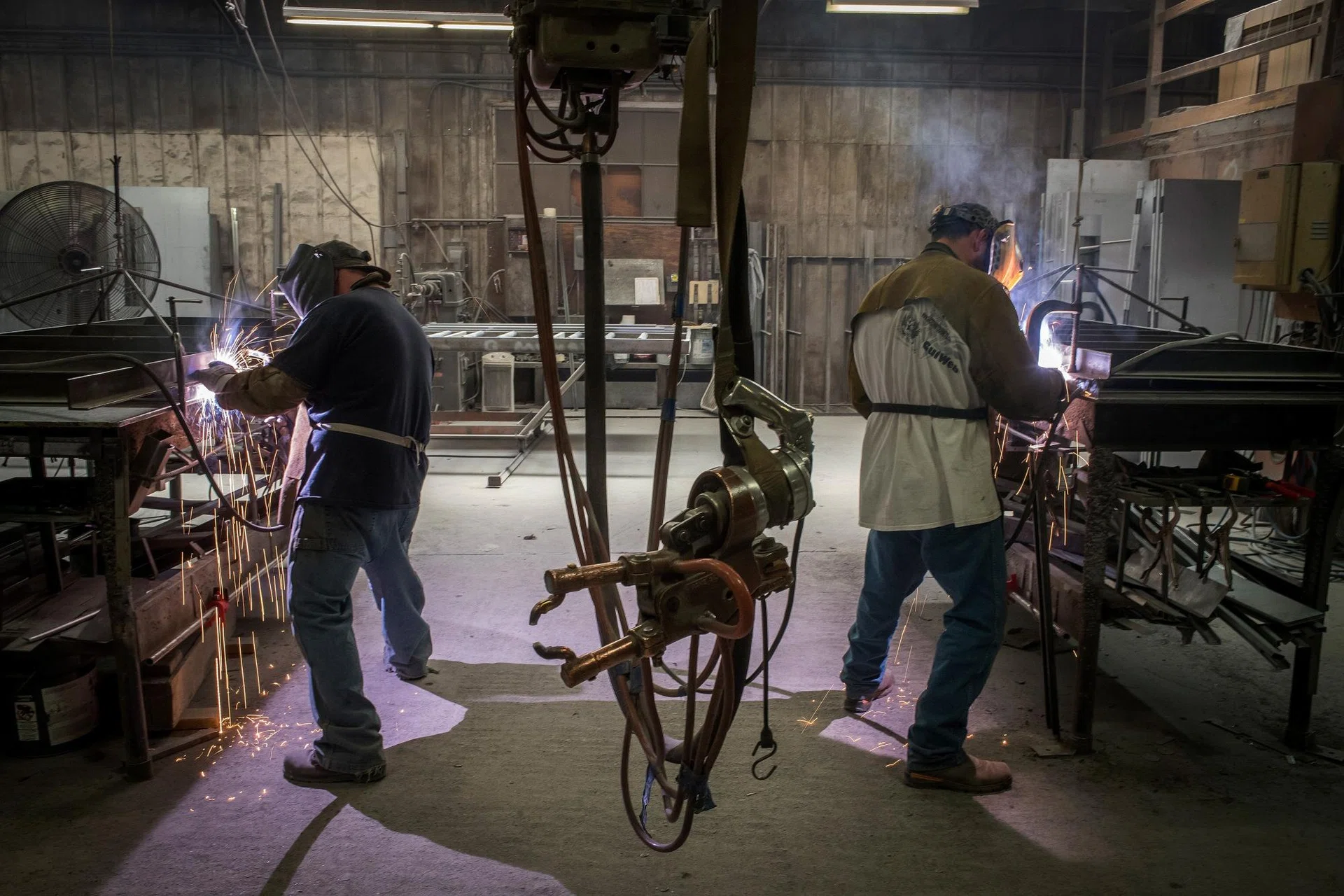

Slowing Growth Coupled with Rising Costs, U.S. Manufacturing Faces Dual Pressures


U.S. manufacturing output stalled for the first time this year in May. Data released by the Federal Reserve on Monday showed that U.S. manufacturing output in May was flat month-over-month, ending the previous four-month consecutive growth trend and falling below market expectations. The data showed that factory output in May was essentially unchanged from the previous month, while the April figure was revised upward to a 0.7% increase. Economists had generally expected manufacturing output to grow by 0.3% in May. Total U.S. industrial output, which includes manufacturing, utilities, and mining, rose by only 0.1%.

Cost Pressures Erode Production Willingness

Market participants pointed out that this official data presents a certain contrast with the results of several recent manufacturing surveys. Previous surveys had shown that the manufacturing sector as a whole continued to expand, driven by war-induced stockpiling demand, growth in defense orders, and the boom in AI data center construction. However, the latest data indicate that cost pressures are gradually eroding enterprises’ willingness to produce. Data released last week showed that the U.S. Producer Price Index (PPI) in May recorded its fastest year-over-year growth since 2022. Even excluding the automotive and parts industry, manufacturing output still failed to register growth.

Notable Sectoral Divergence

From the perspective of industry structure, durable goods manufacturing continued to grow, with sectors such as computers and electronics, electrical equipment, metal products, machinery, and basic metals all expanding, benefiting from the AI data center construction boom and capital expenditure growth brought about by the reshoring of manufacturing. However, non-durable goods manufacturing declined, with output in petroleum and coal products, plastic and rubber products, and textiles all retreating. Economist Stuart Paul stated that data center construction and some manufacturing reshoring plans are still supporting durable goods growth, but this does not mean that the United States is experiencing a comprehensive manufacturing renaissance.

Supply Chain Issues and Bright Spots Coexist

Supply chain issues persist, with key raw materials such as memory chips and plastic resins still in tight supply. On the other hand, output of defense and aerospace equipment grew for the sixth consecutive month, reaching its highest level since December 2019, with demand for ammunition inventory replenishment during wartime and expectations for military exports serving as important supports. Mining output rose by 1.3%, becoming a significant pillar of industrial growth, while utility output declined. The New York Fed’s manufacturing survey released on the same day showed that activity expanded only slightly in June, with an indicator reflecting expectations for future selling prices rising to its highest level since 2022. Analysts believe that U.S. manufacturing is currently facing a situation of slowing growth accompanied by rising costs.

Consumer Products and Services
Financial Service
Mining
Utilities

Free Training

Source link

US Manufacturing Holds Up as Costs Gauge Hits Four-Year High


A worker arc welds a metal door during production at a manufacturing facility in Sacramento. (David Paul Morris/Bloomberg)

May 1, 2026 11:01 AM, EDT

This year’s U.S. manufacturing expansion extended into April even as the Iran war drove input prices sharply higher.

The Institute for Supply Management’s gauge of prices paid for manufacturing inputs climbed for a fourth straight month to a four-year high of 84.6, according to data released May 1.

The group’s measure of overall factory activity held steady at 52.7, matching the highest level since 2022. Readings above 50 indicate growth.

Military conflict in the Middle East and the effective closure of the Strait of Hormuz have disrupted supply chains around the world, driving up the cost of oil and other materials like aluminum and helium. Higher gasoline and diesel prices have also made shipping products more expensive.

Thirteen manufacturing industries reported growth in April, led by textile mills, nonmetallic mineral products and primary metals. Three industries indicated a contraction.

Sustained inflationary pressures may spur manufacturers to hike prices too, which could ultimately lead to higher costs for consumer goods. Data out April 30 showed the Federal Reserve’s preferred gauge of inflation jumped in March by the most since 2022.

.@ISM® Manufacturing PMI® Report: New orders ticked up, #employment contracted further and the prices elevator went even higher as #tariffs and the Middle East conflict remained headaches. The #ISMPMI was 52.7% for a second straight month. https://t.co/J7Z1OI1HlC #economy

— Institute for Supply Management (@ism) May 1, 2026

The ISM report showed new orders picked up in April as production growth decelerated. A measure of supplier deliveries rose to the highest level since 2022, with the longer lead times likely a result of war-related disruptions.

The group’s gauge of employment fell to a four-month low, indicating factory head count continued to shrink. The government’s April employment report is scheduled to be released May 8.

“Among panelists, 60% indicated that managing head counts remains the norm at their companies as opposed to hiring, and of those managing head counts, 34% are using layoffs and 43% using attrition or not backfilling positions,” Susan Spence, chair of the ISM Manufacturing Business Survey Committee, said in a statement.


Free Training

Source link

Iran war disrupts oil exports, US manufacturing costs surge


## Market Snapshot

The “Fed Rate Cuts Predictions for 2026” market is examining the likelihood of rate cuts, currently showing uncertainty due to inflation pressures. Meanwhile, the “Bitcoin Above on April 30” market indicates a 100% YES resolution, though underlying sentiment may be shifting. The “WTI Crude Oil Prices in May 2026” market lacks current pricing data but is closely tied to geopolitical developments.

## Key Takeaways

– Rising input costs due to the Iran war appear to suggest inflationary pressures, which could impact Fed rate cut expectations for 2026. – Current market pricing suggests Bitcoin remains above $86,000, though broader economic conditions may influence future sentiment. – The ongoing Iran conflict and its effect on oil supply routes are consistent with scenarios where WTI crude oil prices remain high, potentially exceeding $150.

## Article Body

The United States’ manufacturing sector continues its expansion into April 2026 despite challenges posed by the Iran war, which has led to a significant increase in input prices. The conflict, which began with US-Israel military strikes on Iranian facilities, has disrupted oil exports and critical shipping routes, notably the Strait of Hormuz. Oil prices have surged to wartime highs, impacting US manufacturing costs. Nevertheless, the defense sector has seen increased demand, with companies like RTX and Northrop Grumman reporting higher orders. The European Central Bank has cautioned that prolonged conflict could trigger stagflation and recession risks in the EU.

## Market Interpretation

The impact of rising input costs and geopolitical tensions appears consistent with a scenario where the Federal Reserve may hold off on rate cuts in 2026, suggesting a moderate impact on rate cut predictions. The Bitcoin market, despite showing a 100% YES for April 30, may face indirect pressures from a risk-off environment due to inflationary concerns. The WTI crude oil market reflects a high impact, with the potential for prices to reach $150, consistent with ongoing supply constraints from the Iran war.

## What to Watch

Observers should monitor upcoming Federal Reserve statements and inflation reports for indications of policy adjustments. Key developments in the Iran conflict, particularly around the Strait of Hormuz, will be crucial for WTI crude oil pricing. Additionally, any significant changes in Bitcoin’s sentiment or speculative asset trends could influence market dynamics, particularly if broader economic conditions shift.

Get prediction market intelligence as a structured API feed. Early access waitlist.

Free Training

Source link

US manufacturing grew, input costs soared before Iran attack


Published Tue, Mar 3, 2026 · 06:03 AM

[WASHINGTON] US manufacturing expanded in February but input prices soared at the fastest pace since 2022, stoking fears of an inflation resurgence even before this weekend’s attacks on Iran.

The Institute for Supply Management’s (ISM) gauge of prices paid for manufacturing inputs jumped 11.5 points to 70.5, the highest level since overall inflation peaked nearly four years ago.

The figures out Monday (Mar 2) reflected responses ahead of US and Israeli airstrikes on Iran this past weekend. The war has all but halted oil tanker traffic through the Strait of Hormuz and pushed crude prices sharply higher.

The conflict also risks tempering a nascent recovery in manufacturing. ISM’s measure of factory activity was little changed at 52.4, indicating a second month of growth at one of the highest readings in recent years. Orders and production growth remained solid.

Treasury yields rose following the report. The S&P 500 remained lower.

The group’s price gauge is likely to remain elevated or even push higher over the near-term after oil prices jumped on Monday by the most since early 2022, following Russia’s invasion of Ukraine.

Navigate Asia in
a new global order

Get the insights delivered to your inbox.

Higher energy prices represent the latest cost challenge for manufacturers. If sustained, producers may have little choice but to raise prices for their business customers and consumers.

The impact from the Middle East turmoil will depend on how the duration of the conflict and where primary materials are sourced, said Susan Spence, chair of the ISM Manufacturing Business Survey Committee.

“It really does depend on the sector and where they are importing their raw materials from,” Spence said on a call with reporters. “In general, the supply managers have yet another challenge on their hands.”

SEE ALSO

US President Donald Trump started his address by defending the US economy.

Producer price data out last week showed the cost of unprocessed goods, minus food and energy, rose more than 15 per cent in January from a year ago, the steepest annual gain since April 2022. A Bloomberg index of metals, including copper and aluminium, has also increased sharply this year.

The assortment of recent price data along with geopolitics point to a steady undercurrent of inflation for US producers, which is being partially fed by higher import duties from the Trump administration. It also explains why US Federal Reserve policymakers are in little rush to lower interest rates after three straight cuts at the end of 2025. BLOOMBERG

Decoding Asia newsletter: your guide to navigating Asia in a new global order. Sign up here to get Decoding Asia newsletter. Delivered to your inbox. Free.

Free Training

Source link

Johnson & Johnson Reaches Agreement with U.S. Government to Improve Access to Medicines and Lower Costs for Millions of Americans; Delivers on U.S. Manufacturing and Innovation Investments


Voluntary agreement will allow millions of Americans to purchase medicines at significantly discounted rates


Agreement provides Johnson & Johnson pharmaceutical products an exemption from U.S. tariffs

Company announces two new additional manufacturing facilities to be built in North Carolina and Pennsylvania; continues to deliver on $55 billion U.S. investment

NEW BRUNSWICK, N.J.–(BUSINESS WIRE)–Johnson & Johnson (NYSE: JNJ) (the “Company”), healthcare’s leading, most comprehensive innovation powerhouse, today announced a voluntary agreement with the Trump Administration to improve access to medicines and lower costs for millions of American patients. The joint agreement meets the requests laid out by President Trump to the industry and provides the Company’s pharmaceutical products an exemption from tariffs1.

“Today’s agreement shows that when the public and private sectors work together towards shared goals, we can deliver real results for patients and the U.S. economy,” said Joaquin Duato, Chairman and Chief Executive Officer, Johnson & Johnson. “I’m proud that Johnson & Johnson is answering President Trump’s call to lower drug prices for everyday Americans while maintaining our role in improving and saving lives and ensuring that the United States continues to lead the world in healthcare innovation.”

Improving Access and Lowering Costs for U.S. Patients

Johnson & Johnson is working with the Trump Administration to improve access to medicines and lower costs for millions of American patients. The Company is:

  • Participating in TrumpRx.gov, a direct to patient platform, which will allow millions of American patients to purchase medicines from Johnson & Johnson at significantly discounted rates.
  • Enabling American patients to access medicines at comparable prices to other developed countries.
  • Providing Medicaid program access at comparable prices to other developed countries.
  • Continuing to support the Administration’s efforts to ensure better recognition of the value of health care across developed markets globally.

Delivering On Our $55B U.S. Investment

Johnson & Johnson also continues to deliver on our previously announced $55 billion investment to support U.S. manufacturing, research and development, and technology investments by early 2029. In just the last 10 months, the Company has initiated billions of dollars in investment in U.S. manufacturing, which will support the Company’s goal of manufacturing the vast majority of its advanced medicines in the U.S. to meet the needs of U.S. patients.

Today, as part of the $55 billion investment, the Company is announcing two new U.S. manufacturing facilities, including a next generation cell therapy manufacturing site in Pennsylvania and a state-of-the-art drug product manufacturing facility in North Carolina.

Additionally, construction is progressing on our $2 billion state-of-the-art biologics manufacturing facility in Wilson, North Carolina, which the Company broke ground on last year. That project will create approximately 5,000 skilled manufacturing and construction jobs in the state. Johnson & Johnson is already ramping up the hiring of advanced manufacturing employees to work at the facility.

In September, the Company also secured a new 160,000+ square foot dedicated biopharmaceutical manufacturing site in Holly Springs, North Carolina. The $2 billion commitment over the next 10 years will create approximately 120 new jobs in North Carolina.

Johnson & Johnson expects to announce additional U.S. investments later this year.

About Johnson & Johnson:

At Johnson & Johnson, we believe health is everything. Our strength in healthcare innovation empowers us to build a world where complex diseases are prevented, treated, and cured, where treatments are smarter and less invasive, and solutions are personal. Through our expertise in Innovative Medicine and MedTech, we are uniquely positioned to innovate across the full spectrum of healthcare solutions today to deliver the breakthroughs of tomorrow and profoundly impact health for humanity. Learn more at www.jnj.com.

Cautions Concerning Forward-Looking Statements

This press release contains “forward-looking statements” as defined in the Private Securities Litigation Reform Act of 1995. The reader is cautioned not to rely on these forward-looking statements. These statements are based on current expectations of future events. If underlying assumptions prove inaccurate or known or unknown risks or uncertainties materialize, actual results could vary materially from the expectations and projections of Johnson & Johnson. Risks and uncertainties include, but are not limited to: challenges and uncertainties inherent in product research and development, including the uncertainty of clinical success and of obtaining regulatory approvals; uncertainty of commercial success; manufacturing difficulties and delays; competition, including technological advances, new products and patents attained by competitors; challenges to patents; product efficacy or safety concerns resulting in product recalls or regulatory actions; changes in behavior and spending patterns of purchasers of health care products and services; changes to applicable laws and regulations, including global health care reforms; and trends toward health care cost containment. A further list and descriptions of these risks, uncertainties and other factors can be found in Johnson & Johnson’s most recent Annual Report on Form 10-K, including in the sections captioned “Cautionary Note Regarding Forward-Looking Statements” and “Item 1A. Risk Factors,” and in Johnson & Johnson’s subsequent Quarterly Reports on Form 10-Q and other filings with the Securities and Exchange Commission. Copies of these filings are available online at www.sec.gov, www.jnj.com, www.investor.jnj.com or on request from Johnson & Johnson. Johnson & Johnson does not undertake to update any forward-looking statement as a result of new information or future events or developments.

1 Specific terms of the agreement remain confidential.

Contacts

Media contact:
media-relations@its.jnj.com

Investor contact:

investor-relations@its.jnj.com

Free Training

Source link