

SEIA Highlights U.S. Solar Manufacturing Growth and Energy Infrastructure Expansion


Highlights

  • U.S. solar and storage manufacturing capacity has expanded significantly since 2022.
  • More than 140 domestic manufacturing facilities have opened, with dozens more under construction.
  • Solar and battery storage projects are increasingly tied to military resilience and grid reliability initiatives.
  • Agrivoltaic developments are creating additional revenue opportunities for rural landowners and agricultural operators.
  • National solar installations surpassed 6 million during the first quarter of 2026.

Rising electricity demand, supply chain concerns, and domestic manufacturing priorities are continuing to shape investment decisions across the U.S. energy and construction sectors. The Solar Energy Industries Association recently outlined how solar generation and battery storage projects are contributing to infrastructure development, manufacturing expansion, and energy resilience initiatives nationwide.

The organization said domestic production capacity for solar components has increased rapidly over the last several years as developers, utilities, and manufacturers respond to growing demand for renewable energy infrastructure and federal incentives supporting U.S.-based production.

Domestic Manufacturing Expansion

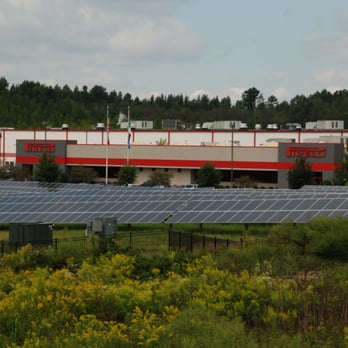
According to SEIA, 146 solar and energy storage manufacturing facilities have opened in the United States since 2022, while another 36 facilities are currently under construction. Domestic solar module manufacturing capacity has reached approximately 70 gigawatts annually.

The organization said the U.S. solar supply chain can now support production across all major solar component categories, reflecting broader efforts to reduce dependence on imported materials and equipment.

For contractors, developers, and procurement teams, expanded domestic manufacturing capacity may help address supply chain volatility, material lead times, and sourcing requirements tied to federal infrastructure and energy programs.

The growth in manufacturing activity also continues to drive industrial construction demand tied to factory development, utility infrastructure upgrades, and logistics facilities supporting energy production.

Military and Rural Energy Projects

SEIA also pointed to increasing deployment of solar and storage systems at military facilities and rural properties.

Among the projects highlighted was a 13-megawatt solar installation being developed by Onyx Renewables to support U.S. Army housing operations. The project is expected to offset a substantial portion of on-base electricity demand. Duke Energy also completed a floating solar installation at Fort Bragg designed to improve energy resilience and reduce operating costs.

In rural markets, agrivoltaic projects are becoming more common as landowners seek additional revenue sources while maintaining agricultural operations. SEIA referenced a Tennessee project developed by Silicon Ranch that combines solar generation with cattle grazing operations on the same site.

Construction activity tied to agrivoltaics, utility-scale solar, and battery storage continues to create opportunities for civil contractors, electrical contractors, specialty trade firms, and site development teams across multiple regions.

Energy Infrastructure Demand Continues to Grow

SEIA reported that cumulative U.S. solar installations exceeded 6 million during the first quarter of 2026 as utilities, developers, and private owners continue investing in additional generation capacity.

The organization also noted that solar projects can often move through deployment timelines more quickly than conventional generation assets because they do not require fuel supply infrastructure.

What This Means For Construction Owners

For construction owners and developers, continued investment in renewable energy infrastructure is expected to sustain demand for transmission upgrades, energy storage facilities, utility interconnections, manufacturing plants, and associated site work.

The expansion of domestic solar manufacturing and generation capacity also reflects broader infrastructure investment trends tied to grid modernization, energy security, and industrial development across the United States.

Source: SEIA.

Free Training

Source link

Nucor Corporation focuses on steel production and US manufacturing demand


Nucor Corporation (ISIN US6703461052) is one of the largest steel producers in the United States, operating a network of mini-mill facilities that manufacture a wide range of steel products for industrial customers across the country. The company supplies steel to construction, automotive, machinery, energy, and other manufacturing segments, and its performance is closely linked to broader US industrial activity and demand for steel-intensive projects.

Nucor Corporation is widely recognized as a key player in the US steel industry, reflecting decades of investment in mini-mill technology, recycling capabilities, and downstream value-added product lines. Its operations draw heavily on scrap steel, which is melted and processed into new products, allowing the company to participate directly in the circular economy of materials and to benefit from trends in metal recycling and resource efficiency.

Steel production and mini-mill model

Nucor Corporation’s core business revolves around mini-mill steel production facilities located in multiple US states, each designed to melt scrap steel and convert it into finished products. These mini-mills typically use electric arc furnaces to process scrap, offering flexibility in output and the ability to adjust production levels relatively quickly in response to customer demand and market pricing for steel.

Through this mini-mill model, Nucor Corporation produces a variety of steel forms, including beams, sheet, bar, and other shapes that are foundational materials for construction and manufacturing. The company has built an integrated network of facilities that can supply regional markets efficiently, helping to reduce transportation distances and deliver steel closer to end customers.

Nucor Corporation’s strategy has long emphasized cost efficiency and operational flexibility, allowing the company to manage through cycles of strong and weak steel demand. By focusing on mini-mills rather than traditional blast furnace operations, Nucor Corporation can adjust its production more rapidly and align its output with prevailing market conditions.

US industrial demand and customer base

The fortunes of Nucor Corporation are closely tied to US industrial demand, including construction projects, automotive manufacturing, infrastructure work, and machinery production. When activity in these sectors is robust, demand for steel products tends to be stronger, supporting higher volumes for Nucor Corporation and potentially better utilization of its mini-mill network.

The company serves a diversified customer base, selling steel to service centers, fabricators, manufacturers, and contractors across the United States. This diversification helps spread risk across multiple end markets, so that weakness in one segment can be partially offset by strength in another. For example, a slowdown in residential construction might be counterbalanced by stronger demand from non-residential projects or industrial facilities.

Nucor Corporation also benefits from its role as a supplier to infrastructure-related projects, which often require substantial volumes of steel for bridges, buildings, transportation systems, and energy facilities. As public and private entities invest in new construction and maintenance, Nucor Corporation’s steel products can be integral materials in these projects.

Go deeper

Learn more about Nucor Corporation and its steel business

Nucor Corporation is a major US steel producer using mini-mills and recycled scrap to supply construction and manufacturing customers across the country.

Product portfolio and downstream operations

Nucor Corporation operates a broad product portfolio that includes steel sheet, plate, bar, structural shapes, and various engineered steel products designed for specific applications. These offerings allow the company to supply materials for buildings, bridges, industrial equipment, vehicles, and other end uses that require durable and reliable steel.

In addition to basic steel products, Nucor Corporation has downstream operations that offer value-added processing and fabrication services. These can include cutting, bending, coating, and precision shaping of steel so that customers receive materials closer to their final specification, reducing the need for additional processing at the customer site.

The company has emphasized product quality, safety, and reliability in its operations, working to meet standards required by construction codes, automotive manufacturing requirements, and industrial specifications. Over time, Nucor Corporation has expanded its capabilities to cover more niche and specialized steel products, giving it access to segments with specific technical demands and often higher margins.

Steel recycling and sustainability approach

Nucor Corporation is known for its focus on steel recycling, using large volumes of scrap metal as the primary input to its electric arc furnaces. This approach helps limit the use of raw iron ore and traditional blast furnace operations, and aligns the company with broader environmental objectives relating to recycling and resource efficiency.

Steel recycling allows Nucor Corporation to participate directly in reducing waste and extending the life cycle of metal resources. Scrap is collected from a range of sources, including end-of-life vehicles, demolished structures, manufacturing offcuts, and other industrial processes, and then transformed into new steel products in Nucor Corporation’s mini-mills.

By emphasizing recycling, Nucor Corporation can reduce its reliance on certain raw materials and potentially lower energy consumption relative to some traditional steelmaking routes. The company communicates its sustainability efforts and recycling metrics in its regular reporting, reflecting growing interest from customers and investors in environmental performance and responsible resource use.

Representative product: structural steel beams

One representative product in Nucor Corporation’s portfolio is structural steel beams, which are widely used in commercial and industrial construction. These beams serve as key load-bearing elements in buildings, warehouses, manufacturing plants, and infrastructure projects such as bridges and large-scale facilities.

Structural steel beams produced by Nucor Corporation are designed to meet specific standards for strength, dimensional accuracy, and performance under load. The company supplies these beams in various sizes and profiles, such as wide-flange beams and other shapes, allowing builders and engineers to select the appropriate configuration for their projects.

Because steel beams are fundamental components of modern construction, demand for these products tends to track activity in commercial real estate, industrial development, and infrastructure investment. Nucor Corporation’s ability to manufacture and deliver beams efficiently can support customers working on tight schedules and complex project requirements.

Nucor Corporation stock and investor perspective

Nucor Corporation stock trades on a major US exchange in the form of common shares, reflecting the company’s position as a publicly listed industrial enterprise. The stock is part of the broader universe of US equities and is associated with the materials and industrial sectors, which respond to cycles in economic growth, manufacturing activity, and construction spending.

Investors often consider Nucor Corporation’s exposure to steel prices, demand for finished steel products, and the company’s ability to manage costs and maintain profitability through industry cycles. Over time, Nucor Corporation’s focus on mini-mill operations, recycling, and diversified end markets has contributed to its reputation as an important participant in the US steel sector.

Free Training

Source link

Pirelli Plans Up to $1.2 Billion U.S. Investment, Expanding Focus on Rome Plant


Tire manufacturer Pirelli is planning to invest between $1 billion and $1.2 billion in its U.S. operations over the coming years, a move expected to further strengthen production at its Rome manufacturing facility.

The Italian company announced that its newly appointed board of directors had been informed of the multi-year investment plan, which will be presented for formal approval at an upcoming board meeting.

The investment is aimed at increasing Pirelli’s manufacturing capacity in the United States, including expanding production of its innovative Cyber Tyres.

In May, Pirelli announced that Cyber Tyres would be produced at its Rome, Georgia, plant, positioning the northwest Georgia facility at the forefront of the company’s next generation of tire technology.

Cyber Tyre technology integrates sensors embedded inside the tire with software capable of transmitting real-time data to vehicles. The system can monitor information such as tire pressure, temperature and road conditions, providing drivers and vehicle systems with enhanced safety and performance data.

The planned investment underscores the strategic importance of Pirelli’s U.S. manufacturing operations as demand grows for advanced tire technologies.

The announcement also comes amid significant changes to the company’s corporate governance.

Earlier this year, the Italian government stepped in to limit the influence of Pirelli’s largest shareholder, Chinese state-owned chemical company Sinochem, citing concerns that its ownership structure could affect the tire maker’s business opportunities in the United States.

Following those restrictions, shareholders approved a new board of directors last week that is controlled by Italian investor Camfin, the investment company led by longtime Pirelli executive Marco Tronchetti Provera.

Camfin owns a 26.2% stake in Pirelli, while Sinochem remains the company’s largest shareholder with a 34.1% stake. However, under the new board structure, Sinochem secured just three seats on the 15-member board.

On Tuesday, the board confirmed Andrea Casaluci as Pirelli’s chief executive officer and appointed Tronchetti Provera as executive chairman after he previously served as executive vice chairman.

For Rome, where Pirelli has operated one of its largest North American manufacturing facilities for decades, the investment signals continued confidence in the plant’s future. The company’s decision earlier this year to manufacture Cyber Tyres in Rome places the local facility at the center of Pirelli’s U.S. growth strategy and positions it to play a key role as the automotive industry increasingly adopts connected vehicle technologies.


Free Training

Source link