

Manna Aero launches US expansion and opens Tulsa manufacturing hub | Ukraine news


An Irish drone startup aims to rapidly scale in the US with a Tulsa manufacturing hub and plans to hire hundreds of workers. Anticipate regulatory milestones and local impact.

Manna Aero, an Irish startup in autonomous drone delivery, plans to broaden its presence in the U.S. market. Founder and CEO Bobby Healy told TechCrunch that the company is currently gearing up for a large-scale American expansion.

After raising $50 million in venture funding in April, Manna Aero announced the creation of a new operations and manufacturing center in Tulsa, Oklahoma. The company expects the center to provide around 1,000 jobs over the next few years. Construction of the plant has already begun, and production is planned to start in about a year.

After construction begins, the team will focus on scaling the operations side to around 200–300 people over the next 12 months. The speed of hiring at the plant will depend on growth outside Tulsa, as the company is considering six other U.S. cities. If the strategy proves successful, Manna intends to begin expanding into these cities by the end of 2027.

Plan for expansion in the U.S. market

The main goal is to position Manna Aero as one of the leading drone-delivery players in the United States, competing with Zipline, Amazon, and Wing from Google.

It’s the market size, consumer behavior, and the fact that aggregators (DoorDash, Uber Eats) have consolidated the market and run it so well. The United States has the market that everyone wants.

– Bobby Healy

Manna’s drone model envisions using automated, remotely piloted aircraft that do not land on the ground. The package descends via a cable – the same approach used by Wing and Zipline. The company has adopted a hybrid business model: a pay-per-flight delivery service along with various routes to reach its goal through partnerships with DoorDash, Deliveroo, and Uber Eats in Europe, as well as direct deals with companies and its own consumer app.

Currently, Manna’s headquarters are in Ireland, where its research, administrative, and manufacturing units are concentrated. However, the company paused drone delivery operations in Ireland last month due to a lack of regulatory norms that would enable scaling.

Instead, the startup is directing its resources and capital to the United States. The company has named former Ryanair chief marketing officer Kenny Jacobs as its executive chairman and president to spearhead the expansion.

Healy emphasized that the policies of the Trump administration and the Federal Aviation Administration have given the industry a “turbo boost” in the country, and that is reflected in investments.

According to Healy, the growth of Amazon, Wing, and Zipline over the past year demonstrates the positive impact of such regulatory support. “We may be a little behind the curve, but we will catch up quickly,” he said.

Although Manna has roots in Ireland, its activity in the U.S. market is growing: in 2023 the company began operating in the AllianceTexas Mobility Zone near Dallas, Texas, as part of Hillwood’s planned cluster development. According to Healy, Manna has expanded its presence in the Dallas–Fort Worth area and plans to continue scaling there over the next year.

The growing footprint in the United States comes amid a friendly regulatory environment and rising demand for drone delivery, creating favorable conditions for rapid growth for the startup.

In summary, Manna Aero’s expansion into the United States unlocks new opportunities for manufacturing and employment, while testing regulatory and market conditions in the U.S., where competition for drone-delivery market leadership centers around players such as Zipline, Amazon, and Wing.

Free Training

Source link

Growing shortage of high-skilled workers threatens US chip manufacturing revival


Washington – A growing nationwide shortage of high-skilled workers threatens to delay the construction of billions of dollars in new semiconductor plants across the United States and constrain future chip production unless the industry pools resources and the government keeps up funding, according to a new report.

The deficit is expected to be most acute in states such as Texas, California, Arizona, New York and Ohio, where many of the new facilities are being planned, according to new analysis including a survey of employers from McKinsey & Co, the chip industry group SEMI and the National Science Foundation.

Altogether, the skilled labour shortage is projected to reach as many as 157,000 full-time workers by 2030, the study released on July 7 found.

The dearth of talent risks stalling plans by Taiwan Semiconductor Manufacturing Co to invest as much as an estimated US$265 billion (S$342 billion) in a dozen chip-making and packaging facilities in Arizona, as well as Micron Technology’s vision to spend US$100 billion on memory chip production in New York and Samsung Electronics’ logic chip facility in Texas.

Even Intel’s delayed US$28 billion investment in Ohio is set for shortages once production ramps up, the report said.

The workforce challenges mark the latest hurdle for chipmakers seeking to expand their manufacturing footprint in the US and reverse the migration of production capacity to Asia that unfolded decades ago.

Rising prices for a wide range of goods including copper, steel and cement threaten to increase the cost of construction for new facilities billed as a centrepiece of US President Donald Trump’s economic agenda.

At the same time that the chip industry expects to see a worker shortfall, the artificial intelligence boom – and companies’ rush to invest in it – has also been blamed for layoffs in other parts of the labour market, including in the tech industry.

Challenger, Gray & Christmas, which tracks layoff plans, found almost 102,000 announced job cuts attributed to AI so far in 2026.

Unless addressed soon, the chip industry labour gap risks undermining not only the billions of dollars in planned investment by companies but also the US grants aimed at boosting domestic production under the 2022 Chips and Science Act, according to the report.

The authors recommended a range of solutions, including continued government funding, expanded curriculum on semiconductors and earlier exposure to chip industry careers.

“There’s just not enough talent to go around,” said Taylor Roundtree, a partner at McKinsey who helped with the analysis. “People are realising that the potential gap is so large that they collectively do have to solve it.”

By 2030, about 74 per cent of the semiconductor industry’s unfilled roles will be in manufacturing and 60 per cent in engineering, the study found.

While Chips Act-funded programmes have helped to increase the number of technicians available to work at new plants, those initiatives have hardly made a dent in addressing the need for manufacturing and hardware engineers.

Already, nearly three-quarters of employers are reporting significant difficulty in hiring engineers, according to the survey, which canvassed semiconductor companies.

The root of the problem is that few US engineering students – only about 3 per cent – go on to work in the chip industry, with most opting for more lucrative software-related fields like AI.

The Chips Act provided the National Science Foundation with US$200 million through 2027 for workforce development through programmes that educate students and train new workers via an organisation called the National Network for Microelectronics Education.

The authors recommended keeping up the funding, though the report did not elaborate on extending those initiatives.

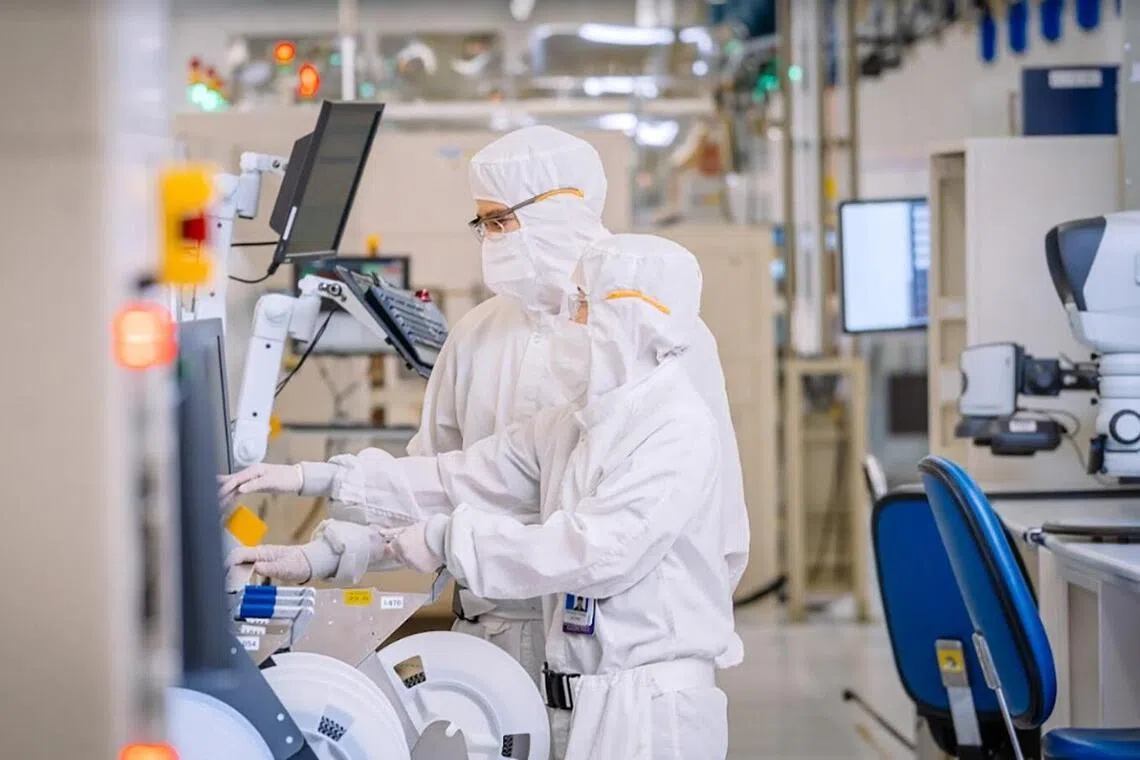
Ongoing efforts to increase interest in the industry have included programmes giving elementary school students in Arizona the chance to touch semiconductor equipment and try on a white bunny suit – the full-body coverall fab workers must wear to ensure no microscopic particles ruin the sensitive semiconductor manufacturing process.

“This is an industry that hasn’t been doing a significant build-out in the United States in decades,” Roundtree said. “High school guidance counsellors, college professors – this just isn’t a natural career for a lot of them to advise folks to look into.” BLOOMBERG

Free Training

Source link

Data centers’ energy demand threatens Trump’s “Made in America” plan


PJM has also forecast that electricity demand in its territory will surpass available supply by 6.6 gigawatts starting in 2027, which the Wall Street Journal describes as equivalent to more than six nuclear power plants.

No easy fixes

Some US manufacturers have raised the prices paid by customers to partially offset their own rising electricity bills, or are even considering relocation of their businesses, Reuters reported. The Wall Street Journal highlighted warnings from steel industry executives that production outages could become more likely if local power grids are overwhelmed by demand. Such results would likely undercut the competitiveness and viability of US manufacturing, which the Trump administration claims to have prioritized despite the loss of 83,000 manufacturing jobs in Trump’s first year back in office.

The White House has touted getting Big Tech companies to pay for new power generation and transmission infrastructure by signing a Ratepayer Protection Pledge, which happens to lack any meaningful enforcement mechanism. The Trump administration also joined state governors in pushing PJM to hold a one-time backstop auction for purchasing new power supply capacity.

But the United States still faces huge challenges in building enough new power generation and transmission lines to support the energy needs of AI data center demand and US manufacturers, not to mention other businesses and residential customers. The Trump administration’s efforts to stop renewable energy projects involving wind and solar power have also not helped.

In 2025 alone, the United States saw the cancellation of power projects totaling 266 gigawatts of generation capacity—equivalent to 25 percent of America’s current electricity generation capacity and more than the total electricity generation of Texas, according to Michael Thomas, CEO of the Cleanview data platform that tracks renewable energy and data center projects. Clean energy projects accounted for 93 percent of those project cancellations.

The Trump administration’s cancellations of various wind power projects certainly represented one contributing factor. But other significant patterns included local opposition to renewable energy projects in states such as Ohio and Indiana that were also courting new data center development, along with a lack of new transmission lines leading to high interconnection costs for new clean energy projects, Thomas said. If US states and the federal government are hoping to support local manufacturing, they may need to start making different choices in addressing the rising energy costs of the data center boom.

Free Training

Source link