Trump Slaps Up to 100% Tariffs on Drones to Boost US Manufacturing, Citing National Security Risks


US President Donald J. Trump has signed a proclamation imposing tariffs of up to 100% on imported drones and certain drone components, citing national security risks and vulnerabilities arising from foreign dependence on critical Unmanned Aircraft System (UAS) components.

“The Proclamation imposes a 100% ad valorem tariff on drones of a certain size or with certain capabilities that are particularly sensitive for national security purposes,” the White House said. The tariff covers drones with a maximum takeoff weight of more than 25 kg, drones with thermal imaging capabilities, their docking stations and certain critical components.

The proclamation imposes a 25% ad valorem tariff on certain smaller drones that lack capabilities considered particularly sensitive to national security, as well as other drone components.

For selected trading partners, the tariff rates will be lower. Drones and components from the European Union, Japan, Liechtenstein, Republic of Korea, Switzerland and Taiwan will attract a 15% tariff, while those from the UK will face a 10% tariff, provided “substantially all hardware, software, and technology originates from within these countries and the United States.”

“The tariffs will take effect 21 days after signing,” the White House said. Tariffs on non-sensitive drone components will take effect after 180 days. Products and components approved by the Department of War for exemption from the Federal Communications Commission’s Covered List within 20 days of signing will also face tariffs after 180 days.

The proclamation authorises the Commerce Secretary to establish an onshoring programme for companies making new investments in US drone and component manufacturing.

“Drones are a key technology in modern armed conflict and critical for present and future U.S. military operations,” the White House said, adding that commercial and military drones rely on foreign sources for critical UAS components, creating “significant risks to U.S. national security and creates cybersecurity vulnerabilities.”

The administration said “U.S. drone production needs to be expanded rapidly” to strengthen national and economic security and support jobs in the country’s defence and defence-adjacent industrial base.

The latest move builds on Trump’s broader use of Section 232 tariffs to protect industries considered critical to US national security. The White House said the administration has imposed or strengthened tariffs on steel, aluminium, copper, trucks, automobiles, timber, lumber and pharmaceuticals since Trump’s return to office..

Free Training

Source link

NIST Funds 14 MEP Centers to Boost U.S. Manufacturers


NIST Manufacturing Extension Partnership logo

GAITHERSBURG, Md. – The U.S. Department of Commerce’s National Institute of Standards and Technology (NIST) has released a Notice of Funding Opportunity for 14 Manufacturing Extension Partnership (MEP) centers to improve U.S. industrial competitiveness by helping small and medium-sized manufacturers adopt advanced manufacturing technologies. The funding will establish MEP centers in Alabama, Alaska, Arkansas, California, Georgia, Louisiana, Massachusetts, Missouri, Montana, Ohio, Pennsylvania, Puerto Rico, Utah and Vermont.

Small and medium-sized manufacturers make up 98% of the U.S. manufacturing base. NIST MEP facilitates cooperation among private sector industry partners, government agencies, academic institutions, economic development organizations and other manufacturing ecosystem stakeholders for advanced manufacturing technologies demonstration, deployment and adoption.

“This new funding opportunity and competition will help to strengthen manufacturing across the United States and expand the impact of the MEP program,” said Under Secretary of Commerce for Standards and Technology and NIST Director Arvind Raman. “With a renewed focus on advanced technology adoption and strong partnerships, MEP can help supercharge the American manufacturing ecosystem and improve America’s industrial competitiveness via our small and medium-sized manufacturers.”

The new funding creates MEP centers that will strengthen manufacturing ecosystems by encouraging the adoption or scale-up of advanced technologies to improve production capacity and capability, supporting supply chain integration and developing a strong manufacturing workforce.

Advanced manufacturing technologies are those that integrate innovations such as robotics, artificial intelligence (AI), automation, advanced materials, additive manufacturing or biotechnology into a manufacturing environment to optimize production, improve efficiency or create new, highly customized products.

Selected applicants must secure nonfederal matching funds (or cost-share) of at least 50% and will enter into a cooperative agreement with NIST to operate the centers. The new centers will join the MEP National Network™, which comprises MEP centers across the country and includes nearly 1,400 trusted manufacturing advisers and experts at more than 450 MEP service locations, with oversight provided by the MEP program at the federal level.

NIST plans to award up to the following amounts to centers in each location:

  • Alabama: $2,191,702
  • Alaska: $706,300
  • Arkansas: $1,291,618
  • California: $15,641,800
  • Georgia: $3,227,001
  • Louisiana: $1,537,719
  • Massachusetts: $2,959,870
  • Missouri: $2,656,601
  • Montana: $839,900
  • Ohio: $6,076,983
  • Pennsylvania: $6,110,684
  • Puerto Rico: $939,133
  • Utah: $1,492,598
  • Vermont: $812,300

NIST MEP will host an informational webinar on Tuesday, July 28, 2026, at 1 p.m. EDT to provide general information about this opportunity and guidance on preparing applications.

Additional information about this funding opportunity is available on Grants.gov and on the NIST MEP website. Applications must be received no later than 11:59 p.m. Eastern Daylight Time, on Aug. 21, 2026.

/Public Release. This material from the originating organization/author(s) might be of the point-in-time nature, and edited for clarity, style and length. Mirage.News does not take institutional positions or sides, and all views, positions, and conclusions expressed herein are solely those of the author(s).View in full here.

Free Training

Source link

Democrats Introduce Bill to Boost U.S. Manufacturing, Reduce Reliance on China


Washington — Senate Democrats have introduced sweeping legislation aimed at rebuilding America’s manufacturing base, reducing reliance on Chinese-dominated supply chains and expanding federal support for industries viewed as critical to U.S. economic and national security.

The Make More in America Act would broaden the mandate of the Export-Import Bank of the United States, known as EXIM, allowing it to finance domestic manufacturing projects in sectors including semiconductors, artificial intelligence, critical minerals, biotechnology, robotics, batteries and shipbuilding.

Senate Democratic Leader Chuck Schumer said the measure is intended to address vulnerabilities exposed by repeated disruptions to global supply chains, which he said have contributed to higher costs for American consumers.

“Americans cannot keep paying the price every time a supply chain crisis hits — whether it’s a pandemic, a war, or the whims of the Chinese Communist Party trying to undermine the American economy,” Schumer said.

“We have to break the cycle of supple chain shocks that are raising prices, invest in American industry, and protect our national security,” he added.

The bill was introduced by Schumer along with Democratic Sens. Jack Reed, Amy Klobuchar, Chris Coons, Brian Schatz, Cory Booker, Elizabeth Warren, Chris Van Hollen, Tammy Duckworth, Mark Kelly, Andy Kim, Lisa Blunt Rochester and Angela Alsobrooks.

Under the legislation, EXIM would be authorized to support the development, commercialization, production and future export of technologies deemed critical to U.S. competitiveness and national security. The bill would create a permanent Make More in America Program focused on expanding manufacturing capacity across the country.

Priority industries would include semiconductors, artificial intelligence, quantum technology, biotechnology, advanced energy systems, critical minerals, drones, robotics and shipbuilding.

“The United States has faced a manufacturing decline under the Trump Administration and we need to reverse that trend,” Reed said.

“We must bolster domestic supply chains, revive America’s manufacturing competitiveness, and get our manufacturing workforce growing again to ensure America is capable of responding to global threats and builds critical technologies here at home.”

Democrats backing the bill cited China’s growing industrial dominance and U.S. dependence on overseas suppliers for strategically important goods. The bill’s findings state that China accounts for a substantially larger share of global manufacturing output than the United States and continues to strengthen its position in advanced technologies.

Booker said the legislation is designed to help American workers compete in the global economy.

“By expanding the Export Import Bank’s core mandate, this legislation strengthens EXIM’s ability to support the industries that are essential to our national security and economic leadership from semiconductors to advanced manufacturing,” Booker said.

The proposal would allow federal support for building or expanding manufacturing facilities in the United States and would require recipients to show benefits for American workers. Projects would need to include commitments related to workforce training and education, while construction work would be subject to prevailing wage requirements.

The legislation also includes safeguards intended to protect taxpayer funds. Assistance could not be used for stock buybacks or repayment of existing debt, and projects that fail to meet agreed deadlines or labor requirements could face clawbacks.

Senior executive branch officials, members of Congress and their immediate family members would also be barred from receiving support under the program. (Source: IANS)

Free Training

Source link

Amazon and Corning partner to boost fiber optics manufacturing in North Carolina :: WRAL.com


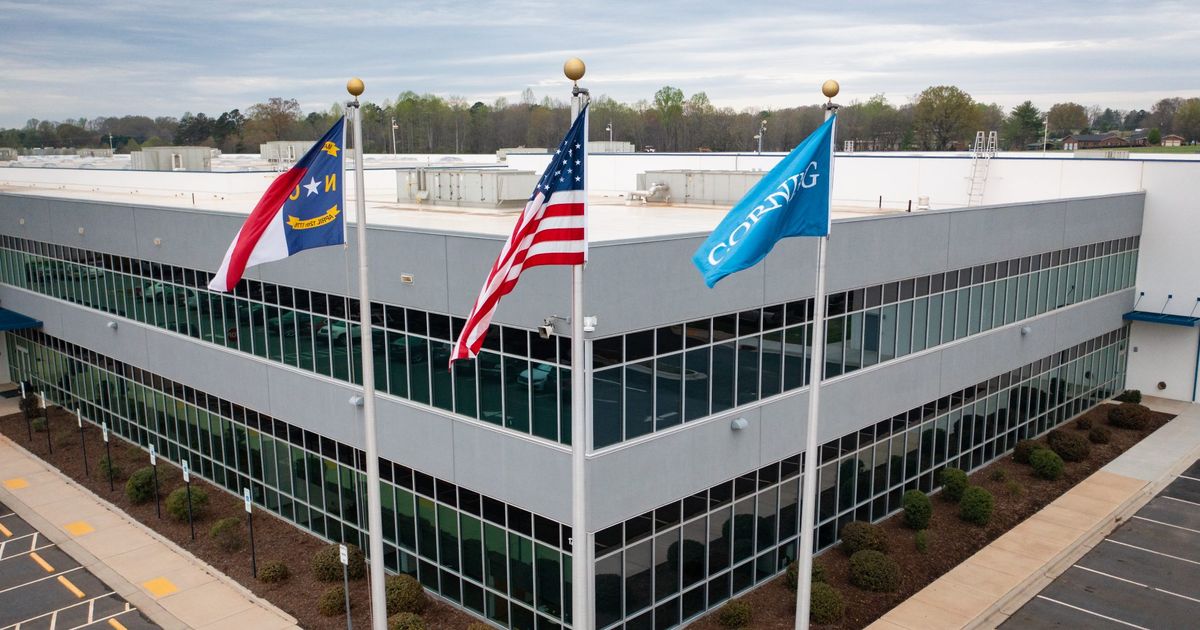
E-commerce giant Amazon is partnering with industrial manufacturer Corning Inc. to expand data center infrastructure across the United States, a multibillion-dollar deal that is expected to create about 1,000 jobs at Corning plants in North Carolina, the companies said Friday.

The agreement comes on top of Amazon’s plans, announced last year, to invest $10 billion in North Carolina to expand cloud computing infrastructure. Amazon has invested at least $20 billion in North Carolina since 2010, creating over 26,000 jobs spanning logistics, cloud infrastructure, and renewable energy across the Tar Heel State, the companies said. 

“North Carolina is proving that American manufacturing and cutting-edge technology go hand in hand,” U.S. Sen. Ted Budd, R-North Carolina, said in a statement. He said the deal would strengthen the U.S. supply chain for data-center infrastructure. 

North Carolina has been a magnet for companies focused on updating the nation’s power grid to accommodate renewable energy and increased power demand from data centers. 

In April, Hitachi Energy said it would create 150 jobs in Cary as part of a new $10 million center expanding its local engineering and testing functions — its latest effort aimed at strengthening the North American power grid in part to help support artificial-intelligence data centers.  

In 2024, Siemens announced plans to expand its Siemens Electrification and Automation U.S. headquarters in Wendell to meet demand in its growing data center, semiconductor and utility sectors — one of several planned expansion by the company in the state.

A unit of Houston-based MetOx International, a maker of efficient power transmission cables, also said in 2024 that it plans to create 333 jobs and invest about $194 million in Chatham County — part of a long-range plan to provide more efficient power for data centers, medical diagnostics and more.

“I am proud that we are continuing to capitalize on that momentum in North Carolina,” Budd said in his statement. 

Amazon Web Services last year announced plans to invest $10 billion in a North Carolina cloud computing and artificial intelligence innovation center — one of the biggest investments in state history, according to state and local officials. The project is expected to bring about 500 high-paying jobs to a 20-building, 800-acre campus in Richmond County, the company said in June. The company’s data centers power hospitals and emergency services, streaming entertainment and AI. 

Corning, a manufacturer of advanced glass and fiber optic technology used in optical fiber and cable, is used in that kind of infrastructure.

“This agreement with Amazon represents a significant milestone for Corning and for American manufacturing,” Wendell Weeks, Corning’s chief executive, said in a statement. 

It was unclear where the Corning jobs would be located. A company spokesperson didn’t immediately respond to a request for more information. 

Corning has manufactured optical fiber and cable in North Carolina for more than 40 years. The company employs more than 5,000 in plants across the state. Charlotte is home to Corning’s Optical Communications headquarters.  In 2023, the company opened an optical cable manufacturing campus in Hickory to support U.S. buildouts of high-speed fiber broadband networks. The company also manufactures optical fiber in Concord and Wilmington.

Through the agreement announced Thursday, Amazon will work with Corning on a new program that will expand its Fiber Optic Technician Training Program with Catawba Valley Community College to train students for careers in fiber optic manufacturing and related technical roles. 

The program provides hands-on education and courses that will increase the talent pool and offer pathways to high-paying technical roles. The efforts will help strengthen the domestic supply chain and U.S. manufacturing base while serving the region and state to help expand residential and commercial fiber densification efforts, the companies said.

“These long-term investments create long-term careers and real opportunity in the communities where we operate,” Matt Garman, the chief executive of Amazon Web Services, said in a statement.

Free Training

Source link

Amazon announces agreement with Corning to boost U.S. fibre optics manufacturing — TradingView News


  • The multibillion-dollar deal will also support hundreds of construction jobs to expand Corning’s North Carolina facilities and create a new workforce development program.
  • Amazon’s multiyear, multibillion-dollar agreement with Corning will produce optical fibre for data centres and strengthen the U.S. supply chain.
  • The deal creates 1,000 jobs at Corning’s North Carolina facilities, hundreds of construction jobs, and a workforce training program.
  • Amazon has invested more than $20 billion in North Carolina, creating over 26,000 jobs across the state.

Dubai, United Arab Emirates – Today, Amazon announced a multibillion-dollar agreement with Corning Incorporated, a leading manufacturer of advanced glass and fibre optic technology, to supply the optical fibre, cable, and connectivity solutions that power Amazon’s expanding data centre infrastructure across the United States. The investment will create 1,000 new, highly skilled jobs at Corning’s manufacturing facilities across North Carolina, and support hundreds of additional construction jobs to expand Corning’s facilities.

Through the agreement, Amazon will work with Corning on a new program that will expand its Fibre Optic Technician Training Program with Catawba Valley Community College to train students for careers in fibre optic manufacturing and related technical roles. The program provides hands-on education and courses that will increase the talent pool and offer pathways to high-paying technical roles. The efforts will help strengthen the domestic supply chain and U.S. manufacturing base while serving the region and state to help expand residential and commercial fibre densification efforts.

“Amazon’s investments in North Carolina have created more than 26,000 jobs across the state. This multibillion-dollar agreement with Corning continues that commitment, channeling investment into American manufacturing and creating 1,000 new jobs at their facilities near our data centres,” said Matt Garman, CEO of AWS. “We’re also partnering to train North Carolinians for highly skilled roles in fibre optics and fusion splicing. These long-term investments create long-term careers and real opportunity in the communities where we operate.”

Investing in North Carolina

This agreement with Corning is in addition to Amazon’s plans, announced last year, to invest $10 billion in North Carolina to expand cloud computing infrastructure. It builds on the more than $20 billion Amazon has invested in North Carolina since 2010, creating over 26,000 jobs spanning logistics, cloud infrastructure, and renewable energy across the Tar Heel State.

“Every day, North Carolina is proving that American manufacturing and cutting-edge technology go hand in hand. This multibillion-dollar agreement, between Amazon and Corning, will create 1,000 family-sustaining jobs for hardworking North Carolinians while also strengthening the critical infrastructure of the U.S. supply chain. This partnership further proves that North Carolina is the number one state in the country for American businesses to invest, build, and grow. As a leading voice in the Senate for workforce development and American manufacturing, I am proud that we are continuing to capitalise on that momentum in North Carolina,” said U.S. Senator Ted Budd.

Powering data centres, creating jobs, and fueling economic growth

Amazon’s data centres power the services millions of people and businesses rely on every day, from hospitals and emergency services to streaming entertainment and AI innovation. Corning’s fibre optics are a critical part of that infrastructure, and together, these investments help fuel the U.S. economic engine.

“This agreement with Amazon represents a significant milestone for Corning and for American manufacturing,” said Wendell Weeks – chairman, CEO, and president of Corning. “For 175 years, Corning has pioneered the technologies that connect people and transform industries. Amazon’s investment will help us expand production, create 1,000 new advanced manufacturing jobs at our facilities, and lead the way toward building a resilient U.S. manufacturing base.”

Amazon’s long-term commitment to North Carolina goes beyond direct investments and jobs created in the state. Through workforce development, Career Choice, and upskilling programs, Amazon has already provided practical training for nearly 7,000 people in North Carolina, helping to open new pathways for higher-paying jobs and fulfilling careers.

In the last decade, Amazon has contributed more than $72 million to charities and organisations supporting local needs across North Carolina, with $10 million provided in 2025 alone to 26 local community partners. This includes contributions like $1.5 million to enhance public safety services for southeastern Hamlet and surrounding Richmond County communities by funding a new fire substation that is expected to lower emergency response times and homeowner insurance premiums.

Learn more about Amazon’s community investments.

MEDIA Contacts

Corning

Radina Ralcheva

EMEA Communications Manager, Corning

Email: ralchevar@corning.com

Andrew Murgatroyd

Vice President, Corporate, Weber Shandwick

Email: amurgatroyd@webershandwick.com​​​​​

About Corning Incorporated

Corning (www.corning.com) is one of the world’s leading innovators in materials science, with a 170-year track record of life-changing inventions. Corning applies its unparalleled expertise in glass science, ceramic science, and optical physics along with its deep manufacturing and engineering capabilities to develop category-defining products that transform industries and enhance people’s lives. Corning succeeds through sustained investment in RD&E, a unique combination of material and process innovation, and deep, trust-based relationships with customers who are global leaders in their industries. Corning’s capabilities are versatile and synergistic, which allows the company to evolve to meet changing market needs, while also helping its customers capture new opportunities in dynamic industries. Today, Corning’s markets include optical communications, mobile consumer electronics, display, automotive, solar, semiconductors, and life sciences.

Corning Forward-Looking Statements

The statements contained in this release and related comments by management that are not historical facts or information and contain words such as “will,” “believe,” “anticipate,” “expect,” “intend,” “plan,” “seek,” “see,” “would,” “target,” “estimate,” “forecast” or similar expressions are forward-looking statements. These forward-looking statements are made pursuant to the safe harbor provisions of the Private Securities Litigation Reform Act of 1995 and include estimates and assumptions related to economic, competitive and legislative developments. Such statements relate to future events that by their nature address matters that are, to different degrees, uncertain. These forward-looking statements relate to, among other things, the Company’s Springboard plan, projected financial and operating performance, anticipated sales opportunities, long-term growth strategy, expected capital deployment, innovation and commercialization plans, and anticipated impacts of customer agreements.  These forward-looking statements also relate to the expected benefits, scope, and timing of the Company’s strategic partnership with NVIDIA, including planned expansions of U.S.-based optical connectivity and fiber manufacturing capacity, the construction and operation of new manufacturing facilities, anticipated job creation, and projected customer demand driven by AI infrastructure deployments.

Although the company believes that these forward-looking statements are based upon reasonable assumptions regarding, among other things, current estimates and forecasts, general economic conditions, its knowledge of its business and key performance indicators that impact the company, there can be no assurance that these forward-looking statements will prove to be accurate, as actual results and future events could differ materially from those anticipated in such statements. The company undertakes no obligation to update forward-looking statements if circumstances or management’s estimates or opinions should change except as required by applicable securities laws.

Some of the risks, uncertainties and other factors that could cause actual results to differ materially from those expressed in or implied by the forward-looking statements include, but are not limited to: global economic trends, competition and geopolitical risks, or an escalation of sanctions, tariffs or other trade tensions between the U.S. and other countries, and related impacts on our businesses’ global supply chains and strategies; changes in macroeconomic and market conditions and market volatility, including developments and volatility arising from health crisis events, inflation, interest rates, the value of securities and other financial assets, precious metals, oil, natural gas, raw materials and other commodity prices and exchange rates (particularly between the U.S. dollar and the Japanese yen, South Korean won, Chinese yuan, New Taiwan dollar, Mexican peso and euro), decreases or sudden increases of consumer demand, and the impact of such changes and volatility on our financial position and businesses; the availability of or adverse changes relating to government grants, tax credits or other government incentives; the duration and severity of health crisis events, such as an epidemic or pandemic, and its impact across our businesses on demand, personnel, operations, our global supply chains and stock price; possible disruption in commercial activities or our supply chain due to terrorist activity, cyber-attack, armed conflict, political or financial instability, natural disasters, international trade disputes or major health concerns; loss of intellectual property due to theft, cyber-attack, or disruption to our information technology infrastructure; ability to enforce patents and protect intellectual property and trade secrets; disruption to Corning’s, our suppliers’ and manufacturers’ supply chain, equipment, facilities, IT systems or operations; product demand and industry capacity; competitive products and pricing; availability and costs of critical components, materials, equipment, natural resources and utilities; new product development and commercialization; our solar business development, including manufacturing facility construction, ramp, and operations, and the achievement of solar revenue and profitability targets; order activity and demand from major customers; the amount and timing of our cash flows and earnings and other conditions, which may affect our ability to pay our quarterly dividend at the planned level or to repurchase shares at planned levels; the amount and timing of any future dividends; the effects of acquisitions, dispositions and other similar transactions; the effect of regulatory and legal developments; ability to pace capital spending to anticipated levels of customer demand; our ability to increase margins through implementation of operational changes, pricing actions and cost reduction measures; rate of technology change; adverse litigation; product and component performance issues; retention of key personnel; customer ability to maintain profitable operations and obtain financing to fund ongoing operations and manufacturing expansions and pay receivables when due; loss of significant customers; changes in tax laws, regulations and international tax standards; the impacts of audits by taxing authorities; the potential impact of legislation, government regulations, and other government action and investigations; and other risks detailed in Corning’s SEC filings.

For a complete listing of risks and other factors, please reference the risk factors and forward-looking statements described in our annual reports on Form 10-K and quarterly reports on Form 10-Q

About NVIDIA

NVIDIA (www.nvidia.com) is the world leader in AI and accelerated computing.

NVIDIA Forward-Looking Statements

Certain statements in this press release including, but not limited to, statements as to: the benefits, impact, performance, and availability of NVIDIA’s products, services, and technologies; expectations with respect to NVIDIA’s third party arrangements, including with its collaborators and partners; expectations with respect to technology developments; expectations with respect to AI and related industries; AI driving the largest infrastructure buildout—and a once-in-a-generation opportunity to reinvigorate American manufacturing and supply chains; together with Corning, NVIDIA inventing the future of computing with advanced optical technologies—building the foundation for AI infrastructure where intelligence moves at the speed of light while advancing the proud tradition of Made in America; and other statements that are not historical facts are forward-looking statements within the meaning of Section 27A of the Securities Act of 1933, as amended, and Section 21E of the Securities Exchange Act of 1934, as amended, which are subject to the “safe harbor” created by those sections based on management’s beliefs and assumptions and on information currently available to management and are subject to risks and uncertainties that could cause results to be materially different than expectations. Important factors that could cause actual results to differ materially include: global economic and political conditions; NVIDIA’s reliance on third parties to manufacture, assemble, package and test NVIDIA’s products; the impact of technological development and competition; development of new products and technologies or enhancements to NVIDIA’s existing product and technologies; market acceptance of NVIDIA’s products or NVIDIA’s partners’ products; design, manufacturing or software defects; changes in consumer preferences or demands; changes in industry standards and interfaces; unexpected loss of performance of NVIDIA’s products or technologies when integrated into systems; NVIDIA’s ability to realize the potential benefits of business investments or acquisitions; and changes in applicable laws and regulations, as well as other factors detailed from time to time in the most recent reports NVIDIA files with the Securities and Exchange Commission, or SEC, including, but not limited to, its annual report on Form 10-K and quarterly reports on Form 10-Q. Copies of reports filed with the SEC are posted on the company’s website and are available from NVIDIA without charge. These forward-looking statements are not guarantees of future performance and speak only as of the date hereof, and, except as required by law, NVIDIA disclaims any obligation to update these forward-looking statements to reflect future events or circumstances.

© 2026 NVIDIA Corporation. All rights reserved. NVIDIA and the NVIDIA logo are trademarks and/or registered trademarks of NVIDIA Corporation in the U.S. and/or other countries. Other company and product names may be trademarks of the respective companies with which they are associated. Features, pricing, availability and specifications are subject to change without notice.

Send us your press releases to pressrelease.zawya@lseg.com

Disclaimer: The contents of this press release was provided from an external third party provider. This website is not responsible for, and does not control, such external content. This content is provided on an “as is” and “as available” basis and has not been edited in any way. Neither this website nor our affiliates guarantee the accuracy of or endorse the views or opinions expressed in this press release.

The press release is provided for informational purposes only. The content does not provide tax, legal or investment advice or opinion regarding the suitability, value or profitability of any particular security, portfolio or investment strategy. Neither this website nor our affiliates shall be liable for any errors or inaccuracies in the content, or for any actions taken by you in reliance thereon. You expressly agree that your use of the information within this article is at your sole risk.

To the fullest extent permitted by applicable law, this website, its parent company, its subsidiaries, its affiliates and the respective shareholders, directors, officers, employees, agents, advertisers, content providers and licensors will not be liable (jointly or severally) to you for any direct, indirect, consequential, special, incidental, punitive or exemplary damages, including without limitation, lost profits, lost savings and lost revenues, whether in negligence, tort, contract or any other theory of liability, even if the parties have been advised of the possibility or could have foreseen any such damages.

Free Training

Source link

U.S. Should Substantially Boost Support for Manufacturing USA Program, Issue National Industrial Manufacturing Strategy, Says New Report


To better compete globally, the United States should develop a comprehensive industrial strategy to align resources for manufacturing and maximize the national security and economic impacts of the Manufacturing USA program, a proven model that connects the key actors — small and large industry, engineering and science expertise, state and local government, and economic development stakeholders — needed to advance progress in manufacturing technology, says a new report by the National Academies of Sciences, Engineering, and Medicine. Nearly all leading competitor nations have detailed national manufacturing strategies that are aligned with their national economic strategies and view manufacturing as crucial to their growth and national security, the report says.

Strengthening the Manufacturing USA program — a public-private partnership coordinated through the National Institute of Standards and Technology comprising 17 institutes that specialize in different types of advanced manufacturing — is essential for bolstering U.S. competitiveness in the next decade, the report says. The network of institutes is a vital national asset that plays a central role in aligning innovation efforts across government, industry, and academia, connecting American businesses of all sizes with state-of-the-art technology and translating the latest breakthroughs into industrial practice.

However, the report says, the nation is missing a coordinated framework to align industry and government efforts, which has led to under-resourcing federal manufacturing programs, including Manufacturing USA, and a lack of investments to scale up production in proven areas.

As a result, U.S. manufacturing productivity — once a hallmark of the economy — has declined markedly in the past 15 years, the report says. China has been the world leader of manufacturing output since 2011, and currently holds around 35 percent of gross world manufacturing, compared to 12 percent in the U.S. The U.S. trade deficit in goods has also risen sharply, reaching a record $1.2 trillion in 2025, which includes a major deficit in advanced technologies such as aircraft, semiconductors, and robots.

“Even though the U.S. develops many manufacturing technologies, the nation continues to outsource most of its manufacturing and lags far behind other nations in production capacity,” said Theresa Kotanchek, chief executive officer of Evolved Analytics LLC and chair of the committee that wrote the report. “This presents risks to our supply chains, our economy, and our national security if we can’t access critical technologies when we need them most. Our report outlines actions to strengthen the Manufacturing USA program and U.S. advanced manufacturing so that we can grow the businesses and produce the technologies we need at home.”

The report calls on the National Economic Council, Office of Science and Technology Policy, the departments of Commerce, Defense, and Energy, and other agencies to develop within the next two years an industrial strategy — in concert with the National Security Strategy — that integrates technology development, scale-up financing, and leadership in standards, trade, and workforce development so that resources are aligned for a more robust U.S. advanced manufacturing posture.

Informed by tools available in leading advanced manufacturing countries, Congress and federal agencies should set policy to create new federal manufacturing and financing mechanisms that include long-term investment vehicles such as patient-capital funds, a sovereign wealth fund with a strategic focus on manufacturing, and intellectual-property backed lending financing. In addition, Congress should create a globally competitive research and development tax credit for manufacturing processes and technologies, as well as explore expanding other tax reforms that support manufacturing.

Congress should provide sustained, dedicated funding above current appropriations by 2030 to establish business development offices at each Manufacturing USA institute, the report says. These offices would support commercialization, scale-up, and regional ecosystem integration, particularly for entrepreneurs and small- and medium-sized manufacturers (SSMs) working in coordination with regional economic development organizations and federal manufacturing programs.

Technology transfer is central to the Manufacturing USA mission. Institutes need to support two small firm extremes, both of which often lack the capital and resources to scale up — at one end, small, innovative entrepreneurs with good ideas to develop nascent technologies and at the other, SSMs that need to implement proven technologies. Additionally, large, multinational corporations that are institute members want to accelerate technology transfer to reduce their risks in scaling up investments. The report recommends establishing dedicated in-house technology transfer teams to help bridge the innovation “valley of death” between early-stage research and full-scale production.

Supporting robust pathways to careers in advanced manufacturing is necessary to cultivate a skilled workforce that can operate, maintain, and improve complex emerging manufacturing technologies in areas such as robotics, data analysis, digital production, and new materials. Yet, attracting and retaining talent remains a challenge, the report says.

“Collaboration across institutions and work sectors, to align student outcomes with industry needs, is necessary for the U.S. to become a leader in advanced manufacturing,” said National Academy of Engineering President Tsu-Jae Liu. “This report highlights the importance of workforce development for achieving and maintaining a competitive edge in advanced manufacturing, for economic prosperity and national security. 

Manufacturing USA institutes should adopt a broad range of programs to address workforce education needs that are built around a unified advanced manufacturing curriculum, the report says. In collaboration with regional stakeholders, this should include broad support for manufacturing apprenticeships and the development of comprehensive online advanced manufacturing courses.

The report also calls for a new interagency council to enable cross-agency and cross-institute collaboration, reduce administrative barriers, develop a digital manufacturing strategy, and establish an integrated strategy for the manufacturing institutes. Cross-agency collaboration is important between institute sponsoring agencies as well as between the institutes and other federal programs, including the national laboratories and the Manufacturing Extension Partnership program, to ensure advanced manufacturing technologies developed by the institutes are disseminated widely. Federal funding on par with comparable effective programs abroad is critical for supporting these activities.

The National Academies of Sciences, Engineering, and Medicine are private, nonprofit institutions that provide independent, objective analysis and advice to the nation to solve complex problems and inform public policy decisions related to science, engineering, and medicine. They operate under an 1863 congressional charter to the National Academy of Sciences, signed by President Lincoln.

For more information, visit https://www.nationalacademies.org/.

Free Training

Source link

Trump Praises Nissan’s Move to Boost U.S. Manufacturing


President Donald Trump on Wednesday publicly cheered Nissan’s push to shift more vehicle production to the United States, crediting tariff pressure and singling out Nissan Americas chairman Christian Meunier by name. Nissan has told investors and reporters that it has sharply increased the share of cars sold in the U.S. that are built domestically, is planning to roll out new hybrid technology within roughly 18 months, and is retooling its Canton, Mississippi, plant for electric-vehicle production. All of that is happening while the company pursues a global recovery plan that will cut capacity and jobs worldwide.

Trump’s public shout-out

Trump took to Truth Social to weigh in, writing, “Wow! Congratulations to Nissan, and Christian Meunier, Americas Chairman, on the tremendous success they are having in the U.S….” as reported by the Denver Gazette. The post landed shortly after comments from Nissan executives and was quickly picked up by national business outlets, framing the automaker’s moves as a validation of the administration’s trade playbook.

What Nissan executives are saying

In a Fox Business interview, Meunier said tariffs have reshaped the math for automakers, arguing they are “really pushing all the manufacturers to do the right thing, which is really to build locally and to sell in the U.S.” He said Nissan has lifted the share of U.S.-sold vehicles that are made domestically from about 45% a year ago to more than two-thirds today, with a target of roughly 80%. Meunier added that the company expects to launch new hybrid technology within the next 18 months and that it plans to expand hiring tied to its U.S. production buildout.

Canton retooling and a U.S. battery pact

Nissan has committed approximately $500 million to retool its Canton Assembly Plant in Mississippi for electric-vehicle production, a serious upgrade for a site that has long been a major regional employer. The company has also lined up a battery-supply deal that will send U.S.-manufactured cells to vehicles built there.

The SK On agreement and Nissan’s description of the Canton investment were laid out in a company release published via BusinessWire. The pact is described as supporting roughly 1,700 jobs at the battery supplier, with U.S.-made cells slated for the Canton line starting in 2028.

Restructuring, plant closures and job cuts

Those new U.S. dollars are part of a far more sobering global picture. Nissan’s Re: Nissan restructuring plan calls for consolidating production and shrinking its global headcount in an effort to restore profitability. Industry reporting indicates the company plans to reduce its number of plants from 17 to 10 and to cut roughly 20,000 positions worldwide as part of the plan, according to coverage by WardsAuto.

The Associated Press has also reported on the reductions and noted that trade-policy shifts, including recent tariffs, have been a material factor in Nissan’s financial results.

Policy backdrop: tariffs and incentives

The administration’s mix of tariffs and incentives is designed to reshape where and how automakers invest. The policy package includes offsets and other adjustments intended to nudge companies toward U.S. assembly plants and domestic supply chains rather than overseas production. The White House laid out that framework in a fact sheet that describes how the measures are meant to boost domestic manufacturing and U.S.-based jobs.

For communities from Canton to supplier towns around the Nashville area, the combination of fresh EV investment and sweeping global downsizing creates a complicated local reality. Nissan employs roughly 20,000 people in the United States, a figure cited in national coverage of the company’s recent remarks and plans, and local hiring tied to new battery and EV lines could offset some losses depending on which facilities are retooled and which are shut down. In the coming months, industry watchers will be tracking production timetables, hybrid rollouts, and Nissan’s list of specific plant changes to see how those trade-offs land on the ground.

Free Training

Source link

Factbox-Global drugmakers rush to boost US presence as tariff threat looms | WKZO | Everything Kalamazoo


March 9 (Reuters) – Global drugmakers are ramping up U.S. manufacturing and stockpiling inventory as the Trump administration considers a 100% tariff on imported branded and patented medicines.

Although enforcement is delayed for companies investing in U.S. manufacturing, the policy has already prompted fast-tracked projects, price cuts and direct-to-consumer sales.

Pfizer and AstraZeneca secured multi-year tariff exemptions through pricing deals and commitments to the new TrumpRx.gov platform. Eli Lilly, Johnson & Johnson and Merck have pledged billions to expand U.S. operations to avoid penalties.

Here’s what drugmakers are doing to mitigate supply-chain risks and reassure investors:

Pfizer

Pfizer reached a deal with President Donald ​Trump on September 30 to invest $70 billion in research and development and domestic manufacturing, and received a three-year grace period exempting its products from the pharmaceutical-targeted tariffs.

GSK

The London-based drugmaker plans to invest $30 billion in ‌U.S. research and development and supply chain infrastructure over five years.

Eli Lilly

U.S. President Donald Trump said in January that Eli Lilly plans to build six plants in the United States.

Lilly said last year that it planned to spend at least $27 billion to build four U.S. plants to expand production and bolster medical supply chains. The company has since announced details on three plants, in Alabama, Virginia and Texas.

Lilly in January said it will build a $3.5 billion pharmaceutical manufacturing facility in Pennsylvania, its fourth new site, in an effort to expand U.S. production and bolster medical supply chains.

Johnson & Johnson

The drugmaker plans to raise U.S. investments by 25%, totaling $55 billion, over the next four years. It plans to build four plants, including one at Wilson, North Carolina, and another at Tokyo-based Fujifilm Biotechnologies’ manufacturing site in Holly Springs, North ‌Carolina, over ​the next 10 years.

The company said in February it would invest more than $1 billion to build a new cell therapy facility in Pennsylvania, part of ⁠its larger plans announced last year to scale up U.S. manufacturing.

Roche

The ⁠Swiss drugmaker said in April last year it would invest $50 billion in the U.S. over the next five years.

A month later, it announced an additional $550 million investment to expand its Indianapolis diagnostics manufacturing hub. The expansion will span Indiana, Pennsylvania, Massachusetts, and California, creating more than 12,000 jobs.

In January, Roche said it will more than double its investment in its drug manufacturing facility in Holly Springs, North Carolina, to about $2 billion, up from the over $700 million announced in May 2025.

AstraZeneca

The Anglo-Swedish drugmaker will invest $50 billion on U.S. manufacturing by 2030. The investment will fund a new drug substance facility in Virginia, its largest single-site global investment, alongside expansions ​in Maryland, Massachusetts, California, Indiana and Texas.

It has already started technology transfers and is managing inventory in 2025 to minimize any tariff hit. Company executives have said the impact would be “very short-lived.”

Novartis

The Swiss drugmaker plans to spend $23 billion to build and expand 10 facilities in the U.S. over the next five years. This includes building six new manufacturing plants and expanding its San Diego research and development site, which is expected to create more than 1,000 ⁠jobs.

Sanofi

The French drugmaker plans to invest at least $20 billion in the U.S. through 2030 to boost manufacturing and research. Sanofi plans to ⁠expand its U.S. manufacturing capacity through direct investments in the company’s sites and partnerships with other domestic manufacturers.

Chief Financial Officer François Roger said in July the potential tariffs are ​expected to have a limited impact in 2025, as the company already has inventory in place in the U.S.

Biogen

The U.S. drugmaker will invest $2 billion more in its existing manufacturing plants in North Carolina, adding capacity for gene-targeting therapies and automation. The ​company has seven factories in the state, with an eighth set to begin operations in late 2025.

Merck

The U.S. drugmaker has begun building a $3 billion pharmaceutical manufacturing plant in Virginia ‌as part of its over $70 billion investment to expand domestic manufacturing and research and development.

It will also invest $1 billion in a new Delaware plant to make biologics and cancer drug Keytruda, to boost U.S. production and potentially create over 4,500 jobs. It also opened a $1 billion facility at its North Carolina site in March.

Merck’s animal health unit will invest $895 million to expand its Kansas manufacturing and R&D site, part of a broader $9 billion U.S. investment through 2028.

CEO Robert Davis in July flagged minimal impact from potential tariffs in 2025, and that the company remained well-positioned due to inventory management and moving of manufacturing to the U.S.

Amgen

The U.S.-based biopharma firm plans to invest $900 million to expand its Ohio manufacturing facility, bringing total ⁠investment in the state to $1.4 billion and adding 750 jobs. In December, the company committed $1 billion to build a second facility in Holly Springs, North Carolina.

Amgen said in September it is investing more than $600 million to build a new research and development center at its headquarters in Thousand Oaks, California.

The drugmaker announced it will invest $650 million to expand drug manufacturing at its facility in Juncos, Puerto Rico, a move expected to create nearly 750 jobs.

Novo Nordisk

The Danish ⁠pharmaceutical company said in August its strong U.S. manufacturing footprint positions it well for ‌tariff challenges, describing itself as “very U.S.-centric and U.S.-focused”.

AbbVie

U.S. drugmaker AbbVie said in January it has committed $100 billion over the next decade to U.S.-based research and development as ⁠part of its three-year deal with the Trump administration to reduce drug prices.

It has 11 manufacturing sites in the U.S. and has said it is “fairly insulated” from ​any tariff impact this ‌year, given inventory management actions.

The company said in February that it plans to invest $380 million to build two manufacturing facilities at its current North Chicago, ​Illinois, campus, to support the ⁠production of its neuroscience and obesity medications.

Gilead Sciences

Earlier this year, the drugmaker announced $11 billion in new planned investment in the U.S. to add to its domestic manufacturing and research heft, taking its total pledged investment to $32 billion.

Gilead said in September that it started work on a pharmaceutical development and manufacturing hub at its headquarters in Foster City, California, in addition to which, it is currently developing two other sites.

Cipla

The Indian drugmaker is expanding its U.S. manufacturing footprint by investing in capacity expansion for complex respiratory products at its advanced facilities in Fall River, Massachusetts, and Central Islip, New York.

CSL

Australia’s CSL said in November it would invest $1.5 billion in the U.S. to manufacture plasma-derived therapies, expanding its footprint in the country over the next five years.

In March, the company announced the expansion of its plasma therapy manufacturing facility in Kankakee, Illinois, which is expected to be operational by 2031.

(Reporting by Siddhi Mahatole, Kamal Choudhury, Puyaan Singh, Sneha S K and Sahil Pandey in Bengaluru; Editing ​by Tasim Zahid, Sahal Muhammed, Shinjini Ganguli and Maju Samuel)

Free Training

Source link

U.S. Manufacturing Boost as Agencies Order 525 New Flyer Buses


New Flyer has received an order from NJ TRANSIT for 375 Xcelsior 40-foot, clean-diesel buses. This order is part of a larger, previously announced multi-phase fleet replacement program, with orders placed in the third and fourth quarters of 2025.

The original contract, awarded in the first quarter of 2024, included a base order of 550 Xcelsior 40-foot, buses to be delivered in three distinct lots, along with options for an additional 750 units. With this newly announced order, NJ TRANSIT has now completed the full base order of 550 buses, leaving all 750 option buses available for future procurement.

“The Xcelsior buses included in this contract deliver dependable, cost-effective performance while improving safety and accessibility for passengers,” said Chris Stoddart, president, North American Bus and Coach, NFI. “Built for durability and long service life, these new buses will help NJ TRANSIT continue providing the reliable, essential transportation services that keep communities and economies moving every day.”

With this additional portion of the contract, NJ TRANSIT can continue replacing aging buses without compromising service. Building and deploying these replacement vehicles strengthens domestic manufacturing, secures good local jobs, and ensures taxpayers get maximum utility from their investment in public transit.

“This additional order underscores NJ TRANSIT’s unwavering commitment to our customers and to delivering the safe, reliable service they depend on every day,” said NJ TRANSIT President & CEO Kris Kolluri. “Modernizing our bus fleet is a critical investment in our riders, our employees, and the communities we serve. These new buses move us closer to our goal of a fully modernized bus fleet by 2031—improving reliability, accessibility, and comfort while ensuring we can continue meeting the needs of hundreds of thousands of daily trips across New Jersey.”

New Flyer also announced that the Washington Metropolitan Area Transit Authority (WMATA / Metro) has exercised options for 75 Xcelsior hybrid-electric 40-foot buses and 25 Xcelsior CHARGE NG battery-electric forty-foot buses. The options are being exercised from New Flyer’s Q4 backlog.

The purchase will be supported by federal, state, and local funding as well as funds awarded through FTA’s Low- or No-Emission grant program. The new buses will replace end-of-life vehicles and provide Metro customers with a modernized, efficient passenger experience, while also delivering on the agency’s five-year Strategic Transformation Plan.

“New Flyer is committed to continuing our decades-long relationship with Metro, providing buses that deliver strong value, reliability, and performance,” said Chris Stoddart. “As Metro phases out aging buses, New Flyer’s Buy America-compliant, advanced hybrid and battery-electric vehicles will boost the efficiency, power, and overall service quality of its transit system while fueling good manufacturing jobs and economic opportunity across the United States.”

“These new hybrid and battery-electric buses allow us to replace aging vehicles, improve the customer experience, and continue modernizing our fleet while reducing emissions across the region,” said Randy Clarke, WMATA general manager and CEO. “Partnering with New Flyer helps ensure we’re delivering safe, dependable service and demonstrating good financial stewardship.”

In addition, New Flyer confirmed that the Regional Transportation Commission of Southern Nevada (RTC) is exercising options for 19 60-foot and 31 40-foot Xcelsior compressed natural gas (CNG) buses. This order was included in NFI’s fourth quarter 2025 firm backlog.

Valued at approximately $56 million, the options are part of two five-year contracts with RTC, supported by local and FTA funds, and meet Buy America requirements supporting manufacturing jobs in the U.S. The low-emission buses in this order will replace end-of-life vehicles, ensuring efficient, safe, clean, and sustainable transit for the region’s 64 million annual riders.

“For more than three decades, New Flyer and RTC have partnered to deliver efficient and reliable transportation options tailored to the community’s evolving needs, delivering over 900 buses to date, with more than 500 utilizing low-emission CNG propulsion,” said Stoddart.

Free Training

Source link

US FDA launches program to boost domestic drug manufacturing


By Ahmed Aboulenein

WASHINGTON, Feb 1 (Reuters) – The U.S. Food and Drug Administration on Sunday began accepting requests to participate in its PreCheck pilot program, designed to ​boost domestic drug supply by speeding up construction and review of drug manufacturing ‌plants in the country.

The FDA said it would select an initial group of new pharmaceutical manufacturing facilities this year ‌based on “alignment with national priorities” in several areas including the product itself, how quickly it can be developed for the U.S. market, and innovations in facility development.

“Additional priority considerations will be given to facilities producing critical medications for the U.S. market,” the agency said in a statement.

The ⁠FDA PreCheck program, first announced ‌in August, aims to streamline review of domestic pharmaceutical plants and eliminate unnecessary regulatory requirements, in line with President Donald Trump’s executive order in ‍May to shift manufacturing of drugs to the United States.

The program introduces a two-phase approach to facilitate new U.S. drug manufacturing facilities.

The initial phase would provide for more frequent communication with the FDA, including ​for facility design, construction and pre-production.

The second phase would facilitate pre-application meetings and early ‌feedback to help streamline the development of manufacturing and quality control processes, the agency said.

The FDA had separately announced another program in June to incentivize drug developers that align with national priorities, including increased domestic manufacturing, with shortened times for reviewing marketing applications.

The FDA Commissioner’s National Priority Voucher Program promised decisions in one or two months on a limited number of ⁠drugs deemed critical to public health or national security, ​cutting four to six months off the fastest priority ​approval process.

Reuters, citing internal documents, reported exclusively last month that the agency had delayed reviews of two drugs chosen for the new fast-track program after ‍agency scientists flagged safety ⁠and efficacy concerns, including the death of a patient while taking one of the medicines.

Two other drugs tapped for the speedy review program have also been pushed by ⁠weeks or longer beyond the original target date. The four drugs are among at least seven in the ‌program that have started their approval process, according to documents.

(Reporting by Ahmed ‌Aboulenein; Editing by Sergio Non and Chizu Nomiyama )

Free Training

Source link