US Manufacturing Revival Fosters Derivatives Plays as High-Tech Outpaces Traditional Industry


US manufacturing is showing a revival after a long period of weak momentum, with survey data indicating stronger activity. The ISM production index has moved from sub-50 contraction territory to levels consistent with firmer growth ahead, while business surveys point to solid order books. Over the next three years, manufacturing volumes are projected to rise by 1.5–2% per year, a pace framed against the sluggish backdrop of the past two decades.

The upturn is expected to be uneven. Advanced, highly automated, high value-added industries linked to the AI and technology cycle are positioned to expand, with pharmaceuticals, tech, transport and aerospace, and electrical and power-related segments cited as areas of strength. By contrast, more traditional, labour-intensive production faces further retrenchment unless it can command a “made in America” price premium, while heavy industry such as steel sits between the two. Relative growth differentials also support the US manufacturing proposition: from 2023 to 2026, the US economy is averaging 2.5% year-on-year volume growth versus 0.9% in Europe.

Strategies for Capitalizing on the Manufacturing Divide

With the US economy outpacing Europe with a 2.5% average growth rate over the last three years, we should position our derivative portfolios to capitalize on a starkly divided manufacturing sector. We recommend buying medium-term call options on advanced manufacturing, aerospace, and semiconductor ETFs like the iShares US Aerospace & Defense ETF (ITA) or the VanEck Semiconductor ETF (SMH). This strategy leverages the massive wave of AI-driven capital expenditure and defense spending that is keeping order books full for high-tech firms.

Conversely, we must hedge this bullishness by purchasing put options on traditional, labor-intensive industrial companies that are suffering from high domestic wages. Sectors like basic textiles or low-value metal fabrication cannot absorb these wage pressures and are poised to contract further. Targeting weak components of the Russell 2000 index with put spreads will protect our portfolios as these low-margin businesses retrench.

Opportunities in Utilities and Volatility Trades

The massive power demands of AI data centers and highly automated factories mean we should also look at utilities and energy derivatives. Historically, US industrial electricity consumption has spiked alongside manufacturing construction spending, which recently hovered around an unprecedented $230 billion annualized rate. We suggest using bull call spreads on the Utilities Select Sector SPDR Fund (XLU) to capture this secular power surge.

As we watch the ISM Manufacturing Index fluctuate around the expansion-contraction threshold, we expect heightened volatility in industrial equities over the coming weeks. We should deploy long straddles on broad industrial ETFs like the Industrial Select Sector SPDR Fund (XLI) ahead of upcoming October economic releases. This allows us to profit from the sharp market reactions as the divide between high-tech champions and struggling traditional factories widens.

Start trading now — click

Free Training

Source link

The Trump Administration’s Promises of a US Manufacturing Revival Fell Flat, First-Half Data Shows


Despite claiming that his preeminent trade policy would shrink America’s export gap with the rest of the world, President Donald Trump’s tariffs haven’t managed to rebalance trade or prompt a reshoring renaissance.

In fact, an analysis of first-half 2026 trade and manufacturing data conducted by Rethink Trade, a program under the American Economic Liberties Project, revealed that the U.S. manufactured goods trade deficit is 5 percent wider than before the president took office for a second term.

While Trump campaigned on a promise that tariffs on foreign imports would drive more purchases of American-made goods, the truth has been much more complicated.

Since taking the oath of office in January 2025, the U.S. has shed 75,000 manufacturing jobs, and there’s been little evidence to show that companies are laying the foundation for a comeback, as construction spending on manufacturing facilities also declined by 30 percent during that period.

According to data from the U.S. Census Bureau, the manufactured goods trade deficit amounted to $785 billion in the first half of 2026—15 percent smaller than the first half of 2025, but higher than the first six months of 2024, as well as the first-half deficits seen from 2015 to 2021.

Rethink Trade director Lori Wallach cautioned against viewing the first-half 2025-to-2026 contraction in the deficit as an all-out win, given that there were special circumstances that precipitated it. Importers were rushing to get inventory into the country during the first three months of the year before Trump’s tariffs took effect—but after that period, the overall U.S. manufactured goods trade deficit jumped by $63 billion in 2025 compared to the previous year, she said.

In looking at the goods trade deficit, which contracted to $545 billion in the first half of 2026 (compared to $750 billion in the first half of 2025 and $603 billion in the first half of 2024), there are also telling signs that the apparent wins may not be what they seem.

For one: most of the gains stemming from goods exports weren’t related to manufacturing output—they were driven by commodities: gold, silver, oil and gas, as well as aircrafts. When it comes to the metals, a large share are re-exports of products that weren’t mined in the U.S., and that’s a sign that the flows are driven more by capital movements than bona fide goods trade.

Wallach put it succinctly. “The whole global economy is a little bit unstable because he”—Trump—”changes his mind every 30 seconds and started a war with Iran. And so you know what do people do? They rush to silver and gold. And so, we’re selling basically the economic security blanket metals as bulk ores (that there’s new demand for because Trump has destabilized the global economy), and then we’re selling oil and gas because the Iran War has basically undermined other supply chains of those things,” she said.

“Trump has caused temporary disruption, and so we’re getting a temporary boom related to this behavior that is also causing major downsides,” she added. “The promised renaissance is not happening because you would not have a net decline in manufacturing jobs since Trump returned to office. You would not have a manufacturing trade deficit that is higher than it was before he was inaugurated for the second term.”

In Wallach’s estimation, using tariffs to prompt reshoring would take a much more nuanced and comprehensive approach than the one the Trump administration has employed thus far. Tariffs should have been a single building block propping up the president’s trade and economic strategy, not the entire structure.

In addition to applying tariffs more surgically, Wallach said the administration should have helped build demand for American-made products through policies—tax incentives for consumers who purchase domestically made goods, for example, and requirements for domestic procurement by the federal government.

On the investment side, she said, the government should have offered subsidies for companies hoping to reshore, “because as well as creating demand for the goods and protecting the sectors not to be surged to death once you are getting the demand, you also need to basically incentivize the investment.”

Wallach pointed to the end of the Inflation Reduction Act subsidies put in place by President Joe Biden as a possible factor in the decline in factory construction. “The most recent peak in the past 15 years of manufacturing employment was the first quarter of 2023, and that is when all of that money was flowing,” she said.

Biden used tariffs in conjunction with subsidies, she added, pointing to duties on China for electric vehicles and heightened tariffs on solar products. The combination of strategically applied tariffs on specific industries and the subsidies and tax breaks for American makers “was working together hand in glove,” she said.

The way the current administration is leveraging tariffs, by contrast, amounts to throwing down a few puzzle pieces and hoping to build a full picture of a robust trade economy. According to Wallach’s research, the new data underscores “what public opinion polls are already capturing.”

“We have a growing gap between the economy Trump promised and the damage his tariff malpractice is causing.” she said.

Free Training

Source link

Growing shortage of high-skilled workers threatens US chip manufacturing revival


Washington – A growing nationwide shortage of high-skilled workers threatens to delay the construction of billions of dollars in new semiconductor plants across the United States and constrain future chip production unless the industry pools resources and the government keeps up funding, according to a new report.

The deficit is expected to be most acute in states such as Texas, California, Arizona, New York and Ohio, where many of the new facilities are being planned, according to new analysis including a survey of employers from McKinsey & Co, the chip industry group SEMI and the National Science Foundation.

Altogether, the skilled labour shortage is projected to reach as many as 157,000 full-time workers by 2030, the study released on July 7 found.

The dearth of talent risks stalling plans by Taiwan Semiconductor Manufacturing Co to invest as much as an estimated US$265 billion (S$342 billion) in a dozen chip-making and packaging facilities in Arizona, as well as Micron Technology’s vision to spend US$100 billion on memory chip production in New York and Samsung Electronics’ logic chip facility in Texas.

Even Intel’s delayed US$28 billion investment in Ohio is set for shortages once production ramps up, the report said.

The workforce challenges mark the latest hurdle for chipmakers seeking to expand their manufacturing footprint in the US and reverse the migration of production capacity to Asia that unfolded decades ago.

Rising prices for a wide range of goods including copper, steel and cement threaten to increase the cost of construction for new facilities billed as a centrepiece of US President Donald Trump’s economic agenda.

At the same time that the chip industry expects to see a worker shortfall, the artificial intelligence boom – and companies’ rush to invest in it – has also been blamed for layoffs in other parts of the labour market, including in the tech industry.

Challenger, Gray & Christmas, which tracks layoff plans, found almost 102,000 announced job cuts attributed to AI so far in 2026.

Unless addressed soon, the chip industry labour gap risks undermining not only the billions of dollars in planned investment by companies but also the US grants aimed at boosting domestic production under the 2022 Chips and Science Act, according to the report.

The authors recommended a range of solutions, including continued government funding, expanded curriculum on semiconductors and earlier exposure to chip industry careers.

“There’s just not enough talent to go around,” said Taylor Roundtree, a partner at McKinsey who helped with the analysis. “People are realising that the potential gap is so large that they collectively do have to solve it.”

By 2030, about 74 per cent of the semiconductor industry’s unfilled roles will be in manufacturing and 60 per cent in engineering, the study found.

While Chips Act-funded programmes have helped to increase the number of technicians available to work at new plants, those initiatives have hardly made a dent in addressing the need for manufacturing and hardware engineers.

Already, nearly three-quarters of employers are reporting significant difficulty in hiring engineers, according to the survey, which canvassed semiconductor companies.

The root of the problem is that few US engineering students – only about 3 per cent – go on to work in the chip industry, with most opting for more lucrative software-related fields like AI.

The Chips Act provided the National Science Foundation with US$200 million through 2027 for workforce development through programmes that educate students and train new workers via an organisation called the National Network for Microelectronics Education.

The authors recommended keeping up the funding, though the report did not elaborate on extending those initiatives.

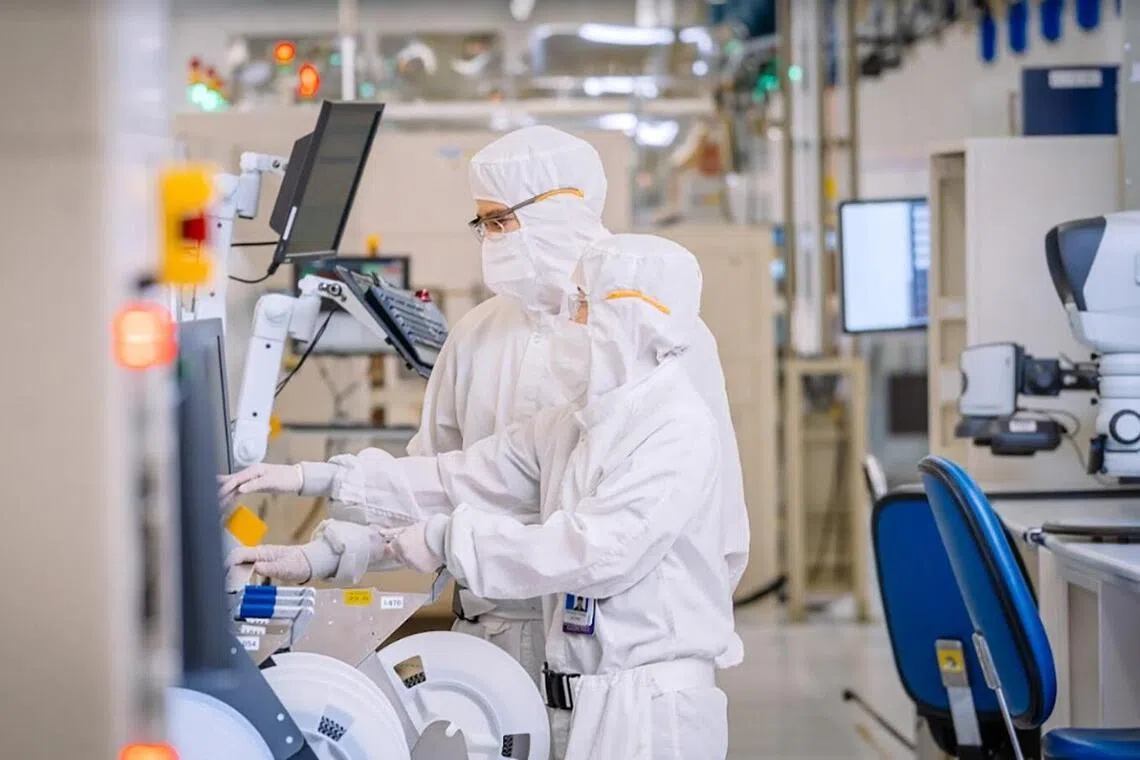
Ongoing efforts to increase interest in the industry have included programmes giving elementary school students in Arizona the chance to touch semiconductor equipment and try on a white bunny suit – the full-body coverall fab workers must wear to ensure no microscopic particles ruin the sensitive semiconductor manufacturing process.

“This is an industry that hasn’t been doing a significant build-out in the United States in decades,” Roundtree said. “High school guidance counsellors, college professors – this just isn’t a natural career for a lot of them to advise folks to look into.” BLOOMBERG

Free Training

Source link

U.S. manufacturing revival may have already arrived


I have one manufacturing client in New Jersey and another in Georgia, both of whom are expanding their businesses. “We have large customers who would prefer to buy from us than overseas,” my New Jersey client told me.

A U.S. manufacturing resurgence is already underway, and policy is accelerating it faster than many expected.

In April, the Institute for Supply Management’s manufacturing purchasing managers index registered its fastest expansion since August 2022. Four of the six largest manufacturing industries (transportation equipment, computer and electronic products, machinery, and chemical products) reported expansion.

The Wall Street Journal’s Greg Ip recently reported on the “stealth manufacturing boom” in the U.S. He cited many examples, including the “booming” rise in aerospace and transportation equipment.

A recently released report from research firm Kearney said a “significant share of executives” are reporting plans to reshore or increase production in the United States.

The recent report showing U.S. gross domestic product growth at 2% has been largely attributed to corporate capital investment. Reuters recently reported that new orders for key U.S.-manufactured capital goods increased by the most in nearly six years and shipments rose “solidly,” suggesting that business spending on equipment helped drive economic growth in the first quarter.

A recent survey from the National Association of Manufacturers found that 75.3% of respondents felt either “somewhat or very positive about their company’s outlook,” a 5.4-percentage-point increase from last quarter and above the historical average of 74.3% for the first time since the first quarter of 2023.

A report in the online trade magazine Manufacturing Tomorrow said reshoring is making a “decisive comeback as manufacturers bring production and key suppliers closer to customers.” The report cited South Carolina, Mississippi and Texas as the beneficiaries of “the largest investment waves in semiconductors, batteries, industrial infrastructure and related industries.”

In Ohio, General Motors recently expanded its Toledo manufacturing capacity with new investment, part of a broader $830 million plan targeting multiple U.S. facilities to support next-generation vehicle production. GM has already invested more than $6 billion in its U.S. manufacturing footprint over the past year, with hundreds of millions of dollars dedicated toward projects in Michigan.

A California-based drone manufacturer announced that it would invest $3.5 billion to expand facilities domestically and plans to create more than 2,000 jobs to “break free from Chinese supply chain dependence.”

In Louisiana, a large construction company announced a state-of-the-art nuclear fabrication facility project spanning two regions of the state. It is expected to create more than 2,000 jobs.

An industrial additive manufacturing company in Michigan said it will start domestic manufacturing of a key product line near Detroit to address customer concerns about lead times, parts availability and total cost of ownership. The company has recently begun manufacturing another product line in Michigan and said it has launched a “broader plan to bring additional major subsystems into U.S. production.”

Kitchen appliance maker Sub-Zero said it would invest $196 million in an expansion in Iowa to “enhance production capacity while further integrating advanced manufacturing technologies into the facility.” Also in the state, a precast concrete manufacturing facility will open, creating dozens of jobs.

These aren’t isolated announcements. They reflect a broader shift toward domestic production. What is behind this?

As with any major change, the cause is never just one thing. Tariffs, of course, are driving more foreign companies to invest in the U.S. and domestic companies to turn to domestic resources.

Supply chain pain from the pandemic has led many companies to rethink how and where they source their materials. Moving production, design and sales closer together speeds innovation.

Quality control is easier with fewer products coming from multiple, unreliable and difficult-to-test foreign sources. The data center boom is playing a significant role. The Iran war is creating demand for more military equipment.

The One Big Beautiful Bill Act, enacted last year, offered manufacturers enormous tax deductions. Public sentiment, driven by White House messaging, shines a favorable light on companies that keep their operations in the U.S.

Of course, there are challenges. Many manufacturers are grappling with much higher costs, labor shortages, artificial-intelligence-driven upheaval, the uncertainties caused by the Middle East conflict and a polarized political environment.

You can’t expect an expansion of tariffs to turn around decades of crushing economic policy in just a year, but there are signs that the tariffs are already having an impact.

The shift won’t be quick or easy, but the early signals are clear: After decades of decline, U.S. manufacturing is beginning to regain momentum.

• Gene Marks, CPA, runs The Marks Group PC, a financial and technology consulting firm near Philadelphia.

Free Training

Source link

US Factory Jobs Keep Falling Despite Trump’s Manufacturing Revival Push


Manufacturing sector

US manufacturing employment has continued to decline despite former President Donald Trump’s repeated claims of an industrial revival driven by tariffs and reshoring policies | Image:
Pexels

US manufacturing employment fell again in December, extending a steady decline that has now lasted most of 2025, underscoring the gap between political promises of an industrial resurgence and labour market realities.

According to government data, factory payrolls have dropped by more than 70,000 jobs since April, pushing total manufacturing employment to around 12.7 million, the lowest level in over three years. The sector has now recorded job losses in eight of the past nine months.

Tariffs Fail to Deliver Hiring Boost

President Donald Trump has repeatedly argued that tariffs and protectionist trade policies would revive domestic manufacturing and bring factory jobs back to the US. Tariff collections have surged, generating tens of billions of dollars in revenue annually, but manufacturers say higher input costs and supply-chain uncertainty have offset any benefit from reduced import competition.

Many firms have opted to invest in automation or overseas capacity rather than expand domestic headcount, limiting the employment impact of reshoring initiatives.

Also read: ₹1.7 Lakh Crore Raised Through IPOs in FY26: SEBI

Broader Jobs Growth Masks Factory Weakness

While overall US employment growth has remained positive, driven largely by healthcare and services, manufacturing has emerged as a weak link. Economists note that factory hiring tends to slow earlier in economic cycles as companies respond quickly to changes in demand and costs.

The unemployment rate edged lower in December, but analysts say this largely reflects slowing labour force participation rather than strong job creation in goods-producing sectors.

Structural Challenges Weigh on Outlook

Industry executives cite multiple headwinds facing US manufacturing, including higher borrowing costs, rising wages, energy price volatility, and slowing global demand. Even companies expanding production capacity are increasingly relying on technology rather than labour-intensive processes.

As a result, economists warn that a sustained rebound in factory employment is unlikely without broader investment incentives, stable trade policy, and stronger demand growth.

Despite aggressive rhetoric and rising tariff revenues, the long-promised revival in US factory jobs has yet to materialise. For now, manufacturing remains a drag on the labour market, highlighting the limits of trade policy as a tool for job creation.

-With inputs from Reuters

Also read: SC Rulings Loom as Trump’s Tariff Authority Faces Fresh Legal Scrutiny

Free Training

Source link