

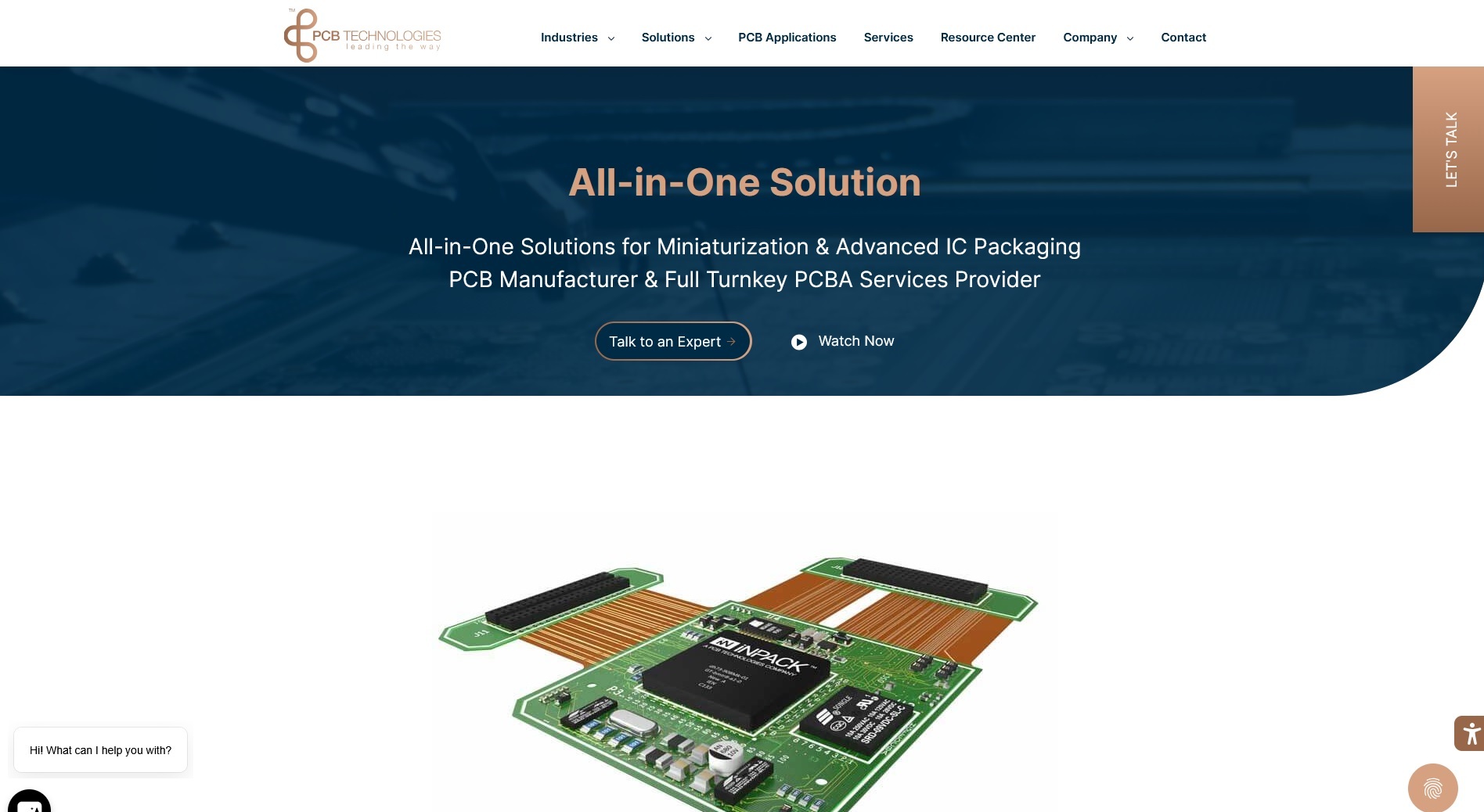

PCB Technologies to Acquire Gorilla Circuits for $120 Million, Expanding U.S. Manufacturing

PCB Technologies Ltd. (TASE: PCBT) has entered into a definitive agreement to acquire Silicon Valley-based Gorilla Circuits at an enterprise value of $120 million, establishing a U.S. manufacturing presence and expanding its capabilities in semiconductor, aerospace and defense electronics.
The Israeli electronics manufacturer will acquire 100% of Gorilla Circuits through a wholly owned subsidiary, adding an established printed circuit board (PCB) fabrication and electronic assembly business with more than 700 active customers.
The transaction values Gorilla Circuits at approximately 7.6 times EBITDA, based on average financial results for 2025 and the first half of 2026, subject to customary purchase price adjustments.
The acquisition is expected to close within eight months, pending customary closing conditions and regulatory approval from the Committee on Foreign Investment in the United States (CFIUS).
PCB Technologies plans to finance the transaction through credit facilities provided by two Israeli banks.
Founded more than two decades ago, Gorilla Circuits operates in San Jose, California, specializing in high-mix, low-volume PCB manufacturing, rapid-turn production and electronic card assembly.
The company serves customers developing technically demanding electronic products, including semiconductor testing equipment, aerospace and defense systems, and advanced technology applications.
For PCB Technologies, the acquisition provides an established U.S. manufacturing operation and direct access to a substantial customer base in markets where domestic production capabilities and engineering proximity can influence purchasing decisions.
The transaction also creates opportunities to introduce PCB Technologies’ advanced substrates, microelectronics and integrated circuit packaging capabilities to Gorilla Circuits’ customers.
“This transaction is intended to transform the scale of PCB Technologies and the opportunities available to us,” said Oved Shapira, CEO of PCB Technologies.
“We are combining the technologies and manufacturing capabilities we have developed in Israel with a U.S. manufacturing base and hundreds of customers in sectors where we have a technological advantage,” Shapira said.
Gorilla Circuits has recorded significant revenue growth over the past two years.
Revenue increased from $69.4 million in 2024 to $91.9 million in 2025, representing growth of approximately 32%.
During the first six months of 2026, the company generated $54.9 million in revenue, reflecting continued expansion in its core manufacturing markets.
Adjusted EBITDA increased from $3 million in 2024 to $13.6 million in 2025. For the first half of 2026, adjusted EBITDA reached $8.9 million, following IFRS 16 adjustments.
The company also reported increasing customer order activity, with orders totaling approximately $100 million in 2025 and a 2026 order run rate of about $131 million.
As of August 31, 2026, Gorilla Circuits maintained an order backlog of approximately $38 million, providing visibility into near-term production demand.
Its customer mix includes significant exposure to technology, semiconductor and aerospace and defense markets.
During the first half of 2026, technology and semiconductor-related activities accounted for approximately 35% of Gorilla Circuits’ sales, while aerospace and defense represented approximately 40%.
These markets align with PCB Technologies’ existing focus on complex electronics used in mission-critical applications.
The acquisition will allow PCB Technologies to expand its U.S. operations while offering Gorilla Circuits’ customers access to a broader range of manufacturing technologies.
PCB Technologies specializes in multilayer rigid, rigid-flex and multi-flex circuit boards, advanced substrates, complex electronic assemblies and electromechanical systems.
Through its iNPACK subsidiary, the company also provides miniaturization and advanced integrated circuit packaging technologies.
The combined business intends to expand access to these capabilities in the United States, particularly for customers requiring specialized electronics manufacturing and advanced packaging solutions.
Shapira said the acquisition supports PCB Technologies’ strategy of offering integrated services across the electronics manufacturing process, from product development and prototyping to fabrication and assembly.
“The combination creates cross-selling opportunities across our operations, and we intend to further expand access to iNPACK solutions for U.S. customers,” he said.
The transaction is also expected to improve PCB Technologies’ ability to compete for U.S. contracts that require domestic manufacturing or close coordination between engineering teams and production facilities.
Gorilla Circuits’ existing San Jose operation provides an established manufacturing base without requiring substantial immediate capital investment.
According to PCB Technologies, the facilities are equipped to accommodate near-term business growth.
Following completion, the companies intend to evaluate additional investments in U.S. manufacturing capacity and introduce technologies related to thermal management, heat dissipation, radio-frequency applications and electronic miniaturization.
Mario Borjon, president of Gorilla Circuits, said the combination would allow the company to pursue larger and more complex customer programs.
“Combining our existing capabilities and relationships we have built in the U.S. market with PCB Technologies’ manufacturing capacity, expertise with specialized advanced technologies is expected to enable us to expand our range of solutions,” Borjon said.
The acquisition will also provide PCB Technologies with an established operating presence in Silicon Valley, where proximity to semiconductor developers and technology companies can support rapid prototyping and shorter production cycles.
Gorilla Circuits was founded by Hershel Petty and has built its business around high-reliability circuit board fabrication and assembly services.
Its manufacturing model emphasizes smaller production volumes, complex product specifications and shorter delivery schedules, complementing PCB Technologies’ existing capabilities in advanced electronics manufacturing.
The companies did not disclose the expected annual cost savings, integration expenses or specific revenue synergies associated with the acquisition.
The transaction remains subject to regulatory review, including CFIUS approval, which is particularly relevant given Gorilla Circuits’ operations in semiconductor and defense-related markets.
Founded in 1981, PCB Technologies serves customers in defense, aerospace, medical technology, radio-frequency systems, robotics and industrial automation.
The proposed acquisition would significantly expand its geographic manufacturing footprint and establish a U.S. platform for pursuing additional opportunities in advanced electronics.
With Gorilla Circuits generating $91.9 million in 2025 revenue and maintaining a $38 million order backlog as of August 2026, PCB Technologies is acquiring an operating business with established customers, manufacturing infrastructure and growing demand.
Subject to closing, the $120 million transaction will position PCB Technologies to combine its Israeli manufacturing and advanced packaging technologies with Gorilla Circuits’ Silicon Valley operations, strengthening its access to North American semiconductor, technology, aerospace and defense customers.

