
U.S. Should Substantially Boost Support for Manufacturing USA Program, Issue National Industrial Manufacturing Strategy, Says New Report


To better compete globally, the United States should develop a comprehensive industrial strategy to align resources for manufacturing and maximize the national security and economic impacts of the Manufacturing USA program, a proven model that connects the key actors — small and large industry, engineering and science expertise, state and local government, and economic development stakeholders — needed to advance progress in manufacturing technology, says a new report by the National Academies of Sciences, Engineering, and Medicine. Nearly all leading competitor nations have detailed national manufacturing strategies that are aligned with their national economic strategies and view manufacturing as crucial to their growth and national security, the report says.

Strengthening the Manufacturing USA program — a public-private partnership coordinated through the National Institute of Standards and Technology comprising 17 institutes that specialize in different types of advanced manufacturing — is essential for bolstering U.S. competitiveness in the next decade, the report says. The network of institutes is a vital national asset that plays a central role in aligning innovation efforts across government, industry, and academia, connecting American businesses of all sizes with state-of-the-art technology and translating the latest breakthroughs into industrial practice.

However, the report says, the nation is missing a coordinated framework to align industry and government efforts, which has led to under-resourcing federal manufacturing programs, including Manufacturing USA, and a lack of investments to scale up production in proven areas.

As a result, U.S. manufacturing productivity — once a hallmark of the economy — has declined markedly in the past 15 years, the report says. China has been the world leader of manufacturing output since 2011, and currently holds around 35 percent of gross world manufacturing, compared to 12 percent in the U.S. The U.S. trade deficit in goods has also risen sharply, reaching a record $1.2 trillion in 2025, which includes a major deficit in advanced technologies such as aircraft, semiconductors, and robots.

“Even though the U.S. develops many manufacturing technologies, the nation continues to outsource most of its manufacturing and lags far behind other nations in production capacity,” said Theresa Kotanchek, chief executive officer of Evolved Analytics LLC and chair of the committee that wrote the report. “This presents risks to our supply chains, our economy, and our national security if we can’t access critical technologies when we need them most. Our report outlines actions to strengthen the Manufacturing USA program and U.S. advanced manufacturing so that we can grow the businesses and produce the technologies we need at home.”

The report calls on the National Economic Council, Office of Science and Technology Policy, the departments of Commerce, Defense, and Energy, and other agencies to develop within the next two years an industrial strategy — in concert with the National Security Strategy — that integrates technology development, scale-up financing, and leadership in standards, trade, and workforce development so that resources are aligned for a more robust U.S. advanced manufacturing posture.

Informed by tools available in leading advanced manufacturing countries, Congress and federal agencies should set policy to create new federal manufacturing and financing mechanisms that include long-term investment vehicles such as patient-capital funds, a sovereign wealth fund with a strategic focus on manufacturing, and intellectual-property backed lending financing. In addition, Congress should create a globally competitive research and development tax credit for manufacturing processes and technologies, as well as explore expanding other tax reforms that support manufacturing.

Congress should provide sustained, dedicated funding above current appropriations by 2030 to establish business development offices at each Manufacturing USA institute, the report says. These offices would support commercialization, scale-up, and regional ecosystem integration, particularly for entrepreneurs and small- and medium-sized manufacturers (SSMs) working in coordination with regional economic development organizations and federal manufacturing programs.

Technology transfer is central to the Manufacturing USA mission. Institutes need to support two small firm extremes, both of which often lack the capital and resources to scale up — at one end, small, innovative entrepreneurs with good ideas to develop nascent technologies and at the other, SSMs that need to implement proven technologies. Additionally, large, multinational corporations that are institute members want to accelerate technology transfer to reduce their risks in scaling up investments. The report recommends establishing dedicated in-house technology transfer teams to help bridge the innovation “valley of death” between early-stage research and full-scale production.

Supporting robust pathways to careers in advanced manufacturing is necessary to cultivate a skilled workforce that can operate, maintain, and improve complex emerging manufacturing technologies in areas such as robotics, data analysis, digital production, and new materials. Yet, attracting and retaining talent remains a challenge, the report says.

“Collaboration across institutions and work sectors, to align student outcomes with industry needs, is necessary for the U.S. to become a leader in advanced manufacturing,” said National Academy of Engineering President Tsu-Jae Liu. “This report highlights the importance of workforce development for achieving and maintaining a competitive edge in advanced manufacturing, for economic prosperity and national security. 

Manufacturing USA institutes should adopt a broad range of programs to address workforce education needs that are built around a unified advanced manufacturing curriculum, the report says. In collaboration with regional stakeholders, this should include broad support for manufacturing apprenticeships and the development of comprehensive online advanced manufacturing courses.

The report also calls for a new interagency council to enable cross-agency and cross-institute collaboration, reduce administrative barriers, develop a digital manufacturing strategy, and establish an integrated strategy for the manufacturing institutes. Cross-agency collaboration is important between institute sponsoring agencies as well as between the institutes and other federal programs, including the national laboratories and the Manufacturing Extension Partnership program, to ensure advanced manufacturing technologies developed by the institutes are disseminated widely. Federal funding on par with comparable effective programs abroad is critical for supporting these activities.

The National Academies of Sciences, Engineering, and Medicine are private, nonprofit institutions that provide independent, objective analysis and advice to the nation to solve complex problems and inform public policy decisions related to science, engineering, and medicine. They operate under an 1863 congressional charter to the National Academy of Sciences, signed by President Lincoln.

For more information, visit https://www.nationalacademies.org/.

Free Training

Source link

SBA’s Empower to Grow program boosts training support for U.S. manufacturing


Small manufacturers and the training organizations that support them have a new opportunity for funding and technical assistance through the U.S. Small Business Administration’s Empower to Grow (E2G) Program, including its Manufacturing in America E2G Grant Initiative.

The initiative aims to strengthen American manufacturing by directing resources to regional and national training providers to help businesses build capacity and overcome challenges. The program is designed to support hands-on training in areas such as advanced robotics, streamlining daily operations and navigating compliance requirements.

The initiative is intended to serve a wide range of industries, including aerospace, food processing, metal fabrication and construction equipment.

Organizations seeking to participate must submit proposals electronically through www.grants.gov by June 15 at 11:59 p.m. EDT.

The SBA is also offering free informational webinars on May 27 and June 3. Questions and requests for more information can be directed to e2g@sba.gov.

The SBA says the effort is part of a broader commitment to small manufacturers, including access to resources such as loan guarantees and simplified programs aimed at helping businesses grow and keep jobs local.

Free Training

Source link

Panel Built Invests in Workforce Development to Support the Future of U.S. Manufacturing


Work-Based Learning and internship programs prepare the next generation of skilled professionals in North Georgia

As manufacturers across the United States face growing labor shortages driven by retirements in the skilled trades, Panel Built, Inc. is expanding its investment in workforce development through structured Work-Based Learning (WBL) and internship programs.

Based in North Georgia, Panel Built partners with local schools to give students hands-on experience in manufacturing, engineering, and business operations. The initiative supports long-term workforce stability while strengthening the regional economy.

The labor shortage challenge is significant. In the United States, manufacturers are expected to need an estimated 2.1 million new workers by 2030 to replace retiring employees, while the American Welding Society projects that 320,500 new welders will be needed by 2029. Similar shortages are expected across construction, electrical, and other skilled trades.

A Structured Approach to Work-Based Learning

Panel Built’s WBL and internship programs place students directly into day-to-day operations. Participants are paid employees who complete the same onboarding process as any other new hire and contribute across departments including engineering, drafting, shipping, customer service, IT, marketing, and sales.

Many continue working with the company through college, particularly in welding and engineering roles that often lead to full-time positions. The program also includes participation in regional CTAE initiatives, career development events, and mock interviews that prepare students for professional environments.

Partnerships That Strengthen the Local Workforce

The company partners with Union County High School and Fannin County High School to identify and prepare students for participation in the Work-Based Learning program.

Kerri Bradshaw, Coordinator for Union County High School’s CTAE and Work-Based Learning programs, said the breadth of experience is what sets Panel Built’s program apart, adding that students can “work and grow in manufacturing, welding, engineering, marketing, accounting, general office work, and IT work.”

Those who fully engage in Work-Based Learning often leave with greater confidence and clearer direction, along with stronger professional habits such as accountability, communication, and teamwork.

Real-World Experience That Translates to Careers

Student participants consistently point to the value of hands-on experience and increased responsibility. Former WBL student Drew McDaris said that in high school, students are “usually treated as a kid, and don’t get a chance to show your worth,” but at Panel Built, “if you show them you are worth your pay, they will trust you and treat you like an adult.”

That growth is recognized across departments. Beth Satterfield, Panel Built Marketing Manager, noted that it is “rewarding to watch students shift from being unsure of themselves to taking real ownership of their daily tasks.”

Investing in Long-Term Stability

For Panel Built, workforce development is part of long-term planning. Supporting students as they gain real-world experience strengthens the company’s team while reinforcing stability in the industries it serves.

To learn more, visit our Workforce Development blog.

About Panel Built

Panel Built, Inc., headquartered in Blairsville, Georgia, is a manufacturer of modular buildings and prefabricated steel structures for industrial, commercial, and government applications. Since 1995, the company has provided custom-engineered solutions designed to meet specific facility and operational needs.

Media Contact

Beth Satterfield
esatterfield@panelbuilt.com
706.389.1803

SOURCE: Panel Built

Source: Panel Built

Free Training

Source link

John Deere’s U.S. Manufacturing Highlighted at White House Agriculture Celebration, Company Applauds New Announcements That Support Farmers


John Deere’s U.S. Manufacturing Highlighted at White House Agriculture Celebration, Company Applauds New Announcements That Support Farmers | American Ag Network

Mozilla/5.0 (Macintosh; Intel Mac OS X 10_15_7) AppleWebKit/537.36 (KHTML, like Gecko) Chrome/120.0.0.0 Safari/537.36

7e7c9b3a15fceea9d0bef0fbd26cf78db8f81ab5

1

Free Training

Source link

Siemens expands manufacturing footprint in the Carolinas to support data center growth – WSOC TV


Siemens has invested more than $165 million in North Carolina and South Carolina to support the artificial intelligence and data center markets. The investment includes the opening and expansion of several manufacturing sites across both states.

The new facilities are designed to increase the company’s manufacturing capacity in the United States to meet a rise in electrical equipment orders. According to a company news release, the expanded footprint will allow for faster production and delivery of low and medium voltage products to data center operators.

In North Carolina, Siemens is establishing two new all-electric and carbon-neutral facilities. A 131,000-square-foot site in Raleigh is expected to add 100 jobs by the end of 2026.

This location will assemble integrated power delivery solutions, which are prefabricated systems designed to reduce on-site installation time for power infrastructure.

The company is also opening a 101,000-square-foot site in Wendell. This facility will localize the production of medium voltage protection and automation devices. The expansion is expected to create 50 new roles at that location.

In South Carolina, a new 120,000-square-foot facility is opening in Spartanburg.

The site will house a distribution center and lighting panel production. Nearby in Roebuck, Siemens is expanding its existing facility by 22,000 square feet to increase busway production capacity. This expansion includes the addition of a new paint line, epoxy line and plating line.

The combined developments in Spartanburg and Roebuck will create 150 manufacturing roles in Spartanburg County. These investments follow nearly $700 million the company has committed to U.S. manufacturing in recent years, including expansions in Pomona, Calif., and Fort Worth, Texas.

The expansion of the Siemens Electrification and Automation U.S. headquarters in Wendell is expected to create more than 200 additional jobs by 2028. This growth will specifically support expanded local switchgear production.

VIDEO: Proposed data center regulations spark debate in York County

Free Training

Source link

Meta Announces Up to $6 Billion Agreement With Corning to Support US Manufacturing


Building and operating data centers – the infrastructure that brings our technologies to life and supports our goal of personalized superintelligence – requires strong servers and hardware that connect and transfer information in near real time. Fiber optic cables are a critical part of supplying this connectivity, helping us power everything from wearable technology like Ray-Ban Meta AI glasses to our apps, which connect billions of people and businesses around the world.

Today, we’re announcing an up to $6 billion multi-year partnership with Corning that will supply fiber optic cables for our data center infrastructure. This agreement enables Corning to expand its manufacturing operations in North Carolina and add new jobs in the state.

“Building the most advanced data centers in the US requires world-class partners and American manufacturing. We’re proud to partner with Corning – a company with deep expertise in optical connectivity and commitment to domestic manufacturing – for the high-performance fiber optic cables our AI infrastructure needs. This collaboration will help create good-paying, skilled US jobs, strengthen local economies, and help secure the US lead in the global AI race.”

Joel Kaplan, Chief Global Affairs Officer, Meta

As part of this agreement, Corning will grow its manufacturing capabilities across its operations, which includes a significant capacity expansion at the Trivium Corporate Center in Catawba County, North Carolina.


“This long-term partnership with Meta reflects Corning’s commitment to develop, innovate, and manufacture the critical technologies that power next generation data centers here in the US,” said Wendell P. Weeks, Chairman and Chief Executive Officer of Corning Incorporated. “The investment will expand our manufacturing footprint in North Carolina, support an increase in Corning’s employment levels in the state by 15 to 20 percent, and help sustain a highly skilled workforce of more than 5,000, including the scientists, engineers, and production teams at two of the world’s largest optical fiber and cable manufacturing facilities. Together with Meta, we’re strengthening domestic supply chains and helping ensure that advanced data centers are built using US innovation and advanced manufacturing.”

Meta’s data centers – 26 of which are under construction or operational in the US – have already supported 30,000 skilled trade jobs during construction and support 5,000 operational jobs. This includes electricians, HVAC specialists, server and network technicians, safety and security experts, and engineers who work together to run some of the world’s most advanced facilities.

As digital tools and generative AI continue to transform our economy – in fields like healthcare, finance, agriculture, and more – the demand for fiber connectivity will continue to grow. By supporting American companies like Corning and building and operating data centers in America, we’re helping ensure that our nation maintains its competitive edge in the digital economy and the global race for AI leadership.

Free Training

Source link

FBR secures conditional order for Mantis welding robot to support US manufacturing


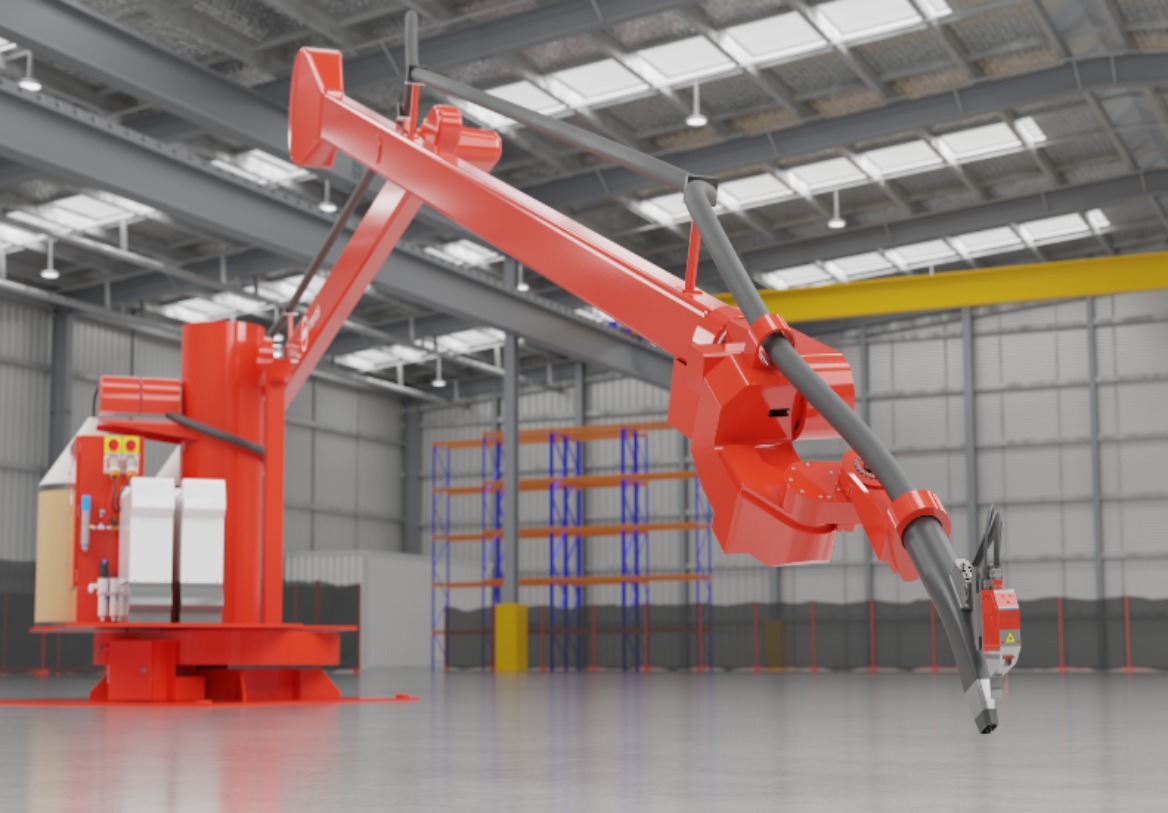
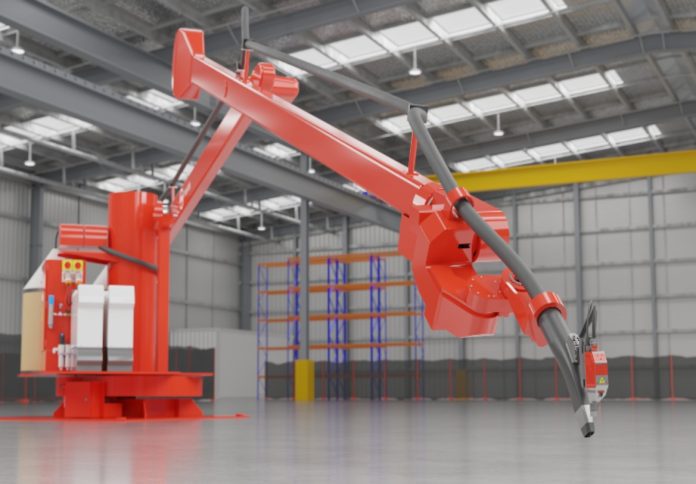
FBR’s Mantis™. Image credit: FBR

Robotic technology company FBR Limited has received a binding conditional purchase order valued at AUD 990,000 for its Mantis welding robot, in a deal aimed at supporting manufacturing operations in the United States.

In a news release, the company said the order has been placed by State Machinery & Equipment Sales, a Louisiana-based dealer for heavy equipment brands, which intends to use the Mantis robot in the manufacture of barges at its facility on the Mississippi River. 

FBR stated delivery is anticipated in the second half of calendar year 2026.

According to FBR, the purchase order is conditional on the successful completion of a Factory Acceptance Test to be conducted at the company’s Western Australian facility. 

The test will involve Mantis welding a sub-assembly of a hopper barge, with welding speed and quality independently assessed through non-destructive testing in line with AWS D1.1 standards.

Once the Factory Acceptance Test is completed to specification, AUD 450,000 of the contract value will become payable, with a further AUD 450,000 due on delivery and the remaining AUD 90,000 payable three months after delivery. 

The contract also includes installation and training services to be provided by FBR in Louisiana.

FBR chief executive officer Mark Pivac said the order reflects early interest in the technology despite it still being in the prototyping phase. “We are very pleased to have secured a binding conditional purchase order for Mantis while we’re still in the prototyping phase, which is indicative of the strong demand we’ve had for the product already,” he said. 

He added that the company looks forward to demonstrating the system’s welding performance during the acceptance testing process.

State Machinery president Ed Renton said the company sees the technology as an opportunity to enhance its manufacturing capability. “As the foremost dealer of heavy equipment in Louisiana, State Machinery has a lot of experience in manufacturing and construction equipment, and we are very excited to get our hands on the first Mantis® in the world,” he said.

“We are pleased to be working with the team to bring their robotic welding technology to the United States to boost our manufacturing capability.”

The content of this article is based on information supplied by FBR Limited. For more information, please refer to the official company announcement and communications from FBR. Please consult a licensed and/or registered professional in this area before making any decisions based on the content of this article.

Free Training

Source link