
US & Philippines to Create 4,000 Acre Manufacturing Zone


The manufacturing zone

The US State Department said in a statement that the hub is expected to serve as a purpose-built platform for allied manufacturing.

The currently conceptual site will serve as an “investment acceleration hub” where the specific industrial activities taking place will be shaped by market demand, host-country comparative advantages and the “evolving needs of the allied network”.

Situated within the Luzon Economic Corridor, the State Department said the Zone can leverage the Philippines’ geographic centrality in the Indo-Pacific as well as “its young and technically skilled workforce”.

This site, the first of its kind, is being designated by the Philippines as an Economic Security Zone, a new model for AI-native investment acceleration hubs being developed under the Pax Silica Initiative.

The Wall Street Journal reports that the administration will ask companies to put forward proposals to compete for a spot in building out the hub, giving priority to bids that will move critical minerals processing and manufacturing away from Chinese suppliers.

China and supply chains

Pax Silica is the Department of State’s effort on AI and supply chain security which spans advanced manufacturing and AI infrastructure with a goal to “reduce coercive dependencies”.

As the US ramps up manufacturing and production of these facilities in line with new technological developments, concerns have been raised about how dependent US supply chains and manufacturing is on China. 

Undersecretary of State for Economic Affairs Jacob Helberg told the Wall Street Journal: “The current geography of the global supply chain is completely unsustainable.” 

Free Training

Source link

FANUC America Announces $90 Million Investment to Create Production-Ready Capacity for Robot Manufacturing in the U.S.


ROCHESTER HILLS, Mich., March 24, 2026 /PRNewswire/ — FANUC America, a global leader in robotics and automation systems, today announced plans for a $90 million investment to acquire property and construct a new 840,000 sq. ft. facility in Michigan providing production-ready space for the potential expansion of the company’s existing U.S.-based manufacturing capabilities for robots.

FANUC America, a global leader in robotics and automation systems, has announced plans for a $90 million investment to acquire property and construct a new 840,000 sq. ft. facility in Michigan, providing production-ready space for the potential expansion of the company’s existing U.S.-based manufacturing capabilities for robots.

FANUC America, a global leader in robotics and automation systems, has announced plans for a $90 million investment to acquire property and construct a new 840,000 sq. ft. facility in Michigan, providing production-ready space for the potential expansion of the company’s existing U.S.-based manufacturing capabilities for robots.

Targeted for completion in late 2027, this strategic project is expected to add 225 jobs. This expands FANUC America’s engineering capacity and advanced manufacturing capabilities to support growing demand for automation solutions across North America, including physical AI, virtual commissioning and digital-twin technologies.

“This investment builds on FANUC America’s Michigan manufacturing footprint, which has included producing robots for paint application domestically for more than four decades,” said Mike Cicco, President and CEO, FANUC America. “By expanding its U.S. presence, FANUC America will strengthen domestic manufacturing, improve responsiveness to customer needs, and support industries that rely on automation to stay competitive.”

With this announcement, FANUC America will have invested nearly $300 million in multiple new facilities, increased the company’s footprint to 3 million sq. ft. and created more than 700 jobs in the United States since 2019.

“FANUC America is committed to supporting U.S. reindustrialization by delivering state-of-the-art automation technologies to customers and broadening access to advanced manufacturing workplace training services,” Cicco said. “The newly expanded FANUC Academy—opening in Auburn Hills, MI, later this year—will become the largest robotics and automation skills-development center in the United States, helping address the national manufacturing skills gap, rising demand for automation talent, the shift toward AI-enabled robotics and the country’s overall competitiveness.”

About FANUC America Corporation 
FANUC America Corporation, a subsidiary of FANUC CORPORATION in Japan, provides industry-leading CNC systems, robotics and ROBOMACHINEs. FANUC’s innovative technologies and proven expertise help manufacturers maximize efficiency and maintain a competitive edge.

FANUC America is headquartered at 3900 W. Hamlin Road, Rochester Hills, MI 48309, and has facilities throughout North and South America. For more information, please call: 888-FANUC-US (888-326-8287) or visit our website: www.fanucamerica.com . Also, connect with us on YouTube, X, Facebook, LinkedIn and Instagram.

Media Contact:
[email protected]

SOURCE Fanuc America Corporation


Free Training

Source link

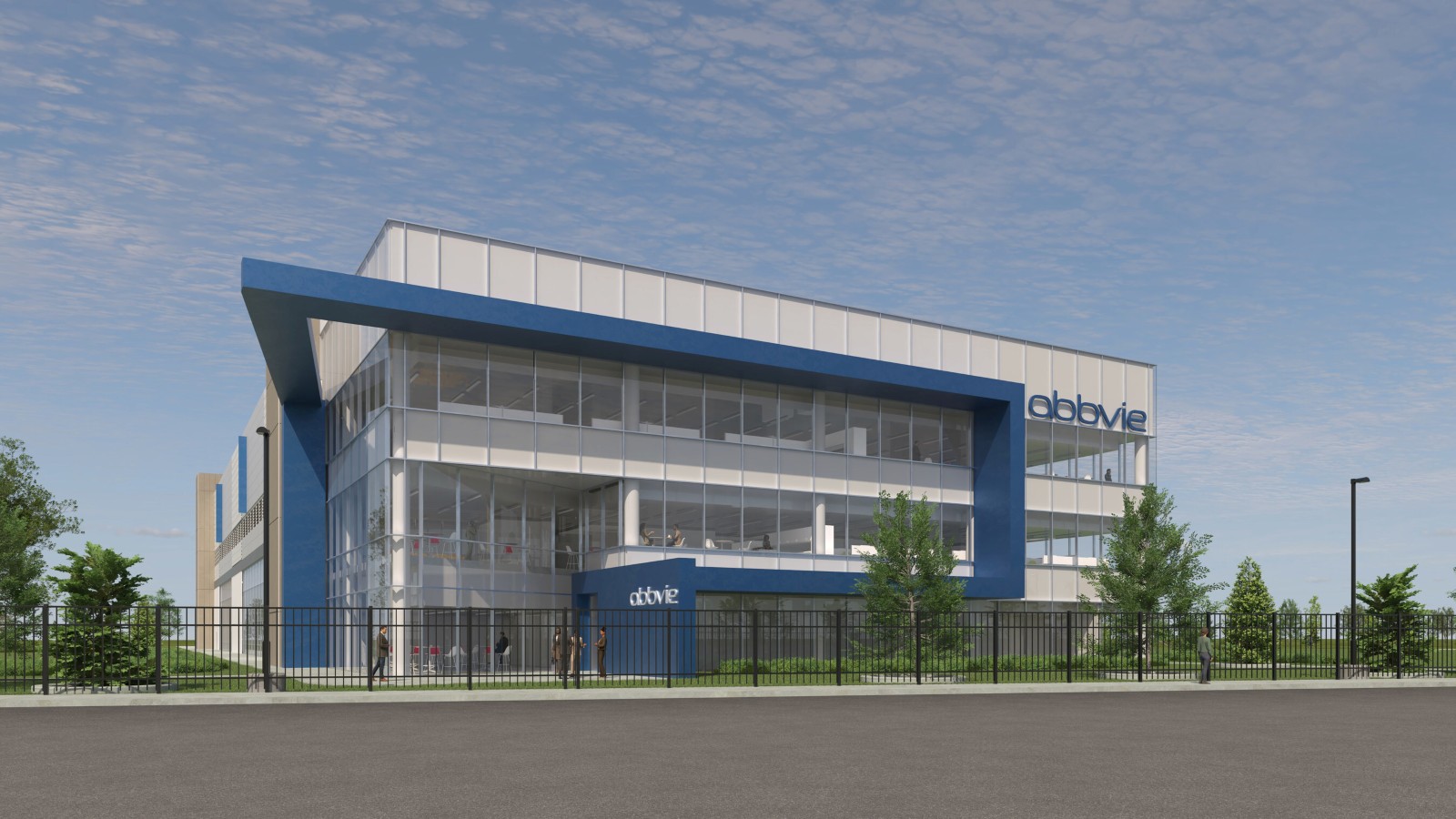
AbbVie to create 300 new jobs with $380m Illinois manufacturing investment


AbbVie has announced a $380m investment to build two new active pharmaceutical ingredient (API) manufacturing facilities at its North Chicago campus, expanding U.S. production capacity for next-generation medicines and creating around 300 new jobs.

The new facilities will support production of AbbVie’s future neuroscience and obesity treatments, integrating advanced manufacturing technologies and artificial intelligence into API production processes. Construction is scheduled to begin in spring 2026, with both plants expected to be operational by 2029.

AbbVie CEO Robert A. Michael said the project reflects the company’s long-term commitment to U.S. manufacturing.

“This milestone demonstrates further progress against our $100bn commitment to U.S. R&D and capital investments over the next decade,” he said. “By strengthening our U.S. manufacturing capabilities, we are well-positioned to support our investment in innovation and enhance our ability to deliver next-generation medicines to patients.”

API manufacturing involves producing the active components responsible for a drug’s therapeutic effects, a complex multi-step process often outsourced globally. AbbVie has spent the past six months outlining plans to expand API capacity in the United States.

In September 2025, the company broke ground on a chemical synthesis facility intended to bring production of selected neuroscience, immunology and oncology APIs back from Europe and Asia to the U.S.

The latest investment is expected to support approximately 300 new roles in North Chicago, including engineers, scientists, manufacturing operators and laboratory technicians.

AbbVie employs around 29,000 people across the United States, including more than 6,000 at its domestic manufacturing sites and over 11,500 in Illinois. The North Chicago expansion reinforces the company’s long-standing presence in the state, where it is headquartered.

The investment also forms part of a wider U.S. manufacturing push. AbbVie recently announced plans to acquire a device manufacturing facility in Arizona and expand operations in Massachusetts, and said it is in talks with several states about additional projects expected to be announced in 2026.

AbbVie’s move reflects a wider trend across North American pharmaceutical manufacturing, where companies are investing in domestic API production to improve supply-chain resilience, meet regulatory expectations, and take advantage of government incentives.

As demand rises for obesity and neuroscience treatments, increased U.S. API capacity could play a key role in ensuring reliable supply while accelerating the adoption of advanced manufacturing technologies.

Free Training

Source link