U.S. Battery Manufacturing Construction Hits $45 Billion Amid Energy Storage Shift


U.S. Battery Manufacturing Construction Reaches $45B as Automakers Shift Toward Energy Storage

Battery manufacturing construction activity across the United States has reached unprecedented levels, with approximately $45 billion worth of projects currently under construction as automakers and energy companies pivot toward energy-storage technology.

Courtesy: photo by Julia on Pexels

According to new data released by Industrial Info Resources (IIR), the U.S. has roughly $63 billion in active and planned battery-manufacturing projects underway, with the majority of spending tied to facilities already being built.

The construction boom reflects a significant shift in strategy among automotive manufacturers and battery suppliers as demand growth for fully electric vehicles slows and companies increasingly focus on battery energy storage systems, or BESS.

“Rollbacks on energy transition funding — including the expiration of the federal $7,500 consumer EV tax credit — and slower-than-expected market adoption — are leading domestic automakers to shift production from full EVs, leaving some U.S. battery-manufacturing capacity underutilized,” the report stated.

Industry analysts say the transition is also being fueled by growing electricity demand from data centers and renewable energy infrastructure.

Automakers Reconfigure Facilities for Energy Storage Production

Major automakers including Ford and General Motors are investing billions to convert or expand facilities capable of producing lithium-iron-phosphate batteries for energy-storage applications.

Ford recently launched its new Ford Energy division and is investing approximately $2 billion to convert a former EV battery plant in Glendale, Kentucky, into a commercial BESS manufacturing facility. The plant is expected to produce at least 20 gigawatt-hours annually and begin operations in 2027.

Another Ford battery project under construction in Marshall, Michigan, is expected to begin production later this year and will focus on smaller residential battery units.

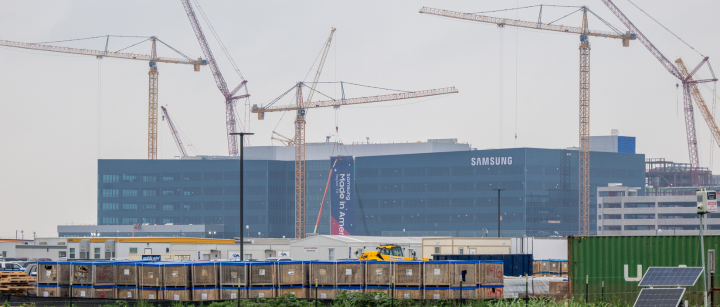
General Motors and Samsung SDI are also constructing a $3.5 billion battery facility in Indiana designed to support both EV and energy-storage battery production. Construction is expected to conclude by the end of 2027.

Meanwhile, GM’s Ultium Cells joint venture with LG Energy Solution is retooling its Spring Hill, Tennessee, facility to shift manufacturing toward lithium-iron-phosphate battery cells for energy storage.

Battery-storage technology is becoming increasingly important for utilities and data centers seeking alternatives to diesel-powered backup systems during grid disruptions.

Suppliers Expand U.S. Battery Investments

Battery manufacturers and suppliers are continuing to invest heavily in U.S. production capacity tied to Tesla and hybrid vehicle demand.

LG Energy Solution recently signed a deal to provide Tesla with $4.3 billion worth of lithium-iron-phosphate battery cells from its Lansing, Michigan, facility for use in energy-storage systems. The agreement is driving plans for a multibillion-dollar retooling and expansion of the plant.

Panasonic is also moving forward with a $4 billion expansion of its De Soto, Kansas, facility near Kansas City to increase production of battery cells for Tesla electric vehicles. Full-scale production is expected to begin in 2027.

Toyota is simultaneously expanding battery production at its Liberty, North Carolina, campus, the company’s only battery plant outside Japan. The project includes a new building with two production lines and eight additional lines dedicated to plug-in hybrid vehicles.

Industrial Info Resources said the rapid expansion of battery manufacturing construction demonstrates how energy storage is becoming a critical component of the nation’s evolving power infrastructure and industrial economy.

The report also highlights how data center growth and grid reliability concerns are reshaping investment priorities across the automotive and manufacturing sectors.

Originally reported by Danny Levin, Deputy Editor for IIR News Intelligence (Sugar Land, Texas) in Industrial Info. Com.

Free Training

Source link

Novartis Begins Construction on Denton, Texas Radioligand Therapy Facility


Novartis Breaks Ground on Texas Radioligand Therapy Facility as Part of $23 Billion U.S. Expansion

Novartis has officially begun construction on a new radioligand therapy manufacturing facility in Denton, Texas, marking another major step in the pharmaceutical company’s multibillion-dollar expansion of its U.S. manufacturing and research operations.

Courtesy: photo by Furkan on pexels

The 46,000-square-foot facility will serve as Novartis’ first manufacturing site in Texas and its fifth radioligand therapy, or RLT, production site in the United States. The project is part of the company’s broader $23 billion investment strategy aimed at strengthening domestic pharmaceutical manufacturing and supply chain operations over the next five years.

Company officials said the Denton facility is expected to become operational in 2028 and will support the production of targeted cancer therapies for patients across the southern United States.

“Radioligand therapy is transforming how we treat cancer, and expanded manufacturing is essential to delivering these therapies at scale,” said Vas Narasimhan, CEO of Novartis. “Breaking ground in Denton further strengthens our US supply chain and helps ensure patients can receive these highly personalized treatments when and where they need them.”

Denton Facility Expands National Manufacturing Network

The groundbreaking ceremony included federal, state and local officials, including U.S. Under Secretary of Commerce for Industry and Security Jeffrey Kessler, Swiss Ambassador to the U.S. Ralf Heckner, Texas State Sen. Brent Hagenbuch, Texas State Rep. Andy Hopper and Denton Mayor Gerard Hudspeth.

The new facility will support Novartis’ expanding radioligand therapy network, which already includes sites in New Jersey, Indiana and California, along with another facility planned for Florida.

According to the company, radioligand therapy manufacturing requires highly specialized production and logistics coordination because treatments are customized for individual patients and delivered within narrow treatment windows. Novartis said its current network allows more than 99% of doses to be administered on the scheduled treatment day.

The company also expects the Denton project to generate new jobs in bioengineering, manufacturing, quality assurance and operations, contributing to regional economic development in North Texas.

“I’m pleased to welcome Novartis to Denton as their newest manufacturing location for their cancer therapies,” said Texas State Senator Brent Hagenbuch. “Their decision establishes a strong partnership and reflects the unique opportunity Denton provides to a well-educated workforce, and the unique access the new plant location will provide to the vibrant North Texas economy and rapidly growing state population.”

Construction Pipeline Includes Multiple U.S. Projects

The Texas project is one of several major construction and expansion initiatives currently underway as part of Novartis’ nationwide investment program.

In recent months, the company announced or began work on projects in North Carolina, California and Florida, including a biomedical research center in San Diego and a new manufacturing facility in Winter Park, Florida. The company also continues to expand existing RLT operations in Indianapolis and Millburn, New Jersey.

Novartis said the ongoing investments are intended to support domestic manufacturing of key medicines while improving supply chain resilience and treatment access.

Radioligand therapy has become a growing area of focus for pharmaceutical manufacturers because the technology targets cancer cells with radioactive compounds designed to minimize damage to surrounding healthy tissue. Novartis said it is currently studying the use of RLTs for several forms of cancer, including prostate, breast, lung, colon, pancreatic and brain cancers.

The company described its U.S. expansion as part of a long-term strategy to scale manufacturing capacity alongside the continued development of its oncology pipeline and emerging treatment technologies.

Originally reported by Novartis Pharma AG in Yahoo Finance.

Free Training

Source link

One Big Beautiful Bill Act Drives U.S. Construction Boom and Manufacturing Growth


The One Big Beautiful Bill Act (BBBA) is reshaping the U.S. manufacturing and construction landscape by introducing significant tax incentives tied to capital investment, domestic production and research activity.

Courtesy: Photo by Scott Blake on Unsplash

Signed as part of President Donald Trump’s broader tax and spending agenda, the legislation is designed to stimulate U.S.-based manufacturing capacity and reduce reliance on overseas production.

BBBA Incentives Expected to Accelerate U.S. Factory Construction

One of the most impactful provisions is the Qualified Production Property Deduction. Under this measure, companies that build new manufacturing facilities — or significantly expand existing ones — can deduct 100% of eligible capital expenditures, provided construction begins between January 20, 2025 and December 31, 2028. Projects must be placed into service by January 1, 2031.

This accelerated deduction dramatically improves project economics. Instead of spreading depreciation over decades, companies can deduct the full investment upfront, strengthening short-term cash flow and improving internal rates of return.

For the construction sector, this creates a narrow but powerful investment window. Industry analysts expect a surge in factory groundbreakings over the next three years as companies race to qualify.

For composites manufacturers and suppliers, the ripple effects could be substantial. Increased factory construction means higher demand for advanced building materials such as fiber-reinforced polymer (FRP) rebar, composite panels, corrosion-resistant structures and lightweight structural components.

100% Bonus Depreciation Strengthens Capital Spending and R&D

In addition to the production property deduction, the BBBA reinstates 100% bonus depreciation for qualifying capital expenditures. Traditionally, capital investments are depreciated over multiple years according to IRS schedules. Under the updated framework, companies can deduct the entire cost of machinery, tooling, and production equipment in the year it is placed in service.

This provision improves liquidity and encourages businesses to modernize production lines, automate facilities and invest in advanced manufacturing technologies.

For the composites industry, this could accelerate:

  • Expansion of domestic composite fabrication plants
  • Investment in automated layup and molding systems
  • Increased capacity for thermoplastic and thermoset production
  • Growth in aerospace, automotive and infrastructure supply chains

Beyond construction, R&D-related incentives embedded in the broader tax package are expected to encourage innovation in advanced materials. Composites firms developing lightweight, high-strength and sustainable materials stand to benefit from a more favorable tax treatment of research expenditures.

Strategic Timing for Composites Manufacturers

The timing window built into the legislation is critical. With eligibility tied to construction start dates and service deadlines, companies must act quickly to secure benefits.

Domestic firms considering U.S. expansion now have a tax-advantaged environment to do so. Likewise, international composites manufacturers evaluating North American production footprints may view the current period as an optimal entry point.

The legislation effectively compresses investment decisions into a three- to four-year horizon. That urgency is likely to generate elevated activity across engineering, procurement and construction (EPC) markets.

For suppliers of composite materials used in industrial flooring, bridge decks, wastewater facilities, reinforcement systems and structural retrofits, the anticipated uptick in manufacturing plant construction could translate into steady order growth through the end of the decade.

Broader Economic Implications

Courtesy: Photo by Pixabay on Pexels

The BBBA’s construction and capital expenditure provisions are not isolated measures; they are part of a broader strategy to strengthen domestic industrial capacity.

If widely adopted, the incentives could:

  • Expand U.S. manufacturing output
  • Increase demand for skilled labor in construction and engineering
  • Shorten supply chains for advanced materials
  • Support long-term infrastructure modernization

For the composites industry, the law represents more than a short-term stimulus. It creates structural incentives for reshoring production and investing in advanced materials technologies — positioning the sector to play a central role in the next wave of U.S. industrial growth.

As companies evaluate investment pipelines for 2025–2029, the BBBA’s tax environment may prove decisive in determining where and when new manufacturing capacity is built.

Originally Reported by JEC Composites.

Free Training

Source link

Manufacturing Construction Spending Declines Despite Trump’s “41% Up” Claim


Spending to build and expand U.S. manufacturing facilities has fallen since President Donald Trump returned to office, according to U.S. Census Bureau figures — a trend that conflicts with the president’s repeated assertion that factory construction is soaring.

Trump has frequently cited a “41% increase” in factory investment, portraying it as proof that his trade and economic policies are fueling a manufacturing boom.

“Investment in American factories is up 41%. That’s a record. Nobody goes 41% up. You go 2% up, 1% up. You go down by 3%. If Kamala [Harris] got elected, the 41% up would be 41% down,” Trump said at a White House press conference on Jan. 20.

Courtesy: Photo by Schiba on Unsplash

He repeated the claim the next day at the World Economic Forum in Davos:

“Factory construction is up by 41%, and that number is really going to skyrocket right now, because that’s during a process that they’re putting in to get their approvals and we’ve given very, very quick, fast approvals.”

FactCheck.org reviewed the underlying data and found a different picture: manufacturing construction spending peaked in 2024 during the Biden administration and has edged downward since.

What the Census Data Actually Show

Under President Joe Biden, manufacturing construction experienced an unprecedented surge. Annual average spending rose more than 200%, climbing from $75.5 billion in 2021 to $235.6 billion in 2024, driven largely by the bipartisan CHIPS and Science Act and post-pandemic reshoring.

Economist Anirban Basu of the Associated Builders and Contractors explained the early momentum:

“Supply chain disruptions at the start of the COVID-19 pandemic convinced many producers to reshore capacity, while a sudden and sharp increase in construction materials prices—which rose more than 40% during the early years of the pandemic—also boosted nominal construction spending.”

However, quarterly Census data indicate that from late 2024 through the third quarter of 2025 — Trump’s first months back in office — spending declined 6.7%. Monthly figures show a 7.3% drop from January to October 2025.

The American Institute of Architects expects further cooling:

“Manufacturing construction spending has seen phenomenal growth… However, growth paused last year as spending in this category fell about 5% and is projected to decline another 4% this year and 1% in 2027.”

Where the “41%” Figure Came From

After multiple inquiries, the White House told FactCheck.org it compared January–August 2025 spending with the average of 2021–2024, producing roughly a 40% increase. But the methodology ignores that the entire surge occurred under Biden and that spending has since softened.

Basu attributed the recent slowdown partly to Trump’s tariff policies:

“With CHIPS Act-enabled megaprojects winding down and the stiff headwind of trade policy, manufacturing construction spending has fallen by nearly 10% over the past 12 months.”

He added that 2025 activity remains elevated “largely due to the surge in megaproject activity induced by the CHIPS Act.”

Tariffs have also pushed up costs:

“[I]t should be noted that spending in the fabricated metal manufacturing subsegment is up 19% over the past year. Some of the increase can be contributed to tariffs and the resulting increase in demand for domestic production.”

Jobs Haven’t Followed the Spending

Despite billions poured into new facilities, manufacturing employment has continued to slip. The Bureau of Labor Statistics shows the economy lost 63,000 manufacturing jobs in Trump’s first 11 months, following a loss of 98,000 in the prior 11 months.

Industry observers say job growth may come later. A December 2024 article in Manufacturing Today noted:

“Unlike traditional industrial projects, today’s semiconductor and clean energy facilities require longer timelines. Factories of this scale can take two to three years to complete… This extended timeline means the full benefits will not be realized for several more years.”

Courtesy: Photo by Pixabay on Pexels

Basu agreed but warned tariffs could blunt those gains:

“The massive facilities incentivized by the CHIPS Act will employ thousands of people. That said… recent trade policy and the effects on manufacturing input prices have put downward pressure on the industry’s employment.”

Mixed Views on Tariffs

Some analysts remain optimistic. Morgan Stanley’s Chris Snyder called tariffs “a positive catalyst” for relocating production:

“What we’re seeing is the cost of imports have gone higher with tariffs, and now it’s more economically advisable for these companies to make the product in the United States.”

Others disagree. The Wall Street Journal reported that tariffs “haven’t worked, so far,” increasing costs and creating uncertainty that executives view as “a lost year for investment.”

Bottom Line

While factory construction remains historically high, the recent trajectory under Trump is downward, not upward. The oft-repeated 41% claim relies on a comparison that credits Biden-era spending to the current administration.

As FactCheck.org concluded, “factory construction so far has declined under Trump and his claim that it has increased 41% depends on a spending surge that occurred under Biden.”

Originally reported by Eugene Kiely in Fact Check.

Free Training

Source link

Manufacturing Construction Spending Declines Under Trump


Spending to build, expand and rehabilitate manufacturing sites in the U.S. has declined since President Donald Trump took office, according to U.S. Census Bureau data. Yet, Trump has repeatedly boasted that “factory construction” is up 41%.
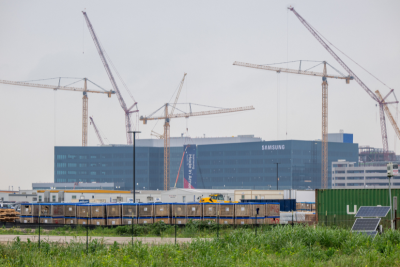
A general view of the Samsung Austin Semiconductor plant on April 16, 2024, in Taylor, Texas, which received CHIPS Act funds. Photo by Brandon Bell/Getty Images.

Trump cited the 41% statistic in a White House press conference on Jan. 20 – calling it a “record” increase and suggesting that other presidents cannot compare to this “record.” 

“Investment in American factories is up 41%. That’s a record. Nobody goes 41% up. You go 2% up, 1% up. You go down by 3%. If Kamala [Harris] got elected, the 41% up would be 41% down,” Trump said at the press conference, referring to the former vice president and Democratic presidential nominee who lost to Trump in the 2024 election.

A day later, in a Jan. 21 speech at the World Economic Forum Annual Meeting in Davos, Switzerland, Trump repeated the 41% figure. 

“Factory construction is up by 41%, and that number is really going to skyrocket right now, because that’s during a process that they’re putting in to get their approvals and we’ve given very, very quick, fast approvals,” Trump said. 

This claim is part of a theme the president has emphasized of a “manufacturing boom” or “booming” economy due to his trade policies.

At our request, the White House sent us a link to the Census Bureau’s manufacturing construction spending data via the Federal Reserve Bank of St. Louis’ online database known as FRED. We provide more about the White House response later, but let’s focus first on what the data show.

Under President Joe Biden — who served from Jan. 20, 2021, to Jan. 20, 2025 — there was a significant increase in manufacturing construction spending in all four years, according to the Census Bureau’s annual average estimates. After declining 6.9% in 2020 – the last year of Trump’s first term – manufacturing construction spending started to rise in 2021, the data show. 

(Technical note: The Census Bureau provides average quarterly and annual estimates and monthly reports for construction spending, including manufacturing construction spending, based on its monthly Value of Construction Put in Place survey. We use all three in this story.) 

Initially, the increases during the Biden years were in response to the COVID-19 pandemic, Anirban Basu, chief economist for the Associated Builders and Contractors, an industry trade association, told us in an email. 

“Supply chain disruptions at the start of the COVID-19 pandemic convinced many producers to reshore capacity, while a sudden and sharp increase in construction materials prices—which rose more than 40% during the early years of the pandemic—also boosted nominal construction spending,” Basu said. 

Manufacturing construction spending accelerated after Biden signed legislation in August 2022 designed to encourage private investment in U.S. manufacturing for semiconductors and clean energy. The bipartisan CHIPS Act, for example, included $39 billion to help fund semiconductor manufacturing facilities in the U.S., as explained in an April 2023 report by the Congressional Research Service.

During Biden’s four years, the annual average rate of manufacturing construction spending jumped more than 200%, from $75.5 billion to $235.6 billion, according to Census Bureau estimates. Spending surged 62% in a single year – 2023, a year after Biden signed the CHIPS Act. 

But manufacturing construction spending peaked in the third quarter of 2024 and has been trending down slightly ever since. Census Bureau quarterly data show that under Trump, measuring from the last quarter in 2024 through the third quarter in 2025, spending declined 6.7%. 

That decline is expected to continue in 2026 and 2027, according to the most recent survey of construction economists that is conducted twice a year by the American Institute of Architects.

“Manufacturing construction spending has seen phenomenal growth in recent years, increasing by over 50% in 2022, another 62% in 2023, and then another 16% in 2024,” the AIA consensus construction forecast published Jan. 15 said. “However, growth paused last year as spending in this category fell about 5% and is projected to decline another 4% this year and 1% in 2027.”

Despite the slight declines, the AIA construction forecast noted that the semiconductor fabrication plants continue to fuel manufacturing construction spending and will do so in the long term.

“The longer-term prospects look much more promising, as construction starts for manufacturing projects have shot up again,” the AIA forecast said. “Since many of these starts are for megaprojects, such as large semiconductor fabrication plants that entail a complex construction process, it may take a while before the activity shows up in the construction spending data.”

In January, Basu analyzed the Census Bureau’s most recent monthly report for nonresidential construction spending, which showed manufacturing construction spending as of October had declined for nine straight months

“With CHIPS Act-enabled megaprojects winding down and the stiff headwind of trade policy, manufacturing construction spending has fallen by nearly 10% over the past 12 months, accounting for more than the entire decline in private nonresidential spending,” Basu said in an ABC press release issued Jan. 21. (By “trade policy,” Basu is referring to the economic impact of Trump’s tariffs on construction materials.)

On a monthly basis, the Census Bureau shows a 7.3% decline in manufacturing construction spending last year under Trump from January through October, the most recent data available.

Beginning on Jan. 23, we asked the White House on multiple occasions to provide support for the 41% figure used in Trump’s Jan. 20 and 21 remarks. After not receiving a response, we sent another email on Feb. 2 after the president wrote an opinion piece for the Wall Street Journal on Jan. 30 that said, “Factory construction is up by 42% since 2022.” We asked how it arrived at a 42% increase “since 2022.” That evening, the White House sent us a link to the Census Bureau’s manufacturing construction spending data, saying it compared “averages of Jan – August 2025 vs 2021-2024 average.”

That’s true — as far as it goes. On an annualized basis, monthly manufacturing construction spending averaged $226.1 billion for January through August — which is 40% higher than the annual average of $161.1 billion in Biden’s four years. But Trump wrote that the 42% increase was “since 2022,” not 2021. (We’ve asked the White House for a clarification.)

More importantly, the White House methodology fails to take into account the 212% increase in factory construction spending over Biden’s four years, which peaked in 2024 at an annual average of $235.6 billion, and how the Biden-era CHIPS Act continues to fuel manufacturing construction spending.

As we noted earlier, Basu attributed the recent decline to Trump’s tariffs and the slowing — not the halting — of construction projects spurred by the CHIPS Act. Asked to elaborate on his analysis, Basu told us that the manufacturing construction spending in 2025 is “largely due” to the CHIPS Act.

“While spending in the segment remains elevated from 2022 levels, that’s partially due to a precipitous increase in materials prices that occurred in 2022 and 2023 — these data are in nominal terms — and largely due to the surge in megaproject activity induced by the CHIPS Act,” Basu said.

He added that Trump’s tariffs have helped drive up the costs of fabricated metal — which has increased manufacturing construction costs.

“[I]t should be noted that spending in the fabricated metal manufacturing subsegment is up 19% over the past year,” Basu said. “Some of the increase can be contributed to tariffs and the resulting increase in demand for domestic production.”

We should note that even with the recent surge in manufacturing construction spending, there has been a decline in the number of manufacturing jobs. As we reported last month, the economy lost 63,000 manufacturing jobs in Trump’s first 11 months. That followed a loss of 98,000 in the preceding 11 months, according to the Bureau of Labor Statistics.

Shortly before Biden left office, Manufacturing Today, a trade magazine, wrote in December 2024 that manufacturing jobs were slow to materialize despite Biden’s incentives to spur manufacturing construction. But the magazine predicted the jobs “will materialize in the future.”

“Unlike traditional industrial projects, today’s semiconductor and clean energy facilities require longer timelines,” the article said. “Factories of this scale can take two to three years to complete, with even longer delays for more complex facilities, such as semiconductor plants. This extended timeline means the full benefits will not be realized for several more years.”

Basu agreed that CHIPS-related spending will result in an overall increase in U.S. manufacturing jobs – but cautioned that the impact of Trump’s tariffs could offset those gains. 

“The massive facilities incentivized by the CHIPS Act will employ thousands of people,” Basu told us. “That said, all else is not equal, and recent trade policy and the effects on manufacturing input prices have put downward pressure on the industry’s employment.” (Input prices are costs of materials and other resources manufacturers need to produce goods, with some of those materials being imported.)

Others are bullish that Trump’s trade policies will encourage more manufacturers to expand in the U.S. 

In April, when Trump announced higher tariffs on nearly all foreign imports, Morgan Stanley analyst Chris Snyder called tariffs “a positive catalyst” for relocating manufacturing to the U.S. More recently, Snyder said in a podcast last month that the tariffs have changed the “supply chain cost calculation” and will result in new U.S. factories. 

“What we’re seeing is the cost of imports have gone higher with tariffs, and now it’s more economically advisable for these companies to make the product in the United States,” Snyder said. “And if that’s the case, that means that when they need a new factory, it’s going to come to the United States. They might not need a factory now, but when they do, the U.S. is at least incrementally better positioned to get that factory.”

In a January news article, the Wall Street Journal wrote that Trump’s tariffs “haven’t worked, so far.” The article said tariffs have increased manufacturers’ costs for foreign parts, adding that the “White House’s stop-and-start” tariff policy announcements have “also led to what many executives view as a lost year for investment.”

In a December interview with the Wall Street Journal, Trump cited — as he often does — the value of investments that he says his administration has secured to date. (As we’ve written, he has exaggerated pledges to invest made by various companies and countries that may or may not materialize, experts say.) But he couldn’t say if the investments would show results in time for the midterm elections, when the Republican Party is in jeopardy of losing its slim majority in the House. “I can’t tell you. I don’t know when all of this money is going to kick in,” the president told the Journal, adding that it may happen in the second quarter of this year.

What will happen in the coming months and years remains to be seen. But what we can say is that factory construction so far has declined under Trump and his claim that it has increased 41% depends on a spending surge that occurred under Biden. 

Editor’s note: FactCheck.org does not accept advertising. We rely on grants and individual donations from people like you. Please consider a donation. Credit card donations may be made through our “Donate” page. If you prefer to give by check, send to: FactCheck.org, Annenberg Public Policy Center, P.O. Box 58100, Philadelphia, PA 19102. 

Free Training

Source link

Construction of a Hypersonic Weapons Manufacturing Facility Begins in the United States


Construction of a Hypersonic Weapons Manufacturing Facility Begins in the United States – Militarnyi

Приват: 5169 3351 0164 7408 PayPal – [email protected] Стати нашим патроном за лінком ⬇

modal-success lazyload

You are subscribed to our newsletter

Free Training

Source link