Bosch Lands $225M in CHIPS Funding for California Chip Plant


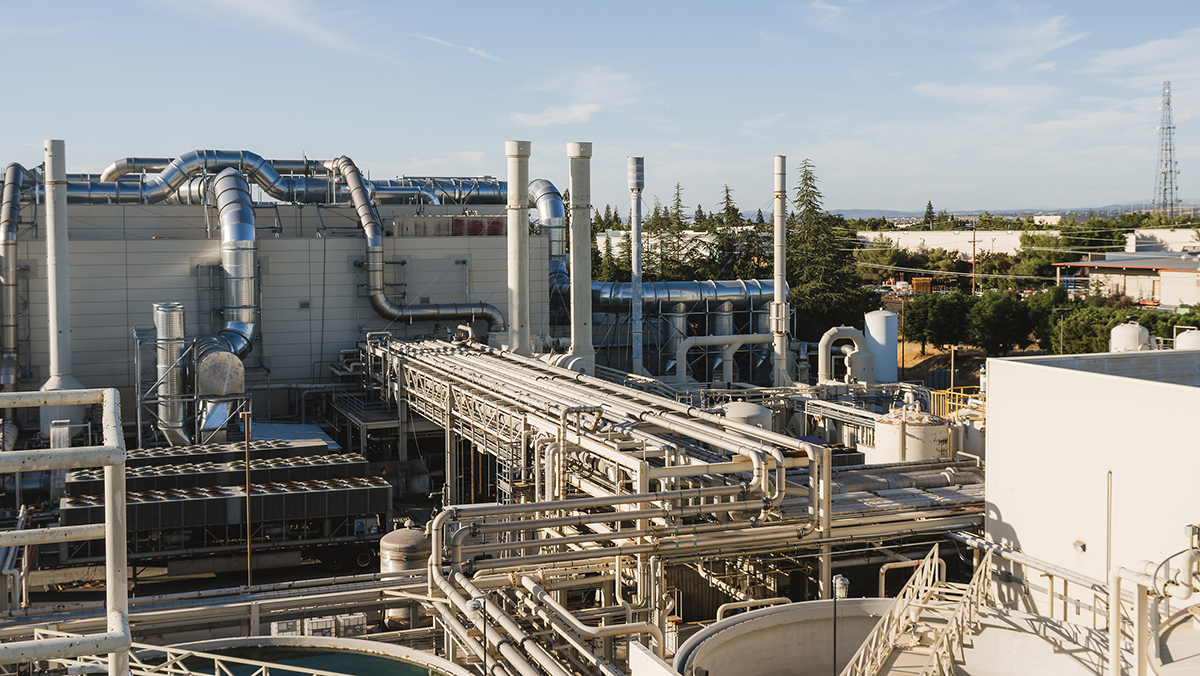
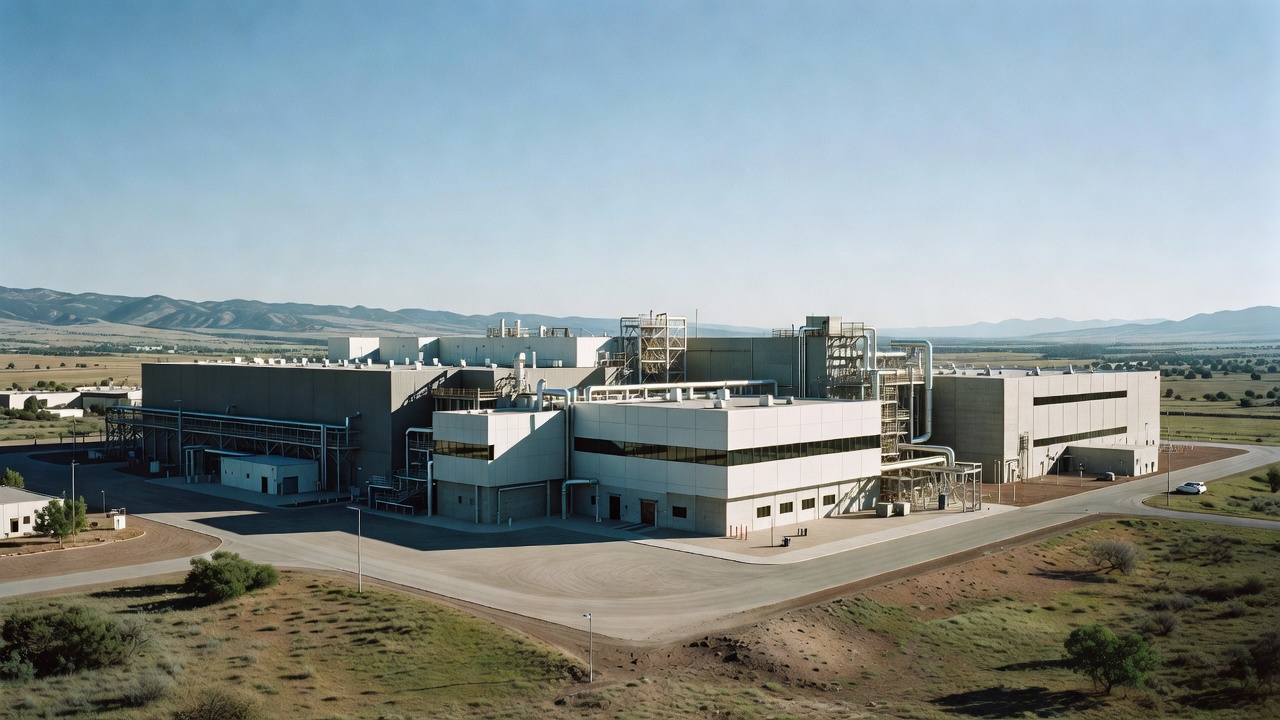
Bosch—a provider of technology and services and the largest automotive supplier in the world according to external rankings—announced a definitive agreement for up to $225 million in direct funding from the Department of Commerce’s CHIPS Program Office. This will support the up to $2 billion Bosch is investing to transform its Roseville, California, site for the production of silicon carbide (SiC) semiconductors, company officials stated in a press release.

The Roseville facility, which has more than 40 years of experience in semiconductor manufacturing, is evolving into a facility that produces and tests SiC semiconductors with state-of-the-art processes and equipment. Bosch also announced it has begun sample production in Roseville as the company intends to produce its first commercial production chips on 200-millimeter wafers based on the pioneering SiC Bosch technology in 2026.

“The start of sample production and our agreement with the Department of Commerce is a milestone in providing our local customers with what they have requested—localized U.S.-based manufacturing,” said Paul Thomas, president and CEO of Bosch in North America. “The production of silicon carbide chips in the United States helps to support supply chain resiliency and capitalizes on the expertise of U.S. manufacturing associates to bring this technology to the U.S. market in a timely manner.”

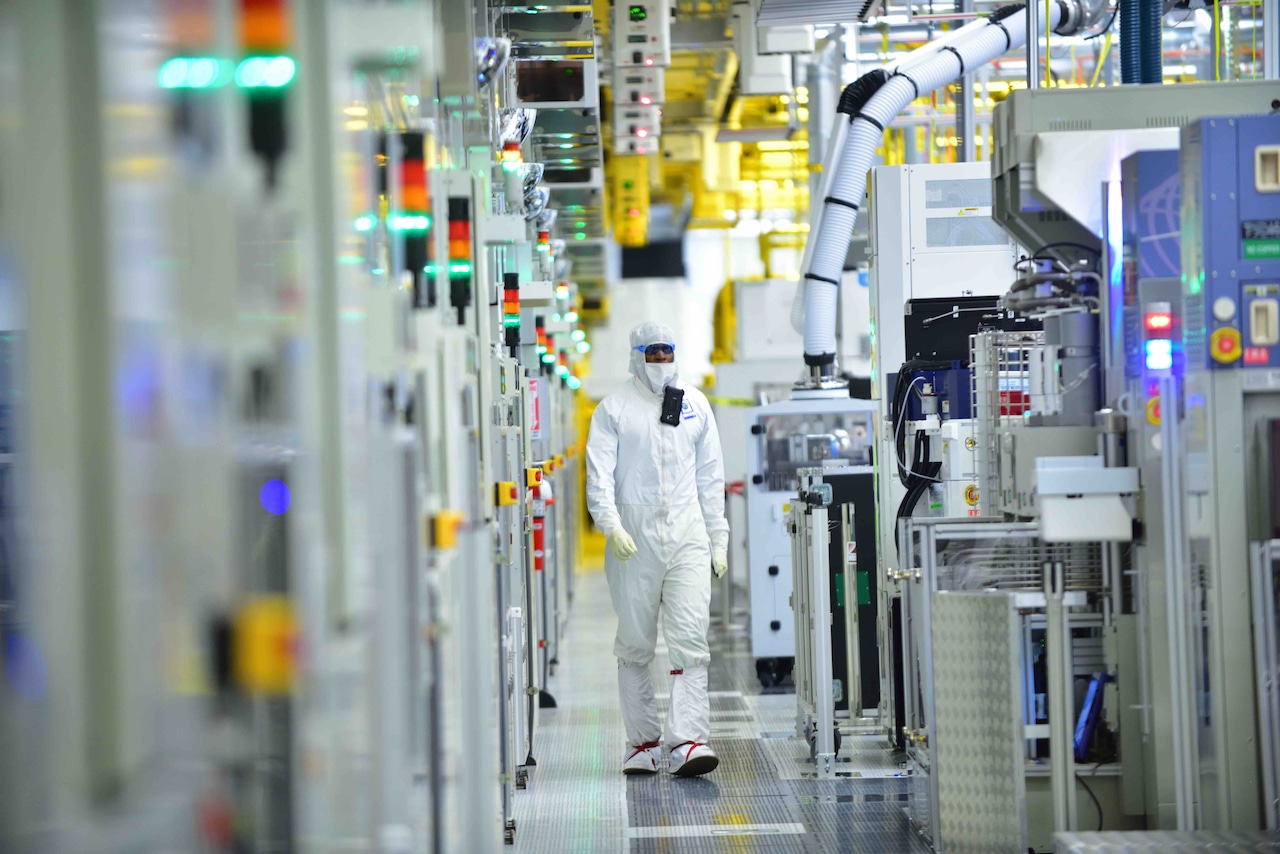
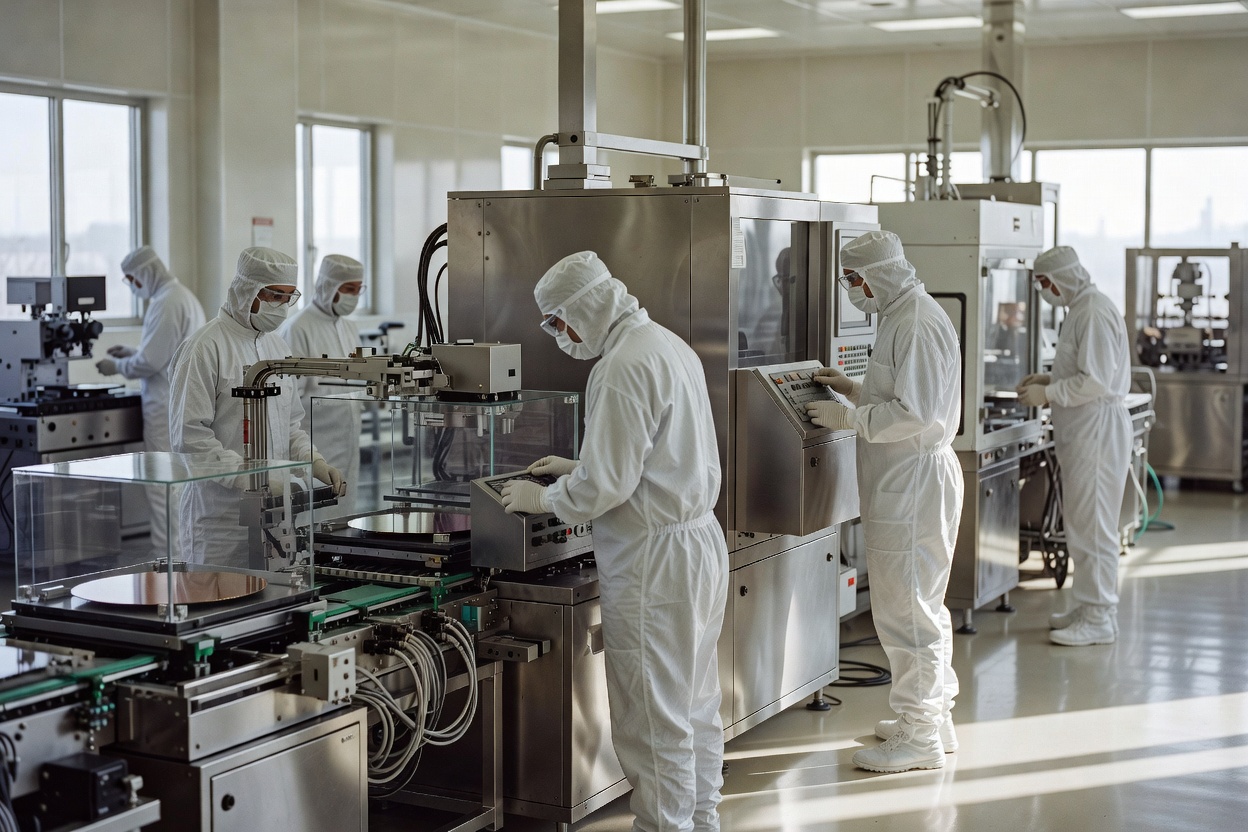
As part of its investment into U.S. manufacturing at the Roseville site, Bosch has developed a new cleanroom space and high-tech manufacturing line for production of silicon carbide chips. Bosch says that it has accelerated its time-to-market through investment into a long-standing U.S.-based manufacturing facility with highly skilled U.S.-based associates who bring specific semiconductor experience.

Bosch signBosch is investing up to $2 billion to transform the Roseville site into a facility that produces & tests SiC semiconductors.

In April 2023, Bosch announced its intention to acquire the assets of the existing wafer fab in Roseville. The acquisition was closed in August 2023, and since that time Bosch has begun to transform the site while also maintaining employment of the existing associates throughout the transformation process. Bosch invested in the further development of Roseville associates through training and collaboration with the Bosch production network.

Bosch has a long-standing commitment to the U.S. and is celebrating its 120th anniversary in the country in 2026, officials said. The company plans to invest up to $7.5 billion over the next five years across its operations in the U.S. as it heads toward its 125th anniversary of U.S. operations in 2031.

“We are focused on growth and investment in the United States in order to increase the share of our global portfolio that is represented by North America and the U.S. specifically,” Thomas said. “The Roseville investment is a key milestone in our 120 years in the U.S.”

Why Silicon Carbide Chips Matter for EV Manufacturing

Silicon carbide chips are becoming foundational in electric and next-generation mobility systems as they handle high voltages, high temperatures and fast switching more efficiently. They also enable automotive manufacturers with a technology that supports consumer choice in the market, as it helps to enable greater range and more efficient recharging in battery-electric vehicles and plug-in hybrid vehicles.

Recently, Bosch announced its third-generation silicon carbide chips that deliver up to 20% higher performance and are smaller than the previous generation. In the near future, Bosch plans to manufacture third-generation silicon carbide chips in Roseville. The new generation helps to enable greater cost efficiency and supports making high-performance electronics more widely available worldwide. Bosch has already delivered more than 60 million SiC chips worldwide since the first generation went into production in 2021.

In addition to mobility applications, silicon carbide also has potential uses in other business sectors, including industrial energy applications for energy consumption effectiveness in data centers. Since SiC chips enable higher-efficiency, higher-power conversion with less heat and smaller components, they’re ideal for supporting rapidly growing AI workloads while reducing energy and cooling demands.

Two techs in white scrubes in a labBosch intends to start U.S.-based commercial manufacturing in 2026, just three years after acquiring the Roseville site.

“Silicon carbide semiconductors are the enabling technology behind the electrification in multiple critical industries, including energy, automotive and defense. The CHIPS Program incentive supports Bosch’s effort to onshore silicon carbide technology that will bolster supply chain resiliency for our country,” said Bill Frauenhofer, executive director for semiconductor innovation and investment at the Department of Commerce.

The Roseville site represents the first semiconductor production site in the United States for Bosch and is one of 20 facilities with manufacturing operations in the U.S. for Bosch across the company’s broad portfolio. Bosch employs around 10,000 associates working in manufacturing operations in the United States. The company has invested significant capital in the U.S. over the past five years, the majority of which is focused on manufacturing, the company said.

In addition, the Roseville site has also been awarded a $25 million California Competes Tax Credit incentive from the Governor’s Office of Business & Economic Development (GO-Biz) to support redevelopment and investment in Roseville.

The Bosch site in Roseville currently employs more than 300 associates, with potential to grow in the future based on market development. Along with advancing the skills of its current associates, Bosch is making local investments to strengthen future semiconductor talent in the United States.

Beginning in 2026, Bosch plans to invest more than $100,000 per year in the Roseville community through the Bosch Community Fund, the regional foundation for Bosch in North America. Since 2024, the Bosch Community Fund has invested $200,000 in grant awards to schools and nonprofits in support of science, technology, engineering and math (STEM) education initiatives, impacting nearly 1,500 students and teachers in the Roseville area.

Free Training

Source link

Apple $30B Broadcom US Chips Deal: Supply Chain Reshoring


Apple has announced a multi-year agreement worth more than $30 billion with longtime supplier Broadcom to design and produce custom silicon components and advanced wireless connectivity technologies entirely in the United States. This commitment will result in the production of more than 15 billion US-made chips and marks the largest single pledge under Apple’s American Manufacturing Program to date.

The deal includes a $1.5 billion expansion of Broadcom’s facility in Fort Collins, Colorado, focusing on advanced radio frequency components such as FBAR filters. It directly supports Apple’s goal of building an end-to-end silicon supply chain on American soil while creating hundreds of domestic jobs.

The Landmark Broadcom Agreement

Apple and Broadcom have collaborated for decades on components that power connectivity in iPhones, Macs, and other devices. The new agreement shifts a substantial portion of production to US facilities, moving beyond previous reliance on overseas manufacturing for these specialized parts.

Under the terms, Broadcom will supply custom chips for a wide range of Apple products through 2031. This volume represents a significant scale-up from prior arrangements and positions Broadcom as a key anchor in the domestic ecosystem.

Tim Cook highlighted the partnership’s role in American manufacturing and innovation, noting the components’ importance for performance and connectivity. Hock Tan of Broadcom emphasized the shared commitment to US-based innovation and the expansion of the Fort Collins footprint.

This agreement stands out as Apple’s largest US manufacturing commitment so far within its broader investment framework. It demonstrates how anchor customers like Apple can drive supplier investments in advanced fabrication capabilities.

Industry observers note that such deals help de-risk supply chains by localizing production of components previously sourced internationally. The scale of 15 billion chips underscores the depth of Apple’s bet on domestic capacity.

Understanding Apple’s American Manufacturing Program

Apple launched its American Manufacturing Program in 2025 as part of a $600 billion four-year US investment commitment. The program incentivizes suppliers to expand or establish manufacturing operations in the United States for components used in Apple products sold globally.

Initial partners included companies such as Corning, Coherent, GlobalWafers America, Applied Materials, Texas Instruments, Samsung, GlobalFoundries, Amkor, and Broadcom. Subsequent expansions added Bosch, Cirrus Logic, and TDK for sensors and integrated circuits.

Since its launch, the program has enabled Apple to source more than 20 billion US-made chips from 24 factories across 12 states. This momentum shows measurable progress toward reducing dependence on concentrated overseas production hubs.

The initiative also includes direct hiring plans, with Apple targeting 20,000 new US roles focused on R&D, silicon engineering, software development, and AI/machine learning. These positions complement the supplier-side job creation.

Participants benefit from Apple’s purchasing power and long-term contracts, which provide the revenue certainty needed for capital-intensive facility expansions. The program explicitly aims to create an end-to-end silicon supply chain within the country.

Expansion at Broadcom’s Fort Collins Facility

Broadcom’s existing site in Fort Collins, Colorado, will undergo a $1.5 billion modernization and expansion specifically tied to the Apple agreement. The investment targets production of advanced radio frequency components essential for wireless performance.

Key outputs include FBAR filters, which enable precise signal filtering in mobile devices, and other advanced wireless connectivity technologies. These parts support the high-speed, reliable connections required in modern smartphones and wearables.

The facility expansion will create hundreds of American jobs in manufacturing, engineering, and related roles. This localized production reduces lead times and transportation risks compared to overseas sourcing.

Fort Collins benefits from Colorado’s established semiconductor ecosystem and skilled workforce. The project aligns with state-level incentives that complement federal efforts to boost domestic chipmaking.

Modernization efforts likely incorporate updated cleanroom standards and process technologies to meet Apple’s quality and volume requirements. Such upgrades can improve yields and efficiency over time.

Apple’s Broader US Investment Strategy

The Broadcom deal forms one pillar of Apple’s $600 billion US commitment spanning manufacturing, job creation, and technology development. Additional elements include server production facilities and expanded R&D centers.

Apple has exceeded early targets by sourcing substantial volumes of US-made chips and components. This approach builds resilience against disruptions from geopolitical events or natural disasters affecting single regions.

Long-term contracts with suppliers like Broadcom provide stability that encourages further private investment in US capacity. The strategy extends beyond chips to materials, sensors, and packaging.

By anchoring demand, Apple helps attract talent and capital to the domestic semiconductor sector. This creates a virtuous cycle where increased production capacity attracts more customers and suppliers.

The overall program supports Apple’s product roadmap by securing access to components tailored for features like advanced connectivity and AI processing. Secure domestic sourcing becomes particularly valuable for sensitive technologies.

TSMC’s Arizona Fabs and Apple’s Chip Sourcing

Apple is also a major customer at TSMC’s Arizona facility, with plans to purchase well over 100 million advanced chips in 2026 alone. The first fab produces 4nm process chips, with additional fabs under construction for more advanced nodes.

TSMC Arizona represents a significant step in bringing leading-edge logic manufacturing to the US. Apple’s commitment as the largest customer there helps anchor the site’s viability and expansion.

Production from Arizona complements the Broadcom RF and wireless components. Together they illustrate progress toward a more complete domestic supply chain for Apple’s silicon needs.

Challenges remain, including the need for advanced packaging capabilities that are still largely located overseas. Plans for packaging facilities at the Arizona site aim to address this gap over time.

Apple’s diversified approach—pairing TSMC Arizona with Broadcom Colorado and other partners—reduces single-point dependencies. This multi-supplier model enhances overall resilience.

The Geopolitical Drivers Behind Reshoring

Global tensions, particularly around Taiwan and China, have accelerated efforts to diversify semiconductor supply chains. Apple’s moves reflect a strategic response to risks of disruption in concentrated production regions.

US policy, including the CHIPS and Science Act and administration priorities, provides incentives and pressure for domestic investment. Apple’s announcements align with these broader national goals.

Reshoring advanced components like wireless chips helps mitigate vulnerabilities in critical technologies. Policymakers view semiconductor self-sufficiency as essential for economic and national security.

Similar pushes appear in other countries, such as South Korea’s semiconductor initiatives. South Korea’s massive semiconductor push highlights parallel global efforts to secure domestic capacity.

Apple’s strategy balances commercial interests with geopolitical realities. Long-term contracts signal commitment that encourages suppliers to invest despite higher US operating costs.

Enhancing Supply Chain Resilience in the AI Era
Enhancing Supply Chain Resilience in the AI Era

Explosive demand for AI hardware has intensified competition for advanced chips and components. Apple’s investments help ensure steady supply for its own AI-enabled devices and services.

Localized production of RF and connectivity chips reduces exposure to shipping delays, tariffs, or export controls. This matters for products requiring consistent high-volume availability.

The AI boom drives needs for specialized silicon, including custom accelerators and efficient wireless modules. US-based manufacturing supports faster iteration and customization.

Broader industry trends show Big Tech companies pursuing similar localization strategies. Secure supply chains become a competitive advantage in an era of rapid technological change.

Apple’s approach demonstrates how major purchasers can catalyze ecosystem development. By committing volume, the company makes US facilities economically viable for specialized production.

Economic Benefits: Jobs and Regional Development

The Broadcom expansion alone supports hundreds of new jobs in Colorado. Broader AMP efforts have already contributed to job growth across multiple states through supplier investments.

High-skill manufacturing and engineering roles in semiconductors offer strong wages and long-term career paths. These positions help revitalize regional economies with advanced industry clusters.

Apple’s direct hiring of 20,000 US employees focuses on innovation roles that complement manufacturing. Silicon engineering and AI development create high-value employment.

Indirect effects include demand for supporting services, training programs, and infrastructure. Semiconductor clusters often spur additional economic activity in surrounding areas.

Quantifiable impacts include the sourcing of over 20 billion US-made chips since the program’s start. This volume translates into sustained supplier revenues and workforce stability.

Technical Details: RF Components and Wireless Tech

FBAR filters represent a specialized technology for separating radio frequency signals with high precision. These components are critical for 5G/6G connectivity, Wi-Fi performance, and interference management in compact devices.

Advanced wireless connectivity technologies from the Fort Collins facility will support evolving standards in Apple’s product lineup. Integration with custom silicon enables optimized power efficiency and speed.

Producing these parts domestically allows tighter collaboration between Apple designers and Broadcom engineers. Proximity can accelerate development cycles for next-generation features.

The $1.5 billion investment likely funds updated equipment for higher throughput and yield improvements. Such upgrades are necessary to meet Apple’s rigorous quality standards at scale.

These components play a foundational role in device performance, often unseen by consumers but essential for reliability. Their US production strengthens the overall technology stack.

Challenges in Scaling US Semiconductor Production

US manufacturing costs remain higher than in established Asian hubs due to labor, energy, and regulatory factors. Long-term contracts help offset these differences but do not eliminate them entirely.

Building a complete ecosystem requires not only fabs but also materials suppliers, equipment makers, and packaging capabilities. Gaps persist in some upstream and downstream segments.

Talent shortages in specialized semiconductor engineering pose ongoing hurdles. Apple’s hiring plans and supplier expansions aim to address this through training and attraction programs.

Timelines for new facilities and process qualifications can span years. Rapid scaling to meet AI-driven demand requires sustained investment and policy support.

While progress is evident, full independence from global supply chains remains distant. Hybrid models combining domestic and international production will likely persist.

Lessons for Other Tech Companies

Apple’s model shows the power of large-scale, multi-year purchase commitments to drive supplier investments. Smaller firms can pursue similar strategies through consortia or government-backed initiatives.

Diversifying across multiple US locations and partners reduces risk compared to single-site reliance. The combination of TSMC Arizona and Broadcom Colorado illustrates this principle.

Engagement with federal and state incentive programs amplifies private capital. Companies evaluating reshoring should map available CHIPS Act funding and tax credits early.

Focus on high-value, specialized components yields quicker wins than attempting to replicate entire overseas ecosystems overnight. RF and wireless technologies represent one such targeted area.

Transparency in announcements, as seen with Apple’s news releases, builds stakeholder confidence and attracts further partnerships. Clear metrics like chip volumes and job numbers help track progress.

Future Implications for Global Supply Chains

Apple’s $30 billion commitment signals a lasting shift toward regionalized production for critical technologies. Other major tech firms are likely to follow with comparable announcements.

Over time, increased US capacity could influence global pricing, lead times, and innovation patterns. Domestic fabs may prioritize certain process nodes or component types.

Continued policy support will determine the pace of further expansion. Sustained incentives and trade frameworks that favor domestic sourcing will be key.

Consumers may eventually see more “Made in USA” labeling on components, though final assembly often remains international. The focus remains on securing the silicon foundation.

This trend contributes to a more distributed global semiconductor landscape, potentially improving overall system resilience against future shocks.

Practical Advice for Businesses Monitoring These Trends

Supply chain professionals should track Apple and peer announcements for signals on capacity availability and pricing trends. Early engagement with new US suppliers can secure allocations.

Companies reliant on wireless or RF components may explore partnerships with Broadcom or similar domestic players. Long-term contracts similar to Apple’s can provide stability.

Monitor TSMC Arizona output and packaging developments for opportunities in advanced logic chips. Diversification across US and allied-nation sources reduces exposure.

Invest in workforce development programs to build internal expertise in semiconductor-adjacent skills. Talent pipelines will be critical as capacity grows.

Evaluate total cost of ownership, including resilience benefits, when comparing domestic versus offshore sourcing options. Short-term premiums may deliver long-term risk mitigation.

Conclusion

Conclusion

Apple’s $30 billion Broadcom agreement represents a concrete advancement in US semiconductor localization. Combined with TSMC Arizona sourcing and the wider American Manufacturing Program, it builds meaningful domestic capacity for critical components.

While challenges around costs, talent, and ecosystem completeness remain, the scale of commitments demonstrates feasibility. The AI era’s demand pressures make such investments strategically timely.

Businesses across tech and manufacturing can draw lessons on using purchasing power to shape supply chains. Continued momentum will depend on sustained private and public sector alignment.

This development strengthens America’s position in a vital industry and offers a model for secure, resilient production in an interconnected world.

Free Training

Source link

Trump says Intel will make chips for Apple in a major win for U.S. manufacturing


Intel’s efforts to rebuild its chipmaking business may have landed its biggest customer yet. U.S. President Donald Trump announced on Thursday that Apple has agreed to work with Intel to design and manufacture chips in the United States, a deal that could significantly strengthen Intel’s foundry ambitions.

The announcement does not come out of the blue. Earlier reports indicated that Apple and Intel had been discussing a manufacturing partnership for more than a year and had already begun working together on select chip production projects.

A major customer win for Intel

Trump announced the agreement in a post on Truth Social but did not specify which Apple chips Intel would manufacture. The president said the deal is part of his administration’s efforts to strengthen domestic chip production and support Intel’s recovery.

Landing Apple would be a major breakthrough for Intel Foundry. The company has spent years trying to attract major technology customers and prove it can compete with manufacturing leaders such as TSMC.

The Trump administration has also invested heavily in Intel’s future. Last year, the U.S. government took a 10% stake in the company and announced plans to invest roughly $10 billion to help build and expand semiconductor manufacturing facilities in the United States.

Intel and Apple have not officially announced the partnership, and neither company has publicly commented on Trump’s claims.

silicon wafer Intel

Intel’s foundry push is finally starting to show results

Recent developments suggest Intel’s manufacturing plans may finally be gaining momentum. The company recently announced that its 18A-P manufacturing process has entered risk production, a key milestone before large-scale manufacturing begins. Intel has also secured Tesla as a future customer for its 14A process, while reports suggest Nvidia could manufacture some products using Intel Foundry technology later this decade.

An Apple manufacturing deal would add significant weight to those efforts. Securing one of the world’s largest chip buyers would help validate Intel’s manufacturing roadmap and strengthen its position as it competes for more foundry customers. With TSMC facing strong demand for advanced manufacturing capacity and charging higher prices for access to its leading-edge processes, Intel has an opportunity to establish itself as a credible alternative for major chip designers.

Free Training

Source link

The U.S. needs leading-edge chips. Can Intel deliver? Will it even try?


Semiconductor manufacturers are spending tens of billions of dollars to build advanced factories in Arizona and Texas. They’re being cheered on by the federal government, which has chipped in billions of taxpayer dollars to ensure the U.S. doesn’t become completely reliant on technology from overseas.

But these new factories, which the industry calls foundries, rely entirely on manufacturing technology developed in Asia.

A geopolitical or natural disaster could leave those new factories stranded, with all that new American manufacturing muscle cut off from the brains in Asia that make them go. There would be no one in the U.S. to develop new manufacturing technologies.

“You’d be stuck in time,” according to veteran chip industry researcher Patrick Moorhead. Cut off from engineers in Taiwan, he said, “the foundry would not advance on anything.”

The U.S. has a solution. Maybe.

It’s Intel, which was the world’s largest and most advanced chipmaker until a series of factory and leadership missteps derailed its business a decade ago. Intel still has thousands of scientists working in its Hillsboro research factories, where the company develops the recipes to manufacture new generations of computer chips.

Those Oregon engineers have made great strides over the past five years in recovering what Intel lost in the 2010s. The company is the only one based in the U.S. doing this kind of leading-edge work and its brand-new technology, which it calls 18A, offers major advances in chip architecture, performance and efficiency.

Still, it may not be enough.

Taiwan Semiconductor Manufacturing Co. continues to lead the industry, making chips for Apple, Nvidia and many other huge technology companies. Intel has been working for five years to win a share of their business but has yet to announce any large customers for its factories. Intel even outsources some of its own leading-edge designs to rival TSMC.

Intel still makes most of its own chips. But the company has cut 6,000 Oregon jobs over the past two years, and many of its top researchers have left. Intel startled the tech industry last summer when it warned that it would abandon its next generation of production technology, called 14A, unless it wins some big outside customers.

That would leave the U.S. without any chipmaker developing advanced technology domestically. The nation’s defense and tech sectors would be reliant on innovations from overseas.

The stakes are just as high for Oregon. Intel is the state’s largest corporate employer and Oregon’s economy is hugely reliant on the billions the company spends building, equipping and maintaining leading-edge factories.

Intel CEO Lip-Bu Tan delivers a speech  in front of a backdrop that reads "Build the Best Products"Intel CEO Lip-Bu Tan says customers are telling him they’re pleased with Intel’s direction: “I’m hearing a clear, consistent message. They see the progress we are making. They want Intel at the table as they navigate their own transformations.”AP Photo/Chiang Ying-ying

Intel repeated its warnings about abandoning 14A in regulatory filings and conversations with analysts as recently as last month. But its executives insist that 14A, being developed by Oregon engineers, is on track and that Intel is charging ahead on future generations of technology that will put the company — and the country — back on the leading edge.

“There should be no ambiguity that we are all-in on 14A,” said Chris Auth, an Intel vice president in Hillsboro who leads manufacturing development. He said that’s the central mission of Intel’s operations in Oregon, and that focus and commitment haven’t changed.

“There’s thousands of people here,” Auth said, “and they are innovating and developing 14A and beyond, just like they were before.”

Historic cuts hit innovation, manufacturing

Intel’s technology may again be near the leading edge, but its business model is a dinosaur. The company is the last major player that both designs and manufactures its computer chips.

All the other big players have chosen to specialize in one or the other. Nvidia, for example, dominates the market for artificial intelligence by designing a class of chip called a GPU — a booming sector Intel missed out on. But Nvidia doesn’t make any of those GPUs itself. It sends its designs off to TSMC.

For decades, Intel maintained that integrating design and manufacturing gave it an advantage. It could work more quickly to adapt its factories for new designs, and vice versa, so advances in one part of its business benefitted the other. Intel made all its own chips and none for anyone else.

Integration is no longer an accelerant for Intel. It’s become an albatross.

A leading-edge factory costs $10 billion to build, plus several billion more every year just to keep up with advances in manufacturing technology. Intel says it can’t afford to keep spending that way if its only customer is Intel itself — especially because the market for its own chips, which primarily power personal computers and servers, is also in decline.

That presents a conundrum, for Intel and for the United States, because the country wants advanced manufacturing and domestic companies that can keep those factories on the leading edge.

“It’s very important for national security to have both,” Moorhead said.

Chris AuthIntel Vice President Chris Auth has worked at the chipmaker for nearly three decades. He leads manufacturing development and customer engineering at Intel’s factories in Hillsboro, and says the company’s commitment to Oregon is solid: “This is still the main R&D site for Intel and there’s no indication that that’s going to change in the future.”Sean Meagher/The Oregonian

For now, Intel is trying to hold on financially until it has proven itself technologically and won some outside customers who can help subsidize continued investment in its manufacturing process.

It’s a tough needle to thread. Desperate to save money, Intel has cut 30,000 jobs globally over the past 18 months. That included the 6,000 lost jobs in Oregon. While Washington County remains the company’s largest site anywhere, layoffs and buyouts have reduced its local workforce to its lowest point in 14 years.

CEO Lip-Bu Tan says the cuts reduced layers of bureaucracy that were impeding innovation. But buyouts, layoffs and retirements have cost Intel some of its best-known researchers. And a round of November layoffs eliminated 600 frontline factory technicians, engineers and scientists in Hillsboro.

Many more are leaving on their own. The company has cut stock benefits and sabbatical time and says nearly 8% of its employees quit last year. That’s the biggest voluntary exodus in nearly two decades — what Intel calls “undesired turnover” — and a steep increase from 2024.

After a surge in spending at the beginning of the decade, Intel slashed its research budget by 16% last year. That’s an enormous cut unmatched any time this century.

Intel has shelved plans for a fourth phase of its D1X research factory in Hillsboro, a multibillion-dollar project that would have provided a massive boost to the state’s economy and Intel’s innovation capacity. At one time, Intel had planned to start construction in 2025.

If those cuts diminished Intel technologically, its financial picture has improved — and only partly because it is spending less. The Trump administration negotiated an $8.9 billion investment in Intel last summer, followed by billions from Nvidia and the Japanese technology investment firm SoftBank.

That money is more than just a financial lifeline. The ties to the government and wealthy backers buy Intel clout in the industry and could open doors to potential customers.

And in the long run, Apple, Nvidia and other big tech companies don’t want to be wholly dependent on TSMC as their only source of leading-edge chips. They would presumably enjoy having Intel as a second option.

But since none of them have signed up to use Intel’s factories, they’re evidently not convinced that it can deliver. At least not yet.

‘They’re not even willing to catch up’

Neither is Christof Teuscher, an engineering professor at Portland State University. He’s spent nearly two decades teaching Ph.D. students who went on to careers at Intel. Now, he says, Intel isn’t hiring anyone and students don’t want to go.

“The excitement is not at Intel anymore,” Teuscher said. “It’s just not there.”

While the Trump administration has invested billions in Intel, and awarded billions to other chipmakers to build factories, Teuscher said the administration’s immigration policies are deterring promising students and researchers.

“That was almost entirely an international pipeline,” he said. “You can be sure they’re going to do their own stuff somewhere else, and not in the U.S.”

Among the students who are here, Teuscher said they are more interested in young Oregon chip companies like Ampere and AheadComputing or in Nvidia, which employs more than 300 at an engineering office in Washington County. He questions Intel’s commitment to its own future.

“Intel had the talent,” Teuscher said, “but they lost that game and it seems like they’re not even willing to catch up.”

Intel’s own messaging is confusing and contradictory on that point. Tan, the CEO, declared at the beginning of this year that “We are going big time into 14A,” the new manufacturing node due sometime in 2028.

But less than two weeks later, Chief Financial Officer David Zinsner reiterated that Intel will restrain research and manufacturing spending on the new technology “until we have customers secured.” The company said it expects potential clients will begin making decisions about using Intel’s 14A technology late this year or early in 2027.

“Once visibility improves there,” Zinsner said, “we’ll start to unlock the spend on 14A.”

Baking the cake

For now, Wall Street appears to be willing to give Intel time to make up its mind. The company’s share price has doubled in the last six months. There is a growing consensus among analysts that Intel is close to a deal to manufacture Apple’s chips for the iPad and some Mac computers.

Many, though, continue to doubt Intel’s technological prowess.

Bank of America’s Vivek Arya told clients last month that he believes that Intel’s brand-new generation of chips, the ones called 18A, are ramping up slowly because so many have defects that require the company to discard them. That’s typical with new generations of chip technology, but Arya said Intel is moving too slowly to improve yields, making its manufacturing process too expensive and unpredictable.

“We appreciate the scarcity value of leading-edge manufacturing,” he said. But if Intel cannot deliver high yields on its 18A technology, Arya said that’s an ill omen for the next generation of 14A chips. That leaves him skeptical Intel can thrive as a contract manufacturer — a market where Intel “has no scale or history of execution.”

It’s true that Intel has no track record as a contract manufacturer, but its history as an innovator stretches back generations. Moore’s Law, the industry maxim that the ability to miniaturize and pack denser circuitry on computer chips would produce exponential growth in computing power while simultaneously driving down the cost to manufacture them, was coined by and named for Intel’s co-founder.

Jamel Tayeb spent 25 years at Intel as an engineer and chip architect before retiring and becoming a professor in Portland State’s engineering department last fall. Intel is again listening to its technologists, Tayeb said, and that’s why he believes it can overcome its technological struggles.

“Do I believe that Intel can do it?” he asked. “I would say that yes, I really deeply feel that they can pull it off.”

To succeed as a leading-edge manufacturer, Intel must demonstrate that it is both capable of making advanced chips and committed to continue doing so.

Even Intel employees expressed confusion last summer when the company appeared to be hedging on its commitment to leading-edge manufacturing. But Auth, the manufacturing vice president in Hillsboro, insists the company never slowed the pace of research.

“The commitment to 14A is unwavering,” Auth said. “We have key milestones that Lip-Bu wants us to hit, and we’ve been hitting those milestones.”

He likens Intel scientists to bakers. The engineers, technicians and researchers working in cleanroom bunny suits are making cakes that need millions of ingredients and thousands of steps.

“Those are the type of things that we do to, at the end of the day, make the best cake we can,” he said, “which is what our customers see.”

Intel has addressed its technological struggles, according to Auth, by focusing on a single cake rather than dabbling in many different ideas. He said Intel has a hard-earned understanding of how to focus on a single concept — manufacturing chips that clients want — and he said the company is convinced it can deliver.

External customers care most of all that chip designs arrive on a predictable schedule, Auth said, and he said a commitment to meeting those expectations is fueling a technological renaissance inside Intel.

“It’s paramount,” Auth said. “And so that has been something that we’ve really embraced.”

Free Training

Source link

Trump Administration Slaps 25% Tariffs on High-End NVIDIA and AMD AI Chips to Force US Manufacturing


In a move that marks the most aggressive shift in global technology trade policy in decades, President Trump signed a national security proclamation yesterday, January 14, 2026, imposing a 25% tariff on the world’s most advanced artificial intelligence semiconductors. The order specifically targets NVIDIA (NASDAQ: NVDA) and AMD (NASDAQ: AMD), hitting their flagship H200 and Instinct MI325X chips. This “Silicon Surcharge” is designed to act as a financial hammer, forcing these semiconductor giants to move their highly sensitive advanced packaging and fabrication processes from Taiwan to the United States.

The immediate significance of this order cannot be overstated. By targeting the H200 and MI325X—the literal engines of the generative AI revolution—the administration is signaling that “AI Sovereignty” now takes precedence over corporate margins. While the administration has framed the move as a necessary step to mitigate the national security risks of offshore fabrication, the tech industry is bracing for a massive recalibration of supply chains. Analysts suggest that the tariffs could add as much as $12,000 to the cost of a single high-end AI GPU, fundamentally altering the economics of data center builds and AI model training overnight.

The Technical Battleground: H200, MI325X, and the Packaging Bottleneck

The specific targeting of NVIDIA’s H200 and AMD’s MI325X is a calculated strike at the “gold standard” of AI hardware. The NVIDIA H200, built on the Hopper architecture, features 141GB of HBM3e memory and is the primary workhorse for large language model (LLM) inference. Its rival, the AMD Instinct MI325X, boasts an even larger 256GB of usable HBM3e memory, making it a critical asset for researchers handling massive datasets. Until now, both chips have relied almost exclusively on Taiwan Semiconductor Manufacturing Company (NYSE: TSM) for fabrication using 4nm and 5nm process nodes, and perhaps more importantly, for “CoWoS” (Chip-on-Wafer-on-Substrate) advanced packaging.

This order differs from previous trade restrictions by moving away from the “blanket bans” of the early 2020s toward a “revenue-capture” model. By allowing the sale of these chips but taxing them at 25%, the administration is effectively creating a state-sanctioned toll road for advanced silicon. Initial reactions from the AI research community have been a mixture of shock and pragmatism. While some researchers at labs like OpenAI and Anthropic worry about the rising cost of compute, others acknowledge that the policy provides a clearer, albeit more expensive, path to acquiring hardware that was previously caught in a web of export-control uncertainty.

Winners, Losers, and the “China Pivot”

The implications for industry titans are profound. NVIDIA (NASDAQ: NVDA) and AMD (NASDAQ: AMD) now face a complex choice: pass the 25% tariff costs onto customers or accelerate their multi-billion dollar transitions to domestic facilities. Intel (NASDAQ: INTC) stands to benefit significantly from this shift; as the primary domestic alternative with established fabrication and growing packaging capabilities in Ohio and Arizona, Intel may see a surge in interest for its Gaudi-line of accelerators if it can close the performance gap with NVIDIA.

For cloud giants like Amazon (NASDAQ: AMZN), Google (NASDAQ: GOOGL), and Microsoft (NASDAQ: MSFT), the tariffs represent a massive increase in capital expenditure for their international data centers. However, a crucial “Domestic Exemption” in the order ensures that chips imported specifically for use in U.S.-based data centers may be eligible for rebates, further incentivizing the concentration of AI power within American borders. Perhaps the most controversial aspect of the order is the “China Pivot”—a policy reversal that allows NVIDIA and AMD to sell H200-class chips to Chinese firms, provided the 25% tariff is paid directly to the U.S. Treasury and domestic U.S. demand is fully satisfied first.

A New Era of Geopolitical AI Fragmentation

This development fits into a broader trend of “technological decoupling” and the rise of a two-tier global AI market. By leveraging tariffs, the U.S. is effectively subsidizing its own domestic manufacturing through the fees collected from international sales. This marks a departure from the “CHIPS Act” era of direct subsidies, moving instead toward a more protectionist stance where access to the American AI ecosystem is the ultimate leverage. The 25% tariff essentially creates a “Trusted Tier” of hardware for the U.S. and its allies, and a “Taxed Tier” for the rest of the world.

Comparisons are already being drawn to the 1980s semiconductor wars with Japan, but the stakes today are vastly higher. Critics argue that these tariffs could slow the global pace of AI innovation by making the necessary hardware prohibitively expensive for startups in Europe and the Global South. Furthermore, there are concerns that this move could provoke retaliatory measures from China, such as restricting the export of rare earth elements or the HBM (High Bandwidth Memory) components produced by firms like SK Hynix that are essential for these very chips.

The Road to Reshoring: What Comes Next?

In the near term, the industry is looking toward the completion of advanced packaging facilities on U.S. soil. Amkor Technology (NASDAQ: AMKR) and TSMC (NYSE: TSM) are both racing to finish high-end packaging plants in Arizona by late 2026. Once these facilities are operational, NVIDIA and AMD will likely be able to bypass the 25% tariff by certifying their chips as “U.S. Manufactured,” a transition the administration hopes will create thousands of high-tech jobs and secure the AI supply chain against a potential conflict in the Taiwan Strait.

Experts predict that we will see a surge in “AI hardware arbitrage,” where secondary markets attempt to shuffle chips between jurisdictions to avoid the Silicon Surcharge. In response, the U.S. Department of Commerce is expected to roll out a “Silicon Passport” system—a blockchain-based tracking mechanism to ensure every H200 and MI325X chip can be traced from the fab to the server rack. The next six months will be a period of intense lobbying and strategic realignment as tech companies seek to define what exactly constitutes “U.S. Manufacturing” under the new rules.

Summary and Final Assessment

The Trump Administration’s 25% tariff on NVIDIA and AMD chips represents a watershed moment in the history of the digital age. By weaponizing the supply chain of the most advanced silicon on earth, the U.S. is attempting to forcefully repatriate an industry that has been offshore for decades. The key takeaways are clear: the cost of global AI compute is going up, the “China Ban” is being replaced by a “China Tax,” and the pressure on semiconductor companies to build domestic capacity has reached a fever pitch.

In the long term, this move may be remembered as the birth of true “Sovereign AI,” where a nation’s power is measured not just by its algorithms, but by the physical silicon it can forge within its own borders. Watch for the upcoming quarterly earnings calls from NVIDIA and AMD in the weeks ahead; their guidance on “tariff-adjusted pricing” will provide the first real data on how the market intends to absorb this seismic policy shift.

This content is intended for informational purposes only and represents analysis of current AI developments.

TokenRing AI delivers enterprise-grade solutions for multi-agent AI workflow orchestration, AI-powered development tools, and seamless remote collaboration platforms.
For more information, visit https://www.tokenring.ai/.


Free Training

Source link