Taiwan-based Gudeng Aerospace opens first US manufacturing facility in Glendale


GLENDALE, AZ — Arizona’s semiconductor boom is creating new demand, and not just for massive chip factories, but for the specialized companies that keep them running.

On Tuesday, Taiwan-based Gudeng Precision Industrial celebrated the grand opening of Gudeng Aerospace, a new facility in Glendale that will manufacture critical semiconductor and aerospace components. It is part of a growing push to move more of that supply chain out of overseas shipping and into the West Valley.

Why Glendale

The Glendale plant is the company’s first in the United States. Gudeng Precision Industrial, the parent company, is known in the semiconductor industry and also does aerospace work. It already operates two factories in Taiwan.

General Manager Darren Chung said Arizona sits where the two industries meet, and that Glendale puts the company within driving distance of its aerospace and semiconductor customers.

“Arizona is the intersection between semiconductor and aerospace,” Chung said. “In Glendale, we have a perfect spot that we can drive to all of our aerospace customers and our semiconductor customers.”

Chung also pointed to the climate. Precision manufacturing depends on steady temperatures and very low humidity, and he said Arizona’s many sunny days help keep conditions constant.

Hiring

The company hopes to hire 30 to 35 people over the next two years. It is looking for high-skilled technicians, CNC machinists, machine operators and electricians, as well as people with a logic or inspection background for quality control.

All of the work will be hands-on manufacturing at the Glendale site, Chung said, not service work. Employees from Taiwan will come to Glendale to help get the plant started and train local hires.

Jobs are posted on LinkedIn and Indeed. Chung said people with a manufacturing background can also visit the Glendale shop in person.

Training the workforce

Glendale Vice Mayor Ray Malnar said the machines are assembled in Taiwan and shipped to the U.S., so they may differ from equipment commonly used here. He said that makes cooperation with local schools important, pointing to West-MEC and the community college system, which offer fast certificate programs.

“That training is going to be absolutely incredible for the workforce development within the entire region,” Malnar said.

A flagship for the region

Malnar called Gudeng a flagship business that could attract others to Arizona.

“There’s going to be many other businesses that they are associated with that will be coming to Arizona,” he said. “So it’s going to be a real boom for Arizona.”

Chung said both the aerospace and semiconductor industries are in what he called a “super cycle,” driven by demand for air travel and newer chips. He said the Airbus A350 he flew to the U.S. on has components made in Taiwan, and that the company’s goal is to build such parts in the United States.

“Our target is safety first,” Chung said.

This story was reported on-air by a journalist and has been converted to this platform with the assistance of AI. Our editorial team verifies all reporting on all platforms for fairness and accuracy.

Free Training

Source link

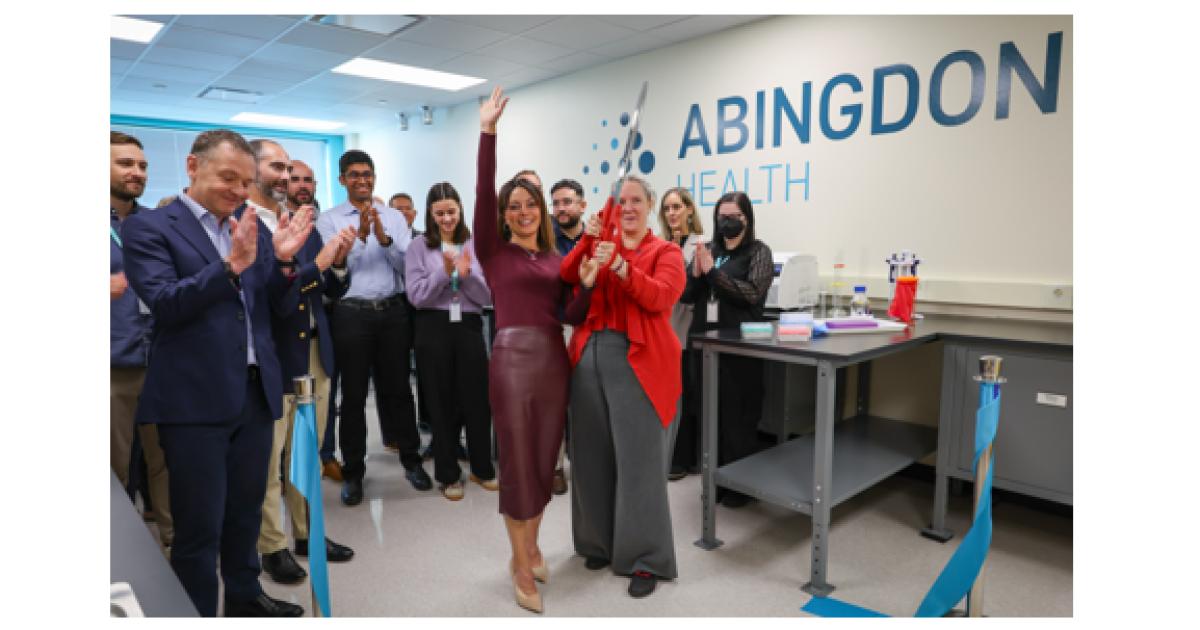
Abingdon Health opens US manufacturing hub in Madison


Abingdon Health has expanded its operations with a facility in Madison, Wisconsin, to meet growing demand for rapid diagnostic testing solutions.

The company is a developer and manufacturer of rapid diagnostic tests and med-tech solutions.

Chris Yates, president of Abingdon Health USA and chief commercial officer of Abingdon Health plc, said: “The opening of our Madison manufacturing hub is a significant milestone for Abingdon Health USA that enables us to offer a more comprehensive and integrated ‘end to end’ CDMO (Contract Development and Manufacturing Organization) solution for our US customers, paving the way for continued growth in the biggest med-tech market in the world.

RECOMMENDED READING:

“We were delighted to welcome Representative Mark Pocan, Mayor Satya Rhodes-Conway, WEDC (Wisconsin Economic Development Company) Secretary John Miller and other legislative and industry leaders to the ribbon-cutting ceremony.

Their support throughout our journey is recognition of the importance of high-quality, domestic diagnostics manufacturing for the United States as well our investment in Madison and its community.”

The ribbon-cutting ceremony was attended by Congressman Mark Pocan, Madison Mayor Satya Rhodes-Conway, WEDC Secretary John Miller, representatives from the Wisconsin State Legislature, leaders of Wisconsin’s biohealth industry, and representatives from the Company.

The new facility is part of Abingdon Health’s strategy to expand its presence in the US market and support customers with products that are developed and manufactured domestically.

Abingdon Health Group serves an international customer base as a med-tech contract service provider.

The company was founded in 2008 and is headquartered in York, with additional laboratories in Doncaster and laboratories and commercial offices in Madison.

A spokesperson for Abingdon Health said: “The opening is an important milestone in the company’s continued expansion and investment in its US operations.”

More information can be found at abingdonhealth.com.

Free Training

Source link

Kikkoman Opens Third U.S. Plant In Wisconsin With $560 Million Planned Investment


Kikkoman Foods Inc. (KFI), Kikkoman Corporation’s wholly owned U.S. manufacturing subsidiary headquartered in Walworth, Wisconsin, will operate the new plant. The company scheduled a grand opening ceremony for September 18, 2026, as it prepared to begin commercial shipments from the facility.

Construction of the Jefferson plant began in April 2024, and soy sauce brewing operations commenced in May 2026. The company expects to begin shipping products from the facility in October 2026, adding manufacturing capacity to its established North American production network.

The plant occupies a 100-acre site, equivalent to about 405,000 square meters, and includes about 240,000 square feet of total floor space. The steel-frame facility will produce soy sauce and soy sauce-related seasonings, with capabilities designed to accommodate a range of products tailored to customer needs.

Kikkoman’s planned investment of approximately $560 million, or ¥80 billion, over a 10-year period reflects its commitment to expanding manufacturing capacity in North America, which represents the largest market in the company’s overseas business. The investment figure represents the company’s longer-term spending plan rather than an amount already invested at the time of the opening.

The Jefferson facility becomes Kikkoman’s third production plant in the United States, joining its existing operations in Walworth, Wisconsin, and Folsom, California.

Kikkoman’s Walworth plant began commercial shipments in June 1973, establishing the company’s first U.S. manufacturing operation. The company subsequently expanded its American production network with its Folsom plant, which began shipments in October 1998.

The addition of Jefferson represents Kikkoman’s first new U.S. manufacturing location in nearly three decades. It also becomes the Kikkoman Group’s ninth soy sauce production base outside Japan, further expanding its international manufacturing footprint.

The new facility will help meet rising demand for soy sauce in North America, where the company has reported steadily increasing shipments from its existing Walworth headquarters plant.

By adding production capacity in Wisconsin, Kikkoman intends to strengthen its supply infrastructure while expanding its ability to manufacture different products for customers throughout the region.

The additional plant also provides greater manufacturing capacity within the company’s largest overseas market, complementing its existing operations in Wisconsin and California.

Kikkoman Foods Inc. was established in March 1972 and is wholly owned by Kikkoman Corporation. The subsidiary reported 274 employees as of March 31, 2026, including 218 employees at its Walworth facility and 38 at its Folsom plant.

Ryohei Tsuji, President and Chief Operating Officer of Kikkoman Foods Inc., leads the company’s U.S. operations.

The expansion forms part of Kikkoman’s broader international growth strategy under Global Vision 2030, established in 2018. One of the strategy’s central objectives is to establish Kikkoman Soy Sauce as a truly global seasoning by expanding its availability and adapting its offerings to different markets.

The Jefferson plant will support that objective by increasing the company’s manufacturing capacity in a market that has become central to its international business.

Kikkoman has also emphasized its commitment to maintaining strong relationships with the communities in which it operates. The new facility expands its longstanding manufacturing presence in Wisconsin, where it has maintained U.S. production operations for more than 50 years.

With brewing operations already underway and shipments scheduled to begin in October, the Jefferson plant adds a production base for Kikkoman as it pursues further growth in North America and strengthens its global supply network.

Free Training

Source link

Planet Opens State-of-the-Art Satellite Manufacturing in Berlin


BERLIN–(BUSINESS WIRE)–Sep 22, 2026–

Planet LabsGmbH, a leading provider of daily data and insights about change on Earth, today welcomed Katherina Reiche, Federal Minister for Economic Affairs and Energy for Germany, to open its state-of-the-art satellite manufacturing facility in Berlin. Having been announced less than a year ago, Planet has achieved facility handover and cleanroom fit-out and is scheduled to commence production of its 300 kg class, 30-cm resolution class Pelican™ satellites this autumn. The first satellite is scheduled to be complete before the end of the year, and the facility will be able to scale to up to 60 satellites per year. The facility further establishes Berlin as a major European hub for advanced aerospace manufacturing and production, accelerating high-tech job growth and Europe’s sovereign Earth observation capabilities.

This press release features multimedia. View the full release here: https://www.businesswire.com/news/home/20260922048020/en/

Pelican image over Planet’s new facility in Berlin on August 10, 2026. © 2026 Planet Labs PBC. All Rights Reserved.

The new location in Berlin’s Mitte district brings increased capacity for satellites to Europe. Planet provides sovereign satellites services for countries and, moreover, can launch them fast. For example, Planet was awarded a German-funded contract to deliver dedicated satellite capacity in support of European peace and security within 2 months of contract signature, and with Sweden similarly its first sovereign satellite within 4 months, accelerating their programme 4 years. With these added manufacturing capabilities, Planet intends to not just deliver for Europe, but from Europe.

“Today I’m thrilled to give a first look at Planet’s world-class manufacturing center and the future of Planet in Berlin, Germany, and Europe,” said Will Marshall, Co-Founder and CEO of Planet. “Planet has built and successfully launched 688 satellites in 15 years, second in the world in total satellites – and we’re bringing that manufacturing prowess here. This will enable Europe to quickly gain the capacity to build scaled earth observation satellite fleets to advance Europe’s critical goals from sustainability to security – to give Europe its own eyes on threats.”

“Europe needs its own eyes in space. In an age of strategic rivalry and growing uncertainty, satellite intelligence is no longer a luxury—it is a prerequisite for security, resilience and genuine strategic autonomy. Germany has the scientific depth, industrial strength and dynamic space ecosystem to become a European anchor for this capability. Planet’s investment in Berlin is more than a vote of confidence in the city: it helps turn Europe’s ambition for sovereign access to space-based intelligence into operational reality,” said Katherina Reiche, Federal Minister for Economic Affairs and Energy.

“When Planet makes a commitment, we deliver on it,” said Martin Polak, Managing Director of Planet Labs Germany. “Less than one year after announcing our vision for a satellite facility in Berlin, we will soon begin production. Europe needs rapid, independent access to sovereign space capabilities to navigate an increasingly complex security and economic landscape. On behalf of Planet in Germany, I could not be more excited and honored to be making this investment and commitment here in Berlin, continuing Planet’s long history of partnership and innovation in Europe.”

The 5,700-square-meter facility will serve as a cornerstone of Planet’s contributions to European technological advancement in space, addressing the region’s growing demand for localized, resilient aerospace innovation and defense solutions. Berlin has been Planet’s base in Europe for over 10 years, serving as a major technical hub with a mission operations center coordinating Planet’s global fleet of hundreds of satellites, software development, imagery processing, and quality control. In addition to satellite production, Planet’s new facility will house other corporate functions such as mission operations, IT, legal, marketing, HR, and sales, among others. Satellites will be built, tested, and shipped from one location, reducing the path from parts to orbit.

Planet will grow the team significantly, adding 70 employees to its existing team of nearly 150 in Berlin.

The first Berlin-built Pelican satellites completed this year are scheduled to be launched on an Isar Aerospace Spectrum launch vehicle in early 2027 – enabling a new first for Germany. This new facility further grows Planet’s European footprint and strengthens the company’s ties with its longstanding German customers and partners, including the German Federal Agency for Cartography and Geodesy (BKG).

Planet maintains a strong and growing presence in Europe, home to over 30% of its global workforce with offices in Berlin, Haarlem, Ljubljana, Graz and London. Berlin serves as Planet’s primary base of operations in Europe. Planet’s ground station network across Germany, the UK, Norway, and Iceland downlinks nearly 50% of all satellite data globally. Planet is guided by its European AdvisoryBoard, which helps the company meet the needs of its growing European customer base.

About Planet

Planet Labs Germany GmbH is part of the Planet group and is based at Planet’s European headquarters in Berlin. Planet Labs PBC (NYSE: PL) is the parent company of the Planet group with global headquarters in San Francisco, USA. Planet is a leading provider of global, daily satellite imagery, and geospatial solutions. Planet is driven by a mission to image the world every day, and make change visible, accessible and actionable. Founded in 2010 by three NASA scientists, Planet designs, builds, and operates the largest Earth observation fleet of imaging satellites. Planet provides mission-critical data, advanced insights, and software solutions to customers comprising the world’s leading agriculture, forestry, intelligence, education and finance companies and government agencies, enabling users to simply and effectively derive unique value from satellite imagery. Planet Labs PBC is a public benefit corporation listed on the New York Stock Exchange as PL. To learn more visit www.planet.com and follow us on X, LinkedIn, or tune in to HBO’s ‘ Wild Wild Space ’.

Forward-looking Statements

Certain statements contained in this press release are “forward-looking statements” about Planet within the meaning of the securities laws, including statements about Planet’s strategic partnerships and Planet’s future growth in new and existing markets. Such statements, which are not of historical fact, involve estimates, assumptions, judgments and uncertainties. There are a number of factors that could cause actual results or outcomes to differ materially from those addressed in the forward-looking statements. Such factors are detailed in Planet’s filings with the Securities and Exchange Commission. Planet does not undertake an obligation to update its forward-looking statements to reflect future events, except as required by applicable law.

View source version on businesswire.com:https://www.businesswire.com/news/home/20260922048020/en/

CONTACT: Planet Press

Rachel Cassells

press@planet.comPlanet Investor Relations

Cleo Palmer-Poroner

ir@planet.com

KEYWORD: SWITZERLAND UNITED STATES AUSTRIA NORTH AMERICA EUROPE GERMANY CALIFORNIA

INDUSTRY KEYWORD: DATA MANAGEMENT TECHNOLOGY SATELLITE AEROSPACE MANUFACTURING SOFTWARE

SOURCE: Planet

Copyright Business Wire 2026.

PUB: 09/22/2026 05:00 AM/DISC: 09/22/2026 05:02 AM

http://www.businesswire.com/news/home/20260922048020/en

Free Training

Source link

IMTS 2026 Opens in Chicago as Manufacturing Takes Center Stage in Reindustrializing the United States


With total attendance on pace to exceed 90,000, the manufacturing community at IMTS 2026 represents all 50 states and 113 countries.

Chicago (September 14, 2026) – IMTS – The International Manufacturing Technology Show opened today at McCormick Place in Chicago with 1,788 exhibiting companies (including 400 first-time exhibitors), 1.17 million square feet of exhibit space, and attendance on pace to exceed 90,000. The largest manufacturing technology show in the Western Hemisphere runs Sept. 14-19, and it brings an economic impact of $250 million to Chicago and Illinois. As of this morning, there were 80,697 registrants, including an estimated 15,000 students. IMTS 2026 is also seeing a higher visitor-to-exhibitor-personnel ratio; in previous years, IMTS saw a 1.42 floor-density ratio, meaning that there are 142 visitors for every 100 exhibitor personnel.

The strong turnout comes as manufacturers continue to invest heavily in production technology. New orders of metalworking machinery totaled $605.8 million in July 2026, according to the U.S. Manufacturing Technology Orders Report issued yesterday. Through July, orders reached $4.03 billion, up 37.1% compared with the same period in 2025. This is only the second time since USMTO began collecting data in 1998 that orders have exceeded half a billion dollars for five consecutive months.

“America has rediscovered a fundamental economic truth: Ultimately, a country creates value by making, mining, or growing something locally, and all three depend on manufacturing,” said Douglas K. Woods, president of AMT – The Association For Manufacturing Technology, at the show’s opening ceremony. AMT owns and produces IMTS. “Investment is flowing into U.S. manufacturing at the same time companies are rethinking and regionalizing their supply chains. The technologies at IMTS give manufacturers the productivity, flexibility, and scale to capitalize on that opportunity.”

Across the show floor, AI, automation, robotics, connected systems, software, additive manufacturing, machining, metrology, tooling, and workholding come together as integrated manufacturing solutions.

“Only IMTS brings the entire manufacturing technology ecosystem together,” said Woods. “This is the one place where you can see all these technologies working together, compare solutions, and understand how they can change what happens in your factory.”

A Global Community
Registrants for IMTS 2026 include people from all 50 states and 113 countries. Visitors include those from the defense, aerospace, automotive, off-highway equipment, power, oil and gas, AI infrastructure (data centers), semiconductor, medical, and other industries. Companies of all sizes are represented, including tens of thousands of small job shops and contract manufacturers, prime defense contractors, AI hyperscalers, and major OEMs.

“IMTS is a solutions-based show and a community of innovators, builders, and people who achieve the impossible,” said Michelle Edmonson, vice president – exhibitions, AMT. “Whether people come from the other side of the world or across the country, they come for the same fundamental reason: They have a challenge to solve or an opportunity to pursue, and they know they can meet the people and companies here who can help them accomplish their goals. Those connections are what make IMTS a community, and they continue long after everyone goes home.”

The manufacturing community has been gathering at IMTS in Chicago for nearly 80 years. First held in the city in 1947 at the Dodge Plant on South Cicero Avenue, IMTS moved to McCormick Place in 1972 and has grown alongside both the manufacturing industry and its longtime host city.
“On behalf of the MPEA McCormick Place campus, we are so excited and proud to welcome IMTS 2026 to McCormick Place and to Chicago, Illinois,” said Larita Clark, CEO of the Metropolitan Pier and Exposition Authority (MPEA). “This year marks 54 years together. That is more than a milestone. It is a reflection of true partnership. Through decades of change, nationally, locally, in our industry, and in the way people gather, our relationship has remained strong because of a shared commitment to delivering meaningful experiences to exhibitors and attendees.”

Register on-site for IMTS 2026 and Achieve the Impossible, Sept. 14-19, at McCormick Place in Chicago.

Free Training

Source link

Apple opens Advanced Manufacturing Center at massive Houston facility


Cupertino, California-based Apple Inc. unveiled its Advanced Manufacturing Center in the Houston area last week, marking the completion of the second of three facilities the tech giant plans to launch in the city by the end of this year.

The 20,000-square-foot training center will welcome small- and medium-sized businesses for free training and educational sessions to “help accelerate smart manufacturing across America,” according to a release from Apple. Apple opened a similar Apple Manufacturing Academy in Detroit last year.

The AMC is part of Apple’s 500,000-square-foot site in northwest Harris County. It also features a massive manufacturing site for Apple’s advanced AI servers and Mac mini. The facility was originally slated to open in 2026, but Apple began producing its advanced AI servers ahead of schedule in 2025.

The company said it plans to begin manufacturing its Mac mini at the site this year. The move will bring production of the compact desktop computer to the U.S. for the first time.

“In less than nine months, we have invested hundreds of millions of dollars into this Houston facility. We stood up a factory, started production, and shipped the first advanced AI servers off the line. Today, we’re thrilled to open our new Advanced Manufacturing Center, a place where businesses, workers, and students can learn the same innovative processes that we use to make Apple’s most groundbreaking products. And we’re pleased to begin Mac mini production later this year,” Tim Cook, Apple’s CEO, said in the news release. “We believe in American workers and American ingenuity, and we are moving at an incredible pace because we want to build more than great products. We want to build the future of American manufacturing.”

Apple’s Houston expansion is part of a $600 billion commitment the company made to the U.S. in 2025.

The company originally announced plans in February 2025 to open a 250,000-square-foot Houston factory, but doubled the facility’s planned size about a year later. Apple has reported that the factory will employ thousands of workers.

“Houston is grateful to Apple for this significant investment in our city. The Advanced Manufacturing Center will create local jobs and will continue improving the quality of life of Houston residents,” Houston Mayor John Whitmire added in the release. “The AMC also recognizes our city as a growing technology hub and solidifies Houston’s leadership in the manufacturing sector of the United States.”

The opening comes on the heels of New Jersey-based pharmaceutical giant Bristol Myers Squibb Co. officially naming Houston home of its new $2.3 billion, state-of-the-art manufacturing site. Read more here.

Free Training

Source link

Apple opens advanced manufacturing center in Houston, expands its investment in US


Joaquín Núñez

Apple is expanding its manufacturing presence in the United States with a new investment of $600 billion that includes the expansion of its plant in Houston. There, the company announced that it will begin manufacturing Mac mini computers before the end of 2026.

The facility is located within the same complex where Apple manufactures its A.I. servers. Tim Cook, the company’s CEO, participated in the groundbreaking ceremony alongside Secretary of Commerce Howard Lutnick, Sen. Ted Cruz (R-Texas), Houston Mayor John Whitmire, Rep. Christian Menefee and Harris County Precinct One Commissioner Rodney Ellis.

The Houston center offers free training for businesses and workers in areas including quality control through machine learning and advanced production techniques. The initiative aims to develop local talent and prepare the workforce for the new demands of technology manufacturing.

facebook

Una tienda de Apple en Tokio.

Andrés Ignacio Henríquez

“President Trump said we would bring advanced technology manufacturing back to America. Now the Mac mini will be made right here in Houston, Texas. Thank you, Tim and Apple, for your $600 billion commitment to America,” said the secretary of commerce.

Gov. Greg Abbott emphasized that Apple’s expansion reinforces Texas’s position as one of the United States’ leading hubs of innovation: “Apple’s expansion in Houston underscores Texas as the epicenter of American industry and innovation. This new facility will deliver the skills Texans need to excel in advanced manufacturing. We thank Apple for its confidence in the Lone Star State.”

Apple’s expansion comes at a time when the Trump administration is seeking to encourage large technology and manufacturing companies to produce more within the United States. Apple’s case is particularly relevant in this context.

Regarding the investment initiative, called the “American Manufacturing Program,” Apple estimates it will directly hire approximately 20,000 American workers over the program’s four-year duration, primarily in research and development, chip engineering, software, and artificial intelligence.

Free Training

Source link

Apple opens Advanced Manufacturing Center in Houston


August 13, 2026

PRESS RELEASE

Apple opens
Advanced Manufacturing :br(s): Center :br(s): in Houston

New training center helps American workers and businesses expand smart manufacturing skills

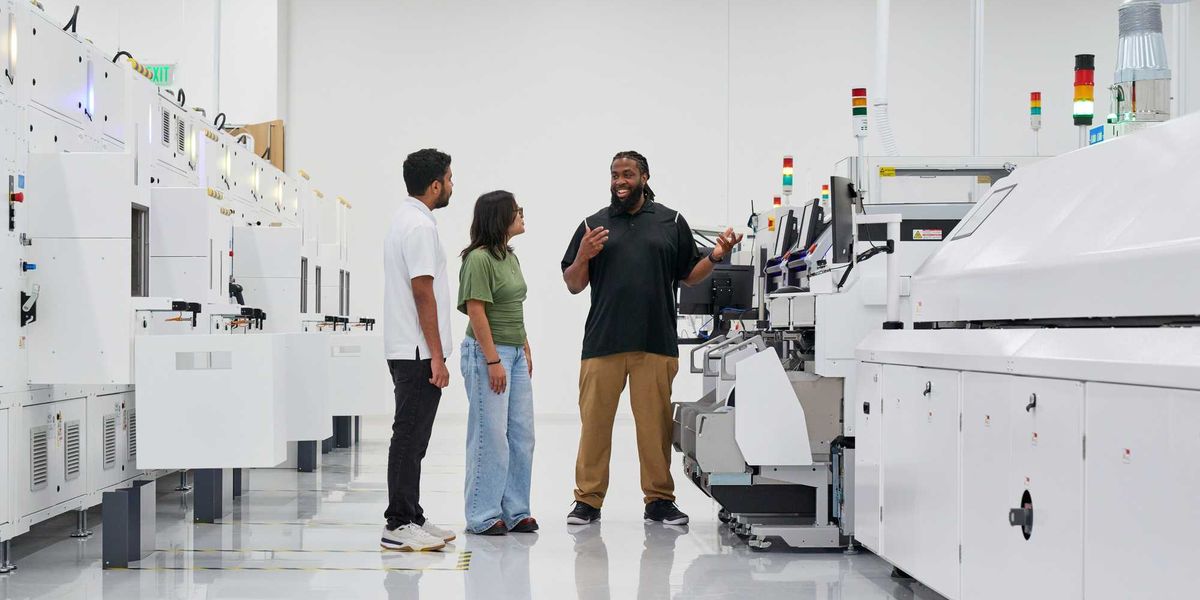
CUPERTINO, CALIFORNIA Apple today opened its new Advanced Manufacturing Center (AMC) in Houston. The center offers free training and educational sessions for small- and medium-sized businesses, giving them direct experience with state-of-the-art equipment, interactive labs, and tools they need to accelerate innovation. The AMC is located within the same Houston facility that builds and ships Apple’s advanced AI servers and will begin manufacturing Mac mini this year.

At the center — the company’s second U.S. manufacturing learning site — experts teach participants many of the same innovative processes used to make Apple products. As part of the center’s kickoff event, Apple is proud to host U.S. Secretary of Commerce Howard Lutnick, U.S. Senator Ted Cruz, Houston Mayor John Whitmire, U.S. Representative Christian Menefee, and Harris County Precinct One Commissioner Rodney Ellis, along with other officials and community partners. They are joining Apple leaders and the AMC’s first cohort of small- and medium-sized business leaders for a full day of hands-on training and programming.

“In less than nine months, we have invested hundreds of millions of dollars into this Houston facility. We stood up a factory, started production, and shipped the first advanced AI servers off the line. Today, we’re thrilled to open our new Advanced Manufacturing Center, a place where businesses, workers, and students can learn the same innovative processes that we use to make Apple’s most groundbreaking products. And we’re pleased to begin Mac mini production later this year,” said Tim Cook, Apple’s CEO. “We believe in American workers and American ingenuity, and we are moving at an incredible pace because we want to build more than great products. We want to build the future of American manufacturing.”

“This opening is an important step in Apple delivering on its promise to bring its manufacturing back to America,” said U.S. Secretary of Commerce Howard Lutnick. “With this Advanced Manufacturing Center, Apple will equip American workers with the skills they need to lead the next generation of technology.”

Inside the 20,000-square-foot center, Apple experts will share their knowledge directly with participating businesses and entrepreneurs to help accelerate smart manufacturing across America. Curriculum topics will range from classroom sessions on advanced manufacturing principles for final assembly and design considerations for printed circuit board assembly, to interactive workshops that make use of the site’s representative production facility and equipment. As programming expands, the AMC will offer the same hands-on training to local college students, equipping the next generation of American manufacturing workers with critical skills.

To mark the AMC’s opening, its first cohort of small- and medium-sized business leaders is spending the day immersed in hands-on training led by Apple engineers, covering smart manufacturing techniques like machine-learning-driven quality control and advanced automation. Participants are learning how to identify and adapt to production challenges in real time, engage with the lab’s holographic table and advanced factory-floor equipment, and gain hands-on experience assembling and laser etching a product themselves.

The AMC builds on the work of the Apple Manufacturing Academy, which opened in Detroit in August 2025 and has already helped nearly 1,000 American companies learn smart manufacturing techniques and integrate AI into their production processes. The Apple Manufacturing Academy’s virtual programming also offers flexible, on-demand learning covering topics including automation, quality control optimization, and machine learning with vision, as well as professional development training.

Apple announced earlier this year that it will bring Mac mini production to Houston. The company shipped its first advanced AI servers less than a year after identifying a factory site. Since announcing a $600 billion commitment last year, Apple and its American Manufacturing Program partners have invested in designing and producing custom silicon, advanced components, and cover glass in the U.S., demonstrating the company’s long-standing commitment to strengthening the country’s advanced manufacturing sector.

Businesses interested in the Advanced Manufacturing Center can sign up to be notified for future sessions.

Texas Governor Greg Abbott:
“Apple’s expansion in Houston underscores Texas as the epicenter of American industry and innovation. This new facility will deliver the skills Texans need to excel in advanced manufacturing. We thank Apple for its confidence in the Lone Star State.”

U.S. Senator Ted Cruz:
“Apple’s new Advanced Manufacturing Center underscores that Texas is the best state in the country to do business. We prioritize innovation, competition, and make it easy for employers to grow and thrive. This new facility will drive job creation and directly benefit our communities by giving small- and mid-sized businesses access to cutting-edge equipment, interactive labs, and operations expertise. This project isn’t just great news for Lone Star State businesses, however. It’s great news for Texas working families.”

U.S. Representative Christian D. Menefee:
“I’m excited about the opportunity Apple is bringing to Houston — partnering with small businesses, keeping manufacturing in the U.S., and creating jobs so folks in our community can build a future right here at home. This is a good day for Houston.”

Houston Mayor John Whitmire:
“Houston is grateful to Apple for this significant investment in our city. The Advanced Manufacturing Center will create local jobs and will continue improving the quality of life of Houston residents. The AMC also recognizes our city as a growing technology hub and solidifies Houston’s leadership in the manufacturing sector of the United States.”

Harris County Precinct One Commissioner Rodney Ellis:
“I am proud that Apple chose Harris County for this investment. My office has consistently fought to bring good jobs within reach of working people and ensure small businesses — especially those historically shut out — have a fair opportunity to compete and grow. At a time when rising costs are squeezing families here and across the country, this new center can help create pathways to greater economic security. I want every young person growing up in our neighborhoods, every student at a university or community college, and every small business owner working to grow their business to know there is a place for them in the future being built here. Investments like these expand opportunity to ensure that no one is left behind.”

About Apple
Apple revolutionized personal technology with the introduction of the Macintosh in 1984. Today, Apple leads the world in innovation with iPhone, iPad, Mac, AirPods, Apple Watch, and Apple Vision Pro. Apple’s six software platforms — iOS, iPadOS, macOS, watchOS, visionOS, and tvOS — provide seamless experiences across all Apple devices and empower people with breakthrough services including the App Store, Apple Music, Apple Pay, iCloud, and Apple TV. Apple’s more than 150,000 employees are dedicated to making the best products on earth and to leaving the world better than we found it.

Press Contacts

Nick Leahy

Apple

nleahy@apple.com

Anna Mitchell

Apple

anna_m@apple.com

Apple Media Helpline

media.help@apple.com

Free Training

Source link

Philip Morris Opens $1.2 Billion Manufacturing Campus In Colorado


Philip Morris International’s U.S. businesses have opened a new manufacturing campus in Aurora, Colorado, representing a planned investment of approximately $1.2 billion between 2024 and 2028.

The facility began commercial production in July 2026 and manufactures ZYN nicotine pouches. It joins PMI’s existing U.S. manufacturing operations in Owensboro, Kentucky, and Wilson, North Carolina.

Located on a 148-acre property, the approximately 780,000-square-foot campus is PMI’s first newly constructed manufacturing and production complex in the United States. The company said the project progressed from the start of construction to commercial shipments in approximately 19 months.

PMI initially announced the Aurora development as a $600 million project in 2024. The planned investment has since doubled as the company added production capacity, expanded the site and introduced additional infrastructure and manufacturing capabilities.

Approximately $1 billion of the planned $1.2 billion investment has already been incurred. The remaining capital is expected to support further development through 2028 as PMI responds to demand for ZYN in the United States and prepares the facility to serve international markets.

The campus integrates manufacturing, packaging, warehousing and distribution within one location. This structure is intended to improve operational efficiency and strengthen PMI’s supply chain by reducing reliance on any single production facility.

The Aurora operation is also being positioned as an export hub serving markets across Asia, Latin America and the Caribbean.

PMI expects the campus to directly employ approximately 500 people in production, engineering, quality control, technical and support roles.

Construction was projected to support nearly 5,000 jobs and generate close to $1 billion in economic activity. Once fully operational, the facility is expected to produce approximately $550 million in annual economic impact and support about 1,000 indirect jobs, according to an economic study cited by PMI.

The company has also contributed more than $1.5 million to Colorado organizations since 2024, including groups supporting veterans, utility assistance and workforce education.

The facility’s opening follows the U.S. Food and Drug Administration’s authorization of 20 ZYN products as modified-risk tobacco products in June 2026. The authorization allows PMI to communicate specified reduced-risk information relative to cigarettes under the conditions established by the agency.

KEY QUOTE:

“This facility expands our production capacity, strengthens our supply chain, and enhances our ability to serve growing demand in the United States and around the world.”

Stacey Kennedy, CEO of PMI U.S.

Thank you for visiting Pulse 2.0. We work hard every day to bring leaders and decision makers like you the latest intelligence on business, finance, capital markets, deal flow, law, tech, and AI. Click here to subscribe to the Pulse 2.0 Newsletter.

Free Training

Source link

Foodservice Packaging Supplier Detpak Opens U.S. Manufacturing Facility


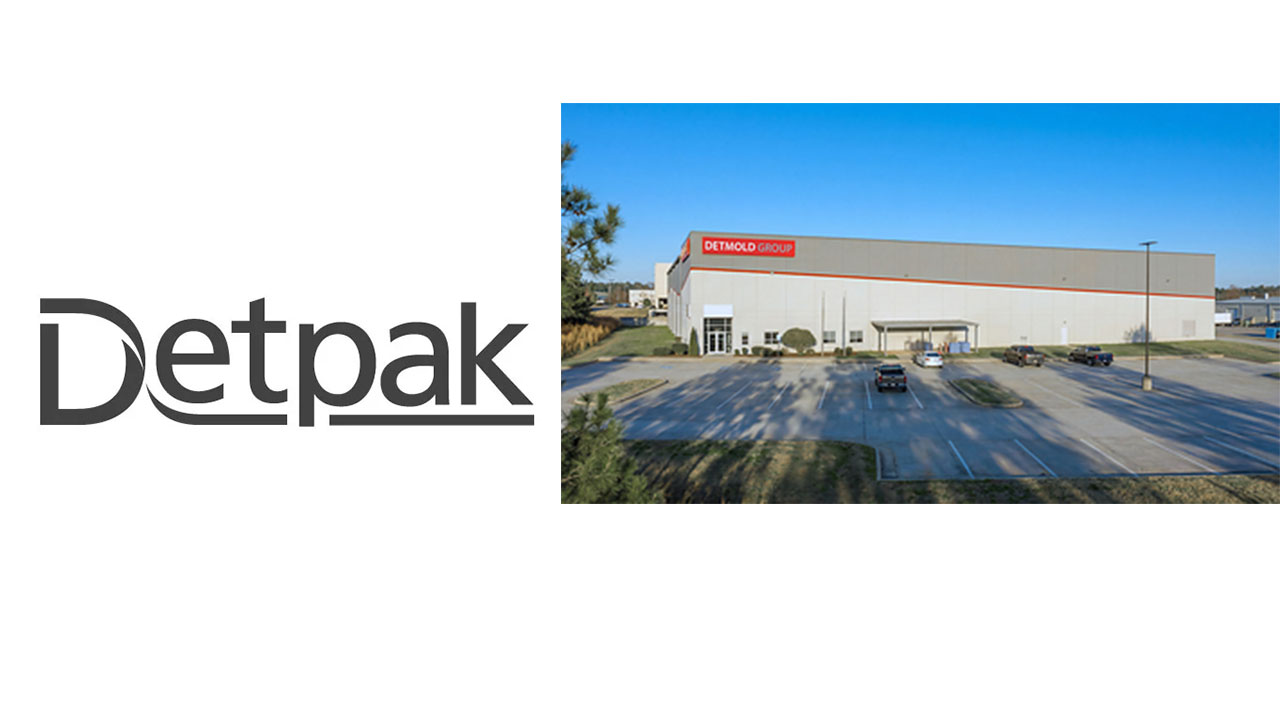
SPARTANBURG, S.C. — Global packaging supplier Detpak has announced the opening of its new manufacturing facility in Spartanburg, South Carolina, strengthening its ability to support major Quick Service Restaurant (QSR) customers with locally produced, paper-based packaging solutions.

Detpak’s new U.S. manufacturing facility in Spartanburg, South Carolina, strengthens local manufacturing capabilities and expands support for Quick Service Restaurant (QSR), foodservice, Fast-Moving Consumer Goods (FMCG), and retail customers across North America.

Detpak, a Detmold Group company headquartered in Australia, is a trusted packaging partner to some of the world’s largest and most recognizable QSR, foodservice, FMCG and retail brands, with experience supplying global customers such as McDonald’s, KFC, Starbucks, and Wendy’s. The company has supported customers in the United States for more than two decades, operates in 45 countries, and owns manufacturing facilities in eight countries.

The new US manufacturing facility marks a significant step in Detpak’s global expansion and reinforces its long-term commitment to the North American market. By combining its global expertise with local manufacturing capability, Detpak will be better positioned to support US customers with improved supply chain reliability, reduced lead times and greater operational flexibility.

“As we continue to grow our global footprint, opening our own manufacturing facility in the United States is a key milestone for our business,” CEO Sascha Detmold Cox said.

“It allows us to better support our customers with locally manufactured products and reinforces our commitment to the U.S. market where we have been supplying customers from our international plants for over 20 years. We’re focused on building long-term partnerships and delivering the same level of service, innovation and reliability that our customers experience globally.”

“We’re proud to be investing in the Spartanburg community and creating new employment opportunities in South Carolina.” Ms. Detmold Cox said.

Initially employing more than 50 people from the local community, the multi-million-dollar facility, spanning 175,000 square feet, is currently undergoing equipment commissioning, with full production commencing in August.

About Detpak and the Detmold Group

Wholly owned by the Detmold Group, Detpak designs, manufactures and supplies the Quick Service Restaurant (QSR), Fast-Moving Consumer Goods (FMCG), grocery and food services industry with world-class sustainable paper and cardboard packaging solutions. Detpak delivers a level of service and care that exceeds standards, with the understanding and operational integrity of a family-owned business. Many of the paper and board packaging products used in the fast-food industry, including from Starbucks, Uber Eats, Burger King and Krispy Kreme are supplied by Detpak.

With headquarters in Australia, the Detmold Group is a 78-year-old, family-owned and operated business, supplying packaging to the world’s largest and most iconic food and retail brands. Detpak serves a range of markets, including fresh produce, QSR, foodservice, Fast-Moving Consumer Goods (FMCG) and grocery and convenience.

Free Training

Source link