
America’s Manufacturing Future Starts With Industrial Hemp | Opinion


America is making a costly mistake by treating industrial hemp as just another crop. It is an industrial material that can strengthen manufacturing, create jobs, reduce dependence on imported raw materials, and help build more resilient supply chains. If we keep limiting hemp to an agricultural debate, we will hand another major manufacturing opportunity to other countries. If we build the industries that process and manufacture hemp-based products here at home, America wins.

Congress already has an opportunity to move in that direction. The bipartisan Biobased Materials Investment and Production Act introduced by Congresswoman Nikki Budzinski (IL-13) and Congresswoman Michelle Fischbach (MN-07) proposes tax incentives to expand domestic production of plant-based materials and chemicals. It recognizes a simple fact: growing raw materials is not enough. Countries create lasting economic strength by turning those materials into finished products, advanced technologies, and manufacturing industries.

I have spent my career helping organizations build businesses around emerging technologies. One lesson has remained true across every industry: breakthroughs do not create economic leadership by themselves. Infrastructure does. Manufacturing does. Investment does. Entire industrial ecosystems, not individual products, are what create long-term prosperity.

Read More on Opinion

History makes that clear. Steel transformed America because we built mills, transportation networks, engineering expertise, and factories around it. Silicon changed the world because we invested in manufacturing, research, and technology that turned a raw material into an entire economy. Industrial hemp deserves the same approach. The crop is only the beginning. The real opportunity is everything built after the harvest.

Hemp already has practical uses in construction materials, advanced composites, textiles, packaging, paper alternatives, and other manufactured products that can reduce dependence on petroleum-based materials. Research published in the journal Advanced Composites and Hybrid Materials in October 2025 documents its expanding role across industries ranging from automotive manufacturing to construction and biofuels. None of those markets grow without processing facilities, engineers, manufacturers, logistics, and investment. The value is created in the factory, not the field.

That is why this debate matters to every American, not only farmers. Manufacturing supports communities, creates skilled jobs, strengthens national resilience, and gives businesses more reliable access to critical materials. Recent supply chain disruptions exposed how vulnerable the United States becomes when too much production depends on foreign suppliers. Building domestic capacity is no longer optional. It is an economic and strategic necessity.

The alternative is clear. If America fails to invest, other countries will build the processing plants, develop the technologies, secure the patents, and capture the high-value manufacturing jobs. American farmers will continue selling raw materials while others profit from turning them into finished products. We have watched this story play out before in industry after industry. There is no reason to repeat it.

The better path is just as clear. Build processing facilities. Expand manufacturing capacity. Invest in engineering, research, and workforce development. Encourage entrepreneurs to create companies that solve real industrial problems. Support manufacturers willing to replace imported materials with products made in America. Those investments would strengthen rural economies while creating opportunities for engineers, technicians, manufacturers, and businesses across the country.

Industrial hemp should not be viewed as an environmental trend or a niche agricultural product. It should be treated as a strategic manufacturing resource. Countries that control advanced materials will shape the next generation of industrial production. America has the land, the talent, and the market demand to compete. What has been missing is the commitment to build the industrial foundation that allows the sector to grow.

The choice is straightforward. We can continue exporting opportunities while importing products made somewhere else, or we can build the factories, technologies, and supply chains that keep innovation and manufacturing in the United States.

Congress should pass policies that accelerate domestic biomanufacturing. Investors should back companies building the industrial infrastructure. Manufacturers should integrate hemp into their long-term material strategies. Entrepreneurs should build the businesses that turn this resource into products people use every day. America has everything it needs to lead. The only question is whether we will choose to build.

David M. Klein is the managing member of DMKlein & Associates, where he advises emerging growth companies on strategy, operations, branding, and commercialization. Klein has worked with companies, investors, and leadership teams navigating expansion, restructuring, and market transformation.

Free Training

Source link

Micron to Pour $250 Billion in Manufacturing on US Soil As It Starts Construction of New York’s DRAM Megafab


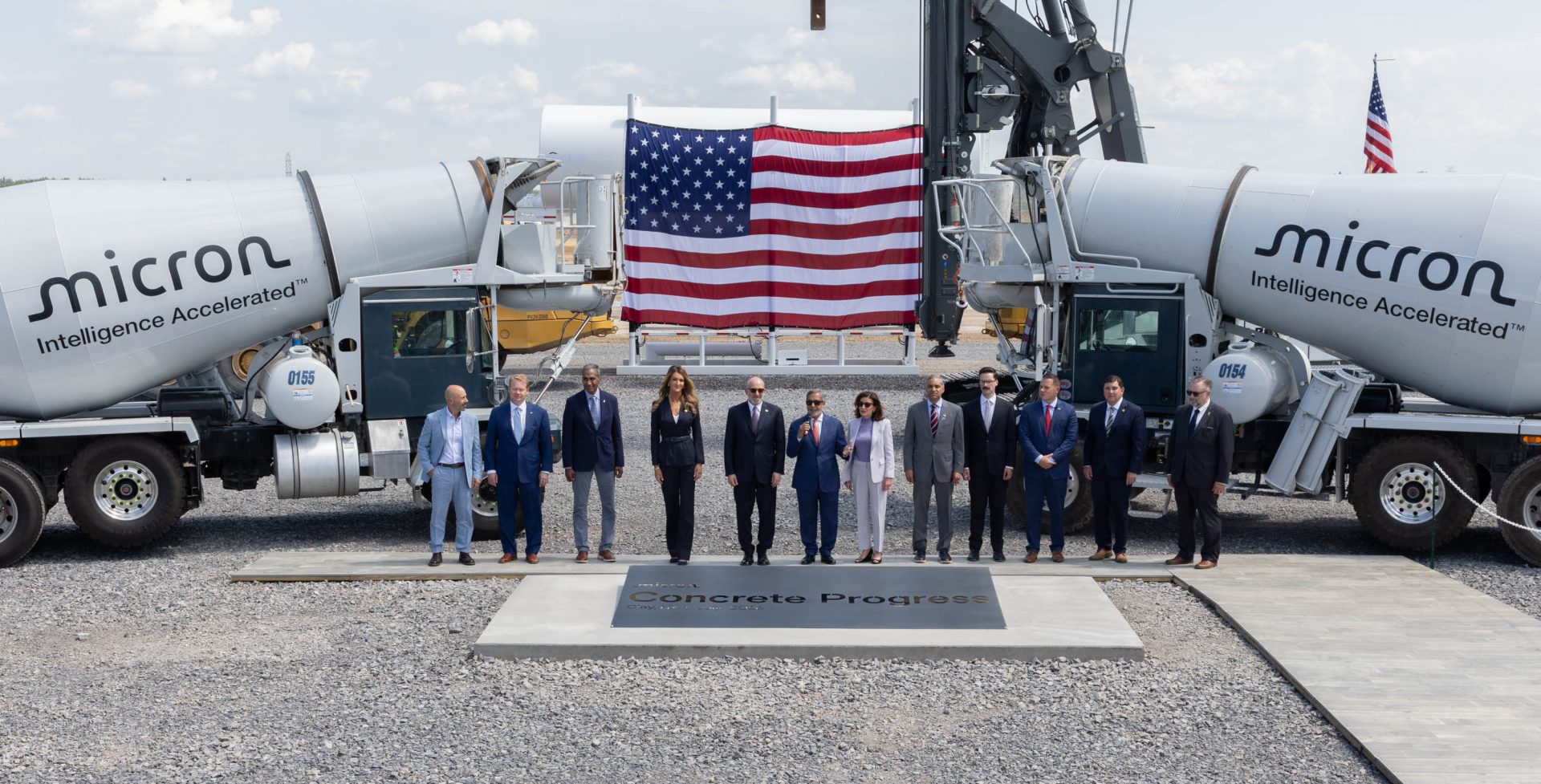
Micron has announced that it will invest $250 billion in America as it lays down the first concrete for the New York DRAM Megafab.

Micron Aims To Make 40% of Its Total DRAM In America While Creating Over 90,000 Jobs Through A $250B Commitment

DRAM demand surge has boosted revenues of all major manufacturers, including Micron, as such, the company has laid down a $250 billion commitment through 2035, which will accelerate the AI segment fruther.

Today is a proud day for Micron and American manufacturing. 🇺🇸

We’re increasing our planned U.S. manufacturing and R&D investment commitment to more than $250B, supporting our goal of producing 40% of our DRAM in America and creating 90,000+ jobs.

We also poured the first… pic.twitter.com/5pFxRl1AtW

— Sanjay Mehrotra (@MicronCEO) July 9, 2026

The initiative is simple: $250 billion of investments through 2035 towards major manufacturing and R&D centers across America. This long-term goal will achieve 40% of Micron’s global DRAM production on US soil, while creating nearly 100,000 jobs in the country.

As part of this commitment, Micron celebrated the announcement with the first concrete pour milestone at its New York DRAM Megafab, which is located in Clay. The milestone is said to be achieved one quarter ahead of the original plan, and the construction will now go vertical. The company is also investing up to $3 billion in the development of a domestic semiconductor supply chain ecosystem.

Today, Micron Chairman, President and CEO Sanjay Mehrotra will host the concrete pour, joined by supplier partners and federal, state and local leaders, including U.S. Secretary of Commerce Howard Lutnick, New York Governor Kathy Hochul, Small Business Administration Administrator Kelly Loeffler, U.S. Chief Technology Officer Dr. Ethan Klein, Onondaga County Executive Ryan McMahon, U.S. Congressman John Mannion, U.S. Congresswoman Claudia Tenney, and Town of Clay Deputy Supervisor Joe Bick.

This commitment goes in line with US President Donald J Trump’s “Made in the USA” policy, with major firms such as Intel, NVIDIA, and AMD all focusing on producing their chips domestically. TSMC has already laid out plans to build major fabs throughout the US in a bid to bring advanced manufacturing capabilities to the US.

“President Trump has made it clear that America is where you should build your business and the world is responding rapidly. Today, Micron pours the foundation on its massive semiconductor campus in upstate New York and increases its American investment commitment to $250 billion, creating nearly 100,000 jobs and providing leading-edge memory supply here in the United States,” said Commerce Secretary Howard Lutnick. “The Trump economic model clearly shows there has never been a better time to invest in the United States.”

Talking a bit about its major fabs, the ones in Idaho are said to be making rapid progress and are expected to have first wafer output by mid 2027 for the first fab and late 2028 for the second fab.

The image shows a construction scene with concrete pouring, alongside text stating, Micron pours first concrete at New York fab ahead of plan, with the event titled 'Concrete Progress Celebration | July 2026'.

Micron is definitely going big with its manufacturing capabilities, which was a given considering just how massive the demand for DRAM and NAND is right now. The company is already engaged with several customers in what it refers to as “Strategic Customer Agreements,” which are hard-locked deals to ensure that the committed memory supply is delivered to these high-level parties at a finalized rate within a 3-5 year timeframe.

Today’s milestone, pouring the first concrete at its New York DRAM Megafab ahead of schedule, symbolizes a new era of advanced manufacturing “Made in the USA.” With strong government support and surging demand, Micron’s ambitious expansion positions the United States at the forefront of next-generation memory technology.


Hassan Mujtaba Photo

About the author: A Software Engineer by training and a PC enthusiast by passion, Hassan Mujtaba serves as Wccftech’s Senior Editor for hardware section. With years of experience in the industry, he specializes in deep-dive technical analysis of next-generation CPU and GPU architectures, motherboards, and cooling solutions. His work involves not only breaking news on upcoming technologies but also extensive hands-on reviews and benchmarking.

Follow Wccftech on Google to get more of our news coverage in your feeds.


Free Training

Source link

Rolls-Royce starts Raynesway site expansion to double submarine reactor manufacturing capacity for UK and Australian programmes


Rolls-Royce Submarines has officially broken ground and started foundational work on a new manufacturing facility at its Raynesway site in Derby. The work forms part of a wider plan to double the size of the entire site.

The expansion will help meet increased demand from the UK and Australian Royal Navies for current and future submarine programmes. More than 100,000m2 of new manufacturing and office facilities will be built, creating 1,170 skilled roles across disciplines including manufacturing and engineering.

The ceremonial event brought together Minister of State for Defence Lord Coaker, Rolls-Royce Submarines President Abi Clayton and Commodore Alistair Moody, Director for Nuclear Propulsion at the Submarine Delivery Group. They dug the first ground together, reflecting the partnership behind the expansion and the significance of the programme.

During the visit, Lord Coaker also met Rolls-Royce nuclear welding apprentices who recently secured first, second, third and fourth place in the SkillWeld 26 East Midlands heats. Rolls-Royce said it was the first time all top-three places had been won by the same company.

SkillWeld is a national competition designed to showcase and benchmark trainee and apprentice welders. The achievement follows welding apprentice Jack Billingham being selected to represent Great Britain at the WorldSkills event in Japan.


Rolls-Royce announced in June 2023 that it planned to double the size of its Submarines site. The Raynesway facility designs and builds the nuclear reactors that power all Royal Navy submarines and helps maintain the UK’s continuous at sea nuclear deterrent.

Under the AUKUS partnership between Australia, the UK and the United States, Rolls-Royce will also provide reactors for future Australian SSN-AUKUS attack submarines. The expansion is intended to unlock additional manufacturing capacity and support the pace of submarine build programmes.

Abi Clayton, President – Rolls-Royce Submarines, said: “Breaking ground is a significant step forward in the critical growth of our business. This expansion will more than double the size of our manufacturing facility, strengthening our capability and demonstrating our ongoing commitment to the Defence Nuclear Enterprise.”

“Together with our trusted delivery partners, our commitment is to deliver this programme safely, efficiently and to the highest standards. This work will unlock much-needed manufacturing capacity on site, allowing us to enhance our delivery drumbeat to support the boat build programmes.”

Defence Minister Lord Coaker said: “The expansion of the Rolls-Royce site is a clear demonstration of the government’s commitment to the UK’s nuclear deterrent. Witnessing the manufacturing of the fifth SSSN-AUKUS reactor and the hundreds of apprentices in action was inspiring – seeing defence investment creating jobs, driving growth, and keeping the UK safe.”

Commodore Alistair Moody, Director for Nuclear Propulsion at the Submarine Delivery Group, said: “The ongoing expansion work at Raynesway demonstrates the shared commitment of the UK and Australian governments to meet the ambitious pace of our submarine build programmes. Together, we are building the foundations for delivery to defend our nations for decades to come.”


“The significant nuclear enterprise investment confirmed in the DIP reflects the UK’s unwavering commitment to maintaining and renewing our nuclear deterrent, a capability that has protected the UK and our allies for almost 60 years. Delivering this work is a National Endeavour and continues to drive growth, strengthen security and sustain tens-of-thousands of jobs across the UK.”

Rolls-Royce Submarines currently employs more than 5,500 people. It designs, manufactures and provides in-service support to the pressurised water reactors that power every submarine in the Royal Navy’s fleet.

The company is supporting the Astute and Dreadnought boat build programmes through delivery of reactor plant and associated components. This work is delivered by the UK MOD’s Defence Nuclear Enterprise as part of a national endeavour to sustain the nuclear deterrent.

Rolls-Royce also provides frontline support worldwide for reactor plant equipment from its Operations Centre in Derby. It supports submarines at the Barrow-in-Furness shipyard and at the naval bases at Devonport and Faslane, with technical specialists also working in Glasgow, Cardiff and Thurso.

Free Training

Source link

Canadian Solar Accelerates U.S. Manufacturing Expansion, Starts HJT Trials


Canadian Solar is ramping up its U.S. manufacturing footprint as the company bets on domestic solar supply chains and higher-value clean energy manufacturing amid evolving policy and trade dynamics in the American market.

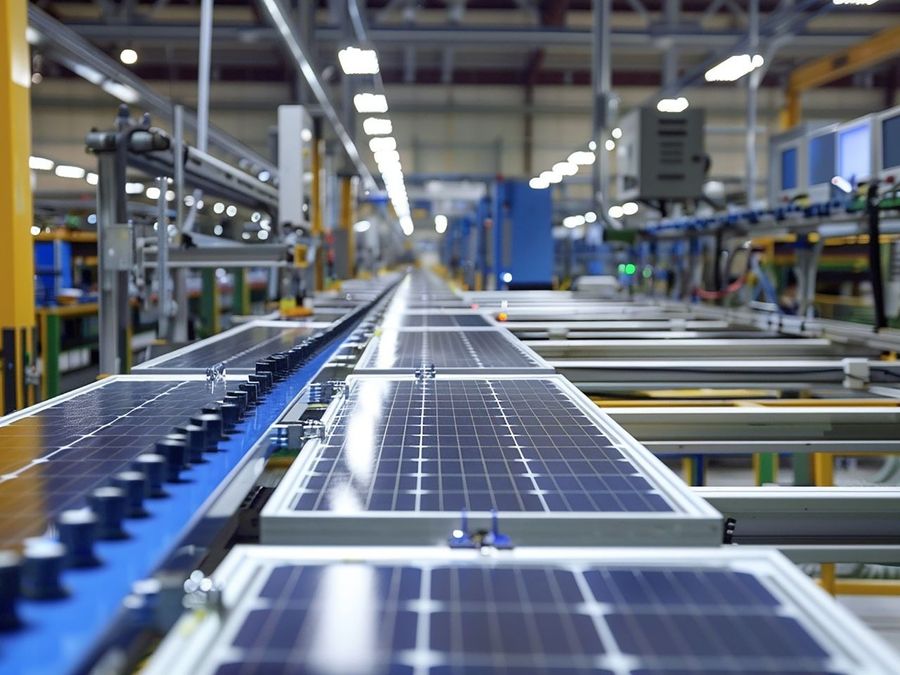
The company said trial production has commenced at its flagship heterojunction (HJT) solar cell manufacturing facility in Jeffersonville, Indiana, marking a major milestone in its U.S. localisation strategy. Commercial operations at the plant are expected to begin in July 2026.

Thrust on HJT 

Canadian Solar said the Indiana facility is expected to become one of the first commercial-scale HJT solar cell manufacturing plants in the United States. The first phase of the project has a nameplate capacity of 2.1 GWp, while a second expansion phase planned for early 2027 would add another 4.2 GWp of capacity.

In parallel, the company is also expanding its solar module manufacturing operations in Mesquite, Texas. Canadian Solar currently operates a 5 GWp module factory at the site and plans to scale the facility to 10 GWp capacity by the second half of 2026.

The company said growing customer demand and the broader shift towards reshoring solar manufacturing in the United States are driving these investments. CEO Colin Parkin said the company’s U.S. manufacturing operations are contributing stronger margins as Canadian Solar continues to localise its supply chain.

Focus on Domestic Manufacturing 

Founder Dr. Shawn Qu said the company is moving from a “volume-driven expansion” strategy towards a “value-driven leadership” approach, with greater emphasis on technology, domestic manufacturing and energy storage integration.

Alongside manufacturing expansion, Canadian Solar is also witnessing rapid growth in its battery energy storage business. The company’s total global battery energy storage project pipeline reached 80.6 GWh as of March 2026, while its contracted e-STORAGE backlog stood at $3.5 billion.

The company reported battery storage shipments of 2.1 GWh in the first quarter of 2026, up 142% year-on-year, significantly outpacing solar module growth.

Canadian Solar’s broader solar project development pipeline stood at 23.7 GWp globally as of March 2026, spanning North America, Europe, Latin America and Asia-Pacific markets.

On the financial front, the company reported Q1 2026 revenue of $1.1 billion with a gross margin of 25.1%. Net loss attributable to shareholders narrowed to $32 million during the quarter, compared to $86 million in the previous quarter.

Free Training

Source link