

US launches Foundry School to build advanced manufacturing workforce


The programme will train entrepreneurs, engineers, technicians, and industrial leaders through a 17-session advanced manufacturing curriculum.

The US launched the Foundry School on 3 September 2026 as a training programme for entrepreneurs, engineers, technicians, and industrial leaders to support the rebuilding of US manufacturing. Vice President J.D. Vance and Secretary of State Marco Rubio announced the programme at an event hosted by Under Secretary for Economic Affairs Jacob Helberg at the Donald J. Trump Institute of Peace.

Foundry School is being developed with Stanford University and seven other universities: Arizona State University, Georgia Institute of Technology, The Ohio State University, The Pennsylvania State University, the University of Kansas, Vanderbilt University, and Washington University in St. Louis. The programme will run 17 sessions across the eight campuses, with each session taught by founders and CEOs from advanced manufacturing enterprises in the United States and Pax Silica economies, including South Korea, Japan, Taiwan, and India.

The curriculum will be delivered in two phases. Seven regional sessions beginning in September 2026 will cover modern factory design, materials and supply chains, assembly-line engineering, plant economics, regulation and permitting, and workforce development at scale. A ten-session core programme at Stanford University beginning in January 2027 will cover advanced manufacturing capabilities including precision tooling, industrial automation, quality systems, new product introduction, digital manufacturing, capital equipment, energy, global site selection, and defence production.

Foundry School is a flagship initiative of Pax Silica, the Trump administration’s economic security partnership connecting governments, industry, and universities around critical supply chains and industrial capabilities underpinning the AI economy. The US Department of State estimates that American manufacturers will need 3.8 million skilled workers by 2033 across sectors including semiconductors, defence, and energy. The programme is intended to help close gaps in design and manufacturing capacity and connect students and workers directly with companies building and operating advanced manufacturing facilities.

Why does it matter?

Advanced manufacturing requires specialised technical and industrial skills as investment in areas such as semiconductors, energy, and defence expands. Bringing universities and industry leaders into a common training programme can connect workforce development with the practical requirements of manufacturing enterprises.

The programme also links skills development with industrial and economic security priorities. Its focus on both foundational and advanced manufacturing capabilities provides training across different stages of the manufacturing process, from factory design and supply chains to automation, digital manufacturing, and production.

Would you like to learn more about AI, tech, and digital diplomacy? If so, ask our Diplo chatbot!

Free Training

Source link

Stanley Black & Decker Investing $1 Billion in the U.S. to Drive Innovation, Strengthen U.S. Manufacturing Footprint and Expand the Skilled Trades Workforce Essential to Building America’s Infrastructure


NEW BRITAIN, Conn., Aug. 12, 2026 /PRNewswire/ — As U.S. infrastructure investment accelerates, the construction sector faces a critical challenge: deploying cutting-edge tools and technologies to boost productivity while closing a widening skilled trades gap, with nearly half a million new workers needed by 2027. Against this backdrop, Stanley Black & Decker (NYSE: SWK) is investing $1 billion in the U.S. to advance innovation, develop next-generation tools and solutions, and increase access to training opportunities to expand the skilled trades workforce.

“Our U.S. investment strategy has multiple dimensions and goes far beyond expanding manufacturing – it’s about igniting innovation, building world-class capabilities, and redefining the future of work in America,” said Chris Nelson, Stanley Black & Decker’s President and Chief Executive Officer. “By leaning into research and development and investing in the future of our U.S. operations, we are setting the benchmark for next-generation products and solutions. These investments will empower America’s tradespeople to work safer, reach new levels of productivity, and rise to help solve the nation’s toughest challenges. This is how we plan to lead America forward – by building, competing, and innovating.”

Of the $1 billion Stanley Black & Decker plans to invest through 2028, approximately 50% will go to research and development to accelerate the creation of next-generation tools and breakthrough solutions for trades professionals. The other 50% will support capital expenditures and long-term investments to further strengthen its U.S. manufacturing footprint and support new product development. In addition, Stanley Black & Decker has committed to investing $60 million through its DEWALT Grow the Trades initiative through 2030 – of which $27 million has already been deployed – to expand training programs and open new pathways to rewarding careers in the skilled trades.

“By advancing technology, investing in U.S. manufacturing and expanding training to skilled trades Stanley Black & Decker is helping to build a stronger workforce and a more resilient future for communities across the nation,” said Nelson.

Jay Timmons, President and CEO of the National Association of Manufacturers, underscored the far-reaching impact of Stanley Black & Decker’s investment in the United States. “For more than 180 years, Stanley Black & Decker has helped define what it means to make things in America – innovating, investing and creating opportunities for manufacturing workers and the communities they serve. Their commitment to strengthening U.S. manufacturing and empowering America’s manufacturers exemplifies the leadership our nation needs. These investments not only reinforce our industrial foundation – they open doors to new economic opportunities and secure a brighter future for communities across the country. This is the kind of vision that propels our industry forward.”

About Stanley Black & Decker
Founded in 1843 and headquartered in the USA, Stanley Black & Decker (NYSE: SWK) is a worldwide leader in Tools and Outdoor, operating manufacturing facilities globally. The Company’s approximately 41,000 employees produce innovative end-user inspired power tools, hand tools, storage, digital jobsite solutions, outdoor and lifestyle products, and engineered fasteners to support the world’s builders, tradespeople and DIYers. The Company’s world class portfolio of trusted brands includes DEWALT®, CRAFTSMAN®, STANLEY®, BLACK+DECKER®, and Cub Cadet®. To learn more visit: www.stanleyblackanddecker.com or follow Stanley Black & Decker on Facebook, Instagram, LinkedIn and X.

Cautionary Note Regarding Forward-Looking Statements

Forward-looking statements, within the meaning of Section 27A of the Securities Act and Section 21E of the Securities Exchange Act of 1934, as amended, are made in this press release, including statements concerning Stanley Black & Decker’s investment, innovation and philanthropy initiatives and anticipated benefits from such initiatives. These forward-looking statements are sometimes identified from the use of forward-looking words such as “believe,” “should,” “could,” “potential,” “continue,” “expect,” “project,” “estimate,” “predict,” “anticipate,” “aim,” “intend,” “plan,” “forecast,” “target,” “is likely,” “will,” “can,” “may” or “would” or the negative of these terms or similar expressions elsewhere in this press release. All forward-looking statements are subject to a number of important factors, risks, uncertainties and assumptions that could cause actual results to differ materially from those described in any forward-looking statements. These factors and risks include, but are not limited to, Stanley Black & Decker’s ability to successfully implement its investment strategy, macroeconomic and geopolitical conditions and other financial, operational and legal risks and uncertainties detailed from time to time in the Company’s risk factors and cautionary statements contained in its filings with the Securities and Exchange Commission. These forward-looking statements represent the Company’s expectations as of the date of this press release. The Company disclaims, however, any intent or obligation to update these forward-looking statements.

SOURCE Stanley Black & Decker, Inc.


Free Training

Source link

Caterpillar invests $5M in Texas manufacturing workforce


Caterpillar Inc. is investing $5 million to strengthen the talent pipeline for advanced manufacturing jobs in Texas, the company announced Thursday at its Seguin facility.

The move comes amid the Trump administration’s push to boost the U.S. manufacturing industry and is part of a broader $100 million pledge Caterpillar made last year to invest in the U.S. workforce.

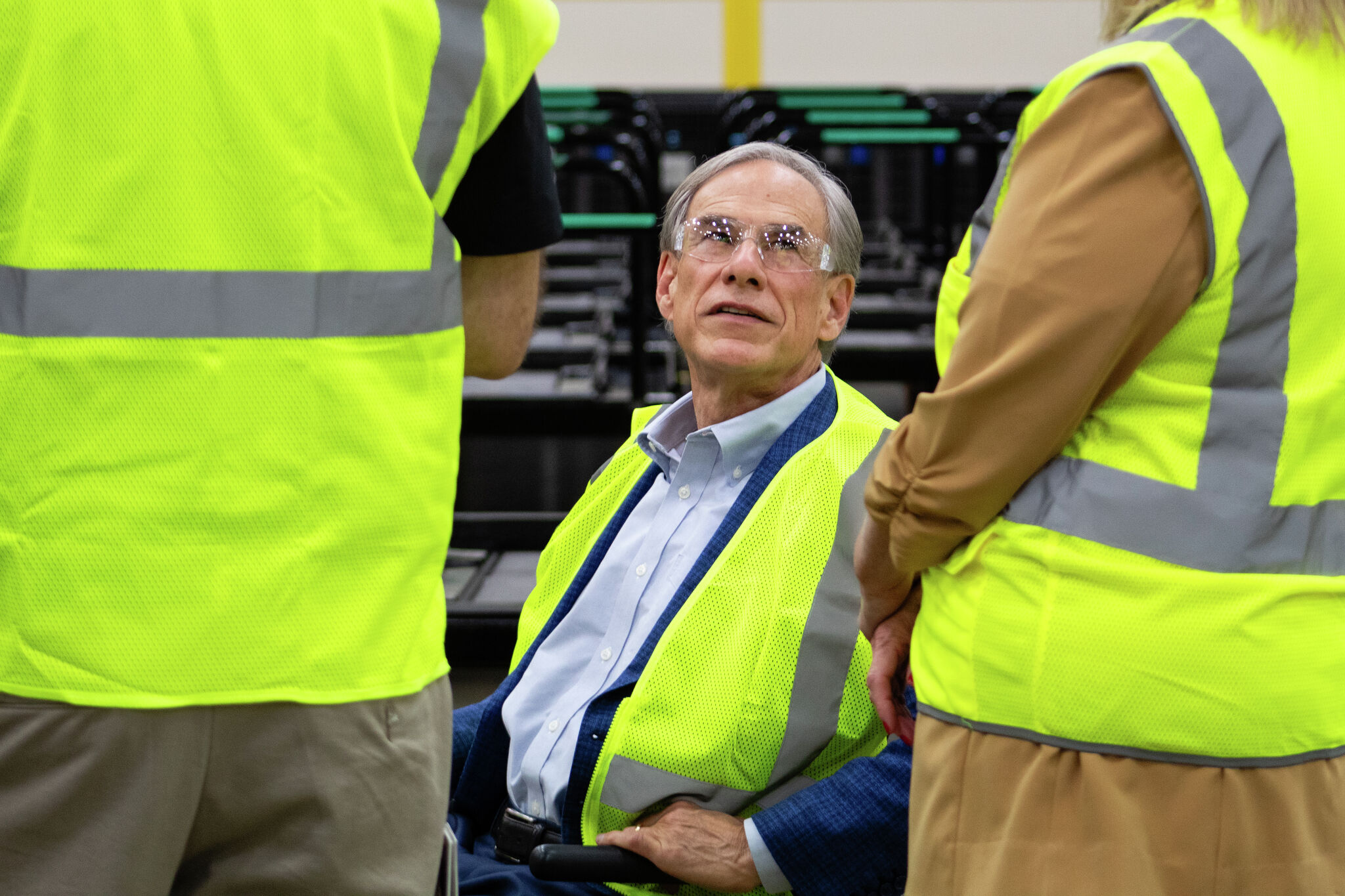
Gov. Greg Abbott on Thursday tours the Caterpillar facility in Seguin.

Gov. Greg Abbott on Thursday tours the Caterpillar facility in Seguin.

Kelsey Brown/San Antonio Express-NewsGov. Greg Abbott speaks Thursday at the Caterpillar facility in Seguin.

Gov. Greg Abbott speaks Thursday at the Caterpillar facility in Seguin.

Kelsey Brown/San Antonio Express-News

The goal is to boost “future-ready, high-quality careers,” said Christy Pambianchi, Caterpillar’s chief human resources officer. “Over the last decade … we’ve tried to really emphasize manufacturing here in the United States,” she said. “We’re kind of rebuilding the educational pipelines and the training pipelines to grow a manufacturing workforce.” 

Article continues below this ad

A key part of Caterpillar’s initiative includes educating people about what advanced manufacturing jobs look like. Manufacturing has changed in the last 30 years, and the job often entails working with automation and innovative technology, she said.

READ MORE: Meta launching construction training program with $115M investment

“Not a lot of people are inside the four walls of a plant, so they don’t always know it’s super modern, really interesting jobs,” she said. “We need more young people to aspire to jobs in manufacturing.” 

Article continues below this ad

While the money will be invested in spurring interest in manufacturing jobs and linking Caterpillar with education systems and training institutions across the state, there are no specific guidelines for how that $5 million will be allocated — but that is intentional. 

Rather than coming in with boxes to check and a clear end point, Pambianchi explained that Caterpillar is looking to partner with local educational and training institutions, economic development organizations and companies to identify the gaps that need to be filled. 

“We’re going to work locally, bottoms up, to say ‘What would have the highest impact here? ’” Pambianchi said. “Of course, we want to benefit from that, but also the whole community is going to benefit.” 

Gov. Greg Abbott, who toured the Seguin facility before the announcement was made, has been leading the state’s efforts to strengthen its workforce pipeline and train workers to use new technology in manufacturing as part of the Texas Task Force on Modernizing Manufacturing.

Article continues below this ad

RELATED: Ready to Work continues to change lives in San Antonio community

“Bottom line, our economy is going incredibly well,” Abbott said. “Caterpillar is a tremendous asset to the Texas economy. A reason why companies like Caterpillar and so many others are moving here is because Texas is well known for having high-skilled job training programs, like what we’re talking about here today, that provide, literally, the best workforce in the United States.”

He also said Caterpillar made the “right decision” to move to Texas. The company announced in 2022 that it was moving its global headquarters from Deerfield, Ill., to Irving.

Seguin Mayor Donna Dodgen said Caterpillar’s investment could provide a path out of poverty for the city’s residents. The city has a poverty rate of 17.1%, higher than the state average of 13.4%, according to census data.

Article continues below this ad

It’s a “big deal” for there to be high-skilled manufacturing positions that offer annual salaries of upward of $100,000, but what’s even more important, she said, is that the investment would create access to education and economic success. 

“Rather than just the true college track — people have choice,” she said. “It’s about choice.”

While there’s an emphasis on recruiting young workers, Mike Reeser, chancellor and CEO of Texas State Technical College, a partner in the investment, said Caterpillar’s investment will provide clear pathways for people at different stages to lock in a secure manufacturing job. 

READ MORE: These San Antonio jobs have the most AI exposure. How does your profession stack up?

Article continues below this ad

For people who are underemployed and looking for expanded job opportunities, he said a credential from a technical college is a great alternative to a master’s degree. 

“You take the communication skills and the critical thinking and the capabilities taught by a bachelor’s degree, and then you add a technical certification on top of it, and you become irresistible to employers,” Reeser said. “You’ve set a career arc that is sure to grow rapidly.” 

Pambianchi said the investment could grow in Texas. The goal is to create a sustainable pipeline of talent to fuel its manufacturing facilities in Texas cities such as San Antonio, Schertz and Seguin. 

“It’s not just a job. It’s a pathway and an entry to a career — a career that could be very robust,” Pambianchi said. “It could take you in a lot of directions.” 

Article continues below this ad

Caterpillar isn’t the only company investing in training programs.

In June, Meta Platforms Inc. launched a $115 million nationwide program to train construction workers, fiber technicians, welders, plumbers, electricians and skilled trades workers. The five-week, fully funded training program aims to address the labor shortage across the state and nation. 

Free Training

Source link

Panel Built Invests in Workforce Development to Support the Future of U.S. Manufacturing


Work-Based Learning and internship programs prepare the next generation of skilled professionals in North Georgia

As manufacturers across the United States face growing labor shortages driven by retirements in the skilled trades, Panel Built, Inc. is expanding its investment in workforce development through structured Work-Based Learning (WBL) and internship programs.

Based in North Georgia, Panel Built partners with local schools to give students hands-on experience in manufacturing, engineering, and business operations. The initiative supports long-term workforce stability while strengthening the regional economy.

The labor shortage challenge is significant. In the United States, manufacturers are expected to need an estimated 2.1 million new workers by 2030 to replace retiring employees, while the American Welding Society projects that 320,500 new welders will be needed by 2029. Similar shortages are expected across construction, electrical, and other skilled trades.

A Structured Approach to Work-Based Learning

Panel Built’s WBL and internship programs place students directly into day-to-day operations. Participants are paid employees who complete the same onboarding process as any other new hire and contribute across departments including engineering, drafting, shipping, customer service, IT, marketing, and sales.

Many continue working with the company through college, particularly in welding and engineering roles that often lead to full-time positions. The program also includes participation in regional CTAE initiatives, career development events, and mock interviews that prepare students for professional environments.

Partnerships That Strengthen the Local Workforce

The company partners with Union County High School and Fannin County High School to identify and prepare students for participation in the Work-Based Learning program.

Kerri Bradshaw, Coordinator for Union County High School’s CTAE and Work-Based Learning programs, said the breadth of experience is what sets Panel Built’s program apart, adding that students can “work and grow in manufacturing, welding, engineering, marketing, accounting, general office work, and IT work.”

Those who fully engage in Work-Based Learning often leave with greater confidence and clearer direction, along with stronger professional habits such as accountability, communication, and teamwork.

Real-World Experience That Translates to Careers

Student participants consistently point to the value of hands-on experience and increased responsibility. Former WBL student Drew McDaris said that in high school, students are “usually treated as a kid, and don’t get a chance to show your worth,” but at Panel Built, “if you show them you are worth your pay, they will trust you and treat you like an adult.”

That growth is recognized across departments. Beth Satterfield, Panel Built Marketing Manager, noted that it is “rewarding to watch students shift from being unsure of themselves to taking real ownership of their daily tasks.”

Investing in Long-Term Stability

For Panel Built, workforce development is part of long-term planning. Supporting students as they gain real-world experience strengthens the company’s team while reinforcing stability in the industries it serves.

To learn more, visit our Workforce Development blog.

About Panel Built

Panel Built, Inc., headquartered in Blairsville, Georgia, is a manufacturer of modular buildings and prefabricated steel structures for industrial, commercial, and government applications. Since 1995, the company has provided custom-engineered solutions designed to meet specific facility and operational needs.

Media Contact

Beth Satterfield
esatterfield@panelbuilt.com
706.389.1803

SOURCE: Panel Built

Source: Panel Built

Free Training

Source link