
Walmart’s AI Push Links Gemini App Experience With U.S. Manufacturing Shift


  • Walmart (NasdaqGS:WMT) is expanding its partnership with Google to integrate Gemini AI into the Walmart mobile app, aiming to support instant checkout and more personalized shopping.
  • The company is also backing Unspun’s AI driven textile production initiative in the U.S., targeting more domestic, tech enabled apparel manufacturing.
  • These moves come alongside Walmart’s broader shift toward platform style profit streams and more advanced, sustainable supply chains.

For investors watching Walmart (NasdaqGS:WMT), these AI and manufacturing moves sit on top of a share price of $126.787 and a 1 year return of 37.8%. Returns over 3 and 5 years are very large, with shares up 165.2% and 188.9% respectively. This underlines how closely the market is tracking Walmart’s repositioning beyond traditional retail margins.

The Gemini AI rollout and Unspun partnership point to Walmart tying digital engagement more tightly to how products are sourced and produced. For you as a shareholder or potential investor, the key question is how these projects influence customer loyalty, cost structure and the mix of higher margin, platform like revenue over time.

Stay updated on the most important news stories for Walmart by adding it to your watchlist or portfolio. Alternatively, explore our Community to discover new perspectives on Walmart.

NasdaqGS:WMT Earnings & Revenue Growth as at Apr 2026NasdaqGS:WMT Earnings & Revenue Growth as at Apr 2026

📰 Beyond the headline: 1 risk and 2 things going right for Walmart that every investor should see.

Quick Assessment

  • ⚖️ Price vs Analyst Target: At US$126.79, Walmart trades about 7% below the US$136.02 analyst target, which sits inside a wide US$62 to US$150 range.
  • ⚖️ Simply Wall St Valuation: The shares are described as trading close to estimated fair value, so this AI and manufacturing news comes against a roughly balanced valuation backdrop.
  • ✅ Recent Momentum: A 30 day return of 2.67% suggests the trend has been slightly positive into this announcement.

There is only one way to know the right time to buy, sell or hold Walmart: head to Simply Wall St’s
company report for the latest analysis of Walmart’s Fair Value.

Key Considerations

  • 📊 Gemini AI in the app and AI led U.S. textile production both speak to Walmart tying digital retail, data and supply chain control more tightly together.
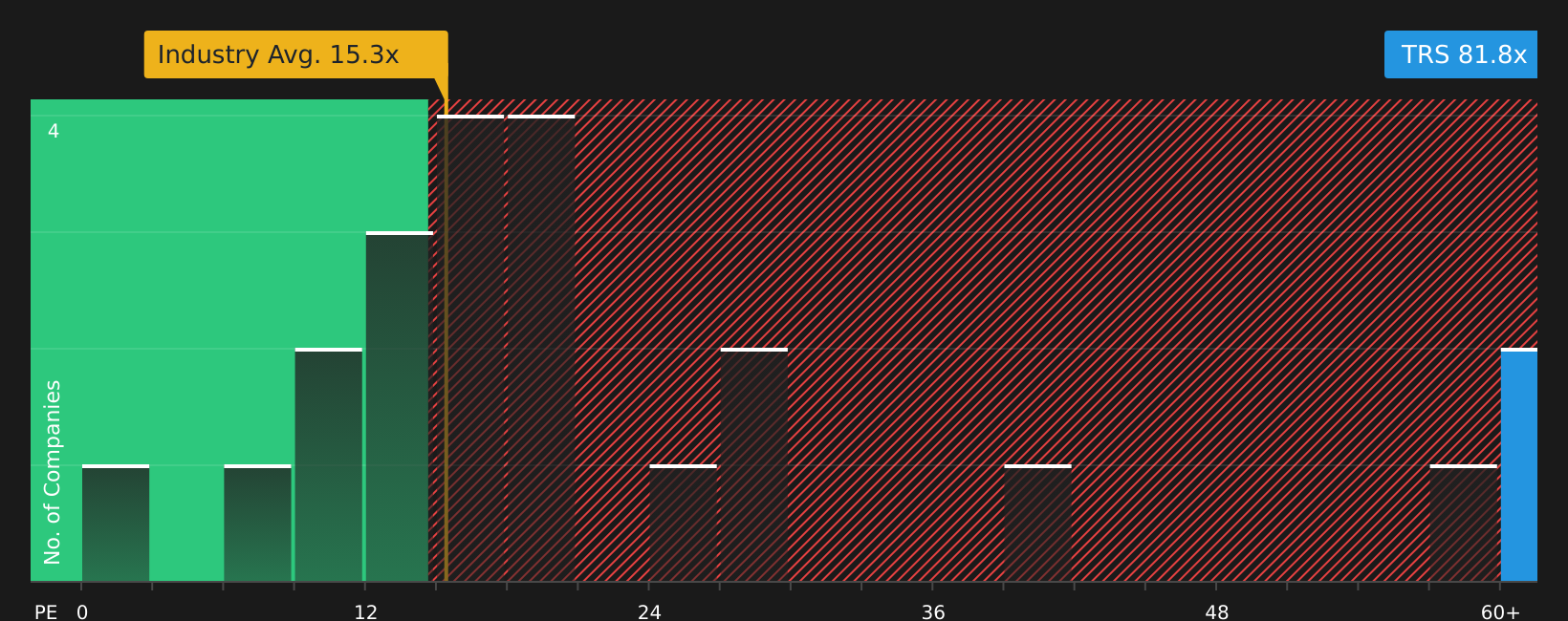
  • 📊 Watch how engagement metrics, unit economics in fulfillment and any disclosure around AI driven productivity show up alongside the current 46.2x P/E.
  • ⚠️ One flagged risk is significant insider selling over the past 3 months, which some investors may weigh against these long term tech and manufacturing projects.

Dig Deeper

For the full picture including more risks and rewards, check out the
complete Walmart analysis. Alternatively, you can check out the
community page for Walmart to see how other investors believe this latest news will impact the company’s narrative.

This article by Simply Wall St is general in nature. We provide commentary based on historical data
and analyst forecasts only using an unbiased methodology and our articles are not intended to be financial advice.
It does not constitute a recommendation to buy or sell any stock, and does not take account of your objectives, or your
financial situation. We aim to bring you long-term focused analysis driven by fundamental data.
Note that our analysis may not factor in the latest price-sensitive company announcements or qualitative material.
Simply Wall St has no position in any stocks mentioned.

Valuation is complex, but we’re here to simplify it.

Discover if Walmart might be undervalued or overvalued with our detailed analysis, featuring fair value estimates, potential risks, dividends, insider trades, and its financial condition.

Access Free Analysis

Have feedback on this article? Concerned about the content? Get in touch with us directly. Alternatively, email editorial-team@simplywallst.com

Free Training

Source link

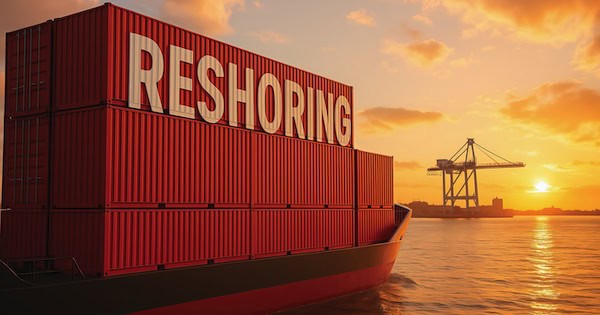
Reshoring: The Domestic Manufacturing Shift


Reshoring(Photo: Adobe Stock / Chopang Studio)

By Howard Riell
From the March/April 2026 Issue

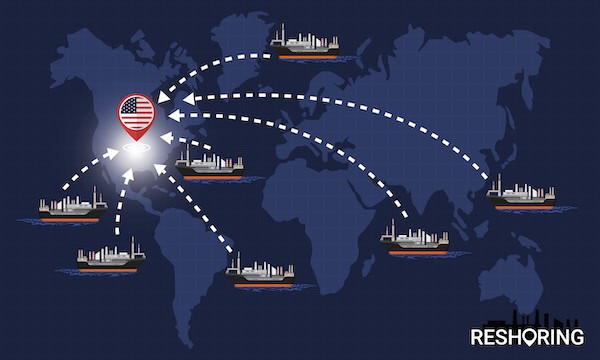
The trend among so many American companies of reshoring—bringing manufacturing and more back to the United States—is proving to be seismic. Under President Donald Trump, many major companies have announced large investments in U.S. production expansions during 2025 and now in 2026, signaling a shift back toward domestic production in strategic sectors.  

GlobalFoundries, for one, has said it is investing $16 billion to reshore chip manufacturing. Stellantis, the owner of Jeep, Ram, Dodge, unveiled a $13 billion U.S. manufacturing investment. And Johnson & Johnson plans to spend $55 billion to build facilities in the United States, partly responding to trade and supply chain pressures.  

Federal announcements in 2025 point to more than $200 billion in multi-year U.S. investment commitments, led by major life sciences companies. In addition to Johnson & Johnson, other significant announcements came from AstraZeneca ($50 billion), Bristol Myers Squibb ($40 billion), GSK ($30 billion), and Eli Lilly and Company ($27 billion). While not always labeled as reshoring, these projects represent significant domestic capacity expansion aligned with federal priorities. 

Activity has been especially concentrated in four sectors: pharmaceuticals, semiconductors, advanced manufacturing, and energy and data infrastructure—industries increasingly tied to national security and supply chain resilience.

On the employment side, reshoring and foreign direct investment continued to generate substantial, if moderating, gains. Approximately 244,000 U.S. jobs were announced in 2024, down slightly from the 2023 peak. While investment momentum remained strong in 2025, job creation is scaling more gradually as projects move from announcement to operation.

These investment announcements are significant, and jobs numbers are substantial compared with historical levels. Companies have cited numerous reasons for bringing manufacturing or business operations back home after they had previously been moved overseas. These include supply chain reliability, tariffs or trade policy changes, rising overseas labor costs, automation reducing labor-cost advantages, national security concerns, and Made in USA branding benefits. 

American Machinist is reporting that industry surveys and analyses suggest that reshoring will continue to grow if the U.S. significantly expands its skilled manufacturing workforce. In fact, if American companies can fill more skilled jobs, some studies estimate that a meaningful share of currently off-shored production—as much as 30% of OEM-offshored products—could come back. 

Reshoring: A Broader View

“Reshoring to the U.S. has experienced steady, moderate growth over the past 10 years, and I expect that to continue,” predicts Rosemary Coates, Executive Director of the Reshoring Institute in Los Gatos, CA, which provides expert guidance on global manufacturing strategy.

“The bigger story is that now companies are considering the global landscape and choosing multiple places to source and manufacture,” Coates continues. “This new way of thinking mitigates the risks of regionalized disasters and geopolitics and allows companies to take advantage of low-cost labor. It is also an opportunity to develop new markets and customers and manufacture products close to where they are sold, thereby reducing carbon footprint and developing sustainability programs. What I see is not just reshoring, nearshoring, or friendshoring, but global supply chain management that is rethinking its world.”

She adds, “What we are seeing from our Reshoring Institute clients is a movement away from China and into other Asian countries and Mexico. Mexico has become a very attractive destination because of its low-cost labor and rapidly developing manufacturing capabilities.”

 Still, geopolitics and the Trump Administration’s changing tariff policy has made selecting alternate global manufacturing locations a challenge. Says Coates, “Companies are unsure of what tariffs might be imposed, causing additional costs on importing raw materials, parts, and finished products. While long-term, this may result in reshoring, in the short term, it increases costs.”

Long before a site selection begins, Coates explains, the Reshoring Institute encourages companies to analyze their product cost structures so that they have a clear picture of the percentage of production that is related to materials and what percentage is related to labor. She points out: “If labor is greater than 50% of the overall cost, then a low-cost labor area is very important.”

Reshoring(Image: Adobe Stock / Foxeel)

Foreign-Trade Zones: Place To Land 

Jeffrey J. Tafel, CAE, President of the National Association of Foreign-Trade Zones (NAFTZ), emphasizes that foreign-trade zones are “a proven competitiveness tool for reshoring, helping manufacturers/importers/exporters lower total landed costs, mitigate tariff exposure, defer duties and improve cash flow—often enough to shift the ROI in favor of U.S. investment.” 

NAFTZ, an association of public and private members, is the collective voice of the U.S. Foreign-Trade Zones Program. Association members increasingly use foreign-trade zones not just for duty savings, Tafel explains, “but as resilience platforms that enable flexible sourcing, domestic assembly, and faster response to customers. For nearshoring in Mexico and Canada, U.S. FTZs complement USMCA (The United States-Mexico-Canada Agreement) by supporting more integrated North American supply chains—allowing firms to optimize cross-border flows while keeping higher-value operations anchored in the U.S.” 

Cost volatility, supply chain risk, geopolitics and customer proximity are all converging to reshape sourcing strategies. 

“NAFTZ consistently hears that unpredictable tariffs, shipping disruptions and geopolitical exposure have made ‘lowest-cost country’ models far riskier,” says Tafel, “while U.S. FTZ benefits and state and local incentives materially narrow the cost gap for U.S. locations. Being closer to customers improves speed and customization, making reshoring and nearshoring a strategic risk management decision, not just a cost play.” 

Supply chain resilience has helped change the way manufacturers evaluate sites today compared to five years ago. Says Tafel, “Site selection has shifted from a primary focus on labor and tax incentives to a broader resilience lens that prioritizes logistics access, supplier redundancy, regulatory readiness and the ability to pivot sourcing quickly.” 

From NAFTZ’s perspective, companies are integrating trade compliance and tariff strategy earlier in site selection—recognizing that operational flexibility and trade tools like U.S. FTZs are now core competitive advantages, not back-office considerations. 

Many firms are positively surprised by how much total landed cost can be reduced through U.S. FTZ benefits, incentives, and logistics efficiencies when viewed holistically, Tafel points out. “Similarly, companies often underestimate the true cost of offshore complexity—inventory carrying costs, compliance burdens, disruption risk and lost revenue from slow response times—which reshoring can materially reduce.” 

Case In Point: John Deere, GE Appliances

Other companies are likewise looking forward and underscoring that there is no place like home. 

In keeping with its self-described “strong tradition of building America,” Moline, IL-based John Deere has rolled out plans to open two new U.S.-based facilities: a state-of-the-art distribution center near Hebron, IN, and a cutting-edge excavator factory in Kernersville, NC. Both are set to open within the next year.  

The Kernersville campus reshores manufacturing and production from Japan. The company already operates over 60 facilities across more than 16 states. 

“Our investment in these new facilities underscores John Deere’s dedication to strengthening the backbone of American industry and supporting local economies,” said John May, Chairman and Chief Executive Officer of the manufacturer of agricultural, construction, and forestry machinery, turf care equipment and diesel engines. “We believe in building America, and these projects represent our intent to continue driving innovation and job creation in the United States.”

“These investments further demonstrate our commitment to invest $20 billion in U.S. manufacturing over the next 10 years,” May said. 

Another example: last summer, GE Appliances, a Haier company, said it would invest more than $3 billion over the next five years in its U.S. operations, workforce, and communities. The first phase of investments will begin at GE Appliances plants in Kentucky, Alabama, Georgia, Tennessee, and South Carolina. Upon completion of this plan, GE Appliances will have invested $6.5 billion across its U.S. manufacturing plants and nationwide distribution network since 2016. 

Workforce “Foundational”

What lies ahead? Workforce availability and skills are “foundational” to reshoring decisions, NAFTZ’s Tafel believes, even as expectations evolve toward technical roles supported by automation.  

And Coates observes, “While workers may be available, they often do not have the skills to operate in a sophisticated and automated manufacturing environment. I often say we have a skills shortage in the U.S., not a labor shortage. There needs to be more emphasis on education—particularly engineering—and the development of community college programs and apprenticeships.”

With more than 4,000 new U.S. jobs added since 2016, and more than 1,000 new jobs anticipated from its five-year plan, GE Appliances places employees as central to its growth strategy.

“Infrastructure and tools matter, but they are not enough,” said Bill Good, GE Appliances’ Vice President of Supply Chain. “America’s manufacturing renaissance will be built by people. That’s why we’re partnering with universities, technical schools, and high schools to develop the next generation of manufacturing leaders. We’re not just bringing jobs back—we’re bringing purpose, pride, and possibility back to American industry.” 

For its part, NAFTZ sees firms pairing FTZ-enabled cost savings with deeper investments in training partnerships and workforce pipelines to make reshoring viable, increasingly prioritizing regions that can demonstrate sustained talent development and adaptability. 

Tafel maintains that reshoring’s momentum will depend on policy stability, predictable trade and tariff regimes, workforce readiness, and sustained infrastructure investment.  

“NAFTZ believes momentum will continue if companies can plan with confidence—knowing U.S. FTZs, incentives, and trade programs will remain reliable tools to offset cost pressures,” he concludes. “Increased policy volatility or talent constraints would risk slowing the pace of investment.”

Snapshots

Snapshot: Puerto Rico

Puerto Rico offers a compelling reshoring value proposition as a U.S. jurisdiction with global reach. Companies benefit from full access to the U.S. market, strong legal and intellectual property protections, and eligibility for federal programs, while operating within a cost-competitive structure. The island’s long-standing manufacturing base, particularly in biosciences, medical devices, and advanced manufacturing, is supported by a highly skilled, bilingual workforce and mature supplier networks. 

Puerto Rico’s strategic location provides efficient access to North America, Latin America, and Europe, helping companies reduce transit times and strengthen supply chain resilience. Incentives under Act 60 and a streamlined business-establishment process further enhance competitiveness for high-value operations, particularly those seeking long-term operational stability within the U.S. 

Recent expansions reinforce this momentum. Amgen, Eli Lilly, CooperVision, Terumo, Millicent Pharma, and others continue to invest and expand on the island —underscoring Puerto Rico’s role as a proven reshoring destination within the United States.

Snapshot: U.S. Virgin Islands

As companies rethink global supply chains, the U.S. Virgin Islands (USVI) emerges as one of the most strategically advantaged U.S. jurisdictions for reshoring and nearshoring. As a U.S. territory outside the U.S. customs zone and exempt from the Jones Act, the USVI allows foreign-flag vessels to move goods directly between the Territory and global markets, reducing shipping constraints and expanding routing options.

On St. Croix, the South Shore Trade Zone features commercial land for development, available warehouse space, and direct access to deep-water ports accommodating drafts of up to 30 feet. An international airport in the zone, with warehouse facilities in close proximity, further enhances multimodal connectivity, enabling efficient movement of goods from port to port and air to sea.

Coupled with competitive tax incentives and a stable U.S. legal framework, the USVI stands out as a resilient, flexible, and globally connected destination for manufacturers, logistics providers, and distributors positioning for long-term growth in the Americas and beyond.

Check out all the latest economic development, corporate relocation, corporate expansion and site selection news related to reshoring and nearshoring.

Free Training

Source link

Telix Advances Radiopharma Platform With Key Trials And US Manufacturing Shift


Track your investments for FREE with Simply Wall St, the portfolio command center trusted by over 7 million individual investors worldwide.

  • Telix Pharmaceuticals (ASX:TLX) has resubmitted its NDA for TLX101-Px, a PET imaging agent for brain cancer.

  • The company reported that Part 1 of the global Phase 3 ProstACT study for TLX591-Tx in prostate cancer met primary safety and tolerability objectives.

  • Telix expanded its U.S. manufacturing footprint with new cyclotron installations to support in-house radioisotope production and supply resilience.

At a share price of A$12.75, Telix Pharmaceuticals (ASX:TLX) sits against a mixed recent track record, with the stock up 12.9% over the past week and 43.6% over the past month, but showing a 54.4% decline over the past year. Over a longer period, the share price return sits at 87.2% over three years and 183.3% over five years. This provides context to the current interest around the company’s pipeline and manufacturing updates.

For investors watching Telix, the NDA resubmission for TLX101-Px, the Phase 3 safety readout for TLX591-Tx and the new U.S. cyclotron capacity are central elements of the current story. The way these clinical and operational milestones progress, and whether they lead to regulatory outcomes and commercial activity, is likely to influence sentiment on ASX:TLX.

Stay updated on the most important news stories for Telix Pharmaceuticals by adding it to your watchlist or portfolio. Alternatively, explore our Community to discover new perspectives on Telix Pharmaceuticals.

ASX:TLX Earnings & Revenue Growth as at Mar 2026 ASX:TLX Earnings & Revenue Growth as at Mar 2026

3 things going right for Telix Pharmaceuticals that this headline doesn’t cover.

The NDA resubmission for TLX101-Px, the positive Part 1 readout from the ProstACT Phase 3 trial for TLX591-Tx, and the U.S. cyclotron rollout all point to Telix working on three parts of its model at once: diagnostics, therapeutics and infrastructure. TLX101-Px targets recurrent or progressive glioma, an area where the FDA currently has no approved targeted amino acid PET agent, so regulatory progress here would speak directly to Telix’s neuro-oncology focus and its companion diagnostic strategy alongside TLX101-Tx. On the prostate cancer side, acceptable safety and tolerability for TLX591-Tx in combination with standard therapies gives Telix more footing in a space where companies such as Novartis and Bayer are active with radioligand and oncology treatments. The cyclotron agreement in the U.S. moves Telix further into vertically integrated production, which can reduce dependence on external isotope suppliers compared with peers that lean more on contract manufacturers. For investors, the thread tying these updates together is execution risk: more assets and infrastructure can deepen the opportunity, but they also raise the bar on Telix’s ability to manage capital, regulatory interactions and complex supply chains over time.

  • The NDA resubmission for TLX101-Px and progress in ProstACT Global align with the narrative of building a multiproduct, multi-region radiopharmaceutical platform across urologic and neuro-oncology indications.

  • The extra data and statistical work needed for TLX101-Px, and the ongoing regulatory interactions for TLX591-Tx, highlight that clinical and regulatory pathways can be slower or more resource intensive than simple catalyst timelines might imply.

  • The cyclotron rollout into RLS and TMS sites was anticipated in the narrative, but contract specific details such as the IBA agreement and ARTMS technology may not be fully captured in earlier assumptions about manufacturing integration and supply reliability.

Knowing what a company is worth starts with understanding its story. Check out one of the top narratives in the Simply Wall St Community for Telix Pharmaceuticals to help decide what it’s worth to you.

  • ⚠️ Heavier investment into clinical programs like ProstACT Global and into cyclotron infrastructure could keep reported earnings and margins under pressure if revenue does not keep pace.

  • ⚠️ Regulatory processes for TLX101-Px and TLX591-Tx, together with existing regulatory scrutiny around prostate cancer disclosures, add uncertainty around timing and ultimate outcomes.

  • 🎁 Progress across both diagnostic and therapeutic candidates, along with manufacturing integration, supports the idea of Telix evolving into a broader radiopharmaceutical platform rather than a single product story.

  • 🎁 U.S. cyclotron capacity and in-house radioisotope production can improve supply chain resilience and may support more consistent availability of products versus competitors that rely mainly on third party isotope suppliers.

Investors should watch for the FDA’s response to the TLX101-Px NDA resubmission, including any further data requests, and updates on the transition of ProstACT Global into its larger Part 2 expansion and U.S. IND amendment. Progress on installing and qualifying the new U.S. cyclotrons, and how quickly they begin supplying Telix products at scale, will be key to understanding execution on the vertical integration plan. It is also worth tracking how Telix positions its prostate and brain cancer offerings in relation to radiopharma peers, and whether management provides clearer guidance on capital spend, margins and timelines as these programs and assets move through their next stages.

To ensure you’re always in the loop on how the latest news impacts the investment narrative for Telix Pharmaceuticals, head to the community page for Telix Pharmaceuticals to never miss an update on the top community narratives.

This article by Simply Wall St is general in nature. We provide commentary based on historical data and analyst forecasts only using an unbiased methodology and our articles are not intended to be financial advice. It does not constitute a recommendation to buy or sell any stock, and does not take account of your objectives, or your financial situation. We aim to bring you long-term focused analysis driven by fundamental data. Note that our analysis may not factor in the latest price-sensitive company announcements or qualitative material. Simply Wall St has no position in any stocks mentioned.

Companies discussed in this article include TLX.AX.

Have feedback on this article? Concerned about the content? Get in touch with us directly. Alternatively, email editorial-team@simplywallst.com

Free Training

Source link

Did New U.S. Defense-Focused Manufacturing Partnerships Just Shift Amprius Technologies’ (AMPX) Investment Narrative?


  • Recently, Needham began covering Amprius Technologies, highlighting its silicon-anode battery technology and citing a US$35 million unmanned aerial systems order alongside contract manufacturing capacity of 1.8 GWh.
  • A separate agreement made Nanotech Energy Amprius’ first U.S.-based manufacturing partner, aligning its high-performance batteries with domestic sourcing rules for defense applications.
  • Next, we’ll examine how this new U.S. manufacturing partnership may influence Amprius’ investment narrative and future growth assumptions.

This technology could replace computers: discover 23 stocks that are working to make quantum computing a reality.

Amprius Technologies Investment Narrative Recap

To own Amprius, you need to believe its silicon-anode batteries can convert early traction in drones and defense into durable, profitable demand while it scales manufacturing. The Nanotech Energy partnership directly addresses one near term catalyst and risk at once: it could support US defense opportunities that require local supply, while beginning to reduce the company’s heavy reliance on overseas contract manufacturing and the related geopolitical and supply chain uncertainties.

Among the recent updates, the Nanotech Energy alliance stands out as most relevant. By adding Amprius’ first US-based manufacturing partner for its silicon-anode cells, the company is creating a domestic pathway that aligns with updated National Defense Authorization Act sourcing rules. For investors focused on catalysts, this matters because it directly intersects with Amprius’ concentration in aviation and drones and its goal of securing higher visibility, defense-linked production orders.

Yet behind the promise of US manufacturing, investors should also be aware of how concentrated defense and drone demand leaves Amprius exposed to shifts in procurement cycles and…

Read the full narrative on Amprius Technologies (it’s free!)

Amprius Technologies’ narrative projects $306.6 million revenue and $13.4 million earnings by 2028. This requires 89.8% yearly revenue growth and a $52.1 million earnings increase from $-38.7 million today.

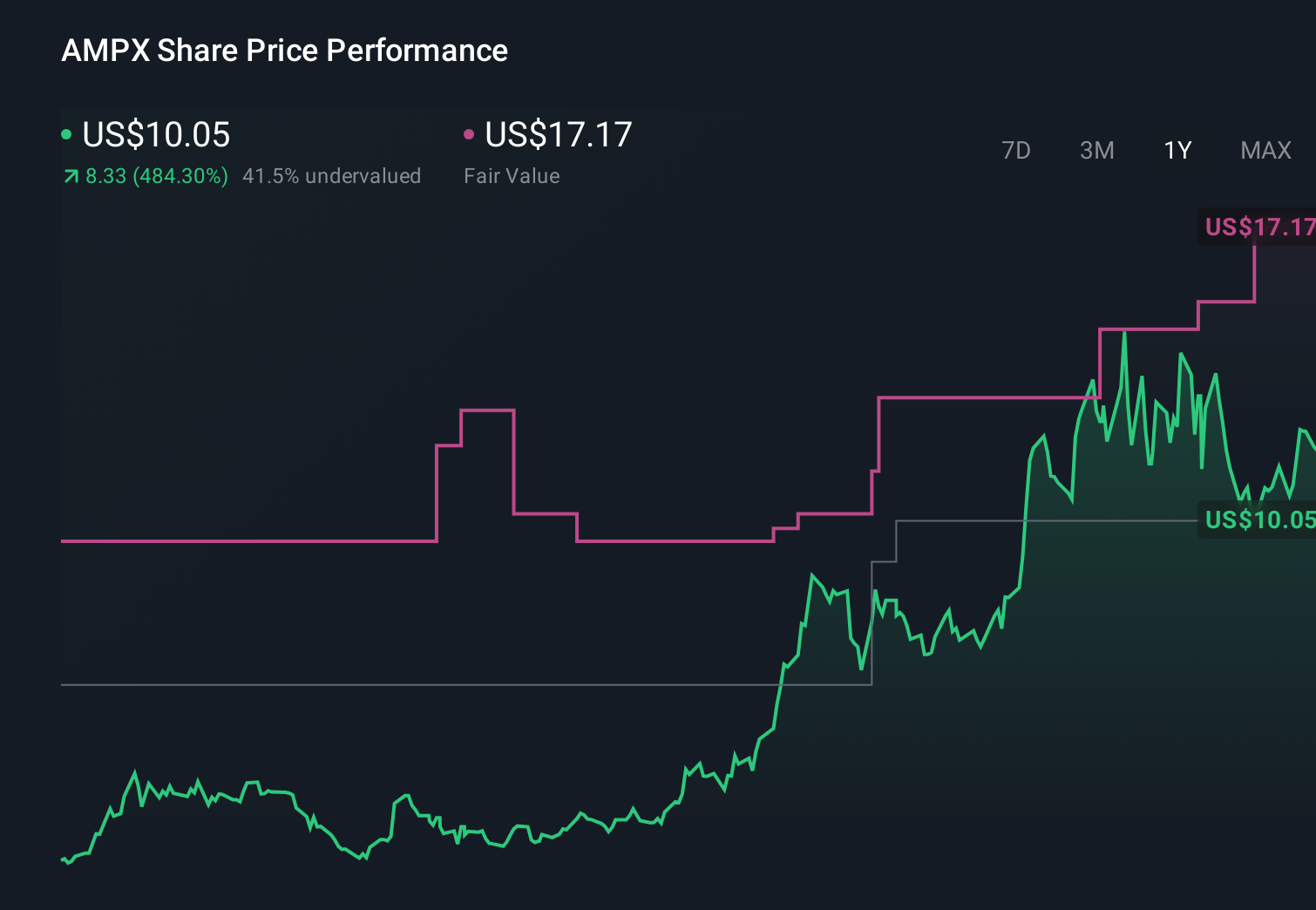
Uncover how Amprius Technologies’ forecasts yield a $17.57 fair value, a 85% upside to its current price.

Exploring Other Perspectives

AMPX 1-Year Stock Price ChartAMPX 1-Year Stock Price Chart

Some of the lowest ranked analysts took a far more cautious view, even while modeling roughly 77.6% annual revenue growth and a potential US$25.5 million profit by 2028, highlighting how sensitive those outcomes could be if drone demand weakens or external manufacturing partners run into trouble.

Explore 9 other fair value estimates on Amprius Technologies – why the stock might be worth less than half the current price!

Form Your Own Verdict

Don’t just follow the ticker – dig into the data and build a conviction that’s truly your own.

Interested In Other Possibilities?

These stocks are moving-our analysis flagged them today. Act fast before the price catches up:

This article by Simply Wall St is general in nature. We provide commentary based on historical data
and analyst forecasts only using an unbiased methodology and our articles are not intended to be financial advice.
It does not constitute a recommendation to buy or sell any stock, and does not take account of your objectives, or your
financial situation. We aim to bring you long-term focused analysis driven by fundamental data.
Note that our analysis may not factor in the latest price-sensitive company announcements or qualitative material.
Simply Wall St has no position in any stocks mentioned.

New: Manage All Your Stock Portfolios in One Place

We’ve created the ultimate portfolio companion for stock investors, and it’s free.

• Connect an unlimited number of Portfolios and see your total in one currency
• Be alerted to new Warning Signs or Risks via email or mobile
• Track the Fair Value of your stocks

Try a Demo Portfolio for Free

Have feedback on this article? Concerned about the content? Get in touch with us directly. Alternatively, email editorial-team@simplywallst.com

Free Training

Source link

Meyer Burger equipment purchase enables Solestial US manufacturing shift


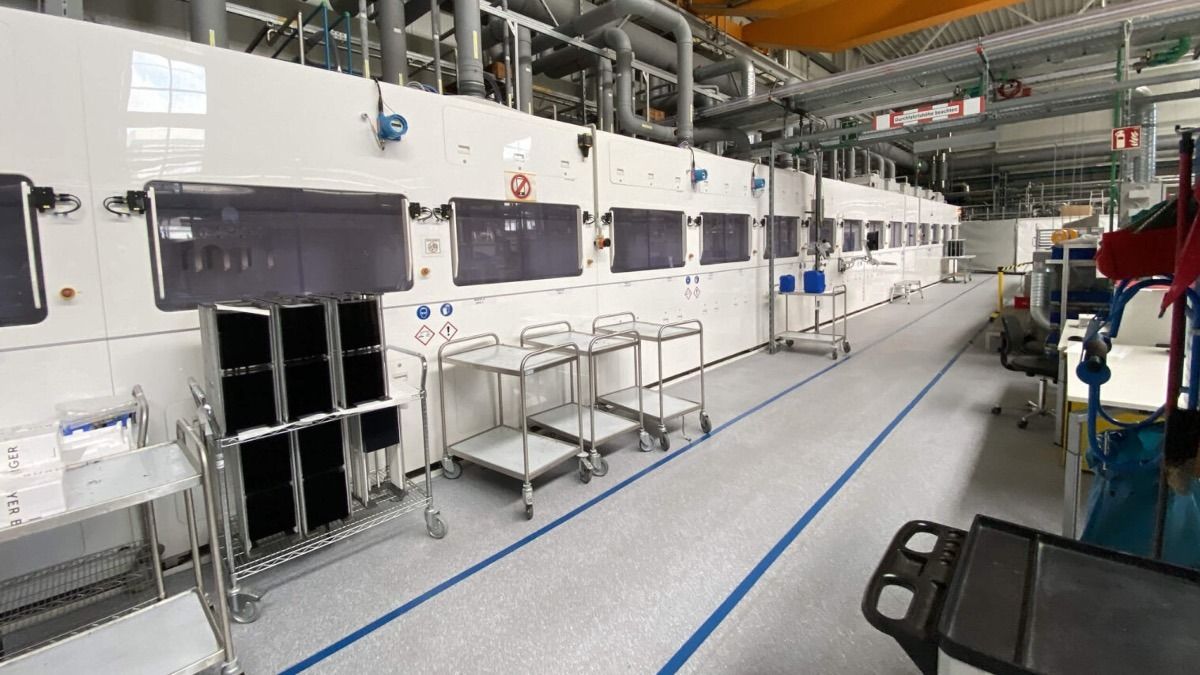
Solestial, a US-based space solar manufacturer, has acquired solar manufacturing equipment from Meyer Burger to strengthen domestic manufacturing operations in the US. The acquisition enables Solestial to process its silicon solar technology from wafer to cell in house. Equipment was acquired from Meyer Burger’s Hohenstein-Ernstthal facility in Germany, where Solestial’s wafers had previously been processed. Solestial has stated that it plans to shift limited solar cell manufacturing activities from Germany to the US. The Solestial has confirmed that its 30,000 square foot US facility is operational and commissioned for production. The move follows the disruption of a prior manufacturing partnership after Meyer Burger’s German subsidiaries filed for insolvency in May 2025. Recently, Solestial has partnered with NASA Glenn Research Center to advance ultrathin silicon solar array performance through technical testing.

Free Training

Source link