

Grundfos Breaks Ground on 143,000-Square-Foot Expansion at Brookshire Manufacturing Campus


BROOKSHIRE, Texas (Covering Katy News) — Grundfos, a global manufacturer of pumps and water technology, has broken ground on a major expansion of its Brookshire manufacturing campus that company officials say will increase production capacity to meet growing demand across North America.

The multi-million-dollar project will add an approximately 143,000-square-foot manufacturing facility to the company’s U.S. headquarters west of Houston. The expansion is expected to be completed in the third quarter of 2027, with production beginning later that year.

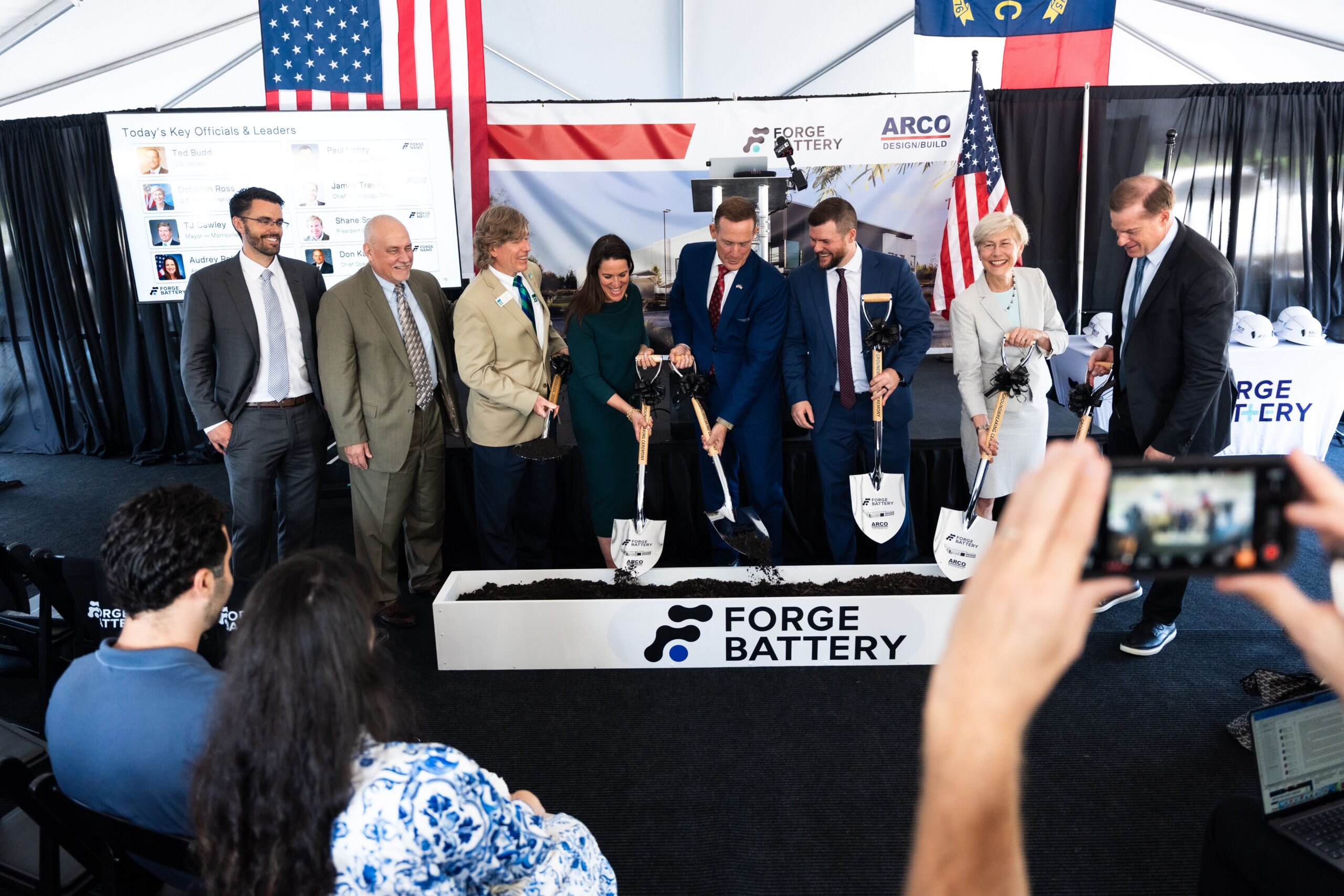
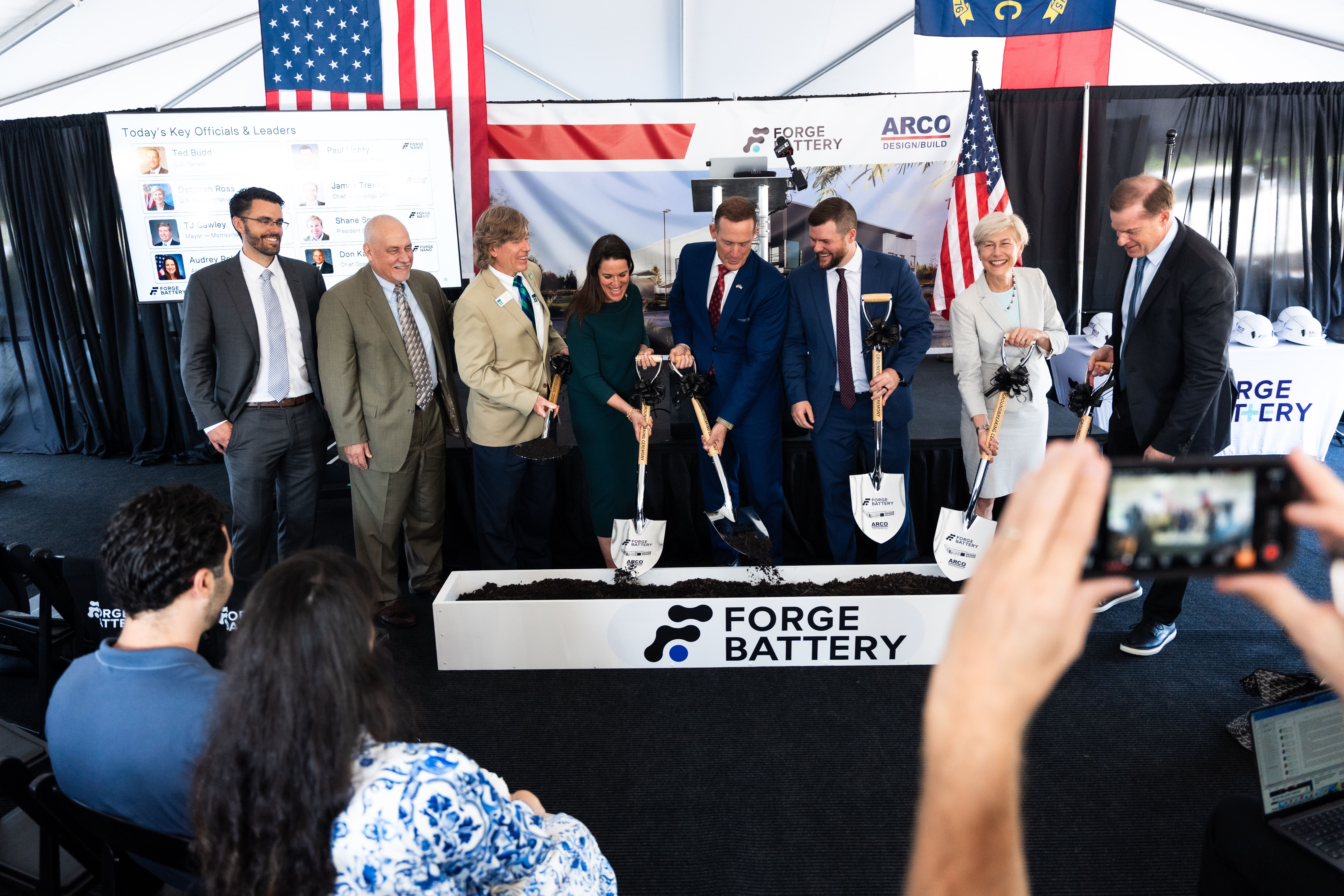
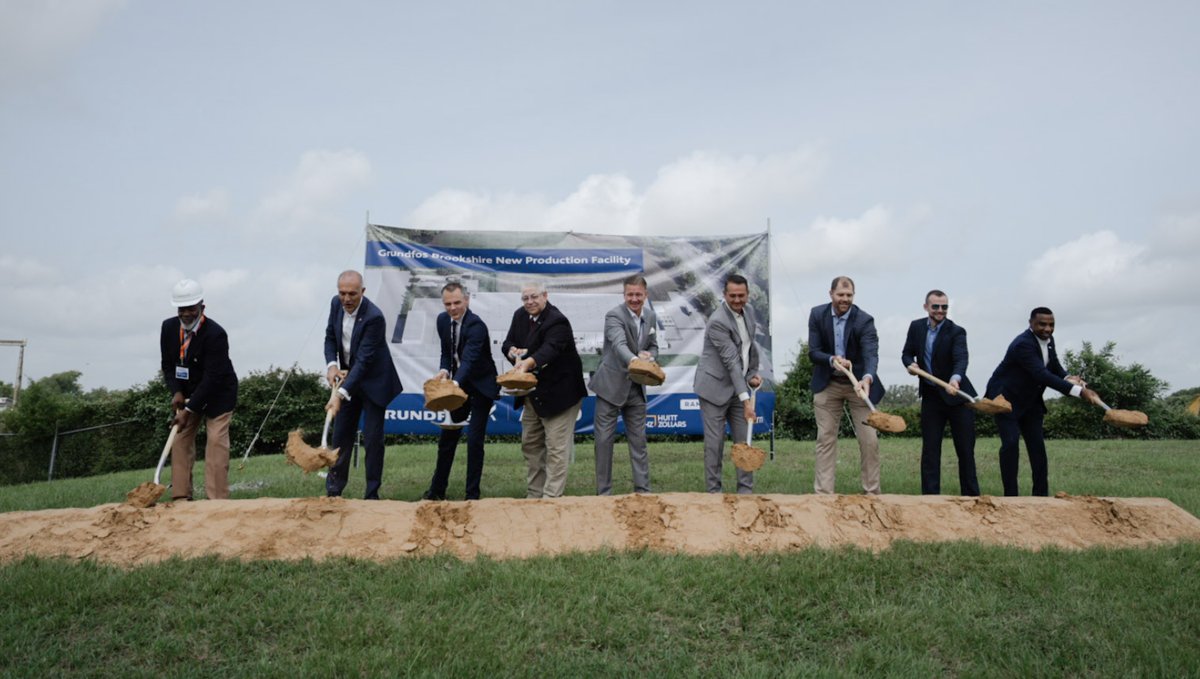
Company leaders, Denmark’s ambassador to the United States, state and local elected officials, and business leaders attended the groundbreaking ceremony Tuesday.

Brookshire Manufacturing Campus Will Expand Production Capacity

The new facility will manufacture advanced pump systems and water technologies primarily for municipal water utilities and commercial buildings. Manufacturing operations will include assembly, welding, fabrication, testing and finishing, with an estimated annual production capacity of 75,000 units.

The company also celebrated the opening of the Grundfos Academy Americas, a new training center designed to provide hands-on instruction for contractors, distributors and other industry partners using the company’s products.

“Our growing presence in Brookshire reflects both our confidence in the U.S. market and our long-term commitment to investing where our customers and partners need us most,” Grundfos Chief Executive Officer Poul Due Jensen said. “The Greater Houston Area offers the skilled workforce, transportation access and proximity to global ports that allow us to manufacture advanced water technologies efficiently and move them across the U.S.”

Growing U.S. Demand Drives Grundfos Investment

Grundfos officials said the expansion follows strong growth in the United States, which has become the company’s largest market and now accounts for about one-fifth of its global revenue. The company reported 15% U.S. sales growth in 2025 and said it expects continued demand driven by investments in water infrastructure, energy-efficient buildings and industrial water systems.

The new manufacturing facility is expected to improve production capacity and reduce delivery times for customers throughout North America.

International and Texas Leaders Attend Groundbreaking

Jesper Møller Sørensen, Denmark’s ambassador to the United States, said the project reflects the economic partnership between Denmark and the United States.

“Danish companies continue to invest in American communities, creating jobs, strengthening local manufacturing and delivering innovative solutions that support the industries of the future,” Sørensen said.

Among those attending the ceremony were Brookshire Mayor Robert Richards and State Rep. Stan Kitzman.

New Facility Expected to Open in 2027

Grundfos said the new facility will seek LEED certification as part of the company’s efforts to improve energy efficiency and sustainability in its manufacturing operations.

Construction is expected to be completed in the third quarter of 2027, with production scheduled to begin during the fourth quarter.

Grundfos employs approximately 20,000 people worldwide and develops pumps and water management systems used in municipal, commercial and industrial applications.

Free Training

Source link

Fuel Cell Manufacturing, Deployment Gain Ground in U.S.


Reports related to this article:

Written by Eric Funderburk for IIR News Intelligence (Sugar Land, Texas)

Summary

Fuel cells, powered by either hydrogen or natural gas, are being increasingly deployed for power generation throughout the U.S., and fuel-cell manufacturers are underway with projects to help meet the increasing demand.

A Growing Technology

The use of fuel cells to provide power generation is gaining ground at sites throughout the U.S., with data centers in particular targeting the technology to decrease reliance on external power. Smaller fuel cells can be used in automotive applications.

Industrial Info Resources data show more than $4.8 billion in active power generation projects using fuel cells, although most of these are planned for the future.

The “fuel cells” umbrella is a bit broad, as the label covers both fuel cells powered directly by hydrogen as well as those that run on a supply of natural gas. The technologies have similarities, as hydrogen is the ultimate source of power for both types of cells.

Both hydrogen and natural gas fuel cells generate electricity through an electrochemical process, rather than combustion. Hydrogen-based fuel cells directly use hydrogen, with water vapor the only byproduct (in addition to heat). Natural gas fuel cells actually convert the natural gas to hydrogen, which is then used to generate electricity and releases both water vapor and carbon dioxide, although significantly less CO2 than combustion processes, as well as virtually eliminating some types of emissions such as nitrogen oxides and sulfur oxides.

Industrial Info’s fuel cell coverage of fuel cell manufacturing and their deployment for power generation includes both natural gas- and hydrogen-based fuel cell technologies.

Power Generation Deployment

Using fuel cells for behind-the-meter power generation is gaining ground in the U.S., and the prime recipients of this technology are data centers.

Many of the fuel cell systems that are intended for data centers are meant to run on natural gas, but one of the nation’s leading fuel cell manufacturers, Bloom Energy, provides technologies that possess substantial fuel flexibility.

It’s these flexible Bloom technologies that American Electric Power Company (AEP) plans to use at a generation facility in Hilliard, Ohio, to help power a nearby Amazon data center. Industrial Info Resources data show most of the buildings at Amazon’s Hilliard data center have been completed, and work on the final 110,000-square-foot building is planned to begin this year. Shortly after that building is finished in mid-2027, AEP is expected to put the finishing touches on a 72.91-megawatt (MW)fuel cell facility that will power a portion of the data center.

At the generation site, AEP will employ various Bloom Energy systems that are primarily meant for natural gas but fully capable of using hydrogen or biogas for a lower emissions footprint. Construction of the power generation plant is expected to begin later this year and last about a year.

Amazon also is considering a 20-MW fuel cell system using Bloom technology at a data center in Santa Clara, California, while elsewhere in Ohio, AEP is in the early planning stages for the use of a 100-MW fuel cell system to help power Cologix’s planned $8 billion hyperscale data center in Johnstown.

Fuel Cell Manufacturing

On the fuel-cell manufacturing side, covered by the Industrial Info Resources Global Market Intelligence (GMI) Industrial Manufacturing Project Database, many, but not all, of the current projects are based on hydrogen-focused technologies, largely the result of a number of them receiving funding from the Biden-era Inflation Reduction Act (IRA), which was primarily aimed to fund clean energy projects.

One of the leading projects to receive IRA funding broke ground earlier this year in Chesterfield County, Virginia, where Topsoe is working with joint venture partners Fluor Incorporated and ABB Incorporated to construct a 280,000-square-foot facility to produce up to 1 gigawatt (GW) per year of solid oxide electrolyzer cells, primarily fueled from green hydrogen. The plant is expected to be completed in 2028.

Most of the other fuel cell-manufacturing construction being tracked by Industrial Info Resources is for renovations and expansions of existing facilities. In the coming weeks, Bloom Energy is expected to break ground on an expansion of its manufacturing plant in Fremont, California, that will include installation of a new assembly line to boost production capacity to 2 GW per year.

Key Takeaways

  • Industrial Info Resources is tracking more than $4.8 billion U.S. power generation projects that will use fuel cells.
  • Industrial Info is tracking construction of a grassroot fuel-cell manufacturing plant in Virginia, while most of the other manufacturing construction is for expansions and renovations of existing fuel cell plants.
  • Data center developers are targeting the technology to provide behind-the-meter power generation.

About Industrial Info Resources
Industrial Info Resources (IIR) is the leading provider of industrial market intelligence. Since 1983, IIR has provided comprehensive research, news and analysis on the industrial process, manufacturing and energy related industries. IIR’s Global Market Intelligence (GMI) helps companies identify and pursue trends across multiple markets with access to real, qualified and validated plant and project opportunities. Across the world, Industrial Info Resources is tracking over 250,000 current and future projects worth $30.2 trillion (USD).

Free Training

Source link

US Dollar gains ground after strong Manufacturing data as US-Iran tensions persist


Here is what you need to know for Tuesday, June 2:

The US Dollar Index (DXY) rises toward the 99.20 region on Monday after stronger-than-expected US manufacturing data reinforced confidence in the resilience of the United States (US) economy.

The ISM Manufacturing PMI rose to 54 in May from 52.7, beating expectations of 53, while the Employment Index improved to 48.6. Meanwhile, investors continued monitoring developments in the Middle East after Iran halted message exchanges with the United States, although sentiment improved later after President Donald Trump stated that there would be no troops sent to Beirut and that Hezbollah had agreed to stop all shooting.

US Dollar Price Today

The table below shows the percentage change of US Dollar (USD) against listed major currencies today. US Dollar was the strongest against the New Zealand Dollar.

USDEURGBPJPYCADAUDNZDCHFUSD0.22%-0.06%0.27%0.28%0.29%0.88%0.71%EUR-0.22%-0.27%0.00%0.07%0.13%0.68%0.48%GBP0.06%0.27%0.30%0.34%0.32%0.90%0.74%JPY-0.27%0.00%-0.30%0.04%0.05%0.65%0.45%CAD-0.28%-0.07%-0.34%-0.04%0.00%0.59%0.41%AUD-0.29%-0.13%-0.32%-0.05%0.00%0.53%0.39%NZD-0.88%-0.68%-0.90%-0.65%-0.59%-0.53%-0.18%CHF-0.71%-0.48%-0.74%-0.45%-0.41%-0.39%0.18%

The heat map shows percentage changes of major currencies against each other. The base currency is picked from the left column, while the quote currency is picked from the top row. For example, if you pick the US Dollar from the left column and move along the horizontal line to the Japanese Yen, the percentage change displayed in the box will represent USD (base)/JPY (quote).

EUR/USD stumbles near the 1.1630 area, pressured by broad US Dollar strength following the upbeat ISM report. The pair struggles to gain traction as markets focus on resilient US economic data.

GBP/USD trades muted near 1.3460 as the Greenback weakens after its early rally. The pair remains under pressure despite relatively stable risk sentiment.

USD/JPY advances toward the 159.70 zone as higher US yields and stronger US economic data support the pair. The pair is close to intervention levels, so investors will watch any Japanese reaction when the Asian session opens.

AUD/USD declines toward the 0.7160 region as the stronger US Dollar and cautious market sentiment weigh on the Australian Dollar (AUD).

West Texas Intermediate (WTI) Oil trades near $92.40 per barrel after volatile headlines surrounding the Middle East. Prices initially found support after Iran suspended message exchanges with the US, but gains were limited after Trump stated he was not worried about Oil prices even if Iran were to block the Strait of Hormuz and indicated that tensions in Lebanon may ease.

Gold (XAU/USD) fell near the $4,480 region, even amid geopolitical uncertainty, as markets choose to back the stronger US Dollar and rising Treasury yields following the upbeat ISM Manufacturing report.

What’s next in the docket:

Tuesday, June 2:

  • Eurozone CPI
  • US JOLTS Job Openings
  • NZ Building Permits
  • AU AiG Industry Index
  • AU PMI
  • AU Q1 GDP
  • China Caixin Services PMI

Wednesday, June 3:

  • Spain Services PMI
  • Germany PMI
  • Eurozone PMI
  • Eurozone PPI
  • US ADP Employment Change 4-week average
  • US PMI
  • US Factory Orders
  • AU Trade Balance

Thursday, June 4:

  • CH CPI
  • Eurozone Retail Sales
  • US Challenger Job Cuts
  • US Initial Jobless Claims
  • US Nonfarm Productivity
  • US Unit Labor Costs
  • JP Labor Cash Earnings

Friday, June 5:

  • Eurozone GDP
  • Eurozone Employment Change
  • CA Employment Report
  • CA Average Hourly Wages
  • CA Unemployment Rate
  • US Nonfarm Payrolls
  • US Unemployment Rate
  • US Average Hourly Earnings
  • US Labor Force Participation Rate
  • CA Ivey PMI

WTI Oil FAQs

WTI Oil is a type of Crude Oil sold on international markets. The WTI stands for West Texas Intermediate, one of three major types including Brent and Dubai Crude. WTI is also referred to as “light” and “sweet” because of its relatively low gravity and sulfur content respectively. It is considered a high quality Oil that is easily refined. It is sourced in the United States and distributed via the Cushing hub, which is considered “The Pipeline Crossroads of the World”. It is a benchmark for the Oil market and WTI price is frequently quoted in the media.

Like all assets, supply and demand are the key drivers of WTI Oil price. As such, global growth can be a driver of increased demand and vice versa for weak global growth. Political instability, wars, and sanctions can disrupt supply and impact prices. The decisions of OPEC, a group of major Oil-producing countries, is another key driver of price. The value of the US Dollar influences the price of WTI Crude Oil, since Oil is predominantly traded in US Dollars, thus a weaker US Dollar can make Oil more affordable and vice versa.

The weekly Oil inventory reports published by the American Petroleum Institute (API) and the Energy Information Agency (EIA) impact the price of WTI Oil. Changes in inventories reflect fluctuating supply and demand. If the data shows a drop in inventories it can indicate increased demand, pushing up Oil price. Higher inventories can reflect increased supply, pushing down prices. API’s report is published every Tuesday and EIA’s the day after. Their results are usually similar, falling within 1% of each other 75% of the time. The EIA data is considered more reliable, since it is a government agency.

OPEC (Organization of the Petroleum Exporting Countries) is a group of 12 Oil-producing nations who collectively decide production quotas for member countries at twice-yearly meetings. Their decisions often impact WTI Oil prices. When OPEC decides to lower quotas, it can tighten supply, pushing up Oil prices. When OPEC increases production, it has the opposite effect. OPEC+ refers to an expanded group that includes ten extra non-OPEC members, the most notable of which is Russia.

Free Training

Source link

ACMI and NSWC Indian head break ground on $250 million Maryland Energetics Innovation Hub for defense manufacturing


The American Center for Manufacturing & Innovation has broken ground on the Maryland Energetics Innovation Hub near Naval Surface Warfare Center Indian Head Division. The hub is intended to modernize how the United States develops, tests and scales critical technologies and energetics production for the military.

The project is backed by an initial $50 million award from NSWC Indian Head Division. ACMI said the hub is expected to catalyze more than $200 million in additional private investment.

The Maryland Energetics Innovation Hub will include multiple new state-of-the-art buildings outside the gates of NSWC Indian Head Division. The site will host companies and research institutions working on U.S. military priorities.

The hub will focus on eight priority innovation areas. These include energetics for uncrewed systems, next-generation propulsion systems, manufacturing automation and other capabilities needed to strengthen the U.S. munitions industrial base.


“This is a generational investment. ACMI is helping America become faster at moving from ideas to production – faster to innovate, faster to manufacture, and faster to scale the technologies that strengthen our national defense,” said John Burer, Founder and CEO of ACMI.

“MEIH brings together the infrastructure, capital, and private-sector talent needed to rapidly advance new producers and technologies. By leading the effort to recruit and convene top defense technology companies around NSWC Indian Head Division’s priority mission areas, ACMI is creating a new kind of industrial ecosystem designed to accelerate collaboration, compress timelines, and turn breakthrough innovation into operational capability at unprecedented speed,” Burer said.

ACMI also announced that Energetics Technology Center and Applied Research Associates will serve as inaugural tenants and partners. The organization said it is in active talks with several leading defense technology companies about expanding to the hub.

The groundbreaking ceremony brought together military leaders, elected officials, industry executives, academic partners and manufacturing stakeholders. Participants included representatives from the Johns Hopkins Applied Physics Laboratory, National Nuclear Security Administration, National Defense Industrial Association, Parsons, Leidos and Rafael-USA.

“This initiative ensures that NSWC Indian Head Division remains at the forefront of energetics innovation, scale-up, and production,” said Captain Steve Duba, NSWC IHD Commanding Officer.

“By bringing together government and industry partners in a collaborative environment, we can accelerate the development and fielding of critical capabilities that strengthen the Navy’s Arsenal and the larger munitions industrial base,” Duba said.

“Southern Maryland has long been a cornerstone of the nation’s energetics enterprise, and the Maryland Energetics Innovation Hub builds on that strong foundation,” said William Durant, CEO and President of ETC.

“ETC is excited to work alongside ACMI and NSWC Indian Head Division to advance critical technologies and support the next generation of capabilities for the nation’s warfighters,” Durant said.

“Local manufacturing is critical to our economy and our workforce. The new Maryland Energetics Innovation Hub is an important investment in supporting local manufacturing and will further cement our state’s leadership in this critical space,” said U.S. Senator Chris Van Hollen.

“This trailblazing facility will help strengthen our national security, create good-paying jobs, and drive economic growth here in Indian Head,” Van Hollen said.

“Today’s groundbreaking for the Maryland Energetic Innovation Hub marks a crucial and exciting step in supporting Indian Head’s mission, expanding off base partnerships, and improving our nation’s military readiness,” said U.S. Representative Sarah Elfreth.

“The Naval Surface Warfare Center at Indian Head is already at the cutting-edge of energetics research for the Department of Defense. This new partnership will only broaden their horizons and solidify Maryland’s role at the forefront of innovation in this ever-evolving global arena,” Elfreth said.

“I’m grateful to see funding and partnerships like these that not only bolster our national security, but invest in our communities,” Elfreth added.

“The Western Charles County Technology Corridor continues to strengthen its position as a competitive hub for defense, energetics, and advanced technology industries,” said Jim Chandler, Director of the Charles County Economic Development Department.

“We are seeing growth in partnerships, investment, and innovation that are expanding opportunities for both new and existing businesses while reinforcing Charles County’s long-term economic competitiveness. The groundbreaking of the Maryland Energetics Innovation Hub marks an important milestone,” Chandler said.


The Maryland investment builds on ACMI’s regional manufacturing campus model. ACMI said the model is designed to revitalize U.S. manufacturing capacity through shared infrastructure, advanced production ecosystems and public-private partnerships.

Earlier this year, ACMI broke ground on its 1,100-acre National Security Industrial Hub in Indiana. That defense manufacturing campus is backed by an initial $75 million award from the Department of War.

ACMI said the Maryland and Indiana hubs together represent more than $1 billion in investment in the defense industrial base. Initial operations at the Maryland Energetics Innovation Hub are expected to begin in 2027 as phased construction advances.

The hub is expected to create high-quality jobs, attract additional private investment and support the growth of domestic manufacturing capabilities critical to national security. ACMI said it will also help accelerate defense manufacturing modernization and expand domestic energetics capacity.

ACMI is an industrial group focused on revitalizing the U.S. manufacturing base by building infrastructure and supporting manufacturers as they scale. NSWC Indian Head Division is a Naval Sea Systems Command field activity focused on ordnance, energetics and explosive ordnance disposal solutions.

Free Training

Source link

Switzerland-Based Novartis Breaks Ground on Radioligand Therapy Site in Denton » Dallas Innovates


Swiss global pharmaceutical giant Novartis recently broke ground on its new radioligand therapy (RLT) manufacturing site in Denton, part of its broader $23 billion investment in U.S. manufacturing and research.

When completed in 2028, the company’s first Texas‑based manufacturing facility will bring RLT medications closer to patients across the southern United States, becoming the fifth RLT site nationwide, Novartis said.

Novartis CEO Vas Narasimhan said radioligand therapy “is transforming how we treat cancer, and expanded manufacturing is essential to delivering these therapies at scale.”

“Breaking ground in Denton further strengthens our U.S. supply chain and helps ensure patients can receive these highly personalized treatments when and where they need them,” Narasimhan added in a statement.

The 46,000-square foot facility aims to boost Novartis’ position as the first company to deliver RLT at scale, creating the network capacity needed as these therapies extend into earlier stages of treatment and a broader range of cancers. Announced earlier this year, the Denton facility is expected to create new U.S.-based Novartis jobs in bioengineering, advanced manufacturing, quality, and operations, supporting economic growth in Denton and surrounding communities, the company said. 

Swiss ambassador, U.S. Department of Commerce official took part in groundbreaking 

Taking part in the groundbreaking in Denton were U.S. Under Secretary of Commerce for Industry and Security Jeffrey Kessler; Swiss Ambassador to the U.S. Ralf Heckner; Texas State Senator Brent Hagenbuch; Texas State Representative Andy Hopper; and Denton Mayor Gerard Hudspeth. They joined Novartis leadership, employees, and community partners to celebrate the start of construction.

“I’m pleased to welcome Novartis to Denton as their newest manufacturing location for their cancer therapies,” Texas State Senator Brent Hagenbuch said in a statement. “Their decision establishes a strong partnership and reflects the unique opportunity Denton provides to a well-educated workforce, and the unique access the new plant location will provide to the vibrant North Texas economy and rapidly growing state population.”

Producing medications for U.S. patients in the U.S.

The Texas facility strengthens the Novartis coast-to-coast RLT manufacturing network, with existing US sites in New Jersey, Indiana and California, and another new site being added in Florida. Together, the facilities make up the largest U.S. RLT manufacturing network, further bolstering the company’s longstanding track record of enabling over 99% of doses to be administered on the planned day of treatment.

Each dose of RLT is custom-made and requires precise coordination, the company said, making manufacturing reliability and proximity to treatment centers key factors in providing timely treatment.

At the groundbreaking, Kessler said the Trump Administration “is delivering historic wins for the American people—lowering drug prices, revitalizing manufacturing, creating jobs, and attracting massive new investments. Novartis’s groundbreaking today is the latest example of the Administration’s successful policies at work.

In April 2025, Novartis said it was designating $23 billion over five years to grow its U.S. research and manufacturing footprint. Seven new and three expanded facilities across the country are already under construction—part of the company’s goal of manufacturing all key medicines for U.S. patients in the U.S, supporting supply resilience and dependable delivery of medicines.

Don’t miss what’s next. Subscribe to Dallas Innovates.

Track Dallas-Fort Worth’s business and innovation landscape with our curated news in your inbox Tuesday-Thursday.


Free Training

Source link

Micron breaks ground on massive chipmaking plant that could transform Central NY


Clay, N.Y. — At the edge of a 1,400-acre tract of swamp, forest and former farmland just north of Syracuse, Micron Technology and public officials across the political spectrum broke ground this morning on what’s being called the largest private development in New York state history.

For Micron, riding a wave of record profits and bolstered by $25 billion in taxpayer subsidies, it marked the first ceremonial step to building its largest memory chip plant.

The groundbreaking comes more than three years after Micron announced it had chosen Central New York for its biggest expansion ever in the United States. Nearly all of the company’s chips are made in Asia.

Upstate New York’s legendary winters didn’t disappoint: Wind chills dipped to about 10 degrees Friday morning and the ground was covered with at least half a foot of fresh lake effect snow blown in from Lake Ontario, where Micron will draw its water.

“That is a perfect day,” Micron CEO Sanjay Mehrotra said of the fresh snow and sun that broke through before the ceremony began. He thanked the Democratic and Republican officials in the audience who both recruited Micron to Upstate New York and helped pass the federal legislation that paved the way for onshoring more computer chipmaking in the nation.

“It shows that when it comes to restoring American manufacturing,” he said, “we are clearly one team.”

Micron Technology groundbreakingMicron Technology breaks ground on a $100 billion computer chipmaking complex in Clay, New York, on Jan. 16, 2026. Pictured from left are: Sen. Kirsten Gillibrand, Sen. Charles Schumer, Gov. Kathy Hochul, Micron CEO Sanjay Mehrotra and U.S. Commerce Secretary Howard Lutnick.N. Scott Trimble | strimble@syracuse.com

Micron says it plans to build four chipmaking factories in Clay by 2041 to churn out billions of tiny computer chips used in cars, cell phones, appliances and, increasingly, data centers and artificial intelligence.

“The site will soon hum with activity,” Mehrotra said. “It will become a thriving technology hub, generating tens of thousands of jobs here, transforming the region.”

Shortly before noon, Mehrotra joined with Gov. Kathy Hochul, Sens. Charles Schumer and Kirsten Gillibrand, U.S. Commerce Secretary Howard Lutnick and County Executive Ryan McMahon for the ceremonial dirt-tossing with silver shovels.

They did it four times for the cameras, then an excavator behind them dumped a load of dirt into a dump truck with a Micron icon on its side. It was 12 degrees. Schumer wore a Buffalo Bills hat and an orange Syracuse tie.

Before the outdoor festivities, Lutnick, whose department will oversee the disbursal of about $20 billion in taxpayer subsidies to Micron over the next decade or so, took the stage and injected politics into a heated tent set up on the former farmland in northern Onondaga County.

“It is great to be in Central New York,” Lutnick said, “which, of course, you all know, is the heart of Trump country.” The applause afterward was tepid.

“It’s a historic day today,” Lutnick continued. “Because this fab, mega fab, is going to be the largest investment in the history, the largest single investment in the history of the great state of New York. So imagine that being right here, rebuilding and growing in the heart of Syracuse. That’s fantastic.”

Micron Technology groundbreakingU.S. Commerce Secretary Howard Lutnick at the Micron groundbreaking on Jan. 16, 2026.N. Scott Trimble | strimble@syracuse.com

Schumer, a Democrat and the Senate’s former majority leader, thanked McMahon, a Republican, for his partnership in working to get Micron to move to the Syracuse area.

“I want to give him some thanks, because he really helped prepare this site,” said Schumer, who ushered through the CHIPS and Science Act in 2022 that gave Micron the impetus to build factories in the United States.

“We will look back generations,” Schumer added. “This was a turning point for Central New York, for Upstate New York, and for the United States of America, because, because what’s happening here is going to give the United States the lead in semiconductor manufacturing for generations.”

Hochul, who went to Syracuse University in the 1970s, noted how at that time manufacturing was fleeing cities in Upstate New York. As she took the microphone, she quipped that this was really Hochul country. The applause was louder than for the secretary’s jab.

Micron’s arrival and its promise of a resurgence of manufacturing in Central New York, Hochul continued, is a dream come true.

“I could not be prouder,” Hochul said. “This is the day we rise up New York.”

The $52 billion, bipartisan CHIPS Act was designed to bring back to the U.S. the manufacture of computer chips essential to modern life and national security. Micron was one of the big winners, securing a grant of more than $6 billion to build factories in New York and at its headquarters in Idaho.

Construction of the first of two fabs in Boise is well underway, with production expected to start next year. Micron announced this year in a new deal with the Trump administration that it would build a second factory in Boise that would open before any of the New York factories.

Late last year, Micron announced that the Clay fabrication plants, or fabs, would be delayed by two to three years. The first is now set to start production in 2030; the second, in 2033.

The moment is about more than today, McMahon said. It’s about helping Micron continue to grow as a memory chip leader, he said. And it’s about making sure Central New Yorkers share in the expected largess.

“This is truly about the American worker and opportunity,” McMahon said. “But the reality is, this is about the national security of this country first and foremost. And by this investment here today, America will lead the world in AI dominance, and that means the world will literally be a safer and better place.”

Micron Technology groundbreakingMicron leaders, local and state officials and community leaders gather at Syracuse University to celebrate the groundbreaking of the chipmaker’s complex in Clay. Gov. Kathy Hochul, Sen. Charles Schumer and Onondaga County Executive listen during SU Chancellor Kent Syverud’s remarks. Jan. 16, 2026N. Scott Trimble | strimble@syracuse.com

Micron says it will spend more than $51 billion to build two fabrication plants, or fabs, by 2033. Taxpayer subsidies from federal, state and local governments would cover about half of those costs.

The company says it could spend another $50 billion to build a third and fourth fab by 2041, although there is no public money allotted for those.

Micron’s project here underwent a two-year, 20,000-page environmental review that was wrapped up in November. Since then, Micron has obtained the wide variety of necessary construction approvals from the federal, state and local governments.

If Micron keeps its promises, the impact on Central New York would be enormous. Micron says it would employ 9,000 people – nearly as many as Upstate Medical University, now the region’s biggest employer.

Up to 40,000 spinoff jobs could be created, from those in semiconductor supply chains to hotels to schools. Construction would require more than 4,000 workers during peak construction periods.

The groundbreaking comes as Micron, founded in the basement of a dentist’s office in Boise in 1978, is soaring on the demand for artificial intelligence chips. Micron has recently posted record sales and profits, and even bailed out of the consumer market to preserve its production for bigger profits in AI. Investors have noticed: Micron’s stock price has tripled in the past year.

Site preparation in Clay is expected to start within days. The first task for Micron’s initial contractor, Gilbane Co., is to start clearing 445 acres of forest. Gilbane will have to hurry: All tree-cutting must halt between March 31 and Nov. 1 because two species of endangered bats use the site to raise their young during the warmer months.

This year, Micron will need to haul in about 2 million yards of gravel-like fill to level and stabilize the site, which contains about 200 acres of wetlands. That will be done mostly by truck, with more than 500 trucks going in and out of the site every day on two-lane roads.

1/14

Free Training

Source link