
Eli Lilly Breaks Ground On $6.5 Billion Houston Manufacturing Facility


Eli Lilly and Company has broken ground on a $6.5 billion manufacturing facility in Houston, Texas, marking another milestone in the pharmaceutical company’s $50 billion initiative to expand domestic medicine production. The facility is one of 10 U.S. manufacturing sites Lilly has announced since 2020 and will produce active pharmaceutical ingredients (APIs) for Foundayo (orforglipron), the company’s first synthetic oral GLP-1 medicine, alongside other small-molecule medicines and advanced therapeutics.

The project is expected to create more than 600 high-wage permanent jobs and approximately 4,000 construction jobs. Permanent positions will include engineers, scientists, operations personnel, and laboratory technicians. Lilly has begun recruiting employees in the Houston area as it prepares to build and operate the new manufacturing complex.

The Houston facility will be Lilly’s fifth U.S. manufacturing location dedicated to producing active pharmaceutical ingredients among the sites announced since 2020. The investment is part of the company’s broader strategy to bring pharmaceutical manufacturing back to the United States, strengthen domestic supply chains, and expand production capacity to meet growing demand for its medicines in the United States and international markets.

One of the facility’s primary products will be Foundayo (orforglipron), a once-daily oral GLP-1 receptor agonist approved in the United States for weight management in adults with obesity or adults with overweight and a weight-related condition. Unlike peptide-based GLP-1 therapies, Foundayo is a small-molecule medicine manufactured using more established production technologies that can be more readily scaled.

Foundayo is currently under regulatory review in more than 40 countries, with Lilly targeting a full global rollout in 2027. The company is also studying the medicine for additional indications, including type 2 diabetes and obstructive sleep apnea, with further clinical data expected later in 2026.

Beyond Foundayo, the Houston manufacturing site will support the production of advanced therapeutics, including oligonucleotides, a class of medicines designed to work at the genetic level by inhibiting the production of specific proteins. These therapies represent an expanding area of pharmaceutical development, with potential applications in treating diseases closer to their underlying biological causes.

The manufacturing complex will incorporate artificial intelligence, machine learning, digitally integrated systems, and advanced data analytics to improve manufacturing operations. Digital automation will be embedded throughout the facility to streamline production processes, support quality control, and help maintain a reliable supply of medicines.

Lilly is also making a substantial investment in workforce development to support the facility’s operations. The company is providing $12.5 million to support a partnership with San Jacinto College, establishing training pathways for Houston-area residents interested in advanced chemical synthesis manufacturing careers.

The partnership will expand the college’s training equipment and facilities while preparing technicians, manufacturing operators, maintenance professionals, and other skilled workers. Lilly employees will also contribute their expertise to curriculum development and instructor preparation. The training programs will provide opportunities for individuals without previous manufacturing experience to enter the biopharmaceutical industry.

Separately, Lilly is contributing $2.5 million to the San Jacinto College Foundation to provide scholarships for eligible students. Together, the workforce development partnership and scholarship contribution represent $15 million in support for education and workforce development in the Houston region.

The Houston project is part of Lilly’s broader expansion of its American manufacturing network. Of the 10 U.S. manufacturing locations announced since 2020, five will produce active pharmaceutical ingredients. These include facilities in Richmond, Virginia; Huntsville, Alabama; Houston, Texas; and two locations in Lebanon, Indiana.

The company’s other announced projects include four facilities dedicated to injectable medicines and manufacturing devices in North Carolina, Wisconsin, and Pennsylvania, along with an advanced therapies facility in Lebanon, Indiana, focused on genetic medicines.

The expansion is intended to establish additional domestic manufacturing capacity for Lilly’s growing portfolio of medicines while supporting the development of next-generation therapies. The Houston investment will also strengthen the region’s pharmaceutical manufacturing workforce through its collaboration with San Jacinto College and create new opportunities for skilled workers throughout the greater Houston area.

KEY QUOTES:

“We are thrilled to break ground on our latest ‘medicines made in America’ site in the great state of Texas. This $6.5B investment will help change the game for tens of millions of people suffering from overweight, obesity and its consequences like diabetes. We will make and ship Lilly’s latest products from Texas to people here at home and around the world.”

David A. Ricks, Chair and CEO of Eli Lilly and Company

“When you invest in a place like Houston, you invest in its people first. This facility will run on the talent of this community, powered by our relationship with San Jacinto College. We’re hiring across the greater Houston area to help residents build careers close to home. The facility itself is being built to the highest standards for safety, quality and responsible stewardship of the environment, and every one of these jobs helps bring innovative medicines to the patients counting on them.”

Edgardo Hernandez, Executive Vice President and President of Lilly Manufacturing Operations

“Eli Lilly’s manufacturing investment in Generation Park is a tremendous opportunity for the Houston region. San Jacinto College is proud to work with Lilly to develop the skilled workforce needed to support the growth of biopharmaceutical manufacturing. Together, we will expand industry-informed education and hands-on training pathways that prepare students and incumbent workers with the technical skills these advanced manufacturing careers require. This relationship will build a strong, sustainable talent pipeline for Lilly while creating meaningful, high-demand career opportunities across our region.”

Dr. Brenda Hellyer, Chancellor of San Jacinto College

Thank you for visiting Pulse 2.0. We work hard every day to bring leaders and decision makers like you the latest intelligence on business, finance, capital markets, deal flow, law, tech, and AI. Click here to subscribe to the Pulse 2.0 Newsletter.

Free Training

Source link

Planet Opens State-of-the-Art Satellite Manufacturing in Berlin


BERLIN–(BUSINESS WIRE)–Sep 22, 2026–

Planet LabsGmbH, a leading provider of daily data and insights about change on Earth, today welcomed Katherina Reiche, Federal Minister for Economic Affairs and Energy for Germany, to open its state-of-the-art satellite manufacturing facility in Berlin. Having been announced less than a year ago, Planet has achieved facility handover and cleanroom fit-out and is scheduled to commence production of its 300 kg class, 30-cm resolution class Pelican™ satellites this autumn. The first satellite is scheduled to be complete before the end of the year, and the facility will be able to scale to up to 60 satellites per year. The facility further establishes Berlin as a major European hub for advanced aerospace manufacturing and production, accelerating high-tech job growth and Europe’s sovereign Earth observation capabilities.

This press release features multimedia. View the full release here: https://www.businesswire.com/news/home/20260922048020/en/

Pelican image over Planet’s new facility in Berlin on August 10, 2026. © 2026 Planet Labs PBC. All Rights Reserved.

The new location in Berlin’s Mitte district brings increased capacity for satellites to Europe. Planet provides sovereign satellites services for countries and, moreover, can launch them fast. For example, Planet was awarded a German-funded contract to deliver dedicated satellite capacity in support of European peace and security within 2 months of contract signature, and with Sweden similarly its first sovereign satellite within 4 months, accelerating their programme 4 years. With these added manufacturing capabilities, Planet intends to not just deliver for Europe, but from Europe.

“Today I’m thrilled to give a first look at Planet’s world-class manufacturing center and the future of Planet in Berlin, Germany, and Europe,” said Will Marshall, Co-Founder and CEO of Planet. “Planet has built and successfully launched 688 satellites in 15 years, second in the world in total satellites – and we’re bringing that manufacturing prowess here. This will enable Europe to quickly gain the capacity to build scaled earth observation satellite fleets to advance Europe’s critical goals from sustainability to security – to give Europe its own eyes on threats.”

“Europe needs its own eyes in space. In an age of strategic rivalry and growing uncertainty, satellite intelligence is no longer a luxury—it is a prerequisite for security, resilience and genuine strategic autonomy. Germany has the scientific depth, industrial strength and dynamic space ecosystem to become a European anchor for this capability. Planet’s investment in Berlin is more than a vote of confidence in the city: it helps turn Europe’s ambition for sovereign access to space-based intelligence into operational reality,” said Katherina Reiche, Federal Minister for Economic Affairs and Energy.

“When Planet makes a commitment, we deliver on it,” said Martin Polak, Managing Director of Planet Labs Germany. “Less than one year after announcing our vision for a satellite facility in Berlin, we will soon begin production. Europe needs rapid, independent access to sovereign space capabilities to navigate an increasingly complex security and economic landscape. On behalf of Planet in Germany, I could not be more excited and honored to be making this investment and commitment here in Berlin, continuing Planet’s long history of partnership and innovation in Europe.”

The 5,700-square-meter facility will serve as a cornerstone of Planet’s contributions to European technological advancement in space, addressing the region’s growing demand for localized, resilient aerospace innovation and defense solutions. Berlin has been Planet’s base in Europe for over 10 years, serving as a major technical hub with a mission operations center coordinating Planet’s global fleet of hundreds of satellites, software development, imagery processing, and quality control. In addition to satellite production, Planet’s new facility will house other corporate functions such as mission operations, IT, legal, marketing, HR, and sales, among others. Satellites will be built, tested, and shipped from one location, reducing the path from parts to orbit.

Planet will grow the team significantly, adding 70 employees to its existing team of nearly 150 in Berlin.

The first Berlin-built Pelican satellites completed this year are scheduled to be launched on an Isar Aerospace Spectrum launch vehicle in early 2027 – enabling a new first for Germany. This new facility further grows Planet’s European footprint and strengthens the company’s ties with its longstanding German customers and partners, including the German Federal Agency for Cartography and Geodesy (BKG).

Planet maintains a strong and growing presence in Europe, home to over 30% of its global workforce with offices in Berlin, Haarlem, Ljubljana, Graz and London. Berlin serves as Planet’s primary base of operations in Europe. Planet’s ground station network across Germany, the UK, Norway, and Iceland downlinks nearly 50% of all satellite data globally. Planet is guided by its European AdvisoryBoard, which helps the company meet the needs of its growing European customer base.

About Planet

Planet Labs Germany GmbH is part of the Planet group and is based at Planet’s European headquarters in Berlin. Planet Labs PBC (NYSE: PL) is the parent company of the Planet group with global headquarters in San Francisco, USA. Planet is a leading provider of global, daily satellite imagery, and geospatial solutions. Planet is driven by a mission to image the world every day, and make change visible, accessible and actionable. Founded in 2010 by three NASA scientists, Planet designs, builds, and operates the largest Earth observation fleet of imaging satellites. Planet provides mission-critical data, advanced insights, and software solutions to customers comprising the world’s leading agriculture, forestry, intelligence, education and finance companies and government agencies, enabling users to simply and effectively derive unique value from satellite imagery. Planet Labs PBC is a public benefit corporation listed on the New York Stock Exchange as PL. To learn more visit www.planet.com and follow us on X, LinkedIn, or tune in to HBO’s ‘ Wild Wild Space ’.

Forward-looking Statements

Certain statements contained in this press release are “forward-looking statements” about Planet within the meaning of the securities laws, including statements about Planet’s strategic partnerships and Planet’s future growth in new and existing markets. Such statements, which are not of historical fact, involve estimates, assumptions, judgments and uncertainties. There are a number of factors that could cause actual results or outcomes to differ materially from those addressed in the forward-looking statements. Such factors are detailed in Planet’s filings with the Securities and Exchange Commission. Planet does not undertake an obligation to update its forward-looking statements to reflect future events, except as required by applicable law.

View source version on businesswire.com:https://www.businesswire.com/news/home/20260922048020/en/

CONTACT: Planet Press

Rachel Cassells

press@planet.comPlanet Investor Relations

Cleo Palmer-Poroner

ir@planet.com

KEYWORD: SWITZERLAND UNITED STATES AUSTRIA NORTH AMERICA EUROPE GERMANY CALIFORNIA

INDUSTRY KEYWORD: DATA MANAGEMENT TECHNOLOGY SATELLITE AEROSPACE MANUFACTURING SOFTWARE

SOURCE: Planet

Copyright Business Wire 2026.

PUB: 09/22/2026 05:00 AM/DISC: 09/22/2026 05:02 AM

http://www.businesswire.com/news/home/20260922048020/en

Free Training

Source link

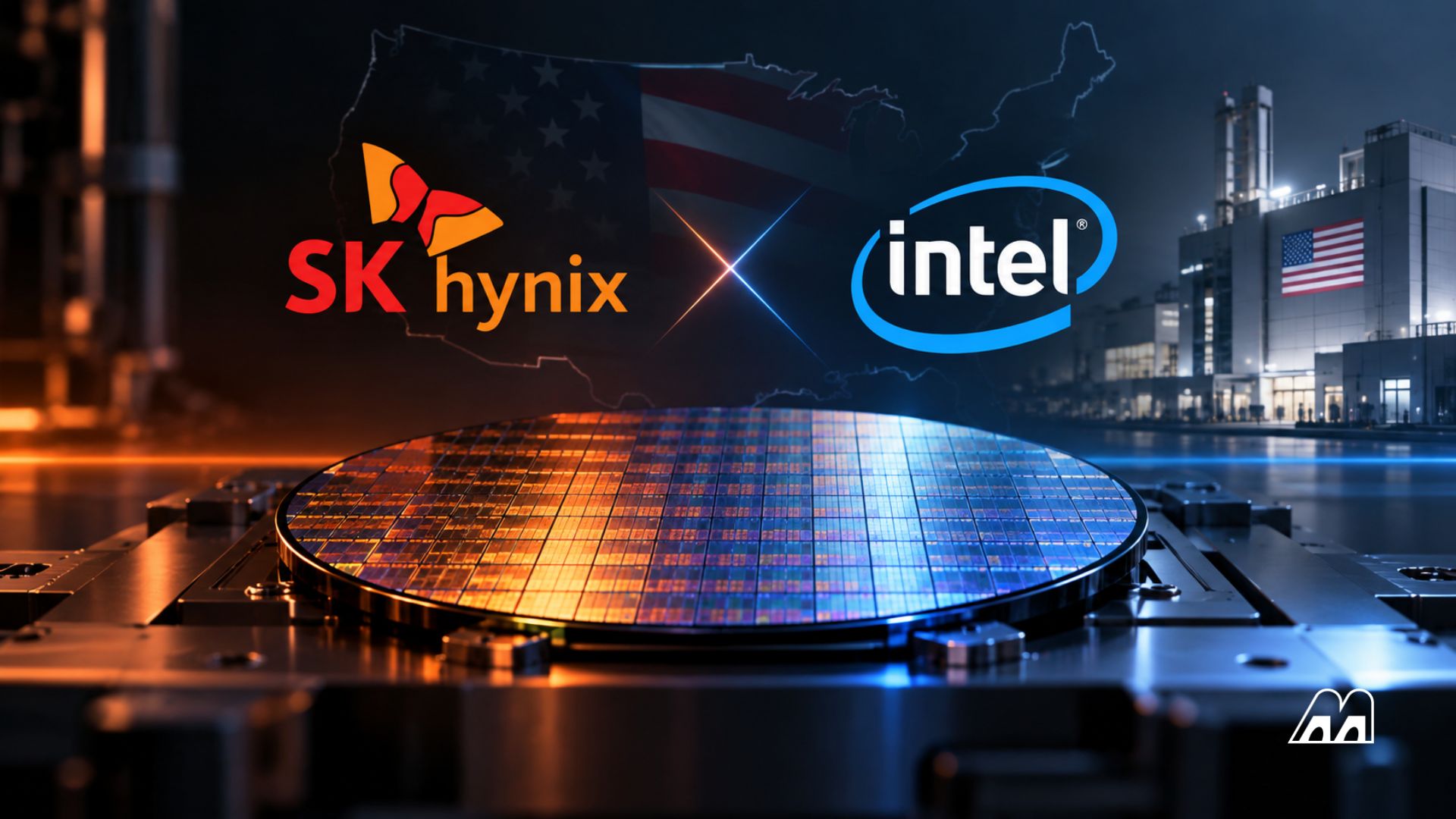
SK Hynix And Intel Explore US Memory Chip Manufacturing Deal


SK Hynix is reportedly exploring a deal with Intel that could bring memory-chip manufacturing to the United States for the first time. Reuters, citing three people familiar with the discussions, said the companies have discussed several structures, including SK Hynix leasing part of Intel’s Ohio semiconductor site or creating a venture with Intel and major cloud companies.

But this is not a signed deal. In its official clarification on 16 September, SK Hynix said it is reviewing ways to strengthen its global competitiveness while stressing that no specific arrangement with Intel and no US memory-production plan has been finalised.

SK Hynix Could Use Intel’s Ohio Megasite

The most direct option would put SK Hynix inside Intel’s long-delayed Ohio project. Reuters reported that the Korean memory company could lease part of the site, giving it manufacturing space without building an entirely separate US wafer fab from scratch.

A second possibility is more ambitious. SK Hynix, Intel and large cloud providers could form a joint venture, potentially giving customers that consume huge amounts of AI hardware a more direct route to securing memory supply.

The exact product is still unknown. SK Hynix makes DRAM, NAND flash and high-bandwidth memory, or HBM, but Reuters said it could not determine which memory technology would be produced in Ohio.

AI Has Turned Memory Into Strategic Infrastructure

That uncertainty matters because not all memory is equally important to the current AI boom. HBM sits close to accelerators such as Nvidia GPUs and feeds them data at extremely high speed, while conventional DRAM supplies working memory across servers, PCs and other systems.

The broader AI memory chip supercycle has made those components a central constraint in data-centre expansion. SK Hynix has also deepened its relationship with Nvidia through the wider SK Group AI infrastructure push.

AI Has Turned Memory Into Strategic Infrastructure AI Has Turned Memory Into Strategic Infrastructure

We think that is the bigger story here. AI infrastructure is no longer only about who can design the fastest processor. Companies increasingly care about securing enough memory, packaging capacity and manufacturing space to keep those processors running.

Intel Could Gain A Major Customer For Ohio

For Intel, a deal could give its Ohio project a powerful outside customer at a useful moment. Intel says it plans to invest more than $28 billion in two leading-edge fabs at the site, but it slowed the timetable in 2025.

Under Intel’s latest published Ohio construction timetable, the first module is expected to begin operations between 2030 and 2031. The second is currently scheduled to start operating in 2032.

That means any SK Hynix arrangement would still be a long-term manufacturing move rather than a quick fix for today’s memory shortages.

The two companies also know each other well. In 2020, Intel agreed to sell its NAND memory and storage business to SK Hynix for $9 billion.

SK Hynix Already Has A US AI Memory Footprint

SK Hynix is not starting from zero in the United States. In August, the company broke ground on its Indiana AI-memory facility, which will package and test next-generation HBM and is expected to begin supplying US customers in the second half of 2029.

SK Hynix Already Has A US AI Memory FootprintSK Hynix Already Has A US AI Memory Footprint

That distinction is important. Advanced packaging combines and stacks chips after core semiconductor dies have been manufactured. An Ohio agreement involving memory-chip fabrication could therefore move more of the production process onto US soil.

It also fits a wider reshaping of semiconductor geography. TSMC’s expanding US chip investment shows how more of the critical AI supply chain is being pushed toward American manufacturing.

South Korea Could Still Complicate The Deal

The biggest obstacle may come from Seoul. Reuters reported that South Korea’s trade ministry considers company investment decisions a matter for SK Hynix, but any transfer involving a “national core technology” could trigger a government review under the country’s Industrial Technology Protection Act.

That could become especially sensitive if the project involves advanced DRAM or HBM technology. SK Hynix has therefore kept its language cautious and says no decision has been made.

For South African readers, the near-term effect would be indirect. Local cloud providers, enterprises and AI developers buy into a global hardware market, so tighter or more diversified memory supply could eventually influence server availability and cloud infrastructure costs.

But with Intel’s Ohio production still years away, this is more about where the next wave of AI hardware gets built than about immediate price relief.

If the talks become a real deal, the most important detail to watch will be simple: what kind of memory does SK Hynix actually plan to manufacture in Ohio?

FAQs

Is SK Hynix Building A Memory Chip Factory With Intel?

Not yet. The companies are reportedly discussing several possible structures, but SK Hynix says no agreement has been finalised. One scenario could involve leasing part of Intel’s Ohio facility, while another could involve a joint venture.

What Kind Of Memory Chips Could SK Hynix Make In Ohio?

That has not been confirmed. SK Hynix produces DRAM, NAND and HBM, but Reuters said the specific technology involved in the talks remains unknown. Advanced HBM or DRAM production would be particularly significant because those technologies are strategically important to AI infrastructure.

Does SK Hynix Already Manufacture AI Memory In The US?

SK Hynix has begun building an AI-memory packaging and testing facility in Indiana. The company says it plans to supply next-generation HBM from the site starting in the second half of 2029. A separate Ohio manufacturing deal with Intel could expand its US footprint further if the talks lead to an agreement.

Temaz Tra is an AI and technology news writer focused on the fast-moving tools, platforms, and companies shaping the digital world. He covers artificial intelligence, consumer tech, cybersecurity, software, social media, and the wider impact of emerging technologies on work, business, and everyday life. With a focus on clear reporting and accessible analysis, Temaz helps readers understand complex tech developments without the jargon. His work connects breaking news with practical context, making it easier to follow how AI and digital innovation are changing the way people live, work, and interact online.

Visit Profile Temaz TraTemaz Tra

Free Training

Source link