WASHINGTON POLICY FORUM EXAMINES PHYSICAL AI, MANUFACTURING AND COMPETITIVENESS


At LG-Supported Forum, Policymakers and Industry Leaders Explore How Allied
Manufacturing Partnerships Can Translate AI Advances Into Real-World Industrial Deployment

News Summary

  • “Physical AI in America: Robotics, Manufacturing and the Allied Industrial Base,” a Washington, D.C. policy forum convened by LG Group, examined how Physical AI is reshaping U.S. manufacturing, supply chains and industrial competitiveness.
  • Ambassador Yunju Ko, President of LG Group’s Global Strategy Center, underscored the importance of partnerships across allied nations, pointing to LG’s collaboration with NVIDIA as an example of AI advancing into real-world industrial applications.
  • The forum brought together representatives from government, industry, academia and the policy community who emphasized that technology and supply chain cooperation across allied partners will be essential to building a resilient AI-driven industrial ecosystem.

WASHINGTON, Sept. 29, 2026 /PRNewswire/ — Policymakers, technology leaders and manufacturing experts examined how Physical AI is reshaping U.S. manufacturing, supply chains and industrial competitiveness today at “Physical AI in America: Robotics, Manufacturing and the Allied Industrial Base,” a Washington, D.C. policy forum supported by LG Group.

Participants discussed the industrial capacity and policy framework needed to sustain U.S. AI leadership as AI extends beyond software and computing into the physical economy through robotics, autonomous systems and smart factories. Topics included advanced manufacturing, semiconductors, batteries, energy infrastructure, resilient supply chains and cooperation among trusted allies, including the U.S. and South Korea.

Ambassador Yunju Ko, President of the LG Global Strategy Center, opened the event with a fireside chat. A panel discussion followed, featuring Jessica McBroom, Director at Micron; Juan Higueros, Co-Founder and Chief Operating Officer of Bear Robotics; Tim Del Monico, Chief of Staff to U.S. Representative Sam Liccardo; and Martijn Rasser, Vice President for Technology Leadership at the Special Competitive Studies Project.

Turning AI Innovation Into Industrial Competitiveness
In his remarks, Ko emphasized that long-term AI leadership will depend on both industrial application and closer collaboration with strategic partners.

“The future AI race will not be won by any single company or country acting alone,” said Ko. “It will be won through trusted partnerships that connect innovation, manufacturing and investment across allied nations. By strengthening these partnerships, we can build a more resilient industrial base and ensure that the benefits of AI are translated into real-world economic growth.”

To illustrate this approach, Ko cited LG’s collaborations with NVIDIA across mobility, AI infrastructure and Physical AI. The partnership uses NVIDIA Omniverse libraries, Cosmos world models and the open NVIDIA Isaac robotics platform to create robot training data from LG’s extensive manufacturing experience. Using this data and simulating processes at LG Electronics’ Tennessee appliance factory, LG CLOiD robots are being trained how to move, stack and assemble parts for potential use at U.S. manufacturing sites.

Cooperation Takes Center Stage in Physical AI Discussion
Building on the forum’s broader discussion, panelists focused on the policy priorities and industrial capabilities shaping the development of Physical AI.

The discussion examined the U.S. AI ecosystem, including areas of strength and gaps that could affect long-term technological leadership. Panelists also highlighted that stronger technology and supply chain cooperation between the U.S. and South Korea can contribute to a more resilient AI-driven industrial ecosystem, with supportive policy needed to advance it at scale.

Expanding Investment in U.S. Industry and Future Technologies
Over the past decade, LG has invested more than USD 20 billion in the United States across batteries, advanced manufacturing, electronics and mobility technologies. These efforts have contributed to the U.S. industrial base and approximately 20,000 jobs, while creating a foundation for LG’s collaboration with leading U.S. technology companies in AI, robotics and smart manufacturing.

“As a long-term investment partner, LG has consistently contributed to the growth of the U.S. industrial base,” Ko said. “We look forward to working with innovative U.S. companies, to help accelerate the deployment of AI across real-world industrial applications.”

About the LG Global Strategy Center
The LG Global Strategy Center (GSC) serves as LG Group’s headquarters for global strategy and external affairs. The GSC analyzes geopolitical, economic, and industry developments to assess their implications for LG’s businesses, while coordinating global external engagement and strengthening relationships with key government, policy, and business stakeholders worldwide.

About the LG Washington D.C. Office
The LG Washington D.C. Office is LG Group’s representative office for government affairs and public policy engagement in the United States. Working closely with policymakers, industry stakeholders, think tanks, and business organizations, the LG Washington Office provides strategic insights and promotes constructive dialogue on issues affecting innovation, trade, manufacturing, supply chains, and economic competitiveness. Through these efforts, it supports LG’s commitment to responsible business growth and investment in the United States.

Media Contacts:

LG Group Washington Office   
Joohwa Jin
+1 202 922 9054
[email protected]                              

SOURCE LG Group

Free Training

Source link

Attalon Invests Nearly $13 Million to Expand U.S. Sapphire Manufacturing Capacity


Attalon Invests Nearly $13 Million to Expand U.S. Sapphire Manufacturing Capacity

Investment in Murrieta, California, expands domestic production of advanced optical materials supporting growing demand across EO/IR and next-generation defense systems

Attalon, a leading U.S. aerospace and defense technology company, today announced a nearly $13 million investment to expand sapphire manufacturing capacity at its Murrieta, California, operation, strengthening domestic production of a critical optical material used across demanding electro-optical and infrared defense applications.

This press release features multimedia. View the full release here: https://www.businesswire.com/news/home/20260929509193/en/

Sapphire produced at Attalon’s Murrieta, California, facility supports advanced optical systems for mission-critical defense applications. Attalon is investing nearly $13 million to expand domestic manufacturing capacity.

The investment comes as demand for high-performance optical materials continues to increase across advanced sensing, targeting, surveillance, missile and other mission-critical defense systems. By expanding its U.S.-based sapphire manufacturing capabilities, Attalon is increasing the production capacity, manufacturing readiness and technical capabilities required to support customers as these systems move toward greater production volumes.

“Sapphire is an enabling technology behind some of today’s most demanding defense systems, and ensuring we have the domestic capacity to produce it at scale is increasingly important,” said John Bergeron, Chief Executive Officer of Attalon. “This investment is about building that capacity here in the United States and ensuring our customers have a trusted manufacturing partner ready to grow alongside their programs.”

The investment builds on a longstanding effort to establish and sustain a domestic U.S. supply of defense-critical sapphire. More than seven years ago, Congressman Ken Calvert, now Chairman of the House Appropriations Subcommittee on Defense and representative for Murrieta, played an important role in supporting federal investment in the advanced technology and manufacturing capabilities required to establish Murrieta as a domestic source for high-performance sapphire.

That early government investment, coupled with sustained private-sector investment in the facility, helped build the technical expertise and U.S. manufacturing capability required to support demanding defense applications, including the F-35 program. Attalon’s nearly $13 million investment marks the next phase of that effort—expanding capacity, advancing manufacturing capabilities and strengthening a proven domestic supply of sapphire for current and next-generation defense systems.

Sapphire combines exceptional optical performance with the durability required for demanding defense environments. Its material properties make it particularly well suited for advanced EO/IR applications where optical performance, environmental resilience and reliability are essential to mission success.

“Our Murrieta team has built deep expertise in sapphire, from material development through production, and this investment allows us to translate that expertise into greater manufacturing scale,” said Anthony McBride, Vice President and General Manager of Precision Optics at Attalon. “We’re expanding the capabilities and infrastructure needed to increase throughput while maintaining the precision, consistency and reliability our customers depend on.”

The expansion is part of Attalon’s continued investment in the enabling technologies behind next-generation defense systems and its strategy of expanding U.S.-based manufacturing for mission-critical technologies. Across advanced optical materials, precision optics, optical coatings, directed energy and thermal technologies, the company is increasing domestic capacity in areas where manufacturing scale, reliability and supply-chain resilience are increasingly important to national security and the advanced defense platforms that depend on them.

About Attalon

Attalon is a leading U.S. aerospace and defense technology company engineering and manufacturing advanced lasers, precision optics, optical coatings, advanced materials and thermal technologies. With more than 500 employees across the United States, Attalon combines deep technical expertise with scalable domestic manufacturing to deliver mission-critical capabilities that strengthen the U.S. defense industrial base and support the modern warfighter.

Press Contact:

Valerie McKiernan

Vice President, Strategy & Communications

Valerie.McKiernan@atln.com

View source version on businesswire.com: https://www.businesswire.com/news/home/20260929509193/en/

Free Training

Source link

SMITH AND FORD Push East-West Energy, Infrastructure and Manufacturing Ties at Calgary Enserva Event – Canadian Energy News, Top Headlines, Commentaries, Features & Events


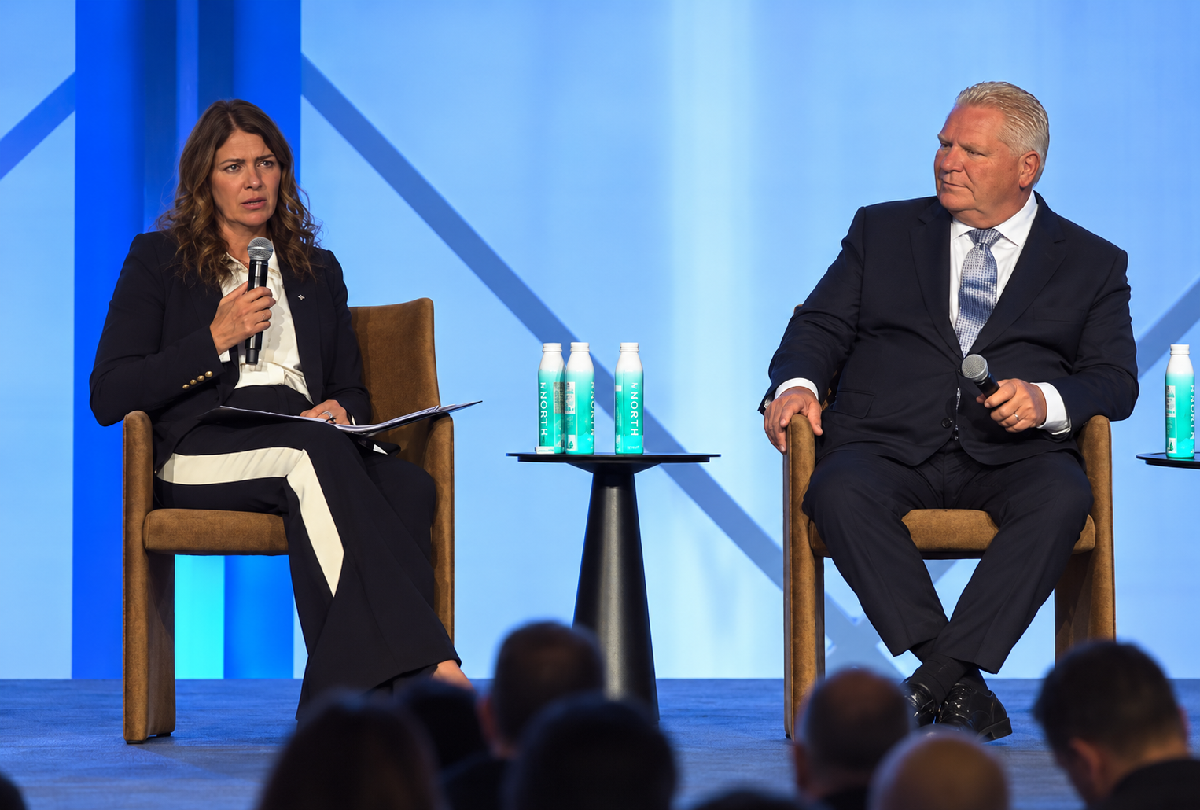
smith ford enserva event 1200x810Premiers Danielle Smith and Doug Ford during a fireside chat hosted by Enserva at the Calgary Telus Convention Centre September 28, 2026 – EnergyNow Media

EnergyNow Media

The two premiers appeared September 28 at the Enserva Speaker Series — Build Canada Stronger: Powering Canada’s Economic Future at the Calgary TELUS Convention Centre. The event brought together energy and business leaders to discuss energy security, infrastructure, trade and Canada’s ability to compete in global markets. It was moderated by Enserva President and CEO Gurpreet Lail. Enserva

The discussion highlighted both areas of agreement and differences between Smith and Ford, particularly on Canada’s evolving relationship with the United States.

Get the Latest Canadian Focused Energy News Delivered to You! It’s FREE: Quick Sign-Up Here

Smith said Alberta’s exposure to U.S. tariffs differs significantly from Ontario’s because most Alberta exports entering the United States are energy products that remain largely tariff-free.

“If you’re looking at a bit of a difference in tone between Premier Ford and I, that’s what it comes down to,” Smith said, pointing to Alberta’s large existing trade relationship with the United States and the role played by cross-border energy companies including Cenovus, TC Energy and Enbridge.

Smith argued that Canada could potentially use energy as the foundation for a broader economic agreement with Washington, suggesting significantly larger volumes of Canadian oil could ultimately move south if a comprehensive Canada-U.S. arrangement were reached.

Ford struck a somewhat different tone but emphasized that he remains strongly supportive of the broader Canada-U.S. relationship.

“I truly love Americans,” Ford said, noting Ontario’s deep economic integration with U.S. manufacturing and trade. He argued for what he called a “Fortress North America” approach in which Canada and the United States strengthen their economic and security relationships while Canada simultaneously expands trade with other countries.

Ford said the current trade friction could ultimately push Canada to become economically stronger.

“He woke us up that we needed to be woken up, and he’s united the country like I’ve never seen before,” Ford said of U.S. President Donald Trump. “We’re going to diversify our trade, but continue building a strong relationship with our closest friends and allies, and that’s the Americans.”

Pipelines Move to Centre Stage

The conversation quickly turned to pipelines and major infrastructure projects — a central theme of the Enserva event, which was promoted around the question of how Canada can build, move and sell more energy to global markets. Enserva

Smith said she has become increasingly confident about the prospects for a proposed new West Coast oil pipeline.

“I’m feeling more and more confident every day that the West Coast oil pipeline is going to potentially even be the first of the projects that go ahead,” she said.

Smith argued that global concerns about supply security have strengthened Canada’s position as a potential long-term supplier to Asian countries seeking greater diversification.

She also pointed to additional export possibilities through the United States and to the proposed Northern Shield corridor, which Alberta and Ontario have been advancing as a potential east-west energy and infrastructure route.

Ford was emphatic that Canada should not be forced to choose between individual pipeline routes.

“We need the West, we need the North, we need the South, and we need to go east,” he said. “Why can’t we do it simultaneously?”

Ford also signalled Ontario’s willingness to participate financially in the Northern Shield concept, saying he evaluates major infrastructure according to its potential return to taxpayers.

“You show me the numbers, and if you can clip those coupons after we get it built every single year, that’s a great investment for our province,” Ford said.

Skilled Labour Could Become the Next Constraint

Both premiers warned that even if governments approve more infrastructure, Canada will need enough skilled workers to actually build it.

Smith pointed to Alberta’s expansion of apprenticeship programs, dual-credit education and partnerships with unions and employers. She said Alberta now has 81,000 apprenticeship positions and argued provinces need greater ability to align immigration with labour-market shortages.

“We need some office jobs, but we sure need a heck of a lot more factory floor jobs and field jobs,” Smith said. Pasted markdown

Ford said Ontario has invested more than $2 billion through its Skills Development Fund and said more than 750,000 people have received training through various programs.

“Number one issue: supply chain and labour. Who is going to fill these jobs?” Ford said, arguing that provinces should have greater influence over immigration programs so workers who have developed needed skills can remain in Canada. Pasted markdown

Alberta Energy Meets Ontario Manufacturing

Perhaps the strongest area of agreement came around creating deeper economic links between Alberta’s energy sector and Ontario’s manufacturing base.

Ford argued governments need to reduce regulatory barriers and create conditions that encourage companies to invest.

“The biggest problem, biggest hurdle is government,” Ford said, pointing to regulation, taxation and permitting as obstacles governments can address. Pasted markdown

Smith then outlined several areas where the provinces could work together directly.

One is natural gas-fired power generation. Alberta wants to substantially expand electricity generation to support industrial growth and data centres, but Smith said global demand for natural gas turbines has created long equipment lead times.

“We’ve got the cheapest natural gas probably anywhere in the world, sitting on an ocean of it,” she said.

Smith suggested Ontario’s manufacturing expertise could help develop a Canadian supply chain for natural gas turbines and related electricity infrastructure.

Another opportunity is steel.

With pipelines, energy projects and other infrastructure requiring enormous volumes of steel pipe and fabricated components, Smith said Alberta should identify the equipment its energy industry will need and work with Ontario manufacturers to produce more of it domestically.

“Let’s figure out how we can identify the steel fabricated items that we need, and let’s work with our friends in Ontario,” Smith said.

She also suggested Canada needs stronger east-west supply chains, rather than relying predominantly on north-south trade with the United States or imported products arriving through West Coast ports. Pasted markdown

The message fit closely with the theme Enserva established for the event. Using Canadian energy, infrastructure and industrial partnerships to improve the country’s economic competitiveness and energy security. Enserva said the discussion was intended to examine how Canada could “look beyond provincial boundaries” to unlock its energy potential.

For Canada’s energy services sector, the discussion underscored a potentially significant shift: major energy development is increasingly being presented not simply as a Western Canadian issue, but as an opportunity to connect Alberta resources, Ontario manufacturing, Canadian workers and new international markets.

And on that central point, Smith and Ford were clearly aligned.

“We’re stronger together,” Ford said.

Free Training

Source link