

US Wind Pulls Out of Wind Turbine Manufacturing Facility at Sparrows Point, Md.


The company relinquishes its lease to shipbuilder Anduril Industries amid continued delays besetting Ocean City wind project

US Wind, the company behind a proposed offshore wind development off the coast of Ocean City, no longer plans to develop components for wind turbines at Baltimore County’s Sparrows Point — at least not for now.

The Baltimore-based company turned over its lease at the Tradepoint Atlantic site in Sparrows Point to Anduril Industries, the shipbuilding company whose arrival was heralded on Tuesday by a visit from President Donald Trump (R).

It comes as US Wind’s only offshore wind project, planned for Ocean City’s coastline, continues to face legal headwinds and roadblocks from the Trump administration.

At the tail end of President Joe Biden’s (D) administration, the US Wind project received its last federal permit, but the town of Ocean City challenged it shortly thereafter. And after Trump’s inauguration, the federal government that once defended the permit permit for the project signaled its intent to revoke it, spurring a new round of legal wrangling.

In a statement issued Tuesday, US Wind CEO Jeff Grybowski said his company “jumped at the opportunity” to bring “near-term” jobs to the Sparrows Point site as US Wind faces delays. The site will be taken over by Anduril, which plans to invest $3.7 billion at the former home of Bethlehem Steel to construct a new shipbuilding facility, Arsenal-2, that is expected to bring an estimated 3,100 permanent new jobs to Maryland.

“Our offshore wind plans, like many other similar projects in the U.S., are delayed due to legal disputes and uncertainty created by federal agencies. So, we are shifting our focus to helping Anduril build a state-of-the-art manufacturing facility at Sparrows Point,” Grybowski’s statement said. “This new development ensures that job creation and economic development can proceed apace at [Tradepoint].”

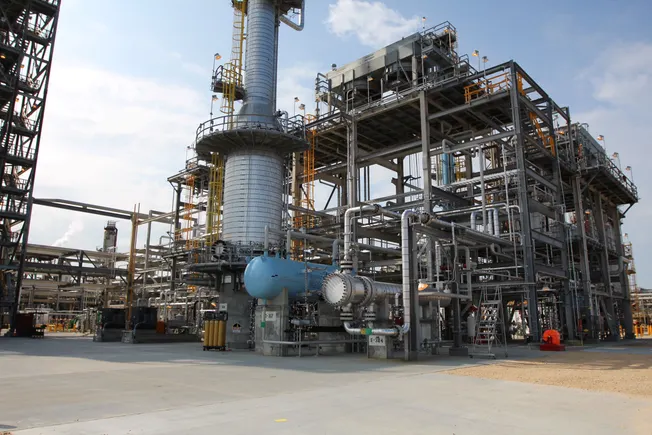
The facility at Tradepoint had been expected to fabricate steel components for wind turbines, including towers and monopiles, and create hundreds of manufacturing jobs. Last year, the Trump administration pulled back $47.4 million in grant funding that had been awarded during the Biden administration for the steel facility, called Sparrows Point Steel, but US Wind said at the time that it planned to move forward with the steel fabrication site anyway.

In a statement on Wednesday, Rebecca Rehr, the director of climate policy and justice at the Maryland League of Conservation Voters, bemoaned the news about Sparrows Point Steel, calling it another negative effect of Trump administration policies on clean-energy companies.

“Maryland faces rising energy demand and electricity bills. We have been consistently disappointed that the Trump administration doesn’t see the value across the supply chain for the clean energy industry, and continues to single out wind when wind is working,” Rehr said.

“We are seeing job and growth opportunities across clean energy sectors, yet this administration continues to block these projects, which are the fastest and cheapest to deploy,” her statement said.

Liz Burdock, president and CEO of Oceantic Network, a trade organization for the offshore wind industry, said in a statement that Tuesday’s US Wind announcement highlights that “many of the companies that serve offshore energy can deliver essential capabilities to a host of other ocean-based sectors.”

“Mobilizing our existing supply chain means helping those businesses find their next customer while continuing our work to advance homegrown offshore energy,” Burdock said.

Source

Free Training

Source link

US manufacturing activity drops to lowest point of 2025: PMI


Listen to the article
4 min

This audio is auto-generated. Please let us know if you have feedback.

U.S. manufacturing activity decreased to its lowest point of 2025 last month, affected by continued tariff uncertainty and weak demand, according to the Institute for Supply Management’s latest Purchasing Managers’ Index.

ISM’s index registered 47.9% in December, down 0.3 percentage points compared with November. A PMI index below 50% shows an industry in contraction.

Despite improvements in three of the four main demand areas — including new orders, backlog of orders and new export orders — the indexes continued to be in contraction as they have been for months. Meanwhile, production slipped 0.4 percentage points, but was in expansion for the second month in a row.

Susan Spence, chair of ISM’s Manufacturing Business Survey Committee, said on a call with reporters Monday that the demand improvements are good, but the question remains if this could be the start of a turnaround or “just another blip.” She also noted that production expansion is likely in a “bubble” following four months of new orders in contraction.

“When new orders start turning around and expand for more than a month at a time — one, two, three, four, five months — then you’re going to see it flow to production and backlog, and then everything should follow,” Spence said.

Last month, new orders expanded in two of the 18 manufacturing sectors that ISM tracks, and only one of them was in computer and electronic products, which has seen major growth last year driven by data center buildouts to accommodate artificial intelligence demand.

Surveyed panelists cited tariffs as the biggest issue for them last month. Executive participants reported softer international orders as uncertainty around U.S. economic policy continues, Spence said, citing a ratio of 1.5 negative comments for every positive one regarding export orders.

Separately, employment contracted at a slower rate, with a majority of panelists saying that their companies are managing head counts instead of hiring. Additionally, supplier deliveries are slower compared to November and customer inventories are in the “too low” category, which can be a positive indicator for future production.

A mix of staff reductions, a lack of backfilling and continued price increases signals “that we’re still in a struggling economy,” Spence said. Compared to the overall economy, which has grown steadily every month since April 2020, the manufacturing sector has contracted for most of 2025.

Of the big six sectors that PMI follows, Spence said the computer and electronics products category expanded for half of the year, while other areas like transportation equipment and chemical products contracted most months. Meanwhile, petroleum and coal products expanded for the first nine months of the year and declined in the last three, she added.

“We’ll see what happens with the latest news out of Venezuela,” said Spence, who oversaw sourcing and procurement at FedEx for 10 years. President Donald Trump’s military operation in the South American country could shock U.S. and global oil prices.

Currently, companies like Chevron and ConocoPhillips are monitoring the situation and say it’s too early to speculate on future business activities or investments, News Nation reported. Chevron has infrastructure and workforces in Venezuela, while ConocoPhillips does not.

“It depends on what the plan is and if the country can come roaring back from an … infrastructure issue,” Spence said.

S&P’s December manufacturing PMI report provided a similar picture for the month as new orders fell for the first time over the past year and international sales continued to decline, due in part to tariffs. On the brighter side, the credit rating agency saw employment growth for most of the year and job creation was its most pronounced since August.

Although manufacturers ramped up production in December, prospects for the start of 2026 are “looking less rosy,” Chris Williamson, chief business economist at S&P Global Market Intelligence, said in a statement.

“Factories are continuing to produce goods despite suffering a drop in orders,” he said, adding that the gap between production and orders is the widest it has been since the height of the 2008 global financial crisis.

“Unless demand improves, current factory production levels are clearly unsustainable,” Williamson said.

Free Training

Source link