Factbox-Global drugmakers rush to boost US presence as tariff threat looms | WKZO | Everything Kalamazoo


March 9 (Reuters) – Global drugmakers are ramping up U.S. manufacturing and stockpiling inventory as the Trump administration considers a 100% tariff on imported branded and patented medicines.

Although enforcement is delayed for companies investing in U.S. manufacturing, the policy has already prompted fast-tracked projects, price cuts and direct-to-consumer sales.

Pfizer and AstraZeneca secured multi-year tariff exemptions through pricing deals and commitments to the new TrumpRx.gov platform. Eli Lilly, Johnson & Johnson and Merck have pledged billions to expand U.S. operations to avoid penalties.

Here’s what drugmakers are doing to mitigate supply-chain risks and reassure investors:

Pfizer

Pfizer reached a deal with President Donald ​Trump on September 30 to invest $70 billion in research and development and domestic manufacturing, and received a three-year grace period exempting its products from the pharmaceutical-targeted tariffs.

GSK

The London-based drugmaker plans to invest $30 billion in ‌U.S. research and development and supply chain infrastructure over five years.

Eli Lilly

U.S. President Donald Trump said in January that Eli Lilly plans to build six plants in the United States.

Lilly said last year that it planned to spend at least $27 billion to build four U.S. plants to expand production and bolster medical supply chains. The company has since announced details on three plants, in Alabama, Virginia and Texas.

Lilly in January said it will build a $3.5 billion pharmaceutical manufacturing facility in Pennsylvania, its fourth new site, in an effort to expand U.S. production and bolster medical supply chains.

Johnson & Johnson

The drugmaker plans to raise U.S. investments by 25%, totaling $55 billion, over the next four years. It plans to build four plants, including one at Wilson, North Carolina, and another at Tokyo-based Fujifilm Biotechnologies’ manufacturing site in Holly Springs, North ‌Carolina, over ​the next 10 years.

The company said in February it would invest more than $1 billion to build a new cell therapy facility in Pennsylvania, part of ⁠its larger plans announced last year to scale up U.S. manufacturing.

Roche

The ⁠Swiss drugmaker said in April last year it would invest $50 billion in the U.S. over the next five years.

A month later, it announced an additional $550 million investment to expand its Indianapolis diagnostics manufacturing hub. The expansion will span Indiana, Pennsylvania, Massachusetts, and California, creating more than 12,000 jobs.

In January, Roche said it will more than double its investment in its drug manufacturing facility in Holly Springs, North Carolina, to about $2 billion, up from the over $700 million announced in May 2025.

AstraZeneca

The Anglo-Swedish drugmaker will invest $50 billion on U.S. manufacturing by 2030. The investment will fund a new drug substance facility in Virginia, its largest single-site global investment, alongside expansions ​in Maryland, Massachusetts, California, Indiana and Texas.

It has already started technology transfers and is managing inventory in 2025 to minimize any tariff hit. Company executives have said the impact would be “very short-lived.”

Novartis

The Swiss drugmaker plans to spend $23 billion to build and expand 10 facilities in the U.S. over the next five years. This includes building six new manufacturing plants and expanding its San Diego research and development site, which is expected to create more than 1,000 ⁠jobs.

Sanofi

The French drugmaker plans to invest at least $20 billion in the U.S. through 2030 to boost manufacturing and research. Sanofi plans to ⁠expand its U.S. manufacturing capacity through direct investments in the company’s sites and partnerships with other domestic manufacturers.

Chief Financial Officer François Roger said in July the potential tariffs are ​expected to have a limited impact in 2025, as the company already has inventory in place in the U.S.

Biogen

The U.S. drugmaker will invest $2 billion more in its existing manufacturing plants in North Carolina, adding capacity for gene-targeting therapies and automation. The ​company has seven factories in the state, with an eighth set to begin operations in late 2025.

Merck

The U.S. drugmaker has begun building a $3 billion pharmaceutical manufacturing plant in Virginia ‌as part of its over $70 billion investment to expand domestic manufacturing and research and development.

It will also invest $1 billion in a new Delaware plant to make biologics and cancer drug Keytruda, to boost U.S. production and potentially create over 4,500 jobs. It also opened a $1 billion facility at its North Carolina site in March.

Merck’s animal health unit will invest $895 million to expand its Kansas manufacturing and R&D site, part of a broader $9 billion U.S. investment through 2028.

CEO Robert Davis in July flagged minimal impact from potential tariffs in 2025, and that the company remained well-positioned due to inventory management and moving of manufacturing to the U.S.

Amgen

The U.S.-based biopharma firm plans to invest $900 million to expand its Ohio manufacturing facility, bringing total ⁠investment in the state to $1.4 billion and adding 750 jobs. In December, the company committed $1 billion to build a second facility in Holly Springs, North Carolina.

Amgen said in September it is investing more than $600 million to build a new research and development center at its headquarters in Thousand Oaks, California.

The drugmaker announced it will invest $650 million to expand drug manufacturing at its facility in Juncos, Puerto Rico, a move expected to create nearly 750 jobs.

Novo Nordisk

The Danish ⁠pharmaceutical company said in August its strong U.S. manufacturing footprint positions it well for ‌tariff challenges, describing itself as “very U.S.-centric and U.S.-focused”.

AbbVie

U.S. drugmaker AbbVie said in January it has committed $100 billion over the next decade to U.S.-based research and development as ⁠part of its three-year deal with the Trump administration to reduce drug prices.

It has 11 manufacturing sites in the U.S. and has said it is “fairly insulated” from ​any tariff impact this ‌year, given inventory management actions.

The company said in February that it plans to invest $380 million to build two manufacturing facilities at its current North Chicago, ​Illinois, campus, to support the ⁠production of its neuroscience and obesity medications.

Gilead Sciences

Earlier this year, the drugmaker announced $11 billion in new planned investment in the U.S. to add to its domestic manufacturing and research heft, taking its total pledged investment to $32 billion.

Gilead said in September that it started work on a pharmaceutical development and manufacturing hub at its headquarters in Foster City, California, in addition to which, it is currently developing two other sites.

Cipla

The Indian drugmaker is expanding its U.S. manufacturing footprint by investing in capacity expansion for complex respiratory products at its advanced facilities in Fall River, Massachusetts, and Central Islip, New York.

CSL

Australia’s CSL said in November it would invest $1.5 billion in the U.S. to manufacture plasma-derived therapies, expanding its footprint in the country over the next five years.

In March, the company announced the expansion of its plasma therapy manufacturing facility in Kankakee, Illinois, which is expected to be operational by 2031.

(Reporting by Siddhi Mahatole, Kamal Choudhury, Puyaan Singh, Sneha S K and Sahil Pandey in Bengaluru; Editing ​by Tasim Zahid, Sahal Muhammed, Shinjini Ganguli and Maju Samuel)

Free Training

Source link

Metal Tariff Relief: US Manufacturing Policy Guide


Current Trade Policy Challenges in US Manufacturing Supply Chains

The intersection of international trade policies and domestic manufacturing capacity has become increasingly complex in recent years, particularly affecting industries that rely heavily on imported raw materials. Trade relationships with traditional allies now face scrutiny through various tariff mechanisms, creating ripple effects throughout US supply chains. Understanding how these policy frameworks operate and their downstream impacts on consumer goods provides crucial insight into the broader economic implications of current trade strategies.

Metal tariff relief has emerged as a critical policy consideration for maintaining competitive manufacturing sectors while balancing national security concerns. Furthermore, the tension between protecting domestic production and ensuring access to essential materials highlights the complexity of modern trade policy implementation. The relationship between US tariffs and inflation demonstrates how these policies affect broader economic conditions beyond their intended targets.

Join thousands of readers who start here

Our best articles, sent straight to your inbox. You can unsubscribe anytime.

Current Tariff Framework Architecture

The United States operates multiple tariff systems that affect metal imports, each serving different policy objectives. Section 232 provisions focus on national security considerations for steel and aluminum imports, while Section 301 mechanisms target specific trading relationships. These frameworks create a complex regulatory environment where manufacturers must navigate various exclusion processes to access essential materials.

The exclusion request process involves detailed documentation requirements, extended review periods, and uncertain approval outcomes. Companies must demonstrate that domestic alternatives are unavailable or insufficient to meet their production needs. However, this administrative burden often disproportionately affects smaller manufacturers who lack the resources to manage complex regulatory submissions.

Strategic Exemptions vs. Blanket Protection

Policy makers must balance broad industry protection with targeted relief for critical supply chains. Strategic exemptions allow for nuanced approaches that consider specific manufacturing needs while maintaining overall trade policy objectives. This approach recognizes that certain industries require imported materials to maintain competitiveness and consumer affordability.

The challenge lies in creating clear criteria for exemptions that prevent abuse while ensuring legitimate manufacturing needs are met. Industries with strong national security implications or significant consumer impact often receive priority consideration in exemption processes. In addition, understanding tariffs’ investment impacts helps policymakers assess the broader economic consequences of their decisions.

Supply Chain Vulnerabilities in Food Packaging Industries

Domestic Production Capacity Decline

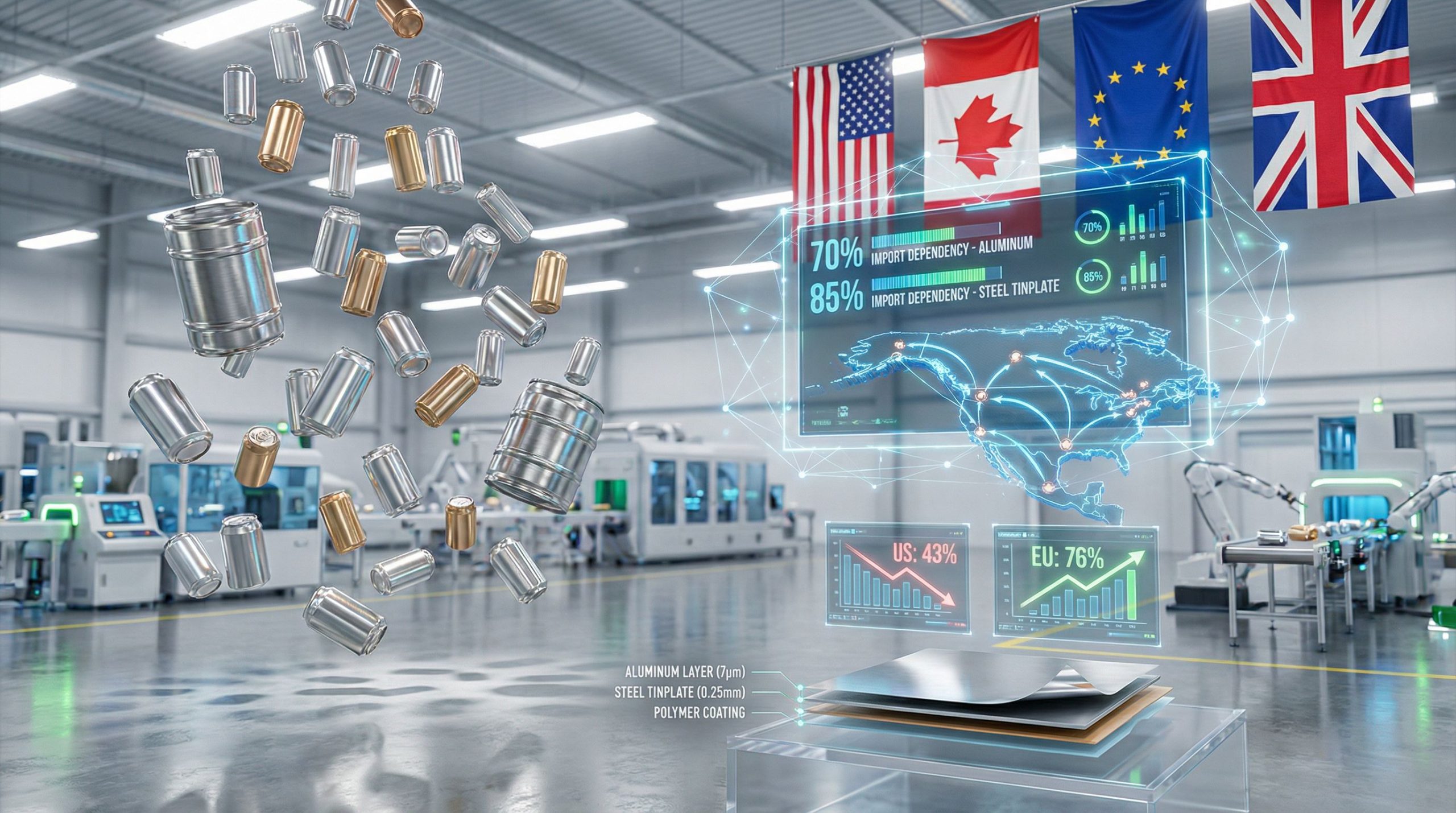
The can manufacturing sector illustrates how trade policies can affect domestic production capacity over time. According to industry data, domestic steel tinplate production has experienced dramatic consolidation, with operational lines decreasing from 12 to just 3 between 2018 and 2026. This reduction represents a fundamental shift in the industry’s production landscape and highlights the vulnerability of domestic supply chains.

The decline in domestic capacity forces manufacturers to rely increasingly on imports from traditional trading partners including Canada, the United Kingdom, and European Union nations. This dependency creates potential supply chain risks during periods of trade tension or international disruptions. Furthermore, the EU expects US to ease impact of metals tariffs in coming negotiations.

Production Metric
2018 Baseline
2026 Current
Change

Steel Tinplate Lines
12
3
-75%

Import Dependency
Moderate
High
Significant increase

Supply Chain Risk
Low
Elevated
Substantial change

Material Import Dependencies

The food packaging industry relies heavily on specialised materials that meet strict food safety standards. Aluminium for beverage cans and steel tinplate for food cans require specific metallurgical properties and certifications that limit the number of qualified suppliers globally.

These materials often come from established trading partners with proven quality systems and regulatory compliance. Disrupting these supply relationships through tariff policies can create immediate challenges for food manufacturers who need consistent material specifications to maintain product safety and quality. Consequently, US manufacturers advocate for metal tariff relief to address rising costs.

Consumer Price Impact Mechanisms

When material costs increase due to tariffs, food manufacturers face difficult decisions about price absorption versus consumer price increases. The food packaging industry operates on relatively thin margins, making it challenging to absorb significant material cost increases without affecting retail prices.

Regional variations in pricing can emerge based on proximity to remaining domestic production facilities versus import-dependent markets. This geographic disparity can create competitive advantages for manufacturers located near domestic supply sources while penalising those in import-dependent regions.

Legislative Approaches to Tariff Reform

STEWARD Act Environmental Data Enhancement

The STEWARD Act represents a comprehensive approach to improving recycling programme data collection and reporting. This legislation would require the Environmental Protection Agency to enhance its data gathering capabilities for recycling and composting programmes nationwide, creating better visibility into material flows and recovery rates.

Improved data collection would enable policy makers to make more informed decisions about material flows and identify opportunities for domestic capacity expansion. The legislation recognises that effective recycling policy requires accurate baseline data and standardised reporting mechanisms.

CIRCLE Act Infrastructure Investment Incentives

The CIRCLE Act proposes tax credit mechanisms to stimulate private investment in recycling infrastructure. By providing financial incentives for qualifying projects, this legislation aims to expand domestic processing capacity and reduce reliance on virgin material imports.

Tax credit programmes can accelerate infrastructure development by improving project economics for private investors. The challenge lies in structuring credits that generate meaningful capacity increases while ensuring public benefit from the tax expenditure. Moreover, these initiatives align with recycling transition strategies being implemented across various industries.

Industry-Specific Relief Proposals

Targeted relief for specific industries requires careful consideration of supply chain characteristics and national security implications. Food packaging materials, for example, have different risk profiles compared to general industrial applications.

Relief proposals must balance immediate industry needs with longer-term domestic capacity development goals. Temporary measures may provide necessary transition time for domestic capacity expansion while ensuring continued manufacturing competitiveness.

Global Recycling Performance Comparisons

Regional Recycling Rate Analysis

The United States significantly lags behind European nations in metal can recycling performance, with aluminium beverage cans achieving only 43% recycling rates compared to 76% in the European Union. Steel can recycling shows similar disparities, with US rates of 44% trailing European performance substantially.

Region
Aluminium Cans
Steel Cans
Policy Framework

United States
43%
44%
Voluntary programmes

European Union
76%
Not specified*
Extended producer responsibility

*Note: The 76% figure represents overall performance for EU, UK, Switzerland, Norway, and Iceland without material-specific breakdowns.

Infrastructure Investment Requirements

Achieving European-level recycling performance would require substantial infrastructure modernisation across collection, sorting, and processing systems. The investment needed extends beyond facility upgrades to include workforce development and consumer education programmes.

Collection system improvements represent a critical bottleneck in US recycling performance. Many regions lack the infrastructure density needed to capture materials efficiently, particularly in rural and suburban areas where transportation costs become prohibitive.

Processing facility modernisation involves both technology upgrades and capacity expansion. Advanced sorting systems and contamination reduction technologies could significantly improve material recovery rates and quality.

Extended Producer Responsibility vs. Voluntary Programmes

European recycling success stems largely from extended producer responsibility frameworks that create financial incentives for manufacturers to design recyclable products and support collection infrastructure. These systems internalise environmental costs into product pricing and create sustainable funding mechanisms for recycling programmes.

Voluntary programmes, while offering implementation flexibility, often struggle to achieve comprehensive coverage and consistent performance. Market-based incentives may not align with optimal environmental outcomes without regulatory frameworks to ensure participation.

Economic Impact Assessment of Current Tariff Policies

Manufacturing Sector Analysis

The Can Manufacturers Institute represents companies generating over $13 billion in annual economic activity, highlighting the significant economic scale affected by metal tariff policies. This economic impact extends beyond direct manufacturing to include suppliers, logistics providers, and supporting service industries.

Regional concentration in manufacturing corridors means that tariff impacts are geographically clustered, potentially affecting entire regional economies. Areas dependent on metal manufacturing face multiplied effects when primary industries experience cost pressures or capacity reductions. The broader implications of Trump’s tariff policies continue to influence these regional dynamics.

Employment and Workforce Considerations

Manufacturing employment in metal-intensive industries faces pressure from both automation trends and trade policy impacts. While tariffs may protect some domestic jobs in primary metal production, downstream manufacturing employment may decline due to higher input costs and reduced competitiveness.

Workforce development programmes must account for changing skill requirements as domestic production methods evolve. Investment in training and education becomes critical for maintaining competitive manufacturing capabilities.

Long-term Competitiveness Factors

Sustaining competitive manufacturing requires balancing short-term protection with long-term innovation and efficiency improvements. Metal tariff relief policies must consider how temporary measures can support transition to more sustainable competitive positions.

Technology transfer opportunities from international partnerships may be affected by trade tensions, potentially limiting access to advanced manufacturing techniques and process improvements. For instance, US–China trade impacts continue to shape global manufacturing relationships.

Section 232 Exclusion Procedures

Companies seeking relief from steel and aluminium tariffs must navigate complex exclusion request procedures with uncertain outcomes. The documentation requirements involve detailed supply chain analysis, domestic availability assessments, and economic impact projections.

Processing timelines can extend over several months, creating planning challenges for manufacturers with time-sensitive production schedules. The uncertainty around approval decisions complicates inventory management and long-term sourcing strategies.

Alternative Sourcing Documentation

Successful exclusion requests often require comprehensive demonstration that domestic alternatives are inadequate for specific applications. This documentation process involves technical specifications, quality certifications, and capacity availability assessments.

Manufacturers must maintain detailed records of sourcing attempts and supplier capabilities to support exclusion requests. This administrative burden requires dedicated resources and expertise in regulatory compliance.

Policy Development Trajectories

The evolution of metal tariff policies will likely reflect broader trade relationship developments with key allies and competitors. Changes in international agreements and bilateral relationships could significantly affect current tariff structures.

Administrative transitions may bring different approaches to balancing protection and competitiveness objectives. Industry stakeholders must prepare for potential policy shifts while advocating for stable, predictable regulatory environments.

Circular Economy Integration Opportunities

Developing domestic recycling capacity represents a potential pathway for reducing import dependencies while supporting environmental objectives. Investment in circular economy infrastructure could address both trade and sustainability policy goals simultaneously.

Metal recycling technologies continue advancing, potentially making domestic secondary production more competitive with imports. These technological improvements could support both environmental and trade policy objectives.

International Partnership Strategies

Maintaining productive trade relationships with traditional allies requires careful balance between protection and cooperation. Metal tariff relief policies should consider how trade measures affect broader strategic partnerships and security cooperation.

Multilateral approaches to trade challenges may offer more sustainable solutions than unilateral measures, particularly for industries dependent on complex international supply chains.

Enjoyed this article?

We publish high-impact stories like this a few times a week. No spam.

Strategic Recommendations for Policy Framework Development

Targeted Relief Implementation

Effective metal tariff relief requires nuanced approaches that consider specific industry characteristics and supply chain requirements. Food packaging industries, for example, have different risk profiles and consumer impact considerations compared to general industrial applications.

Policy mechanisms should provide clear criteria and predictable processes for relief requests. Transparency in decision-making helps manufacturers make informed planning decisions and reduces regulatory uncertainty.

Infrastructure Investment Coordination

Recycling infrastructure development requires coordinated investment across public and private sectors. Tax incentive programmes must align with regulatory frameworks and local development priorities to maximise effectiveness.

Regional coordination becomes important for achieving efficient collection and processing networks. Interstate cooperation may be necessary for developing economically viable recycling systems in smaller markets.

International Partnership Preservation

Trade policies should consider long-term strategic relationships with key allies and trading partners. Metal tariff relief mechanisms can demonstrate commitment to collaborative approaches while addressing domestic industry concerns.

Bilateral and multilateral engagement on trade issues helps maintain productive relationships that support broader security and economic cooperation objectives.

The complexity of metal tariff relief policies requires careful balance between competing objectives including domestic industry protection, consumer affordability, environmental sustainability, and international partnership maintenance. Success depends on developing nuanced approaches that recognise specific industry needs while supporting broader economic and strategic goals.

This analysis is based on publicly available information and industry statements. Trade policy developments continue evolving, and readers should consult current regulatory guidance for specific compliance requirements. Investment and business decisions should consider multiple factors beyond trade policy considerations.

Discovery Alert’s proprietary Discovery IQ model delivers real-time alerts on significant ASX mineral discoveries, instantly empowering subscribers to identify actionable opportunities in critical metals markets ahead of broader market awareness. Begin your 14-day free trial today to position yourself strategically as global supply chain dynamics create new investment landscapes in the mining sector.

Free Training

Source link

Byrna Technologies moves manufacturing to US amid tariff concerns


Byrna Technologies CEO Bryan Ganz discusses the company’s efforts to ramp up its U.S. manufacturing operations.

A company that makes self-defense products has spent the last few years moving much of its manufacturing to the U.S. and is finding the benefits extend beyond having the ability to put a “Made in America” label on their products.

Byrna Technologies, which makes non-lethal personal security devices that can launch plastic or chemical irritant rounds, moved its main manufacturing facility from South Africa to Indiana in 2021 and began finding qualified U.S. component suppliers to prevent supply chain disruptions like what transpired during the pandemic.

“There are over 100 components that go into our launchers, we wanted redundancy on all of them,” Byrna Technologies CEO Bryan Ganz told FOX Business. “Generally, the offshore manufacturers were a little bit less expensive, so they got the majority of the production.”

Port of Charleston

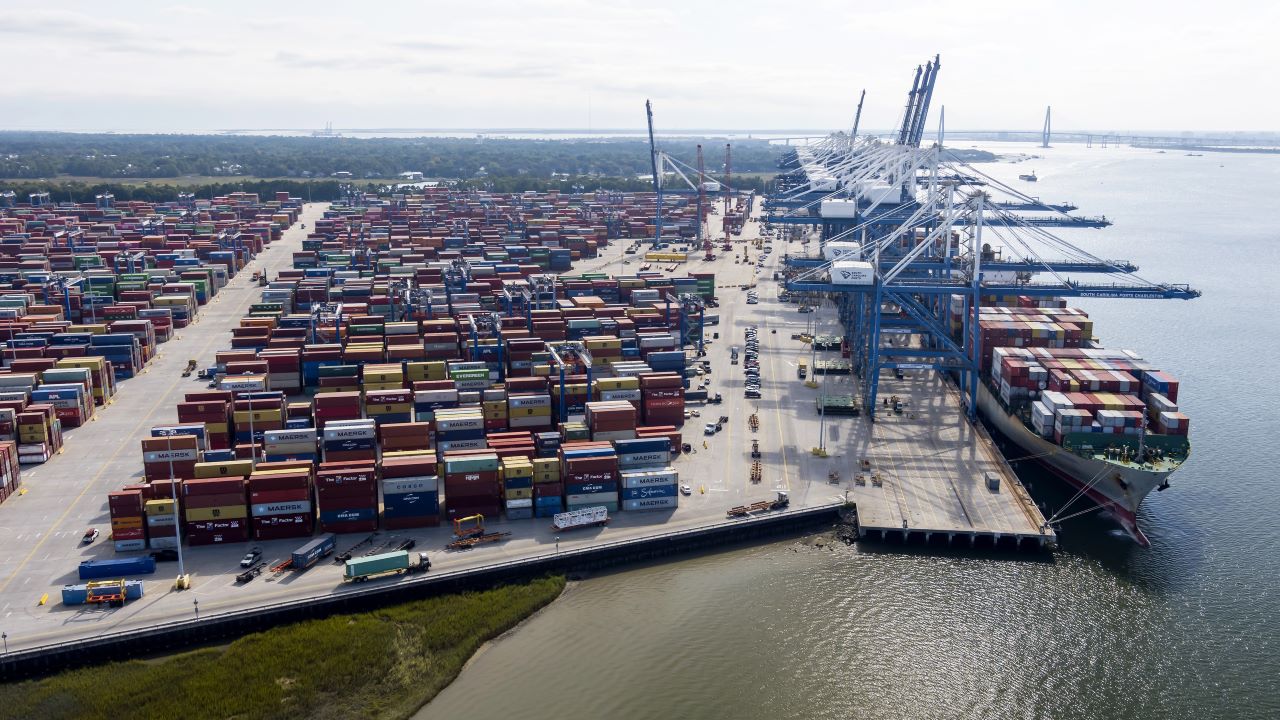
Byrna Technologies moved its main manufacturing facility from South Africa to Indiana in 2021. (Sam Wolfe/Bloomberg via Getty Images)

“But when it was evident that Donald Trump was going to be elected president, we said, ‘You know what, he’s been very, very vocal about tariffs, this is probably a good time for us to start the process of moving the supply chain back on-shore,'” Ganz said.

BYRNA TECHNOLOGIES CEO ‘PLEASED’ WITH TRUMP TARIFFS HITTING CHINESE RIVALS

“We started this even before the tariffs were announced. When the tariffs were announced, we were feeling pretty smart about ourselves that we had correctly surmised that we would be able to on-shore things,” he added.

Ganz said that while the process of onshoring more of Byrna’s supply chain before the Trump administration’s tariffs were implemented last year, the tariffs made domestic production more cost-effective and the onshoring process revealed other benefits.

“It was very interesting because not only was it much cheaper with the imposition of the tariffs to be producing in the U.S., but we also discovered all sorts of soft cost benefits,” he said.

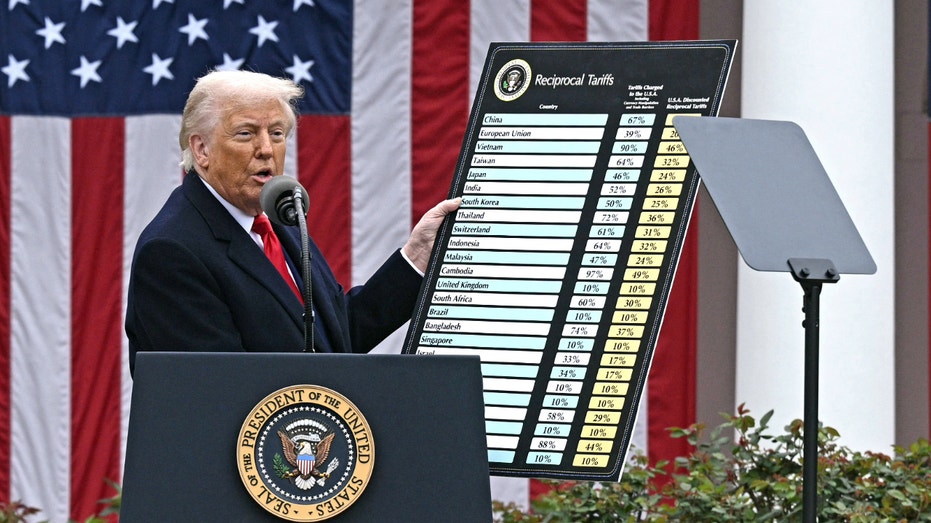
President Donald Trump holds up a sign showing reciprocal tariffs.

Byrna Technologies moved its manufacturing back to the U.S. before President Donald Trump implemented tariffs. (Brendan Smialowski/AFP via Getty Images)

“When you’re supplying componentry from offshore, you either have air freight costs, you have lengthy ocean voyages – when you’re supplying it from a hundred miles away by truck, you can be much more responsive to changes in consumer demand. If I need to visit the factory because there’s a quality problem, I can do it.”

HOW SHOULD BUSINESSES APPROACH TARIFF REFUNDS?

He added that while Byrna continues to buy some of its accessories from offshore suppliers, the company has focused its onshoring effort on the most critical aspects of its product, such as the launcher itself and its ammunition.

“We’re making self-defense products and I think the quality of the product, the dependability of the product, is really important to our consumers, so the Made in America moniker is very, very meaningful for our type of product,” he explained.

Ganz noted that Byrna closed its ammunition manufacturing facility in South Africa and moved it to a newly built facility in Fort Wayne that’s five miles away from the company’s facility where its launchers are produced.

FORMER INTEL CEO WARNS US CHIP COMEBACK STILL HAS A LONG WAY TO GO

The company’s latest launcher, the Byrna CL, was made of 34% U.S. components prior to the reshoring effort, but the launcher is now made with 92% U.S. components.

“It’s not without some cost. We’ve seen a couple percentage points increase in our cost as a result of bringing it back to the U.S., because of course, we would have been making it in the U.S. to begin with if it was the same price,” Ganz said. “But our margins have remained within two percentage points – last year we were 62% and this year we were 60.5-61% – so it was a de minimis impact on the cost.”

Ganz added that the tariffs were a determining factor in some of its reshoring decisions due to the higher cost of the import levies.

GET FOX BUSINESS ON THE GO BY CLICKING HERE

“When we ship something up, even though it may have been 10% less expensive than building it here, not so when you put a 30% tariff on. I’m a very patriotic guy, I like making stuff here in America. On the other hand, we’re a public company, we have shareholders – we have to look at what’s in the best interest of our shareholders,” he said. “With the tariffs, it was clear that it became less expensive to build in the U.S. than to build offshore.”

Ganz added that Byrna maintains some component manufacturing abroad to keep redundancy in the supply chain to guard against vulnerabilities that would arise if a domestic facility were to go offline unexpectedly, but the onshoring push has brought the company’s overall supply chain into the 80%-90% range for domestically-sourced components.

Free Training

Source link

Vestas CEO: Our tariff mitigation is sensible given our (not out) big U.S. manufacturing footprint


Real-time Estimate


Cboe Europe


04:02:19 2026-02-05 am EST

5-day change

1st Jan Change

183.45 DKK

-5.02%

Intraday chart for Vestas Wind Systems A/S

-1.04%

+7.24%

Published on 02/05/2026
at 03:17 am EST

Reuters

Reuters logo
© Reuters –
2026

DurationAuto.2 months3 months6 months9 months1 year2 years5 years10 yearsMax.

PeriodDayWeek

Chart Vestas Wind Systems A/S
VWS: Dynamic Chart
Logo Vestas Wind Systems A/S
Vestas Wind Systems A/S is the world’s leading manufacturer of wind turbines. Net sales by activity break down as follows:

– sale of wind turbines and wind energy production systems (78.6%): 2,837 turbines and systems (with a total capacity of 12,900 MW) delivered in 2024. The group also sells replacement parts;

– services (21.4%): notably maintenance services and warranty extension agreements.

Net sales are distributed geographically as follows: Denmark (2%), Germany (13.4%), Europe/Middle East/Africa (31.2%), the United States (20%), Brazil (10.1%), Americas (8.7%) and Asia/Pacific (14.6%).

More about the company

Trader

Trader

This super rating is the result of a weighted average of the rankings based on the following ratings: Global Valuation (Composite), EPS Revisions (4 months), and Visibility (Composite). We recommend that you carefully review the associated descriptions.

Investor

Investor

This super composite rating is the result of a weighted average of the rankings based on the following ratings: Fundamentals (Composite), Global Valuation (Composite), EPS Revisions (1 year), and Visibility (Composite). We recommend that you carefully review the associated descriptions.

Global

Global

This composite rating is the result of an average of the rankings based on the following ratings: Fundamentals (Composite), Valuation (Composite), Financial Estimates Revisions (Composite), Consensus (Composite), and Visibility (Composite). The company must be covered by at least 4 of these 5 ratings for the calculation to be performed. We recommend that you carefully review the associated descriptions.

Quality

Quality

This composite rating is the result of an average of the rankings based on the following ratings: Capital Efficiency (Composite), Quality of Financial Reporting (Composite), and Financial Health (Composite). The company must be covered by at least 2 of these 3 ratings for the calculation to be performed. We recommend that you carefully review the associated descriptions.

More RatingsSellConsensusBuy

Average target price

23.26EUR

Spread / Average Target

-10.14%

Consensus

Quarterly revenue – Rate of surprise

Download from Apple Store

OUR EXPERTS ARE HERE FOR YOU

Monday – Friday 9am-12pm / 2pm-6pm GMT + 1

MarketScreener, Stock Market Live
Legal information
|
Cookie settings
|
MarketScreener Blog
|
About us
|
Copyright © 2026 Surperformance SAS. All rights reserved.

Stock quotes are provided by Factset, Morningstar and S&P Capital IQ

Select your edition

All financial news and data tailored to specific country editions

Free Training

Source link

Has Trump’s tariff policy backfired, leading to a contraction in U.S. manufacturing?


The manufacturing boom promised by Trump has failed to materialize. Months after the implementation of his hallmark tariff policies, manufacturing jobs continue to decline, and industry activity has remained in prolonged contraction.

Trump once promised a ‘golden age’ for American manufacturing, but this prosperity is now receding. After years of economic intervention under both the Trump and Biden administrations, the number of manufacturing jobs in the United States has dropped to its lowest point since the end of the pandemic.

Federal data shows that in the eight months following Trump’s announcement of the ‘Liberation Day’ tariff, manufacturing jobs declined month by month, continuing a contraction trend that has seen over 200,000 jobs disappear since 2023. The index of factory activity tracked by the Institute for Supply Management remained in contraction territory for 26 consecutive months through December of last year, although a surprise rebound in new orders and production indexes in January caught analysts off guard. Manufacturing construction spending, which had surged under Biden-era funding for chips and renewable energy, fell month by month during Trump’s first nine months in office, according to estimates from the U.S. Census Bureau.

This gradual slowdown is, to some extent, a continuation of decades-long trends that shifted factory jobs overseas and accelerated the decline of Midwestern cities. In an industry where capital planning and construction cycles often span several years, reversing these trends will not happen overnight.


In November last year, the Federal Reserve significantly revised downward its estimates of total U.S. output since the pandemic when it conducted its annual revision of industrial production indicators.

“We never fully recovered from the pandemic,” said Josh Lehner, a U.S. economist at SGH Macro Advisors. Although automakers and chip manufacturers cut tens of thousands of jobs over the past year, the steady pace of layoffs across the industry suggests that job losses have been gradual.

Lehner and other economists also pointed out signs that output has stabilized and even grown slightly, though increased efficiency may limit the number of new jobs created. A White House spokesperson highlighted a modest rise in manufacturing productivity in recent quarters and noted that wage growth for workers exceeded inflation over the past year.

U.S. manufacturing jobs

U.S. manufacturing job additions

In the long run, tariffs may achieve their intended effect of enhancing the competitiveness of some manufacturers relative to overseas producers. Economists believe that lowering interest rates and deregulation could also provide support. However, in the short term, tariffs have raised costs for many companies importing raw materials and components, forcing businesses reliant on foreign parts to raise product prices or hurriedly seek alternative supplies.

The intermittent policymaking from the White House—Trump threatened new tariffs on Europe, Canada, and South Korea in recent weeks—has also led many business executives to view the past year as a ‘lost year for investment.’ The possibility that the Supreme Court might overturn some import taxes has added further uncertainty.

Meanwhile, despite the tariffs, some countries continue to expand their exports, driving down prices in the global market and making it difficult for U.S. manufacturers to compete.

“In our product portfolio, there are hardly any products that have benefited from tariffs,” said the CEO of Insteel Industries, headquartered in North Carolina.$Insteel Industries (IIIN.US)$H.O. Woltz III. With foreign steel tariffs doubling to 50% this year, Insteel has found it increasingly difficult to obtain steel from its U.S. suppliers for producing concrete infrastructure reinforcements, such as those required for the upcoming Gordie Howe Bridge connecting Detroit and Canada.$TRADELINK (00536.HK)$On the contrary, when domestic supply in the U.S. is insufficient, Insteel sometimes has no choice but to turn to importing tariffed steel from places like Algeria and India.

“Our growth today could be undermined by a lack of available (domestic) raw materials,” Woltz said.

In the trucking industry, a multi-year slump following the pandemic hit metal component manufacturers such as NN. The company, headquartered in Charlotte, North Carolina, and operating 23 plants across six countries, has cut its U.S. workforce in recent years to compete with low-cost factories overseas while addressing slowing demand for electric vehicles. CEO Harold Bevis believes tariffs will ultimately benefit NN by curbing competition from rivals in precision components like steering systems and audiovisual controls. However, import duties have driven up costs for steel and aluminum, while surging market prices for gold and silver—used in some of NN’s products—have added further pressure.

This squeezes the company’s ability to invest in new potentially profitable areas such as data centers and electrical equipment. “So you get hit,” Bevis said. NN is attempting to offset the costs by raising prices in subsequent orders. Bevis noted that NN’s business has accelerated amid Ford and General Motors’ push for localized sourcing, following multibillion-dollar asset write-downs on their EV businesses. However, when evaluating locations for expanding production for the auto sector, Bevis cautioned that places like Michigan and Massachusetts remain less attractive compared to Mexico, where many products can still enter the U.S. duty-free under trade agreements.

Trump has also taken other measures to try to revitalize manufacturing. He pressured trading partners like Japan and South Korea into agreements promising to invest tens of billions of dollars in the U.S.$Apple (AAPL.US)$$Taiwan Semiconductor (TSM.US)$and$AstraZeneca (AZN.US)$Companies have announced large-scale projects that could create thousands of manufacturing jobs. Government officials stated that the long-term vision is achieving industrial self-sufficiency. However, these investments often span several years, leaving the short-term outlook for manufacturing uncertain. “I don’t know when all this money will start to pay off,” Trump told The Wall Street Journal in December last year.

Analysts pointed out that new investments might focus on areas that fascinate Wall Street, such as robotic tools and artificial intelligence components, meaning the likelihood of a surge in permanent factory jobs is low. After years of inflation and high borrowing costs, some sectors of the economy remain lagging, impacting certain types of manufacturing.$Qualcomm (QCOM.US)$After experiencing years of inflation and high borrowing costs, certain segments of the economy continue to lag behind, affecting specific types of manufacturing.

“If people aren’t buying homes, they won’t buy furniture,” said Meganne Wecker, CEO of Skyline Furniture Manufacturing, a family-owned business founded in 1946 located outside Chicago. Skyline ventured early into e-commerce and began sourcing metal materials domestically in 2018. However, tariffs have impacted hardwood imports from Vietnam and textiles from India and China, leading to price increases.

Wecker is more concerned about the impact of tariffs not directly on Skyline but on suppliers and retailers. “The entire industry feels somewhat fragile,” she said of the furniture sector, adding that tariff uncertainties have dampened prospects for new domestic capacity investment. “I don’t know anyone who feels confident enough to make an investment that might only last a few years.”

Some investors believe that interest rate cuts and stimulative fiscal policies should help accelerate economic growth this year. “The biggest overall factor determining how well manufacturing performs is how well our economy performs. There’s no escaping that,” said Scott Paul, president of the Alliance for American Manufacturing, which supports tariffs on steel and many products. “It’s too early to tell what the new normal will be because we’ve just come out of that roller-coaster period.”

Editor/Doris

Free Training

Source link

Tariff threats prompted pharma production boom last year: report


While the threat of U.S. import tariffs prompted a surge in drug production last year, that output is slated to slow across multiple geographies in 2026. And, even as the biopharma industry enters the new year with greater certainty around the U.S.’ trade policy, the risk of another “tariff flare-up” looms large.

That’s the macro situation according to financial services firm Atradius, which noted in a new industry trend report (PDF) that global pharmaceutical production leapt 9.1% in 2025, mainly on the back of “front-loading activity in anticipation of US tariffs.” 

In 2026, however, output growth is expected to slow to 1.6% as a move toward “retrenchment” results in a slowdown of production growth in the first half of the year, the report predicts.

Nevertheless, a rebound could be not too far behind, with Atradius reckoning that global drug production will eke out 3.7% growth in 2027. That general trend holds true when looking at Atradius’ predictions for the growth of pharmaceutical sales and investments around the world in 2027, too.

As for 2025, the financial services company logged 9.7% growth in global pharmaceutical sales and 5.2% growth in overall industry investment. Atradius expects momentum in those areas will slow to 1.6% and 2.7% in 2026, respectively. 

The Trump administration’s persistent threat of pharmaceutical import tariffs was the driving force behind last year’s manufacturing surge, the experts say.

Still, the overall impact of U.S. trade duties has been “limited,” according to Atradius, which pointed to the exemptions Big Pharma companies have won through White House drug pricing deals as well as country- and region-specific agreements capping U.S. import tariff rates. Furthermore, generic drugs have largely been excluded from President Donald Trump’s trade negotiations, sparing the medicines that make up the bulk of the American public’s prescriptions from supply and price disruptions.

The industry isn’t out of the woods yet, with the report cautioning that “the downside risk of another tariff flare-up remains.”

Earlier this week, following an intensification of Trump’s rhetoric around a potential U.S. acquisition of Greenland, concerns were raised that the threat of new 10% taxes on select European countries that showed military support for the autonomous Danish territory might scupper the U.S.-EU trade deal reached last summer. Under that accord, which still needs to be ratified by European lawmakers, most European exports, including pharmaceuticals, will have tariffs capped at 15%.

Trump ultimately backed down on the threat after reaching the “framework of a future deal” on his Greenland ambitions during the World Economic Forum in Davos, Switzerland, this week. Still, the uncertainty his comments cast on previously secured agreements lends credence to Atradius’ “tariff flare-up” warning.

Overall, Atradius suggested industrial policy will play an increasingly large role across the pharmaceutical industry in the coming years, buoyed by government efforts around the globe to reduce reliance on imports and incentivize strategic stockpiling and domestic manufacturing.

“Supply networks of pharmaceuticals and medical devices will become more fragmented due to geopolitical tensions,” the firm predicted.
 

Mapping 2025’s production output
 

In the U.S., pharmaceutical manufacturing output is expected to “decelerate” to 0.9% this year—a marked departure from the 5.2% increase charted in 2025, according to Atradius’ report. The outlook forecasts a 2.5% rebound in U.S. pharmaceutical output growth in 2027.

The report again pointed to industry-won tariff exemptions as a relief for drugmakers in the near term, while caveating that “uncertainty remains, as Washington has repeatedly announced its intention to target medicine imports.”

Aside from the most-favored-nation drug pricing deals that have won many large pharma companies exemptions from tariffs, efforts by the FDA to ease the build-out of new production facilities in the U.S. could also bolster the country’s pharmaceutical output, Atradius said.

At the same time, “high production costs could still make it more cost-effective for pharmaceuticals to be manufactured elsewhere,” the report reads.

Perhaps most striking in Atradius’ report was the 21.6% growth in pharmaceutical output that the U.K. and the EU charted in 2025, again attributed to “front-loading triggered by massive U.S. tariff threats.” In Ireland—a country with a wealth of large pharma manufacturing outposts—production output surged a whopping 41.3% in 2025, according to Atradius. The country is predicted to experience a sharp turn in the other direction this year, with Atradius forecasting a 6.4% output decline.

This year, the U.K. and the EU’s combined output is tipped to “contract temporarily” by 3.7%, by Atradius’ reckoning.

While the EU has presently secured a 15% tariff rate cap, the U.K. has dodged U.S. import duties altogether in part by agreeing to raise the net prices its National Health Service pays for innovative medicines by 25%.

While those agreements blunt the impact of tariffs in Europe, Atradius acknowledged that shifting manufacturing to the U.S.—a key part of Trump’s trade agenda—is both expensive and complex, posing challenges for smaller companies with fewer resources.

Unlike Europe and the U.S., China’s pharmaceutical output is expected to continue growing in 2026. Atradius estimates that the country’s drug production will increase 6.6% this year versus 3.6% growth in 2025. 

China’s exposure to U.S. tariffs is “limited,” and, while the country accounts for some 40% of the world’s active pharmaceutical ingredient output, those drug building blocks aren’t targeted by U.S. tariffs, Atradius noted. 

Free Training

Source link

Trump meets Intel CEO, hails US-Made Sub-2 Nanometer Chip, links manufacturing push to tariff policy


ANI |
Updated:
Jan 09, 2026 08:39 IST

Washington DC [US], January 9 (ANI): US President Donald Trump has hailed chipmaker Intel for launching an advanced semiconductor product manufactured entirely in the United States, calling it a major achievement for American industry and a validation of his administration’s aggressive trade and manufacturing policies.
In a social media post, President Trump said he had a “great meeting” with Intel CEO Lip-Bu Tan, praising the company’s technological progress and its commitment to domestic manufacturing.
Trump stated that Intel has launched the first sub-2 nanometer CPU processor that has been designed, built, and packaged in the USA.
“I just finished a great meeting with the very successful Intel CEO, Lip-Bu Tan. Intel just launched the first SUB 2 NANOMETER CPU PROCESSOR designed, built, and packaged right here in the U.S.A.,” Trump wrote in the post.
The US President also highlighted the financial gains made by the US government through its ownership position in Intel. According to Trump, the United States government is a shareholder in the company and has already earned tens of billions of dollars for the American people in just four months through this stake.
“The United States Government is proud to be a Shareholder of Intel, and has already made, through its U.S.A. ownership position, Tens of Billions of Dollars for the American People – IN JUST FOUR MONTHS. We made a GREAT Deal, and so did Intel,” Trump said.
Trump further asserted that his administration is determined to bring leading-edge chip manufacturing back to America, adding that the progress made by Intel demonstrates that this objective is being achieved.
“Our Country is determined to bring leading edge Chip Manufacturing back to America, and that is exactly what is happening!!!” the President added.
Echoing Trump‘s comments, Intel CEO Lip-Bu Tan also shared a social media post expressing appreciation for the support received from the US leadership.
“Honored and delighted to have the full support and encouragement of @POTUS @realDonaldTrump and @CommerceGovSecretary @howardlutnick as we bring leading edge chip manufacturing back to America,” Tan said in his post.

He added that Intel is now shipping its latest Core Ultra Series 3 CPU processors, which are designed, manufactured, and packaged in the USA using the most advanced semiconductor technology.
“@intel is now shipping the latest Core Ultra Series 3 CPU processors – designed, manufactured and packaged with the most advanced semiconductor technology, right here in the USA,” the Intel CEO stated.
President Trump has repeatedly linked such developments to his administration’s trade policies. Since beginning his second term as President, Trump has pursued aggressive trade measures, including the imposition of tariffs, with the stated objective of boosting domestic manufacturing in the United States.
Trump has imposed tariffs on countries that were major exporters to the US, including India and China.
On India, Trump has already imposed 50 per cent tariffs on goods entering the United States since August 2025.
In another social media post, Trump cited recent economic data to argue that tariffs have strengthened the US economy and improved national security.
He claimed that the United States has recorded its lowest trade deficit since 2009 and that the figure is continuing to decline.
“Numbers released today show that the United States of America has the lowest Trade Deficit since 2009, and going even lower,” Trump said.
He further stated that the nation’s gross domestic product is predicted to come in at over 5 per cent, even after what he described as a 1.5 per cent loss due to a Democrat “Shutdown.”
Trump attributed these outcomes directly to his tariff policies, saying they have “rescued” the US economy and national security. He also urged the Supreme Court to take note of what he described as historic achievements before issuing what he called its most important decision ever.
“These incredible numbers, and the unprecedented SUCCESS of our Country, are a direct result of TARIFFS, which have rescued our Economy and National Security. I hope the Supreme Court is aware of these Historic, Country saving achievements prior to the issuance of their most important (ever!) Decision. Thank you for your attention to this matter! PRESIDENT DONALD J. TRUMP.” (ANI)

Free Training

Source link