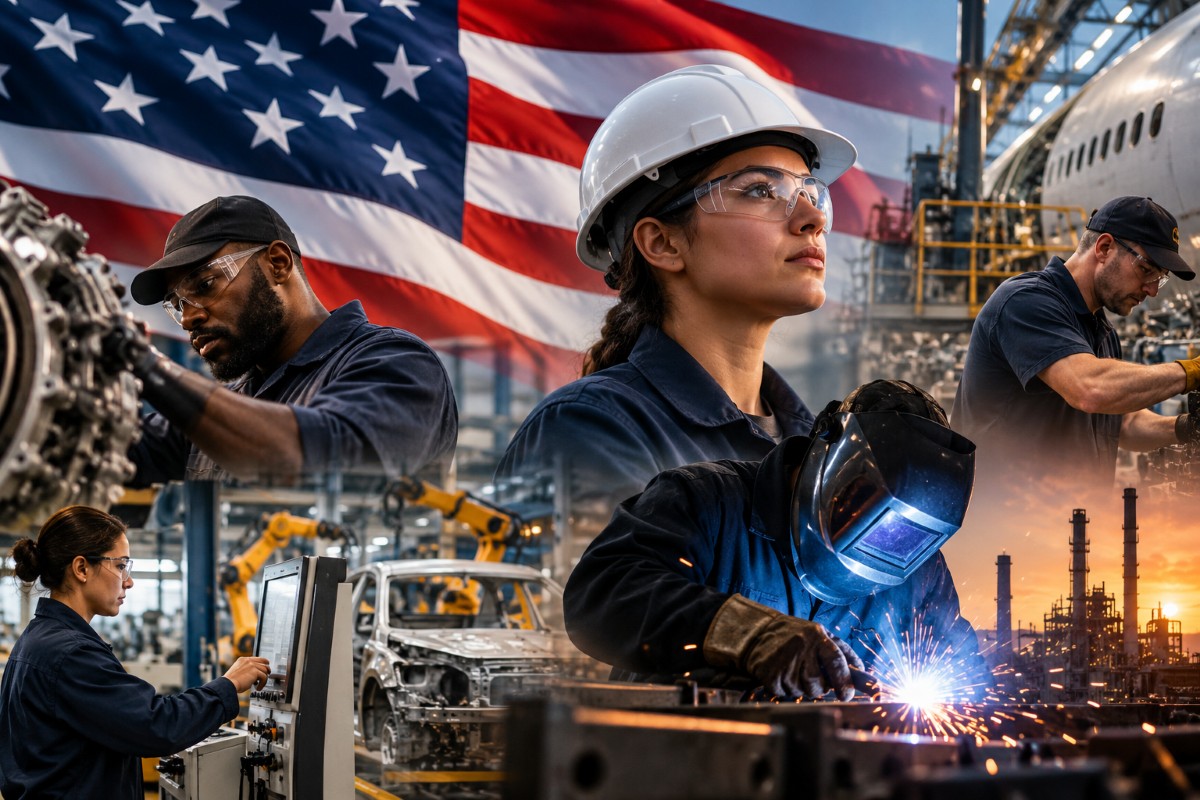
North America Manufacturing News Digest – the industry stories you should be aware of


Welcome to our weekly roundup of North America manufacturing news, designed to inform you of all the industry stories you should know about.

GE Appliances announces $1bn investment to expand US appliance manufacturing

GE Appliances, a Haier company, is investing $1bn to transform its Appliance Park campus in Louisville, Kentucky, expanding high-output laundry production and bringing dryer manufacturing from Mexico back to the US. Read more via The Manufacturer

Lilly breaks ground on $6.5bn Houston manufacturing site

Eli Lilly has broken ground on a $6.5bn pharmaceutical manufacturing facility in Houston, Texas, as part of the company’s drive to expand domestic production of medicines and active pharmaceutical ingredients (API). Read more via The Manufacturer

Quickparts invests nearly $6m in aerospace and defence manufacturing capacity

Quickparts is investing nearly $6m in its Seattle Aerospace & Defense Center of Excellence as part of a wider expansion of its additive manufacturing capacity across the US and Europe. Read more via The Manufacturer

UK’s Goodfellow set to create 20 new jobs as it invests £1.5m into US advanced manufacturing hub

Goodfellow, one of the UK’s leading advanced materials and metals suppliers, is targeting international expansion after opening a new expanded production facility in the US. Read more via The Manufacturer

Free Training

Source link

US Manufacturing Revival Fosters Derivatives Plays as High-Tech Outpaces Traditional Industry


US manufacturing is showing a revival after a long period of weak momentum, with survey data indicating stronger activity. The ISM production index has moved from sub-50 contraction territory to levels consistent with firmer growth ahead, while business surveys point to solid order books. Over the next three years, manufacturing volumes are projected to rise by 1.5–2% per year, a pace framed against the sluggish backdrop of the past two decades.

The upturn is expected to be uneven. Advanced, highly automated, high value-added industries linked to the AI and technology cycle are positioned to expand, with pharmaceuticals, tech, transport and aerospace, and electrical and power-related segments cited as areas of strength. By contrast, more traditional, labour-intensive production faces further retrenchment unless it can command a “made in America” price premium, while heavy industry such as steel sits between the two. Relative growth differentials also support the US manufacturing proposition: from 2023 to 2026, the US economy is averaging 2.5% year-on-year volume growth versus 0.9% in Europe.

Strategies for Capitalizing on the Manufacturing Divide

With the US economy outpacing Europe with a 2.5% average growth rate over the last three years, we should position our derivative portfolios to capitalize on a starkly divided manufacturing sector. We recommend buying medium-term call options on advanced manufacturing, aerospace, and semiconductor ETFs like the iShares US Aerospace & Defense ETF (ITA) or the VanEck Semiconductor ETF (SMH). This strategy leverages the massive wave of AI-driven capital expenditure and defense spending that is keeping order books full for high-tech firms.

Conversely, we must hedge this bullishness by purchasing put options on traditional, labor-intensive industrial companies that are suffering from high domestic wages. Sectors like basic textiles or low-value metal fabrication cannot absorb these wage pressures and are poised to contract further. Targeting weak components of the Russell 2000 index with put spreads will protect our portfolios as these low-margin businesses retrench.

Opportunities in Utilities and Volatility Trades

The massive power demands of AI data centers and highly automated factories mean we should also look at utilities and energy derivatives. Historically, US industrial electricity consumption has spiked alongside manufacturing construction spending, which recently hovered around an unprecedented $230 billion annualized rate. We suggest using bull call spreads on the Utilities Select Sector SPDR Fund (XLU) to capture this secular power surge.

As we watch the ISM Manufacturing Index fluctuate around the expansion-contraction threshold, we expect heightened volatility in industrial equities over the coming weeks. We should deploy long straddles on broad industrial ETFs like the Industrial Select Sector SPDR Fund (XLI) ahead of upcoming October economic releases. This allows us to profit from the sharp market reactions as the divide between high-tech champions and struggling traditional factories widens.

Start trading now — click

Free Training

Source link

US Transit Bus Industry Generates $5.1 Billion Economic Impact


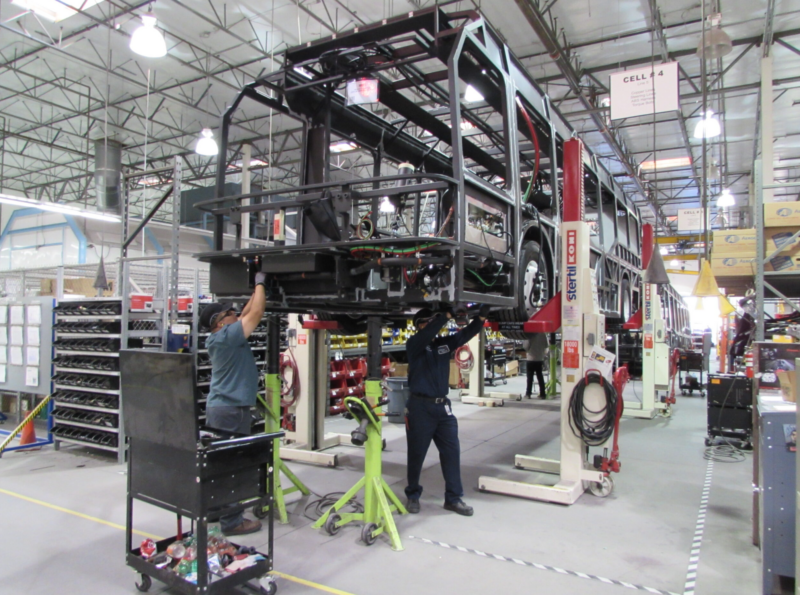
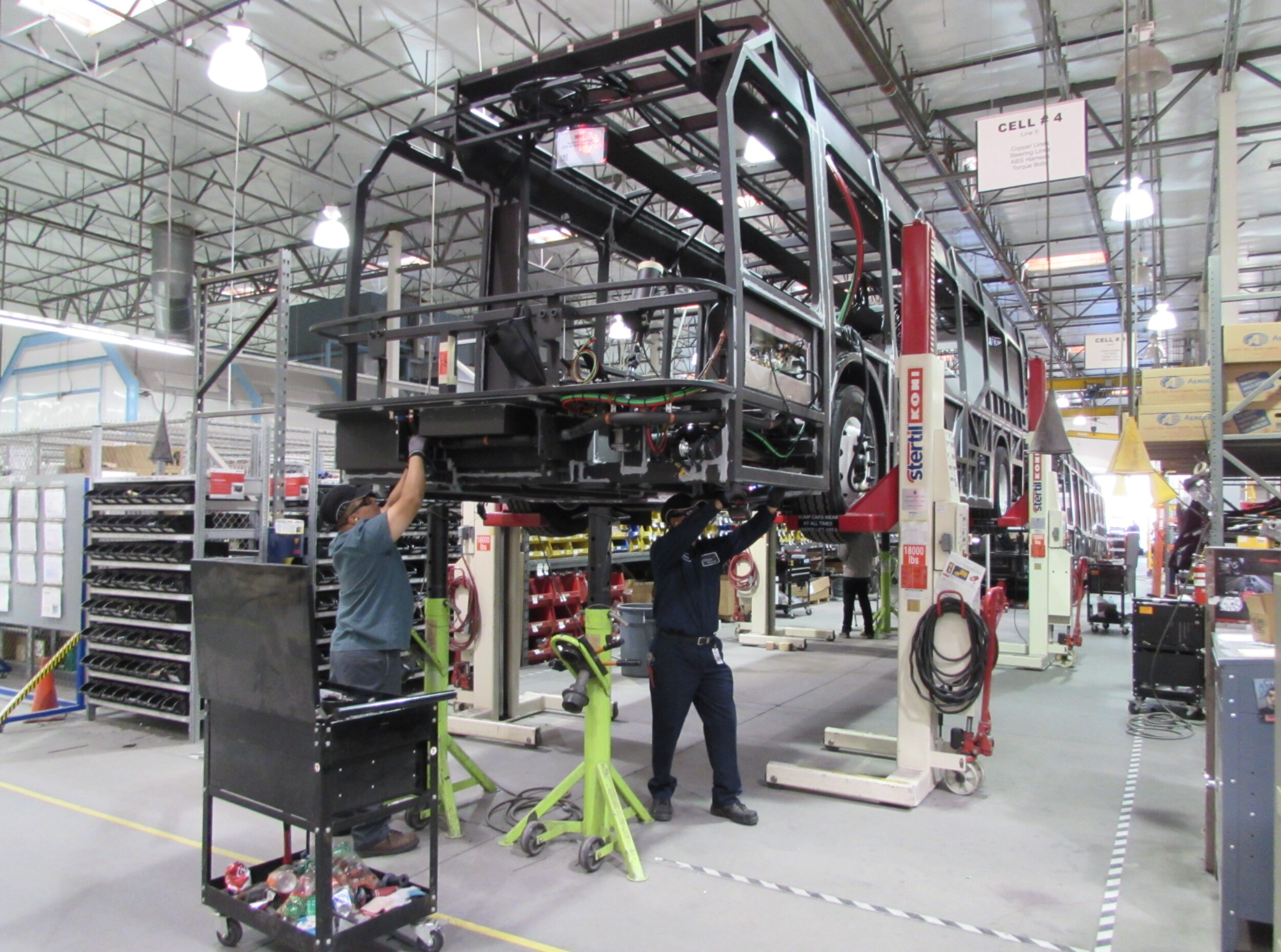
The US heavy-duty transit bus manufacturing industry supported around 34,100 jobs and contributed 5.1 billion USD to the US economy in 2025, according to a new report from Oxford Economics.

The report, Buses Mean Business, examines the economic contribution of domestic transit bus manufacturers and their supply chains. It was commissioned by business members of the American Public Transportation Association (APTA).

ENC bus manufacturing

ENC bus manufacturing

© ENC

Of the 34,100 jobs supported by the industry, approximately 4,700 were employed directly by transit bus manufacturers. A further 29,400 jobs were supported through the wider supply chain and the spending of workers’ earnings.

Oxford Economics calculates that every direct job at a transit bus manufacturer supported an additional 6.3 jobs elsewhere in the US economy. Manufacturing accounted for around 13,000 of the total jobs supported.

The industry also generated an estimated 1.1 billion USD in federal, state and local tax revenue in 2025. The report estimates that every dollar of GDP generated directly by transit bus manufacturers supported a further 5.30 USD through supply-chain and household-spending effects.

The report found that the economic impact of transit bus manufacturing extended across all 50 states. States with major bus assembly facilities, including Alabama, California, Minnesota and New York, recorded some of the largest impacts. Significant activity was also identified in Illinois, Indiana, Michigan, Pennsylvania and Texas.

Research from APTA has previously shown that federal investment in public transport supports a wide manufacturing network across the United States.

The analysis covers three forms of economic impact: direct activity from bus manufacturers, indirect activity generated through their domestic supply chains, and induced activity resulting from workers spending their earnings elsewhere in the economy.

The research focuses specifically on heavy-duty transit buses, defined as vehicles of at least 30 feet operated by public transit agencies. This includes standard and articulated buses, commuter coaches, double-deckers and other heavy-duty transit vehicles.

The report also highlights the age of the US transit bus fleet as a factor supporting future manufacturing demand. US transit agencies operated approximately 65,300 heavy-duty transit buses in 2024. Around 13,700 were already more than 12 years old, while another 21,500 were between eight and 12 years old. Together, those vehicles represented more than 54% of the fleet and either already exceeded, or are expected to reach within five years, the Federal Transit Administration’s 12-year useful-life benchmark.

Transit buses carried approximately 3.8 billion passenger trips in the US during 2025, representing around 49% of all public transport trips and more than 10 million trips on an average day. However, bus deliveries have yet to return to pre-pandemic levels. Around 4,700 transit buses were delivered in the US and Canada in 2025, compared with more than 6,300 in 2019.

Electric Buses

The composition of new bus deliveries is also changing. Battery-electric buses represented around 4% of the existing US transit bus fleet, but accounted for approximately 20% of transit buses delivered during 2023 and 2024. Diesel buses remained the largest category of new deliveries, representing roughly half of vehicles delivered during the period.

Oxford Economics notes that domestic procurement requirements, including federal Buy America provisions applying to federally funded transit investment, have helped support the US manufacturing and supplier base. Looking ahead, this trend may change, as the current administration has stated that it intends to give priority to low-emission projects over zero-emission proposals where permitted.

The report’s findings come as US transit agencies face a sizeable fleet replacement requirement, while manufacturers and suppliers adapt to changes in propulsion technology.

The research does not attempt to quantify the wider economic effects of operating transit services or investing in depots, charging infrastructure and other transit capital projects. Its analysis is limited to the manufacturing of heavy-duty transit buses and the domestic supply chain supporting their production.

Tags

Free Training

Source link

US. solar industry advances cybersecurity as domestic manufacturing expands


GALERIA

The Solar Energy Industries Association (SEIA) has released a new report outlining a roadmap to strengthen cybersecurity across the US solar and energy storage industry while supporting the continued expansion of domestic manufacturing. The publication comes as the country’s solar and battery storage manufacturing capacity continues to grow, with US inverter manufacturing having nearly tripled since the end of 2024. Following the opening of a new inverter production facility in July, the United States is now tied as the world’s second-largest manufacturer of inverters.

The report addresses the growing cybersecurity challenges facing the energy sector and highlights the importance of secure technologies backed by resilient domestic supply chains. Developed in collaboration with industry and government stakeholders, it provides recommendations, best practices and resources to help companies improve cybersecurity preparedness across the solar and storage value chain.

According to SEIA, the rapid deployment of solar and battery storage systems makes cybersecurity an increasingly critical component of energy security. The association argues that strengthening domestic manufacturing and supply chain resilience will help protect critical infrastructure while reducing exposure to evolving cyber threats.

“As solar and storage continue to lead the way in adding new power capacity to the grid, cybersecurity must remain front and center,” said Tim Pawlenty, president and CEO of SEIA. “From secure and resilient systems to expanding domestic manufacturing, this report lays out the actions our industry is taking to strengthen U.S. energy security, protect critical infrastructure, and stay ahead of emerging threats.”

Among its recommendations, the report calls for expanding domestic solar and storage manufacturing through more resilient supply chains, greater transparency and trusted production capacity. It also advocates establishing consistent cybersecurity practices across the industry, promoting national guidance for distributed energy resources, and improving information sharing and coordination to strengthen threat detection and risk communication throughout the sector.

Free Training

Source link

North America Manufacturing News Digest – the industry stories you should be aware of


Welcome to our weekly roundup of North America manufacturing news, designed to inform you of all the industry stories you should know about.

US manufacturing growth slows to seven-month low as tariffs and weather hit exports

Growth in the US manufacturing sector slowed in February, with new data showing the pace of expansion easing to its weakest level in seven months amid falling exports, tariff pressures and weather disruption. Read more via The Manufacturer

Carhartt backs next generation of tradespeople with $375k NCCER grant

Carhartt has announced a $375,000 grant through its “For the Love of Labor” program to the National Center for Construction Education and Research (NCCER), a nonprofit leader in skilled trades workforce development. Read more via The Manufacturer

Unox officially opens U.S. manufacturing facility

Unox officially celebrated the grand opening of its first U.S. manufacturing facility in Denver, North Carolina this week. Read more via The Manufacturer

Canada’s Dainty Foods announces first US manufacturing operation

Dainty Foods, a Canadian-based producer of private-label rice and ready-to-heat meal solutions, has announced it will establish its first United States manufacturing operation in Batavia Township, Ohio. Read more via The Manufacturer

Edible Garden to develop Midwest ready-to-drink manufacturing hub

Edible Garden has announced plans to develop a ready-to-drink (RTD) beverage manufacturing platform at its Midwest facility as it expands beyond fresh produce into shelf-stable nutrition products. Read more via The Manufacturer

Free Training

Source link

North America Manufacturing News Digest – the industry stories you should be aware of


Welcome to our weekly roundup of North America manufacturing news, designed to inform you of all the industry stories you should know about.

Apple to bring Mac mini production to Houston in major US manufacturing expansion

Apple has announced a significant expansion of its Houston manufacturing operations, confirming that production of the Mac mini will move to the United States for the first time as part of a broader investment in advanced manufacturing and AI infrastructure. Read more via The Manufacturer

AbbVie to create 300 new jobs with $380m Illinois manufacturing investment

AbbVie has announced a $380m investment to build two new active pharmaceutical ingredient (API) manufacturing facilities at its North Chicago campus, expanding U.S. production capacity for next-generation medicines and creating around 300 new jobs. Read more via The Manufacturer

Alfa Laval to double capacity at Richmond, VA facility by 2028

In response to accelerating demand driven by the rapid expansion of data centers across North America, Alfa Laval announced a major expansion of its Richmond, Virginia manufacturing facility. Read more via The Manufacturer

NAM report warns against policy changes that could disrupt U.S. food manufacturing

The National Association of Manufacturers (NAM) has released a new report highlighting the economic and social importance of the U.S. food and beverage supply chain, while cautioning policymakers against reforms that could undermine what it describes as a science-based system delivering safe, affordable and accessible food. Read more via The Manufacturer

EU Motors opens U.S. manufacturing facility in Florida

EU Motors Sp. z o.o., one of the largest producers of electric drone motors outside of China, today announced the opening of its new production facility, EU Motors USA, in Hallandale Beach, Florida. Read more via The Manufacturer

Free Training

Source link

The Trump Administration Failed the U.S. Auto Industry, and the Canada-China Deal Proves It


On January 16, 2026, Canadian Prime Minister Mark Carney announced a landmark trade deal with China that will open its market to Chinese electric vehicles (EVs) in exchange for lower tariffs on Canadian-produced canola oil. It’s a major change that could lead to the Canadian market welcoming Chinese-made passenger vehicles at a significantly higher scale and throws into stark relief the consequences of the Trump administration’s reckless trade policy and its large-scale disinvestment in EVs.

The Trump administration’s wrecking-ball approach to traditional forms of international cooperation; its willingness to attack long-time partners and allies with ever more outrageous tariff threats; and its destruction of the U.S. EV supply chain has forced Canada to change its strategy for modernizing and growing its domestic auto industry. Canada has historically been the largest importer of U.S. passenger vehicles. Now, as a direct result of the Trump administration’s actions, Canada’s pivot toward Mexico, China, and elsewhere stands to further isolate the U.S. market as the rest of the world moves decidedly toward a cleaner future. Indeed, if U.S. automakers were already behind Chinese and other international EV producers in terms of technology, production, and price, then the Trump administration’s antics on the world stage will only widen the gap and jeopardize a lucrative export market, to the detriment of American workers and consumers alike.

Stay informed

on Energy and Environment

What’s in the deal?

Canada and China recently agreed to lower tariffs on Canadian canola oil—from 84 percent to approximately 15 percent by March 1, 2026—in exchange for Canada lowering the tariff rate on Chinese EVs from 100 percent to 6.1 percent on the first 49,000 vehicles, eventually growing to 70,000 over five years. Perhaps more importantly, China will invest in EV production capacity in Canada. While this is more of an understanding than an official agreement at this point, it may turn out to be the most significant component of the deal. Legacy North American automakers lag behind their Chinese counterparts in the maturity of their EV production processes. Landing direct investment in domestic production capacity will allow Canadian participants in the supply chain a significant opportunity to learn from Chinese EV and battery makers and produce affordable cars for Canadian citizens. The new Chinese electric vehicles, whether imported or produced in Canada, are likely to be less expensive than other vehicles produced in North America, which will force North American automakers to innovate and learn in order to remain competitive—preferably not to the detriment of autoworker jobs.

Which parts of the manufacturing process ultimately end up onshored in Canada will matter significantly. China has surged ahead of the rest of the world the further upstream one goes in the supply chain. Localizing battery active material production—cathodes and anodes—would bring more economic value and direct jobs than just final battery pack assembly.

It remains to be seen whether this deal will deliver positive benefits to Canada—although ensuring that any factory that supplies EVs either made in Canada or exported into Canada meets the highest standards for workers’ rights and sustainability would be a good start. But what is clear is that this deal would not have occurred without the Trump administration’s ongoing hostility toward EVs and the U.S.-Canada relationship more broadly.

Why make the deal?

The deal is, no doubt, a calculated risk by the Canadian government, based on two key factors. First, the Trump administration has undermined innovation in the domestic auto industry, gutting investments in EVs and causing domestic automakers to cancel billions of dollars of investment in advanced manufacturing. Second, it has deeply exacerbated trade and diplomatic tensions between Washington and Ottawa. As a result, Canada finds itself with a need to reduce its dependency on and integration with the United States to reclaim control over its economy and industrial future. It is a message that Mark Carney, Canada’s prime minister, delivered to his country via video message a few days after signing the agreement with China.

On the future of the auto sector in the United States, it is hard to question the Canadian government’s assessment. One of the first actions taken by the Trump administration, starting with a day-one executive order, was to launch an all-out attack on American EV manufacturing, directing the government to “eliminate the ‘electric vehicle (EV) mandate’,” despite no such mandate existing. Less than a month later, the administration unilaterally and unlawfully froze billions of dollars of funding for everything from EV charger installation to critical mineral processing for batteries, including funds for which the government had already signed contracts with American companies. Finally, in July, the president signed the One Big Beautiful Bill Act and delivered the coup de grâce for the future auto industry, repealing tax credits for EVs made in North America and hamstringing government support for American battery manufacturing. High-quality EVs have an average cost of $25,000 in China, but instead of helping American automakers offer a similarly affordable vehicle, the administration has held them back. NPR captured it succinctly in December:

California’s ability to require the sale of EVs: gone. Federal rules about emissions and fuel economy — being rewritten. Federal penalties for car companies that sell too many gas guzzlers: zeroed out. The $7,500 federal tax credit? Kaput.

These actions have already caused damage. Ford took a $19.5 billion write-down scaling back its plans for EV production, while GM took a $6 billion hit. As of the end of the third quarter of 2025, EV supply chain investment was down 30 percent from that point a year earlier. These cancellations won’t just hurt the United States and American workers but also Canada. The auto industry is not an American industry; it’s a North American industry, with the region that includes Michigan, Ohio, Indiana, and Ontario often referred to as the “Great Lakes supercluster.” As described in a recent report to Congress, “Across the region, hundreds of suppliers provide thousands of parts for vehicles, some of which cross the border seven or eight times as they are assembled into larger products.” The industry is deeply intertwined, so major changes in the United States will significantly affect both Canada and Mexico. Without a strong automotive industry—along with all the supplier industries that serve the auto industry—Canada’s industrial future would be far weaker and far less resilient to the vagaries of policy choices in the United States and elsewhere.

Without a strong automotive industry, Canada’s industrial future would be far weaker and far less resilient to the vagaries of policy choices in the United States and elsewhere.

Canada and the United States have had a remarkably close relationship, consistently sharing economic and foreign policy goals over generations. In 2023, more than $2.5 billion in goods and services crossed the U.S.-Canada border each day. In all likelihood, Ottawa would like to maintain this close relationship and economic integration as much as possible, but as Carney noted in his recent speech to the World Economic Forum in Davos, Switzerland, Canada must react to the world as it is—not the world it wishes existed. And the current world is defined by the brazen tariff threats and toxic nationalism of the Trump administration.

In just its first year in office, the Trump administration has ushered in a trade war unprecedented in its size and scale, imposing new tariffs on nearly every nation and on roughly half the goods entering the United States. In addition to tariffs, the Trump administration has done its best to antagonize Canada, from referring to Canada as the “51st state” and Prime Minister Carney as “Governor Carney” to reportedly meeting with Albertan separatists. As a result, Canada has come to view the United States not as a partner or ally but as a belligerent nation that no longer shares its interests and values—at least not as long as the Trump administration is in the White House.

What about U.S. manufacturing?

Allowing Chinese EVs into the Canadian market, albeit in limited numbers at first, will place massive pressure on American automakers to catch up technologically—which would be the best-case outcome. There are some positive signs that this is happening, such as GM’s investment in new battery technologies. However, if U.S. automakers choose instead to cede the market entirely, then that loss will be felt directly in the U.S. labor market. As the United States has deprioritized affordable EVs—and affordable vehicles in general—China has kept up its massive push to build and adopt EVs. More than half of new cars sold in China are now EVs, accounting for roughly 70 percent of global EV production. This global EV adoption is helping change the trajectory of global oil demand to peak in five years. And it’s not just China, with countries like India electrifying even faster.

There is no turning away from an electrified future for passenger vehicles unless the goal is to condemn people to a future of more expensive cars and fewer jobs.

This means that Canada is a canary in the coal mine for U.S. automakers. If they cannot build and sell EVs to compete with those manufactured by their competitors in a market physically next door—and one that was previously accustomed to buying U.S.-made vehicles—then there is little hope of them competing in a broader world that is rapidly electrifying. One in 4 vehicles sold in 2025 was electric; making a cost-competitive EV is not optional for automakers who want to retain significant market share. Should American automakers fail to do so, autoworkers and U.S. industry more broadly would likely be the first to suffer the consequences.

On the campaign trail, President Trump wildly claimed that “all the electric cars are going to be made in China.” This isn’t likely to become true with other parts of the world such as Europe shifting toward EV production, but what may be true is that significant numbers won’t be made in the United States, which will be a problem when the rest of the world ultimately decides EVs are the way to go. Investors want to invest in industries of the future, and workers need training in those industries now. But instead of recognizing this future—one that Canada clearly does—President Trump appears focused on keeping American auto manufacturing stuck in the past. If he is successful, those investors won’t invest in the U.S. auto industry, and there will be fewer workers in it as a result.

Conclusion

In only a year, the Trump administration’s reckless policies forced a dilemma upon Canada: Continue to be tied to a historic trading partner whose current leadership has decided to hold its own—and, by extension, Canada’s—industry back from producing innovative EVs, or make a deal with China, a competitor leading in the EV industry.

Canada has made a choice to welcome Chinese EVs today, and that should be a wake-up call: There is no turning away from an electrified future for passenger vehicles unless the goal is to condemn people to a future of more expensive cars and fewer jobs. The rest of the world is moving on to cheaper, cleaner vehicles. If the United States wants to produce the vehicles the world wants, as it should, then the country must return to investing in electric vehicle production and an associated supply chain. Nearly 1 million direct jobs are at stake. The Trump administration, and U.S. automakers, should stop seeing the world they wish to see and start seeing the world as it is. Otherwise, U.S. autoworkers and consumers are going to pay the price. A continuation of the Trump administration’s toxicity on the world stage and its backward auto and energy policy would only mean more deals like the one Canada and China agreed to a few weeks ago.

The authors would like to thank Kalina Gibson, Allison McManus, Steve Bonitatibus, and Mona Alsaidi for their feedback, guidance, and support on this column.

Free Training

Source link

Why Modernizing Existing Manufacturing Has Become a Strategic Advantage for U.S. Industry in 2026


Can the United States remain competitive in the era of advanced manufacturing without relying exclusively on building new factories and completely replacing existing equipment? This question is increasingly raised not only in academic discussions but also at the level of individual production facilities. It has become clear that the core challenge lies not so much in a lack of capital or technology, but in the ability to adapt and modernize existing production systems without halting operations.

According to data from the U.S. Census Bureau and the Bureau of Economic Analysis, the U.S. trade deficit in goods and services exceeded $918 billion in 2024, increasing by approximately 17 percent compared to 2023. At the same time, the deficit in the Advanced Technology Products category remained consistently high throughout 2023-2025, pointing to structural limitations in adapting existing industrial capacity to the requirements of modern manufacturing.

In practice, this issue is particularly acute at facilities that rely on non-standard or highly customized equipment. Such production lines cannot simply be shut down for months to allow for a complete replacement of machinery or control systems. Any prolonged downtime results in contract failures, direct financial losses, and disruptions to supply chains. Under these conditions, modernization ceases to be a one-time investment and instead becomes a continuous engineering process that requires rapid diagnostics, phased solutions, and a deep understanding of production logic.

After industrialization, the same challenge inevitably emerges: equipment can be purchased, but it is far more difficult to find specialists capable of maintaining it, quickly identifying failures, and simultaneously adapting production systems to new market demands. “Once any production system is launched, specialists are needed who can go beyond routine maintenance and evaluate equipment performance at the level of the entire technological chain, identifying critical points and implementing solutions to modernize both equipment and production processes,” notes applied mechanics engineer Mykola Nazarenko.

Today, such highly qualified engineers form a hidden competitive advantage for American industry. The decisive factor is the ability of engineering teams to carry out modernization within active production environments while minimizing downtime and capital expenditures.

Nazarenko’s approach differs fundamentally from the traditional model of a maintenance engineer. He works as a systems diagnostic engineer, structuring his process around a comprehensive analysis of the production cycle and equipment interdependencies. This makes it possible to identify accumulated engineering compromises and bottlenecks and only then proceed with the phased modernization of control systems, automation, and equipment interaction. This approach improves reliability and productivity without the need for capital-intensive full machine replacement.

Nazarenko’s professional experience was shaped in environments where the cost of error was measured not in theory, but in direct financial losses. From 2020 to 2022, he was responsible for the uninterrupted operation of complex production lines at the woodworking enterprise LLC FPK Korobel. The production environment did not allow for extended downtime: stopping a line meant immediate financial losses. It was there that he implemented a phased equipment modernization practice that stabilized production and extended machine service life through process and control system optimization rather than mechanical component replacement.

After relocating to the United States in 2022, this experience proved directly applicable. At Toufayan Bakery, a large-scale food manufacturing operation with a continuous production cycle, Nazarenko advanced from equipment operator to production supervisor within one year. His role included not only shift management but also support for CNC equipment and automated lines operating under high load. During this period, the frequency of emergency stoppages was reduced, line stability improved, and production scheduling became more predictable, directly enhancing the company’s operational efficiency.

A sound engineering approach often becomes the key driver of modernization. “My experience shows that the longer a person works within a single system, the fewer opportunities for adaptation and improvement they tend to see. Over time, a habituation effect emerges, and production begins to be maintained by inertia,” Nazarenko observes. His approach is based on identifying such “blind spots” and systematically re-evaluating processes that have long been considered unchangeable.

In 2025, Nazarenko continued his professional career in the United States after receiving a confirmed job offer from Fair Wind East Inc., a company specializing in the manufacture and repair of marine canvas structures and upholstery for boats and yachts. Most products are made to the individual dimensions of a specific vessel, and the quality and stability of production equipment directly determine schedule adherence and contract fulfillment. His responsibilities include rapid diagnostics, optimization, and phased modernization of production equipment and workflows with minimal downtime.

In the broader context of U.S. industry during 2023-2025, it has become evident that the limitations of advanced manufacturing are not solely financial but also structural and engineering-related. The persistent deficit in industrial and high-technology products underscores the need to adapt existing capacity to evolving market requirements.

Mykola Nazarenko represents a type of engineering expertise that enables the United States to remain competitive not by rebuilding everything from scratch, but by gaining an advantage through the intelligent modernization of existing production systems. Such specialists strengthen the resilience of American industry where real competitiveness is determined – on the shop floor, at the level of equipment and processes that directly shape the future of U.S. manufacturing.

Free Training

Source link

North America Manufacturing News Digest – the industry stories you should be aware of


Welcome to our weekly roundup of North America manufacturing news, designed to inform you of all the industry stories you should know about.

Meta signs up to $6bn fibre supply deal with Corning for US data centres

Meta has signed a multi-year agreement worth up to $6bn with Corning to supply fibre optic cables for its expanding US data centre network, in a move aimed at strengthening domestic manufacturing and supporting the company’s AI infrastructure ambitions. Read more via The Manufacturer

Volkswagen warns US Audi factory plans at risk without tariff relief

Volkswagen Group could abandon plans to build an Audi factory in the United States unless President Donald Trump lowers tariffs on the automotive industry, the company’s chief executive has indicated. Read more via The Manufacturer

CPKC extends US$800m US manufacturing investment with new locomotive orders

Canadian Pacific Kansas City (CPKC) is this year is continuing the renewal of its locomotive fleet with the world’s two leading locomotive manufacturers as part of an ongoing multi-year $800m investment in American industry. Read more via The Manufacturer

John Deere to open new US distribution and excavator manufacturing facilities

John Deere has announced plans to open two new US-based facilities, expanding its domestic manufacturing and supply chain operations as part of a broader commitment to American industry. Read more via The Manufacturer

NAM welcomes new leaders to Council of Manufacturing Associations

The National Association of Manufacturers (NAM) has announced new leadership for its Council of Manufacturing Associations following the CMA 2026 Winter Leadership Conference. Read more via The Manufacturer

Free Training

Source link

Morph Systems, a defense industry and U.S. manufacturing data integration platform developer, announ..


Defense & U.S. Manufacturing Data Platform
Palantir Foundry Technology Utilization

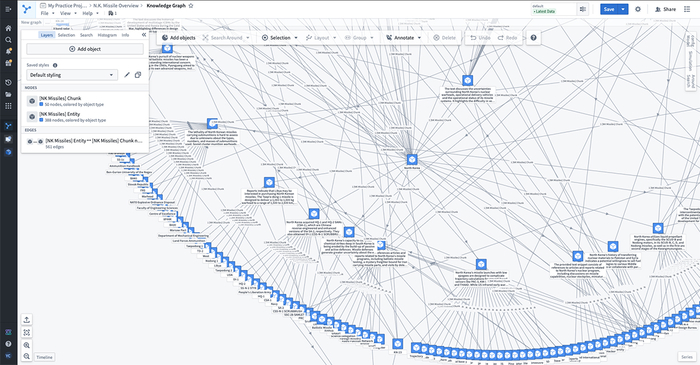
A case of Morph Systems' ontology construction that can identify relationships between unstructured data [Morph Systems] 사진 확대 A case of Morph Systems’ ontology construction that can identify relationships between unstructured data [Morph Systems]

Morph Systems, a defense industry and U.S. manufacturing data integration platform developer, announced on the 20th that it has attracted pre-seed investment from Mashup Ventures and 500 Global.

Morph Systems is an enterprise AI company that designs supply chain data and workflow for defense and U.S. manufacturing companies that are pushing for utilization advancement after the introduction of Palantir. Establish an ontology model that systematically defines data relationships according to the customer’s work context, and design data flows so that ERP (company resource management), logistics, settlement, and operation data can lead to actual decision-making and execution.

In addition, for organizations in the early stages of Palantir introduction, data and work structure design is also being carried out considering future expansion. Customers can have a data processing structure and a high-performance computing environment that can operate stably even if the supply chain expands. The technological excellence of these morph systems is advantageous not only at the manufacturing site, but also in the military and defense industry environment that requires large-scale material movement and strict traceability.

CEO Park Min-gyu, a graduate of Seoul National University’s Department of Aerospace Engineering, has published a number of international academic papers in the field of reinforcement learning, served as an AI researcher at the Korea Military Academy, and conducted defense and public AI projects. While working on a Palantir Foundry-based consulting project, he discovered the demand for data integration in the manufacturing and defense industries and decided to start a business. Co-founder Koo Ha-rim is a graduate of the Department of Mechanical Engineering at the National University of Singapore and has two startup experiences and is in charge of data integration and AI system implementation directly in the field.

Morph Systems expects 40% of its sales to come from U.S. customers since its first year, and to expand to more than 80% this year. Recently, in recognition of the excellence of data integration technology that can handle large-scale supply chains stably, it was selected for the TIPS program organized by the Ministry of SMEs and Startups and secured up to 500 million won in R&D funds. The selection of this tip was made on the recommendation of Mashup Ventures.

“After attracting this investment, we plan to implement a large-scale ontology-based computational and decision-making operation system centered on the U.S. market,” said Park Min-gyu, CEO of Morph Systems. “The ultimate goal is to expand to Neo-Cloud infrastructure and software layers optimized for specific industries and workloads based on our experience in operating field-oriented AI systems.”

Lee Seung-guk, a Mashup Ventures partner who led the investment, said, “The demand for data integration and decision-making automation is increasing rapidly in the process of re-industrialization and supply chain reorganization in the United States. Morph Systems is a team that solves core problems in the manufacturing and defense industry based on Palantir Foundry-based data integration technology and field-oriented experience, and it is expected to grow quickly in the U.S. market.”

Free Training

Source link