Buy These 5 Stocks as U.S. Manufacturing Activities Rebound in 2026


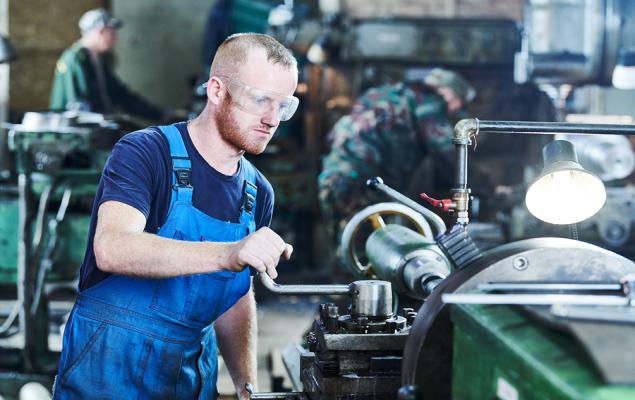
The U.S. manufacturing sector has struggled over the past three years but appears to be making a solid rebound in 2026. ISM Manufacturing PMI (purchasing managers’ index) expanded in May for the fifth straight month.

The index for May came in at 54%, higher than April’s metric of 52.7% and above the Zacks Consensus Estimate of 53.3%. Any reading above 50% indicates expansion of manufacturing activities.

The Zacks-defined Manufacturing – General Industrial industry is currently in the top 35% of the Zacks Industry Rank. Since Manufacturing – General Industrial is ranked in the top half of the Zacks Ranked Industries, we expect it to outperform the market over the next three to six months.

Given the positive sentiment, it would be ideal to invest in five stocks from the manufacturing industry with a favorable Zacks Rank and double-digit returns year to date. These are: RBC Bearings Inc. RBC, Helios Technologies Inc. HLIO, Luxfer Holdings plc LXFR, Tennant Co. TNC and Graham Corp. GHM.

The chart below shows the price performance of our five picks year to date.

Zacks Investment Research Zacks Investment Research

Image Source: Zacks Investment Research

RBC Bearings Inc.

Zacks Rank #2 RBC Bearings is benefiting from strength in its Aerospace/Defense unit. Strength in the commercial aerospace market, driven by strong growth in orders from the aftermarket verticals, bodes well for the segment.

An increase in demand for RBC’s bearings and engineered component products in the defense market is expected to be beneficial. Solid momentum in the Industrial segment, driven by stable demand for its highly engineered bearings and precision components in food & beverage, aggregate & cement and warehousing end markets, also bodes well for RBC. Solid shareholder-friendly policies raise the stock’s attractiveness.

RBC Bearings has an expected revenue and earnings growth rate of 13.6% and 14.2%, respectively, for the current year (ending March 2027). The Zacks Consensus Estimate for the current year’s earnings has improved 0.5% in the last 60 days.

Helios Technologies Inc.

Zacks Rank #1 Helios Technologies is benefiting from sustained order momentum, expanding market reach and improving profitability. HLIO has delivered double-digit order growth for more than a year, with backlog also rising. Growth across both Hydraulics and Electronics segments is driven by infrastructure-related demand, OEM strength and recovery in select end markets.

New product launches are broadening HLIO’s addressable markets, including newer applications such as data center thermal management. At the same time, margin recovery is gaining traction through volume leverage and operational efficiencies. HLIO’s solid cash generation and lower leverage provide flexibility to invest, pursue selective acquisitions and enhance shareholder returns.

Story Continues

Helios Technologies has an expected revenue and earnings growth rate of 2.9% and 12.9%, respectively, for the current year. The Zacks Consensus Estimate for the current year’s earnings has improved 4.7% in the last 30 days.

Luxfer Holdings plc

Luxfer Holdings is a materials technology company specializing in the design, manufacture and supply of high-performance materials, components and gas cylinders. LXFR had two divisions, Elektron and Gas Cylinders. Currently, Luxfer Holdings sports a Zacks Rank #1 (Strong Buy). You can see the complete list of today’s Zacks #1 Rank stocks here.

The Elektron division focuses on specialty materials based on magnesium, zirconium and rare earths. The Gas Cylinders division manufactures products made from aluminum, composites and other metals using technically advanced processes.

LXFR also offers recycling services and magnesium powders throughout global networks. LXFR operates manufacturing plants in various countries, which include the United Kingdom, the United States, France, the Czech Republic, Canada and China.

Luxfer Holdings has an expected revenue and earnings growth rate of -6.1% and 8.1%, respectively, for the current year. The Zacks Consensus Estimate for the current year’s earnings has improved 7.1% in the last 30 days.

Tennant Co.

Zacks Rank #1 Tennant is a world leader in designing, manufacturing and marketing solutions that empower customers to achieve quality cleaning performance, significantly reduce their environmental impact and help create a cleaner, safer, healthier world.

TNC’s products include equipment for maintaining surfaces in industrial, commercial and outdoor environments, detergent-free and other sustainable cleaning technologies, and coatings for protecting, repairing and upgrading surfaces.

TNC’s global field service network is the most extensive in the industry. Tennant has manufacturing operations in Minneapolis, MN, Holland, MI, Louisville, KY, Chicago, IL, Uden, The Netherlands, Sou Paulo, Brazil, and Shanghai, China. TNC sells products directly in 15 countries and through distributors in more than 80 countries.

Tennant has an expected revenue and earnings growth rate of 5.4% and -6.6%, respectively, for the current year. The Zacks Consensus Estimate for the current year’s earnings has improved 5.8% in the last 30 days.

Graham Corp.

Zacks Rank #2 Graham designs and builds vacuum and heat transfer equipment for process industries and energy markets worldwide. GHM’s products include steam jet ejector vacuum systems and liquid ring vacuum pumps, surface condensers, Heliflows, water heaters, and various types of heat exchangers. GHM markets to chemical, petrochemical, petroleum refining, and electric power generating industries, including cogeneration and geothermal plants.

Graham has an expected revenue and earnings growth rate of 17.4% and 47.4%, respectively, for the current year (ending March 2027). The Zacks Consensus Estimate for the current year’s earnings has improved 3% in the last 30 days.

Want the latest recommendations from Zacks Investment Research? Today, you can download 7 Best Stocks for the Next 30 Days. Click to get this free report

RBC Bearings Incorporated (RBC) : Free Stock Analysis Report

Graham Corporation (GHM) : Free Stock Analysis Report

Luxfer Holdings PLC (LXFR) : Free Stock Analysis Report

Tennant Company (TNC) : Free Stock Analysis Report

Helios Technologies, Inc (HLIO) : Free Stock Analysis Report

This article originally published on Zacks Investment Research (zacks.com).

Zacks Investment Research

Free Training

Source link

Ardena reaps rewards from CDMO specialization plays, US plant buy


As biotechs face increasingly tight development timelines, scale-up headaches, and, more recently, unpredictable policy fluctuations, one way to stand out as a CDMO partner is by picking a specialty and mastering it. 

That was one of Jeremie Trochu’s goals when he joined as Ardena’s CEO in 2024—aiming to steward the CDMO toward a new phase of growth by expanding its international footprint, refining its strengths and ensuring that recent acquisitions entered the fold smoothly. 

In the ensuing years, Ardena has worked to bolster a range of CDMO capabilities without overloading its clients with potential service offerings, Trochu said in a recent virtual interview with Fierce in tandem with DCAT Week 2026. 

“You want to be holistic, but within a particular specialty,” he explained. 

The CDMO’s current business revolves around its advanced oral solid services, from formulation development through to clinical manufacturing and small-scale commercial production, plus its capabilities related to nanomedicines and advanced conjugates, according to Trochu. 

Ardena has integrated those constituent pieces into its overall focus on precision medicine, specifically working with clients on therapies tailored to smaller patient populations, Trochu continued. 

The CEO speculated that more biotechs are likely looking for one-stop-shop CDMOs such as Ardena given the accelerated development and regulatory timelines they’re operating under in places like the U.S. 

When companies developing drugs for rare or undertreated conditions win FDA fast track or orphan drug designations, the pressure increases “to quickly pivot from successful results in phase 2 all the way through to your commercial launch on an accelerated timeframe,” Trochu explained. 

Newer technologies, such as artificial intelligence, also have the potential to increase the pace of development cycles, he added. 

“If you’re not integrated as an operation, and if you’re not specialized in the capabilities you are offering to your client, you are not going to be able to have the agility and the speed necessary and required by your biotech customers,” Trochu said of the resultant expectations placed on CDMOs.

Breaking down some of Ardena’s recent specialization moves, Trochu homed in on nanomedicine, which he noted the CDMO has been engaged with since “before it was cool,” alluding to the lipid nanoparticles that rose to prominence as delivery vehicles for mRNA in COVID-19 vaccines earlier in the decade. 

Over its history, Ardena has worked on more than 100 nanomedicine programs, by Trochu’s tally, and 30 of those are actively in the clinic now, per the CEO. To support its nanomedicine strategy, Ardena established a facility dedicated to the technology in the Netherlands several years back, he added. 

On the other side of the equation, Ardena hasn’t hesitated to downsize in areas where it feels its resources could be better spent.

Case in point: Earlier this year, Ardena agreed to sell a manufacturing facility in Södertälje, Sweden, to local drugmaker Nanologica for nearly $1 million. As Trochu put it, Ardena was “not in a position to truly invest in the next chapter of growth” at the site.

As for the company’s purpose-built Dutch facility, Trochu said Ardena designed the plant to address a “gap” in the market for nanomedicine developers, pointing out that the site has continued to garner strong international interest from clients despite a strained geopolitical environment. 

“When you have a unique set of capabilities and you have a track record along [with] those capabilities, people from the U.S., people from Asia, definitely people from Europe, will find you,” he said. 

Trochu addressed the recent geopolitical turbulence affecting markets and supply chains directly, noting that while there certainly have been pressures on the biopharma industry, “we’ve been pretty immune to those dynamics.” 

Ultimately, biotech clients are still looking for “best-in-class” partners to help solve their problems, and that desire tends to supersede challenges posed by governmental policy shifts, Trochu said. 


Heading West


For much of its history, Belgium’s Ardena has been “primarily an EU-based CDMO,” Trochu said. But the firm in 2024 made inroads into the U.S. with plans to purchase Catalent’s oral solids development and small-scale manufacturing facility in Somerset, New Jersey, which was put up for sale as part of the U.S. CDMO’s acquisition by Novo Holdings. 

Ardena completed the purchase in February of 2025. 

That timing turned out to be serendipitous, Trochu suggested, as a massive industry push to establish or expand U.S. production infrastructure kicked off soon after, largely in response to the threat of U.S. import tariffs under the Trump administration. 

“If you think about the last 15 to 18 months, it’s even more important to be able to supply clients on both sides of the pond,” he explained.

Trochu admitted that the “timing worked out” on the Catalent facility purchase.

“A year later, it would have been maybe a more competitive process to acquire a world-class GMP facility in the U.S., especially in light of a stronger regionalization trend,” he said. 

Ardena has added around 200 employees to its headcount through the purchase of the site, which is currently equipped for clinical and smaller-scale commercial manufacturing of oral drugs. But from the jump, the company’s strategy was to eventually bring its other capabilities online at the U.S. location, Trochu said. 

Some of those expansion efforts are already underway, with the CDMO’s first bioanalytical lab opening in Somerset soon, the CEO added. Meanwhile, Ardena is eyeing portions of the site’s greater GMP space to devote to nanomedicines in the future, he said. 

Free Training

Source link

Tesla (TSLA) reportedly in talks to buy $2.9B in Chinese solar equipment for 100 GW US push


FERC July 2025
Image: Tesla

Elon Musk’s plan to build 100 GW of solar manufacturing capacity in the United States just got its first major price tag: $2.9 billion in equipment from Chinese suppliers, according to a Reuters exclusive.

If the deal closes, it marks the biggest concrete investment yet in Musk’s solar ambitions, and a stunning reversal for a company that effectively abandoned its solar business just two years ago.

The deal

Reuters reports that the equipment is valued at roughly 20 billion yuan ($2.9 billion) and that Tesla is in discussions with multiple Chinese suppliers. The frontrunner is Suzhou Maxwell Technologies, a Shenzhen-listed company that dominates the global market for solar cell screen-printing production lines.

Other potential suppliers include Shenzhen S.C New Energy Technology and Laplace Renewable Energy Technology.

Advertisement – scroll for more content

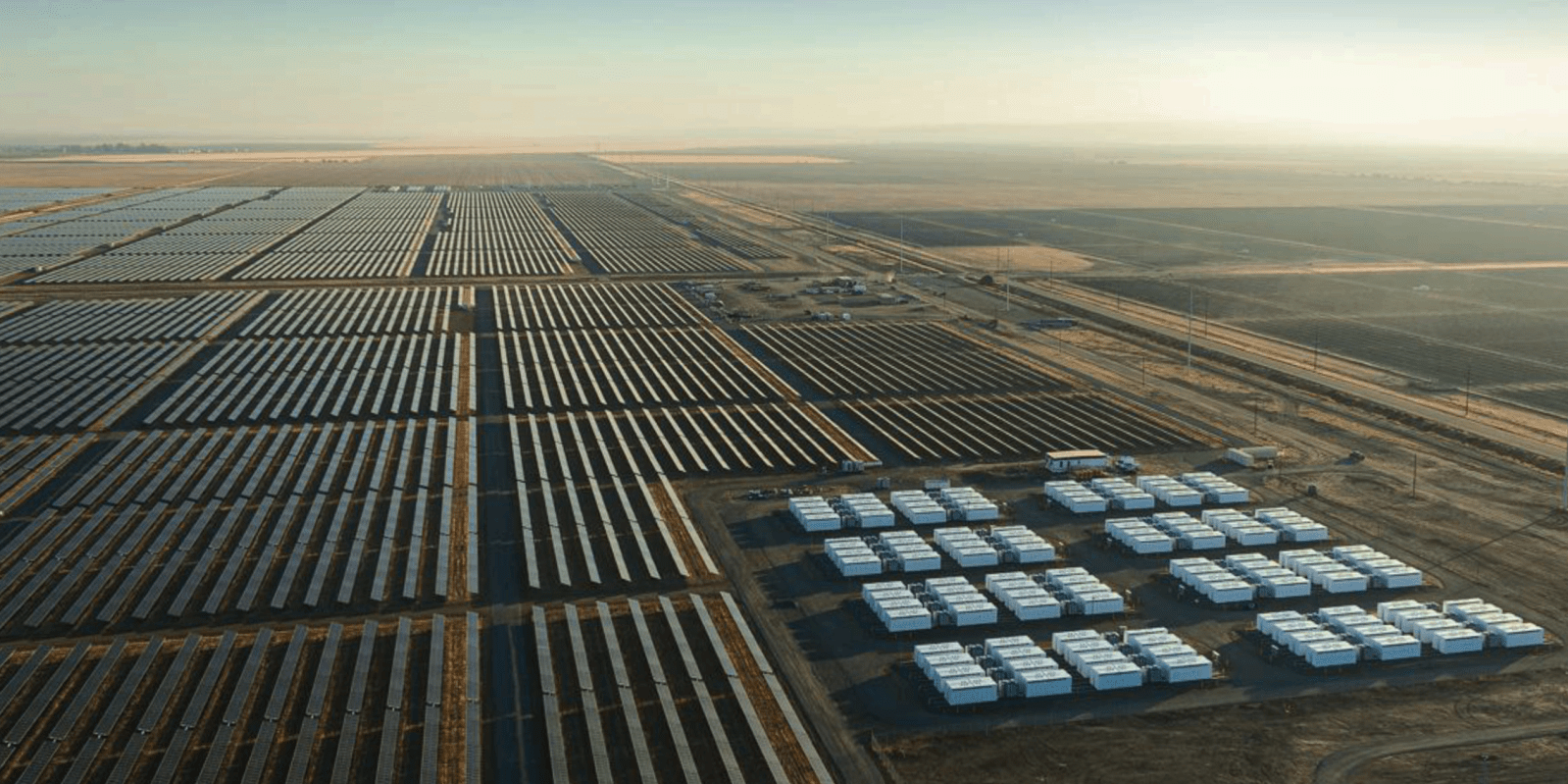
The Chinese companies have been told to deliver the equipment before this autumn, with at least two sources indicating it would be shipped to Texas. That aligns with Tesla’s expanding Texas manufacturing footprint, which already includes its Austin Gigafactory and a new Houston Megafactory under construction for Megapack production.

One significant hurdle remains: Suzhou Maxwell needs export approval from China’s commerce ministry, and it’s unclear how quickly that clearance will come. Beijing has been tightening its grip on solar technology exports over the past two years, and China’s commerce ministry recently made export controls a top priority for 2026.

On the US side, the equipment faces a more favorable regulatory path. Solar manufacturing equipment was excluded from Section 301 tariffs in 2024 at the urging of American solar panel makers, and that exemption has been extended by the Trump administration through November 2026.

The 100 GW ambition

The $2.9 billion equipment purchase is tied directly to a goal Musk laid out at the World Economic Forum in Davos in January 2026. There, he announced that both Tesla and SpaceX are independently working to build 100 GW per year of solar manufacturing capacity in the US — covering the entire supply chain from raw materials to finished panels.

The company’s own job listings reinforce the scale of the ambition, explicitly referencing a target of 100 GW of “solar manufacturing from raw materials on American soil before the end of 2028.”

For context, total US solar installations in 2023 reached about 32 GW. Tesla wants to manufacture more than three times that, every single year, on its own.

The driving force behind the urgency isn’t climate policy, it’s AI. Data center construction and the broader electrification of transportation pushed US power consumption to a second consecutive record in 2025, and the projections keep rising. Musk has argued that no other energy source can scale fast enough or cheaply enough to meet those demands.

Tesla’s troubled solar history

The irony is thick. Tesla acquired SolarCity for $2.6 billion in 2016 and promised to revolutionize the residential solar market with its Solar Roof tiles. Musk set a target of 1,000 new solar roofs per week by the end of 2019. Tesla never came close. By Q2 2022, the company was deploying approximately 23 roofs per week — roughly 2% of the target.

Today, Tesla never talks about its solar roof; it’s essentially a dead product.

Tesla’s solar deployment declined steadily after the SolarCity acquisition. Panasonic, which had partnered with Tesla at the Buffalo Gigafactory to manufacture solar cells, exited the facility in 2020. By late 2024, Tesla stopped reporting solar deployment altogether, and the word “solar” didn’t appear once during the company’s Q3 2024 earnings call.

There were signs of a revival in early 2026 when Tesla launched a new US-made solar panel (the TSP-420) assembled at the Buffalo factory, featuring a proprietary 18-zone power optimization system. But the scale was modest — initial capacity at the Buffalo facility was just over 300 MW per year, a rounding error compared to the 100 GW target.

Energy storage is a different story

While Tesla’s solar business withered, its energy storage division exploded. Tesla deployed a record 46.7 GWh of energy storage in 2025, a 48% increase year-over-year, generating $12.8 billion in revenue with a 29.8% gross margin — nearly double what Tesla earns selling cars.

Energy storage now accounts for 13% of Tesla’s total revenue and 23% of its gross profit. The Lathrop Megafactory in California produces Megapacks at its full planned capacity of 40 GWh per year, and the new Houston facility targets 50 GWh of annual output by end of 2026.

The solar manufacturing push would complement this storage infrastructure — Tesla could theoretically pair its own solar panels with Megapacks and Powerwalls for integrated energy solutions, and potentially use the output to power its own operations and even SpaceX satellites.

Electrek’s Take

We’ve been tracking Tesla’s solar journey since the SolarCity acquisition, and the trajectory has been one of consistent underdelivery. The Solar Roof never materialized at scale. Solar deployments cratered. The entire solar business segment became an afterthought as energy storage consumed all of Tesla’s energy division attention.

So when Musk announced a 100 GW solar manufacturing target at Davos, our first instinct was skepticism — and it still is. Going from roughly 300 MW of annual solar panel capacity at the Buffalo factory to 100 GW is a staggering 300x increase, on a timeline of less than three years.

That said, the $2.9 billion equipment purchase suggests this isn’t just talk. That’s real capital being deployed (or at least negotiated), and the autumn delivery deadline for equipment in Texas suggests Tesla intends to move fast. The company also has genuine tailwinds: the tariff exemption on solar manufacturing equipment, surging electricity demand from AI data centers, and a proven energy division that can integrate solar with its storage products.

The biggest risks are execution, Tesla’s solar track record is dismal, and the Chinese export approval, which Beijing could use as leverage in the ongoing trade tensions. We’ll believe the 100 GW target when we see equipment on the ground and production lines running.


Add Electrek as a preferred source on Google

FTC: We use income earning auto affiliate links. More.

Free Training

Source link