Op-ed: Why Made in America still matters to a global manufacturing market


Excel Dryer Executive Vice President and COO, William Gagnon, argues that the future of US manufacturing will depend not on chasing the lowest costs, but on investing in domestic production, skilled people and long-term resilience. In this exclusive op-ed for The Manufacturer, he explains why “Made in America” still has global significance, and what manufacturers on both sides of the Atlantic can learn from it.

As the United States approaches its 250th anniversary, American manufacturers are facing an important question: what should “Made in America” mean in a global economy?

It is a question with relevance well beyond the US. Manufacturers in North America, the UK and other advanced economies are weighing similar pressures, from overseas production and tariffs to supply chain resilience, labour availability, quality control and long-term competitiveness.

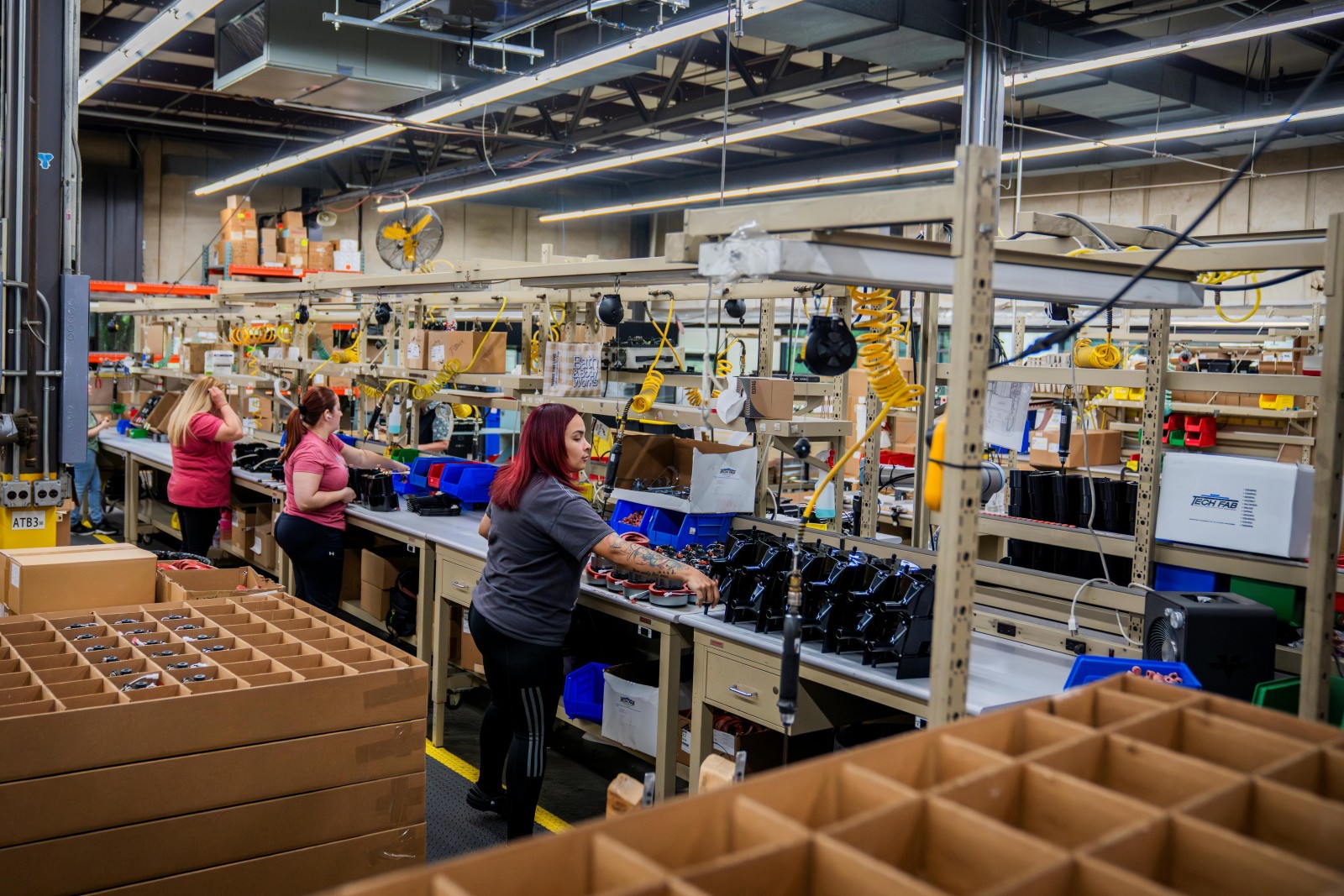
For many companies, offshore production became the default model decades ago. Lower labour costs and expanded supplier networks promised short-term savings. For others, keeping manufacturing close to home remained a deliberate business decision. At Excel Dryer, that decision has been central to who we are. We are a Massachusetts-based manufacturer, and we have continued to manufacture in the US while many competitors moved production overseas. That choice has shaped our products, our workforce, our supplier relationships and our ability to serve customers around the world.

Domestic manufacturing is not the easiest path. It requires investment in equipment, training, skilled labour, supplier partnerships and continuous improvement. It requires patience and a long-term view of the business. The value becomes clear over time through stronger quality control, greater flexibility and closer alignment between engineering, production and customer needs.

For us, the business case starts with quality. When product development, manufacturing and leadership are closely connected, teams can solve problems faster and make improvements with greater precision. Feedback from the production floor reaches engineering quickly. Product testing is more practical. Customer insight can be turned into measurable improvements.

That matters in any sector. It is especially important for products used in high-traffic public spaces where reliability, hygiene, sustainability and cost-effectiveness are priorities. Hand dryers are installed in airports, stadiums, schools, healthcare facilities, restaurants and commercial buildings. They have to perform consistently, reduce maintenance demands and support the operating goals of each facility.

The past several years have also reinforced the importance of resilience. Supply chain disruption exposed the risk of depending too heavily on distant production networks. Delays, shortages and rising transport costs forced many manufacturers to reassess where and how their products are made.

Manufacturing in the US does not remove every challenge, but it gives companies greater visibility and control. It can shorten communication lines, strengthen supplier relationships and reduce exposure to disruption. For customers, that can translate into more reliable delivery, stronger support and confidence in the company behind the product.

The global market still matters. Excel Dryer serves customers in the US and internationally, including in the UK. Our products are installed at major British venues such as Heathrow Airport and Wembley Stadium, where high-traffic washrooms require dependable, efficient and hygienic solutions. Those installations reflect an important point for manufacturers on both sides of the Atlantic: strong domestic production can support global growth.

A product made in America can compete in international markets when it is built around performance, quality and innovation. Domestic manufacturing should not be seen as a retreat from global trade. It can be a foundation for it.

There is also a workforce story that deserves more attention. Manufacturing creates skilled careers and supports local economies. It gives employees a direct role in building products used every day in facilities around the world. When companies invest in domestic production, they invest in technical knowledge, training and the next generation of manufacturing talent.

That will become increasingly important as the US approaches America250. The future of American manufacturing will need to be modern, efficient and globally competitive. It will require automation, sustainability, continuous improvement and a renewed commitment to workforce development. It will also require companies to make deliberate decisions about what they value over the long term.

For Excel Dryer, manufacturing in the US remains a smart business decision. It strengthens quality. It supports innovation. It improves supply chain resilience. It gives our workforce pride in what they build and gives customers confidence in what they choose.

As manufacturers in North America and the UK continue to navigate a changing global economy, the lesson is clear. The lowest short-term cost does not always create the strongest company. Long-term value depends on quality, reliability, skilled people and the ability to adapt.

“Made in America” still matters. At its best, it represents more than where a product is assembled. It represents accountability, investment, innovation and confidence in the future of manufacturing.

About the author

William Gagnon is executive vice president and COO of Excel Dryer, Inc., where he helps lead operations, product innovation, global growth and strategic initiatives for the family-owned manufacturer. With more than 20 years of industry experience, Gagnon has played a key role in advancing the XLERATOR® Hand Dryer and establishing the high-speed, energy-efficient hand dryer category. His leadership supports Excel Dryer’s continued focus on hygienic, sustainable and cost-effective hand drying solutions for facilities worldwide.


Free Training

Source link

Zinke-Led Military Sales Bill Passes House, Bolstering U.S. Manufacturing and Global Alliances


Washington, D.C. – Today, the U.S. House of Representatives passed Congressman Ryan Zinke’s Allied Defense Sales Act, legislation aimed at strengthening American manufacturing by making it easier for allied nations to jointly purchase U.S.-made defense equipment while deepening strategic partnerships abroad. The bill is a continuation of Zinke’s work as Chairman of the Foreign Military Sales Task Force, where he has worked alongside the Department of War to modernize military sales, securing huge wins through legislation and executive order.

“America builds the best defense equipment in the world, and our allies need it to safeguard their – and our – people and interests,” said Zinke. “This bill helps cut through the bureaucracy so our partners can work together to buy American-made systems faster and more efficiently. That means stronger and more secure alliances, and more manufacturing jobs here at home.”

“Strengthening our partnerships abroad is critical to advancing our national security interests and maintaining a competitive edge in an increasingly complex and dangerous world,” said Representative Ami Bera, M.D. “I’m pleased the House has passed our bipartisan legislation to help trusted allies and partners coordinate purchases of U.S. defense equipment, improve interoperability, and deliver critical capabilities more efficiently.”

The bill is modeled after successful multinational cooperation efforts and focuses on helping groups of allied countries with similar defense needs coordinate joint purchases. By aligning demand across multiple partners, the legislation would help stabilize production and accelerate delivery timelines for American manufacturers.

Under the current system, many smaller countries face steep barriers when trying to purchase U.S. equipment due to the scale and complexity of the process. These hurdles can delay orders and create uncertainty for American manufacturers. The Allied Defense Sales Act addresses these challenges by creating a more flexible and coordinated approach for enabling multinational procurement, especially for partners in regions like Eastern Europe, Southeast Asia, and the Caribbean, further helping generate more consistent demand for U.S.-made systems.

The legislation directs the Department of War to assess interest among allied nations, identify potential lead coordinator countries for joint purchases, recommend ways to streamline approvals and licensing, and increase the exportability of defense articles and services. It also explores ways to expand access to financing tools and accelerate sales outside traditional programs, ensuring American defense companies can respond more quickly to allied demand.

Read the full text of the bill here.

###

Free Training

Source link

If Global Manufacturing Weakens, Here’s What Happens to This Copper ETF


If Global Manufacturing Weakens, Here’s What Happens to This Copper ETF

© bigjom jom / Shutterstock.com

The United States Copper Index Fund (NYSEARCA:CPER) has quietly become one of the better-performing commodity vehicles of the cycle, trading near $39 after a 33% run over the past year and an 8% jump in just the last month. With roughly $456 million in net assets, CPER is the largest pure-play copper futures ETF available to U.S. investors, and its recent move tracks a copper market that printed a 12-month high of $12,986 per metric ton in January before easing to $12,528 in March. The question for CPER holders now is whether the next leg is a continuation higher or a stall driven by softening industrial demand.

The Macro Signal That Matters Most: Global Manufacturing PMI

Copper is the textbook industrial barometer, and the single most important macro variable for CPER over the next 12 months is the trajectory of global manufacturing activity, best tracked through the monthly J.P. Morgan Global Manufacturing PMI (released the first business day of each month) and China’s Caixin Manufacturing PMI. A reading above 50 signals expansion; sustained readings below 50 historically coincide with copper drawdowns of 10% to 20%.

The early warning lights are already blinking. U.S. manufacturing value-added grew just 0.3% in Q4 2025 after a 3.2% Q3, construction stalled at 0.0% growth, and WTI crude has tumbled from roughly $112 in mid-May to under $98 a week later, a roughly 13% weekly decline that typically signals fading industrial demand expectations. For CPER, the threshold to watch is a Global Manufacturing PMI print below 49 for two consecutive months. That has historically been the level at which copper inventories on the LME and SHFE start building, and refined-copper premiums compress. Check it monthly. If China’s print stays at or above 50 while the U.S. weakens, copper’s bid likely holds. If both turn down together, the recent 3.5% monthly pullback in spot copper could extend.

The Fund-Specific Issue: Roll Yield in a Flattening Futures Curve

Because CPER holds COMEX copper futures rather than physical metal, its return diverges from spot whenever the futures curve shifts. The fund tracks the SummerHaven Copper Index, which dynamically selects contracts to minimize contango drag, but it cannot eliminate it. When near-dated futures trade above further-dated contracts (backwardation), CPER captures a positive roll yield each month. When the curve flips to contango, every monthly roll bleeds NAV even if spot copper is flat.

This is where the 1.06% expense ratio matters: it is roughly triple what a broad equity ETF charges, and it stacks on top of any negative roll. Investors should monitor the COMEX copper futures curve weekly using CME Group’s settlement data, specifically the spread between the front-month and the contract six months out. A persistent move into contango of more than 1% annualized would meaningfully erode CPER’s tracking of spot, and that often coincides with surging warehouse inventories. For investors who want copper exposure without futures mechanics, mining-equity vehicles like the Global X Copper Miners ETF (NYSEARCA:COPX) provide a different beta, levered to producer margins rather than the spot price itself.

What To Watch From Here

If the next two Global Manufacturing PMI prints hold above 50 and the COMEX copper curve stays in backwardation, CPER’s run has room to extend toward the January spot high. If PMIs slip below 49 and the curve flips into contango, the combination of softer demand and negative roll yield is the setup that historically punishes futures-based copper funds the hardest.

Free Training

Source link

Press Release: DelBene, Buchanan, and Sewell Introduce Semiconductor Superiority Act to Enhance U.S. Manufacturing and Global Competitiveness


Suzan DelBene introduces the Semiconductor Superiority Act to support U.S. semiconductor manufacturing in space.

Quiver AI Summary

Legislative Proposal Introduced: Representatives Suzan DelBene, Vern Buchanan, and Terri Sewell have introduced the Semiconductor Superiority Act. This bill aims to amend the Section 48D Advanced Manufacturing Investment Credit to explicitly include space-based semiconductor manufacturing, with the goal of enhancing U.S. leadership in the technology sector.

Impact of Space Manufacturing: The legislation seeks to clarify that technologies developed in low-Earth orbit qualify for existing tax incentives aimed at U.S. semiconductor production. Proponents argue that microgravity benefits fabrication processes, enabling advancements critical for emerging technologies like quantum computing and AI, as highlighted by DelBene.

Support from Key Representatives: Buchanan emphasized the importance of keeping U.S. companies competitive in the space economy, while Sewell noted the bill’s potential to strengthen national security and high-paying job creation. The bill is seen as a strategic response to global competition, particularly with China’s advancements in semiconductor technologies.

Disclaimer: This is an AI-generated summary of a press release. The model used to summarize this release may make mistakes. See the full release here.

Check out the Quiver Quantitative API to build on top of data on congressional stock trading, insider transactions, hedge fund moves, and more.

🏛️ Receive Alerts on Congress


Sign Up

Suzan K. DelBene Fundraising

Suzan K. DelBene Fundraising

Suzan K. DelBene recently disclosed $562.3K of fundraising in a Q1 FEC disclosure filed on April 15th, 2026. This was the 190th most from all Q1 reports we have seen this year. 51.2% came from individual donors.

DelBene disclosed $655.5K of spending. This was the 125th most from all Q1 reports we have seen from politicians so far this year.

DelBene disclosed $1.4M of cash on hand at the end of the filing period. This was the 325th most from all Q1 reports we have seen this year.

You can see the disclosure here, or track Suzan K. DelBene’s fundraising on Quiver Quantitative.

Suzan K. DelBene Net Worth

Quiver Quantitative estimates that Suzan K. DelBene is worth $142.9M, as of May 22nd, 2026. This is the 13th highest net worth in Congress, per our live estimates.

DelBene has approximately $18.8M invested in publicly traded assets which Quiver is able to track live.

You can track Suzan K. DelBene’s net worth on Quiver Quantitative’s politician page for DelBene.

Suzan K. DelBene Bill Proposals

Here are some bills which have recently been proposed by Suzan K. DelBene:

  • H.R.8261: Chronic Care Management Improvement Act of 2026
  • H.R.7868: Expanding Support for Living Donors Act of 2026
  • H.R.6787: Clean Competition Act
  • H.R.5940: Seniors Deserve SMARTER Care Act of 2025
  • H.R.4649: Smart Cities and Communities Act of 2025
  • H.R.2421: Protecting Taxpayer Resources Act

You can track bills proposed by Suzan K. DelBene on Quiver Quantitative’s politician page for DelBene.

2026 Washington’s 1st Congressional District Election

There has been approximately $4,533,458 of spending in Washington’s 1st congressional district elections over the last two years, per our estimates.

The rating for this race is currently “Solid D”.

You can track this election on our matchup page for the 2026 Washington’s 1st congressional district election.

Free Training

Source link

Understanding the global clean tech manufacturing slowdown


Investment in clean technology manufacturing facilities is falling worldwide. After peaking at $70 billion in 2023, quarterly manufacturing investment more than halved to $35 billion by end-2025. This is despite global demand for clean technologies growing rapidly. Since 2020, solar installations have more than tripled in China (+250 percent), while more than doubling in the United States and European Union (+132 percent and +125 percent, respectively). Also since 2020, electric vehicle (EV) sales in China have grown nearly tenfold, in the US fourfold and in the EU threefold. These three economies host 86 percent of total clean-technology manufacturing investment since 2018.

In the context of growing demand, why is global clean-tech manufacturing investment slowing? We examine the three largest clean-tech sectors: solar, batteries and EVs. The headline fall largely reflects an oversupplied market, especially falling Chinese investment in solar photovoltaic manufacturing (Figure 1) – in this respect the decline is not a cause for concern. However, the drop in battery manufacturing investment that has followed abrupt US policy changes is worrying. Amid the slowdown, European investment remains largely stable.

Overcapacity and policy reversals

Most of the global clean-tech investment drop relates to China, where investment in 2025 was down nearly 70 percent from a peak in 2023 (Figure 2). This followed years of state-led investment that secured dominance for China in solar, battery and EV supply chains and allowed Chinese firms to produce at prices no competitor could match. But the strategy also drove overcapacity and domestic price wars. To rein in overcapacity, the Chinese government has adjusted policy since 2024 (Davidson and Qian, 2026).

Meanwhile, access to foreign markets for Chinese goods has tightened, with steep US tariffs on Chinese clean technology and European tariffs on EVs. This has led some Chinese companies to shift investment overseas.

Declining clean-tech investment in the US is driven by policy, especially the dismantling under President Donald Trump of the 2022 Inflation Reduction Act (IRA), which provided clean-tech subsidies. Since mid-2025, some subsidies have been cut and certain tax credits phased out. Many clean-tech manufacturing projects have since been cancelled, with €7 billion worth of project cancellations in the first quarter of 2025 and another €5 billion in the second quarter (Rhodium Group, 2025).

European manufacturing investment has remained stable, though EV investment has slowed because of weaker than expected demand growth, partly driven by a European Commission proposal to reduce to 90 percent a goal for zero-emission passenger vehicles to comprise 100 percent of new sales in 2035 (European Commission, 2025). Unlike the US however, the EU remains broadly committed to its climate targets, which favours clean-tech investment. The EU Net-Zero Industry Act (Regulation (EU) 2024/1735) sets a target for the bloc to meet 40 percent of its clean-tech demand from domestic manufacturing by 2030. European governments have provided subsidies to support manufacturing projects for selected clean technologies, especially batteries and EVs. The rollback of US climate policy and imposition of tariffs is reducing an important export market for EU manufacturers. Monthly net EU EV exports to the US have fallen from €1.5 billion to €300 million since the beginning of 2025.

Supply-demand imbalances contribute to slowing solar investment

More than 90 percent of the world’s solar PV manufacturing capacity is in China, with just one percent in the EU and two percent in the US (Rhodium Group, 2025). The Chinese government identified solar energy as a strategic sector in the early 2000s, and a combination of land subsidies, cheap loans and low-cost financing backed an enormous manufacturing push. Five-Year Plans set binding targets for installation, creating certainty on the demand side (IEA, 2022). As factories expanded, solar panel costs fell and Chinese companies became the default suppliers for buyers worldwide.

Intense Chinese competition saw solar module prices fall by about two thirds between 2022 and 2024. Subsequently, changes were made to Chinese state support to reign in price wars and rationalise the industry (Davidson and Qian, 2026). Since 2024, firms must fund at least 30 percent of project costs through equity rather than debt and new efficiency standards have been introduced. New power-market reforms now expose solar to market-based pricing. Consequently, Chinese solar manufacturing investment fell from €83 billion in 2023 to €15 billion in 2025, the single largest driver of the global clean-tech investment slowdown.  

This however will not fundamentally change China’s dominance of global solar PV manufacturing. Current Chinese solar cell manufacturing capacity of 1,200 GW already meets annual domestic solar demand four times over and global demand more than twice over. Already underway investment is on track to add an additional one third to Chinese capacity in the next few years (Figure 3). 

Solar manufacturing investments in the US and EU are not comparable to China. The IRA encouraged through tax credits US solar manufacturing investment, leading to a rapid expansion of domestic capacity. However, the Trump administration has shortened eligibility windows for credits and tightened sourcing restrictions, slowing new developments. This has reduced the business case for new projects, and announced US solar manufacturing investment fell to $3.25 billion in 2025, down from a peak of $11.25 billion in 2023. 

Europe’s manufacturing capacity remains limited. Enel’s 3SUN gigafactory is the largest operational plant in Europe with a 3 GW capacity, equivalent to approximately 5 percent of annual European solar PV demand. A handful of projects concentrated in Spain, France and the Netherlands are at a very early stage and considering final investment decisions

From 2026, under the Net-Zero Industry Act, European governments must introduce requirements for public authorities to favour bids that diversify away from dominant third-country suppliers, in sectors in which the EU is particularly dependent on a single country. This is the case for EU imports of Chinese solar PV, and the change will marginally reduce the attractiveness of Chinese imports. However, the economic rationale for replacing Chinese solar panel supply with domestic production is weak (McWilliams et al, 2024). Governments remain reluctant to offer the necessarily substantial fiscal support to domestic solar manufacturers.

Europe is adopting a more targeted approach aimed at reducing dependence on Chinese supply for solar components that are considered security relevant. In May 2026, the EU barred the use of Chinese inverters, which convert solar energy into a form suitable for the power grid, for European publicly funded solar projects. The European Commission considers the inverter to represent a cybersecurity risk because of the possibility of remotely operated shutdowns.

Sharp contraction in battery manufacturing investment is a concern for the US

Similarly to solar PV, China remains the dominant global battery and EV market and manufacturing hub, but is entering a managed slowdown phase after years of state-led expansion. A comprehensive policy framework, including purchase subsidies since 2013, the Dual-Credit Policy (ICCT, 2017) and sustained industrial planning, have framed the rapid development of a fully integrated supply chain. The Dual Credit Policy sets rising annual EV credit quotas that carmakers can trade, with foreign battery-makers excluded from subsidies during this crucial phase.

Since 2023, Chinese battery and EV investment has declined as margins have fallen and authorities respond to overcapacity and falling profitability. Policy adjustments in 2024-2025, including tighter battery regulations and revised credit rules, aim to curb price wars and rationalise the industry, shifting towards higher-quality growth.

Some of the slowdown has been offset by growth in the stationary storage market. In 2025, two-thirds of the announced battery investments in China were earmarked for stationary storage, compared to about 15 percent in 2021. 

In the US, the IRA shaped battery and EV investments. In 2022, the IRA introduced a $7,500 consumer EV tax credit, alongside manufacturing subsidies and loans. This support triggered a rapid expansion in battery production and vehicle assembly. Battery manufacturing accounted for three-quarters of the growth in US clean-tech investment between 2021 and the 2024 peak, with investment rising more than fivefold over that period.

However, unlike in China – where the investment slowdown comes after global leadership has been secured – US industrial policy support ended before domestic manufacturing had scaled sufficiently or a robust home market took hold. Changes introduced by the US Congress preserve manufacturing credits in principle but introduce ‘foreign entity of concern’ restrictions that require 60 percent of qualifying battery inputs to come from non-Chinese sources by 2026, rising to 85 percent by 2030 (Elizalde et al, 2025). For most US battery manufacturers, whose supply chains run through China, compliance means costly restructuring or losing the credits entirely. The IRA manufacturing loan programme has been eliminated, while new tariffs have increased import prices.

US EV demand has also fallen sharply, with the expiry of the $7,500 vehicle tax credit in September 2025. Consumer spending on EVs fell 43 percent in the last quarter of 2025 after the previous quarter’s record high, and was down 31 percent on the last quarter of 2024. The EV demand outlook has also weakened following federal rollbacks of vehicle emission standards and fuel economy penalties. The abrupt policy shifts on both the supply and demand side of the EV supply chain have dampened battery manufacturing investment, with $11 billion of investment cancelled in 2025, more than ten times the 2024 level (Figure 4). In two quarters of 2025, cancellations exceeded new announcements. A further $51 billion of investment for US battery projects is still in the planning or construction stages and vulnerable to cancellations or delays.

European EV investment steady for now

In the EU, battery investment remained relatively high throughout 2025, between $1.7 billion and $2.4 billion per quarter, and continues to grow. EV manufacturing investment in the EU has slowed slightly. South Korean companies own most of the operational battery cell capacity in Europe, while Chinese companies are responsible for close to half of ongoing investments. European governments have provided upfront subsidies to these investments and to notable investments by domestic manufacturers, such as Verkor in France.

For the EU, EV and battery demand is guided by a regulation to phase out the sale of new passenger vehicles with exhaust emissions by 2035 (Regulation (EU) 2023/851). Alongside government purchase support, this regulation supports manufacturing investments. The steady tightening of the regulation since 2019 has been mirrored by a steady growth in manufacturing investment. In 2025, a proposal by the European Commission to weaken the 2035 target (European Commission, 2025) partly disrupted what was a stable policy framework. However, the proposed weakening is relatively minor in reducing the 2035 target for zero emission vehicles from 100 percent to 90 per cent (see above). European demand for EVs continues to grow, especially in the context of high petrol and diesel prices since the US-Israel war against Iran and the closure of the Strait of Hormuz

EV production capacity in the EU is already substantial at 4.8 million vehicles annually, compared to a demand close to 2.5 million (Figure 3). The EU has introduced tariffs on the import of Chinese electric vehicles, but these are far lower than those imposed by the US. In 2024, the US was the destination for €10 billion (one quarter) of EU EV exports; the imposition since then of vehicle tariffs by the US has hurt.

References

Bruegel Dataset (2025) ‘European Clean Tech Tracker’, version of 10 January 2026, available at https://doi.org/10.64153/HYOM7675

Davidson, M. and S. Qian (2026) ‘China’s Solar Industry Is in Upheaval—The Effects Will Be Global’, CSIS Briefs, Center for Strategic & International Studies, available at https://www.csis.org/analysis/chinas-solar-industry-upheaval-effects-will-be-global

Dornoff, J., C. Baldino, S. Díaz de Aguilar, E. Mulholland, M. Negri and M. Vega Gonzalo (2025) ‘Unwrapping the package: A review of the European Commission’s CO2 standards proposal’, Policy Brief, International Council on Clean Transportation, available at https://theicct.org/wp-content/uploads/2025/12/ID-537-%E2%80%93-EU-CO2-proposal_policy-brief_final.pdf

Elizalde, D., Z, Urecki and X, Fishman (2025) ‘Unpacking the FEOC Provisions in the House Ways and Means Reconciliation Bill’, Issue Brief, Bipartisan Policy Center, available at https://bipartisanpolicy.org/issue-brief/2025-reconciliation-feoc-provisions-house-ways-and-means-bill/

European Commission (2025) ‘Proposal for a Regulation of the European Parliament and of the Council amending Regulation (EU) 2019/631 as regards CO2 emission performance standards for new passenger cars and new light commercial vehicles’, COM(2025) 995 final, available at https://eur-lex.europa.eu/legal-content/EN/TXT/?uri=celex:52025PC0995

ICCT (2017) ‘China’s New Energy Vehicle Mandate Policy (Final Rule)’, Policy Update, International Council on Clean Transportation, available at https://theicct.org/wp-content/uploads/2021/06/China_NEV_mandate_PolicyUpdate-_20180525.pdf

IEA (2022) Solar PV Global Supply Chains, International Energy Agency, available at https://www.iea.org/reports/solar-pv-global-supply-chains

McWilliams, B., S. Tagliapietra and C. Trasi (2024) ‘Smarter European Union industrial policy for solar panels’, Policy Brief 02/2024, Bruegel, available at https://www.bruegel.org/system/files/2024-02/PB%2002%202024_3.pdf

Rhodium Group (2025) ‘Clean Investment Monitor: US Q2 2025 Update’28 August, available at https://www.cleaninvestmentmonitor.org/reports/q2-2025-update

Free Training

Source link

Quartz Manufacturing Alliance of America Commends ITC for Affirmative Injury Determination in Global Safeguard Case


WASHINGTON, April 1, 2026 /PRNewswire/ — The Quartz Manufacturing Alliance of America (QMAA) today commended the U.S. International Trade Commission (ITC) for its affirmative injury determination in the Global Safeguard petition filed by the coalition in September. The affirmative determination signifies the ITC’s recognition of the serious injury caused by a surge of quartz surface imports entering the United States from around the globe.

QMAA Logo QMAA Logo

“Today’s ITC injury determination is a great step forward for American quartz manufacturing and the 100,000 American jobs this industry supports,” remarked Luke Meisner, Counsel for QMAA. “With foreign quartz imports representing nearly 90% of the U.S. market, we are confident that the ITC will recommend that the President take decisive action in the coming weeks.”

“We applaud today’s ITC injury determination that recognizes the negative impact of the flood of foreign quartz surface products coming into our country,” said Cambria CEO Marty Davis. “These quartz imports don’t just put slab manufacturers at risk, they also steal business from downstream American fabricators. Now is the time to stop the cheating. Free and fair trade, and a level playing field is all that U.S. manufacturers desire.”

“Today, when I walk through the plant, I see uncertainty and fear in the eyes of employees who worry they may be next to be let go,” remarked Daniel Vaz De Melo Sa, Business Development Manager of Guidoni USA. “The ITC’s injury determination marks significant progress towards saving this great American manufacturing industry.”

“Our industry is at risk without safeguard measures in place,” remarked Michael Morici, Vice President of Surfaces at LX Hausys America. “Thanks to the ITC’s vote, we are one step closer to saving American quartz jobs and remain committed to reinvestment and growth.”

The domestic quartz manufacturing industry supports over 100,000 American jobs across the country. These jobs are in jeopardy due to the flood of unfairly traded imports from nations such as India, Thailand, Vietnam, and Malaysia, which is why QMAA filed a Global Safeguard petition to initiate this case.

About the Quartz Manufacturing Alliance for America
QMAA is a coalition of U.S.-based, American quartz slab manufacturing factories, united with other industry leaders to support and strengthen the American quartz industry. QMAA is committed to ensuring a free and fair, competitive marketplace born of free enterprise that provides the opportunity to compete on a level playing field for American quartz slab manufacturing factories and their valued workers. We also believe this effort will have a positive impact throughout the entire quartz surfacing industry, including to the strong benefit of American stone fabrication shops and upstream suppliers of quartz minerals and resin. Learn more at: https://www.qmaa.org/

Free Training

Source link

U.S. Launches Major Trade Investigation into Global Manufacturing Overcapacity | 2026 – News and Statistics


Mar 12, 2026

According to SupplyChainDive, the United States has initiated an investigation into the manufacturing policies of multiple nations to evaluate potential structural excess capacity and its effects on domestic industries. The Office of the U.S. Trade Representative is conducting this Section 301 probe, which includes China, the European Union, Singapore, Switzerland, Norway, Indonesia, Malaysia, Cambodia, Thailand, Korea, Vietnam, Taiwan, Bangladesh, Mexico, Japan, and India.

The investigation will assess possible supply and demand imbalances, policies affecting wages, and barriers to market access. The USTR filing indicates that key trading partners have developed manufacturing capacity that exceeds both domestic and global demand incentives, leading to overproduction, persistent trade surpluses, and underutilized facilities.

Sectors identified as currently experiencing overcapacity and excessive production include automobiles, electronics, processed food, and semiconductors. The filing specifically cited electric vehicle production in China as surpassing demand, noting one manufacturer’s expanding distribution and production networks abroad. USTR Jamieson Greer stated that overproduction by trading partners displaces existing U.S. domestic production or prevents new U.S. manufacturing investment and expansion.

The agency will open a docket for public comments on March 17, with a hearing scheduled for May 5. This investigation adds to a series of Section 301 probes started in the last year. Following a Supreme Court ruling in February that eliminated a broad set of tariffs installed last year, Greer said the U.S. would launch these investigations on an accelerated schedule, with an expectation they could be completed within the next five months.

Trade analysts note that if the investigation concludes that foreign industrial policies are unreasonable or distort trade, the U.S. could respond with tariffs. The current administration has previously used Section 301 investigations to review trading practices of other nations, some of which resulted in levies.

  1. 1. INTRODUCTION

    Making Data-Driven Decisions to Grow Your Business

    1. REPORT DESCRIPTION
    2. RESEARCH METHODOLOGY AND THE AI PLATFORM
    3. DATA-DRIVEN DECISIONS FOR YOUR BUSINESS
    4. GLOSSARY AND SPECIFIC TERMS
  2. 2. EXECUTIVE SUMMARY

    A Quick Overview of Market Performance

    1. KEY FINDINGS
    2. MARKET TRENDS This Chapter is Available Only for the Professional EditionPRO
  3. 3. MARKET OVERVIEW

    Understanding the Current State of The Market and its Prospects

    1. MARKET SIZE: HISTORICAL DATA (2012–2025) AND FORECAST (2026–2035)
    2. CONSUMPTION BY COUNTRY: HISTORICAL DATA (2012–2025) AND FORECAST (2026–2035)
    3. MARKET FORECAST TO 2035
  4. 4. MOST PROMISING PRODUCTS FOR DIVERSIFICATION

    Finding New Products to Diversify Your Business

    1. TOP PRODUCTS TO DIVERSIFY YOUR BUSINESS
    2. BEST-SELLING PRODUCTS
    3. MOST CONSUMED PRODUCTS
    4. MOST TRADED PRODUCTS
    5. MOST PROFITABLE PRODUCTS FOR EXPORT
  5. 5. MOST PROMISING SUPPLYING COUNTRIES

    Choosing the Best Countries to Establish Your Sustainable Supply Chain

    1. TOP COUNTRIES TO SOURCE YOUR PRODUCT
    2. TOP PRODUCING COUNTRIES
    3. TOP EXPORTING COUNTRIES
    4. LOW-COST EXPORTING COUNTRIES
  6. 6. MOST PROMISING OVERSEAS MARKETS

    Choosing the Best Countries to Boost Your Export

    1. TOP OVERSEAS MARKETS FOR EXPORTING YOUR PRODUCT
    2. TOP CONSUMING MARKETS
    3. UNSATURATED MARKETS
    4. TOP IMPORTING MARKETS
    5. MOST PROFITABLE MARKETS
  7. 7. PRODUCTION

    The Latest Trends and Insights into The Industry

    1. PRODUCTION VOLUME AND VALUE: HISTORICAL DATA (2012–2025) AND FORECAST (2026–2035)
    2. PRODUCTION BY COUNTRY: HISTORICAL DATA (2012–2025) AND FORECAST (2026–2035)
  8. 8. IMPORTS

    The Largest Import Supplying Countries

    1. IMPORTS: HISTORICAL DATA (2012–2025) AND FORECAST (2026–2035)
    2. IMPORTS BY COUNTRY: HISTORICAL DATA (2012–2025) AND FORECAST (2026–2035)
    3. IMPORT PRICES BY COUNTRY: HISTORICAL DATA (2012–2025) AND FORECAST (2026–2035)
  9. 9. EXPORTS

    The Largest Destinations for Exports

    1. EXPORTS: HISTORICAL DATA (2012–2025) AND FORECAST (2026–2035)
    2. EXPORTS BY COUNTRY: HISTORICAL DATA (2012–2025) AND FORECAST (2026–2035)
    3. EXPORT PRICES BY COUNTRY: HISTORICAL DATA (2012–2025) AND FORECAST (2026–2035)
  10. 10. PROFILES OF MAJOR PRODUCERS

    The Largest Producers on The Market and Their Profiles

  11. 11. COUNTRY PROFILES

    The Largest Markets And Their Profiles

    This Chapter is Available Only for the Professional Edition
    PRO

    1. 11.1

      United States

      • Market Size
      • Production
      • Imports
      • Exports
    2. 11.2

      China

      • Market Size
      • Production
      • Imports
      • Exports
    3. 11.3

      Japan

      • Market Size
      • Production
      • Imports
      • Exports
    4. 11.4

      Germany

      • Market Size
      • Production
      • Imports
      • Exports
    5. 11.5

      United Kingdom

      • Market Size
      • Production
      • Imports
      • Exports
    6. 11.6

      France

      • Market Size
      • Production
      • Imports
      • Exports
    7. 11.7

      Brazil

      • Market Size
      • Production
      • Imports
      • Exports
    8. 11.8

      Italy

      • Market Size
      • Production
      • Imports
      • Exports
    9. 11.9

      Russian Federation

      • Market Size
      • Production
      • Imports
      • Exports
    10. 11.10

      India

      • Market Size
      • Production
      • Imports
      • Exports
    11. 11.11

      Canada

      • Market Size
      • Production
      • Imports
      • Exports
    12. 11.12

      Australia

      • Market Size
      • Production
      • Imports
      • Exports
    13. 11.13

      Republic of Korea

      • Market Size
      • Production
      • Imports
      • Exports
    14. 11.14

      Spain

      • Market Size
      • Production
      • Imports
      • Exports
    15. 11.15

      Mexico

      • Market Size
      • Production
      • Imports
      • Exports
    16. 11.16

      Indonesia

      • Market Size
      • Production
      • Imports
      • Exports
    17. 11.17

      Netherlands

      • Market Size
      • Production
      • Imports
      • Exports
    18. 11.18

      Turkey

      • Market Size
      • Production
      • Imports
      • Exports
    19. 11.19

      Saudi Arabia

      • Market Size
      • Production
      • Imports
      • Exports
    20. 11.20

      Switzerland

      • Market Size
      • Production
      • Imports
      • Exports
    21. 11.21

      Sweden

      • Market Size
      • Production
      • Imports
      • Exports
    22. 11.22

      Nigeria

      • Market Size
      • Production
      • Imports
      • Exports
    23. 11.23

      Poland

      • Market Size
      • Production
      • Imports
      • Exports
    24. 11.24

      Belgium

      • Market Size
      • Production
      • Imports
      • Exports
    25. 11.25

      Argentina

      • Market Size
      • Production
      • Imports
      • Exports
    26. 11.26

      Norway

      • Market Size
      • Production
      • Imports
      • Exports
    27. 11.27

      Austria

      • Market Size
      • Production
      • Imports
      • Exports
    28. 11.28

      Thailand

      • Market Size
      • Production
      • Imports
      • Exports
    29. 11.29

      United Arab Emirates

      • Market Size
      • Production
      • Imports
      • Exports
    30. 11.30

      Colombia

      • Market Size
      • Production
      • Imports
      • Exports
    31. 11.31

      Denmark

      • Market Size
      • Production
      • Imports
      • Exports
    32. 11.32

      South Africa

      • Market Size
      • Production
      • Imports
      • Exports
    33. 11.33

      Malaysia

      • Market Size
      • Production
      • Imports
      • Exports
    34. 11.34

      Israel

      • Market Size
      • Production
      • Imports
      • Exports
    35. 11.35

      Singapore

      • Market Size
      • Production
      • Imports
      • Exports
    36. 11.36

      Egypt

      • Market Size
      • Production
      • Imports
      • Exports
    37. 11.37

      Philippines

      • Market Size
      • Production
      • Imports
      • Exports
    38. 11.38

      Finland

      • Market Size
      • Production
      • Imports
      • Exports
    39. 11.39

      Chile

      • Market Size
      • Production
      • Imports
      • Exports
    40. 11.40

      Ireland

      • Market Size
      • Production
      • Imports
      • Exports
    41. 11.41

      Pakistan

      • Market Size
      • Production
      • Imports
      • Exports
    42. 11.42

      Greece

      • Market Size
      • Production
      • Imports
      • Exports
    43. 11.43

      Portugal

      • Market Size
      • Production
      • Imports
      • Exports
    44. 11.44

      Kazakhstan

      • Market Size
      • Production
      • Imports
      • Exports
    45. 11.45

      Algeria

      • Market Size
      • Production
      • Imports
      • Exports
    46. 11.46

      Czech Republic

      • Market Size
      • Production
      • Imports
      • Exports
    47. 11.47

      Qatar

      • Market Size
      • Production
      • Imports
      • Exports
    48. 11.48

      Peru

      • Market Size
      • Production
      • Imports
      • Exports
    49. 11.49

      Romania

      • Market Size
      • Production
      • Imports
      • Exports
    50. 11.50

      Vietnam

      • Market Size
      • Production
      • Imports
      • Exports
  12. LIST OF TABLES

    1. Key Findings In 2025
    2. Market Volume, In Physical Terms: Historical Data (2012–2025) and Forecast (2026–2035)
    3. Market Value: Historical Data (2012–2025) and Forecast (2026–2035)
    4. Per Capita Consumption, by Country, 2022–2025
    5. Production, In Physical Terms, By Country: Historical Data (2012–2025) and Forecast (2026–2035)
    6. Imports, In Physical Terms, By Country: Historical Data (2012–2025) and Forecast (2026–2035)
    7. Imports, In Value Terms, By Country: Historical Data (2012–2025) and Forecast (2026–2035)
    8. Import Prices, By Country: Historical Data (2012–2025) and Forecast (2026–2035)
    9. Exports, In Physical Terms, By Country: Historical Data (2012–2025) and Forecast (2026–2035)
    10. Exports, In Value Terms, By Country: Historical Data (2012–2025) and Forecast (2026–2035)
    11. Export Prices, By Country: Historical Data (2012–2025) and Forecast (2026–2035)
  13. LIST OF FIGURES

    1. Market Volume, In Physical Terms: Historical Data (2012–2025) and Forecast (2026–2035)
    2. Market Value: Historical Data (2012–2025) and Forecast (2026–2035)
    3. Consumption, by Country, 2025
    4. Market Volume Forecast to 2035
    5. Market Value Forecast to 2035
    6. Market Size and Growth, By Product
    7. Average Per Capita Consumption, By Product
    8. Exports and Growth, By Product
    9. Export Prices and Growth, By Product
    10. Production Volume and Growth
    11. Exports and Growth
    12. Export Prices and Growth
    13. Market Size and Growth
    14. Per Capita Consumption
    15. Imports and Growth
    16. Import Prices
    17. Production, In Physical Terms: Historical Data (2012–2025) and Forecast (2026–2035)
    18. Production, In Value Terms: Historical Data (2012–2025) and Forecast (2026–2035)
    19. Production, by Country, 2025
    20. Production, In Physical Terms, by Country: Historical Data (2012–2025) and Forecast (2026–2035)
    21. Imports, In Physical Terms: Historical Data (2012–2025) and Forecast (2026–2035)
    22. Imports, In Value Terms: Historical Data (2012–2025) and Forecast (2026–2035)
    23. Imports, In Physical Terms, By Country, 2025
    24. Imports, In Physical Terms, By Country: Historical Data (2012–2025) and Forecast (2026–2035)
    25. Imports, In Value Terms, By Country: Historical Data (2012–2025) and Forecast (2026–2035)
    26. Import Prices, By Country: Historical Data (2012–2025) and Forecast (2026–2035)
    27. Exports, In Physical Terms: Historical Data (2012–2025) and Forecast (2026–2035)
    28. Exports, In Value Terms: Historical Data (2012–2025) and Forecast (2026–2035)
    29. Exports, In Physical Terms, By Country, 2025
    30. Exports, In Physical Terms, By Country: Historical Data (2012–2025) and Forecast (2026–2035)
    31. Exports, In Value Terms, By Country: Historical Data (2012–2025) and Forecast (2026–2035)
    32. Export Prices, By Country: Historical Data (2012–2025) and Forecast (2026–2035)

Free Training

Source link

Copper Mountain Technologies Advances Global Production Strategy with Expanded Manufacturing Operations in Cyprus


INDIANAPOLIS, Feb. 03, 2026 (GLOBE NEWSWIRE) — Copper Mountain Technologies (CMT) enters 2026 after a year of significant advances in manufacturing capability, security compliance, and product development. Throughout 2025, the company invested in strengthening its infrastructure and delivering VNA solutions to better support RF engineers and test and measurement professionals worldwide.

To support rising global demand, CMT expanded its production capabilities through strategic investment in operations and resources. In addition to its established manufacturing site in the United States, the company has extended its footprint in the European Union.

While the Cyprus office was originally established in 2022, this February, the company has moved into a new, larger manufacturing facility. The new facility brings design engineering, production, software development, and service under one roof — enhancing agility, scalability, customer support, reliable supply and faster delivery worldwide.

Together with US manufacturing operations, this European Union expansion strengthens CMT’s ability to meet increasing demand across Europe and the EMEA region.

About Copper Mountain Technologies

Copper Mountain Technologies develops innovative RF test and measurement solutions for engineers around the world. Headquartered in Indianapolis, Indiana (USA), CMT maintains manufacturing, R&D, applications engineering and service operations in both the United States and Paphos, Cyprus (EU), with additional regional offices in Singapore, London, and Miami. They offer a broad range of USB vector network analyzers, calibration kits, and accessories for 50 Ohm and 75 Ohm impedances to 330 GHz. Their VNAs use software for Windows® and Linux® operating systems on an external computer, PC, or tablet. Every CMT VNA includes robust application and automation support, backed by years of RF engineering expertise dedicated to customer success.

A photo accompanying this announcement is available at https://www.globenewswire.com/NewsRoom/AttachmentNg/ea94e617-829d-47a7-ab62-3a20b453193f

Primary Logo

Free Training

Source link