
Siemens, Jabil expand electrical equipment manufacturing


Siemens and Jabil Inc. (NYSE: JBL) recently announced plans to operate a new manufacturing facility at the Crosspointe Logistics Center in Prince George County, Va., supporting the energy infrastructure industry. As demand for power infrastructure continues to accelerate, particularly driven by rapid growth in data centers and electrification, this investment will help expand capacity and increase how quickly new infrastructure can be brought online. The Prince George facility, operated by Jabil, will feature approximately 300,000-square-feet of modern industrial space, allowing Siemens to expand U.S. production capacity for its medium-voltage switchgear and integrated power delivery solutions. This facility will expedite the availability of critical equipment needed to energize new infrastructure.

The $30 million investment will go towards scaling-up equipment, tooling, production readiness and operations at the Virginia site. The facility will produce the advanced systems and solutions necessary to protect, control and safely operate equipment in data center, utility, and industrial power generation and distribution applications. With production slated to begin in fall 2026, the Prince George facility is expected to add at least 350 jobs once operational.

“Our data center, utility and industrial customers are under intense pressure to add capacity quickly, with less risk and more predictability,” said Brian Dula, President of the Electrification and Automation business unit at Siemens Smart Infrastructure USA. “By adding additional avenues to expand dedicated manufacturing of Siemens‑designed switchgear and power delivery solutions here in the U.S., we’re helping customers shorten project timelines and improve delivery confidence — while reinforcing a resilient domestic supply chain.”

“Our new Prince George facility will help us build the energy management solutions Siemens needs to meet customers’ growing power requirements with greater speed and scale,” said Brent Tompkins, SVP, Global Business Units, Renewables and Energy Infrastructure, at Jabil. “We’re proud to collaborate with Siemens to expand Jabil’s capabilities within the United States and enable the world’s most important technologies.” Recently achieving a $1 billion manufacturing investment milestone, this expansion reflects Siemens’ continued focus on strengthening domestic supply chains, reindustrializing the U.S. and adding capacity to meet accelerating demand for critical power infrastructure. This will allow Siemens to expand its leadership position in the electrification of data centers and the related grid infrastructure. For Jabil, this investment adds to the company’s growing U.S. manufacturing footprint, spanning more than 30 sites with proven experience and investments in automation, robotics, and process optimization to support production at scale across industries.

Jabil is one of the world’s largest manufacturing solutions providers and has worked with Siemens across the globe for numerous years, supporting high standards for quality and delivery performance. The Prince George collaboration builds on that foundation to help Siemens scale production in the U.S. while maintaining rigorous oversight and adherence to Siemens’ specifications and quality requirements, delivering essential power infrastructure at the pace demand now requires.

To learn more about career opportunities at the Prince George facility, click here.

Free Training

Source link

Industrial equipment leader for US manufacturing


SPX FLOW Inc provides pumps, valves and mixers essential for food, beverage and industrial processing, with strong exposure to US markets amid ongoing supply chain recovery.

SPX FLOW Inc, a key supplier of engineered equipment for food and beverage processing, recently reported steady demand in its core segments. The company, listed on the New York Stock Exchange under ticker FLOW, serves major US producers with solutions for mixing, blending and heat transfer. Its products support efficiency in manufacturing plants across North America.

The stock traded at approximately 50.25 USD on 05/13/2026 on NYSE, reflecting stability in the industrial sector, according to Yahoo Finance as of 05/13/2026. Investors track SPX FLOW for its role in resilient supply chains vital to US consumer goods production.

As of: 14.05.2026

By the editorial team – specialized in equity coverage.

At a glance

  • Name: SPX FLOW Inc
  • Sector/industry: Industrial Machinery & Equipment
  • Headquarters/country: United States
  • Core markets: North America, Europe
  • Key revenue drivers: Food & Beverage, Power & Energy
  • Home exchange/listing venue: NYSE (FLOW)
  • Trading currency: USD

SPX FLOW: core business model

SPX FLOW designs and manufactures process equipment for applications including homogenization, heat exchangers and dryers. Its portfolio targets the food and beverage industry, where precision mixing ensures product quality for dairy, beverages and bakery goods. The company also serves power generation and chemical processing with pumps and valves built for high-pressure operations.

Headquartered in Charlotte, North Carolina, SPX FLOW operates globally but derives a significant portion of revenue from US customers. For the fiscal year 2025, reported on 02/27/2026, net sales reached 1.45 billion USD, with Food & Beverage contributing 58%, according to SPX FLOW investor site as of 02/27/2026. This segment benefits from US food safety regulations driving equipment upgrades.

Main revenue and product drivers for SPX FLOW

The Food & Beverage division leads with products like APV pumps and mixing systems used by processors such as dairy giants and soft drink makers. In Q4 2025, this unit posted 8% organic growth, fueled by demand for sustainable processing tech amid US sustainability mandates. Industrial segment follows, providing solutions for oil & gas and chemicals.

Key drivers include aftermarket parts and services, which offer high-margin recurring revenue. For 2025 full year, adjusted EBITDA margins hit 17.2%, published with Q4 results on 02/27/2026 per company filings. US manufacturing resurgence supports orders as plants modernize post-pandemic.

Industry trends and competitive position

The industrial processing equipment market grows with US food production output, projected at 3-4% CAGR through 2028 per S&P Global as of 01/2026. SPX FLOW competes with Alfa Laval and GEA Group, differentiating via US-centric service networks that reduce downtime for domestic clients.

Sustainability trends favor its energy-efficient heat exchangers, aligning with EPA guidelines. The company’s 2025 sustainability report highlighted 15% reduction in product energy use, enhancing appeal to US firms facing carbon reporting rules.

Why SPX FLOW matters for US investors

SPX FLOW’s NYSE listing and US headquarters provide direct exposure to American industrial recovery. Over 50% of revenue ties to North America, linking performance to US GDP growth and manufacturing PMI. Its dividend yield around 1.2% as of Q1 2026 adds income stability for retail portfolios.

Conclusion

SPX FLOW maintains a solid position in industrial processing equipment, with Food & Beverage driving growth amid US market demands. Recent financials show margin expansion and stable orders, though sector cycles warrant monitoring. The company’s US focus offers retail investors a play on domestic manufacturing strength without overseas volatility.

Disclaimer: This article does not constitute investment advice. Stocks are volatile financial instruments.

Free Training

Source link

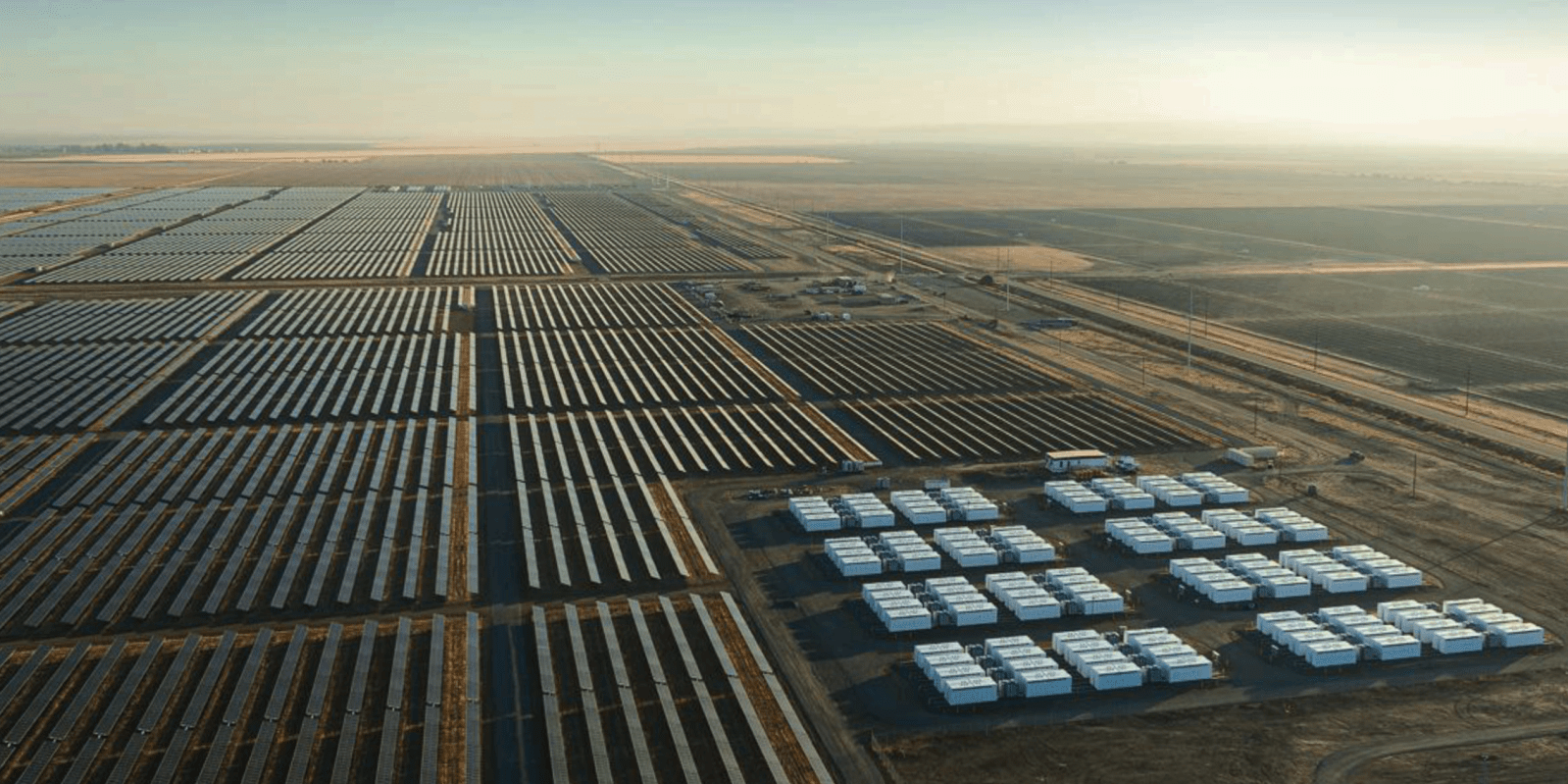
Tesla (TSLA) reportedly in talks to buy $2.9B in Chinese solar equipment for 100 GW US push


FERC July 2025
Image: Tesla

Elon Musk’s plan to build 100 GW of solar manufacturing capacity in the United States just got its first major price tag: $2.9 billion in equipment from Chinese suppliers, according to a Reuters exclusive.

If the deal closes, it marks the biggest concrete investment yet in Musk’s solar ambitions, and a stunning reversal for a company that effectively abandoned its solar business just two years ago.

The deal

Reuters reports that the equipment is valued at roughly 20 billion yuan ($2.9 billion) and that Tesla is in discussions with multiple Chinese suppliers. The frontrunner is Suzhou Maxwell Technologies, a Shenzhen-listed company that dominates the global market for solar cell screen-printing production lines.

Other potential suppliers include Shenzhen S.C New Energy Technology and Laplace Renewable Energy Technology.

Advertisement – scroll for more content

The Chinese companies have been told to deliver the equipment before this autumn, with at least two sources indicating it would be shipped to Texas. That aligns with Tesla’s expanding Texas manufacturing footprint, which already includes its Austin Gigafactory and a new Houston Megafactory under construction for Megapack production.

One significant hurdle remains: Suzhou Maxwell needs export approval from China’s commerce ministry, and it’s unclear how quickly that clearance will come. Beijing has been tightening its grip on solar technology exports over the past two years, and China’s commerce ministry recently made export controls a top priority for 2026.

On the US side, the equipment faces a more favorable regulatory path. Solar manufacturing equipment was excluded from Section 301 tariffs in 2024 at the urging of American solar panel makers, and that exemption has been extended by the Trump administration through November 2026.

The 100 GW ambition

The $2.9 billion equipment purchase is tied directly to a goal Musk laid out at the World Economic Forum in Davos in January 2026. There, he announced that both Tesla and SpaceX are independently working to build 100 GW per year of solar manufacturing capacity in the US — covering the entire supply chain from raw materials to finished panels.

The company’s own job listings reinforce the scale of the ambition, explicitly referencing a target of 100 GW of “solar manufacturing from raw materials on American soil before the end of 2028.”

For context, total US solar installations in 2023 reached about 32 GW. Tesla wants to manufacture more than three times that, every single year, on its own.

The driving force behind the urgency isn’t climate policy, it’s AI. Data center construction and the broader electrification of transportation pushed US power consumption to a second consecutive record in 2025, and the projections keep rising. Musk has argued that no other energy source can scale fast enough or cheaply enough to meet those demands.

Tesla’s troubled solar history

The irony is thick. Tesla acquired SolarCity for $2.6 billion in 2016 and promised to revolutionize the residential solar market with its Solar Roof tiles. Musk set a target of 1,000 new solar roofs per week by the end of 2019. Tesla never came close. By Q2 2022, the company was deploying approximately 23 roofs per week — roughly 2% of the target.

Today, Tesla never talks about its solar roof; it’s essentially a dead product.

Tesla’s solar deployment declined steadily after the SolarCity acquisition. Panasonic, which had partnered with Tesla at the Buffalo Gigafactory to manufacture solar cells, exited the facility in 2020. By late 2024, Tesla stopped reporting solar deployment altogether, and the word “solar” didn’t appear once during the company’s Q3 2024 earnings call.

There were signs of a revival in early 2026 when Tesla launched a new US-made solar panel (the TSP-420) assembled at the Buffalo factory, featuring a proprietary 18-zone power optimization system. But the scale was modest — initial capacity at the Buffalo facility was just over 300 MW per year, a rounding error compared to the 100 GW target.

Energy storage is a different story

While Tesla’s solar business withered, its energy storage division exploded. Tesla deployed a record 46.7 GWh of energy storage in 2025, a 48% increase year-over-year, generating $12.8 billion in revenue with a 29.8% gross margin — nearly double what Tesla earns selling cars.

Energy storage now accounts for 13% of Tesla’s total revenue and 23% of its gross profit. The Lathrop Megafactory in California produces Megapacks at its full planned capacity of 40 GWh per year, and the new Houston facility targets 50 GWh of annual output by end of 2026.

The solar manufacturing push would complement this storage infrastructure — Tesla could theoretically pair its own solar panels with Megapacks and Powerwalls for integrated energy solutions, and potentially use the output to power its own operations and even SpaceX satellites.

Electrek’s Take

We’ve been tracking Tesla’s solar journey since the SolarCity acquisition, and the trajectory has been one of consistent underdelivery. The Solar Roof never materialized at scale. Solar deployments cratered. The entire solar business segment became an afterthought as energy storage consumed all of Tesla’s energy division attention.

So when Musk announced a 100 GW solar manufacturing target at Davos, our first instinct was skepticism — and it still is. Going from roughly 300 MW of annual solar panel capacity at the Buffalo factory to 100 GW is a staggering 300x increase, on a timeline of less than three years.

That said, the $2.9 billion equipment purchase suggests this isn’t just talk. That’s real capital being deployed (or at least negotiated), and the autumn delivery deadline for equipment in Texas suggests Tesla intends to move fast. The company also has genuine tailwinds: the tariff exemption on solar manufacturing equipment, surging electricity demand from AI data centers, and a proven energy division that can integrate solar with its storage products.

The biggest risks are execution, Tesla’s solar track record is dismal, and the Chinese export approval, which Beijing could use as leverage in the ongoing trade tensions. We’ll believe the 100 GW target when we see equipment on the ground and production lines running.


Add Electrek as a preferred source on Google

FTC: We use income earning auto affiliate links. More.

Free Training

Source link

Meyer Burger equipment purchase enables Solestial US manufacturing shift


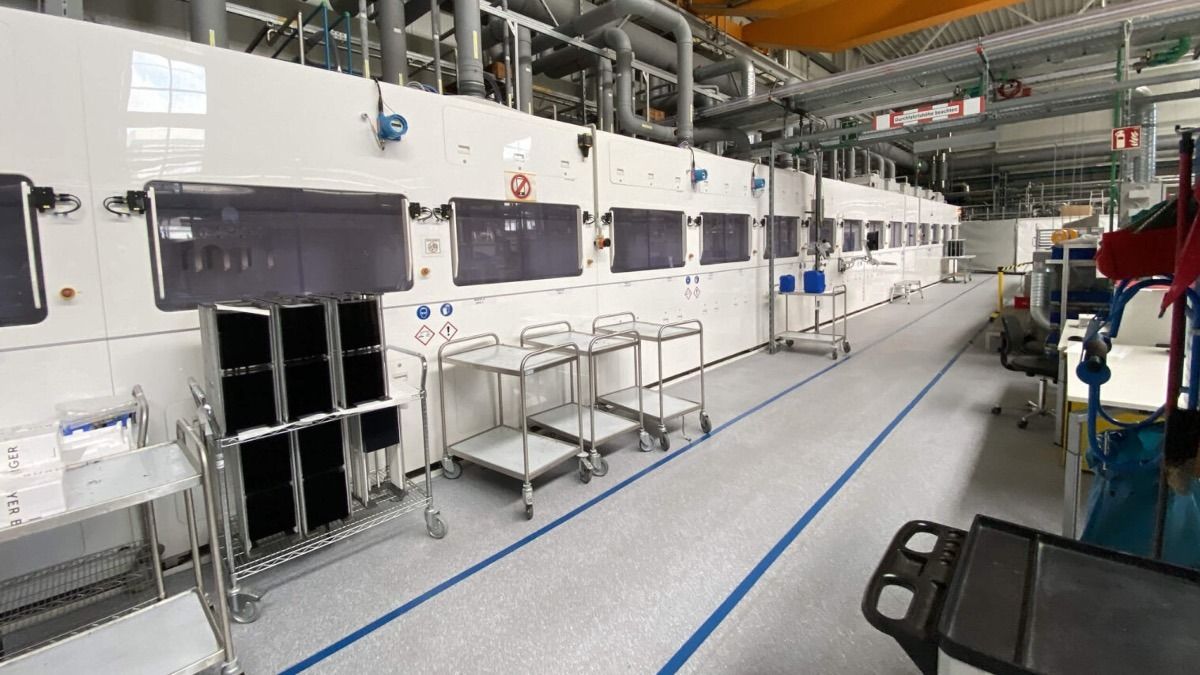
Solestial, a US-based space solar manufacturer, has acquired solar manufacturing equipment from Meyer Burger to strengthen domestic manufacturing operations in the US. The acquisition enables Solestial to process its silicon solar technology from wafer to cell in house. Equipment was acquired from Meyer Burger’s Hohenstein-Ernstthal facility in Germany, where Solestial’s wafers had previously been processed. Solestial has stated that it plans to shift limited solar cell manufacturing activities from Germany to the US. The Solestial has confirmed that its 30,000 square foot US facility is operational and commissioned for production. The move follows the disruption of a prior manufacturing partnership after Meyer Burger’s German subsidiaries filed for insolvency in May 2025. Recently, Solestial has partnered with NASA Glenn Research Center to advance ultrathin silicon solar array performance through technical testing.

Free Training

Source link