
2026 AI In Manufacturing & Supply Chain Series – New Technology


FL

Foley & Lardner


More


Foley & Lardner logo


Foley & Lardner LLP looks beyond the law to focus on the constantly evolving demands facing our clients and their industries. With over 1,100 lawyers in 24 offices across the United States, Mexico, Europe and Asia, Foley approaches client service by first understanding our clients’ priorities, objectives and challenges. We work hard to understand our clients’ issues and forge long-term relationships with them to help achieve successful outcomes and solve their legal issues through practical business advice and cutting-edge legal insight. Our clients view us as trusted business advisors because we understand that great legal service is only valuable if it is relevant, practical and beneficial to their businesses.


The manufacturing and supply chain sectors face unprecedented transformation as AI-driven technologies like agentic systems, predictive analytics, and digital twins revolutionize operations while simultaneously…


United States
Technology


To print this article, all you need is to be registered or login on Mondaq.com.

Article Insights

Vanessa L. Miller’s articles from Foley & Lardner are most popular:

  • with readers working within the Securities & Investment industries

Foley & Lardner are most popular:

  • within Coronavirus (COVID-19) topic(s)

Welcome to the 2026 AI in Manufacturing & Supply Chain Series, a new initiative where we will help industry participants identify and manage the legal risks and business strategies arising from the profound shifts and innovations reshaping manufacturing and supply chain operations.

The sector stands on the brink of unprecedented transformation—and with it, a new landscape of legal exposure. The momentum toward intelligent, autonomous systems—powered by agentic AI, predictive analytics, digital twins, and real-time IoT integration—is accelerating rapidly. While these technological breakthroughs enable proactive decision-making and dramatic efficiency gains, they also create novel liability risks, regulatory compliance challenges, and contractual complexities that demand careful legal planning. The convergence of AI with legacy systems and connected ecosystems is revolutionizing how factories operate and how supply networks adapt, but it simultaneously exposes organizations to heightened cybersecurity vulnerabilities, data governance obligations, and potential disputes with vendors, customers, and regulators.

The year 2026 presents industry participants with formidable legal challenges alongside exciting operational opportunities. As leaders harness AI to drive predictive maintenance, optimize production, and build resilient supply chains, they must also confront emerging sources of liability—from algorithmic errors and autonomous system failures to data breaches and regulatory non-compliance. The sector continues to navigate evolving regulatory landscapes, including new AI-specific requirements that carry significant penalties for violations. Workforce dynamics are shifting as well, raising labor-law questions around human-AI collaboration and automation-driven displacement. Consumer and stakeholder expectations for transparency, sustainability, and ethical AI practices are intensifying, creating reputational and litigation risks for organizations that fall short. Proactive legal planning is essential for manufacturers and supply chain operators seeking to capture AI’s benefits while minimizing exposure.

As these shifts unfold, the volatility of global manufacturing and supply chains remains a critical factor, intensified by geopolitical tensions, economic fluctuations, and persistent disruptions. Strategic legal planning and agile, well-counseled responses are essential to manage competitive pressures and the intricate web of regulations, contracts, and potential claims worldwide.

To aid industry leaders, innovators, and their legal advisors in navigating this complex risk environment, Foley & Lardner is thrilled to present the 2026 AI in Manufacturing & Supply Chain Series. This series will offer legal insights and risk analyses that delve into the pivotal developments influencing these sectors. Join us as we examine key legal risks, emerging regulatory requirements, and strategic imperatives arising from new AI technology, including but not limited to:

  • Liability exposure from AI-driven predictive maintenance, quality control, and production scheduling—including product liability implications, warranty considerations, and risk mitigation strategies when AI systems inform critical operational decisions
  • Legal frameworks for building resilient, visible, and autonomous supply chains—including contractual risk allocation, indemnification strategies, and liability considerations when deploying AI-driven predictive analytics and agentic systems
  • Data governance, privacy compliance, and legal risks of system integration when scaling AI across manufacturing and IoT ecosystems—including legacy infrastructure challenges and regulatory requirements for data handling
  • Cybersecurity liability, privacy litigation risks, and governance of AI-enabled smart factories—including regulatory enforcement exposure, breach notification obligations, and strategies for managing unauthorized “shadow AI” deployments
  • Intellectual property protection strategies, patentability challenges for AI-assisted inventions, trade secret safeguards, and contractual approaches to data-ownership disputes in smart manufacturing environments
  • Compliance obligations and enforcement risks in the evolving U.S. and global AI regulatory environment, including the EU AI Act’s requirements for high-risk systems in manufacturing and supply chain applications and penalties for non-compliance
  • Contractual best practices and risk allocation strategies for AI vendor agreements, including liability caps, indemnification provisions, performance guarantees, audit rights, and dispute resolution mechanisms in manufacturing and supply chain contexts
  • Legal due diligence for AI investments, avoiding implementation pitfalls that create liability, and establishing governance frameworks that support compliant, enterprise-wide AI deployment in manufacturing and supply chain operations

The content of this article is intended to provide a general guide
to the subject matter. Specialist advice should be sought about your
specific circumstances.

[View Source]

Free Training

Source link

AI drone company Skydio announces $3.5 billion investment in technology race


Artificial intelligence-powered drone manufacturer Skydio on Friday announced a $3.5 billion investment to expand its domestic production and supply chain as the technology race against China intensifies.

The investment, unveiled during a press conference with local law enforcement in Fairfax County, Virginia, will be deployed over the next five years to scale U.S.-based manufacturing, develop critical components, and create thousands of jobs. 

“This is going to go squarely into the U.S. drone ecosystem,” Skydio CEO Adam Bry said, adding that the company plans to “5x the size of our own factory” and dedicate roughly $1 billion toward sourcing key components domestically.

The announcement comes amid heightened warnings from U.S. officials about foreign threats to American innovation. 

A memo circulated this week by White House technology adviser Michael Kratsios warned that China has been actively attempting to steal United States advances in AI, raising concerns about supply chain vulnerabilities.

Bry emphasized that the global drone market has been dominated by foreign manufacturers, many based in China.

“It’s just untenable to be dependent on our adversaries for technology this important,” he said. 

A central component of the investment is a new initiative aimed at “onshoring” production of drone parts, including motors, batteries, and microchips. The effort seeks to build a fully domestic supply chain for robotics and AI-enabled systems, reducing reliance on overseas manufacturing hubs. 

“It’s not a mystery that right now, the world-leading manufacturing ecosystem for electronics is in China,” Bry said. “But there’s no law of physics that says it has to be that way.” 

Bry said the investment will create thousands of jobs, primarily in California, where the company is based, but will also look nationally.

Kratsios, who attended the announcement event, called the announcement “a real turning point” for U.S. industrial policy, tying it to broader federal efforts to secure supply chains and strengthen domestic manufacturing. 

“We are going to ensure that the most advanced, most reliable and most trusted systems in the world are built here in the United States,” he said, describing domestic production as a “national security imperative.” 

Drone technology is increasingly linked to broader geopolitical competition with China, particularly as AI-driven systems become integral to military, infrastructure, and public safety operations. 

Skydio drones are already used by U.S. military branches, law enforcement agencies, and infrastructure operators, driving demand for expanded domestic production.

US MILITARY SITES DEPLOY DRONES FOR SECURITY AS RECRUITMENT FLUCTUATES

President Donald Trump has pushed for what he has dubbed “drone dominance,” signing an executive order that seeks to build a strong domestic drone sector. 

Skydio is already part of the administration’s movement, as it secured a record-breaking contract with the Department of War in March, making a $52 million sale of its drones to the agency, the largest small drone procurement from a single manufacturer.

Free Training

Source link

KULR Technology Group Awarded 5-year Preferred Battery Supply Agreement from Caban Energy; Expands U.S. Manufacturing Footprint


HOUSTON, Jan. 14, 2026 (GLOBE NEWSWIRE) — KULR Technology Group, Inc. (NYSE American: KULR) (the “Company” or “KULR”), an energy-systems platform company that enables the safe, certifiable deployment of ultra-high-power lithium battery systems for space and defense programs, hyperscale AI data centers, and telecom infrastructure OEMs, today announced it was awarded a five‑year preferred battery supply agreement from Caban Energy (“Caban”), a Miami-based renewable energy services and technology company delivering flexible solutions for critical infrastructure. The agreement, generating an estimated $30 million in total revenue to KULR starting 2026, further reinforces KULR’s strategy to deliver mission‑critical energy‑storage technologies across digital infrastructure, communications, aerospace, and defense markets, while expanding U.S.‑based manufacturing capacity to support growing customer demand.

No Image

KULR’s expansion into lithium-based battery solutions for digital infrastructure and telecommunications underscores the increasingly central role of advanced energy storage in ensuring continuous, mission-critical network operations. In telecom environments, batteries serve as the primary line of defense against grid interruptions – preserving network availability, minimizing service outages, and sustaining communications during emergency conditions as expectations for uptime and resilience continue to rise. By integrating telecom-focused battery solutions into its portfolio, KULR is aligning its technology platform with the evolving requirements of digital infrastructure operators who require reliable, high-performance backup power to support 5G rollouts and long-term network scalability.

As part of the agreement, the Company took over Caban’s Plano, Texas‑based manufacturing assets, strengthening KULR’s domestic production footprint and accelerating its expansion into communications, fiber, and data‑center energy‑storage markets across the United States.

Get the latest news


delivered to your inbox

Sign up for The Manila Times newsletters

By signing up with an email address, I acknowledge that I have read and agree to the Terms of Service and Privacy Policy.

“This supplier award and the addition of manufacturing assets are timely and important steps as we continue to scale into fast‑growing global markets,” said Michael Mo, Chief Executive Officer of KULR Technology Group. “By centralizing and integrating these capabilities into our U.S. manufacturing operations, we expect to increase development and production throughput and deliver high‑reliability energy systems at the scale required by our customers.”

Caban focuses on decarbonizing energy for critical infrastructure, including telecommunications networks and other mission‑critical facilities. A core component of Caban’s commercial model is Energy‑as‑a‑Service (EaaS), through which the company installs, operates, and owns renewable energy infrastructure while customers pay a predictable monthly fee without upfront capital expenditure. Caban’s EaaS offerings are designed to lower operating costs, reduce carbon footprint, eliminate risk exposure, and improve the reliability and predictability of energy supply. The company has experienced strong momentum in recent years, forging key partnerships and securing long-term contracts with some of the largest telecommunications companies in the world, including a new project with Digicel announced earlier this year. Its solutions have been successfully deployed across 12 countries, enabling businesses to enhance their energy resilience while meeting ambitious sustainability goals.

About KULR Technology Group, Inc.

KULR Technology Group, Inc. (NYSE American: KULR) is an energy-management and reliability platform company delivering certifiable battery safety, vibration-mitigation, and thermal control solutions that enable ultra-high-power lithium-ion systems and sensitive electronics to operate reliably across space and defense missions, hyperscale AI data centers, telecom infrastructure and mobility applications.

About Caban

Caban, founded in 2018, set out to tackle the challenge of decarbonizing one of the most fossil fuel-dependent industries. Initially focused on providing alternative energy solutions for the telecommunications industry in the Americas, the company has demonstrated success in supplying energy to several of the world’s largest telecom operators. Building on this momentum, Caban has scaled globally and expanded its reach to support clean energy needs across critical infrastructure sectors worldwide. Caban uniquely combines service, hardware, software, and finance tools to deliver reliable, clean power and boosts your bottom line. This turnkey approach allows clients to work directly with one trusted partner to achieve reliability and decarbonization across their operations.

For more information, visit www.cabanenergy.com.

Find KULR: Website | X | Telegram | LinkedIn | Instagram | TikTok | Facebook

Safe Harbor Statement

This release contains certain forward-looking statements based on our current expectations, forecasts and assumptions that involve risks and uncertainties. Forward-looking statements in this release are based on information available to us as of the date hereof. Our actual results may differ materially from those stated or implied in such forward-looking statements, due to risks and uncertainties associated with our business, which include the risk factors disclosed in our Form 10-K filed with the Securities and Exchange Commission on March 31, 2025, as may be amended or supplemented by other reports we file with the Securities and Exchange Commission from time to time. Forward-looking statements include statements regarding our expectations, beliefs, intentions, or strategies regarding the future and can be identified by forward-looking words such as “anticipate,” “believe,” “could,” “estimate,” “expect,” “intend,” “may,” “should,” and “would” or similar words. All forecasts are provided by management in this release are based on information available at this time and management expects that internal projections and expectations may change over time. In addition, the forecasts are entirely based on management’s best estimate of our future financial performance given our current contracts, current backlog of opportunities and conversations with new and existing customers about our products and services. We assume no obligation to update the information included in this press release, whether as a result of new information, future events or otherwise.

Investor Relations:

KULR Technology Group, Inc.

Phone: 858-866-8478 x 847

Email: [email protected]

KULR Media Relations:

M Group Strategic Communications (on behalf of KULR)

Email: [email protected]

A photo accompanying this announcement is available at: https://www.globenewswire.com/NewsRoom/AttachmentNg/0b2da4ec-b5ec-46a6-8af2-19f9fac9a770

Free Training

Source link

KULR Technology Group Awarded 5-year Preferred Battery Supply Agreement from Caban Energy; Expands U.S. Manufacturing Footprint


HOUSTON, Jan. 14, 2026 (GLOBE NEWSWIRE) — KULR Technology Group, Inc. (NYSE American: KULR) (the “Company” or “KULR”), an energy-systems platform company that enables the safe, certifiable deployment of ultra-high-power lithium battery systems for space and defense programs, hyperscale AI data centers, and telecom infrastructure OEMs, today announced it was awarded a five‑year preferred battery supply agreement from Caban Energy (“Caban”), a Miami-based renewable energy services and technology company delivering flexible solutions for critical infrastructure. The agreement, generating an estimated $30 million in total revenue to KULR starting 2026, further reinforces KULR’s strategy to deliver mission‑critical energy‑storage technologies across digital infrastructure, communications, aerospace, and defense markets, while expanding U.S.‑based manufacturing capacity to support growing customer demand.

KULR Caban Lockout

KULR’s expansion into lithium-based battery solutions for digital infrastructure and telecommunications underscores the increasingly central role of advanced energy storage in ensuring continuous, mission-critical network operations. In telecom environments, batteries serve as the primary line of defense against grid interruptions – preserving network availability, minimizing service outages, and sustaining communications during emergency conditions as expectations for uptime and resilience continue to rise. By integrating telecom-focused battery solutions into its portfolio, KULR is aligning its technology platform with the evolving requirements of digital infrastructure operators who require reliable, high-performance backup power to support 5G rollouts and long-term network scalability.

As part of the agreement, the Company took over Caban’s Plano, Texas‑based manufacturing assets, strengthening KULR’s domestic production footprint and accelerating its expansion into communications, fiber, and data‑center energy‑storage markets across the United States.

“This supplier award and the addition of manufacturing assets are timely and important steps as we continue to scale into fast‑growing global markets,” said Michael Mo, Chief Executive Officer of KULR Technology Group. “By centralizing and integrating these capabilities into our U.S. manufacturing operations, we expect to increase development and production throughput and deliver high‑reliability energy systems at the scale required by our customers.”

Caban focuses on decarbonizing energy for critical infrastructure, including telecommunications networks and other mission‑critical facilities. A core component of Caban’s commercial model is Energy‑as‑a‑Service (EaaS), through which the company installs, operates, and owns renewable energy infrastructure while customers pay a predictable monthly fee without upfront capital expenditure. Caban’s EaaS offerings are designed to lower operating costs, reduce carbon footprint, eliminate risk exposure, and improve the reliability and predictability of energy supply. The company has experienced strong momentum in recent years, forging key partnerships and securing long-term contracts with some of the largest telecommunications companies in the world, including a new project with Digicel announced earlier this year. Its solutions have been successfully deployed across 12 countries, enabling businesses to enhance their energy resilience while meeting ambitious sustainability goals.

About KULR Technology Group, Inc.
KULR Technology Group, Inc. (NYSE American: KULR) is an energy-management and reliability platform company delivering certifiable battery safety, vibration-mitigation, and thermal control solutions that enable ultra-high-power lithium-ion systems and sensitive electronics to operate reliably across space and defense missions, hyperscale AI data centers, telecom infrastructure and mobility applications.

About Caban
Caban, founded in 2018, set out to tackle the challenge of decarbonizing one of the most fossil fuel-dependent industries. Initially focused on providing alternative energy solutions for the telecommunications industry in the Americas, the company has demonstrated success in supplying energy to several of the world’s largest telecom operators. Building on this momentum, Caban has scaled globally and expanded its reach to support clean energy needs across critical infrastructure sectors worldwide. Caban uniquely combines service, hardware, software, and finance tools to deliver reliable, clean power and boosts your bottom line. This turnkey approach allows clients to work directly with one trusted partner to achieve reliability and decarbonization across their operations.

For more information, visit www.cabanenergy.com.

Find KULR: Website | X | Telegram | LinkedIn | Instagram | TikTok | Facebook

Safe Harbor Statement
This release contains certain forward-looking statements based on our current expectations, forecasts and assumptions that involve risks and uncertainties. Forward-looking statements in this release are based on information available to us as of the date hereof. Our actual results may differ materially from those stated or implied in such forward-looking statements, due to risks and uncertainties associated with our business, which include the risk factors disclosed in our Form 10-K filed with the Securities and Exchange Commission on March 31, 2025, as may be amended or supplemented by other reports we file with the Securities and Exchange Commission from time to time. Forward-looking statements include statements regarding our expectations, beliefs, intentions, or strategies regarding the future and can be identified by forward-looking words such as “anticipate,” “believe,” “could,” “estimate,” “expect,” “intend,” “may,” “should,” and “would” or similar words. All forecasts are provided by management in this release are based on information available at this time and management expects that internal projections and expectations may change over time. In addition, the forecasts are entirely based on management’s best estimate of our future financial performance given our current contracts, current backlog of opportunities and conversations with new and existing customers about our products and services. We assume no obligation to update the information included in this press release, whether as a result of new information, future events or otherwise.

Investor Relations:
KULR Technology Group, Inc.
Phone: 858-866-8478 x 847
Email: ir@kulr.ai

KULR Media Relations:
M Group Strategic Communications (on behalf of KULR)
Email: kulr@mgroupsc.com

A photo accompanying this announcement is available at: https://www.globenewswire.com/NewsRoom/AttachmentNg/0b2da4ec-b5ec-46a6-8af2-19f9fac9a770


Primary Logo

This article contains syndicated content. We have not reviewed, approved, or endorsed the content, and may receive compensation for placement of the content on this site. For more information please view the Barchart Disclosure Policy here.

Free Training

Source link

Digital Twin Technology in Manufacturing Market is expected


Digital Twin Technology in Manufacturing Market

Digital Twin Technology in Manufacturing Market

Market Size and Growth:

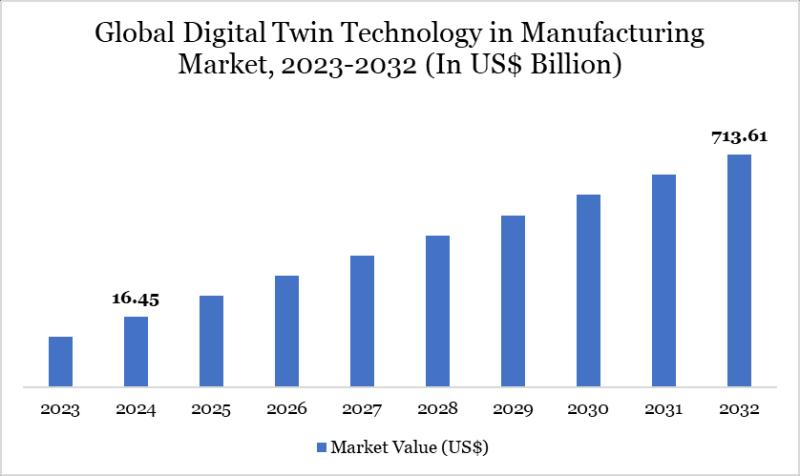
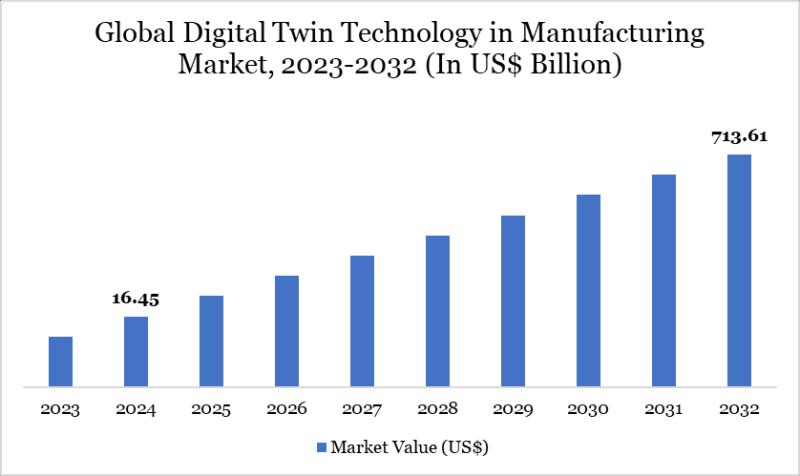
The Global Digital Twin Technology in Manufacturing Market size reached US$ 16.45 billion in 2024 and is expected to reach US$ 713.61 billion by 2032, growing with a CAGR of 60.20% during the forecast period 2025-2032.

The Digital Twin Technology in Manufacturing Market report, published by DataM Intelligence, provides in-depth insights and analysis on key market trends, growth opportunities, and emerging challenges. Committed to delivering actionable intelligence, DataM Intelligence empowers businesses to make informed decisions and stay ahead of the competition. Through a combination of qualitative and quantitative research methods, it offers comprehensive reports that help clients navigate complex market landscapes, drive strategic growth, and seize new opportunities in an ever-evolving global market.

Get a Free Sample PDF Of This Report (Get Higher Priority for Corporate Email ID): https://datamintelligence.com/download-sample/digital-twin-technology-in-manufacturing-market?sz

The Digital Twin Technology in Manufacturing Market refers to the use of virtual replicas of physical manufacturing assets, processes, and systems to simulate, monitor, and optimize real-time operations. It enables predictive maintenance, performance optimization, process efficiency, and data-driven decision-making by integrating IoT, AI, analytics, and advanced simulation across the manufacturing lifecycle.

Recent Key Developments of United States:

✅ December 2025: Siemens digital twin technology featured in the Washington Post for reimagining U.S. manufacturing by enabling virtual factory layouts, optimizing equipment placement, and shortening production timelines through real-time simulations.

✅ November 2025: North America digital twin market projected to grow significantly, driven by U.S. investments in AI, IoT, and manufacturing efficiency under Industry 4.0 initiatives.

✅ October 2025: NVIDIA expanded Omniverse Blueprint with U.S. manufacturing leaders, including Siemens, to build factory-scale digital twins for advanced robotics and production planning.

Recent Key Developments of Europe:

✅ December 2025: DestinE project advanced European digital twin capabilities on EuroHPC supercomputers, achieving high-resolution simulations for industrial applications including manufacturing processes.

✅ November 2025: Deutsche Telekom and NVIDIA launched one of Europe’s largest AI factories in Munich, featuring NVIDIA Omniverse for 3D digital twins in factory planning, simulation, and manufacturing optimization.

✅ November 2025: Siemens showcased AI-era manufacturing digital twins at NVIDIA GTC, demonstrating rapid design and optimization tools applicable to European smart factories.

List of the Key Players in the Digital Twin Technology in Manufacturing Market:

Dassault Systèmes SE

TIBCO Software Inc.

Siemens AG

Microsoft Corporation

Autodesk Inc.

Hexagon AB

Oracle Corporation

Altair Engineering Inc.

IBM Corp.

aPriori Technologies, Inc.

Speak to Our Analyst and Get Customization in the report as per your requirements: https://datamintelligence.com/customize/digital-twin-technology-in-manufacturing-market?sz

This Report Covers:

✔ Go-to-market Strategy.

✔ Neutral perspective on the market performance.

✔Development trends, competitive landscape analysis, supply side analysis, demand side analysis, year-on-year growth, competitive benchmarking, vendor identification, and other significant analysis, as well as development status.

✔Customized regional/country reports as per request and country level analysis.

✔ Potential & niche segments and regions exhibiting promising growth covered.

✔ Analysis of Market Size (historical and forecast), Total Addressable Market (TAM), Serviceable Available Market (SAM), Serviceable Obtainable Market (SOM), Market Growth, Technological Trends, Market Share, Market Dynamics, Competitive Landscape and Major Players (Innovators, Start-ups, Laggard, and Pioneer).

Segments Covered in the Digital Twin Technology in Manufacturing Market:

By Type: Product Digital Twin, Process Digital Twin, System Digital Twin.

By Enterprise Size: Small & Medium Enterprises (SMEs), Large Enterprises.

By Application: Predictive Maintenance, Performance Monitoring, Product Design & Development, Business Optimization, Others.

Regional Analysis:

⇥ North America (U.S., Canada, Mexico)

⇥ Europe (U.K., Italy, Germany, Russia, France, Spain, The Netherlands and Rest of Europe)

⇥ Asia-Pacific (India, Japan, China, South Korea, Australia, Indonesia Rest of Asia Pacific)

⇥ South America (Colombia, Brazil, Argentina, Rest of South America)

⇥ Middle East & Africa (Saudi Arabia, U.A.E., South Africa, Rest of Middle East & Africa)

Looking For Full Report? Get it Here: https://www.datamintelligence.com/buy-now-page?report=digital-twin-technology-in-manufacturing-market

Chapter Outline

⏩ Market Overview: It contains five chapters, as well as information about the research scope, major manufacturers covered, market segments, Digital Twin Technology in Manufacturing market segments, study objectives, and years considered.

⏩ Market Landscape: The competition in the Global Digital Twin Technology in Manufacturing Market is evaluated here in terms of value, turnover, revenues, and market share by organization, as well as market rate, competitive landscape, and recent developments, transaction, growth, sale, and market shares of top companies.

⏩ Companies Profiles: The Global Digital Twin Technology in Manufacturing market’s leading players are studied based on sales, main products, gross profit margin, revenue, price, and growth production.

⏩ Market Outlook by Region: The report goes through gross margin, sales, income, supply, market share, CAGR, and market size by region in this segment. North America, Europe, Asia Pacific, Middle East & Africa, and South America are among the regions and countries studied in depth in this study.

⏩ Market Segments: It contains the deep research study which interprets how different end-user/application/type segments contribute to the Digital Twin Technology in Manufacturing Market.

⏩ Market Forecast: Production Side: In this part of the report, the authors have focused on production and production value forecast, key producers forecast, and production and production value forecast by type.

⏩ Research Findings: This section of the report showcases the findings and analysis of the report.

⏩ Conclusion: This portion of the report is the last section of the report where the conclusion of the research study is provided.

Unlock 360° Market Intelligence with DataM Subscription Services: https://www.datamintelligence.com/reports-subscription

People Also Ask:

◆ How big is the Digital Twin Technology in Manufacturing Market in 2025?

◆ What is the projected growth rate of the Digital Twin Technology in Manufacturing Market through 2033?

◆ Who are the key players in the Digital Twin Technology in Manufacturing Market?

◆ Which region is expected to dominate the industry during the forecast period?

Contact Us –

Company Name: DataM Intelligence

Contact Person: Sai Kiran

Email: Sai.k@datamintelligence.com

Phone: +1 877 441 4866

Website: https://www.datamintelligence.com

About Us –

DataM Intelligence is a Market Research and Consulting firm that provides end-to-end business solutions to organizations from Research to Consulting. We, at DataM Intelligence, leverage our top trademark trends, insights and developments to emancipate swift and astute solutions to clients like you. We encompass a multitude of syndicate reports and customized reports with a robust methodology.

Our research database features countless statistics and in-depth analyses across a wide range of 6300+ reports in 40+ domains creating business solutions for more than 200+ companies across 50+ countries; catering to the key business research needs that influence the growth trajectory of our vast clientele.

This release was published on openPR.

Free Training

Source link