INKAS® Announces Major North American Manufacturing Expansion Across Canada and the United States – sUAS News


New facilities in Canada, North Carolina, and Florida are expected to more than double INKAS®’ armored vehicle, defense, and special-purpose production footprint by July 31, 2026

INKAS®, a Canadian armored vehicle manufacturer and systems integrator, announces a major expansion of its North American manufacturing footprint, with three additional production facilities across Canada and the United States expected to be in full operation by July 31, 2026.  

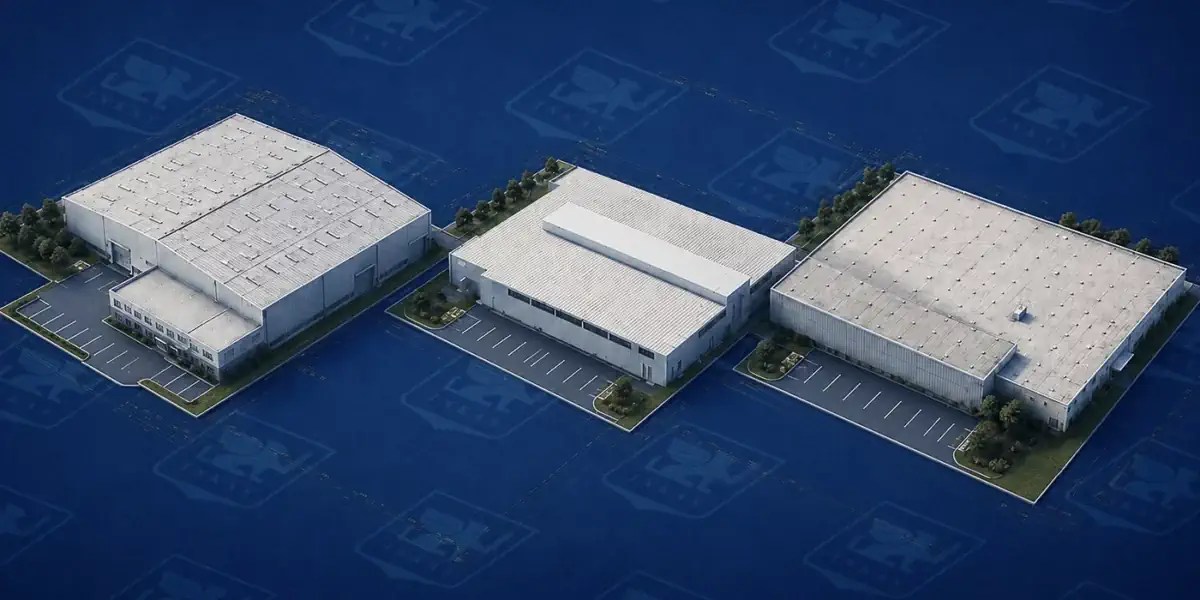
The three newly leased facilities are comprised of a mix of manufacturing and production space, with approximately 42,000 square feet at an additional Toronto facility in Canada, 200,000 square feet at an armored vehicle production facility in Charlotte, North Carolina, and 31,000 square feet for a first-time facility in Florida at Fort Pierce.  

Together, these facilities are expected to more than double INKAS’® production space across North America, strengthening the company’s ability to support growing demand from government, defense, law enforcement, commercial security, and specialized vehicle customers.  

The expanded footprint provides INKAS® with greater production flexibility, additional manufacturing capacity, and a stronger operational platform to support both current and future programs across its armored vehicle, tactical platform, drone / UAV, and special purpose vehicle portfolios. The Charlotte facility is specially equipped for armored vehicle production and has access to an experienced workforce with direct expertise in armored vehicle manufacturing, helping accelerate operational scaling without the need to build those capabilities from the ground up.  

“This expansion marks an important milestone in the continued growth of INKAS® as a North American manufacturer,” said David Khazanski, CEO of INKAS®. “By adding significant production space across Canada and the United States, we are strengthening our ability to support customers with reliable, scalable, and mission-ready security and defense solutions. This investment reflects our confidence in the long-term demand for advanced protected mobility, unmanned systems, and specialized platforms.” 

The new facilities form part of INKAS®’ broader strategy to increase production capacity, improve operational resilience, and support a growing portfolio of armored, tactical, unmanned, and special-purpose solutions. With operations expanding across Toronto, Charlotte, and Fort Pierce, INKAS® is positioned to better serve domestic and international customers while supporting more efficient production, faster program execution, and future growth across key markets.  

“Beyond expanding our production footprint, this investment is about creating skilled jobs, supporting local economies, and building long-term manufacturing capability in North America,” said Margarita Simkin, Chairwoman of INKAS®. “As these facilities come online, they will create opportunities for engineers, technicians, production specialists, and support teams across Canada and the United States. We believe that investing in people and manufacturing infrastructure is essential to building a stronger, more resilient security and defense industry.”

For nearly three decades, INKAS® has specialized in the design, engineering, and manufacturing of armored vehicles and advanced security solutions. The company’s portfolio includes discreet armored SUVs and sedans, tactical vehicles, armored personnel carriers, drones / UAVs, cash-in-transit vehicles, and custom-built special purpose platforms for clients around the world. 

Discover more from sUAS News

Subscribe to get the latest posts sent to your email.

Free Training

Source link

BFGoodrich Tires Brand Reorganizes U.S. Manufacturing Operations :: Michelin North America, Inc.


  • Consolidating production at Fort Wayne, Ind., site, as Tuscaloosa, Ala., site gradually ramps down
  • Tuscaloosa site operations expected to conclude by year-end 2028
  • A difficult decision made necessary due to structural inefficiencies and increasingly competitive recreation/off-road markets 
  • Company affirms its full support for impacted employees in Tuscaloosa throughout the transition, and supporting the community after the transition

Greenville, S.C., June 25, 2026 — Michelin North America, Inc., today has informed employees, community leaders and other stakeholders that the Company will reorganize U.S. manufacturing operations supporting its BFGoodrich Tires brand starting later this year. 

Under the reorganization, the Company will consolidate nearly all production for BFGoodrich Tires at its plant in Fort Wayne, Ind. Operations at the Company’s Tuscaloosa, Ala., site will begin winding down in phases early next year and are expected to conclude by year-end 2028.


In line with Michelin’s value of Respect for People, the Company is committed to supporting employees closely throughout the transition, with the goal of helping every person plan effectively for what comes next.  

The Company temporarily idled operations in Tuscaloosa to discuss specific details directly with employees starting today. Operations are expected to resume normally on Monday, June 29, 2026. No separations are anticipated for several months, as transition plans are finalized.

The Company will begin discussions with union leaders to determine separation benefits for wage employees in Tuscaloosa, consistent with the current collective bargaining agreement and U.S. laws.

Both sites operate well below their designed capacities, resulting in structural inefficiencies that cannot be sustained. At the same time, BFGoodrich Tires faces intensifying competition in its core recreation/off-road market segment, even as the brand maintains a strong market share and remains the benchmark for performance in this category. Consolidating production at Fort Wayne will create a more efficient industrial structure positioned for the brand’s long-term success.

“Because of the dedication of our teams in Tuscaloosa, BFGoodrich Tires is celebrated as a pioneering American brand, and an enduring symbol of car and truck culture,” said Terry Redmile, Michelin’s senior vice president for manufacturing operations in the Americas. 

“Due to the size, footprint and infrastructure of the Fort Wayne factory, that site is better positioned to consolidate the capacity and meet future demands for the success of BFGoodrich Tires,” Redmile said. “Unfortunately, we could not identify any feasible structure that would enable us to continue operating in Tuscaloosa while also supporting long-term value creation across our factories in North America.”  

The reorganization will impact approximately 1,200 employees in Tuscaloosa, as tire-production and rubber-mixing activities gradually ramp down over the next two years. As the wind-down process is completed, Michelin North America intends to collaborate with public and private stakeholders to explore new missions for the Tuscaloosa site, keeping in focus its stewardship and commitment to the community’s long-term success.


Free Training

Source link

Argon & Co Appoints Lotfi Maroizy to Expand North American Manufacturing Practice


Argon & Co has appointed manufacturing and operations executive Lotfi Maroizy as a partner in its North American Manufacturing Practice, a move aimed at expanding the consulting firm’s capabilities as manufacturers accelerate investments in digital transformation, supply chain modernization and operational efficiency.

Based in Houston and aligned with the firm’s Atlanta office, Maroizy will lead the growth, strategy and execution of Argon & Co’s expanded manufacturing services across the United States. His appointment comes as industrial companies face mounting pressure to modernize operations, address workforce challenges and improve competitiveness through technology-driven transformation initiatives.

The addition reflects increasing demand among manufacturers for consulting support that combines operational expertise with digital capabilities. Across sectors ranging from consumer goods and chemicals to automotive and food production, companies are seeking ways to improve resilience, automate processes and optimize increasingly complex supply chains.

“We are thrilled to welcome Lotfi to our leadership team as we aggressively scale our North American Manufacturing Practice,” said Simon Clarke, managing partner at Argon & Co.

Maroizy brings more than two decades of experience leading large-scale operational, supply chain and manufacturing transformation programs. Throughout his career, he has worked with organizations undergoing significant change initiatives aimed at improving productivity, reducing costs and enhancing operational performance.

Prior to joining Argon & Co, Maroizy held senior leadership positions at EFESO Consulting, Riveron and Accenture. In those roles, he led consulting teams responsible for implementing complex transformation programs across a range of industries. According to the company, initiatives he helped oversee generated more than $1 billion in cumulative cost savings and revenue improvements.

His industry experience spans several sectors that continue to face rapid technological and competitive shifts, including consumer products, food and beverage, chemicals, pulp and paper, and automotive manufacturing. Those industries are increasingly investing in smart factory technologies, advanced analytics, automation and digital supply chain tools as they respond to changing customer expectations and evolving market conditions.

At Argon & Co, Maroizy will focus on expanding the firm’s go-to-market strategy by integrating traditional operational improvement methodologies with digital manufacturing capabilities. The company views this combination as increasingly important as manufacturers seek practical solutions that deliver measurable business results rather than standalone technology deployments.

“Argon & Co’s hands-on, ‘roll-up-your-sleeves’ culture perfectly aligns with my philosophy on transformation,” Maroizy said. “True operational change isn’t born in a silo; it happens alongside the client on the shop floor.”

He added that the firm’s expanded supply chain, operations and digital capabilities will help manufacturers address legacy operational challenges while adopting automation and modern manufacturing technologies designed to improve profitability and market competitiveness.

The appointment comes at a pivotal time for the North American manufacturing sector. Many companies are balancing investments in automation and artificial intelligence with efforts to strengthen domestic production capabilities, improve supply chain visibility and address ongoing labor shortages. Those trends have created growing demand for advisory firms capable of guiding transformation efforts from strategy development through implementation.

Argon & Co specializes in supply chain strategy, operational transformation and managed services, working with organizations across North America, Europe and Asia-Pacific. The firm’s consulting model emphasizes direct engagement with clients throughout execution rather than focusing solely on strategic planning.

By adding a leader with extensive experience in manufacturing operations and digital transformation, Argon & Co is positioning itself to capture growing demand from industrial organizations seeking to modernize operations and build more resilient, technology-enabled supply chains. The move also reinforces the firm’s commitment to expanding its presence in North America as manufacturers continue investing in operational excellence and digital innovation.

Free Training

Source link

Supreme Nonwoven opens first US manufacturing plant in North Carolina


North Carolina Governor Josh Stein has announced that Supreme Nonwoven Inc, a manufacturer of advanced nonwoven materials and products, will establish its first manufacturing facility in the United States in Lexington. The project is expected to create 50 new jobs in Davidson County and involve an investment of $25.8 million.

The company, which has built a strong reputation over the past four decades, serves customers across the apparel, automotive, filtration, and industrial sectors through its broad portfolio of material technologies and value-added solutions.

Supreme Nonwoven Inc will invest $25.8 million to establish its first US manufacturing facility in Lexington, North Carolina, creating 50 jobs.
The 200,000-square-foot plant will serve apparel, automotive, filtration, and industrial customers across North America, while strengthening technical collaboration and supporting the company’s regional growth strategy.

Stein said, “Our state is a premier destination for textile innovation. Our history in this industry is enhanced by a skilled workforce that is ready to support global companies seeking to establish and expand their presence in the US.”

The new facility, spanning more than 200,000 square feet, will function as a centre for technical collaboration, allowing the company to work more closely with North American customers and partners on customised material solutions. The site is expected to enhance responsiveness, support tailored applications, and provide access to the latest developments in nonwoven technologies.

Amit Kavrie, managing director of Supreme Group said, “We see this as an important step in bringing our material technologies and development capabilities closer to customers in the region while building a foundation for long-term growth.”

“Lexington offers us a strong base from which to support customers with responsiveness, technical collaboration, and reliable execution,” said Manoj Swain, director of international operations of Supreme Group adding, “As we build this operation, our focus will be on creating the right competencies locally while also drawing on the broader capabilities of the Group to serve regional customer requirements over time.”

The new positions will offer an average annual salary of $55,800, above Davidson County’s average wage of $54,395. The project is expected to generate an annual payroll impact of approximately $2.79 million for the local economy.

To support the investment, the company has been awarded a performance-based grant of $100,000 from the One North Carolina Fund.

North Carolina Senator Steve Jarvis said, “Investments like this create good jobs, strengthen our local economy, and demonstrate confidence in the business-friendly climate we have worked hard to build across North Carolina. I look forward to the positive impact this project will have on our community and families for years to come.”

Fibre2Fashion News Desk (CG)

Free Training

Source link

3 North American Manufacturing Stocks Watching Tariffs And Cost Pressures


Tariff headlines are back in focus, with fresh Section 301 proposals, shifting steel and aluminum duties, and questions around USMCA all reshaping the cost of doing business across borders. For North American manufacturers, higher and more uncertain trade costs can either squeeze margins or create openings where competitors face bigger hurdles. This article looks at three stocks from a U.S., Canada, and Mexico manufacturing screener that appear positioned to benefit from these policy moves. It explores how their business models intersect with the latest tariff rules and where investors may want to dig deeper.

Century Aluminum (CENX)

Overview: Century Aluminum produces primary aluminum and alumina, supplying both standard and higher value products from smelters in the United States and Iceland, supported by a carbon anode plant in the Netherlands and bauxite and alumina operations in Jamaica.

Operations: The company generates all its US$2.5b of revenue from primary aluminum, with around US$1.9b coming from the United States and about US$660 million from Iceland.

Market Cap: US$5.4b

Century Aluminum sits at the heart of the tariff story, with a largely U.S. and EU production footprint that benefits when Section 232 and Section 301 measures raise costs for overseas competitors and support regional aluminum premiums. Recent trade actions limiting imports from China and other countries, together with projects like the Mt. Holly expansion and the planned Oklahoma smelter, position the company to serve reshoring and electrification demand while tapping U.S. manufacturing tax credits. At the same time, investors need to weigh meaningful risks, including sensitivity to power and raw material costs, heavy reliance on supportive trade policy, and some recent insider selling. All of these factors can affect the quality and durability of current profitability and growth expectations.

Tariff fueled momentum at Century Aluminum looks powerful, but the full story sits in how policy support, power costs and new U.S. projects interact. Start with the 4 key rewards and 2 important warning signs (1 is major!)

NasdaqGS:CENX Earnings & Revenue History as at Jun 2026NasdaqGS:CENX Earnings & Revenue History as at Jun 2026

West Fraser Timber (TSX:WFG)

Overview: West Fraser Timber is a large Canadian wood products company that makes lumber, engineered wood panels, pulp, paper, and bioenergy inputs used in housing, renovation, packaging, and industrial applications across North America and Europe.

Operations: West Fraser Timber generates most of its US$5.3b of revenue from Lumber at US$2.5b and North America Engineered Wood Products at US$2.0b, with Europe Engineered Wood Products contributing US$524 million and the balance from segment adjustments and corporate items.

Market Cap: CA$7.8b

West Fraser Timber stands out in this screener because it sits on the right side of several trade and sustainability trends, yet still carries meaningful risks. As a Canadian exporter into the U.S., it benefits when Section 301 tariffs raise costs for overseas competitors while USMCA keeps its own trade channels relatively open, even as softwood lumber duties and tariff uncertainty remain a drag. Some analysts highlight the possibility of a shift from current losses to future profitability, supported by higher margin engineered wood products, mill modernization and a growing sustainability story including emissions targets and long term fibre agreements. At the same time, recent losses, ongoing trade disputes and a dividend that is not covered by earnings show that the recovery path is not straightforward.

West Fraser Timber’s shift from basic lumber to higher margin engineered wood and bio-products could be more than a cycle story. Yet the real twist is buried in the 2 key rewards and 1 important major warning sign

TSX:WFG Revenue & Expenses Breakdown as at Jun 2026TSX:WFG Revenue & Expenses Breakdown as at Jun 2026

Amprius Technologies (AMPX)

Overview: Amprius Technologies develops and sells silicon anode lithium ion batteries, with its SiCore and SiMaxx product lines designed for high energy density mobility uses such as drones, high altitude aircraft and other emerging aviation platforms.

Operations: Amprius Technologies generates US$90.3m of revenue from its Battery Business, with around US$62.8m from EMEA customers, US$15.9m from North America and US$11.5m from Asia Pacific.

Market Cap: US$2.2b

Amprius Technologies sits at the intersection of tariff policy and next generation battery demand, with U.S. anchored supply chains, high energy density cells and a growing mix of defense, drone and electric mobility customers. New Section 301 tariffs that keep import costs elevated for foreign battery suppliers can affect the relative economics for Amprius, particularly as it secures multi million contracts, expands global capacity and raises 2026 revenue guidance. The flip side is real execution risk, including heavy exposure to aviation and drone demand, complex scale up of silicon anode technology, share dilution and ongoing losses that still need to narrow. For investors watching North American manufacturing, a key question is how those policy tailwinds, growth targets and balance sheet risks fit together into a coherent risk reward view on Amprius.

Amprius Technologies is racing to scale high energy batteries as tariffs reshape who wins future defense and drone contracts, but the real tension between its ambition and its risks sits inside the 3 key rewards and 3 important warning signs

NYSE:AMPX Earnings & Revenue Growth as at Jun 2026NYSE:AMPX Earnings & Revenue Growth as at Jun 2026

The three stocks covered here are only a starting point, with the full North American Manufacturing screen surfacing 44 more companies that share similarly compelling fundamentals and policy linked narratives inside the North American Manufacturing screener. Use Simply Wall St to identify, filter and analyze the specific catalysts, financial profiles and trade related angles that matter most so you can focus on the highest conviction manufacturing ideas across the U.S., Canada and Mexico.

Take Control of Your Investment Journey

If Century Aluminum or any of these companies sound like a great opportunity, register for FREE with Simply Wall St and add your companies to a Watchlist to monitor the share price against the fair value the ideal entry point.
Once you’ve made your move, manage your holdings with our Portfolio Command Center that filters out the noise to deliver only the most critical, actionable updates.
Throughout your journey, our Community allows you to filter the best ideas from thousands of investor perspectives.
By uncovering hidden catalysts and risks early, you’ll accelerate your decision-making and stay one step ahead of the market.

Seeking Alternatives Before The Crowd?

Fresh ideas can move fast, and the stocks leading the next breakout rarely stay under the radar for long. Before momentum is gone and prices start flying, act now.

This article by Simply Wall St is general in nature. We provide commentary based on historical data
and analyst forecasts only using an unbiased methodology and our articles are not intended to be financial advice.
It does not constitute a recommendation to buy or sell any stock, and does not take account of your objectives, or your
financial situation. We aim to bring you long-term focused analysis driven by fundamental data.
Note that our analysis may not factor in the latest price-sensitive company announcements or qualitative material.
Simply Wall St has no position in any stocks mentioned.

Valuation is complex, but we’re here to simplify it.

Discover if West Fraser Timber might be undervalued or overvalued with our detailed analysis, featuring fair value estimates, potential risks, dividends, insider trades, and its financial condition.

Access Free Analysis

Have feedback on this article? Concerned about the content? Get in touch with us directly. Alternatively, email editorial-team@simplywallst.com

Free Training

Source link

Supreme Nonwoven opens first US manufacturing plant in North Carolina


North Carolina Governor Josh Stein has announced that Supreme Nonwoven Inc, a manufacturer of advanced nonwoven materials and products, will establish its first manufacturing facility in the United States in Lexington. The project is expected to create 50 new jobs in Davidson County and involve an investment of $25.8 million.

The company, which has built a strong reputation over the past four decades, serves customers across the apparel, automotive, filtration, and industrial sectors through its broad portfolio of material technologies and value-added solutions.

Supreme Nonwoven Inc will invest $25.8 million to establish its first US manufacturing facility in Lexington, North Carolina, creating 50 jobs.
The 200,000-square-foot plant will serve apparel, automotive, filtration, and industrial customers across North America, while strengthening technical collaboration and supporting the company’s regional growth strategy.

Stein said, “Our state is a premier destination for textile innovation. Our history in this industry is enhanced by a skilled workforce that is ready to support global companies seeking to establish and expand their presence in the US.”

The new facility, spanning more than 200,000 square feet, will function as a centre for technical collaboration, allowing the company to work more closely with North American customers and partners on customised material solutions. The site is expected to enhance responsiveness, support tailored applications, and provide access to the latest developments in nonwoven technologies.

Amit Kavrie, managing director of Supreme Group said, “We see this as an important step in bringing our material technologies and development capabilities closer to customers in the region while building a foundation for long-term growth.”

“Lexington offers us a strong base from which to support customers with responsiveness, technical collaboration, and reliable execution,” said Manoj Swain, director of international operations of Supreme Group adding, “As we build this operation, our focus will be on creating the right competencies locally while also drawing on the broader capabilities of the Group to serve regional customer requirements over time.”

The new positions will offer an average annual salary of $55,800, above Davidson County’s average wage of $54,395. The project is expected to generate an annual payroll impact of approximately $2.79 million for the local economy.

To support the investment, the company has been awarded a performance-based grant of $100,000 from the One North Carolina Fund.

North Carolina Senator Steve Jarvis said, “Investments like this create good jobs, strengthen our local economy, and demonstrate confidence in the business-friendly climate we have worked hard to build across North Carolina. I look forward to the positive impact this project will have on our community and families for years to come.”

Fibre2Fashion News Desk (CG)

Free Training

Source link

NAFTZ Supports Senate Bill Meant to Enhance U.S. Manufacturing Competitiveness Across North America


Measure would help restore parity for U.S. manufacturers exporting to Canada and Mexico, strengthening North American supply chains and cross-border trade

WASHINGTON, June 16, 2026 /PRNewswire/ — The National Association of Foreign-Trade Zones (NAFTZ), the only national trade association focused solely on the U.S. Foreign-Trade Zones program, today applauded the introduction of Senate companion legislation from U.S. Sen. Tim Scott (R-S.C.) aimed at strengthening the competitiveness of American importers and exporters operating in U.S. FTZs.

The National Association of Foreign-Trade Zones (NAFTZ) today applauded the introduction of Senate companion legislation from Sens. Tim Scott (R-S.C.) and Katie Britt (R-Ala.), aimed at strengthening the competitiveness of American importers and exporters operating in U.S. FTZs.
(Photo by Harold Mendoza on Unsplash)

The National Association of Foreign-Trade Zones (NAFTZ) today applauded the introduction of Senate companion legislation from Sens. Tim Scott (R-S.C.) and Katie Britt (R-Ala.), aimed at strengthening the competitiveness of American importers and exporters operating in U.S. FTZs.
(Photo by Harold Mendoza on Unsplash)

The legislation – co-sponsored by Sen. Katie Britt (R-Ala.) – mirrors the recently introduced Foreign-Trade Zone Export Enhancement Act in the House and would provide duty-relief benefits for certain goods produced or altered in federally designated U.S. FTZs and subsequently exported to Canada and Mexico. The proposal addresses a longstanding imbalance under the U.S.-Mexico-Canada Agreement (USMCA) that has placed businesses operating in U.S. FTZs at a competitive disadvantage relative to counterparts in Canada and Mexico.

Annual trade between the U.S., Canada and Mexico totals roughly $1.8 trillion, with operators increasingly relying on cross-border production, sourcing and export relationships to remain globally competitive. Yet, under current USMCA rules, businesses operating in U.S. FTZs must pay duties on inputs before exporting finished goods to North American partners – even when those products would otherwise qualify for preferential treatment under the agreement.

Meanwhile, competing manufacturers in Canada and Mexico benefit from national duty-relief programs that eliminate comparable costs – including Mexico’s PROSEC program and Canada’s targeted tariff relief efforts.

“South Carolina companies operating in Foreign-Trade Zones make significant contributions to the Palmetto State’s economy,” said Sen. Scott. “My bill levels the playing field for our businesses by making sure American manufacturing remains globally competitive, boosting USA-made exports, and supporting American jobs.”

Ultimately, the bill would clarify U.S. trade law to ensure qualifying goods produced in U.S. FTZs can benefit from duty-relief treatment when exported to Canada and Mexico, helping restore the intent behind the U.S. Foreign-Trade Zones program – first established by Congress in 1934 to promote domestic production and exports.

“U.S. Foreign-Trade Zones were designed to make the nation a more competitive place to invest and operate in,” said Jeff Tafel, president of NAFTZ. “Unfortunately, current USMCA rules have produced the opposite result for many U.S. FTZ-based operations, imposing costs that competitors in Canada and Mexico often do not face. Sen. Scott’s proposal recognizes that American businesses should not be penalized simply because they operate within one of these zones.”

NAFTZ has advocated for reforms addressing this issue since the NAFTA era and has continued that effort through the implementation of USMCA. The association maintains that the legislation would not weaken the agreement, but rather ensure that U.S. operators receive treatment comparable to that already available to competing North American producers.

The organization also noted that the proposal aligns with broader national priorities surrounding reshoring, supply-chain security and domestic industrial growth.

“At a time when policymakers are focused on strengthening North American supply chains and encouraging manufacturing investment in the U.S., this legislation addresses a clear policy inconsistency that has persisted for far too long,” said Melissa Irmen, director of advocacy for NAFTZ. “The bill would help reduce cost disparities for qualifying U.S. FTZ operators, encourage additional investment in U.S. production facilities, and better align USMCA implementation with the original purpose of the U.S. FTZ program.”

Irmen added: “We appreciate Sen. Scott’s leadership and look forward to working with lawmakers in both chambers to advance this important measure.”

U.S. FTZ users like AFL, a South Carolina-based manufacturer of fiber-optic cable, hardware and equipment, are equally hopeful for the bill’s eventual passage.

“We appreciate Senator Scott’s leadership in supporting policies that strengthen U.S. manufacturing competitiveness,” said Jaxon Lang, CEO and President of AFL. “This legislation will help ensure that products manufactured in South Carolina can be exported efficiently to Canada and Mexico, allowing companies like AFL to compete on a level playing field and continue investing in jobs and innovation here at home.”

NAFTZ now intends to work directly with Congress, the administration and key industry stakeholders to further the proposal. Its House counterpart is pending review among the chamber’s Ways and Means Committee.

About the National Association of Foreign-Trade Zones (NAFTZ)

The National Association of Foreign-Trade Zones (NAFTZ) is the collective voice of the U.S. Foreign-Trade Zones community. Representing public and private sector members across the United States, NAFTZ is dedicated to advancing the U.S. Foreign-Trade Zones program through advocacy, education and collaboration. The association works to promote policies that strengthen U.S. competitiveness, encourage domestic investment and job creation, and support secure and efficient international trade operations. For more information visit: www.naftz.org.

SOURCE National Association of Foreign-Trade Zones

Free Training

Source link

Bosch Posts $18.8 Billion in 2025 Sales in North America, Marks 120 Years in the US


As it continues to invest for growth in the North American region, Bosch announced its final 2025 results, achieving $18.8 billion USD (16.6 billion euros) in sales. This represents a slight year-on-year increase of approximately 4%.

Despite global economic challenges, the North American market once again posted growth and continues to be a focus market for growth at Bosch, particularly in the United States, company officials stated in a press release. Bosch has a long-standing commitment to the U.S. and is celebrating its 120th anniversary in the country in 2026.

“Our 2025 performance demonstrates the dedication of our team in the region and the economic resilience of our market,” said Paul Thomas, president and CEO of Bosch in North America and president of Bosch Mobility Americas. “We continue to aim for the North American region to represent 20% of the global turnover of Bosch as part of our global 2030 strategy.”

Bosch ended the 2025 year with around 41,000 associates in North America across all its operations.

Bosch Operates 20 US Manufacturing Sites Across 14 States

A major part of the commitment to the U.S. is in manufacturing, where Bosch manages 20 sites with manufacturing operations supporting all four of its business sectors: Mobility, Consumer Goods, Energy and Building Technology, and Industrial Technology. U.S. manufacturing for Bosch expanded in 2025 as the company closed a major acquisition. Bosch currently maintains manufacturing locations in Arkansas, California, Florida, Illinois, Indiana, Kansas, Kentucky, North Carolina, Michigan, Minnesota, Oklahoma, Pennsylvania, South Carolina and Tennessee. In 2025, several key manufacturing milestones occurred:

  • Bosch Mobility launched production on a new, high-tech line in its Charleston, South Carolina, facility to produce the 10th generation of electronic stability control, known as ESP.
  • Bosch Power Tools opened the $130 million USD expansion of its facility in Lincolnton, North Carolina, for the manufacturing of power tool accessories.
  • Prominent manufacturing locations in Norman, Oklahoma, and Wichita, Kansas, were added as Bosch Home Comfort closed a major acquisition.
  • Construction continued for the planned $1.9 billion USD transformation of the Bosch site in Roseville, California, into a facility that produces and tests silicon carbide (SiC) semiconductors with state-of-the-art processes and equipment.

AI, Software & Powertrain Options Fuel Mobility Business Sector

The Mobility business sector achieved $11.4 billion USD in sales in North America in 2025, demonstrating nominal growth ($10.8 billion USD in 2024) despite market headwinds. The company continues to develop software and artificial intelligence-enabled solutions for customers tied to the needs of the local market, particularly in the United States, noted the release.

In December 2025, Bosch Mobility introduced two new features showcasing AI as an enabler. The AI extension platform extends the capabilities of existing cockpit systems, bringing advanced AI functions into the vehicle. This allows OEMs to quickly and easily retrofit existing hardware or system architecture without costly redesign, the company said.

“The AI extension platform helps to provide the features that consumers are looking for while also keeping an eye on vehicle affordability since it doesn’t require significant shifts at the system level and in the vehicle architecture,” Thomas said.

The company continues to see growth in solutions to support hybrid vehicles, where the rich history and system-level expertise of Bosch in powertrain is highly applicable. Bosch Mobility integrates and modularizes a variety of components backed by development teams for both internal combustion and electrification.

The company recently introduced a next-generation synchronous motor designed for traction and generation applications from hybrid through battery-electric and fuel cell powertrains that delivers a world-record gain in efficiency, with only 0.85 kWh/100 km losses in the WLTC (Worldwide Harmonized Light Vehicles Test Cycle), representing up to a 30% reduction from the previous generation.

“The U.S. market will continue to be a multi-lane highway of powertrain options,” Thomas said. “We are supporting a broad range of hybrid, internal combustion, battery-electric and hydrogen solutions so that we can help our OEM customers provide consumers with options based on the vehicle use case.”

Consumer Goods Sector

The Consumer Goods business sector, comprised of Home Appliances and Bosch Power Tools, registered third-party sales of $3.5 billion USD in 2025, up from $3.4 billion USD in 2024. Home Appliances reported strong 2025 performance, outpacing the market with a more than 5% increase in turnover.

Major Portfolio Shifts in Energy & Building Technology

The Energy and Building Technology business sector posted $2.5 billion USD in sales in 2025 as it underwent fundamental shifts in its portfolio. In August, Bosch closed the acquisition of the residential and light-commercial heating, ventilation, and air conditioning (HVAC) business from Johnson Controls. This significantly expanded the presence of Bosch Home Comfort in the North American market, where the brand portfolio now includes YORK, Hitachi and more alongside the Bosch brand.

In October 2025, the Bosch Home Comfort Group completed another acquisition in the North American market: US Air Conditioning Distributors LLC, which has 52 locations and almost 500 employees in California, Arizona, Utah and Idaho. The company’s factory-direct sales model provides the Bosch Home Comfort Group with direct customer access.

In October 2025, Bosch announced it would unify its global building technologies integrator operations under the unified name Bosch Building Technologies. Beginning in January of 2026, the brands Climatec and Paladin Technologies combined their branch networks under the Bosch brand. The Building Technologies business now features a wide-ranging portfolio of integrated, digital and cross-domain solutions, positioning it to expand in the areas of Building Automation, Security, Fire Life Safety, and Energy Solutions.

At the end of June 2025, Bosch completed the sale of its security and communications technology product business, now named KEENFINITY Group, to Triton as Bosch Building Technologies focuses on its system integrator business.

Industrial Technology Grows Despite Market Challenges

The Industrial Technology business sector faced continued market headwinds, posting a nominal gain in sales of $1.4 billion USD, up from $1.3 billion in 2024. The Industrial Technology business in the U.S. includes Bosch Rexroth, which has been part of the Bosch family for 25 years, and Hydraforce, which joined the Bosch family in 2023.

2026 Regional Financial Results infographic2

Bosch Group: Outlook for 2026 & Strategic Direction

In the face of geopolitical tensions and trade barriers, the Bosch Group says that it intends to exploit the growth prospects in its global markets with full innovative strength in the 2026 business year. The necessary upfront investments in areas of future importance are set to remain at the high level of previous years. In 2025, Bosch devoted some 12 billion euros to investments in research and development and to capital expenditure. The supplier of technology and services is planning sales growth of 2%–5% and an EBIT margin from operations of 4%–6% for 2026.

“As a global technology leader, we are committed to shaping the trends of automation, digitalization, electrification and artificial intelligence, as this also paves the way for profitable growth in our business,” said Stefan Hartung, chairman of the board of management of Robert Bosch GmbH.

Despite considerable challenges, Bosch was able to achieve sales revenue of 91.0 billion euros ($102.8 billion USD) in the 2025 business year, slightly up on the previous year (2024: 90.3 billion euros). After adjusting for exchange-rate effects, this was equivalent to 4.1% growth. At 2%, the EBIT margin from operations was below the previous year’s figure (2024: 3.5%). Necessary structural and personnel adjustments to increase future viability had a considerable negative impact on the result in the form of provisions of 2.7 billion euros.

“Bosch can deliver the future—even under unfavorable conditions. 2026 will be a year of progress,” said Hartung. When it comes to innovative strength, Bosch is one of the strongest industrial companies in the world and, with around 6,300 patents in 2025, one of the most prolific patent applicants in Europe. Hartung sees the expansion of innovation leadership as a key success factor for expanding business and implementing the company’s Strategy 2030.

For more details on Bosch’s annual report for 2025, visit bosch-press.com.

Free Training

Source link

Amazon and Corning partner to boost fiber optics manufacturing in North Carolina :: WRAL.com


E-commerce giant Amazon is partnering with industrial manufacturer Corning Inc. to expand data center infrastructure across the United States, a multibillion-dollar deal that is expected to create about 1,000 jobs at Corning plants in North Carolina, the companies said Friday.

The agreement comes on top of Amazon’s plans, announced last year, to invest $10 billion in North Carolina to expand cloud computing infrastructure. Amazon has invested at least $20 billion in North Carolina since 2010, creating over 26,000 jobs spanning logistics, cloud infrastructure, and renewable energy across the Tar Heel State, the companies said. 

“North Carolina is proving that American manufacturing and cutting-edge technology go hand in hand,” U.S. Sen. Ted Budd, R-North Carolina, said in a statement. He said the deal would strengthen the U.S. supply chain for data-center infrastructure. 

North Carolina has been a magnet for companies focused on updating the nation’s power grid to accommodate renewable energy and increased power demand from data centers. 

In April, Hitachi Energy said it would create 150 jobs in Cary as part of a new $10 million center expanding its local engineering and testing functions — its latest effort aimed at strengthening the North American power grid in part to help support artificial-intelligence data centers.  

In 2024, Siemens announced plans to expand its Siemens Electrification and Automation U.S. headquarters in Wendell to meet demand in its growing data center, semiconductor and utility sectors — one of several planned expansion by the company in the state.

A unit of Houston-based MetOx International, a maker of efficient power transmission cables, also said in 2024 that it plans to create 333 jobs and invest about $194 million in Chatham County — part of a long-range plan to provide more efficient power for data centers, medical diagnostics and more.

“I am proud that we are continuing to capitalize on that momentum in North Carolina,” Budd said in his statement. 

Amazon Web Services last year announced plans to invest $10 billion in a North Carolina cloud computing and artificial intelligence innovation center — one of the biggest investments in state history, according to state and local officials. The project is expected to bring about 500 high-paying jobs to a 20-building, 800-acre campus in Richmond County, the company said in June. The company’s data centers power hospitals and emergency services, streaming entertainment and AI. 

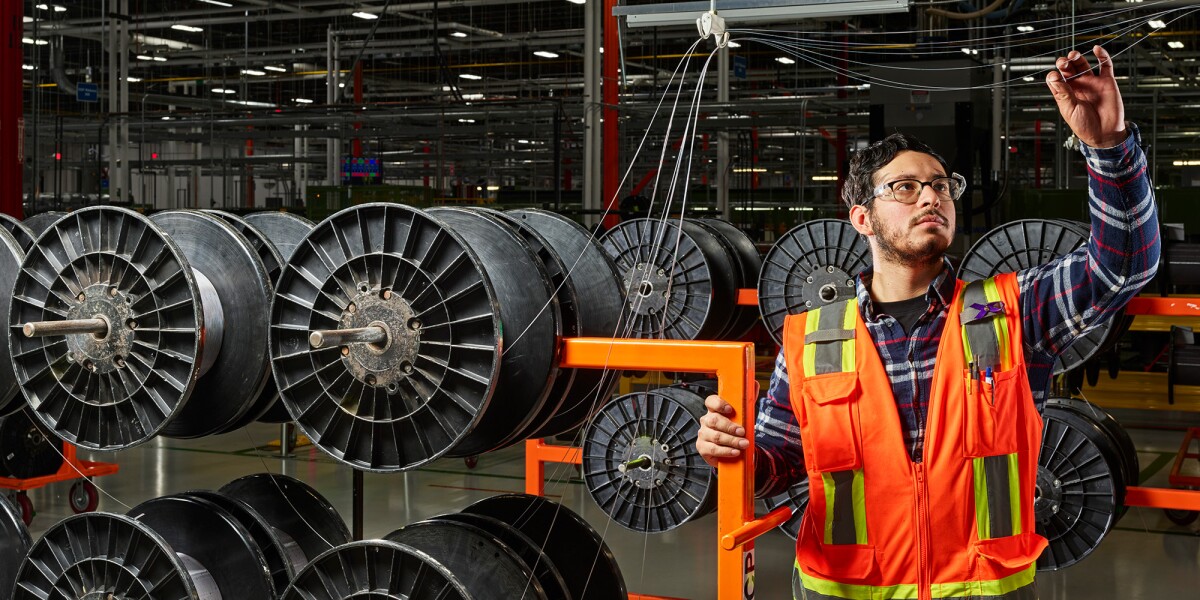
Corning, a manufacturer of advanced glass and fiber optic technology used in optical fiber and cable, is used in that kind of infrastructure.

“This agreement with Amazon represents a significant milestone for Corning and for American manufacturing,” Wendell Weeks, Corning’s chief executive, said in a statement. 

It was unclear where the Corning jobs would be located. A company spokesperson didn’t immediately respond to a request for more information. 

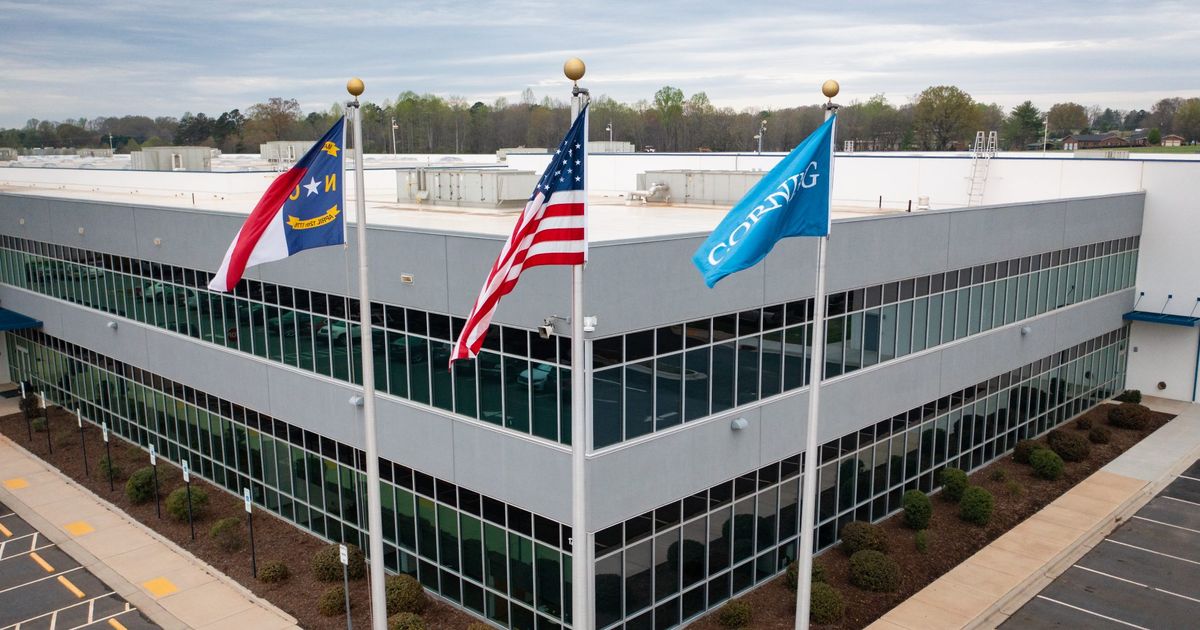
Corning has manufactured optical fiber and cable in North Carolina for more than 40 years. The company employs more than 5,000 in plants across the state. Charlotte is home to Corning’s Optical Communications headquarters.  In 2023, the company opened an optical cable manufacturing campus in Hickory to support U.S. buildouts of high-speed fiber broadband networks. The company also manufactures optical fiber in Concord and Wilmington.

Through the agreement announced Thursday, Amazon will work with Corning on a new program that will expand its Fiber Optic Technician Training Program with Catawba Valley Community College to train students for careers in fiber optic manufacturing and related technical roles. 

The program provides hands-on education and courses that will increase the talent pool and offer pathways to high-paying technical roles. The efforts will help strengthen the domestic supply chain and U.S. manufacturing base while serving the region and state to help expand residential and commercial fiber densification efforts, the companies said.

“These long-term investments create long-term careers and real opportunity in the communities where we operate,” Matt Garman, the chief executive of Amazon Web Services, said in a statement.

Free Training

Source link

Amazon’s multibillion-dollar deal with Corning creates 1,000 jobs in North Carolina


Today, Amazon announced a multibillion-dollar agreement with Corning Incorporated, a leading manufacturer of advanced glass and fiber optic technology, to supply the optical fiber, cable, and connectivity solutions that power Amazon’s expanding data center infrastructure across the United States. The investment will create 1,000 new, highly skilled jobs at Corning’s manufacturing facilities across North Carolina, and support hundreds of additional construction jobs to expand Corning’s facilities.

Free Training

Source link