
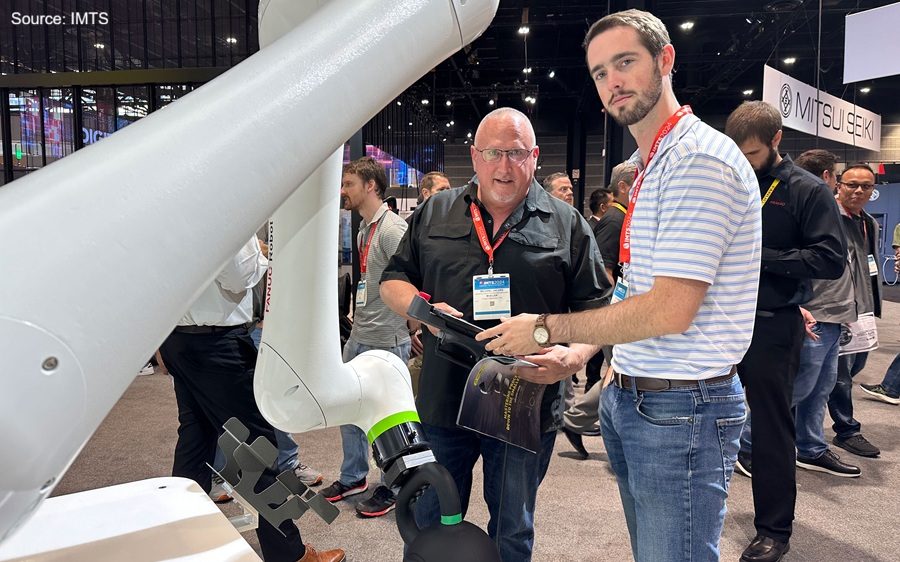
U.S. Manufacturing Investment and Productivity Momentum Set Stage for IMTS 2026


The United States continues to see renewed manufacturing investment and output growth, but sustaining reindustrialization depends on accelerating productivity. At IMTS – The International Manufacturing Technology Show, the manufacturers and job shops that build America will find the technologies, ideas, and connections that translate capital investment into greater efficiency, resilience, and long-term competitiveness.

U.S. manufacturing generates trillions of dollars in economic output, and IMTS serves as a marketplace connecting manufacturers with technology providers. According to the U.S. Manufacturing Technology Orders Report, in the first half of 2026, new orders of metalworking machinery reached a record total of $3.44 billion, up 36% year over year and the strongest half since USMTO began tracking orders in 1998. New orders for manufactured durable goods increased $3.6 billion, or 1.1%, to $339.3 billion in July, according to the U.S. Census Bureau, marking the fourth increase in five months. The ISM Manufacturing PMI registered 54.6 in August, the eighth straight month of manufacturing sector expansion, while ISM’s broader economic indicator has now shown growth for 22 consecutive months.

“Economic momentum, demand for a stronger U.S. industrial base, continued reshoring and foreign direct investment, new incentives for capital investment, and the launch of cutting-edge technologies are creating one of the most exciting moments manufacturing has seen in years – and one of the most important reasons to attend IMTS,” says Douglas K. Woods, president of AMT – The Association For Manufacturing Technology, which owns and produces IMTS. “Across aerospace, defense, medical, AI infrastructure, and other high-demand sectors, manufacturers are looking for the technologies, partners, and productivity gains that will help them compete and grow.”

Manufacturing sector labor productivity increased 2.4% in the second quarter of 2026, as output increased 5.4% and hours worked increased 2.9%, according to the U.S. Bureau of Labor Statistics. Durable-goods manufacturers performed even better, increasing productivity 3.6% as output grew 7.3%. Manufacturing unit labor costs decreased 0.3%, with productivity gains offset by higher hourly compensation.

U.S. and foreign companies have announced $11 trillion in U.S. investment commitments, according to investments tracked by the White House, underscoring the scale of opportunity for manufacturers and technology providers gathering at IMTS.

The investment momentum aligns with reshoring trends that continue to reshape U.S. manufacturing.

“Manufacturing is surging,” confirms Harry Moser, founder of the Reshoring Initiative. “Much of that strength is due to reshoring and foreign direct investment staying strong and being projected to reach a near-record 338,000 jobs announced in 2026 alone.”

Moser says balancing the country’s $1.3 trillion goods trade deficit will require a 40% increase in manufacturing and a surge in investment and productivity. The award-winning shops demonstrate how manufacturers can help close that gap.

“As a country, we need to make more things here. Reindustrializing America depends on increasing our total productivity factor by adopting new technologies and business approaches,” says John “Jay” Rogers, co-founder and CEO of Haddy. 

For machine shops, equipment represents their largest capital investment, making IMTS an important venue for evaluating technologies that can improve productivity, expand capacity, and support more confident purchasing decisions.

“By investing in the best-of-the-best CNC and fabrication equipment, we’re able to produce better parts faster, with fewer defects and less postprocessing, which ultimately lowers costs and improves reliability for our customers,” says Jim Belosic, founder and CEO of SendCutSend, an on-demand manufacturing company specializing in custom sheet metal and CNC machining. 

“Walking the IMTS floor shows you the technology. Presentations on the IMTS+ Main Stage, conferences, and networking events provide insight on how to make investment decisions with greater confidence and deliver lasting value,” says Payne.

Van Metre adds, “IMTS brings together the people that have solved these challenges before. We’ll interview these experts so visitors can learn from their experience instead of starting from scratch.”

For more information, visit IMTS.com.

Free Training

Source link

US Transit Bus Industry Generates $5.1 Billion Economic Impact


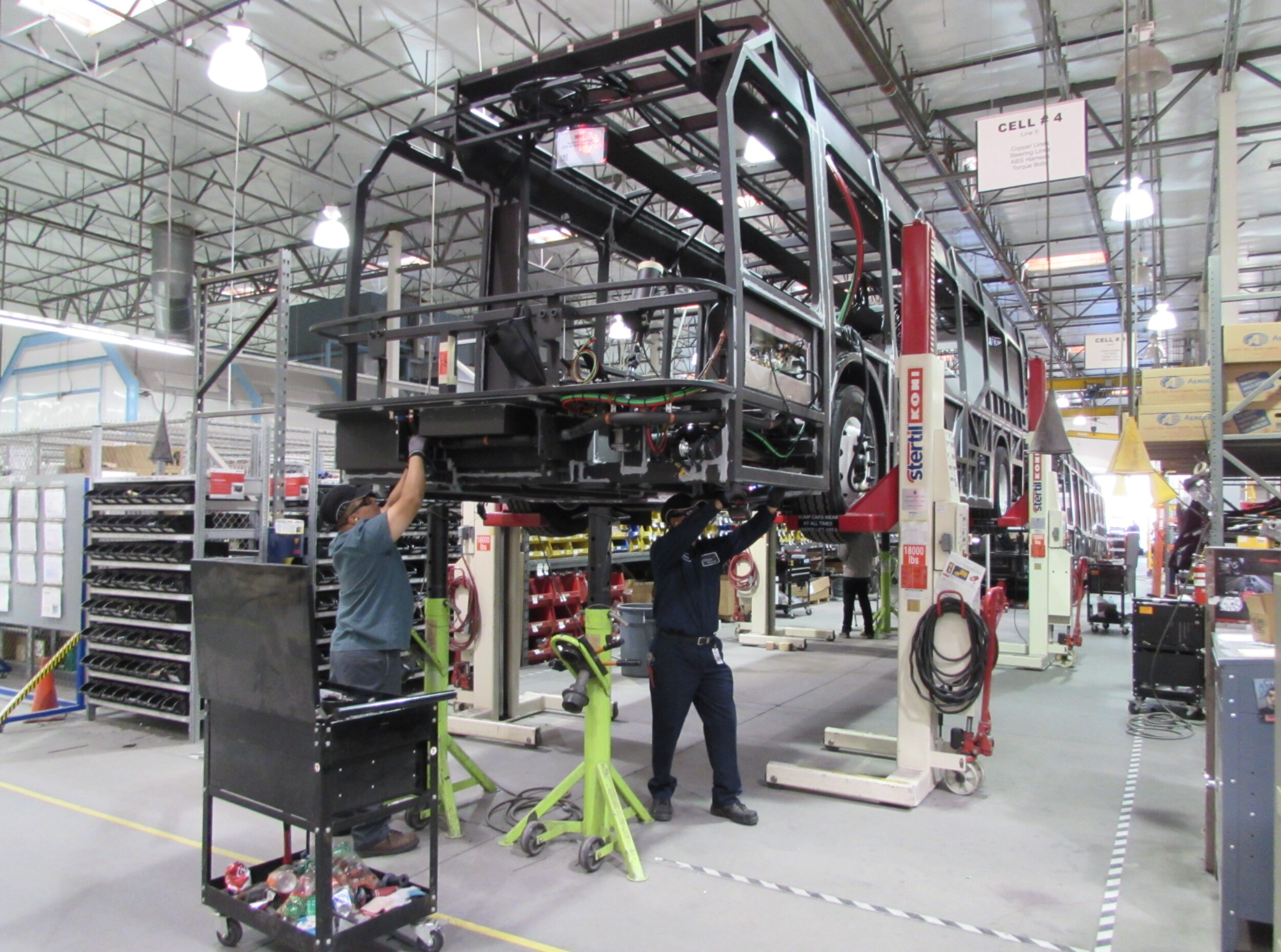
The US heavy-duty transit bus manufacturing industry supported around 34,100 jobs and contributed 5.1 billion USD to the US economy in 2025, according to a new report from Oxford Economics.

The report, Buses Mean Business, examines the economic contribution of domestic transit bus manufacturers and their supply chains. It was commissioned by business members of the American Public Transportation Association (APTA).

ENC bus manufacturing

ENC bus manufacturing

© ENC

Of the 34,100 jobs supported by the industry, approximately 4,700 were employed directly by transit bus manufacturers. A further 29,400 jobs were supported through the wider supply chain and the spending of workers’ earnings.

Oxford Economics calculates that every direct job at a transit bus manufacturer supported an additional 6.3 jobs elsewhere in the US economy. Manufacturing accounted for around 13,000 of the total jobs supported.

The industry also generated an estimated 1.1 billion USD in federal, state and local tax revenue in 2025. The report estimates that every dollar of GDP generated directly by transit bus manufacturers supported a further 5.30 USD through supply-chain and household-spending effects.

The report found that the economic impact of transit bus manufacturing extended across all 50 states. States with major bus assembly facilities, including Alabama, California, Minnesota and New York, recorded some of the largest impacts. Significant activity was also identified in Illinois, Indiana, Michigan, Pennsylvania and Texas.

Research from APTA has previously shown that federal investment in public transport supports a wide manufacturing network across the United States.

The analysis covers three forms of economic impact: direct activity from bus manufacturers, indirect activity generated through their domestic supply chains, and induced activity resulting from workers spending their earnings elsewhere in the economy.

The research focuses specifically on heavy-duty transit buses, defined as vehicles of at least 30 feet operated by public transit agencies. This includes standard and articulated buses, commuter coaches, double-deckers and other heavy-duty transit vehicles.

The report also highlights the age of the US transit bus fleet as a factor supporting future manufacturing demand. US transit agencies operated approximately 65,300 heavy-duty transit buses in 2024. Around 13,700 were already more than 12 years old, while another 21,500 were between eight and 12 years old. Together, those vehicles represented more than 54% of the fleet and either already exceeded, or are expected to reach within five years, the Federal Transit Administration’s 12-year useful-life benchmark.

Transit buses carried approximately 3.8 billion passenger trips in the US during 2025, representing around 49% of all public transport trips and more than 10 million trips on an average day. However, bus deliveries have yet to return to pre-pandemic levels. Around 4,700 transit buses were delivered in the US and Canada in 2025, compared with more than 6,300 in 2019.

Electric Buses

The composition of new bus deliveries is also changing. Battery-electric buses represented around 4% of the existing US transit bus fleet, but accounted for approximately 20% of transit buses delivered during 2023 and 2024. Diesel buses remained the largest category of new deliveries, representing roughly half of vehicles delivered during the period.

Oxford Economics notes that domestic procurement requirements, including federal Buy America provisions applying to federally funded transit investment, have helped support the US manufacturing and supplier base. Looking ahead, this trend may change, as the current administration has stated that it intends to give priority to low-emission projects over zero-emission proposals where permitted.

The report’s findings come as US transit agencies face a sizeable fleet replacement requirement, while manufacturers and suppliers adapt to changes in propulsion technology.

The research does not attempt to quantify the wider economic effects of operating transit services or investing in depots, charging infrastructure and other transit capital projects. Its analysis is limited to the manufacturing of heavy-duty transit buses and the domestic supply chain supporting their production.

Tags

Free Training

Source link

2.1 Million Manufacturing Jobs Could Go Unfilled by 2030


The manufacturing skills gap in the U.S. could result in 2.1 million unfilled jobs by 2030, according to a new study by Deloitte and The Manufacturing Institute, the workforce development and education partner of the NAM. The cost of those missing jobs could potentially total $1 trillion in 2030 alone.

The study’s dramatic findings come from online surveys of more than 800 U.S.-based manufacturing leaders, as well as interviews with executives across the industry and economic analyses. All told, they paint a worrying picture of manufacturing’s labor shortage. The lack of skilled labor was the industry’s major challenge even before the pandemic, according to the NAM’s quarterly outlook surveys—and this new study shows it’s still a major concern today.

The hard data: About 1.4 million U.S. manufacturing jobs were lost during the early days of the pandemic, according to the study, setting back the manufacturing labor force by more than a decade. However, the industry has largely recovered those lost jobs and is now urgently seeking more workers.

  • While the manufacturing industry recouped 63% of jobs lost during the pandemic, the remaining 570,000 had not been added back by the end of 2020, despite a near record number of job openings in the sector.

The inside scoop: Manufacturers surveyed reported that finding the right talent is now 36% harder than it was in 2018, even though the unemployment rate has nearly doubled the supply of available workers.

  • Executives reported they cannot even fill higher paying entry-level production positions, let alone find and retain skilled workers for specialized roles.
  • A long-term challenge: 77% of manufacturers say they will have ongoing difficulties in attracting and retaining workers in 2021 and beyond.

Deloitte says: “Given the foundational role the manufacturing sector plays in our nation’s economy, it is deeply concerning that at a time when jobs are in such high demand nationwide, the number of vacant entry-level manufacturing positions continues to grow,” said Paul Wellener, Deloitte vice chairman and U.S. industrial products and construction leader. “Attracting and retaining diverse talent presents both a challenge and solution to bridging the talent gap. To attract a new generation of workers, the industry should work together to change the perception of work in manufacturing and expand and diversify its talent pipeline.”

The Institute says: “Manufacturers are proud to lead efforts to build stronger, more diverse and inclusive workplaces because we are committed to being the solution,” said Carolyn Lee, executive director of the Institute. “As we expand our programs at The Manufacturing Institute, and work with the National Association of Manufacturers on initiatives like our Creators Wanted campaign and tour, we’re making sure that Americans of all backgrounds in all states can find a home in manufacturing and get equipped with the skills to seize these opportunities.”

Free Training

Source link