

IMTS 2026 Opens in Chicago as Manufacturing Takes Center Stage in Reindustrializing the United States


With total attendance on pace to exceed 90,000, the manufacturing community at IMTS 2026 represents all 50 states and 113 countries.

Chicago (September 14, 2026) – IMTS – The International Manufacturing Technology Show opened today at McCormick Place in Chicago with 1,788 exhibiting companies (including 400 first-time exhibitors), 1.17 million square feet of exhibit space, and attendance on pace to exceed 90,000. The largest manufacturing technology show in the Western Hemisphere runs Sept. 14-19, and it brings an economic impact of $250 million to Chicago and Illinois. As of this morning, there were 80,697 registrants, including an estimated 15,000 students. IMTS 2026 is also seeing a higher visitor-to-exhibitor-personnel ratio; in previous years, IMTS saw a 1.42 floor-density ratio, meaning that there are 142 visitors for every 100 exhibitor personnel.

The strong turnout comes as manufacturers continue to invest heavily in production technology. New orders of metalworking machinery totaled $605.8 million in July 2026, according to the U.S. Manufacturing Technology Orders Report issued yesterday. Through July, orders reached $4.03 billion, up 37.1% compared with the same period in 2025. This is only the second time since USMTO began collecting data in 1998 that orders have exceeded half a billion dollars for five consecutive months.

“America has rediscovered a fundamental economic truth: Ultimately, a country creates value by making, mining, or growing something locally, and all three depend on manufacturing,” said Douglas K. Woods, president of AMT – The Association For Manufacturing Technology, at the show’s opening ceremony. AMT owns and produces IMTS. “Investment is flowing into U.S. manufacturing at the same time companies are rethinking and regionalizing their supply chains. The technologies at IMTS give manufacturers the productivity, flexibility, and scale to capitalize on that opportunity.”

Across the show floor, AI, automation, robotics, connected systems, software, additive manufacturing, machining, metrology, tooling, and workholding come together as integrated manufacturing solutions.

“Only IMTS brings the entire manufacturing technology ecosystem together,” said Woods. “This is the one place where you can see all these technologies working together, compare solutions, and understand how they can change what happens in your factory.”

A Global Community
Registrants for IMTS 2026 include people from all 50 states and 113 countries. Visitors include those from the defense, aerospace, automotive, off-highway equipment, power, oil and gas, AI infrastructure (data centers), semiconductor, medical, and other industries. Companies of all sizes are represented, including tens of thousands of small job shops and contract manufacturers, prime defense contractors, AI hyperscalers, and major OEMs.

“IMTS is a solutions-based show and a community of innovators, builders, and people who achieve the impossible,” said Michelle Edmonson, vice president – exhibitions, AMT. “Whether people come from the other side of the world or across the country, they come for the same fundamental reason: They have a challenge to solve or an opportunity to pursue, and they know they can meet the people and companies here who can help them accomplish their goals. Those connections are what make IMTS a community, and they continue long after everyone goes home.”

The manufacturing community has been gathering at IMTS in Chicago for nearly 80 years. First held in the city in 1947 at the Dodge Plant on South Cicero Avenue, IMTS moved to McCormick Place in 1972 and has grown alongside both the manufacturing industry and its longtime host city.
“On behalf of the MPEA McCormick Place campus, we are so excited and proud to welcome IMTS 2026 to McCormick Place and to Chicago, Illinois,” said Larita Clark, CEO of the Metropolitan Pier and Exposition Authority (MPEA). “This year marks 54 years together. That is more than a milestone. It is a reflection of true partnership. Through decades of change, nationally, locally, in our industry, and in the way people gather, our relationship has remained strong because of a shared commitment to delivering meaningful experiences to exhibitors and attendees.”

Register on-site for IMTS 2026 and Achieve the Impossible, Sept. 14-19, at McCormick Place in Chicago.

Free Training

Source link

Why Are Some Companies Bringing Manufacturing Back to China Despite US Tariffs?


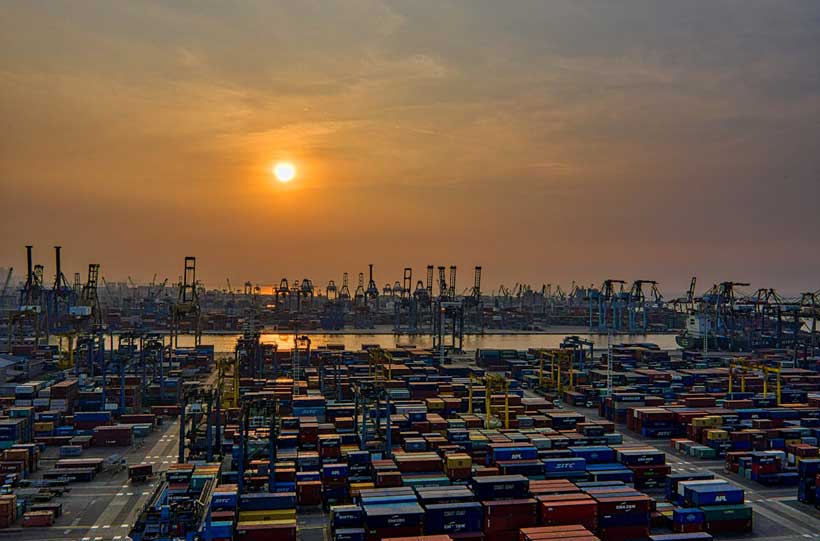
A year after U.S. tariffs pushed companies to diversify production away from China, some businesses are discovering that replacing the country’s manufacturing ecosystem is more difficult and expensive than expected.

The shift reflects the limits of the “China plus one” strategy, under which companies maintained production in China while developing additional manufacturing capacity in countries such as Vietnam, India and Indonesia to reduce exposure to U.S. tariffs.

While diversification continues, some companies are now restoring Chinese suppliers or bringing production back after facing higher costs, supply chain disruptions, shortages of skilled labour and unreliable infrastructure elsewhere.

What’s Happening

Heather Kuang, vice president of China based Dawang Metals, said the company lost business last year when a major U.S. customer moved some orders to India in response to higher tariffs.

Stay ahead of the geopolitical week.

MD Briefing delivers expert analysis across five global fronts — the Indo-Pacific, energy, geoeconomics, European security, and the Middle East — every Monday morning. Free.

The customer has since returned with new orders after encountering problems in India. Dawang itself also explored moving some production overseas but ultimately abandoned the plan.

Kuang said China’s supply chain advantage remains difficult to reproduce elsewhere.

Other companies are reaching similar conclusions.

U.S. retailer Target has moved some orders back to Chinese suppliers, according to two people familiar with the matter, who cited supply chain disruptions and production constraints.

Chinese exporter Jin Chaofeng also moved production back to China after closing a workshop in Ho Chi Minh City that had opened in 2024. He said he struggled to find the necessary equipment in Vietnam and had to import basic supplies such as screws and moulds from China.

After calculating the full cost of operating abroad, Jin said the overall expense was not significantly different from producing in China.

The Tariff Advantage Is Narrowing

One of the main reasons companies moved production away from China was the difference in U.S. tariff rates.

According to Economist Intelligence Unit estimates from July, China faced an effective U.S. tariff rate of about 20%, compared with 6.1% for Vietnam, 13.4% for Indonesia and 4.5% for Thailand.

That gap, however, has narrowed as Washington expanded tariffs across a wider range of countries.

The changing tariff environment has made it harder for companies to justify relocating production solely to avoid duties on Chinese goods.

Chinese manufacturers are also reconsidering overseas investment as the benefits of lower tariff rates become less certain.

Beyond Tariffs

For many companies, the decision is increasingly about more than tariffs.

Access to reliable electricity and the broader manufacturing infrastructure have become important considerations, particularly after the Middle East crisis pushed up energy costs and highlighted vulnerabilities in global energy markets.

Stanislaw Krykun, CEO of Poland based packaging company DST Pack, said his six year Chinese manufacturing partner helped the company navigate a period when plastic input costs rose sharply.

DST Pack currently sources about 80% of its production from a factory in Shenzhen, with the remainder coming from established backup plants in the United States and Europe.

Those alternatives cost two to three times more per unit.

Krykun said he had rejected the idea of relocating to Southeast Asia after seeing a business partner struggle with production and exports in Vietnam.

A Qingdao based lawyer who advises manufacturers, Guan Baokui, also pointed to electricity supply problems in Vietnam and Indonesia, describing their power systems as unstable and discontinuous.

China’s Manufacturing Ecosystem

The experience of these companies highlights China’s broader manufacturing advantage.

The country has developed extensive networks of suppliers, specialized equipment manufacturers, skilled workers and supporting industries. Companies can often source multiple components and services within the same industrial ecosystem.

This means that moving one factory does not necessarily mean moving only production. Businesses may also need to recreate the network of suppliers, machinery, logistics and technical expertise that supports that factory.

For companies that have already spent years building relationships in China, the cost and complexity of reproducing that ecosystem elsewhere can outweigh the benefits of lower tariffs.

Diversification Has Not Ended

The return of some manufacturing to China does not mean the supply chain diversification trend has stopped.

Vietnam remains one of the biggest beneficiaries of companies seeking alternatives to China and continues to attract billions of dollars in foreign investment.

Some businesses are also maintaining production outside China as insurance against future policy changes.

Yu Yangxian, who sells electric lockers and vending machines, said her company is keeping about one eighth of its total capacity in Vietnam as a hedge.

She said the company could expand production there again if tariffs rise sharply.

This suggests that many companies are moving toward a more flexible strategy rather than choosing China or another country exclusively.

Why It Matters

The developments show that tariffs alone cannot determine where global manufacturing takes place.

Lower tariffs can make countries such as Vietnam, Indonesia and Thailand attractive, but companies must also consider electricity, equipment availability, supplier networks, labour skills, logistics and the overall reliability of the production system.

For China, the return of some orders provides evidence that its manufacturing ecosystem remains difficult for competitors to replicate despite rising geopolitical and trade pressures.

For companies, however, maintaining production in China still carries tariff and geopolitical risks. That is why many are keeping alternative capacity elsewhere even when Chinese production remains cheaper or more reliable.

Key Stakeholders

Chinese manufacturers continue to benefit from established supplier networks, skilled labour, infrastructure and production capabilities.

U.S. companies and retailers are balancing tariff costs against the reliability and overall cost of alternative manufacturing bases.

Vietnam, India and Indonesia remain important destinations for companies pursuing supply chain diversification.

Thailand also retains an advantage through comparatively low U.S. tariff rates, although the gap with China has narrowed.

The U.S. and Chinese governments remain central to the outlook because future tariff decisions could alter companies’ calculations again.

What’s Next

Businesses are watching the expected meeting between Donald Trump and Chinese President Xi Jinping for signs of whether Washington and Beijing can reduce trade barriers on some non sensitive goods.

However, exporters do not expect the meeting to resolve the broader uncertainty.

Companies are likely to continue maintaining manufacturing capacity across multiple countries rather than relying entirely on a single production base.

Analysis

The return of some manufacturing to China reveals a weakness in the assumption that supply chains can be relocated simply by following tariff differences.

China’s advantage is not just the cost of producing an individual product. It is the dense industrial ecosystem surrounding that production. When companies move factories abroad, they may discover that machinery, components, skilled workers, electricity and logistics cannot be replicated at the same cost or speed.

At the same time, the diversification strategy has not failed completely. Companies are increasingly using countries such as Vietnam as backup capacity rather than complete replacements for China.

This could lead to a more fragmented global manufacturing system in which China remains the core production hub for many businesses while Southeast Asia and other emerging hubs provide alternatives.

The result may therefore be less of a reversal of globalization than a more complicated form of it. Companies are learning that reducing dependence on China does not necessarily mean abandoning China. Instead, they may need to maintain Chinese production while building enough alternative capacity elsewhere to protect themselves against future tariffs, geopolitical shocks and supply chain disruptions.

With information from Reuters.

Free Training

Source link

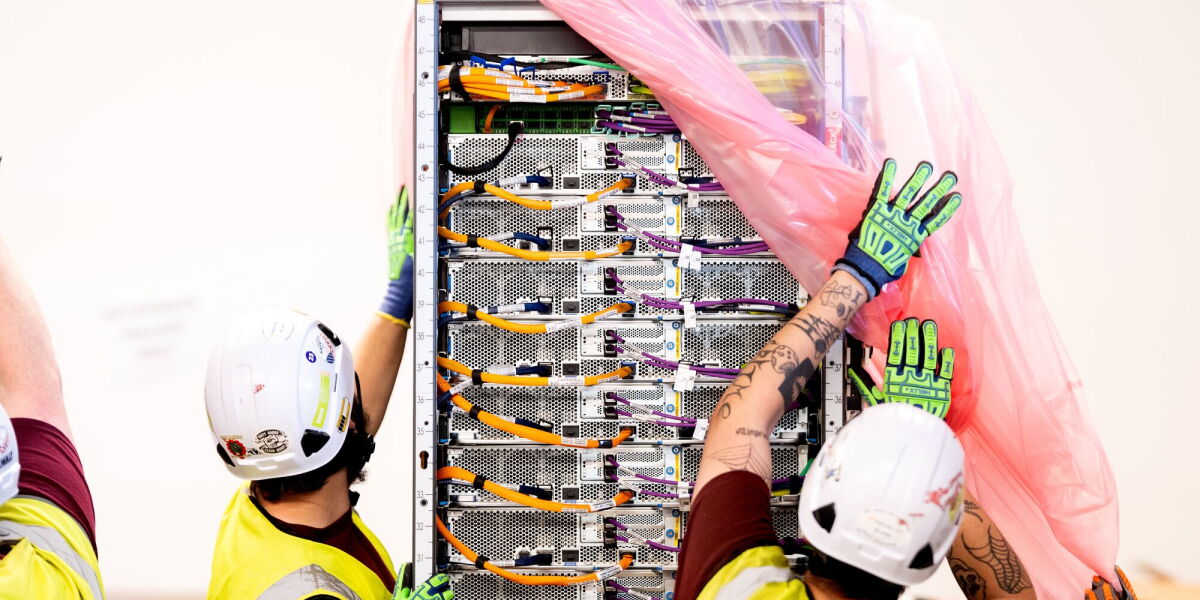
Amazon and Wiwynn expand Texas manufacturing facility, creating nearly 1,000 jobs


“Amazon’s continued work with Wiwynn to bring nearly 1,000 advanced manufacturing jobs to the U.S. is exactly the type of collaboration we want to see to help strengthen the U.S. supply chain. This investment is one example of Taiwan’s commitment to invest $250 billion in advanced manufacturing into the United States.“ said Deputy United States Trade Representative, Ambassador Rick Switzer. “America’s competitive edge is reliant on investment that will onshore more of these opportunities and our administration is committed to supporting the critical infrastructure that will spur our economic growth.”

“Wiwynn’s new advanced manufacturing facility represents a major new chapter in our global manufacturing footprint and an important milestone for Amazon, Texas, and the entire U.S. supply chain,” said William Lin, president and CEO of Wiwynn. “Through our over $1.6 billion investment in the Texas facility, we are expanding our ability to address the growing demand of U.S. customers, reinforce the resilience of the global supply chain, and create high-value career opportunities as we continue to grow in partnership with the local community.”

Amazon’s data centers power the services millions of people and businesses rely on every day, from hospitals and emergency services to streaming entertainment and AI innovation. Wiwynn’s server racks are a critical part of that infrastructure, and together, these investments help fuel the U.S. economic engine. Since 2017, data center activity has grown U.S. manufacturing jobs by nearly 70% to over 200,000 jobs*.

Free Training

Source link